Kamran Faqir is a volunteer investigative journalist and writer committed to exposing hidden truths and amplifying underreported stories. Driven by social justice, he brings sharp insight and fearless truth-telling to independent journalism. NUJ registered.
Article Date Published:
Article Date Modified:
13 minutes
Views:234
Listen to this article
Help support our mission, donate today and be the change. Every contribution goes directly toward driving real impact for the cause we believe in.
Dateline: Muridke, Sheikhupura District, Punjab, Pakistan – July 28, 2026
1. The Night The Floods Came
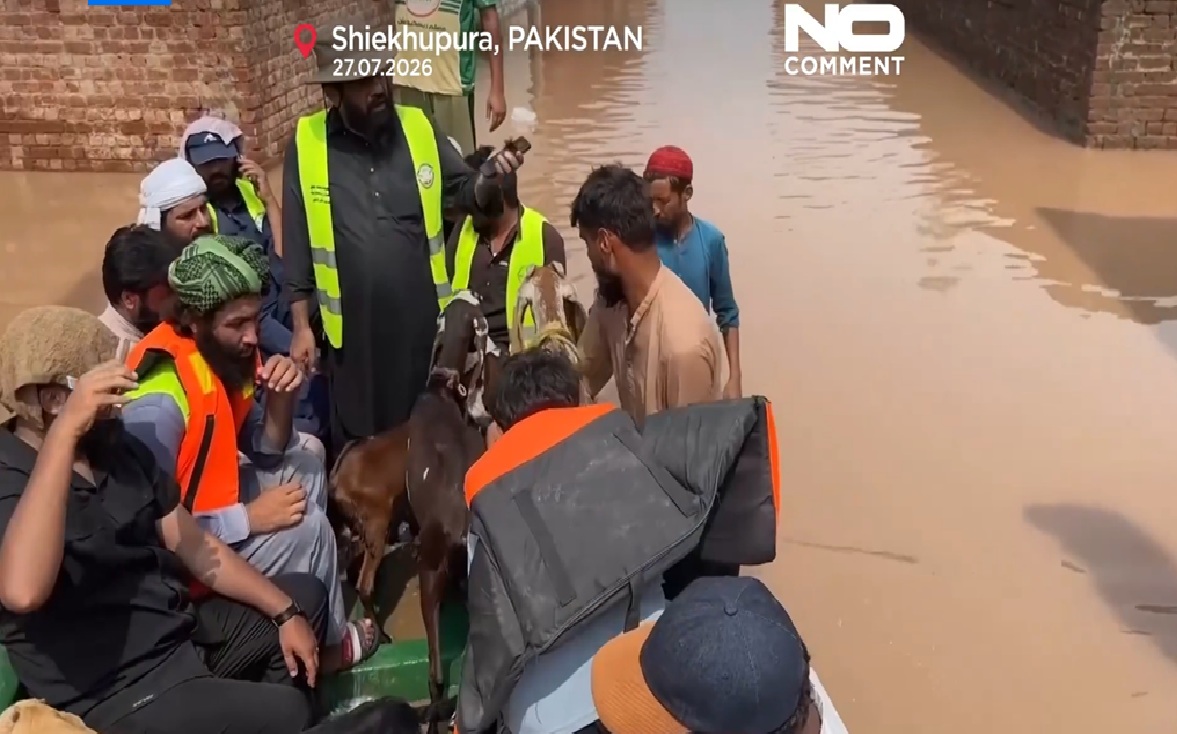
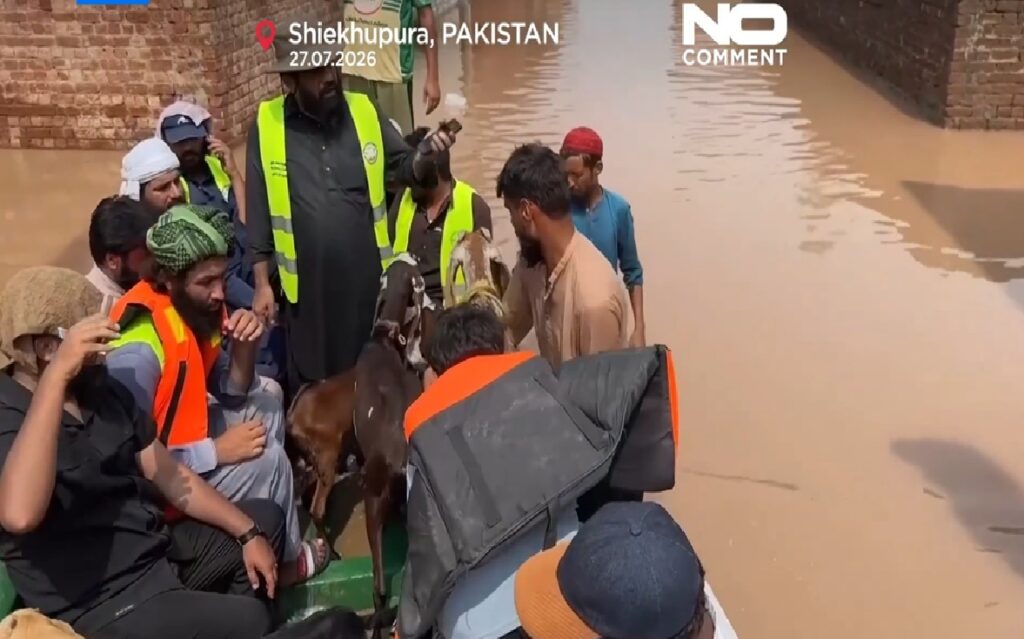
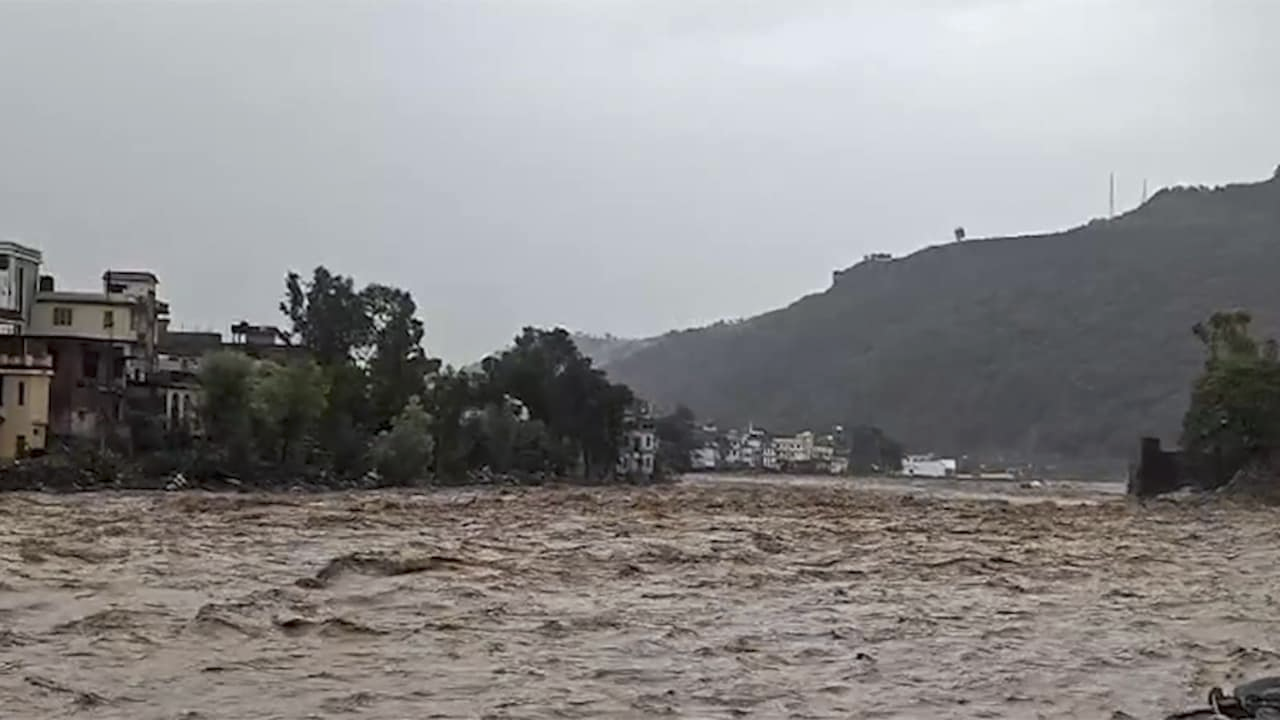
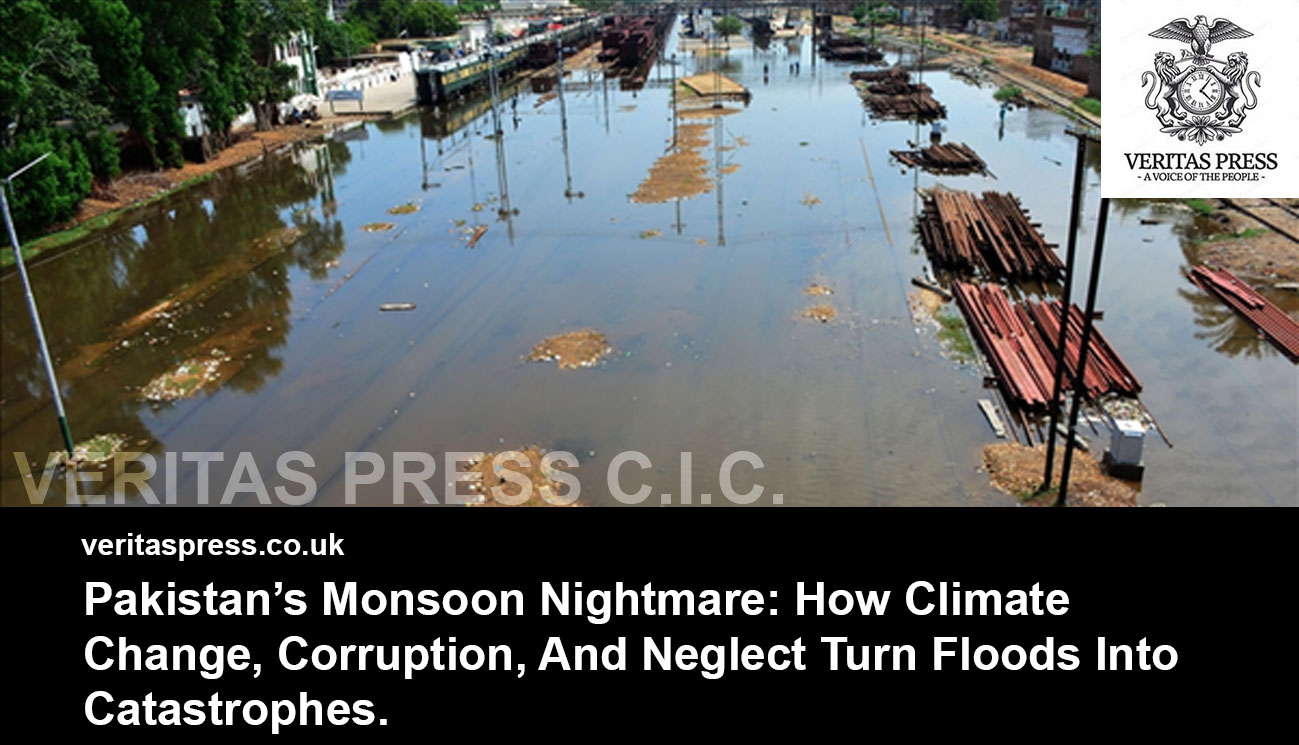
MURIDKE, SHEIKHUPURA DISTRICT – The floodwater swallowed Muhammad Ramzan’s world in the dead of night. At around three in the morning, a wall of murky, debris-choked water surged through his village on the outskirts of Sheikhupura, collapsing his mud-and-brick home before he could grab a single belonging. “Everything was destroyed. We couldn’t save a single thing,” the 45-year-old daily-wage labourer told this reporter, his voice hollow with exhaustion as he stood on a narrow embankment, watching rescue boats crisscross fields that had become lakes.
Ramzan is one of more than a hundred people plucked from rooftops and flooded lanes since Sunday by emergency crews after the Dek and Bhed seasonal streams burst their banks under relentless monsoon rains. But the numbers rescued tell only half the story. Across submerged hamlets in the Muridke and Ferozewala tehsils, families remain stranded, pleading for help that, many say, has been agonisingly slow to arrive. This is the face of Pakistan’s 2026 monsoon: a disaster foretold, yet met with the same chaotic, reactive scramble that defines the country’s flood response year after year.
2. Stranded And Forgotten: Voices From The Water
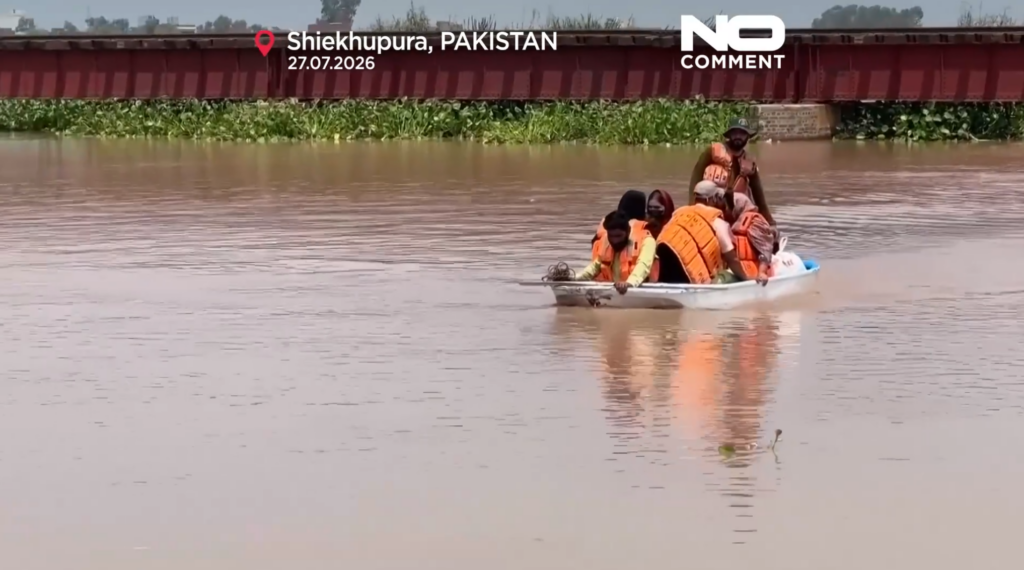
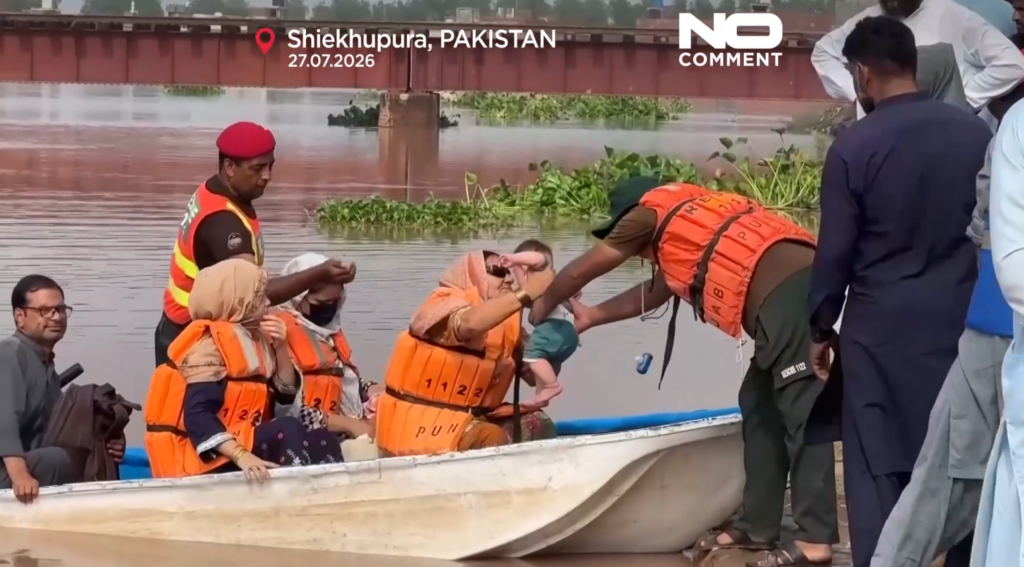
By Monday afternoon, the water had not receded; in some pockets, it was still rising. Rescue 1122, the Punjab emergency service, had deployed 59 rescuers, 31 rescue scouts and nine boats, establishing 12 relief camps and evacuating 70 people directly, while providing boat transport to 286 residents so they could salvage what remained of their soaked belongings. Rescuers also saved six heads of livestock. A rescue volunteer, Haris Dar, confirmed that “dozens of villages in this area remain submerged” and that “as the water level continues to rise, relief efforts have expanded to include the distribution of food.”
But for those still cut off, official statistics provide little comfort. “The rescue boats are operating on the other side of the area, but no one is coming to our side,” said Iqra Salman, a 32-year-old housewife, speaking by phone from a flooded street where she was trapped with small children. “We have no electricity, no clean water, and now we have completely run out of food supplies. Floodwater surrounded us. At the very least, we urge the authorities to rescue us as soon as possible.”
Her neighbour, Muhammad Faisal, another labourer, traced the crisis back to Friday. “Floodwater has inundated our area since Friday, leaving the entire neighbourhood submerged. Our children remain trapped inside their homes, hungry and thirsty, and no one is coming to aid them. For the past four days, we have been without electricity, and our supply of drinking water has been completely exhausted.” The local grid failed the moment the waters rose, and with roads severed, tankers cannot reach them. Medicines for the elderly, insulin for diabetics, baby formula, all gone.
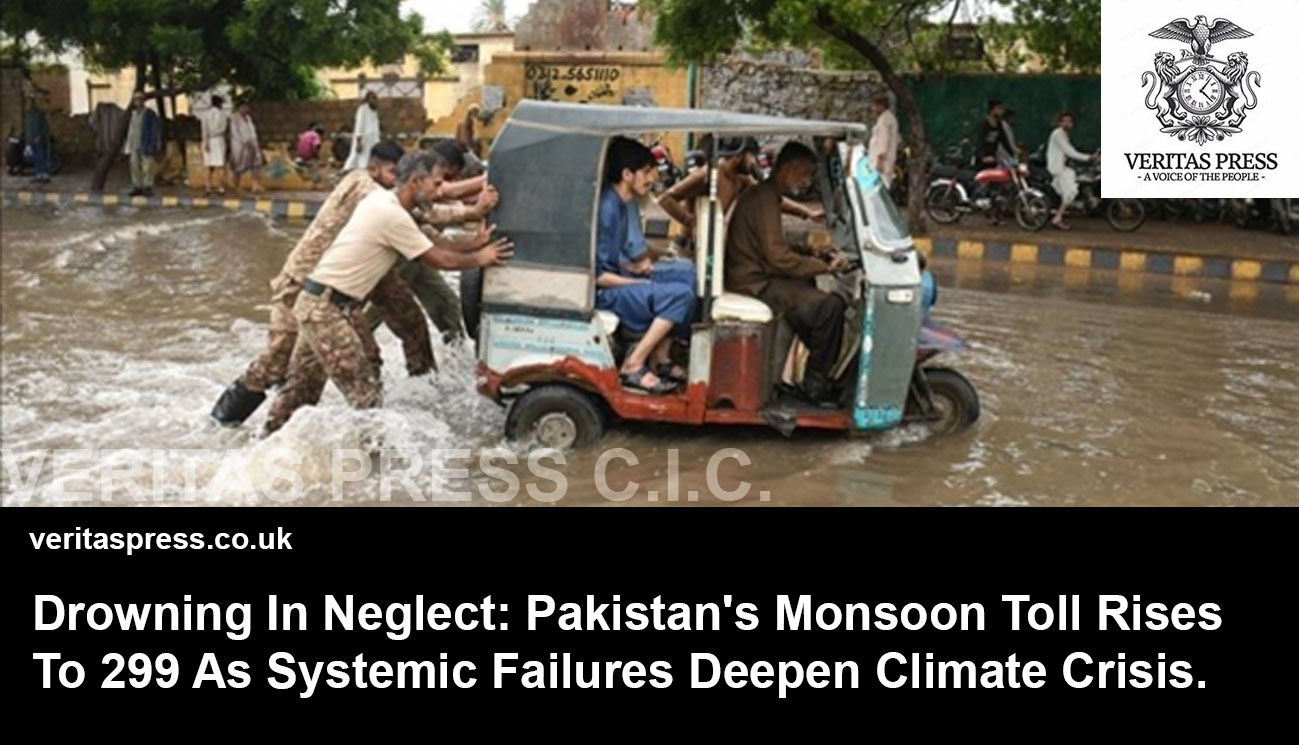
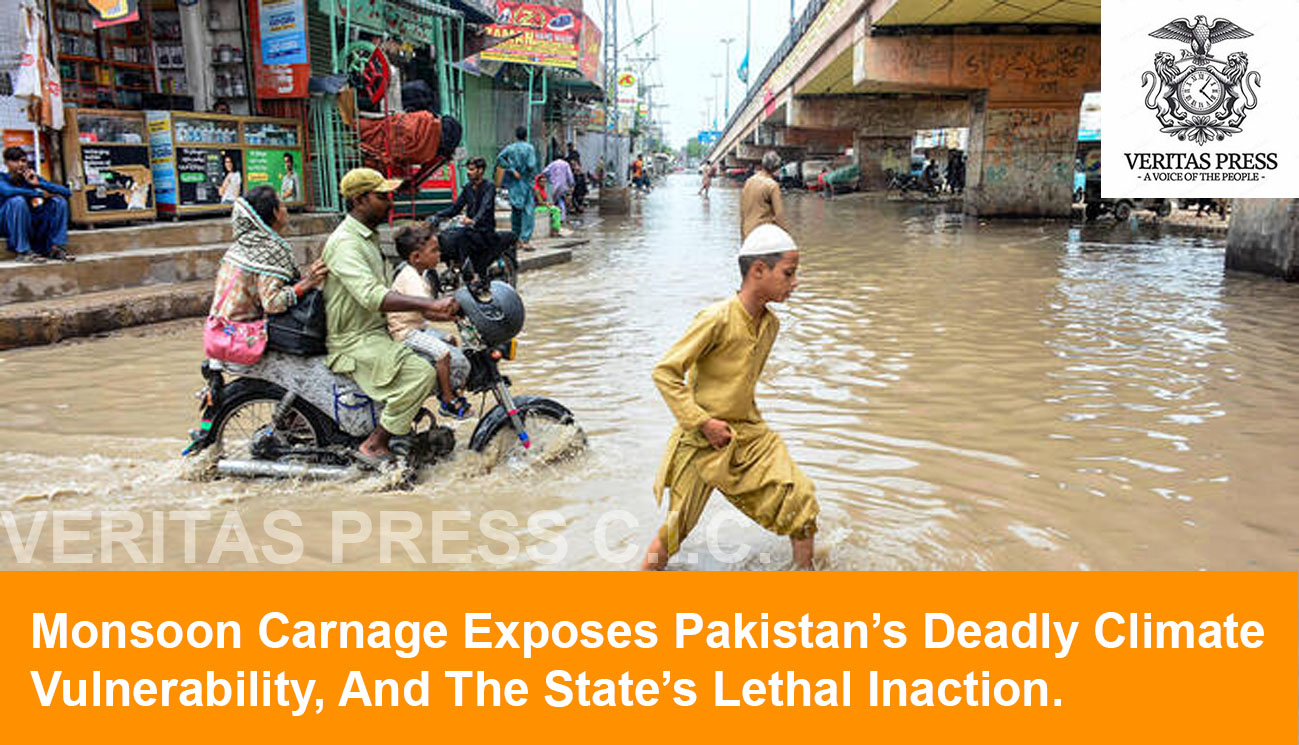
This correspondent watched villagers wade through chest-high water, clutching goats and plastic bags stuffed with clothes. One man balanced a small television on his head; another pushed a bed frame through the current. It was a desperate, improvised exodus, a tableau repeated in flood zones across the country.
3. The Official Response: Boats And Briefings
Sheikhupura’s authorities have been quick to publicise their efforts. Commissioner of Lahore visited the affected areas alongside Deputy Commissioner Rana Adil Tasawur and Assistant Commissioner Muridke. District Emergency Officer Rana Ejaz Ahmed, who is overseeing the rescue operation, briefed them and insisted that rescue personnel “remain on duty 24 hours a day to assist flood-affected communities.” Rescue 1122’s official statement noted that the service was acting “under the directives of Emergency Services Department Secretary, Dr Rizwan Naseer.”
Yet, on the ground, the gap between the official narrative and lived reality is gaping. Residents in the most peripheral hamlets say they saw no warning before the water arrived. No text alerts, no announcements from the loudspeakers of local mosques, nothing that might have given them a few precious hours to move to higher ground. “We were asleep. The water didn’t knock,” Ramzan said bitterly.
The Provincial Disaster Management Authority (PDMA) Punjab, while issuing regular weather advisories, has not explained why early warning systems, funded by international donors after the catastrophic 2022 floods, apparently failed to trigger a pre-emptive evacuation. A source at the PDMA, speaking on condition of anonymity, acknowledged “gaps in last-mile communication” but blamed “the erratic behaviour of the monsoon” and “unprecedented rainfall intensity.” Meteorological Department data, however, shows that the rainfall in the Sheikhupura catchment, while heavy, was within the upper band of seasonal forecasts, a fact that should have put local administrations on high alert days in advance.
4. Climate Scientists Sound The Alarm: ‘This Is Not An Anomaly’
As floodwaters spread, climate researchers underline that the intensity of these rains is neither a surprise nor an isolated incident. Dr Aisha Khan, a geophysicist at the Global Change Impact Studies Centre (GCISC) in Islamabad, told this correspondent that a warming Arabian Sea is injecting more moisture into the monsoon system, producing shorter, sharper downpours. “Every degree of sea-surface temperature rise translates into a roughly 7% increase in atmospheric moisture capacity. We are not seeing more rainy days; we are seeing more rain per event. The 2026 monsoon is proving exactly what our models have projected for a decade,” she said.
Dr Muhammad Hanif, a veteran meteorologist formerly with the Pakistan Meteorological Department, went further. “The tragedy is not that it rained heavily; the tragedy is that our response has barely evolved since the 2010 superflood. The meteorological department issued a clear advisory four days before the flooding in Sheikhupura, warning of a flash-flood risk in the catchment of the Dek and Bhed streams. That advisory landed on the desks of district administrations. But there was no mandatory follow-up, no forced evacuation protocol. We are still treating climate threats as administrative formalities,” he said, speaking from Lahore.
Both scientists pointed to a recent study co-authored by the World Weather Attribution initiative that concluded human-caused climate change made the 2022 Pakistan floods at least 30% more intense. They said the same fingerprint is visible this year, and that without drastic emissions cuts and adaptation investment, the country will face escalating losses. “We are in the era of compound disasters: a heatwave preceding a flood, followed by a disease outbreak. The state must stop treating each crisis in a silo,” Dr Khan added.
5. Complacency By Design: The Government’s Flood-Time Ritual
Despite years of post-disaster commitments, the Pakistani state’s approach remains mired in complacency, say critics. A scathing internal audit by the Auditor General of Pakistan, which leaked to the media in February 2026, found that as of December 2025, they had completed only 18% of the flood-protection infrastructure planned for Punjab under the post-2022 reconstruction programme. Critics claim the state diverted funds to other projects. Embankments along the Dek and Bhed streams were among those never reinforced.
Opposition Senator Khurram Latif Khosa, who raised the issue in the Upper House last week, accused the government of treating flood preparedness as “a photo-opportunity industry.” In a telephone interview, he said: “Every year, the same ministers board the same boats, distribute the same relief packets, and issue the same statements. Then the floods recede, and so does their attention. The complacency is not accidental; it is institutionalised. Disaster management has become a cyclical political theatre in which the victims are props.”
Civil society activists are equally blunt. Bushra Khaliq, executive director of the grassroots women’s rights group WISE, which has been assisting flood-affected women in Punjab, said the state’s neglect of vulnerable groups is chronic. “Women, children, and the elderly are always the last to be rescued, the last to receive aid, and the last to be counted. We documented that in the 2022 floods, and we are documenting the same patterns now. Government officials talk about ‘zero casualties’ as a success, but they ignore the slow deaths from deprivation that follow,” she said.
Meanwhile, the legal advocacy network Shehri-CBE filed a public interest petition in the Lahore High Court asking the court to investigate why authorities never enforced the flood-zoning regulations, notified in 2023, in Sheikhupura’s revenue villages. “The local administration issued residential permits in floodplains months after those regulations were adopted. That is not negligence; it is complicity,” said Shehri’s counsel, Barrister Ahmad Rafay.
6. The Rescue Mirage And The Media Struggle
Journalists covering the floods face their own obstacles. In Sheikhupura, two local press club members said security reasons initially denied reporters access to certain areas. Although authorities later eased those restrictions, the incident shows a wider trend of information control that hinders accurate damage assessment. Independent media have relied heavily on social media footage and accounts from residents like Iqra Salman, whose mobile phone recordings of flooded lanes, shared on WhatsApp, eventually reached national news desks when official channels remained silent.
Yet the media’s gaze is fleeting. Satellite trucks roll in for a day, capture the drama of boat rescues, and move on. Before this article is published, the national news cycle might have already shifted to political wrangling in Islamabad. The tragedy of Muridke, however, will persist in the form of damaged crops, lost livestock, waterborne diseases, and children unable to return to school.
Ahmed Waqas, a local correspondent for an Urdu-language daily who has been covering the floods since Friday, described the situation as “a crisis inside a crisis.” Speaking by phone while wading through water, he said, “The government is counting the people it rescues, but no one is counting the people who are still waiting, and no one is counting the damage that will linger for months. The story is not the boat; the story is the absence of the state before the water rose.”
7. Climate, Compensation And The Long Road Ahead
Against the backdrop of these immediate struggles lies the elephant in the room: climate finance. Pakistan, which contributes less than 1% of global greenhouse gas emissions, remains one of the world’s most climate-vulnerable nations. At the 2022 COP27 summit, the international community pledged a “loss and damage” fund, but its operationalisation has been painfully slow, and disbursements to frontline communities are almost non-existent. In the fields of Muridke, such global negotiations feel like a cruel abstraction.
Meanwhile, the government’s domestic compensation mechanisms are equally inadequate. Flood victims in Punjab can receive modest cash payments for damaged houses and lost livelihoods through the provincial calamity relief programme, but the process is notoriously labyrinthine. In 2024, a third-party audit found that only 40% of eligible claimants in disaster-hit districts received their full entitlement within six months. Activists fear the 2026 floods will repeat that pattern.
Back on the embankment, Muhammad Ramzan watches the brown water and wonders aloud how he will rebuild. “The government came with boats, yes. But what will I do tomorrow? I have no home, no job, no savings. The water will go, but my life will stay broken.” His question is not only personal; it is the question Pakistan must answer if it is ever to break the cycle of flood, rescue and neglect.
8. Developments As Of July 28, 2026
Late Monday, the Pakistan Meteorological Department issued a fresh alert for the upper catchment areas of the Chenab and Ravi rivers, warning that more monsoon currents from the Arabian Sea were likely to trigger intense rainfall from Wednesday. The NDMA advised all provincial disaster authorities to pre-position relief stocks and prepare mass evacuation plans. In Sheikhupura, Rescue 1122 reported that they had partially inundated seven more villages overnight and had evacuated 32 additional individuals, mostly elderly and children, before dawn. The health department has set up three temporary medical camps, with early reports of diarrhoeal cases beginning to emerge.
Punjab Chief Minister Maryam Nawaz Sharif has announced a special relief package and has instructed the local administration to “leave no stone unturned” in rescue efforts, though opposition politicians have already accused the government of “photo-op politics” and ignoring structural reforms. The coming days will test whether words translate into durable action, or whether Pakistan is merely living through another chapter in its monsoon tragedy.
Veritas Press Investigative Analysis Independent journalism examining global affairs, power, diplomacy and accountability.
Source:Veritas Press C.I.C. | Multi-News Agencies
Help Support Our Work By Donating
Readers who believe that truth still matters have power over popular information. When just a few more people step up to support this work, it means more lies exposed, more corruption uncovered, and more accountability where it’s long overdue.
Help Protect Independent Journalism, Which Is Currently Under Attack.
If you believe journalism should serve the public, not the powerful, and you’re able to help, becoming a regular DONOR or a PAID SUBSCRIBER truly makes a difference.
DONATION APPEAL: If you found this reporting valuable, please consider supporting independent journalism.
Your support fuels our fearless, truth-driven journalism. In unity, we endeavour to amplify marginalised voices and champion justice, irrespective of geographical location. We operate independently, with no financial backing from billionaires; our readers support us.
But it’s also extremely important. One of Veritas Press’s greatest assets is its reader-funded model.
1. Reader funding means we can cover what we like. We’re not beholden to the political whims of a billionaire owner. We are a small, independent and impartial organisation. No one can tell us what not to say or what not to report.
2. Reader funding means we don’t have to chase clicks and traffic. We’re not desperately seeking your attention for its own sake; we pursue the stories that our editorial team deems important and believes are worthy of your time.
3. Reader Funding: enables us to keep our website and other social media channels open, allowing as many people as possible to access quality journalism from around the world, particularly those in places where the free press is under threat.
We know not everyone can afford to pay for news, but if you’ve been meaning to support us, now’s the time.
Your donation goes a long way. It helps us:
Keep the lights on and sustain our day-to-day operations
Hire new, talented, independent reporters
Launch real-time live debates, community-focused shows, and on-the-ground reporting
Cover the issues that matter most to our communities, in real time, with depth and integrity
Without your support, independent voices like ours will be silenced.
Furthermore, we plan to expand our work, but we can’t do so without your support. Every contribution, no matter the size, helps us stay independent and build a truly people-powered media platform.
If you believe in journalism that informs, empowers, and reflects the communities we serve, please donate today.
Kamran Faqir is a volunteer investigative journalist and writer committed to exposing hidden truths and amplifying underreported stories. Driven by social justice, he brings sharp insight and fearless truth-telling to independent journalism. NUJ registered.
SEATTLE, TEHRAN — The U.S. Department of Homeland Security (DHS) will allow Iran’s national football team to enter the country 48 hours before their critical World Cup match against Egypt on Friday, a modest concession in a tournament where Team Melli’s travel conditions have sparked claims of oppression and competitive disadvantage.













































0xsbwe
fgtbet
0u7c3l