Kamran Faqir is a volunteer investigative journalist and writer committed to exposing hidden truths and amplifying underreported stories. Driven by social justice, he brings sharp insight and fearless truth-telling to independent journalism. NUJ registered.
Article Date Published:
Article Date Modified:
24 minutes
Views:310
Listen to this article
Help support our mission, donate today and be the change. Every contribution goes directly toward driving real impact for the cause we believe in.
New York City Mayor Zohran Mamdani Has Declared Benjamin Netanyahu A “War Criminal” And Demanded The Federal Government Enforce The International Criminal Court’s Arrest Warrant. But A Year-Long Investigation Reveals His Call Is Both Legally Hollow And Politically Explosive, Laying Bare America’s Role As The Ultimate Safe Harbour For An Ally Accused Of Genocide.
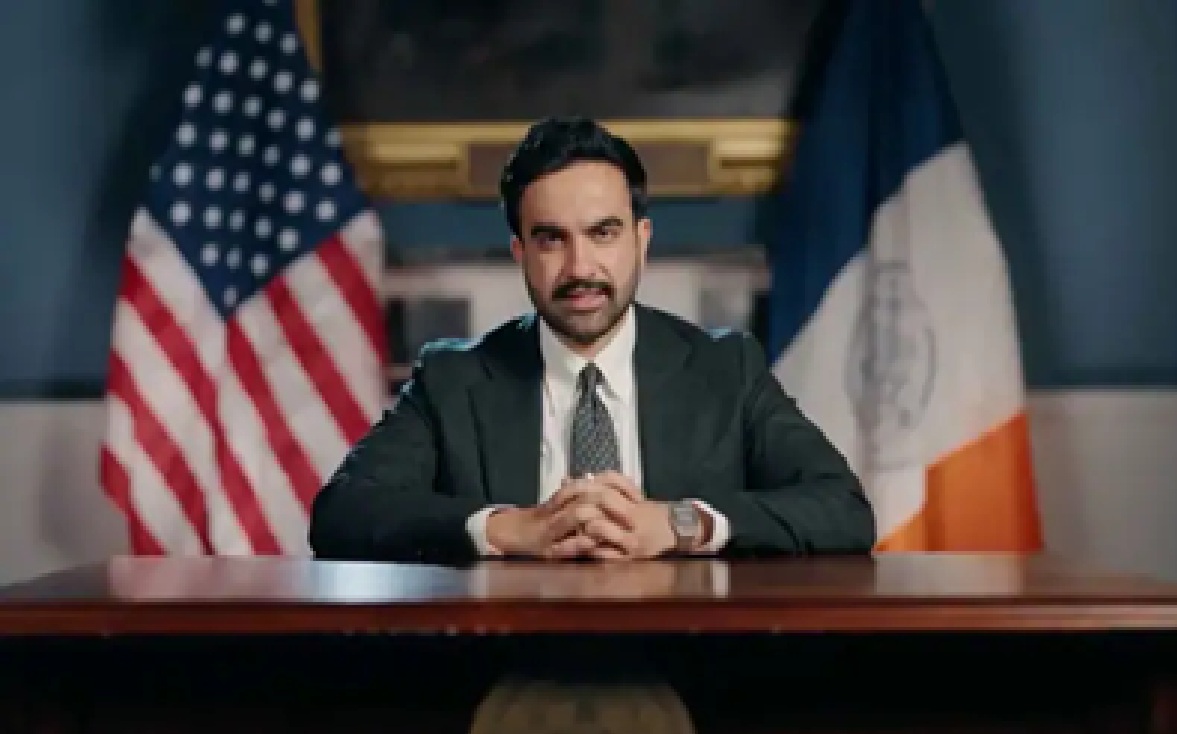
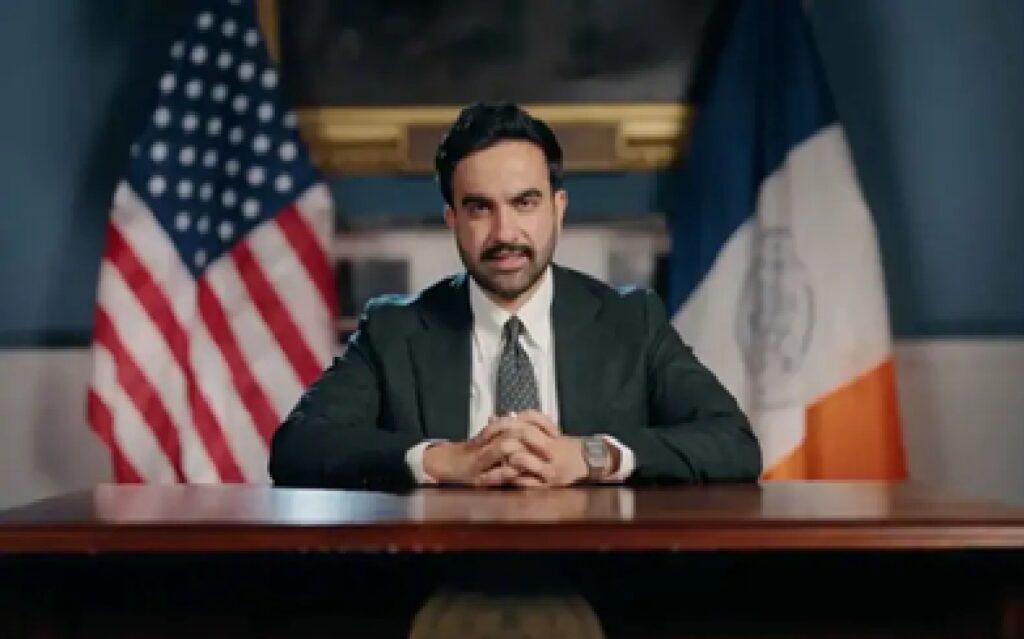
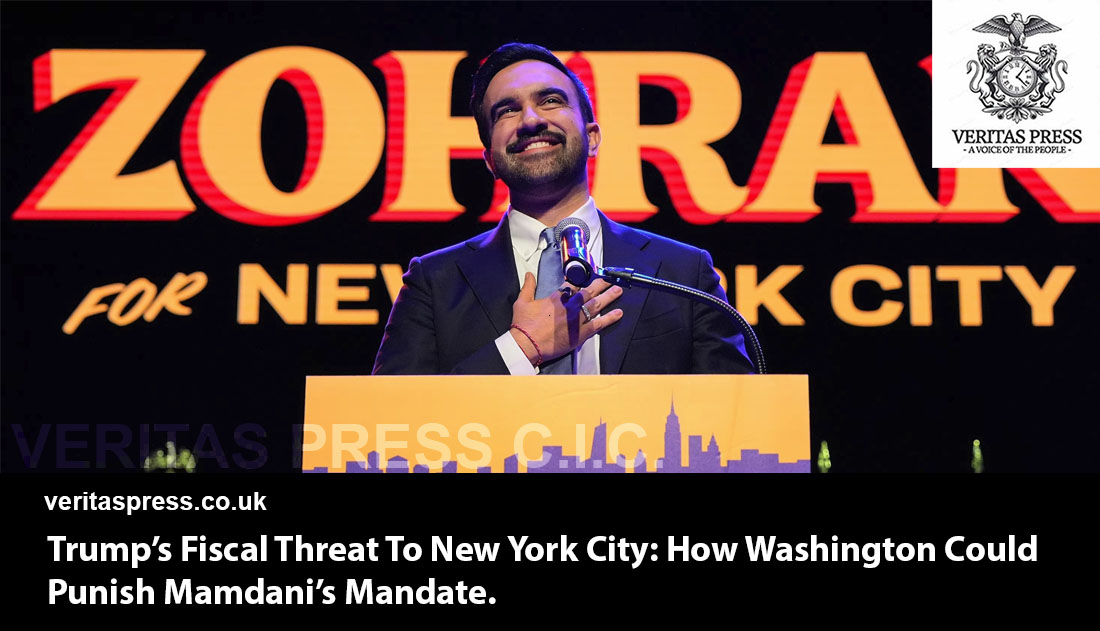
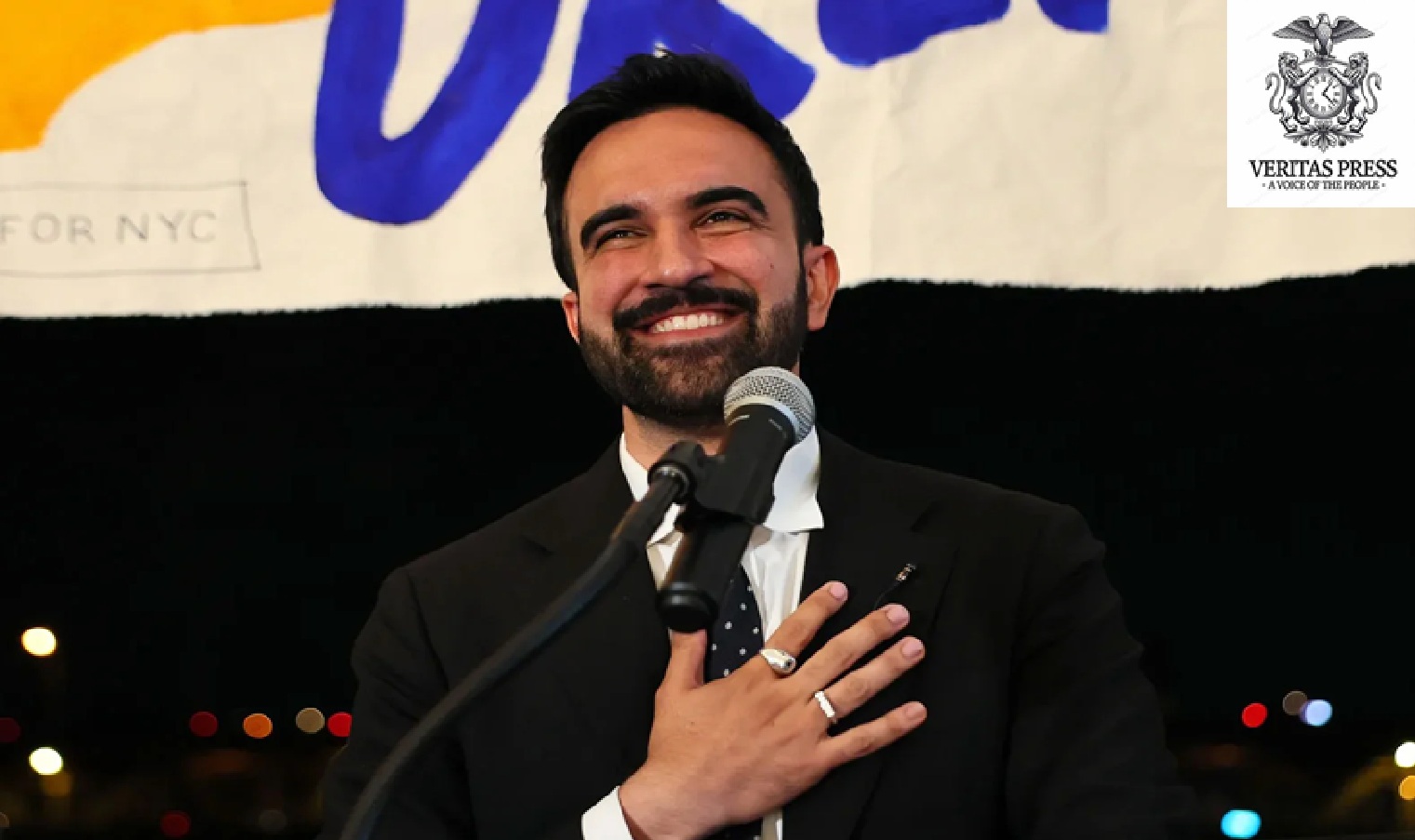
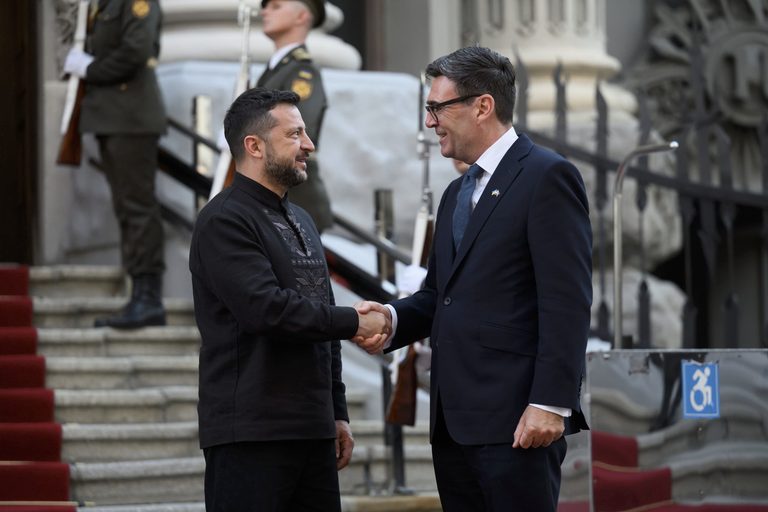
NEW YORK — On a humid Tuesday evening in late July, New York City Mayor Zohran Mamdani stepped before a camera in his City Hall office and delivered the kind of speech no occupant of that room has ever dared to make. In a two-minute video posted to his official social media accounts, Mamdani declared that the Prime Minister of Israel, Benjamin Netanyahu, is “the architect of a horrific genocide against the Palestinian people,” responsible for “the killing of over 73,000 people” and “the maiming of tens of thousands of children,” and that he “belongs before a court of law.”
Then, the mayor lowered the boom: after a months-long review, the New York City Law Department had concluded that the city “does not have the independent legal authority” to execute the arrest warrant issued by the International Criminal Court (ICC) in November 2024. So, Mamdani said, the federal government must do it instead. “I call on them to join the ICC and execute this warrant. And I want to be equally clear: Benjamin Netanyahu is not welcome in New York City. Nor is any other war criminal at large.”
The statement, delivered with the sober deliberateness of a man who knows he is lighting a fuse, instantly ricocheted across the political spectrum. For a city that hosts the United Nations and has long prided itself on a cosmopolitan, human-rights-forward identity, the mayor’s words were a thunderclap. Yet a deeper investigation, pieced together from dozens of interviews with city and federal officials, international law experts, human rights organisations, and community activists, reveals that Mamdani’s dramatic appeal is less a legal strategy than a political indictment. It exposes a yawning chasm between the moral aspirations of a progressive municipality and the cold reality of federal power, which has shielded Israeli leaders from accountability for decades.
The Legal Limbo Of New York City:
Mamdani’s announcement was the culmination of a quiet, behind-the-scenes scramble that began shortly after he took office in January 2026. According to three senior administration officials who spoke on condition of anonymity because they were not authorised to discuss internal legal deliberations, the mayor’s office had formally asked the city’s Law Department in February to explore every conceivable mechanism, local ordinances, state statutes, even obscure provisions of the City Charter, that might empower the NYPD or other city agencies to detain a visiting head of government on an ICC warrant.
What they found was a legal brick wall. New York City is not a sovereign entity; it cannot ratify treaties, and it possesses no independent criminal jurisdiction over violations of international humanitarian law. The United States is not a party to the Rome Statute, the treaty that established the ICC, and successive administrations have gone further: they have actively opposed the court’s assertion of jurisdiction over American nationals and those of certain allies. The 2002 American Service-Members’ Protection Act, signed by President George W. Bush, even authorises “all means necessary and appropriate” to free U.S. or allied personnel detained by the ICC, a provision that earned it the nickname “The Hague Invasion Act.”
“The city’s legal conclusion was foreordained,” said Professor Nadia Hassan, an expert on international criminal law at Columbia Law School and a former legal advisor to the ICC Prosecutor’s Office. “There is no domestic statute incorporating ICC arrest warrants into U.S. law. Even if New York State passed a law tomorrow, it would almost certainly be preempted by federal foreign affairs powers. The mayor’s call for the federal government to ‘join the ICC and execute this warrant’ is, in practical terms, a demand for a complete inversion of a quarter-century of American policy.”
Yet Hassan and other observers note that the mayor’s statement was never really about municipal legal authority. It was about piercing what activists call the “normalisation of impunity.” As Mamdani himself put it in the video: “While we cannot end the genocide on our own, we can decide whether our silence will become another weapon.”
The Federal Firewall: Trump’s Blanket Immunity.
If Mamdani’s words were a moral provocation, the federal response was a blunt-force rejection. On Monday, President Donald Trump posted on his Truth Social platform: “Benjamin Netanyahu will not be arrested, in any way, shape, or form, while in the United States of America. He is fighting against the Islamic Republic of Iran… The only ones that should be arrested are the people that led Iran into this unprecedented SPIRAL OF DEATH AND DESTRUCTION.” The statement, vintage Trump in its conflation of unrelated grievances, echoed the administration’s long-standing hostility to the ICC—a body it sanctioned in 2020 and again threatened with sanctions in 2025 after the warrants against Netanyahu and former Defence Minister Yoav Gallant were issued.
The State Department amplified the message on Wednesday. Spokesperson Matthew Krause told reporters that “the United States does not recognise the legitimacy of the ICC’s politically motivated actions against Israeli officials. We will take all necessary steps to ensure the safety and security of our guests during the UN General Assembly.” He declined to specify what those steps might entail, but former diplomatic security officials told this reporter that the protective bubble around a visiting head of government is virtually impenetrable. “Even if a local prosecutor went rogue, the Secret Service, Diplomatic Security, and the NYPD’s own intelligence division would never allow an arrest to occur,” said retired DSS agent Linda McAllister. “The federal government would physically prevent it. And if they had to, they’d whisk him out of the country within the hour.”
The Israeli Counter-Offensive: ‘Blood Libels’ And Political Distraction.
The Israeli government, predictably, responded with fury. Israel’s Ambassador to the UN, Danny Danon, fired off a tweet within hours: “Enough with the blood libels. You were elected to serve New Yorkers, not Hamas’ propaganda. Do your job!” Netanyahu’s office released a statement accusing Mamdani of “attempting to divert public attention from the mounting crises in his own city, crime, homelessness, and a failing education system, by cynically targeting Israel.” The prime minister, in an earlier radio interview with conservative host Sid Rosenberg, had already laid the groundwork: “I think he should look at who he’s condemning, who he’s praising. He’s condemning Israel, the one autocracy that stands shoulder to shoulder with American values… Who does he champion? Hamas, that calls openly to massacre every Jew on earth.”
Analysts say that such rhetoric is calibrated to exploit the mayor’s political vulnerabilities. Mamdani, a Democratic Socialist and son of Ugandan-Indian immigrants, won office on a wave of progressive energy but faces a restive electorate concerned about post-pandemic recovery, housing costs, and public safety. His vocal support for Palestinian rights has energised a coalition of young leftists, Arab-American communities, and Jewish anti-occupation activists. But it has also drawn sharp criticism from establishment Democratic leaders and pro-Israel groups, who accuse him of dividing the city and alienating Jewish voters.
“Mamdani is walking a tightrope,” said Dr. Yael Stern, a political historian at the City University of New York. “He’s banking on the idea that the moral urgency of the moment, what his base sees as a genocide unfolding in real time, will carry him past the backlash. But every time he uses the word ‘genocide’ to describe Israeli actions, he invites a firestorm that consumes his other policy priorities.”
Voices From The Ground: Activism, Anger, And The Waiting Game.
The mayor’s video has galvanised a sprawling network of New York-based advocacy groups that have, for months, been preparing for Netanyahu’s likely September arrival. The “NYC Says No to War Criminals” coalition, comprising organisations such as Jewish Voice for Peace, the Palestinian Youth Movement, and the Centre for Constitutional Rights, issued a statement hailing Mamdani’s “unprecedented moral clarity” but stressing that “words are not enough.” At a rally in Union Square on Wednesday afternoon, several hundred demonstrators chanted “Arrest Netanyahu” and unfurled banners bearing the names of children killed in Gaza. Some held signs reading “Mamdani: Close the Airspace, Not Just Your Heart.”
“I’m a Holocaust descendant, and I know what genocide looks like,” said Ruth Messinger, a former Manhattan Borough President and longtime human rights advocate, addressing the crowd. “We are watching it, funded by our tax dollars, live-streamed by the victims. The mayor is right to call it what it is. But we must push him to go further, to use the city’s permitting powers, its control over motorcade routes, its economic leverage, to make this criminal feel the full weight of our rejection.”
Others were less charitable. Jumaane Williams, the city’s Public Advocate and a frequent Mamdani ally, told reporters that while he supports the sentiment, “the real question is what concrete steps the administration will take if the federal government does nothing. Can we revoke the permits for the motorcade? Can we refuse to provide NYPD protection? These are the uncomfortable questions we need to ask.”
Meanwhile, local Palestinian-American community leaders expressed a mix of gratitude and exhaustion. “It’s good that someone in power finally uses the word ‘genocide,’” said Layla El-Amin, director of the Brooklyn-based Arab American Family Support Centre. “But my community isn’t hanging its hopes on a U.S. arrest. We’ve seen how the system works. We just want the bombs to stop. We want our families to be able to bury their dead without being shot at. The ICC warrant is a tool, but it’s been 20 months since the ‘ceasefire ’, and children are still being killed.”
Her reference was to the deeply alarming report issued by the UN Office of the High Commissioner for Human Rights in June 2026, which documented the deliberate targeting of Palestinian minors by Israeli armed forces in the months following the January 2025 ceasefire, an agreement that had already been battered by repeated violations. The report, which Mamdani explicitly cited in his video, found that 47 children had been killed by Israeli fire in the preceding six months, many in incidents where there was “no evidence of hostilities.” The finding has been seized upon by human rights organisations as proof that Israel’s pattern of violence did not end with the nominal cessation of large-scale combat; it merely shifted forms.
The ICC Warrant: A Tale Of Two Systems Of Justice.
To understand the full weight of Mamdani’s challenge, and its futility, one must revisit the warrant itself. On November 21, 2024, a pre-trial chamber of the ICC issued sealed arrest warrants for Netanyahu and Gallant on charges that included the war crime of starvation of civilians as a method of warfare, the crime against humanity of extermination, ethnic cleansing, and intentionally directing attacks against a civilian population. The judges found reasonable grounds to believe that both men “intentionally and knowingly deprived the civilian population in Gaza of objects indispensable to their survival, including food, water, medicine, and medical supplies, as well as fuel and electricity.”
The evidence, drawn from UN investigations, satellite imagery, and testimony from humanitarian workers, was voluminous. The Prosecutor’s office documented how Israel’s “total siege” of Gaza, imposed in the days after the October 7, 2023, Hamas attacks, systematically blocked aid convoys, bombed water infrastructure, and targeted agricultural land. The warrant noted that the deprivation was so severe that by late 2023, the population was experiencing “catastrophic levels of food insecurity,” with children dying of malnutrition.
The United States reacted not with self-reflection but with scorn. Then-President Joe Biden called the warrants “outrageous,” while the House of Representatives passed a bill threatening sanctions on ICC officials. Trump, upon returning to office in January 2025, reissued an executive order blocking assets and banning travel for anyone assisting the court’s investigation into U.S. or allied personnel. Secretary of State Marco Rubio famously declared that the ICC was “a kangaroo court for anti-American and anti-Semitic show trials.”
This dual posture, condemning the court while bankrolling the very military operations the court was investigating, has become a central target of Mamdani’s rhetoric. “We, as Americans, pay for the bombs that do the killing,” he said in the video, a line that drew gasps from some listeners but roars of approval from others. It’s a claim grounded in data: the U.S. has provided more than $38 billion in military aid to Israel since the Gaza war began, according to the Congressional Research Service, and has expedited the delivery of 2,000-pound bombs, precision-guidance kits, and other munitions, even as administration officials acknowledged that their use in dense urban areas likely violates international humanitarian law.
The Investigative Lens: What The City Really Can Do, And What It Won’t.
The mayor’s announcement that the city “lacks independent legal authority” raises an uncomfortable follow-up: what about the authority it does possess? Legal experts and former city officials point to a range of administrative and logistical levers that, while not enabling an arrest, could make the visit profoundly uncomfortable.
The NYPD provides extensive security for visiting dignitaries, coordinating motorcade routes, closing streets, and deploying counter-sniper teams. The mayor’s office has the power to deny or modify permits for mass gatherings, which could complicate pro-Israel rallies. The city’s pension funds, among the largest in the world, could face renewed pressure to divest from companies complicit in arms transfers. And while the mayor cannot bar a foreign head of government from entering the city (entry is controlled by the federal government), he can instruct city agencies not to provide the usual courtesies, no flag-raising ceremonies, no keys to the city, no ceremonial receptions.
To date, the administration has not publicly committed to any of these steps. When asked at a press conference on Wednesday whether he would deny NYPD protection for Netanyahu’s convoy, Mamdani demurred: “We will follow all applicable local laws. But my message is clear: he is not welcome.” Pressed further by a reporter from The Intercept, he added, “I’m not going to negotiate in public what tools we may use. I’ve said we will examine every tool we have to defend the humanity and dignity of all people.”
That ambiguity frustrates some activists, who recall that in 2017, then-Mayor Bill de Blasio faced no legal barrier when he cancelled a scheduled meeting with the far-right Hungarian Prime Minister Viktor Orbán, citing “hateful rhetoric.” De Blasio also allowed city permits for mass protests that effectively locked down Midtown during the 2018 UN General Assembly. “The mayor could, at a minimum, facilitate a massive, peaceful mobilisation that sends an unmistakable signal,” said Ali Mustafa, lead organiser for the “NYC Says No to War Criminals” coalition. “He controls the streets. If Trump won’t arrest Netanyahu, we can at least drown him out.”
City Council Member Shahana Hanif, a Democrat from Brooklyn and one of the council’s most vocal proponents of Palestinian rights, plans to introduce a resolution declaring Netanyahu persona non grata and urging the State Department to deny him entry, a symbolic but highly unusual move. “Will it change federal policy overnight? No,” Hanif said in an interview. “But symbols matter. They shape the Overton window. Twenty years from now, we’ll look back and ask who was on the right side of history. I want New York City to be on that list.”
The Transatlantic Rift: Europe Watches, And Waits.
Beyond American shores, Mamdani’s statement has been received with a mixture of admiration and bemusement. Several European states are ICC parties and would, in theory, be obligated to arrest Netanyahu if he set foot on their soil. Yet none has ever dared to test that obligation against a sitting Israeli premier. In 2025, when rumours surfaced that Netanyahu might attend a climate summit in London, then-Prime Minister Keir Starmer’s government privately signalled that it would not bar his entry, citing “national security interests” and the need to maintain diplomatic channels. The UK’s own courts later ruled that diplomatic immunity would shield Netanyahu, even if the ICC warrant were valid—a ruling that human rights groups called a “betrayal of the rule of law.”
The contrast with the treatment of Russian President Vladimir Putin, against whom the ICC issued an arrest warrant in March 2023, is instructive. Putin has effectively been confined to a shrinking circle of friendly states, cancelling trips to South Africa and Brazil for fear of arrest. His foreign minister, Sergey Lavrov, was forced to leave a G20 meeting in Bali early after Western delegates refused to be photographed with him. No such ostracism has befallen Netanyahu, who has travelled to Washington, London, Paris, and Berlin in the 18 months since his warrant was issued, each time receiving full diplomatic courtesies.
“The asymmetry is glaring,” said Agnès Callamard, Secretary General of Amnesty International, in a statement released Wednesday. “The ICC warrant against Netanyahu is based on the same body of law as the warrant against Putin. The refusal of Western capitals to enforce it is not a legal distinction; it is a political choice. It tells the world that some victims matter more than others, and that powerful allies can commit atrocity crimes with impunity. Mayor Mamdani’s stand is a breath of fresh air, but it also underscores how broken the system is.”
The Journalist’s View: Covering The Unspeakable.
The mayor’s video also addressed a dimension of the conflict that has cut deeply into the media world: the killing of journalists and humanitarian workers. “For the gunning down of hundreds of aid workers and journalists,” he said, a reference to a toll that, as of June 2026, stood at more than 150 media workers killed in Gaza, according to the Committee to Protect Journalists, the deadliest conflict for journalists in modern history. Several of those killed were wearing clearly marked press vests and were struck by precision-guided munitions.
Ali Qassem, a Gaza-based photojournalist who survived a drone strike that killed his colleague in December 2025, told this reporter via a patchy voice note: “When I heard the mayor of New York say those words, I cried. Finally, someone in power is seeing us. But I also know that his words won’t bring my friend back, and they won’t stop the next bomb. The world is watching our slow death in high definition and doing nothing.”
The targeting of aid workers has been equally systematic. The January 2025 ceasefire had raised hopes that humanitarian access would improve, but multiple UN agencies and the International Rescue Committee report that Israeli forces have repeatedly blocked convoys, destroyed warehouses, and killed staff at checkpoints. The ICC warrant explicitly mentions the deprivation of “objects indispensable to survival”, a charge that encompasses not only food and water but also the denial of medical care. Mamdani’s reference to “amputation without anaesthesia” is drawn from the testimony of British-Palestinian surgeon Dr. Ghassan Abu-Sittah, who worked in Gaza’s Al-Shifa Hospital during the most intense phases of the war and has described operating on children on blood-soaked floors, using vinegar as an antiseptic.
The Road To September: A Collision Course.
As September 15 approaches, marking the UN General Assembly’s opening session, a dramatic confrontation is poised to occur. Netanyahu’s office has not officially confirmed his travel plans, but multiple Israeli and U.S. officials, speaking on background, say the prime minister is determined to attend. For him, the UN podium is a vital platform to rally international support against Iran, push back against what he calls the “chorus of lies” from the ICC, and shore up his embattled coalition government. An arrest attempt, however symbolic, would be a diplomatic earthquake and would almost certainly trigger a ferocious U.S. response.
Behind the scenes, the Trump administration has been working to ensure that the visit proceeds without incident. According to a leaked diplomatic cable obtained by The New York Times last week, the State Department has asked the UN Secretary-General to “reaffirm the inviolability of heads of state and government” during the General Assembly, a veiled request to publicly undercut the ICC warrant. Meanwhile, the Department of Homeland Security has reportedly added Israeli officials to a special “protected persons” list that prioritises their safety and grants them additional legal immunities under the 1947 UN Headquarters Agreement.
Legal scholars disagree on whether that agreement would shield Netanyahu from an ICC arrest warrant. The agreement grants the United States the power to regulate access to the UN headquarters district, and the U.S. has long interpreted it as obligating the host country to facilitate the attendance of representatives of member states. But the Rome Statute’s Article 27 explicitly rejects immunity based on official capacity, and the ICC has repeatedly held that its warrants supersede diplomatic protections. In practice, though, the question is academic: no U.S. federal marshal is going to storm the General Assembly hall.
“The Trump administration will treat any attempt to execute the warrant as an act of hostility against a key ally, and they will retaliate massively,” warned Daniel Kurtzer, a former U.S. ambassador to Israel now at Princeton University. “You could see sanctions on the ICC, sanctions on NGOs that support the court, and a redoubled effort to undermine the court globally. The mayor’s call, however well-intentioned, could accelerate the very campaign to destroy the ICC that he claims to oppose.”
The Deeper Critique: What Mamdani’s Moment Reveals.
From a broader perspective, the episode sheds light on a fundamental flaw in the global justice system and the specific part of the United States plays in sustaining it. The U.S. has long positioned itself as the world’s leading advocate for justice and accountability, from Nuremberg to the tribunals for the former Yugoslavia and Rwanda. Yet it has consistently carved out exceptions for itself and its allies. It refuses to join the ICC, but it has vetoed UN Security Council resolutions seeking to refer situations in Syria and Ukraine to the court, while simultaneously supporting the court’s work in Darfur and Libya when it suits U.S. interests.
This “à la carte” approach to international law has been exposed, perhaps irreparably, by the Gaza conflict. The U.S. provides the weapons that kill civilians, uses its veto to block ceasefires, imposes sanctions on the very court it once championed, and then professes concern for the humanitarian consequences. Mamdani, whatever his limitations, has named that contradiction in the rawest possible terms, from the seat of power in the most iconic American city.
“The mayor has done something extraordinary,” said Noura Erakat, a human rights attorney and author of Justice for Some: Law and the Question of Palestine. “He’s forced a municipal government to conduct a serious legal inquiry into its obligations under international law. That inquiry concluded that the city can’t arrest Netanyahu. Fine. But it also concluded, implicitly, that the federal government could, if it wanted to. That’s the true scandal. The United States has the capacity to enforce the warrant. It simply refuses because Netanyahu is an ally, not an enemy. That’s not justice; that’s power.”
Erakat and others argue that the mayor’s next step should be to release the full legal memo prepared by the Law Department, so that the public can see precisely what options were considered and rejected. “Transparency would turn a symbolic statement into an educational tool. Americans would see how their own laws were contorted to protect a foreign leader accused of the most serious and heinous crimes imaginable. That might, over time, build the pressure needed to change those laws.”
Conclusion: The Unwelcome Mat.
On Wednesday evening, as the summer sunset over the East River, a small group of demonstrators maintained a vigil outside the Israeli consulate on Second Avenue. They held flickering candles and photographs of children killed in Gaza. One held a sign with the mayor’s words: “Not Welcome Here.”
Whether Benjamin Netanyahu actually sets foot on New York City soil in September is, at this juncture, a matter of political theatre. The real story is what his visit, or its disruption, says about the project of international justice in an era of resurgent great-power politics. For a moment, a young, progressive mayor used his platform to articulate a truth that the global establishment prefers to suppress: that the world’s most powerful state and its elitists, with their raw muscle, protect some war criminals, not the law.
Mamdani’s message, in the end, is less an arrest warrant than an invitation to Americans, and to the world, to sit with a terrible question. If the courts cannot reach the powerful, and if the police are themselves in the service of the accused, what remains? His answer, for now, is a declaration of unwelcome and a promise to “examine every tool we have.” Whether that examination leads to concrete acts of disruption, or merely to more eloquent speeches, will define not just his mayoralty, but the moral credibility of the city he leads.
Source:Veritas Press C.I.C. | Multi-News Agencies
Help Support Our Work By Donating
Readers who believe that truth still matters have power over popular information. When just a few more people step up to support this work, it means more lies exposed, more corruption uncovered, and more accountability where it’s long overdue.
Help Protect Independent Journalism, Which Is Currently Under Attack.
If you believe journalism should serve the public, not the powerful, and you’re able to help, becoming a regular DONOR or a PAID SUBSCRIBER truly makes a difference.
DONATION APPEAL: If you found this reporting valuable, please consider supporting independent journalism.
Your support fuels our fearless, truth-driven journalism. In unity, we endeavour to amplify marginalised voices and champion justice, irrespective of geographical location. We operate independently, with no financial backing from billionaires; our readers support us.
But it’s also extremely important. One of Veritas Press’s greatest assets is its reader-funded model.
1. Reader funding means we can cover what we like. We’re not beholden to the political whims of a billionaire owner. We are a small, independent and impartial organisation. No one can tell us what not to say or what not to report.
2. Reader funding means we don’t have to chase clicks and traffic. We’re not desperately seeking your attention for its own sake; we pursue the stories that our editorial team deems important and believes are worthy of your time.
3. Reader Funding: enables us to keep our website and other social media channels open, allowing as many people as possible to access quality journalism from around the world, particularly those in places where the free press is under threat.
We know not everyone can afford to pay for news, but if you’ve been meaning to support us, now’s the time.
Your donation goes a long way. It helps us:
Keep the lights on and sustain our day-to-day operations
Hire new, talented, independent reporters
Launch real-time live debates, community-focused shows, and on-the-ground reporting
Cover the issues that matter most to our communities, in real time, with depth and integrity
Without your support, independent voices like ours will be silenced.
Further, we have plans to expand our work, but we can’t do it without your support. Every contribution, no matter the size, helps us stay independent and build a truly people-powered media platform.
If you believe in journalism that informs, empowers, and reflects the communities we serve, please donate today.
Kamran Faqir is a volunteer investigative journalist and writer committed to exposing hidden truths and amplifying underreported stories. Driven by social justice, he brings sharp insight and fearless truth-telling to independent journalism. NUJ registered.
SEATTLE, TEHRAN — The U.S. Department of Homeland Security (DHS) will allow Iran’s national football team to enter the country 48 hours before their critical World Cup match against Egypt on Friday, a modest concession in a tournament where Team Melli’s travel conditions have sparked claims of oppression and competitive disadvantage.