


Help support our mission, donate today and be the change. Every contribution goes directly toward driving real impact for the cause we believe in.
The Expanding Shadow War Over the World’s Most Critical Oil Chokepoint.
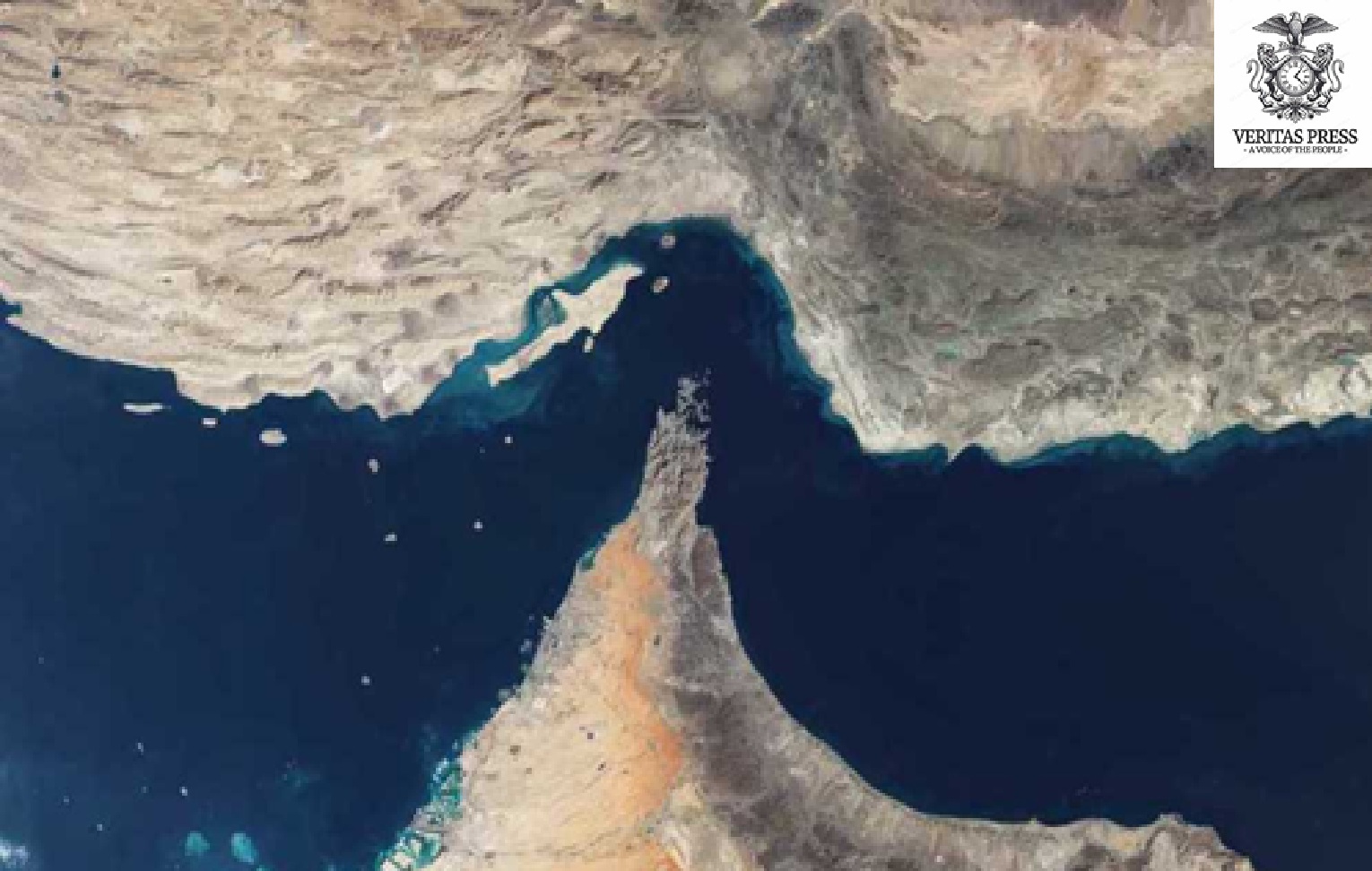
MUSCAT, OMAN / BANDAR ABBAS, IRAN — In the gilded corridors of a palace in Muscat this week, behind closed doors and far from the gaze of warships massing in the Gulf of Oman, Iranian and Omani jurists and diplomats sat across a polished table to discuss a question that now haunts every energy ministry, shipping insurer, and naval command on earth: who, if anyone, controls the Strait of Hormuz?
The answer, three months into a spiralling military confrontation between Iran and a US-Israeli coalition, is no longer an academic exercise in maritime law. It has become a live, combustible reality. And the meeting in Muscat, held amid a near-total collapse of commercial transit, tit-for-tat blockades, and Tehran’s dramatic unilateral expansion of its operational boundaries, reveals that the very legal architecture governing the waterway is being rewritten in real time, with profound consequences for global security.
This investigation, based on statements from Iranian and Omani officials, shipping data, legal experts, and local sources on both sides of the strait, exposes a chokepoint descending into legal grey zones and militarised ambiguity. While the Muscat talks were officially described as “technical and legal consultations on sovereign rights and safe passage,” they arrived at the precise moment when Iran had, for the first time, asserted a radically expanded definition of the strait and begun enforcing a de facto closure against any vessel deemed hostile. The question now is whether Muscat’s quiet diplomacy can preserve a framework for international shipping, or whether the strait has become a permanent fault line of the new world disorder.
The Muscat Meeting: Law As A Weapon.
The Iranian delegation, led by Abbas Baqerpour, Director-General for International Legal Affairs at Iran’s Foreign Ministry, and including representatives from the Islamic Republic of Iran Navy and the Islamic Revolution Guards Corps (IRGC) Navy, met with Omani counterparts on Tuesday, May 12. The agenda: “arrangements for the safe passage of ships” and reaffirmation of “sovereign rights and jurisdictions over the strait.” The meeting was followed by separate talks with Omani Foreign Minister Badr bin Hamad Al Busaidi and, crucially, International Maritime Organisation (IMO) Secretary-General Arsenio Dominguez, who happened to be in Oman at the same time.
Oman’s state news agency issued a careful, understated readout, noting only the “exchange of views on maritime cooperation.” But sources with knowledge of the talks, who spoke on condition of anonymity because of the sensitivity of the discussions, said the atmosphere was tense. Tehran is seeking Omani recognition, or at least tacit acceptance, of its newly declared control regime. Muscat, which has long prided itself on being the region’s quiet mediator, is walking a razor’s edge.
“We have always believed the strait is a shared responsibility, a shared sovereignty,” a senior Omani diplomatic source told this investigation. “But when one side begins unilaterally redrawing the map and enforcing rules through naval guns, the word ‘shared’ loses its meaning. We are in uncharted waters, legally and literally.”
The IMO’s presence adds another layer. Dominguez, whose organisation is charged with ensuring the safety and security of global shipping, has so far avoided public comment on the legality of Iran’s actions. But shipping industry representatives in London and Dubai told this reporter that the IMO is deeply alarmed. “Dominguez is hearing two completely incompatible versions of reality,” said a senior official at the International Chamber of Shipping (ICS). “On the one side, Iran says it is providing safe passage to compliant vessels. On the other hand, the United States says it is intercepting ships at gunpoint and threatening to sink any vessel approaching Iranian ports. The legal void is absolute, and it’s the seafarers who pay the price.”
The Crescent Doctrine: How Iran Redefined The Strait of Hormuz.
Days before the Muscat meeting, Brigadier General Mohammad Akbarzadeh, political deputy to the IRGC Navy commander, delivered a speech in Bandar Abbas that sent shockwaves through maritime intelligence circles. His words, largely ignored by Western media initially, were a blunt announcement of a new geographical reality, one that extends Iran’s claimed reach far beyond anything codified in international law.
“In the past, the Strait of Hormuz was defined as a limited area around islands such as Hormuz and Hengam, but today this has changed,” Akbarzadeh declared. “It has expanded from a width of 20 to 30 miles in the past to over 200 to 300 miles, that is, 500 kilometres, from Jask and Sirik to beyond Qeshm Island and Greater Tunb. This is a complete crescent.”
What Akbarzadeh calls the “strategic zone” now encompasses not just the narrow throat of the strait, where, under the UN Convention on the Law of the Sea (UNCLOS), the territorial waters of Iran and Oman abut or overlap, leaving no high-seas corridor, but the broader approaches in the Gulf of Oman and the northern Arabian Sea. It is a claim that effectively pushes Iran’s operational boundary to the edge of the Indian Ocean.
Legal experts are withering in their assessment. “This ‘crescent’ has no basis in the law of the sea,” said Dr. James Kraska, professor of international maritime law at the US Naval War College, in a phone interview. “Territorial sea claims under UNCLOS are limited to 12 nautical miles from the baseline. Even if Iran, which signed but never ratified UNCLOS, argues it is entitled to a contiguous zone or exclusive economic zone, the right of transit passage through straits used for international navigation cannot be impeded. What Iran is describing is an attempt to assert a de facto sovereignty over an area of ocean larger than some small nations. It’s a claim of maritime empire, not a legal argument.”
Yet Iranian officials have been relentless. They point to what they describe as the “illegal war of aggression” launched by the United States and Israel in early March, following a series of covert operations and airstrikes on Iranian nuclear and military infrastructure. In Tehran’s telling, the expansion is a necessary defensive measure. “The enemy has blockaded our ports, fired on our merchant vessels, and attempted to choke our economy. In response, we have no choice but to secure our strategic depth,” said a senior IRGC Navy officer, who briefed journalists in Tehran on condition he not be named.
The Great Chokepoint Shutdown: Near-Zero Transit And A World On Edge.
Whether justified or not, the practical effect has been seismic. Multiple shipping trackers and insurance sources confirm that commercial traffic through the Strait of Hormuz, the conduit for roughly one-fifth of global oil and gas trade, has collapsed to levels not seen since the Tanker War of the 1980s. As of mid-May 2026, average daily transits of oil tankers are down more than 95% compared with the same period in 2025. Satellite data analysed by Lloyd’s List Intelligence shows a graveyard of idling VLCCs (Very Large Crude Carriers) anchored off Fujairah, Sohar, and Duqm, while dozens more have rerouted around the Cape of Good Hope at immense cost.
“The strait is not technically ‘closed’ in the sense of mines blocking the waterway, but it is commercially closed,” said Richard Meade, editor-in-chief of Lloyd’s List Maritime Intelligence, by video link from London. “No responsible operator will send a fully laden tanker through a zone where two major military powers are running a double blockade, where you might be challenged by an IRGC speedboat one moment and a US destroyer the next, and where the legal framework governing your passage changes depending on whose guns are trained on you.”
Iran insists it is not blocking all shipping, only “hostile” vessels. IRGC naval commanders say they have established a system of coordination: any tanker or cargo ship wishing to transit must contact Iranian naval authorities, declare its destination and cargo, and submit to inspection if so ordered. Vessels from “friendly” nations, notably Iraq and Qatar, have been allowed to pass after complying with these new rules. In recent days, a second Qatari LNG tanker successfully navigated the strait under Iranian escort, a development trumpeted by Tehran as evidence that normal trade can continue.
Iraq, which relies on the strait for its crude exports, has been forced into an awkward dance. “We are coordinating with Iran constantly,” a senior Iraqi oil ministry official told this reporter in Baghdad. “But this is not a normal arrangement. We have had tankers delayed, boarded, and diverted. The phrase ‘safe passage’ has become a daily negotiation.”
For everyone else, the Strait is a no-go zone. The US Navy’s 5th Fleet, operating from Bahrain and supplemented by carrier strike groups in the Arabian Sea, has been enforcing what Washington calls a “maritime interdiction operation” to prevent weapons and sanctioned goods from reaching Iran, and to choke its oil exports. Dozens of vessels suspected of carrying Iranian crude have been turned back, seized, or fired upon. Multiple shipowners, speaking on condition of anonymity, described a climate of fear: vessels switch off AIS transponders to “go dark,” hoping to slip past US patrols, only to risk being mistaken for hostile by Iranian forces. In at least three incidents since early April, commercial ships have been struck by gunfire or warning shots, and several seafarers have been injured.
“The Americans say it’s a blockade on Iran; Iran says it’s a blockade on global shipping in retaliation. The result is the same: no one moves,” said a Greek shipping magnate whose tankers have been trapped in the Gulf for weeks. “I have 23 crew on board a VLCC off Khor Fakkan, and I can’t tell them with any certainty if they will be safe if they try to go home. This is not maritime security; this is madness.”
Oman’s Impossible Balancing Act:
For the Sultanate of Oman, the crisis is existential. Oman sits on the other side of the strait’s narrows, with its tiny exclave of Musandam jutting into the waterway. Omani officials have watched with mounting alarm as the IRGC’s “crescent” laps against their own shores. Muscat has traditionally defended the principle that the strait’s overlapping territorial seas must be jointly managed, and has long called for demilitarisation of the chokepoint. But Iran’s new posture renders that cooperation almost impossible.
“Oman is caught between a rock and a very hard place,” said Dr. Abdulkhaleq Abdulla, a UAE-based political analyst who has studied Gulf security for decades. “They cannot afford to antagonise Iran, with whom they have deep energy and security ties. But they also cannot endorse an Iranian zone of control that swallows Omani sovereignty and turns the strait into a Persian lake. The meeting was a desperate attempt to find a middle path, and to remind the world that Oman still has a seat at the table.”
Omani Foreign Minister Al Busaidi, in a brief statement after meeting the Iranian delegation, emphasised “the importance of dialogue and respect for international norms.” Behind the diplomatic language, however, Muscat is urgently pressing for some form of de-escalation mechanism. According to a European diplomat stationed in the Gulf, Oman has floated the idea of a joint civilian maritime coordination centre, perhaps under IMO auspices, that would handle transit requests and verify compliance, a buffer between the warring parties. But the details remain elusive.
Locals in the Musandam Peninsula, where fishing communities once watched supertankers glide past their dhows, now speak of a profound unease. “We hear the naval helicopters at night, and sometimes see drones overhead,” said Ahmed al-Shehhi, a boat captain in Khasab. “The sea used to be our livelihood; now it feels like a frontier. Nobody knows where the line is anymore.”
The IMO’s Dilemma: Words Without Teeth.
The involvement of IMO Secretary-General Dominguez in the Muscat talks marks a rare direct intervention by the UN agency. Dominguez, who previously served as Panama’s maritime authority head, is known as a pragmatist. But the IMO has no enforcement powers; it can only recommend, urge, and coordinate. After meeting the Iranian delegation, Dominguez issued a short statement saying he “took note of the concerns raised and reiterated the imperative of preserving the safety of life at sea and the freedom of navigation.”
Behind the scenes, the IMO is reportedly considering convening an emergency session of its Maritime Safety Committee to address the Hormuz crisis, but such a move would require consensus among members that include the US, Iran, and Israel, a near impossibility. “The IMO is being dragged into a geopolitical firestorm with a water pistol,” an agency insider told this reporter.
Civil society and human rights organisations are increasingly vocal. Amnesty International and Human Rights Watch have documented cases of crew members detained by both sides, while environmental groups warn that a major oil spill in the narrow channel could be catastrophic. “We are one misstep away from an Exxon Valdez times ten,” said Fatima Al-Abdulrazzaq, a Gulf-based marine ecologist and activist. “The geopolitics has completely ignored the ecosystems and coastal communities that would bear the brunt.”
The Legal Abyss And The Shadow Of War:
The Muscat talks reveal the deepening legal chasm at the heart of the crisis. Both Iran and Oman emphasised their sovereign rights and jurisdictions over the strait, viewing it as part of their territorial waters. Under UNCLOS, a coastal state may regulate innocent passage in its territorial sea, but international straits are subject to a more robust right of “transit passage” that cannot be suspended. Yet Iran has not ratified UNCLOS, and its legal team has long argued that it only applies to “the extent that it reflects customary international law.” The US, likewise, has never ratified UNCLOS, creating a situation where the two main antagonists are operating from distinct and incompatible legal frameworks.
“What we are witnessing is not a series of violations of the law of the sea, but the complete unravelling of it,” said Dr. Nilufer Oral, a member of the International Law Commission and leading expert on the law of the sea, during a recent webinar on the crisis. “When a state asserts a 200-mile operational zone, board vessels on the high seas, and justifies it by a purported state of war, the rule-based order has already failed. We are operating in a pre-law-of-the-sea world now.”
Iranian officials, by contrast, insist that their actions are fully consistent with the right of self-defence under the UN Charter. “If the strait is being used to send weapons and economic strangulation against us, we have every right to interdict that traffic,” said Foreign Ministry legal adviser Baqerpour in a televised interview after the Muscat meeting. “The age of unilateral Western dictates is over.”
Global Fallout: Energy Markets And The Spectre Of Escalation.
The implications of the Hormuz standoff are rippling across the global economy. Brent crude futures spiked to 134 per barrel this week be foresettling around 128, as traders priced in a prolonged disruption. The International Energy Agency has activated emergency stock releases, but analysts say these are band-aid solutions. “If the strait remains effectively closed for another month, we will see genuine shortages, not just price volatility,” warned Dr. Sara Vakhshouri, president of SVB Energy International.
The US-Israeli campaign, described by President Mark Green as a “necessary operation to prevent a nuclear Iran,” has found itself in a deadlock few predicted. The blockade has not brought Tehran to its knees; instead, Iran has pivoted to land routes through Pakistan and the Caucasus, and accelerated smuggling via shadow fleets. Washington’s latest effort to target a China-Iran network accused of moving crude through front companies has further entangled Beijing, which has called for restraint but has been unwilling to confront Tehran directly.
Israeli officials, meanwhile, have maintained a steady drumbeat of warnings. “The Strait of Hormuz must remain open to international shipping, and any claim by Iran to unilaterally control it is an act of war against the global community,” said a spokesperson for the Israeli Prime Minister’s office. Yet Israel has limited naval capacity to project force so far from its shores, relying instead on its alliance with Washington and its developing ties with Gulf Arab states, a relationship under tremendous strain due to the crisis.
Voices From The Ground: The Locals Caught In The Middle.
In the Iranian coastal towns of Jask and Sirik, now the westernmost edge of the IRGC’s operational crescent, residents describe an atmosphere of tense patriotism mixed with fear. “We support our defenders, but the economic hardship is severe,” said a local shopkeeper in Jask, who would not give his name. “The sea was our second home; now it is a battlefield.” Fishermen complain their boats are restricted or commandeered for patrol duties. Activists outside Iran, such as the London-based Justice for Iran, allege that the Revolutionary Guards are using the crisis to tighten their grip on coastal communities and silence dissent.
On the Omani side, in the rocky villages of Musandam, the mood is one of quiet dread. “We are not at war, but we feel its shadow every day,” said Fatima al-Balushi, a schoolteacher in Dibba. “Our children ask about the warships and the black smoke on the horizon. What do we tell them?”
A Prelude To Permanent Change?
As the Muscat meeting concluded with handshakes and pledges to continue consultations, the larger question hung unanswered: can the Strait of Hormuz ever return to being a predictable, rules-based artery of global trade? Or has the confluence of war, blockade, and a revolutionary redefinition of sovereignty ended that era forever?
Experts are gloomy. “We are looking at a potential paradigm shift where chokepoints are no longer international commons but instruments of national power,” said Dr. Kraska. “If Iran’s ‘crescent doctrine’ stands, even implicitly, other states will follow, the South China Sea, the Bab el-Mandeb, the Turkish Straits. It would be the end of the maritime order built over the last seventy years.”
Back in the Muscat meeting room, the Iranian legal team packed their briefcases and prepared to fly home, their Omani hosts seeing them off with courteous smiles. Outside, on the shimmering waters of the Gulf of Oman, a lonely Iranian patrol boat cut through the swell, its crew scanning for any echo on the radar that might be a tanker, friend or foe.
The lights of supertankers no longer illuminate the night off Musandam. For now, the strait is dark, silent, and claimed by many but mastered by none. And the world holds its breath, waiting for the next ship to move.
Source: Multiple News Agencies
Submissions:
For The Secure Submission Of Documentation, Testimonies, Or Exclusive Investigative Reports From Any Global Location, Please Utilise The Following Contact Details For Our Investigations Desk: enquiries@veritaspress.co.uk or editor@veritaspress.co.uk
Help Support Our Work:
Popular Information is powered by readers who believe that truth still matters. When just a few more people step up to support this work, it means more lies exposed, more corruption uncovered, and more accountability where it’s long overdue.
Help Protect Independent Journalism, Which Is Currently Under Attack.
If you believe journalism should serve the public, not the powerful, and you’re in a position to help, becoming a DONATOR or a PAID SUBSCRIBER truly makes a difference.
DONATION APPEAL: If You Found This Reporting Valuable, Please Consider Supporting Independent Journalism.
Help Support Our Work – We Know, We Know, We Know …
Seeing these messages is annoying. We know that. (Imagine what it’s like writing them … )
Your support fuels our fearless, truth-driven journalism. In unity, we endeavour to amplify marginalised voices and champion justice, irrespective of geographical location.
But it’s also extremely important. One of Veritas Press’s greatest assets is its reader-funded model.
1. Reader funding means we can cover what we like. We’re not beholden to the political whims of a billionaire owner. We are a small, independent and impartial organisation. No one can tell us what not to say or what not to report.
2. Reader funding means we don’t have to chase clicks and traffic. We’re not desperately seeking your attention for its own sake: we pursue the stories that our editorial team deems important and believe are worthy of your time.
3. Reader Funding: enables us to keep our website and other social media channels open, allowing as many people as possible to access quality journalism from around the world, particularly those in places where the free press is under threat.
We know not everyone can afford to pay for news, but if you’ve been meaning to support us, now’s the time.
Your donation goes a long way. It helps us:
- Keep the lights on and sustain our day-to-day operations
- Hire new, talented independent reporters
- Launch real-time live debates, community-focused shows, and on-the-ground reporting
- Cover the issues that matter most to our communities, in real time, with depth and integrity
We have plans to expand our work, but we can’t do it without your support. Every contribution, no matter the size, helps us stay independent and build a truly people-powered media platform.
If you believe in journalism that informs, empowers, and reflects the communities we serve, please donate today.
Donate Today:
GENEVA — A United Nations fact-finding mission has concluded there are “reasonable grounds to believe”
Iran’s GDP is projected to contract by 5.4 to 6.1% in 2026, its worst performance
The Trump administration is preparing a $2.8 billion weapons package for Israel containing 40,000 2,000-pound

Film alleges mass civilian deaths are routinely built into military decisions amid Israel’s genocidal war
The Israeli rights group says violence, displacement, economic strangulation, and settlement expansion form part of

Houthi forces have captured the historic Red Sea port of Mocha and are advancing on
London’s historic sanctions against Israeli settlements mark a watershed moment in UK foreign policy, but
With 95% of Gaza’s population now wholly dependent on aid and more than 90% stripped
India calls for Kashmir and Ladakh to appear only on its official map after a
ISLAMABAD – In the high-stakes political theatre of Pakistan, the battleground has shifted from the