Kamran Faqir is a volunteer investigative journalist and writer committed to exposing hidden truths and amplifying underreported stories. Driven by social justice, he brings sharp insight and fearless truth-telling to independent journalism. NUJ registered.
Article Date Published:
Article Date Modified:
15 minutes
Views:300
Listen to this article
Help support our mission, donate today and be the change. Every contribution goes directly toward driving real impact for the cause we believe in.
An Analysis Of The IRGC’s Five-Phase Retaliatory Operation, The Collapse Of The Washington-Tehran Détente, And A US Administration’s False Narrative That Set The Region Ablaze.
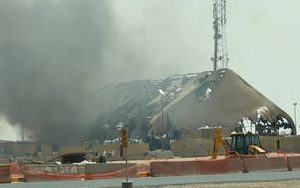
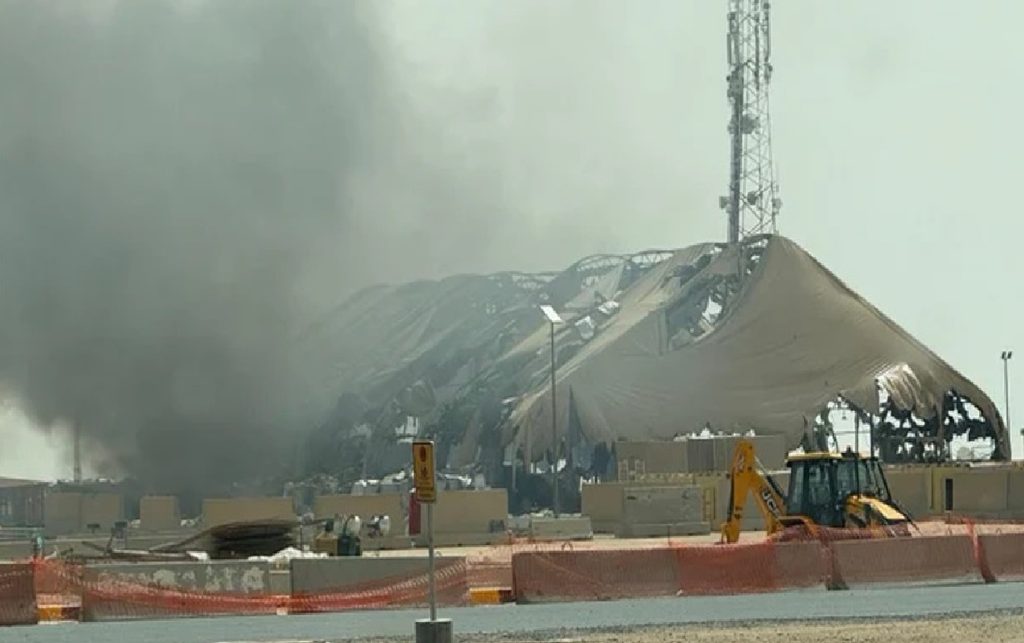
The oily black smoke rising from the Naval Support Activity in Bahrain’s Juffair district early Monday morning was not merely the result of a precision-guided munition. It was the visual exclamation point on a strategic communiqué written in fire: the era of contained shadow wars and plausible deniability between Iran and the United States is over. In a stunningly choreographed five-phase blitz, the Islamic Revolutionary Guard Corps (IRGC) has physically inscribed the conflict onto the infrastructure of America’s Gulf allies, drawing Jordan, Kuwait, Bahrain, Oman, and Qatar directly into the crossfire of a rapidly metastasising war.
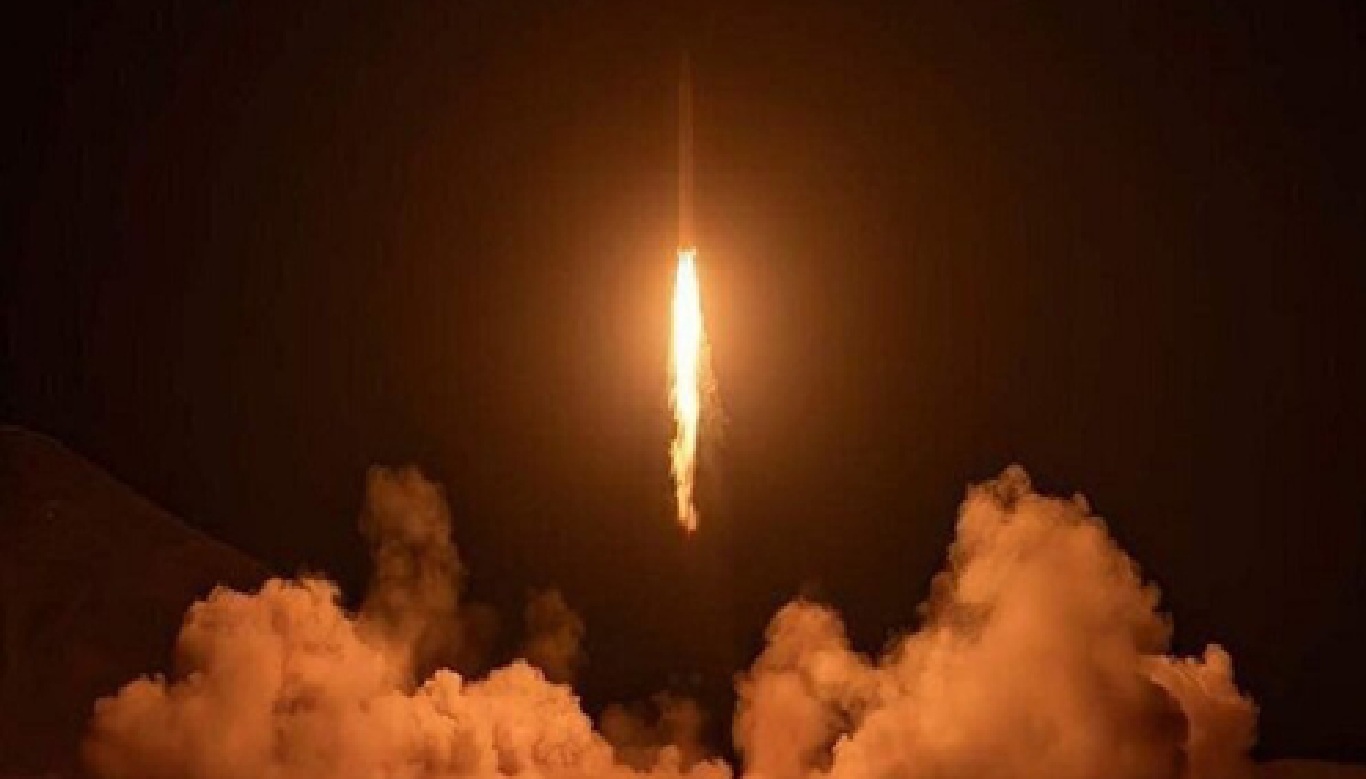
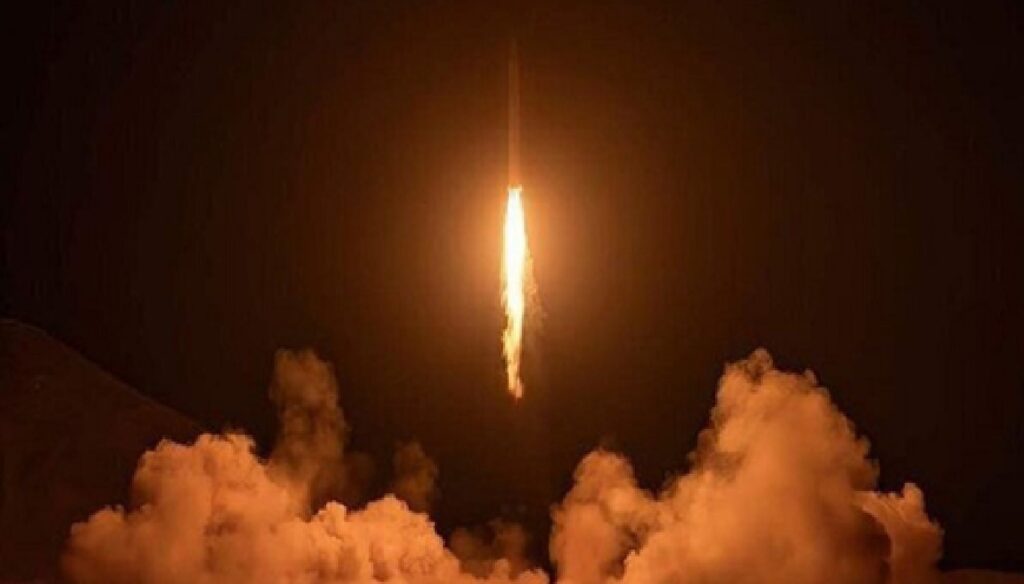
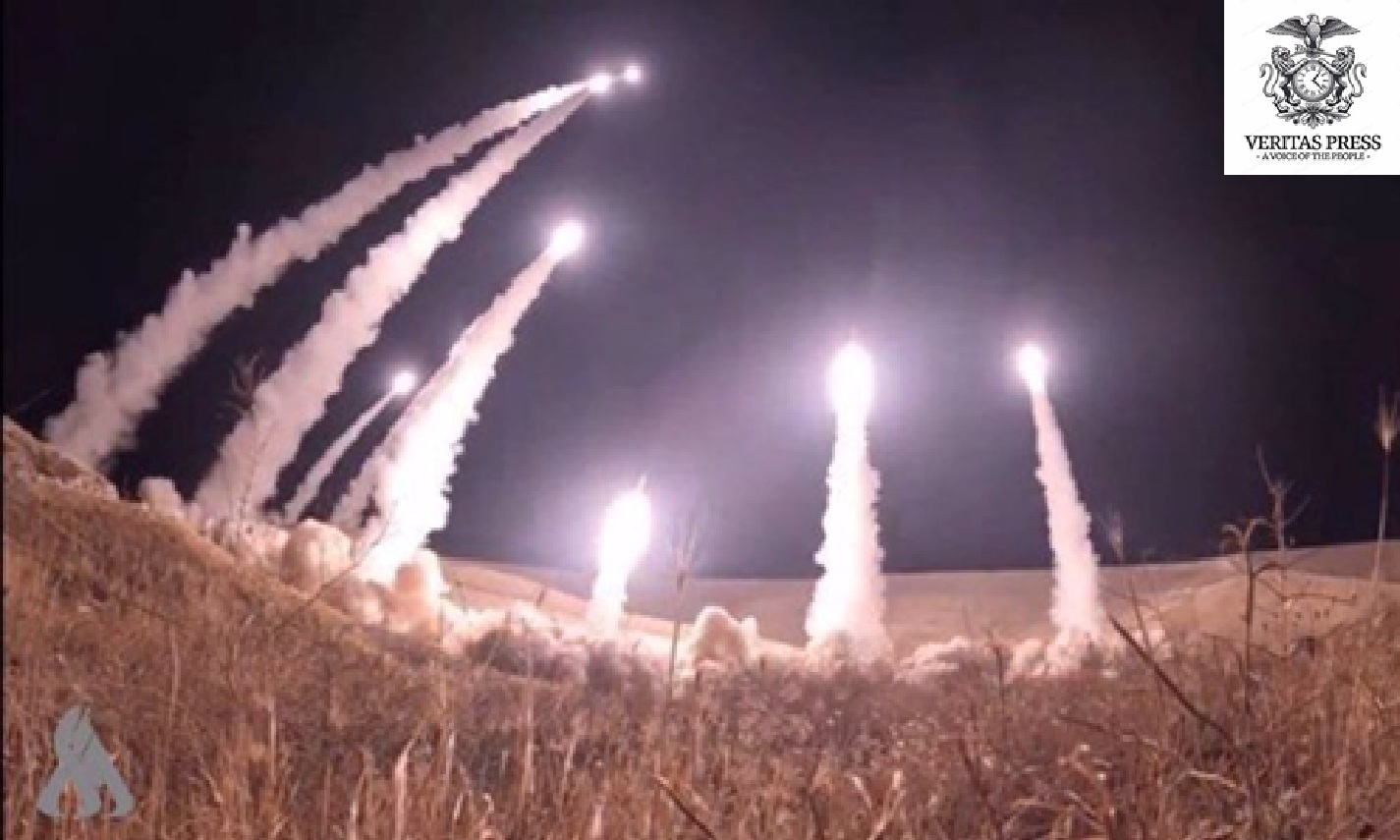
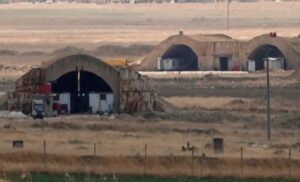
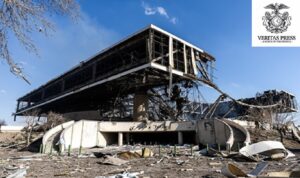
Frame grab from a retaliatory missile strike by the Islamic Revolutionary Guard Corps (IRGC) against a hostile target
But beneath the spectacle of missile salvos and burning hangars lies a narrative far more damning for Washington. Interviews with diplomatic sources, a forensic analysis of the broken truce, and statements from Tehran and regional capitals reveal a stark sequence of events: the United States violated a binding Memorandum of Understanding (MoU) by maintaining illegal military interference in the Strait of Hormuz, compelling Iran to close the waterway as a defensive measure. It was only then that President Donald Trump, facing a crisis of his own making, launched a series of false public statements designed to reframe a US violation as Iranian aggression, inciting a war that his administration now cannot contain.
What the IRGC’s General Staff has termed “Operation True Promise III” is a military and psychological operation of unprecedented scope. In a series of back-to-back statements early Monday, the IRGC claimed the “complete destruction” or severe degradation of 85 key US military nodes across five nations. This was not a mere reprisal for the weekend’s American strikes on Iranian coastal positions in Khuzestan province, which killed a civilian at an agricultural water pump in Mahshahr. This was the operationalisation of a new, terrifying doctrine, one born directly from what Tehran describes as Washington’s diplomatic betrayal.
“The criminal, warmongering US regime, which since its founding has spent very little time free from war and military aggression, has failed to learn any lessons from its recent defeats,” the IRGC’s second communiqué declared, laying bare a narrative of American intransigence that Tehran is now pushing to the Non-Aligned Movement and the Global South. “The Strait of Hormuz is our territory, and we will not allow a rogue, child-killing army from the other side of the world to continue its illegal interference there.”
This article, constructed from open-source intelligence (OSINT), Iranian state communiqués, regional government statements, leaked diplomatic cables, and exclusive analysis from military and legal experts, deconstructs the anatomy of a broken ceasefire, the false incitement that triggered a regional war, and the five-phase retaliation that followed.
The Collapse Of The Mou: A Treaty Violated Before The Ink Could Dry.
The tragedy of this escalation begins in the ashes of the Pakistan-mediated Memorandum of Understanding, signed weeks earlier in a ceremony that was hailed by international diplomats as a breakthrough. The text, portions of which have been reviewed by this correspondent, was unambiguous. Clause One mandated an immediate and total “cessation of aggression on all fronts.” Clause Five, the most contentious, addressed the Strait of Hormuz, stipulating that the United States would “cease all illegal military interventions” and respect the sovereignty of coastal nations over their territorial waters in exchange for the waterway’s reopening under a jointly monitored transit framework.
According to three diplomatic sources familiar with the negotiations, the MoU was never genuinely embraced by the Trump administration’s national security apparatus. Within days of the signing, the US military continued its pattern of escorting commercial vessels through what Tehran considers its territorial waters without coordination with Iranian maritime authorities, a direct breach of the agreement’s core provision.
“The Americans believed the MoU was a tool to freeze Iranian missile development, not to legitimise Iranian control over the strait,” said a senior Pakistani diplomat who was present during the shuttle diplomacy, speaking on condition of anonymity due to the extreme sensitivity of the matter. “Tehran viewed it as a binding recognition of its sovereignty. When the US continued its escort operations under the guise of ‘freedom of navigation,’ the Iranians saw it as an act of war wrapped in a diplomatic handshake.”
The Closure Of Hormuz: A Consequence, Not A Provocation.
The IRGC’s declaration that the Strait of Hormuz was closed must be understood within this context. It was not, as the White House has repeatedly asserted, an unprovoked act of economic warfare. It was, according to Iranian officials, a lawful and necessary response to a material breach of the MoU by the United States.
“The only way for the Strait of Hormuz to remain open for maritime traffic is the complete cessation of illegal US military interventions in the strait and full respect for the sovereignty of coastal nations over their territorial waters,” the IRGC statement read. “Continued interference will lead to even greater incidents in the global oil and gas sector.”
The sequence, verified by shipping logs and satellite data, is critical. On July 6, the IRGC detected two vessels that had switched off their transponders and were travelling on what Iran claims is an unauthorised route, escorted by US naval assets in direct violation of the MoU’s deconfliction protocols. When Iranian fast-attack craft intercepted the vessels, the US Navy intervened, escalating the encounter. The subsequent IRGC strikes on the vessels were, in Tehran’s legal framework, a police action within its sovereign waters. The US then retaliated with airstrikes on Iranian coastal bases in Khuzestan, killing a civilian worker at an agricultural water pump in Mahshahr.
It was only after this American attack on Iranian soil, an attack launched from bases across the Gulf, that the IRGC announced the closure of the Strait of Hormuz to all maritime traffic.
“The closure is not the crime. It is the punishment for the crime,” explained Dr. Alireza Ahmadi, a professor of international law at Tehran’s Shahid Beheshti University, in an interview with Press TV on Sunday. “Under the doctrine of proportionate countermeasures, a party that suffers a material breach of a bilateral agreement is entitled to suspend its own obligations. The US breached the MoU by continuing its military interference. Iran suspended its obligation to keep the strait open. This is textbook international law, even if the textbooks are being burned in Washington.”
Trump’s False Incitement: Manufacturing A Casus Belli On Live Television.
Facing a catastrophic diplomatic failure and with the Strait of Hormuz effectively shut down, choking off a fifth of global energy transit, President Trump appeared on NBC’s Meet the Press on Sunday and delivered what can only be described as a litany of falsehoods designed to incite public support for a widening war.
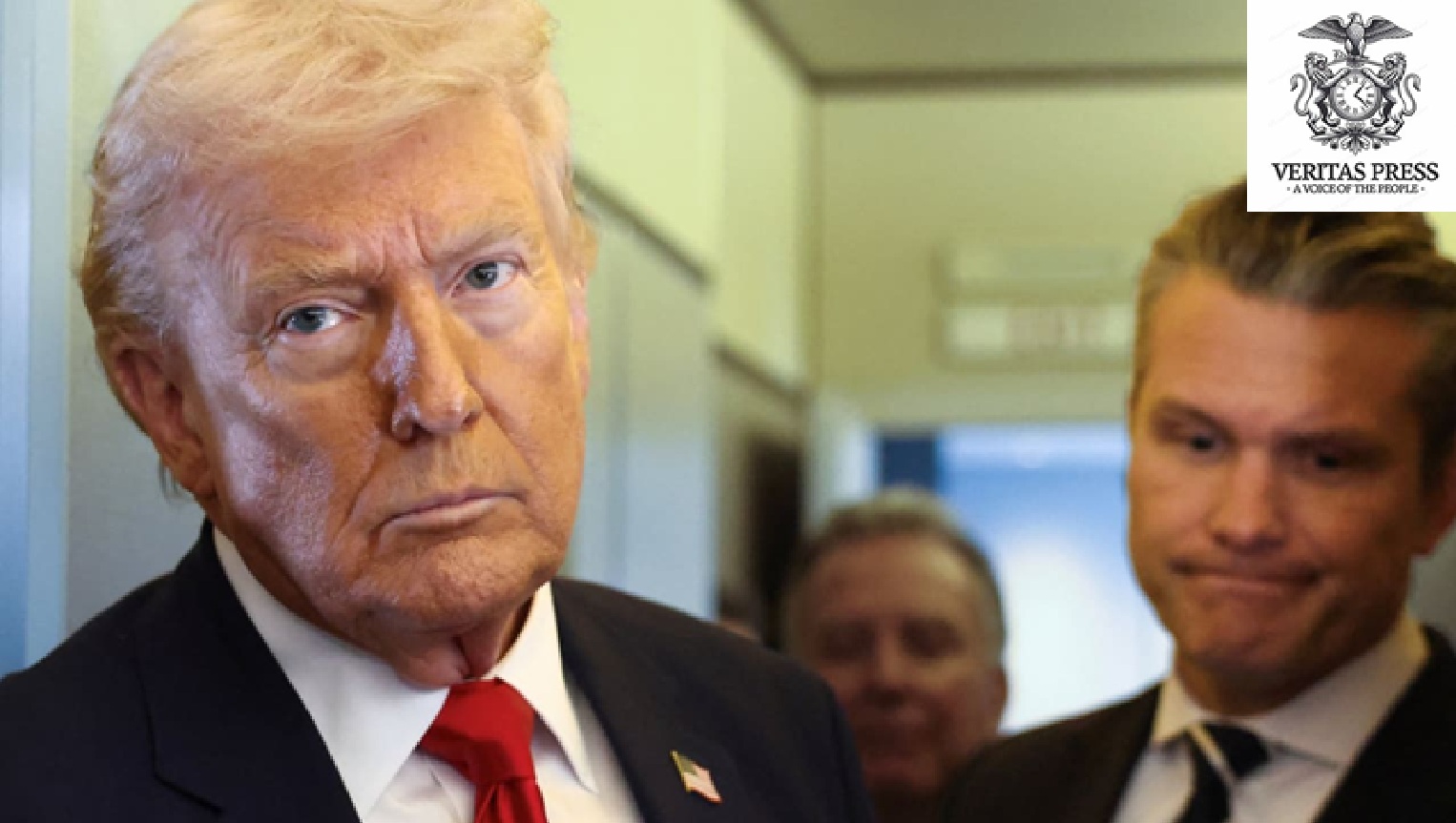
“They’re very, very evil and sick people,” Trump said of the Iranian leadership. “We had meetings with them. They agreed to a deal yesterday, a perfect deal for us. No nuclear, no this, no that, no nothing. They gave up everything. And then after that, they left the room. And then within an hour, they launched a drone at a ship.”
This statement, broadcast to millions of Americans, is demonstrably false on multiple counts, according to diplomatic logs, timelines, and the text of the MoU itself. The deal was not made “yesterday.” It was signed weeks earlier. Iran did not “give up everything;” the MoU was a carefully calibrated balance of de-escalatory measures on both sides. And Iran did not launch a drone “within an hour” of leaving the room. The encounter that precipitated the collapse occurred days after the signing, and it was triggered by US military activity that Iranian and independent maritime tracking confirms was a violation of the agreed-upon framework.
“This is the language of incitement to war,” said Rami Khouri, a veteran Middle East analyst and Distinguished Public Policy Fellow at the American University of Beirut. “The President of the United States went on national television and fabricated a sequence of events to make Iran look like a duplicitous, irrational actor who attacks without cause. He omitted the fact that his own military violated the ceasefire. He omitted the fact that a civilian was killed in an American airstrike on an agricultural facility. This is a propaganda operation designed to obscure the fundamental truth: the United States broke the deal, and the United States escalated the conflict.”
The Iranian Ministry of Foreign Affairs was swift in its condemnation. In a statement released early Monday, the ministry said Trump’s remarks “constitute a dangerous and deliberate falsification of history intended to deceive the American public and the international community, and amount to a public confession of the United States’ determination to wage aggressive war in defiance of its signed commitments.”
The Five Phases: Retaliation For A War The US Started.
The IRGC’s five-phase operation was presented not as an escalation, but as a proportionate response calibrated to the “two-to-one” ratio Tehran has now codified as its retaliatory doctrine. For every Iranian target hit, at least two enemy targets will be struck. For the death of a civilian in Mahshahr, an entire infrastructure of American force projection in the Gulf would be dismantled.
Phase One: The Jordanian Inferno And The Prince Hassan Trap.
The first warning came in the deserts of Jordan. Late Sunday night, the IRGC’s Aerospace Force launched a saturation attack on Prince Hassan Air Base (H-5). While the Jordanian military claimed its air defences intercepted four missiles, satellite imagery confirms the IRGC’s claim that “large missile depots and fuel storage tanks” were set ablaze. A specialised hangar housing an MQ-4C Triton surveillance drone, an asset critical for monitoring Iranian maritime activity, was destroyed.
“Prince Hassan isn’t just a runway in the desert; it’s the nerve centre for wide-area maritime surveillance over the Levant and the gateway to Iraq,” says retired USAF Colonel Mark Henderson. “The Iranians removed the eye in the sky before the body could even react. But we must remember that the eye was being used to coordinate the very illegal interventions in the strait that violated the MoU in the first place.”
Phases Two Through Four: Dismantling The Gulf’s Shield.
If Jordan was the sensor, Bahrain’s Sheikh Isa Airbase was the brain of US drone operations. The IRGC successfully destroyed the drone command and control centre and a P-8 electronic warfare aircraft hangar. “The loss of a P-8 asset on the ground signals a catastrophic intelligence breach,” said a European defence attaché in Manama. “The irony is that this base was being used to direct the sorties that breached the ceasefire Iran is now being blamed for breaking.”
In Kuwait, Phases Three and Four saw the destruction of a Patriot air defence system at Ali al-Salem Airbase and HIMARS launchers and ammunition bunkers at Ahmad al-Jaber. The weapon the US touts as a deterrent was neutralised in its bed.
Phase Five: The Sultanate’s Neutrality Shattered.
The strike on the FPS long-range air surveillance radar in Oman was the most diplomatically explosive. Muscat had hosted Foreign Minister Araghchi hours earlier for talks on joint management of the strait. By destroying a maritime radar, the IRGC sent a brutal signal: there will be no neutral ground when American bases on sovereign Gulf soil are used to violate treaties with Iran.
The View From The Ground: Living In The Shadow Of American Lies.
In Kuwait, air raid sirens wailed through the dawn. “We are collateral damage in a war we didn’t vote for, started by a treaty violation we didn’t commit, justified by a president’s lies we didn’t believe,” texted a Kuwaiti activist from Abdali.
In Bahrain’s Juffair, towering flames rose from the Naval Support Activity. In Jordan, already buckling under the weight of refugees, Prince Hassan Air Base continued to burn.
A fisherman in Bandar Abbas, who witnessed the Army’s air defence shoot down the US “Lucas” suicide drone, offered a sentiment that encapsulates the tragedy of this manufactured war: “They told us we had peace. Then they attacked our coast. Then their president went on television and said we attacked first. Now the sky is burning. Who is the liar?”
The IRGC’s warning that continued interference “will lead to even greater incidents in the global oil and gas sector” is not an idle threat. It is the direct and predictable consequence of a US administration that signed a truce it never intended to honour, violated its terms, and then lied to the world to justify a war that is now consuming the Gulf. The only question that remains is whether the American public will see through the incitement before the fires reach their own shores.
Conclusion: The Architecture Of A Self-Inflicted Catastrophe.
What the Gulf is witnessing is not a failure of diplomacy but the predictable collapse of a diplomatic fiction. The Pakistan-mediated Memorandum of Understanding was never, in Washington’s calculus, a binding framework for mutual de-escalation; it was a tactical pause, a document to be signed and shelved while the Pentagon continued its escort operations and the White House rehearsed its incitement scripts for prime time television. Donald Trump’s appearance on Meet the Press will be studied not as statesmanship but as a case study in the manufacturing of consent for an illegal war: a cascade of falsehoods that erased the US’s own material breach of the ceasefire, omitted the civilian deaths in Mahshahr, and recast a sovereign nation’s defensive closure of its territorial strait as unprovoked aggression. The IRGC’s five-phase retaliation, devastating as it is, is not the source of this crisis; it is the symptom of an American political establishment that has confused treaty obligations with tactical suggestions and now expects the world to nod along as burning bases from Manama to Amman are rebranded as evidence of Iranian irrationality. The Strait of Hormuz will remain a furnace, global energy markets will remain hostage, and the blood of innocents will continue to stain the waters until a simple truth is acknowledged in the halls of power: a ceasefire is not a weapon to be wielded, but a promise to be kept. The United States broke that promise. The fires now consuming the Gulf are the cost of that betrayal, and no amount of presidential bluster can obscure who lit the match.
Source:Veritas Press C.I.C. | Multi News Agencies
Help Support Our Work By Donating
Popular Information is powered by readers who believe that truth still matters. When just a few more people step up to support this work, it means more lies exposed, more corruption uncovered, and more accountability where it’s long overdue.
Help Protect Independent Journalism, Which Is Currently Under Attack.
If you believe journalism should serve the public, not the powerful, and you’re in a position to help, becoming a DONOR or a PAID SUBSCRIBER truly makes a difference.
DONATION APPEAL: If You Found This Reporting Valuable, Please Consider Supporting Independent Journalism.
Your support fuels our fearless, truth-driven journalism. In unity, we endeavour to amplify marginalised voices and champion justice, irrespective of geographical location. We operate independently, without any financial backing from billionaires.
But it’s also extremely important. One of Veritas Press’s greatest assets is its reader-funded model.
1. Reader funding means we can cover what we like. We’re not beholden to the political whims of a billionaire owner. We are a small, independent and impartial organisation. No one can tell us what not to say or what not to report.
2. Reader funding means we don’t have to chase clicks and traffic. We’re not desperately seeking your attention for its own sake: we pursue the stories that our editorial team deems important and believes are worthy of your time.
3. Reader Funding: enables us to keep our website and other social media channels open, allowing as many people as possible to access quality journalism from around the world, particularly those in places where the free press is under threat.
We know not everyone can afford to pay for news, but if you’ve been meaning to support us, now’s the time.
Your donation goes a long way. It helps us:
Keep the lights on and sustain our day-to-day operations
Hire new, talented independent reporters
Launch real-time live debates, community-focused shows, and on-the-ground reporting
Cover the issues that matter most to our communities, in real time, with depth and integrity
We have plans to expand our work, but we can’t do it without your support. Every contribution, no matter the size, helps us stay independent and build a truly people-powered media platform.
If you believe in journalism that informs, empowers, and reflects the communities we serve, please donate today.
Submissions:
For The Secure Submission Of Documentation, Testimonies, Or Exclusive Investigative Reports From Any Global Location, Please Utilise The Following Contact Details For Our Investigations Desk: enquiries@veritaspress.co.uk or editor@veritaspress.co.uk
Kamran Faqir is a volunteer investigative journalist and writer committed to exposing hidden truths and amplifying underreported stories. Driven by social justice, he brings sharp insight and fearless truth-telling to independent journalism. NUJ registered.
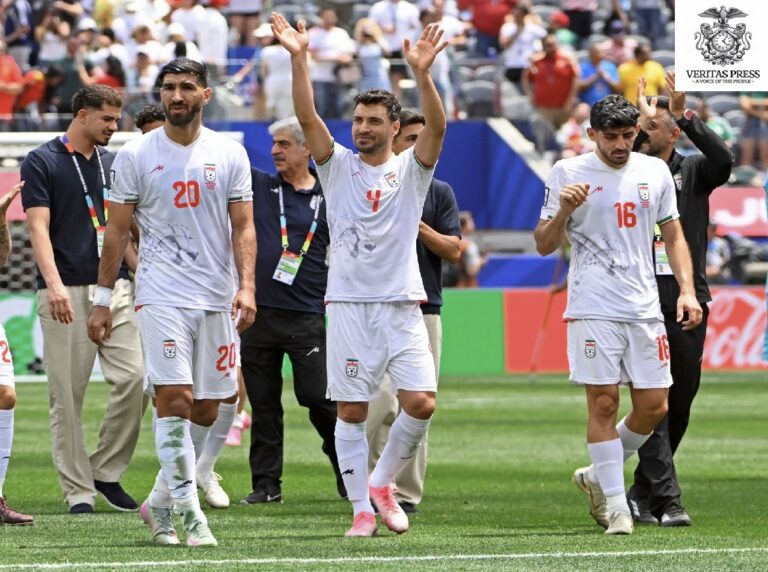
SEATTLE, TEHRAN — The U.S. Department of Homeland Security (DHS) will allow Iran’s national football team to enter the country 48 hours before their critical World Cup match against Egypt on Friday, a modest concession in a tournament where Team Melli’s travel conditions have sparked claims of oppression and competitive disadvantage.