




Author:
Byline: Investigative Desk
Help support our mission, donate today and be the change. Every contribution goes directly toward driving real impact for the cause we believe in.
Serbian Orthodox leader’s unprecedented intervention exposes the systematic erosion of Christianity’s oldest continuous community, and the silence of a world that claims to cherish the Holy Land
JERUSALEM— In the predawn darkness of October 4, an Israeli airstrike tore through a residential building in Gaza. Among the rubble, rescue workers pulled the bodies of five Palestinians, four women, two of them Christian. They were the latest casualties in a war that has claimed tens of thousands of lives, but for the tiny Christian community of Gaza, already reduced to fewer than 800 souls, each death represents an existential wound.
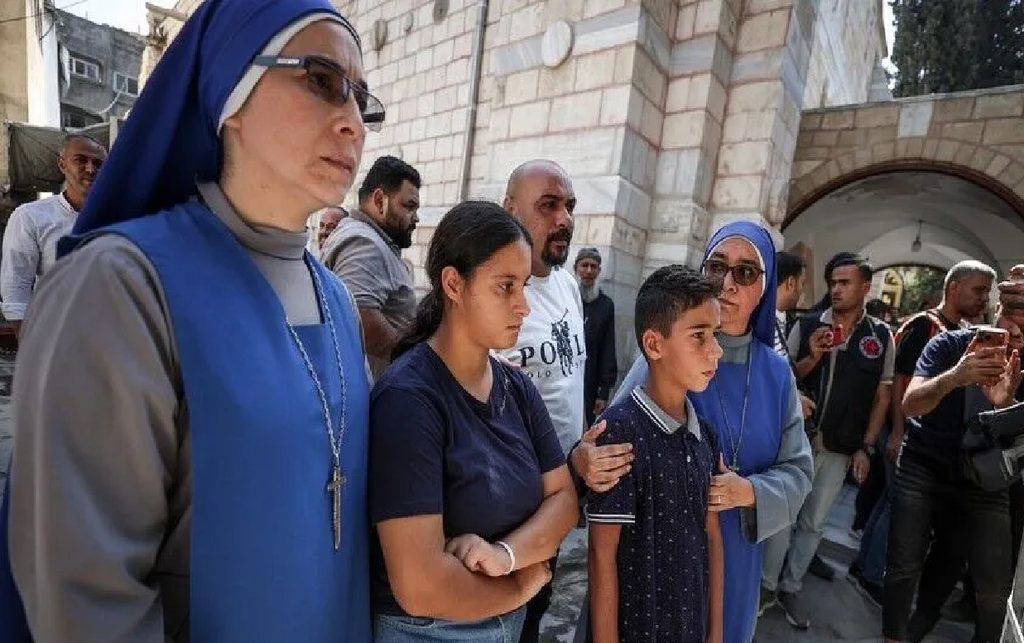
Hours later, some 1,500 miles away in Belgrade, Serbian Patriarch Porfirije sat down to write a letter that would send ripples through the global Orthodox world and lay bare a crisis that Palestinian Christians say the international community has chosen to ignore.
A Patriarch’s Warning
In a letter addressed to Ramzi Khouri, head of Palestine’s Higher Presidential Committee for Church Affairs and a member of the Palestine Liberation Organisation’s Executive Committee, the Serbian Orthodox Church leader did something rare in the annals of Orthodox diplomacy: he named the persecution directly.
“The suffering, persecution, and discrimination” facing Christians in the occupied territories, Porfirije wrote, contradicts “human dignity and fundamental principles of justice”, regardless of religious background.
But it was his historical framing that carried the most weight. Christians, he emphasised, have maintained “an uninterrupted presence in the Holy Land for more than 2,000 years.” They are not newcomers, not colonial imports, not a demographic footnote. They are the indigenous heart of a land their faith was born in.
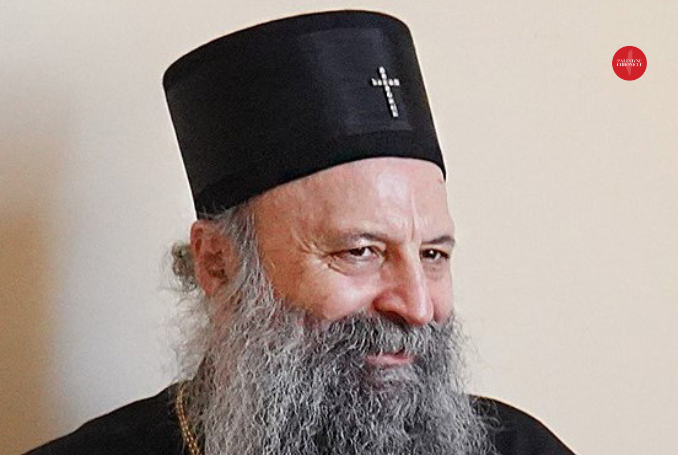
The church warned that “excluding or marginalising any religious or ethnic community risks causing irreparable damage to the region’s social and religious cohesion”, a statement that reads less than diplomatic courtesy and more as an indictment of the status quo.
The Numbers Behind The Words
The Patriarch’s letter did not emerge in a vacuum. It followed months of documentation by Palestinian institutions of what they describe as an accelerating campaign of pressure against Christian communities across the West Bank, East Jerusalem, and Gaza.
According to data cited by the Palestinian WAFA news agency in June, more than 88 incidents of attacks or harassment targeting Christians had been documented since the beginning of 2026 alone. These included spitting, verbal abuse, damage to religious symbols and cemeteries, and offensive graffiti. Many incidents were concentrated in Jerusalem’s Old City, around Mount Zion, and near the Armenian Patriarchate.
In August 2026, the Higher Presidential Committee for Church Affairs issued an urgent appeal to church leaders worldwide, reporting “violence, displacement, land confiscation, settlement expansion, restrictions on freedom of worship and difficulties accessing Christian and Muslim holy sites.” The committee specifically cited incidents involving clergy, churches, monasteries, and church property.
Among the documented cases:
- August 2026: An attack on the Armenian monastery in East Jerusalem involving stone-throwing and harassment
- June 2026: The uprooting of trees and removal of equipment from land belonging to the Greek Orthodox Patriarchate in Silwan
- Ongoing: Restrictions affecting worship, education, and access to holy sites
“These are not isolated incidents,” Khouri told The Chronicle in an exclusive interview. “They are part of a systematic effort to make life unbearable for Palestinian Christians, to force them to leave, and to erase the pluralistic character of Jerusalem and the Holy Land.”
A Community On The Brink
The statistics tell a stark story. In 1948, Christians constituted approximately 10% of the Palestinian population. Today, they represent less than 2%. In Jerusalem, the Christian population has plummeted from 20% in 1948 to less than 1% today.
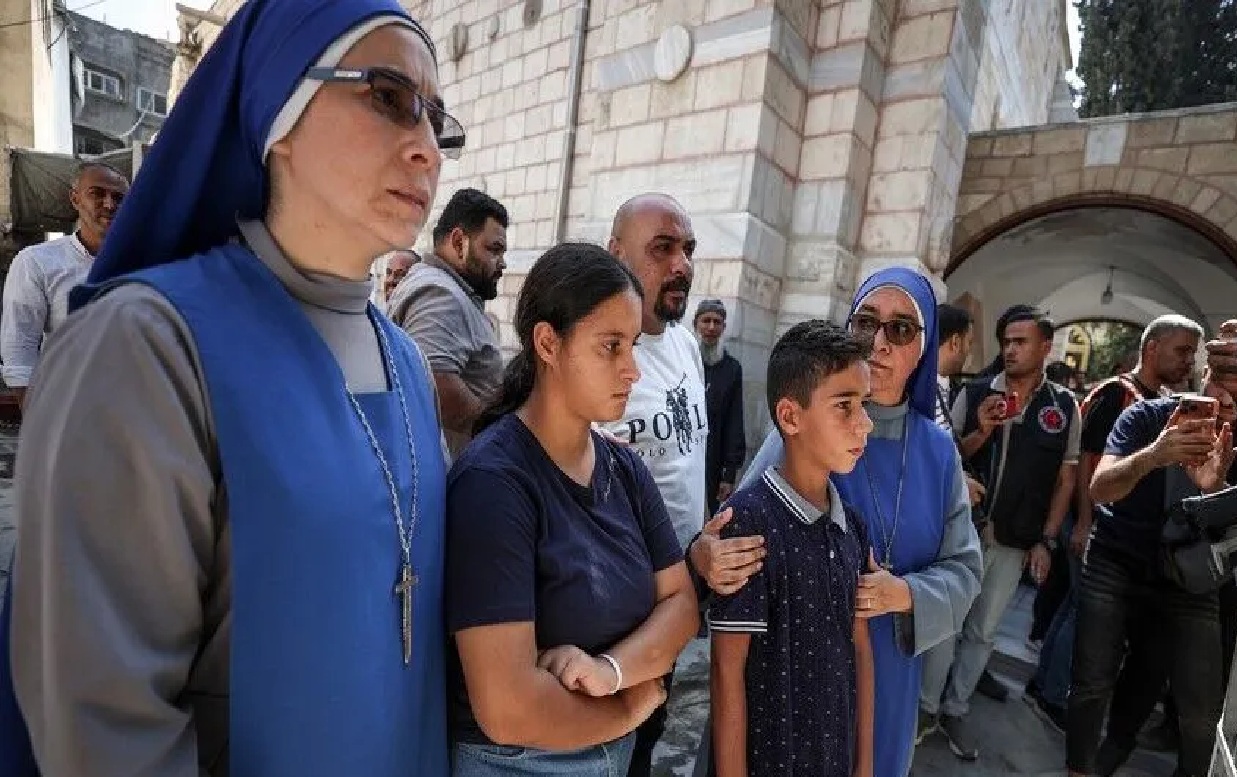
In Gaza, the situation is even more desperate. Before the current war, approximately 1,000 Christians lived in the Strip, most of them Greek Orthodox. Today, that number has dwindled to fewer than 800, with many sheltering in churches that have themselves come under attack.
“The Christian presence in Gaza is on the verge of extinction,” said Rev. Dr. Munther Isaac, pastor of the Christmas Lutheran Church in Bethlehem and a prominent Palestinian Christian voice. “When you kill Christians in Gaza, when you force them to flee, you are not just killing individuals, you are killing a community that has existed since the time of Christ.”
Isaac, who has become one of the most outspoken critics of both Israeli policy and Western Christian silence, was blunt about the stakes.
“The world’s Christians send pilgrims to walk where Jesus walked, but they refuse to stand with the people who still live there,” he told The Chronicle. “They venerate the stones but abandon the living stones, the Palestinian Christians who are the direct descendants of the first followers of Christ.”
The Silence Of The Orthodox World
Patriarch Porfirije’s letter is significant not only for what it says but for who is saying it. The Serbian Orthodox Church, while not among the largest or wealthiest Orthodox jurisdictions, carries moral weight in the Orthodox world, particularly among churches that have themselves experienced persecution.
Yet the broader Orthodox response has been muted. The Ecumenical Patriarchate of Constantinople, the spiritual centre of global Orthodoxy, has issued statements calling for peace but has stopped short of explicitly naming the persecution of Palestinian Christians. The Greek Orthodox Patriarchate of Jerusalem, which holds vast properties in the Holy Land, has been accused by Palestinian activists of prioritising property disputes over the welfare of its own flock.
“The Greek Orthodox Patriarchate has been complicit in the sale of Palestinian land to Israeli settler organisations,” alleged Dimitri Diliani, a Palestinian Christian activist and former member of the Palestinian National Council. “They wear the mantle of spiritual authority while facilitating the dispossession of their own people.”
The Patriarchate has denied such claims, but the controversy has deepened distrust between the church hierarchy and Palestinian Christians who feel abandoned by their own institutions.
The Armenian Question
The Armenian community, one of the oldest Christian communities in Jerusalem, has faced particularly acute pressure. The Armenian Patriarchate has been embroiled in a long-running dispute over land in the Armenian Quarter of Jerusalem’s Old City, land that Palestinian Christians say is being systematically acquired by Israeli settler interests.
In August 2026, the Higher Presidential Committee for Church Affairs condemned an attack on the Armenian monastery in East Jerusalem. The incident was part of what Armenian leaders describe as a sustained campaign of harassment.
“We are witnessing an attempt to push Christians out of Jerusalem, one neighbourhood at a time,” said Hagop Djernazian, a spokesperson for the Armenian Patriarchate. “The world must understand: when the Armenian Quarter falls, when the Christian Quarter falls, there will be no going back.”
The Gaza Dimension
While the West Bank and East Jerusalem face systematic pressure through settlements, property disputes, and movement restrictions, Gaza’s Christians have been caught in the crossfire of a war that has devastated the entire population.
The October 4 airstrike that killed four women, two of them Christian, was a reminder that in Gaza, Christian and Muslim civilians share the same fate. But for a community as small as Gaza’s Christians, each death represents a disproportionate loss.
“Every Christian killed in Gaza is a percentage point of our community erased forever,” said Isaac. “We are not talking about abstract numbers. We are talking about families, about the future of Christianity in the land of its birth.”
The Orthodox Church of Saint Porphyrius in Gaza City, one of the oldest churches in the world, has served as a shelter for displaced families during the war. In October 2023, an Israeli airstrike damaged the church compound, killing several people. The church, named after the bishop who converted the first Christians in Gaza, stands as a symbol of a community that has worshipped in the same place for over 1,600 years.
The Larger Context: A Pattern of Pressure
Palestinian institutions argue that the pressures on Christians cannot be understood in isolation from the broader Israeli occupation. The Higher Presidential Committee for Church Affairs has documented what it describes as a pattern of systematic discrimination affecting all Palestinians, but with particular consequences for religious minorities.
“Israel wants to present itself as a protector of Christians and a bastion of religious freedom,” Khouri said. “But the reality is that Christians in Palestine face the same occupation, the same restrictions, the same violence as our Muslim brothers and sisters, and in some cases, we face additional pressures because we are a minority.”
The committee has cited:
- Settlement expansion into areas with significant Christian populations
- Land confiscation affecting church properties and Christian-owned land
- Movement restrictions that make it difficult for Christians to reach churches and holy sites
- Physical attacks by settlers, often with impunity
- Economic pressures that make it increasingly difficult for Christian families to remain in their communities
Israel’s defenders argue that Christians in Israel enjoy full rights and that accusations of systematic persecution are politically motivated. They point to the fact that Israel’s Christian population has grown slightly in recent years, though this growth is largely due to immigration rather than natural increase among Palestinian Christians.
A Demographic Time Bomb
The real threat, Palestinian Christians argue, is not immediate violence but slow demographic erosion. Each family that emigrates, each young person who leaves for opportunities elsewhere, represents an irreversible loss.
“We are not asking for special treatment,” said Rania Murra, a Palestinian Christian from Bethlehem whose family has lived in the city for generations. “We are asking for the right to live in our homeland, to raise our children here, to worship in our churches without fear. Is that too much to ask?”
Murra’s sentiment is echoed by Christian leaders across the spectrum. The World Council of Churches, the Middle East Council of Churches, and numerous other ecumenical bodies have issued statements calling for the protection of Palestinian Christians. But those statements have done little to change the situation on the ground.
The International Response: Words Without Action
The international community has repeatedly expressed concern about the situation of Palestinian Christians, but critics say those expressions have been hollow.
In 2023, Pope Francis issued an appeal for the protection of Christians in Gaza, saying they were “suffering greatly.” The Vatican has maintained a careful diplomatic balance, advocating for peace while avoiding direct confrontation with Israel.
The United States, Israel’s closest ally, has occasionally raised concerns about specific incidents affecting Christians but has done little to alter its broader support for Israeli policies that Palestinians say are driving Christians out.
“The international community has failed Palestinian Christians,” said Dr. Hanan Ashrawi, a former PLO executive committee member and prominent Palestinian Christian. “They issue statements, they express concern, they send envoys, and nothing changes. Meanwhile, our community shrinks year by year, and soon there will be no Christians left to protect.”
A Question Of Witness
For Palestinian Christians, the stakes go beyond politics. They see themselves as witnesses to the living faith that began in their land, a faith that risks becoming a museum piece if their community disappears.
“When the last Christian leaves Bethlehem, what will remain?” asked Rev. Isaac. “A church without a congregation. A holy site without a living community. Pilgrims will come and see the empty churches and ask, ‘What happened to the Christians who used to live here?’ And the answer will be: they were pushed out, and the world let it happen.”
Patriarch Porfirije’s letter, then, is more than a diplomatic gesture. It is a warning, one that echoes the concerns of Palestinian Christians who have been saying for decades that their presence in the Holy Land is under threat.
The question now is whether anyone will listen.
The Church’s Pledge
In his letter, Porfirije said the Serbian Orthodox Church would continue raising the protection of Christian communities and efforts toward peace in the Middle East “during forthcoming meetings with political leaders and international institutions.”
It is a pledge that Palestinian Christians hope will be matched by action, and that other churches will follow.
“The Orthodox world has a special responsibility for the Holy Land,” said Khouri. “The Patriarchs, the churches, the faithful, they all have a stake in what happens here. We are asking them to act, not just to speak. We are asking them to stand with us before it is too late.”
For the Christians of Gaza, the West Bank, and Jerusalem, time is running out. Each passing day brings more departures, more deaths, more empty churches.
And with them, the light of Christianity’s oldest continuous community grows dimmer.
Epilogue: A Note From Bethlehem
On a recent evening in Bethlehem, the Church of the Nativity stood bathed in the golden light of sunset. Inside, a small congregation gathered for evening prayers, fewer than two dozen worshippers in a space built for hundreds.
An elderly woman, her hands wrapped around a wooden cross worn smooth by decades of devotion, whispered a prayer in Arabic, the language of the first Christians.
“Lord,” she said, “keep us here. Keep your people here. Do not let us disappear.”
The words hung in the air, unanswered, except by the echo of a history that may soon belong only to the past.
References:
- Serbian Orthodox Church statement via Anadolu Agency, October 4, 2026
- Higher Presidential Committee for Church Affairs, August 2026 appeal to church leaders
- Palestinian WAFA news agency report, June 2026
- Jerusalem Governorate quarterly report, Third Quarter 2026
- Interview with Ramzi Khouri, Head of the Higher Presidential Committee for Church Affairs
- Interview with Rev. Dr. Munther Isaac, Pastor of Christmas Lutheran Church, Bethlehem
- Interview with Dimitri Diliani, Palestinian Christian activist
- Interview with Hagop Djernazian, Armenian Patriarchate spokesperson
- Interview with Rania Murra, Palestinian Christian from Bethlehem
- Statement from Dr. Hanan Ashrawi, former PLO Executive Committee member
- World Council of Churches documentation on Palestinian Christians
- Middle East Council of Churches reports on Christian presence in the Holy Land
Veritas Press Investigative Analysis
Independent journalism examining global affairs, power, diplomacy, and accountability.
Source: Veritas Press C.I.C. | Multi-News Agencies
Help Support Our Work By Donating
Readers who believe that truth still matters have power over popular information. When just a few more people step up to support this work, it means more lies exposed, more corruption uncovered, and more accountability where it’s long overdue.
Help Protect Independent Journalism, Which Is Currently Under Attack.
If you believe journalism should serve the public, not the powerful, and you’re able to help, becoming a regular DONOR or a PAID SUBSCRIBER truly makes a difference.
DONATION APPEAL: If you found this reporting valuable, please consider supporting independent journalism.
Your support fuels our fearless, truth-driven journalism. In unity, we endeavour to amplify marginalised voices and champion justice, irrespective of geographical location. We operate independently, with no financial backing from billionaires; our readers support us.
But it’s also extremely important. One of Veritas Press’s greatest assets is its reader-funded model.
1. Reader funding means we can cover what we like. We’re not beholden to the political whims of a billionaire owner. We are a small, independent and impartial organisation. No one can tell us what not to say or what not to report.
2. Reader funding means we don’t have to chase clicks and traffic. We’re not desperately seeking your attention for its own sake; we pursue the stories that our editorial team deems important and believes are worthy of your time.
3. Reader Funding: enables us to keep our website and other social media channels open, allowing as many people as possible to access quality journalism from around the world, particularly those in places where the free press is under threat.
We know not everyone can afford to pay for news, but if you’ve been meaning to support us, now’s the time.
Your donation goes a long way. It helps us:
- Keep the lights on and sustain our day-to-day operations
- Hire new, talented, independent reporters
- Launch real-time live debates, community-focused shows, and on-the-ground reporting
- Cover the issues that matter most to our communities, in real time, with depth and integrity
Without your support, independent voices like ours will be silenced.
Furthermore, we have plans to expand our work, but we can’t do it without your support. Every contribution, no matter the size, helps us stay independent and build a truly people-powered media platform.
If you believe in journalism that informs, empowers, and reflects the communities we serve, please donate today.
Submissions
For the secure submission of documentation, testimonies, or exclusive investigative reports from any global location, please utilise the following contact details for our Investigations Desk: mailto:enquiries@veritaspress.co.uk or mailto:editor@veritaspress.co.uk

NEWCASTLE UPON TYNE — Health authorities have confirmed two separate cases of Hepatitis A among
Serbian Orthodox leader’s unprecedented intervention exposes the systematic erosion of Christianity’s oldest continuous community, and
GENEVA — A United Nations fact-finding mission has concluded there are “reasonable grounds to believe”
Iran’s GDP is projected to contract by 5.4 to 6.1% in 2026, its worst performance
The Trump administration is preparing a $2.8 billion weapons package for Israel containing 40,000 2,000-pound

Film alleges mass civilian deaths are routinely built into military decisions amid Israel’s genocidal war
The Israeli rights group says violence, displacement, economic strangulation, and settlement expansion form part of

Houthi forces have captured the historic Red Sea port of Mocha and are advancing on
London’s historic sanctions against Israeli settlements mark a watershed moment in UK foreign policy, but
With 95% of Gaza’s population now wholly dependent on aid and more than 90% stripped