Kamran Faqir is a volunteer investigative journalist and writer committed to exposing hidden truths and amplifying underreported stories. Driven by social justice, he brings sharp insight and fearless truth-telling to independent journalism. NUJ registered.
Article Date Published:
Article Date Modified:
8 minutes
Views:334
Listen to this article
Help support our mission, donate today and be the change. Every contribution goes directly toward driving real impact for the cause we believe in.
The latest immigration statistics show work visas down 59% from their December 2023 peak, with 253,000 granted in the year ending March 2026. The decline is substantial, but the figures at the sector and nationality levels are far more dramatic than the headline suggests. The transparency data published alongside today’s statistics reveals that enforcement against employers and sponsors is running at record levels.
The government is not only restricting who can come to work in the UK, but also It is removing the right to work from people already here at an unprecedented pace.
The occupation collapse
The single biggest driver of the overall fall is the closure of the health and care worker route. At its 2023 peak, the caring personal services category — care workers, support workers, home carers — received over 108,000 work visa grants. In 2025, that figure was 3,190, and in the first quarter of 2026 it was 11. The entry clearance route for care workers closed in July 2025, completing a restriction process that began in early 2024 and has essentially eliminated international recruitment into social care.
Beyond care, the July 2025 statement of changes to the immigration rules removed or raised the skill threshold for a range of mid-skill occupations that had been significant beneficiaries of the post-COVID migration surge:
The effect has been to concentrate the skilled worker route on its highest-skill users. IT professionals remain the largest single non-agricultural occupation category (10,038 grants in 2025), followed by medical practitioners (6,709) and finance professionals (4,394). These have also fallen — down around 18% each — but they have not collapsed.
The one segment genuinely growing is agricultural work: elementary agricultural occupations (mainly seasonal workers) rose 8% to 23,955 grants in 2025 and agricultural trades rose 10% to 14,611. The seasonal worker route is now expanding while almost everything else contracts.
However, seasonal worker route comes with its own risks including labour exploitation. You can read more about it here.
The nationality effect
The occupational changes have had a sharply differential impact by nationality. The countries hit hardest are those whose work visa grants were concentrated in care and lower-skill roles now closed or removed from the route:
Zimbabwe went from 45,960 work visa grants in 2023 to 5,545 in 2025 — a fall of 88% in two years. Nigeria fell from 82,325 to 11,795. Ghana from 31,755 to 3,855. Bangladesh, Pakistan and Sri Lanka each fell by more than half. These falls are not driven by reduced demand from employers or changed circumstances in the countries of origin. They reflect the specific closure of routes in which nationals of those countries were disproportionately concentrated.
By contrast, nationals of high-income English-speaking and Western European countries — who work predominantly in IT, finance, medicine and management — have seen much smaller falls or small increases. US work visa grants rose 6% in 2025 from the 2024 figure to 11,508. Australian grants fell 17%. French and German visa grants fell by low single-digit percentages. The policy is framed in occupational terms. Its effect by nationality is not neutral.
There is an obvious racial dimension to these changes. The justification and rationale are based on skills and prosperity. The effect is substantially to exclude those who are not white.
One notable outlier is Kyrgyzstan, whose work visa grants rose 29% to 12,719 in 2025. Along with Uzbekistan, Kazakhstan and Tajikistan, Central Asian nationals now receive around 33,000 work visas a year — almost entirely in the agricultural seasonal worker route. Since Ukrainian seasonal workers effectively disappeared from the route following the full-scale Russian invasion in 2022, Central Asians have become the backbone of the seasonal agricultural workforce in the UK.
Sponsor licence revocations
The main statistics release says little about what is happening to employers currently sponsoring overseas workers. The transparency data published alongside it tells a different story. Sponsor licence revocations — where the Home Office withdraws an organisation’s licence to employ overseas nationals — have reached record levels in consecutive quarters:
Q4 2025 saw 1,516 Skilled Worker licence revocations — then the highest quarterly total on record. Q1 2026 saw 1,545 — breaking that record immediately. The 2025 total of around 3,100 revocations was roughly nine times higher than the 2023 total of 337.
Revocation is not the same as suspension. When a licence is revoked, every sponsored worker has 60 days to find a new sponsor or leave the UK. There is no published data on how many workers are affected by each revocation, but with most sponsors holding multiple sponsored workers, the number will be a substantial multiple of 1,545.
The new sponsor application figures suggest employers are taking notice. Applications for new Skilled Worker licences fell from 13,663 in Q1 2024 to 6,075 in Q1 2026 — a fall of 55% in two years.
Employer fines
The financial consequences for employers who fail to check the right to work of their staff have risen sharply since February 2024, when the maximum fine per illegal worker increased from £15,000 to £45,000, and as much as £60,000 for subsequent penalties. The transparency data records the effect clearly. Employers paid around £28 million in illegal working fines in 2023. They paid £130 million in 2025. Q1 2026 brought a further £32.6 million, suggesting 2026 will produce a similar annual total. The average fine per case has risen from around £17,600 to £53,600. The average now exceeds the statutory maximum per single worker, which means the typical case involves multiple workers or a repeat offender.
Year
Penalties issued
Total value
Average fine
2021
342
£5.7m
£16,667
2022
911
£16.0m
£17,563
2023
1,610
£28.4m
£17,640
2024
1,835
£77.3m
£42,125
2025
2,438
£130.7m
£53,610
The right to rent regime, which imposes fines on landlords who fail to check tenants’ immigration status, shows the same pattern at much smaller scale. The average landlord fine was around £1,000 before 2024 and stands at around £11,800 now. Annual totals remain modest (£2.8 million in 2025), but enforcement is more active than at any point since the regime was introduced in 2016.
Year
Penalties issued
Total value
Average fine
2021
22
£16,520
£751
2022
32
£29,960
£936
2023
155
£151,000
£977
2024
366
£3,422,000
£9,349
2025
254
£2,795,000
£11,004
The connected picture
These trends are not independent. Record sponsor licence revocations leave many workers without the right to work. Some will inevitably fail to find a new sponsor within the 60-day window. Employers who then continue to employ them face fines three times higher than before 2024.
The government has constructed a system in which the front door is closing rapidly, the compliance team is working through existing sponsors at a record pace, and the financial penalty for getting caught at either end is substantially larger than before.
What the government has not published is any data on the number of workers displaced by each revocation, or what happens to them.
Source:Veritas Press C.I.C. | Multi News Agencies
Submissions:
For The Secure Submission Of Documentation, Testimonies, Or Exclusive Investigative Reports From Any Global Location, Please Utilise The Following Contact Details For Our Investigations Desk: enquiries@veritaspress.co.uk or editor@veritaspress.co.uk
Help Support Our Work:
Popular Information is powered by readers who believe that truth still matters. When just a few more people step up to support this work, it means more lies exposed, more corruption uncovered, and more accountability where it’s long overdue.
Help Protect Independent Journalism, Which Is Currently Under Attack.
If you believe journalism should serve the public, not the powerful, and you’re in a position to help, becoming a DONATOR or a PAID SUBSCRIBER truly makes a difference.
DONATION APPEAL: If You Found This Reporting Valuable, Please Consider Supporting Independent Journalism.
Help Support Our Work – We Know, We Know, We Know …
Seeing these messages is annoying. We know that. (Imagine what it’s like writing them … )
Your support fuels our fearless, truth-driven journalism. In unity, we endeavour to amplify marginalised voices and champion justice, irrespective of geographical location.
But it’s also extremely important. One of Veritas Press’s greatest assets is its reader-funded model.
1. Reader funding means we can cover what we like. We’re not beholden to the political whims of a billionaire owner. We are a small, independent and impartial organisation. No one can tell us what not to say or what not to report.
2. Reader funding means we don’t have to chase clicks and traffic. We’re not desperately seeking your attention for its own sake: we pursue the stories that our editorial team deems important and believe are worthy of your time.
3. Reader Funding: enables us to keep our website and other social media channels open, allowing as many people as possible to access quality journalism from around the world, particularly those in places where the free press is under threat.
We know not everyone can afford to pay for news, but if you’ve been meaning to support us, now’s the time.
Your donation goes a long way. It helps us:
Keep the lights on and sustain our day-to-day operations
Hire new, talented independent reporters
Launch real-time live debates, community-focused shows, and on-the-ground reporting
Cover the issues that matter most to our communities, in real time, with depth and integrity
We have plans to expand our work, but we can’t do it without your support. Every contribution, no matter the size, helps us stay independent and build a truly people-powered media platform.
If you believe in journalism that informs, empowers, and reflects the communities we serve, please donate today.
Kamran Faqir is a volunteer investigative journalist and writer committed to exposing hidden truths and amplifying underreported stories. Driven by social justice, he brings sharp insight and fearless truth-telling to independent journalism. NUJ registered.
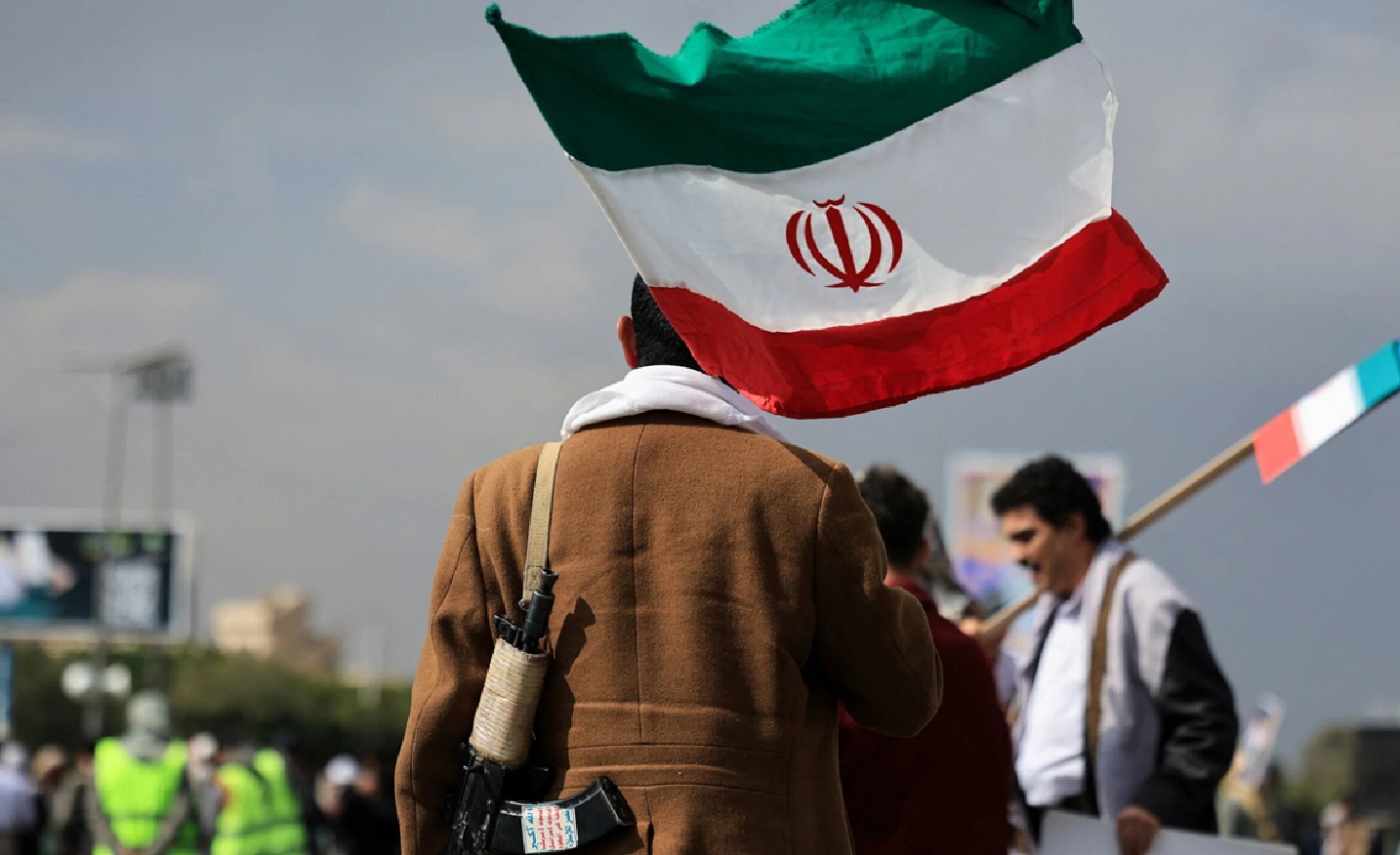
SEATTLE, TEHRAN — The U.S. Department of Homeland Security (DHS) will allow Iran’s national football team to enter the country 48 hours before their critical World Cup match against Egypt on Friday, a modest concession in a tournament where Team Melli’s travel conditions have sparked claims of oppression and competitive disadvantage.






























































tixrd5
g3fwor
st8o90
70dwcx
jk6zkk
4bj6wu
iixmy5