Kamran Faqir is a volunteer investigative journalist and writer committed to exposing hidden truths and amplifying underreported stories. Driven by social justice, he brings sharp insight and fearless truth-telling to independent journalism. NUJ registered.
Article Date Published:
Article Date Modified:
13 minutes
Views:322
Listen to this article
Help support our mission, donate today and be the change. Every contribution goes directly toward driving real impact for the cause we believe in.
LONDON – In one of the final and most consequential acts of his premiership, outgoing Prime Minister Keir Starmer has unveiled the largest single security investment ever made to protect a specific religious community in British history. A £251 million ($335 million) package will flood Jewish neighbourhoods with more than 500 additional police officers, expand counter-terrorism surveillance, and harden the perimeters of synagogues, schools, and community centres across England and Wales. Announced on the back of a ferocious wave of antisemitic violence, stabbings, arson, and a synagogue massacre, the funding marks, in Starmer’s words, a “step change in protection.” But behind the immediate political relief, deep questions are emerging: will a fortress mentality extinguish the flames of hate, or merely wall off a community under siege while leaving the source of the fire untouched?
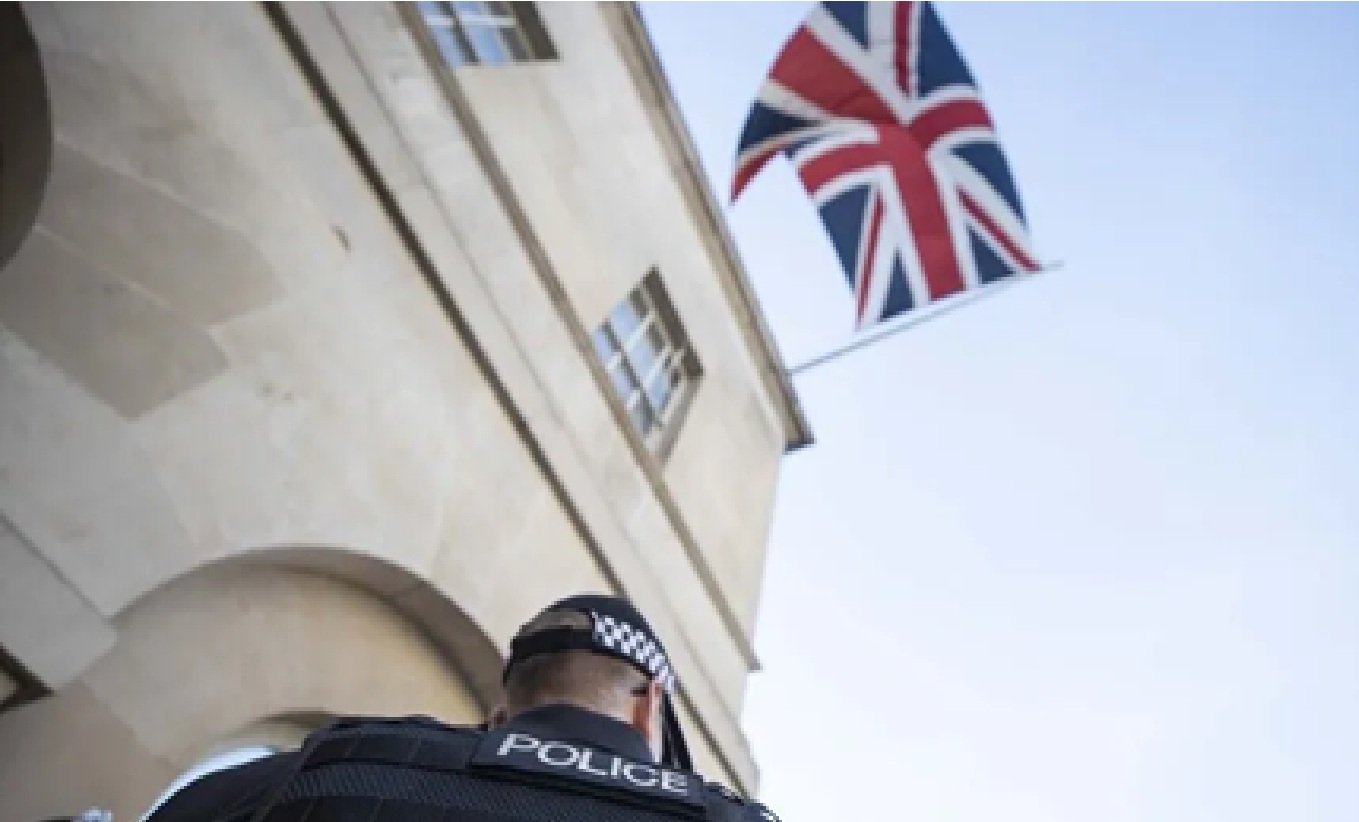
Police forces across England will receive a £251 million ($335 million) funding boost to strengthen protection for Jewish communities following a rise in antisemitic attacks, the British government announced.
The numbers are staggering. Over three years, London’s Metropolitan Police will receive £86 million to recruit roughly 300 officers, establishing new Community Protection Team hubs, including a dedicated base in Golders Green, the heart of north London’s visibly Jewish population. Greater Manchester Police, still reeling from the October 2025 Heaton Park terror attack that killed Adrian Daulby and Melvin Cravitz, will get £22 million to sustain a permanent uplift of 80 officers. Seven other force areas, Essex, West Yorkshire, Hertfordshire, and others with significant Jewish populations, will share £43 million. A further £59 million flows directly to UK Counter Terrorism Policing, £41 million to national coordination and mandatory antisemitism training for every officer in England and Wales, and a record £32.4 million for physical security guarding at Jewish sites in the 2026-27 fiscal year alone.
“This money will see more officers on the streets and stronger protection at community sites to ensure they have the protection they need to live their lives peacefully,” Chancellor Rachel Reeves said. Crime and Policing Minister Sarah Jones added that the decision came “after a series of appalling attacks” and the “difficult decision” to raise the national terror threat level to “severe.” Deputy Metropolitan Police Commissioner Matt Jukes stated that Jewish communities face an “exceptional threat” from rising hate crime, terrorism, and hostile state activity.
Yet, to treat this package as a sudden governmental awakening would be to misread a long, blood-stained timeline. The emergency £25 million announced in April after a terrorist stabbing in Golders Green, where two men were knifed by an attacker later linked to Iranian-directed plots, was merely a down payment. Before that, in 2025, arsonists torched four Hatzola community ambulances in Hackney; a synagogue in Manchester was attacked, killing two; and the Community Security Trust (CST), the Jewish community’s volunteer security body, recorded 3,700 antisemitic incidents, the highest-ever annual tally, more than half directly referencing Israel, Palestine, or the ongoing Middle East conflict.
“Record funding to help keep Jewish people safe,” is how Minister Jones frames it. Mark Gardner, CST’s chief executive, greeted the announcement with a telling mix of gratitude and exhaustion: “This support has come not a moment too soon. For years, we have warned that antisemitism was mutating from fringe prejudice into a mainstream, violent threat. The state has now visibly stepped up, but the challenge is so profound that even this historic investment must be accompanied by a societal reckoning.”
Walking The Beat In Golders Green: Reassurance Or A Ring Of Steel?
On a sunlit afternoon in Golders Green Road, the shift is palpable. Two uniformed officers stand outside a kosher pizzeria; a marked car crawls past the Jewish secondary school. A new community hub, still being fitted out, will embed police directly in the neighbourhood. For many locals, the presence is a lifeline. “After the stabbing, my children were terrified to wear their school blazers with the Jewish badge,” says Rivka Levy, a mother of four who has lived in the area for two decades. “I see these officers now, and I can breathe. They know us. They know the festivals and the school run times. It’s a hug we desperately needed.”
But not everyone wants to be hugged by the state. A few streets away, a young professional, who asks not to be named out of fear of community backlash, voices an anxiety that simmers beneath the surface: “We are becoming a gated community policed by the Met. What message does that send to our non-Jewish neighbours? That we are a problem to be managed, a target that needs an army. I didn’t move to London to live in a fortress.”
This tension between visible protection and the optics of permanent securitisation lies at the heart of the critical debate. The government’s plan explicitly includes expanding “Project Servator,” a tactic that deploys specialist plainclothes officers and unpredictable, high-visibility patrols designed to deter terrorist reconnaissance. While effective at disrupting hostile planning, Servator deployments often involve stop-and-question powers that have historically soured police relations with ethnic minority communities. Civil liberties group Liberty has cautioned that without rigorous oversight, the infusion of officers into tight-knit religious districts risks a two-tier policing model.
“We cannot defeat antisemitism by creating permanent, hyper-policed zones that treat an entire faith community as a potential crime scene,” said a Liberty spokesperson. “The Met’s history in diverse neighbourhoods demands that this surge comes with mandatory community impact assessments, transparent stop-and-search data disaggregated by religion, and an absolute firewall against intelligence-gathering that conflates Jewish communal life with political surveillance.”
The Root Cause Debate: Censorship, Foreign Policy, And Uncomfortable Questions
The government’s messaging ties the spike in antisemitism directly to “hostile state activity”, pointing to Iran’s proxies and to failures to remove “illegal” content online. The Online Safety Act is routinely cited, alongside £7 million for tackling antisemitism in schools and universities, urgent NHS and Department for Education reviews, and the expanded CST community cohesion programs. “We will do everything in our power to rid society of the evil of antisemitism,” says Jones.
Yet interview after interview with activists, scholars, and even some communal leaders reveals a glaring gap in the approach: a refusal to connect Britain’s domestic climate with its foreign policy choices. Since the outbreak of the 2023-24 Gaza war, pro-Palestinian protests have become a permanent fixture on British streets, often featuring rhetoric that Jewish community organisations say descends into blatant antisemitic tropes. But the government’s simultaneous continued arm sales to Israel, its staunch diplomatic shielding at the UN, and its broad interpretation of antisemitism, including a highly contested adoption of the IHRA definition’s examples that conflate anti-Zionism with Jew-hatred, has polarised the debate.
“You cannot silo this,” argues Dr. Nadia Rahman, a lecturer in security studies at SOAS. “The state is saying to British Jews: we will protect you with £251 million, while simultaneously pursuing a Middle East policy that large sections of the British public, including Jews, view as morally indefensible. That creates a cognitive dissonance that fuels the extremists. Some attackers are empowered by Iran, but others are radicalised by what they perceive as Western hypocrisy and complicity in the deaths of civilians. The government won’t touch that third rail.”
A CST report acknowledges the complexity. “2025 saw a disturbing conflation of anti-Israel activism and raw anti-Jewish hatred, making it the most difficult operational year in our history. We cannot police our way out of a social epidemic; we need education, regulation, and honest political leadership that lowers the temperature, not one that weaponises our fear for partisan gain.” Mark Gardner told the Jewish Chronicle earlier this year. It’s a nuance the headline “Record Funding to Protect Jews” often drowns out.
Manchester’s Wound: The Heaton Park Legacy.
Nowhere is the new package more politically charged than in Manchester. The October 2025 Heaton Park attack, a jihadist knifeman slaughtering two Jewish men who were simply walking home on a Shabbat afternoon, shattered the city’s pluralist self-image. Greater Manchester Police’s £22 million allocation will fund a permanent uplift, but for families of the victims, it is both a memorial and a monument to failure.
“Adrian and Melvin were murdered because the system didn’t believe the threat was real enough,” says a family friend who helps run a local interfaith charity. “We had been telling the Home Office for months that specific chatter about Heaton Park as a ‘Jew hunting ground’ was circulating on Telegram. It was flagged. It was ignored. So forgive me if I greet a £251 million cheque with tears of anger rather than gratitude. Will the extra officers be allowed to act on intelligence, or will they just stand guard while the next attacker walks through a gap?”
The package’s architects emphasise that the £59 million for counter-terrorism policing will specifically enhance intelligence analysis and coordination, linking local officers to the national network, and that the new recruits will be empowered to investigate online hate crimes in tandem with the expanded Servator operations. In London, the Met’s Deputy Commissioner Jukes has promised “an exceptional response to an exceptional threat.” The true test will be whether these structures can intercept the next plot before a knife is drawn.
A Political Farewell Gift With Long Shadows:
For Keir Starmer, the announcement is a legacy-defining move, made as he prepares to leave Downing Street after a bruising parliamentary term that saw Labour’s polling collapse amid internal fractures over Gaza, civil liberties, and the cost of living. “The rise in antisemitism we have seen in recent years is a test of our values as a country and tackling it has been central to my leadership from day one,” he said in a statement that critics read as a retrospective defence of his controversial purging of left-wing voices from the party.
Political opponents have already seized on the timing. “A quarter of a billion pounds dropped days before a new Prime Minister takes over is emblematic of a government that governs by reactive, headline-grabbing cash injections rather than a coherent national strategy,” said a shadow home affairs spokesperson. “Where is the equivalent funding for the explosion in Islamophobic attacks, the rise in anti-black hate crime? British Jews deserve safety, but so do all communities. A country that creates a hierarchy of victimhood is not a country that defeats hate.”
CST’s Gardner pushes back, noting that the fund is a direct response to a documented, unprecedented threat level, not a competition. “We have never asked for the state to love us more than others. We asked the state to protect us from people who want to kill us. That is what this money does. Every other community facing such a threat should demand the same.”
The Human Landscape: Between Vigilance And Normalcy.
What does the future look like for the young Jewish Londoner who will grow up knowing that their school entrance is guarded by armed police, a sight that was unthinkable a generation ago? How does a community maintain its warmth and openness when trust in the stranger is replaced by the watchful eye of a camera and a tactical patrol?
Back in Golders Green, as the afternoon fades, a group of teenagers emerges from a kosher burger joint, laughing, their uniforms slightly askew. They barely glance at the two officers leaning against the patrol car. This intermingling of armed state power with the mundane texture of teenage life is the new normal. “I hate it,” says one of the girls, adjusting her headscarf. “But I’d hate a knife more. If this is what it takes to walk home without my mum calling me every two minutes, then fine. Just make sure the police smile back when we say hello.”
The £251 million question is whether Britain can move beyond the metal detectors and the patrols to address the moral collapse that made them necessary. The funding is a monumental, concrete admission that the state has, for too long, underestimated the rot. It is a fortress, painstakingly constructed, but the war against antisemitism will not be won by guarding the gates alone. It will require dismantling the ideological bomb factories, in schoolyards, online echo chambers, and yes, in the cynical rhetoric of politicians who traffic in division. Until then, the record investment buys protection, but not yet peace.
Source:Veritas Press C.I.C. | Multi News Agencies
Help Support Our Work By Donating
Popular Information is powered by readers who believe that truth still matters. When just a few more people step up to support this work, it means more lies exposed, more corruption uncovered, and more accountability where it’s long overdue.
Help Protect Independent Journalism, Which Is Currently Under Attack.
If you believe journalism should serve the public, not the powerful, and you’re in a position to help, becoming a DONOR or a PAID SUBSCRIBER truly makes a difference.
DONATION APPEAL: If You Found This Reporting Valuable, Please Consider Supporting Independent Journalism.
Your support fuels our fearless, truth-driven journalism. In unity, we endeavour to amplify marginalised voices and champion justice, irrespective of geographical location. We operate independently, without any financial backing from billionaires.
But it’s also extremely important. One of Veritas Press’s greatest assets is its reader-funded model.
1. Reader funding means we can cover what we like. We’re not beholden to the political whims of a billionaire owner. We are a small, independent and impartial organisation. No one can tell us what not to say or what not to report.
2. Reader funding means we don’t have to chase clicks and traffic. We’re not desperately seeking your attention for its own sake: we pursue the stories that our editorial team deems important and believes are worthy of your time.
3. Reader Funding: enables us to keep our website and other social media channels open, allowing as many people as possible to access quality journalism from around the world, particularly those in places where the free press is under threat.
We know not everyone can afford to pay for news, but if you’ve been meaning to support us, now’s the time.
Your donation goes a long way. It helps us:
Keep the lights on and sustain our day-to-day operations
Hire new, talented independent reporters
Launch real-time live debates, community-focused shows, and on-the-ground reporting
Cover the issues that matter most to our communities, in real time, with depth and integrity
We have plans to expand our work, but we can’t do it without your support. Every contribution, no matter the size, helps us stay independent and build a truly people-powered media platform.
If you believe in journalism that informs, empowers, and reflects the communities we serve, please donate today.
Submissions:
For The Secure Submission Of Documentation, Testimonies, Or Exclusive Investigative Reports From Any Global Location, Please Utilise The Following Contact Details For Our Investigations Desk: enquiries@veritaspress.co.uk or editor@veritaspress.co.uk
Kamran Faqir is a volunteer investigative journalist and writer committed to exposing hidden truths and amplifying underreported stories. Driven by social justice, he brings sharp insight and fearless truth-telling to independent journalism. NUJ registered.
SEATTLE, TEHRAN — The U.S. Department of Homeland Security (DHS) will allow Iran’s national football team to enter the country 48 hours before their critical World Cup match against Egypt on Friday, a modest concession in a tournament where Team Melli’s travel conditions have sparked claims of oppression and competitive disadvantage.








































k4thkg
zk5k1z
yhwi4c
7t2gqs
yljadh