Kamran Faqir is a volunteer investigative journalist and writer committed to exposing hidden truths and amplifying underreported stories. Driven by social justice, he brings sharp insight and fearless truth-telling to independent journalism. NUJ registered.
Article Date Published:
Article Date Modified:
13 minutes
Post Views:286
Listen to this article
Help support our mission, donate today and be the change. Every contribution goes directly toward driving real impact for the cause we believe in.
With A Paper Ceasefire Reduced To Ash, Israel’s Bulldozers Level Homes While Drones Stalk Beirut’s Skies And Lebanon’s Government, Bound By Humiliating Concessions And Diplomatic Blackmail, Answers The Escalating Violations With Silence. As Hezbollah Warns That State Inaction Is Legitimising A De Facto Occupation, And A US-Iran Memorandum Promises Peace That Never Arrives, Border Communities Are Left To Ask: If No One Defends The Agreement, Does It Exist At All?
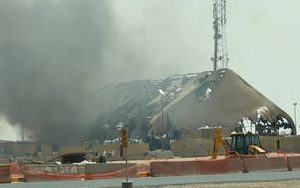
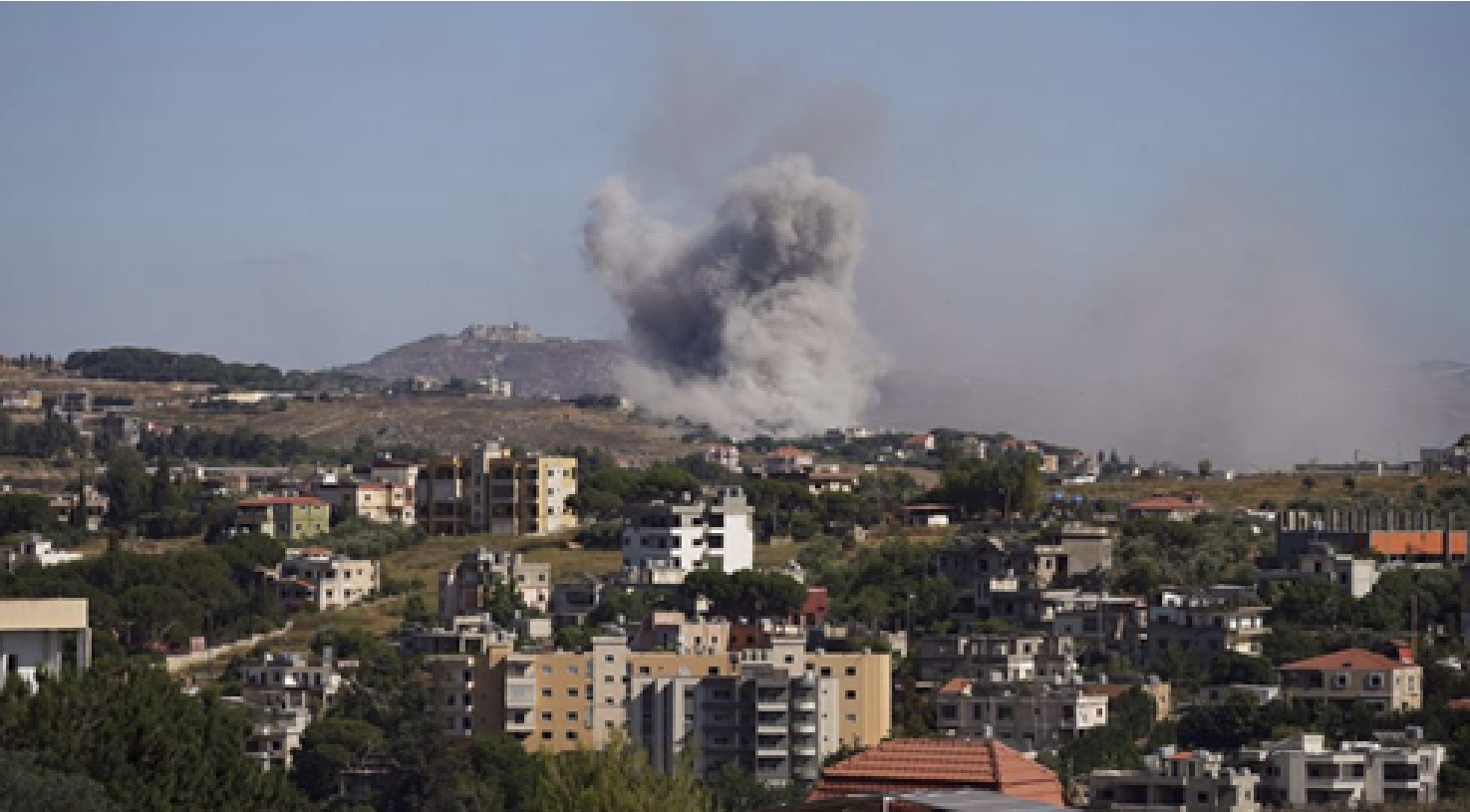
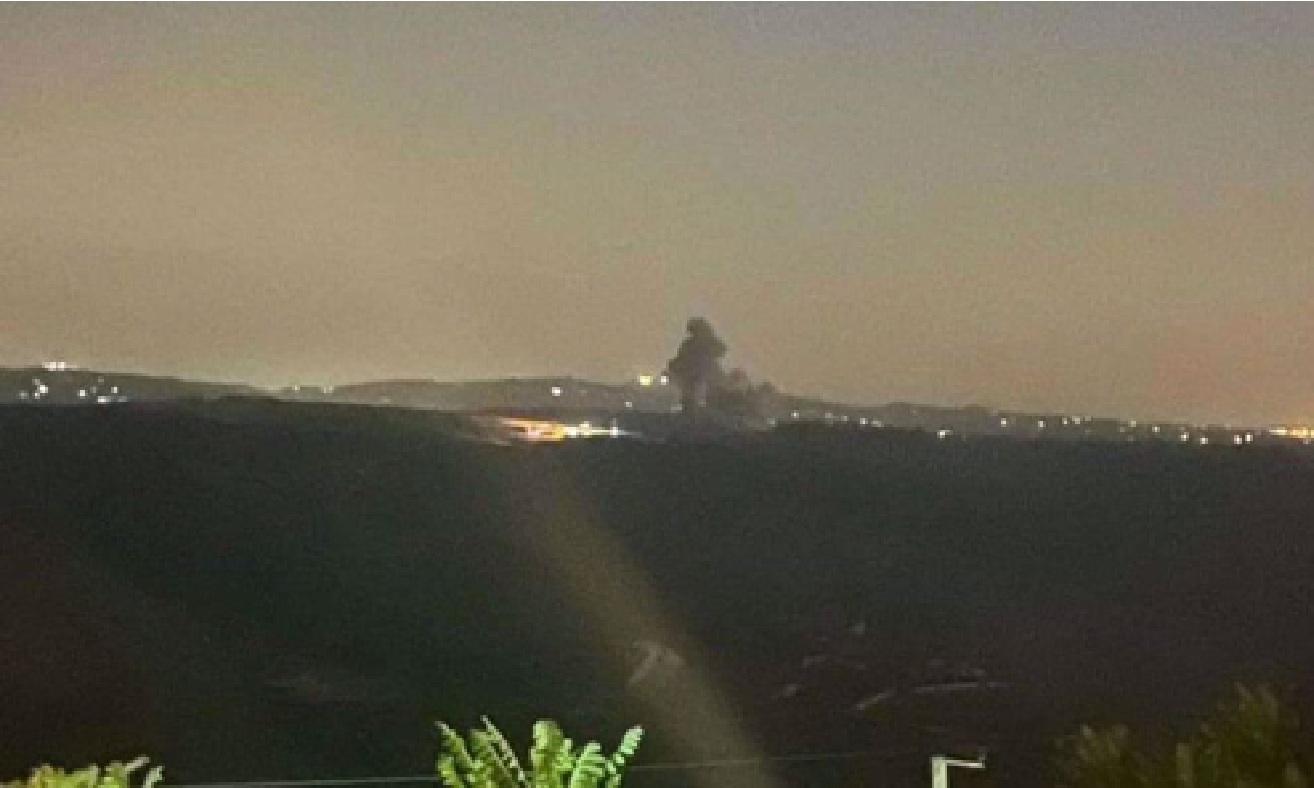
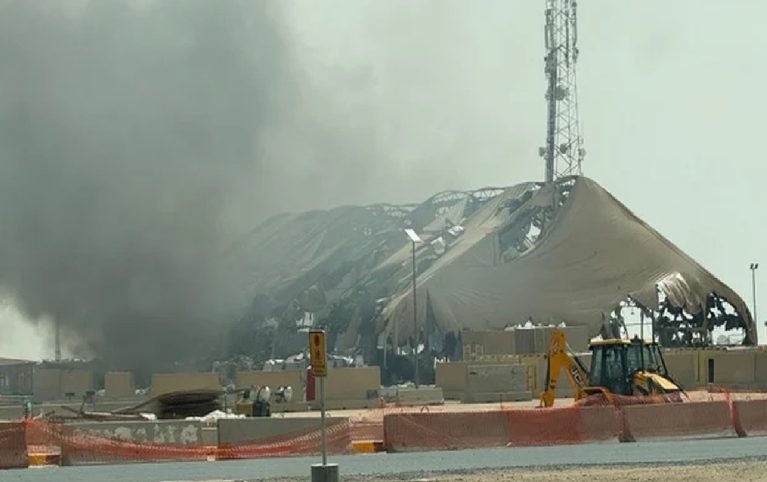
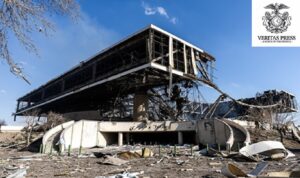
Smoke billows from southern Lebanon following an Israeli strike, as seen from Nabatieh, southern Lebanon, on June 19, 2026. (Photo from PressTV)
BEIRUT, JULY 6, 2026 – At dawn on Monday, the rumble of controlled detonations rolled across the rocky hills of Aitaroun in southern Lebanon. Israeli military bulldozers, flanked by Merkava tanks, had spent the night reducing a cluster of family homes to rubble. By mid-morning, drones were crisscrossing the skies over Beirut’s southern suburbs, their menacing buzz a calculated reminder that the war Israel claims to have suspended is, for Lebanon, anything but over. The demolitions and overflights are the latest stitches in a pattern of ceasefire violations so brazen that they have rendered two successive diplomatic agreements all but meaningless and exposed what critics call the near-total abdication of the Lebanese state.
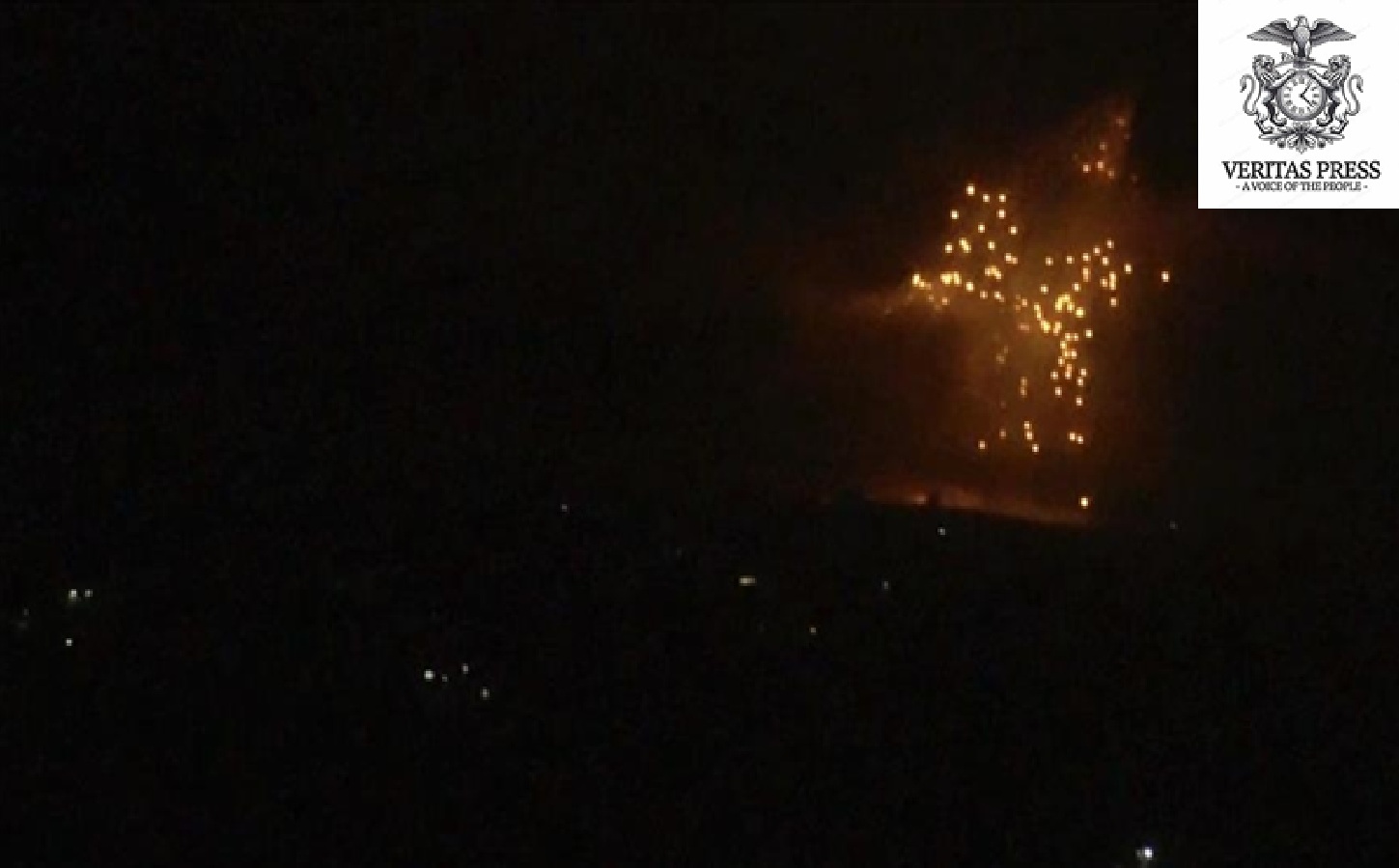
Just twenty-four hours earlier, Hezbollah MP Ali Ammar had laid the blame squarely on Beirut’s inaction. “Ever since the Lebanese government signed the so-called framework agreement with the Zionist enemy, the criminal leaders of the regime have constantly made assertions that they have obtained legitimacy from the Lebanese government to stay put in southern Lebanon,” Ammar, a senior member of the Loyalty to the Resistance Bloc, said in a televised address on Sunday. “Israeli forces continue to violate the ceasefire agreement, kill civilians, destroy and demolish houses, and burn farms with phosphorus bombs, in the face of the utter silence of the Lebanese government.”
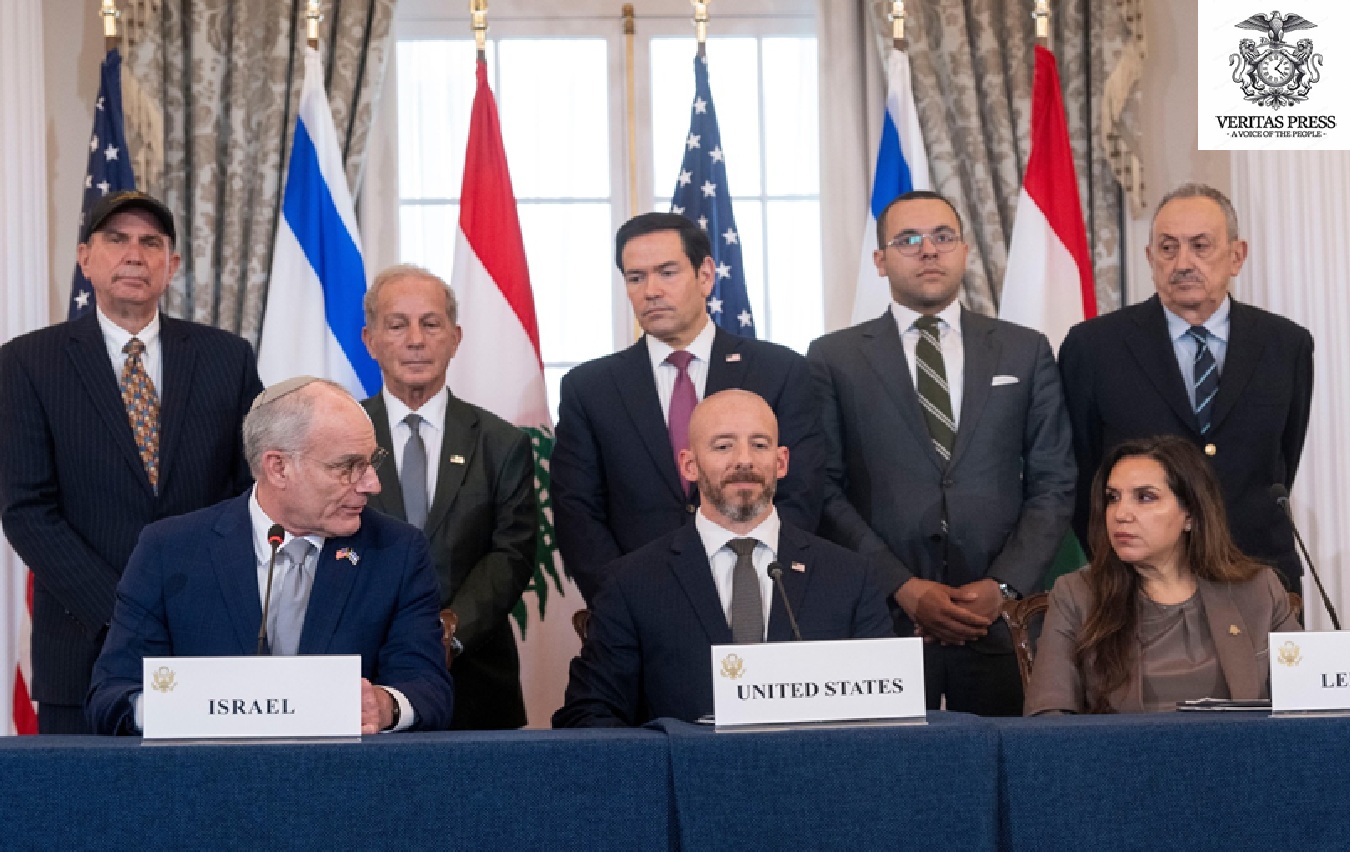
The framework agreement Ammar referenced was inked on June 26 under urgent US mediation, intended to halt an Israeli offensive that had been raging since March 2. That offensive has, according to Lebanon’s Health Ministry, killed at least 4,303 people, wounded 12,202 more, and displaced an estimated 1.5 million citizens, the vast majority of whom are not sheltered in formal camps but scattered across overcrowded apartments, unfinished buildings and public parks. The June 26 accord was supposed to secure an Israeli withdrawal from Lebanese territory. Instead, Ammar charged, it furnished Prime Minister Benjamin Netanyahu and his far-right Finance Minister Bezalel Smotrich with a pretext to declare that Israel had been given international legitimacy to remain inside a so-called “yellow line”, a de facto buffer zone carved out of sovereign Lebanese land.
“The recent statements of criminal Israeli Prime Minister Benjamin Netanyahu and extremist Finance Minister Bezalel Smotrich are tantamount to denunciation of the Lebanese government,” Ammar said, “which has given the enemy a pretext to assert it has been given the legitimacy to remain.” He was referring to comments made by Netanyahu last week claiming the June agreement allows the Israeli army to “maintain a security presence” in a band of villages up to five kilometres from the border. Smotrich went further, publicly musing that if the Lebanese army did not disarm Hezbollah south of the Litani River, Israel would be “compelled to do the job permanently.”
Adding to the combustible mix, Israeli Chief of the General Staff Eyal Zamir issued what Ammar termed “an illegitimate request” for the Lebanese Armed Forces (LAF) to confront Hezbollah fighters directly. Zamir’s statement, circulated by Israeli military correspondents, suggested that the LAF should “complete the mission” the IDF could not finish in its devastating three-month campaign. Ammar warned: “These statements, which are considered a violation of Lebanon’s sovereignty and intervention in its internal affairs, require a firm official position.”
No such position has materialised. The Lebanese government, a caretaker cabinet operating under a prolonged political vacuum, has issued only a single, terse foreign ministry communiqué in response to the Israeli assertions, calling them “regrettable” while reaffirming Lebanon’s commitment to the “full implementation” of the June framework. Repeated attempts by this reporter to obtain comment from the Prime Minister’s office, the Ministry of Defence, and the Army Command went unanswered. A senior diplomatic source, speaking on condition of anonymity, said Beirut has been warned by Washington that any “robust” condemnation of Israeli actions could imperil the nascent reconstruction fund pledged at a Paris donors’ conference, leaving the administration paralysed between popular outrage and financial survival.
The Living Reality Of A Paper Ceasefire:
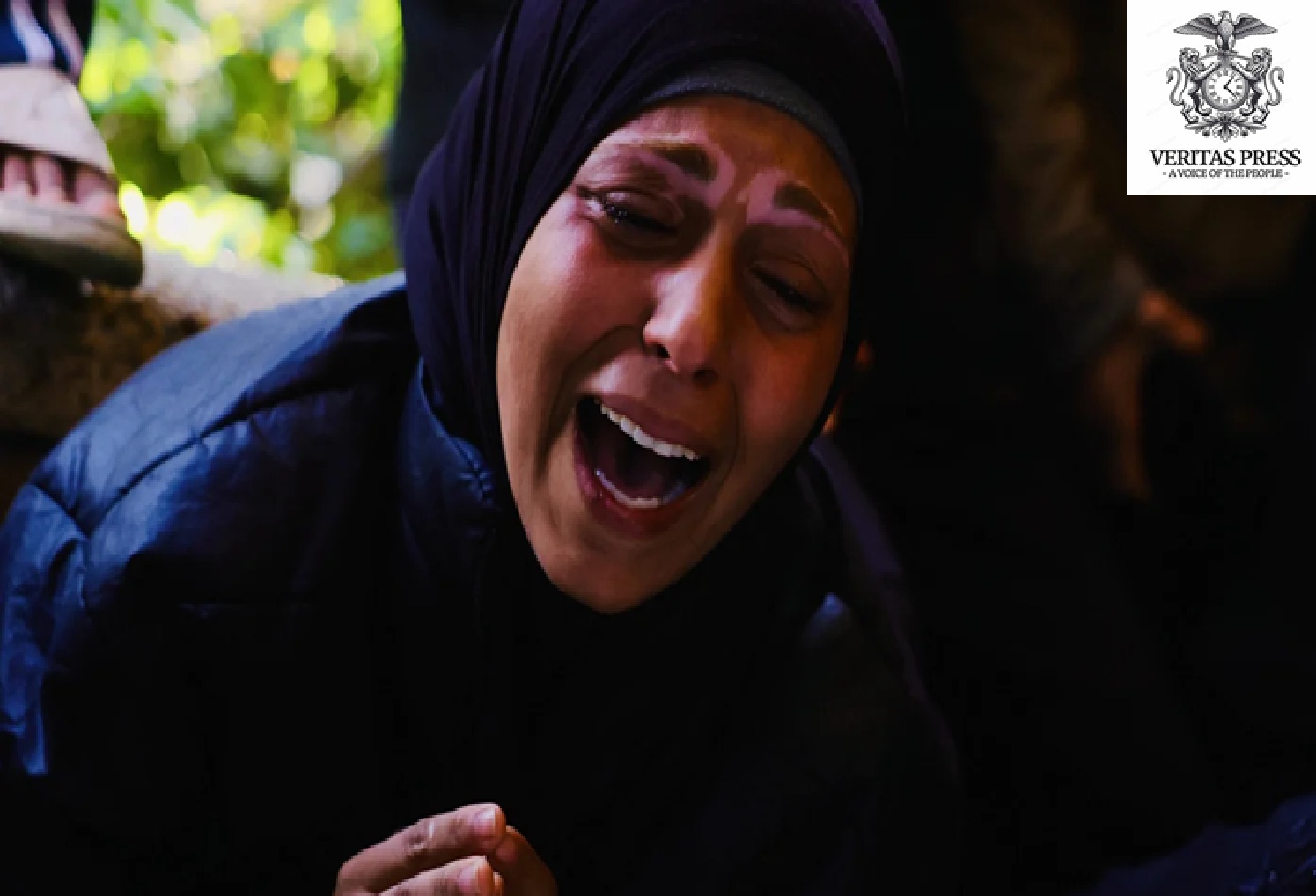
On the ground, the dissonance is staggering. In Aitaroun, municipal official Hassan Bazzi watched the dust settle over what was once a street of twelve homes. “We were told the agreement would bring the army back, that we could return,” he said, his voice hoarse. “Yesterday, the Israelis came with loudspeakers and told us to evacuate the few houses still standing. Then they blew them up. Where is the state? Where is the army? We are alone.”
One of the destroyed structures belonged to Umm Jawad, a 58-year-old widow who had sheltered sixteen relatives. “They said we could go back after the June agreement. We came, we cleaned the rubble, we put blankets on the floor. Last night they levelled it again. They are burning our future with phosphorus, and nobody stops them.” Reports from Houla in the Marjeyoun district confirm that Israeli forces carried out an overnight bombing operation on Sunday, targeting what residents say was a disused water pumping station, an attack the Israeli military spokesperson justified as a strike on “Hezbollah command infrastructure.” No casualties were reported, but the strike shattered windows for a kilometre and sent terrified families fleeing into olive groves.
The United Nations Interim Force in Lebanon (UNIFIL) issued a statement Monday expressing “serious concern over the continued destruction of civilian property and airspace violations” and calling on all parties to “exercise maximum restraint.” Yet, as has been the case since the 2006 war, the peacekeepers are powerless to intervene in active demolitions; their patrols are frequently turned back at Israeli roadblocks.
The Islamabad Memorandum: A Ceasefire That Wasn’t.
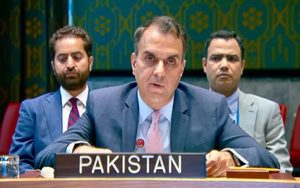
Compounding the sense of diplomatic farce, on July 2, Pakistani Prime Minister Shehbaz Sharif stunned the international community by announcing the electronic signing of the “Islamabad Memorandum of Understanding” between the United States and the Islamic Republic of Iran. The accord, hammered out in secret talks over several weeks, reportedly mandates “a simultaneous and comprehensive ceasefire on all fronts,” explicitly including Lebanon. Sharif heralded it as “a historic breakthrough for regional peace.” Iranian state media confirmed that Tehran expects “all allied groups” to abide by the ceasefire, while a senior Biden administration official, speaking on background, called the deal “a critical off-ramp.”
Yet five days later, the demolitions in Aitaroun and the drone incursions over Dahieh continue unabated. A Western diplomat in Beirut, who requested anonymity to discuss sensitive negotiations, told this reporter that the United States has privately assured Israel that the Islamabad MoU does not constrain “defensive operations” against “imminent threats” and that the definition of those threats remains, in practice, at Israel’s sole discretion. “The agreement was about Iran’s direct assets, not Hezbollah’s tactical infrastructure,” the diplomat said. “Israel was never going to leave those hills.”
Hezbollah, for its part, has kept its fire astonishingly restrained since March, adhering to a unilateral understanding to avoid giving Israel a pretext for a full-scale re-invasion. But its patience is visibly fraying. Ammar’s Sunday address was laced with barely coded warnings. “The Lebanese nation expects the authorities to give a clear and unequivocal response to these brazen statements, instead of wasting time, making excuses and interpreting the agreement outside its framework,” he said. “Then they might be able to retain the least credibility remaining following a string of substantial concessions.” He went on to call on governing bodies to “rectify their mistakes and assume their national responsibility by reversing these decisions, which have yielded nothing other than weakening Lebanon and sapping its sources of strength.”
Human rights organisations have begun to document what they are calling a systematic campaign of collective punishment. Amnesty International’s Beirut-based researcher, Layal Saqr, said in a statement released Monday that “the deliberate demolition of civilian homes in Aitaroun, in an area supposed to be covered by a ceasefire, constitutes a grave breach of international humanitarian law. The international community’s silence is complicity.” The Legal Agenda, a Lebanese NGO, has filed an urgent appeal to the UN Special Rapporteur on adequate housing, describing the Israeli operations as “domicide” intended to render border villages permanently uninhabitable.
A State Hollowed Out:
The core crisis, as articulated by critics and even some former ministers, is less about Israeli bad faith than about the Lebanese state’s voluntary forfeiture of sovereignty. The June 26 agreement, drafted under the shadow of an ongoing bombardment that had killed the chief of Hezbollah’s missile unit and levelled parts of Nabatieh, contained ambiguous language on “security arrangements” and “interim measures.” Israeli negotiators, according to leaked minutes published by the Israeli daily Haaretz, insisted on clauses allowing the IDF to “address residual threats” until the Lebanese army is “credibly deployed.” The United States, the guarantor, signed off. Beirut accepted.
“The government walked into a trap,” said Dr. Rami Khouri, a political analyst and professor at the American University of Beirut. “It needed a ceasefire so desperately that it accepted language Israel could weaponise to legitimise permanent occupation of a strip of southern Lebanon. Now Netanyahu can say to his right wing: look, we got the Lebanese to agree to our security zone. And the Lebanese government cannot even complain loudly because that would expose its own signature.”
Into this void steps the figure of Israeli army chief Eyal Zamir, whose reported call for the LAF to confront Hezbollah is seen here as an incendiary attempt to trigger internal conflict. A senior Lebanese military source, declining to be named, firmly rejected the notion. “The Lebanese army is the guardian of civil peace, not a proxy force for any foreign power. Our mission is to deploy in the south alongside UNIFIL, not to turn our guns on fellow Lebanese. Those statements only serve the enemy’s agenda.” However, the army’s deployment south of the Litani remains largely theoretical; without a political mandate to challenge Israeli bulldozers, it has stayed on the edges of the destruction, conducting patrols that avoid friction.
A Tipping Point?
The juxtaposition of the US-Iran deal and the relentless demolition campaign has created a new and dangerous dynamic. Iran’s willingness to sign a memorandum that includes Lebanon’s front suggests Tehran is prioritising its own strategic relief over immediate support for Hezbollah, a calculation that leaves the Lebanese resistance movement in an awkward limbo. Hezbollah officials have publicly welcomed the “spirit” of the Islamabad agreement but warned that “occupation cannot be legitimised by any paper.” Privately, party cadres express fears of a repeat of the post-2006 scenario, where a UN resolution was supposed to create a buffer zone free of armed militants but instead became a justification for permanent Israeli surveillance and intermittent strikes.
For Lebanese civilians, the geopolitical manoeuvring translates into unending dread. In a school-turned-shelter in Sidon, where dozens of displaced families from Aitaroun and Houla are crammed into classrooms, a graffiti scrawled on a blackboard reads: “June agreement + Islamabad memo, zero.” Fatima Mroue, a mother of four whose husband was killed in a March air raid, sat on a thin mattress and asked: “Who will protect us? The Americans who sign papers with Iran? The Lebanese government that doesn’t even answer the phone? The army that watches from a distance? We are tired of being the laboratory for everyone’s diplomacy.”
As dusk fell on Monday, Israeli drones still prowled over Dahieh, their hum mingling with the call to evening prayer. In the south, the debris of Aitaroun’s latest demolition smoked faintly. Ali Ammar’s demand for a “clear and unequivocal response” hung unanswered in the heavy summer air, another question swallowed by a state that has grown adept at silence. With each unpunished violation, the “framework” that was supposed to bring calm is becoming the scaffold for a new, permanent reality of occupation, and the credibility of those who signed it is crumbling faster than the houses of the borderland.
Popular Information is powered by readers who believe that truth still matters. When just a few more people step up to support this work, it means more lies exposed, more corruption uncovered, and more accountability where it’s long overdue.
Help Protect Independent Journalism, Which Is Currently Under Attack.
If you believe journalism should serve the public, not the powerful, and you’re in a position to help, becoming a DONOR or a PAID SUBSCRIBER truly makes a difference.
DONATION APPEAL: If You Found This Reporting Valuable, Please Consider Supporting Independent Journalism.
Your support fuels our fearless, truth-driven journalism. In unity, we endeavour to amplify marginalised voices and champion justice, irrespective of geographical location. We operate independently, without any financial backing from billionaires.
But it’s also extremely important. One of Veritas Press’s greatest assets is its reader-funded model.
1. Reader funding means we can cover what we like. We’re not beholden to the political whims of a billionaire owner. We are a small, independent and impartial organisation. No one can tell us what not to say or what not to report.
2. Reader funding means we don’t have to chase clicks and traffic. We’re not desperately seeking your attention for its own sake: we pursue the stories that our editorial team deems important and believes are worthy of your time.
3. Reader Funding: enables us to keep our website and other social media channels open, allowing as many people as possible to access quality journalism from around the world, particularly those in places where the free press is under threat.
We know not everyone can afford to pay for news, but if you’ve been meaning to support us, now’s the time.
Your donation goes a long way. It helps us:
Keep the lights on and sustain our day-to-day operations
Hire new, talented independent reporters
Launch real-time live debates, community-focused shows, and on-the-ground reporting
Cover the issues that matter most to our communities, in real time, with depth and integrity
We have plans to expand our work, but we can’t do it without your support. Every contribution, no matter the size, helps us stay independent and build a truly people-powered media platform.
If you believe in journalism that informs, empowers, and reflects the communities we serve, please donate today.
Submissions:
For The Secure Submission Of Documentation, Testimonies, Or Exclusive Investigative Reports From Any Global Location, Please Utilise The Following Contact Details For Our Investigations Desk: enquiries@veritaspress.co.uk or editor@veritaspress.co.uk
Kamran Faqir is a volunteer investigative journalist and writer committed to exposing hidden truths and amplifying underreported stories. Driven by social justice, he brings sharp insight and fearless truth-telling to independent journalism. NUJ registered.
SEATTLE, TEHRAN — The U.S. Department of Homeland Security (DHS) will allow Iran’s national football team to enter the country 48 hours before their critical World Cup match against Egypt on Friday, a modest concession in a tournament where Team Melli’s travel conditions have sparked claims of oppression and competitive disadvantage.