Kamran Faqir is a volunteer investigative journalist and writer committed to exposing hidden truths and amplifying underreported stories. Driven by social justice, he brings sharp insight and fearless truth-telling to independent journalism. NUJ registered.
Article Date Publishing:
Article Date Modified:
17 minutes
Views:337
Listen to this article
Help support our mission, donate today and be the change. Every contribution goes directly toward driving real impact for the cause we believe in.
How An Extremist Minister And A Compliant Environment Minister Turned A Grotesque Political Provocation Into A Live Policy, Bypassing Legal Safeguards, Animal Welfare, And International Law.
JERUSALEM — What began two and a half years ago as a grotesque political provocation by Israel’s most incendiary cabinet minister has now advanced further than almost anyone anticipated. After a contentious legal reclassification, sustained pressure on regulatory agencies, and the deliberate bypassing of her own ministry’s legal adviser, Environmental Protection Minister Idit Silman has cleared the path for the Israel Prison Service to deploy live Nile crocodiles as a security barrier around prisons holding Palestinian detainees. The so-called “crocodile prison” plan, championed by National Security Minister Itamar Ben-Gvir, is no longer merely a macabre thought experiment; it is a live policy initiative with feasibility studies, budgetary estimates, and a pilot site already identified.
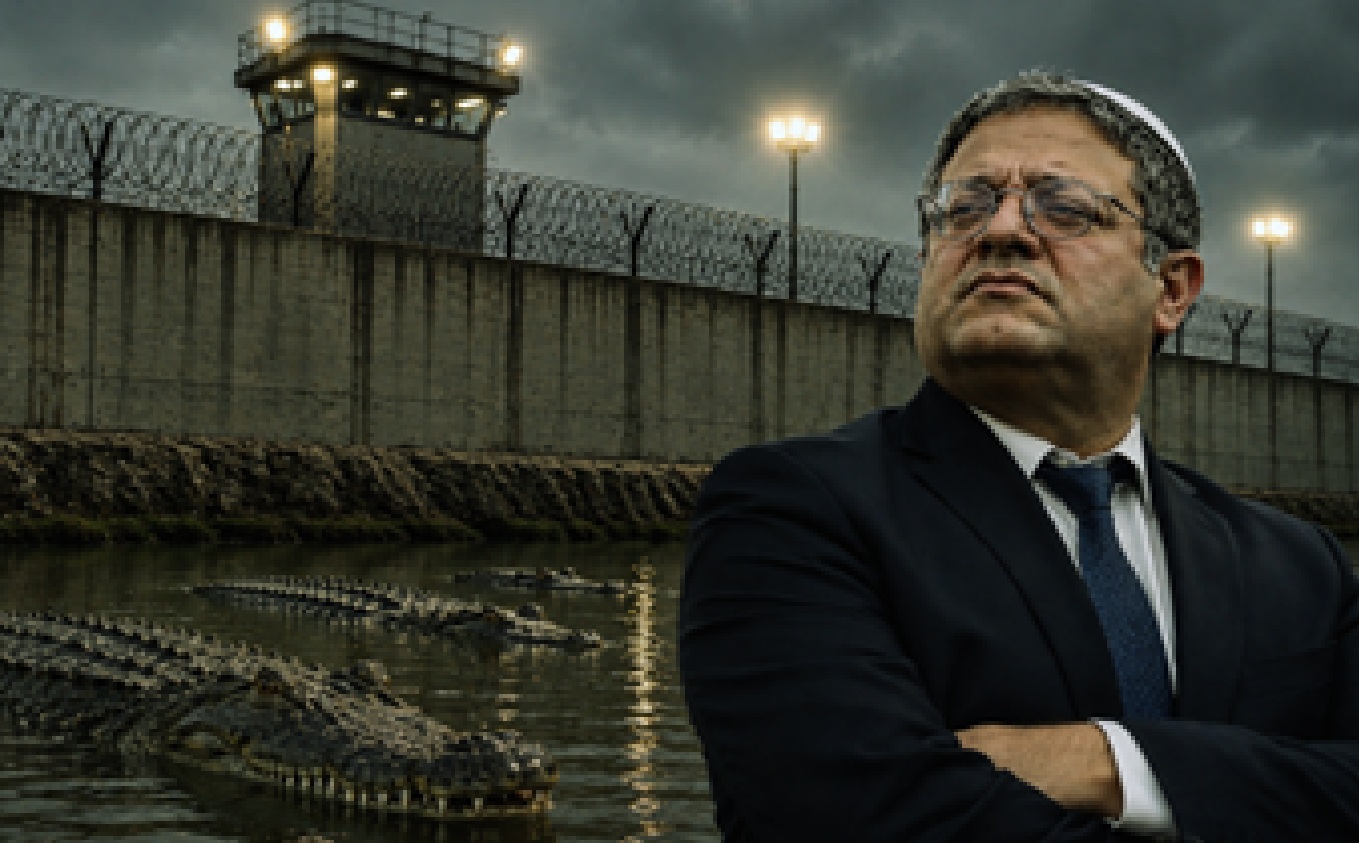
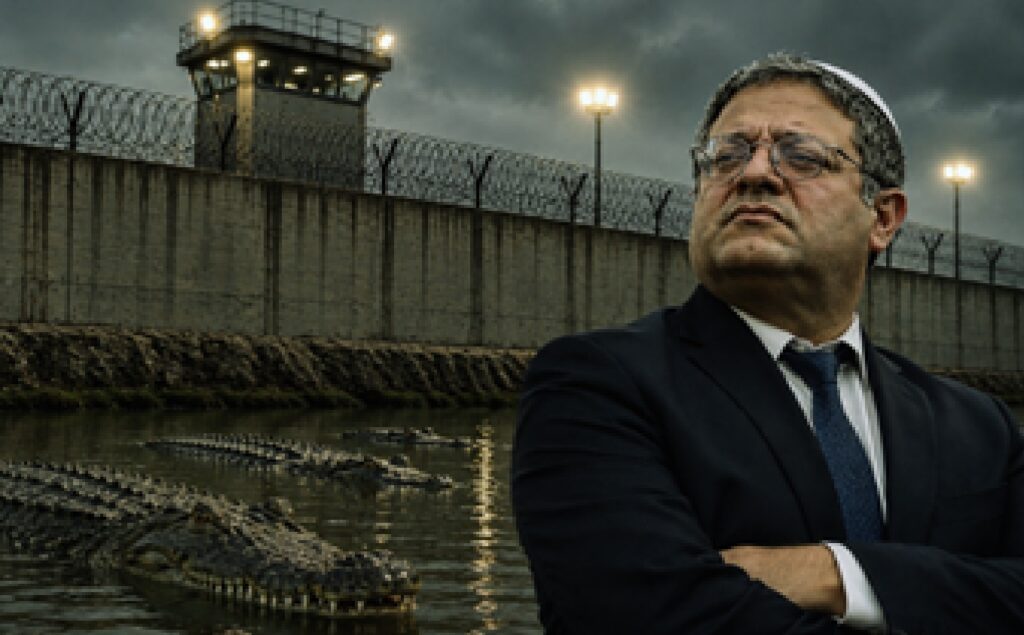
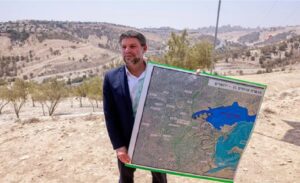
Israeli National Security Minister Itamar Ben-Gvir may be one step closer to realizing his crocodile prison proposal. (Illustration: PC)
Yet the deeper story here is not simply about crocodiles. It is about how an extremist minister with a criminal record has systematically dismantled norms of incarceration, pushed the boundaries of legality, and weaponised state resources to further degrade the lives of thousands of Palestinians held in Israeli custody, while the international community largely watches in silence. This investigation, drawing on exclusive documents, legal opinions, and interviews with officials, activists, and rights organisations, reveals how a proposal that “any person of sound mind understands as utter stupidity,” as one journalist put it, has been willed toward implementation through a combination of legal manipulation, bureaucratic bullying, and an ideological project to inflict maximum suffering on detainees.
The Legal Alchemy: Reclassifying A Predator.
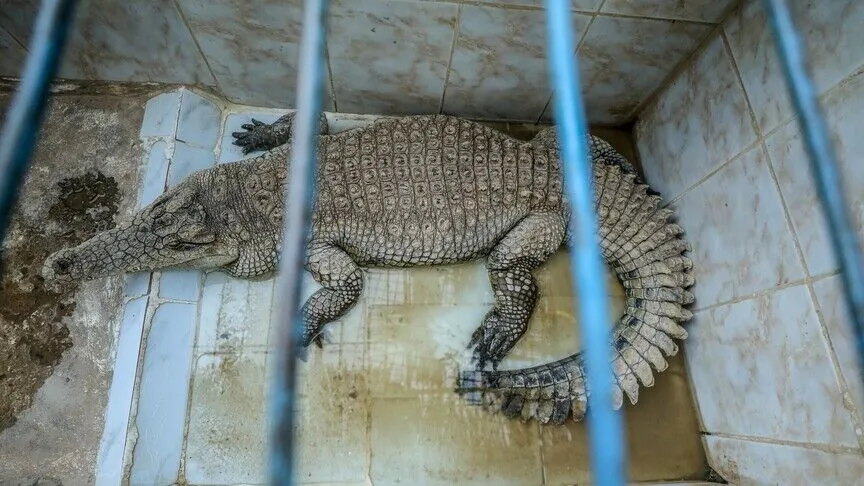
The key legal obstacle that had stalled Ben-Gvir’s proposal for more than a year was the protected status of the Nile crocodile (Crocodylus niloticus) under Israel’s Wildlife Protection Law. The Wildlife Protection Law only allowed licensed zoological institutions to hold crocodiles. These institutions could only hold them for education, research, or public information purposes. The Israel Nature and Parks Authority (INPA), the statutory guardian of the country’s wildlife, firmly opposed the idea of using apex predators as prison guards. “We need to protect them, not have them protect us,” an INPA official told the national security ministry in an early meeting. “That is not the spirit of the law.”
Faced with that wall, Silman engineered an end-run. In July 2024, she signed an order reclassifying the Nile crocodile as a “managed wild animal” (chayat bar metupelet), a category created decades ago to permit commercial crocodile farming for skins, a practice that was itself shut down by a previous environmental protection minister, Gilad Erdan, following escapes and public safety incidents. By reviving that dormant legal category and grafting onto it a new, unprecedented purpose, “cultivated wild animal kept for security purposes”, Silman effectively legislated through ministerial fiat.
The legal opinion from her own ministry’s legal adviser, attorney Neta Drori, obtained and reviewed for this article, was scathing. Drori wrote that “there was insufficient professional and factual evidence” to proceed, that “there is no known professional precedent for using crocodiles as a security measure at modern prisons,” and that the Israel Prison Service’s claim of precedent in the United States was disingenuous. “It was noted that this was a short-lived trial that was discontinued,” Drori wrote, adding that the American experiment “apparently took place in an area where crocodiles already occur in the wild, and there is therefore no basis for comparison.”
Drori further warned that any such designation would require primary legislation, not a ministerial decision, because it created an entirely new legal category. She demanded an in-depth examination of animal welfare and public safety, noting pointedly that although prison service officials claimed expertise based on their canine units, “the organisation apparently has no expertise in raising dangerous wild animals such as crocodiles.”
Silman dismissed Drori’s position, insisting that a senior INPA professional had indicated the authority did not oppose the initiative—a characterisation that INPA officials have privately disputed, noting that the professional in question was speaking informally and that the authority’s plenum has consistently opposed the plan. The Environmental Protection Ministry’s plenum is expected to review the matter soon, and Silman’s declaration has already taken effect.
“The minister is acting contrary to her own legal adviser, contrary to the legal opinion of the Israel Nature and Parks Authority, contrary to the authority’s plenum, and contrary to the law,” a senior professional official told me, speaking on condition of anonymity for fear of reprisal. “In other words, there is no legal basis for this.”
The Architect: Itamar Ben-Gvir’s War On Prisoners.
To understand the crocodile proposal, one must understand the man behind it. Itamar Ben-Gvir entered the Knesset as the leader of the Jewish Power party after a political career built on racist incitement, anti-Arab violence, and veneration of the terrorist Baruch Goldstein, who massacred 29 Palestinian worshippers in Hebron in 1994. Ben-Gvir himself has multiple criminal convictions, including for supporting a terrorist organisation and racist sedition. As national security minister, he has made the systematic worsening of prison conditions for Palestinian detainees a centrepiece of his tenure.
Within months of taking office, Ben-Gvir restricted shower durations for Palestinians held on security charges, banned prison bakeries that inmates had operated, slashed the number of family visits, and authorised the confiscation of kitchen equipment. His policies have been explicitly punitive. “We will make their conditions harsh, and they will not receive the rights they had before,” he declared in February 2023. “No more summer camps.”
The crocodile proposal first surfaced in December 2023, when Ben-Gvir raised it with the head of the prison service, according to Channel 13. He envisioned a new high-security prison where waterways teeming with crocodiles would deter escape. In January 2024, prison officials went to a crocodile farm in northern Israel to study how to handle and care for crocodiles. According to Channel 7, officials briefed on the project argued that crocodile-filled moats could simultaneously strengthen perimeter security and reduce personnel costs by limiting the need for conventional perimeter guards.
The economic argument is flimsy. A juvenile crocodile costs approximately $8,000, and an adult can cost as much as $20,000, Channel 7 reported, figures that add up quickly when you consider a moat around an entire prison. Even setting aside the ethics of turning living creatures into a killing barrier, the proposal is fiscally absurd in a prison system plagued by severe overcrowding and a desperate shortage of detention cells. Former Israeli government spokesman Eylon Levy captured the absurdity: “There is no problem in Israel of prisoners escaping from prisons. It has a severe problem of a shortage of detention cells … it is possible to address the problem, or it is possible to behave like villains from James Bond movies because there is nothing cheaper than populism.”
Journalist Josh Breiner was blunter: “This idea perfectly expresses the level of populism that the criminal minister has sunk to.”
The Torture Infrastructure:
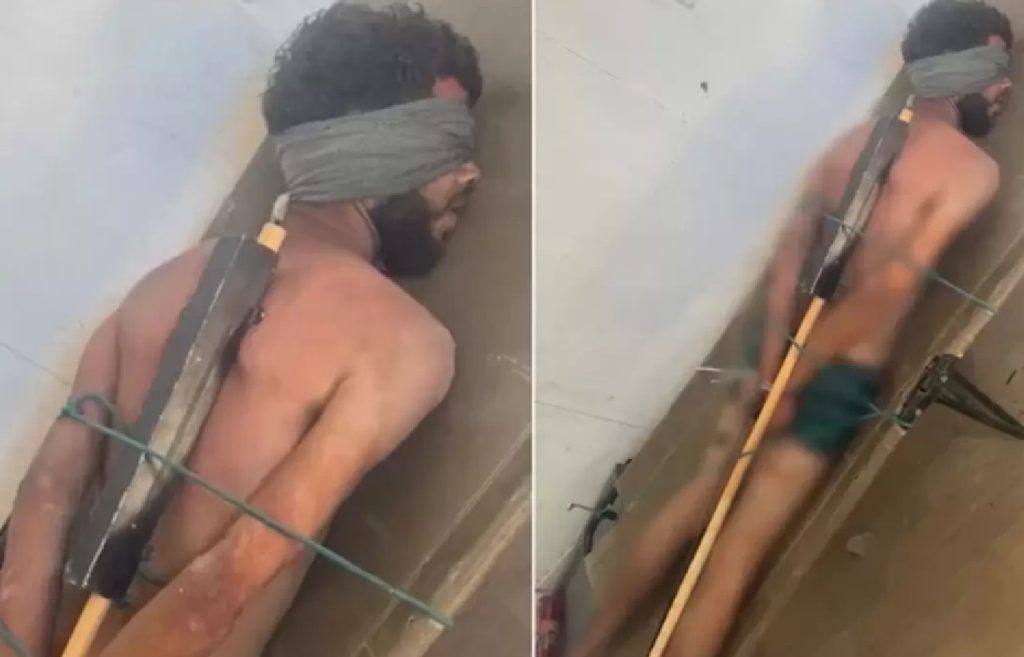
The crocodile plan lands against the backdrop of an Israeli prison system that leading human rights organisations describe as a network of torture camps. In January 2024, B’Tselem, Israel’s most prominent human rights watchdog, published a harrowing report titled “Welcome to Hell,” which documented systematic abuse on a scale unseen in decades. “The prisons continue to function as a network of torture camps for Palestinians, with the systematic abuse even more extensive than before,” the report found. “This includes physical and psychological abuse, inhuman conditions, deliberate starvation and denial of medical care, all of which has led to numerous deaths.”
Since October 2023, the number of Palestinians in Israeli custody has surged, with current estimates placing the figure at around 9,500, a number that includes women, children, administrative detainees held without charge or trial, and hundreds captured during Israel’s military operations in Gaza. Rights organisations, including Addameer and the Palestinian Prisoner’s Society, have documented dozens of deaths in custody, with allegations of severe beatings, sexual violence, medical neglect, and outright execution.
In July 2024, the Israeli human rights group Physicians for Human Rights–Israel released testimony from a released detainee who described being held in a cage, beaten with clubs and rifle butts, and denied treatment for a broken arm. United Nations Special Rapporteur on torture Alice Jill Edwards has called for an independent investigation into what she described as “credible allegations of torture and ill-treatment” of Palestinian detainees. The International Committee of the Red Cross systematically lacks access to many detention sites.
It is within this context, one of mass arbitrary detention, systemic abuse, and dehumanisation, that the Israeli government is devoting ministerial time, legal resources, and public funds to the question of how best to deploy crocodiles around prison perimeters. To critics, the proposal is less about security than about the performative cruelty that defines Ben-Gvir’s political brand, a symbolic message that Palestinian prisoners are to be treated not as human beings with rights but as dangerous animals to be caged and threatened with death.
Animal Welfare, Public Safety, And The Forgotten Precedent:
Beyond the human rights dimension, the crocodile plan raises profound concerns about animal welfare and public safety, concerns that Israel has previously confronted during its ill-fated experiment with commercial crocodile farming. In the early 2000s, crocodile farms operating under the same “managed wild animal” category that Silman has now revived led to multiple escapes, including incidents in which crocodiles reached residential areas and posed a lethal threat to the public. The advisory committee of the Nature and Parks Authority’s plenum recommended ending the practice, and then-minister Gilad Erdan did so.
Silman’s order essentially resurrects a dead letter of the law, but with a far more dangerous twist: instead of raising the animals in controlled agricultural settings for skins, they will place the animals in open-air moats around a prison facility, subjecting them to environmental conditions, potential sabotage, and the reality that prisoners, guards, and surrounding communities could face deadly attacks. Crocodiles are not domestic dogs; they are highly intelligent ambush predators that can grow to over five metres, are capable of explosive bursts of speed on land, and are known to escape enclosures even in reputable zoological parks. The Israel Prison Service’s claim that its experience with canine units translates to crocodile management is, in the words of the legal adviser’s letter, unfounded.
Environmental and animal rights organisations have been vocal in their opposition. Let the Animals Live, an Israeli animal protection group, has called the plan “a dangerous circus” and threatened legal action under Israel’s Animal Welfare Law, which prohibits causing unnecessary suffering to animals. The group’s legal director, Yael Arkin, told me: “Reptiles experience stress, pain, and deprivation. Placing them in a moat designed to terrorise humans, where they may be shot or injured during escape attempts, is an act of institutional animal abuse that has no place in a modern society.”
The International Echo Chamber Of Silence:
Despite all domestic criticism, other countries have offered a muted response. The crocodile scheme has been reported in international media as a bizarre curiosity, but it has not triggered the kind of diplomatic interventions or sanctions threats that would accompany similar acts by other states.
One senior European diplomat, speaking on background, admitted that while the crocodile plan is viewed with “deep unease” in European capitals, it is seen as “part of a broader pattern that we are already failing to address”, a reference to the escalating violence in Gaza and the West Bank, the expansion of settlements, and the systemic mistreatment of detainees. “If we cannot stop the mass killing of children in Gaza, why would anyone take us seriously on crocodiles?” the diplomat asked. “Ben-Gvir thrives on this. He knows there is impunity.”
Indeed, international law prohibits collective punishment, torture, and cruel, inhuman, or degrading treatment. The Fourth Geneva Convention explicitly protects detainees. Yet Israeli officials, including Ben-Gvir, have explicitly framed the worsening of prison conditions as a deliberate policy of collective punishment. The crocodile proposal, whether implemented or not, functions as a further instrument of psychological torture, a threat of a horrific death that is meant to break the spirit of prisoners and send a chilling message to their families and communities.
Sahar Francis, director of the Palestinian human rights organisation Addameer, described the plan as “a continuation of the fascist, racist ideology that sees Palestinians as subhuman, as beasts to be controlled.” In a phone interview, she said: “When you propose surrounding a prison with crocodiles, you are telling the world that you consider the people inside to be lower than animals. This is the logical endpoint of a system that has spent decades dehumanising Palestinian prisoners.”
Where Things Stand: From Fever Dream To Feasibility Study.
As of July 2026, the project has moved from political rhetoric to a formal feasibility study. A pilot is earmarked for Ketziot Prison, a sprawling facility in the Negev desert that already holds a large population of Palestinians held on security-related charges. According to sources familiar with the planning, the prison service has prepared preliminary designs for a moat system that would encircle the facility, with water sourced through desert-adapted engineering. A delegation of prison officials has visited commercial crocodile operations in Hamat Gader to study containment protocols, feeding regimes, and veterinary requirements. Cost estimates have ballooned, but Silman’s reclassification has removed the principal legal hurdle.
Still, the path forward is not assured. The Nature and Parks Authority’s plenum is expected to meet in the coming weeks to deliberate the matter, and conservation professionals are preparing a formal opinion that the reclassification is ultra vires, beyond the minister’s legal authority. Civil society organisations, including the Association for Civil Rights in Israel, are examining options for a High Court petition, citing Drori’s legal opinion and the absence of primary legislation. International animal welfare organisations, including the World Society for the Protection of Animals, have offered to assist local groups in mounting a challenge.
Yet the fact that the proposal has survived this long, and that a sitting minister overrode her own legal adviser to advance it, speaks volumes about the political ecosystem in which it flourishes. Ben-Gvir’s brand of theatrical cruelty has proven remarkably resilient, in part because it serves a political purpose: distracting from the real, structural violence of occupation and incarceration with a spectacle that dominates headlines and feeds the darkest impulses of a constituency radicalised by decades of conflict.
When I asked a senior official in the prison service, speaking off the record, whether anyone truly believed crocodiles would enhance security, the answer was illuminating: “No one thinks a Palestinian is going to try to swim through a crocodile-infested moat. That’s not the point. The point is to make a statement. The statement is: ‘We can do anything to you. We can even put crocodiles around your prison, and no one will stop us.’ That is the security, the psychological security.”
A Test For The Rule Of Law:
Ultimately, the crocodile prison saga is not a story about animals; it is a story about power without restraint. It is the tale of a minister who has made official cruelty his political signature, and of a government that enables him. It is about the erosion of legal safeguards, the hollowing out of institutional checks, and the instrumentalisation of wildlife for a project of domination.
Idit Silman’s reclassification order may yet be struck down by the courts, but the fact that it was signed at all, over the explicit objection of the ministry’s own legal adviser and the country’s wildlife protection authority, sends an unmistakable signal that the rule of law is itself on the docket. If a government can redefine a crocodile as a security asset by ministerial decree, what other protections, human or ecological, can be similarly dismantled?
For the approximately 9,500 Palestinians currently held in Israeli custody, the answer is already clear. Their guards have been given a licence to starve, beat, and humiliate. Their overseers promise worse. And now, if Ben-Gvir and Silman have their way, they will be forced to live in the shadow of creatures that can tear a human body apart, not as a security necessity, but as a political spectacle, a final degradation, and a warning to anyone who believes that the most extreme fantasies of the Israeli far right remain safely in the realm of fiction.
Source:Veritas Press C.I.C. | Multi-News Agencies
Help Support Our Work By Donating
Readers who believe that truth still matters power popular information. When just a few more people step up to support this work, it means more lies exposed, more corruption uncovered, and more accountability where it’s long overdue.
Help Protect Independent Journalism, Which Is Currently Under Attack.
If you believe journalism should serve the public, not the powerful, and you’re in a position to help, becoming a DONOR or a PAID SUBSCRIBER truly makes a difference.
DONATION APPEAL: If You Found This Reporting Valuable, Please Consider Supporting Independent Journalism.
Your support fuels our fearless, truth-driven journalism. In unity, we endeavour to amplify marginalised voices and champion justice, irrespective of geographical location. We operate independently, with no financial backing from billionaires; our readers support us.
But it’s also extremely important. One of Veritas Press’s greatest assets is its reader-funded model.
1. Reader funding means we can cover what we like. We’re not beholden to the political whims of a billionaire owner. We are a small, independent and impartial organisation. No one can tell us what not to say or what not to report.
2. Reader funding means we don’t have to chase clicks and traffic. We’re not desperately seeking your attention for its own sake; we pursue the stories that our editorial team deems important and believes are worthy of your time.
3. Reader Funding: enables us to keep our website and other social media channels open, allowing as many people as possible to access quality journalism from around the world, particularly those in places where the free press is under threat.
We know not everyone can afford to pay for news, but if you’ve been meaning to support us, now’s the time.
Your donation goes a long way. It helps us:
Keep the lights on and sustain our day-to-day operations
Hire new, talented, independent reporters
Launch real-time live debates, community-focused shows, and on-the-ground reporting
Cover the issues that matter most to our communities, in real time, with depth and integrity
We have plans to expand our work, but we can’t do it without your support. Every contribution, no matter the size, helps us stay independent and build a truly people-powered media platform.
If you believe in journalism that informs, empowers, and reflects the communities we serve, please donate today.
Submissions:
For The Secure Submission Of Documentation, Testimonies, Or Exclusive Investigative Reports From Any Global Location, Please Utilise The Following Contact Details For Our Investigations Desk: enquiries@veritaspress.co.uk or editor@veritaspress.co.uk
Kamran Faqir is a volunteer investigative journalist and writer committed to exposing hidden truths and amplifying underreported stories. Driven by social justice, he brings sharp insight and fearless truth-telling to independent journalism. NUJ registered.
SEATTLE, TEHRAN — The U.S. Department of Homeland Security (DHS) will allow Iran’s national football team to enter the country 48 hours before their critical World Cup match against Egypt on Friday, a modest concession in a tournament where Team Melli’s travel conditions have sparked claims of oppression and competitive disadvantage.


















































dkpfqy
iogk6j