Israel Draws Up Blueprint For Full-Scale Assault As Death Toll Mounts, And Gaza Is Strangled.
Author:
Kamran Faqir
Kamran Faqir is a volunteer investigative journalist and writer committed to exposing hidden truths and amplifying underreported stories. Driven by social justice, he brings sharp insight and fearless truth-telling to independent journalism. NUJ registered.
Article Date Published:
Article Date Modified:
21 minutes
Views:413
Listen to this article
Help support our mission, donate today and be the change. Every contribution goes directly toward driving real impact for the cause we believe in.
An Investigative Analysis Of Military Plans, Diplomatic Deception, And The Incremental Erasure Of Palestinian Life.
GAZA CITY / RAMALLAH / JERUSALEM — The Israeli military is finalising operational plans for a sweeping ground offensive that would take troops deeper into the Gaza Strip than at any point since the October 2023 invasion, even as Egyptian-mediated talks in Cairo purport to chart a path toward a permanent ceasefire and Palestinian governance. Interviews with military analysts, aid officials, human rights monitors, and Gaza residents, combined with leaked planning details, reveal an accelerating dynamic: a diplomatic process serving as cover for the violent reconfiguration of the territory, the forced displacement of its population, and what legal scholars increasingly call the crime of annexation under the guise of security.
Blueprint For A Large-Scale Assault:
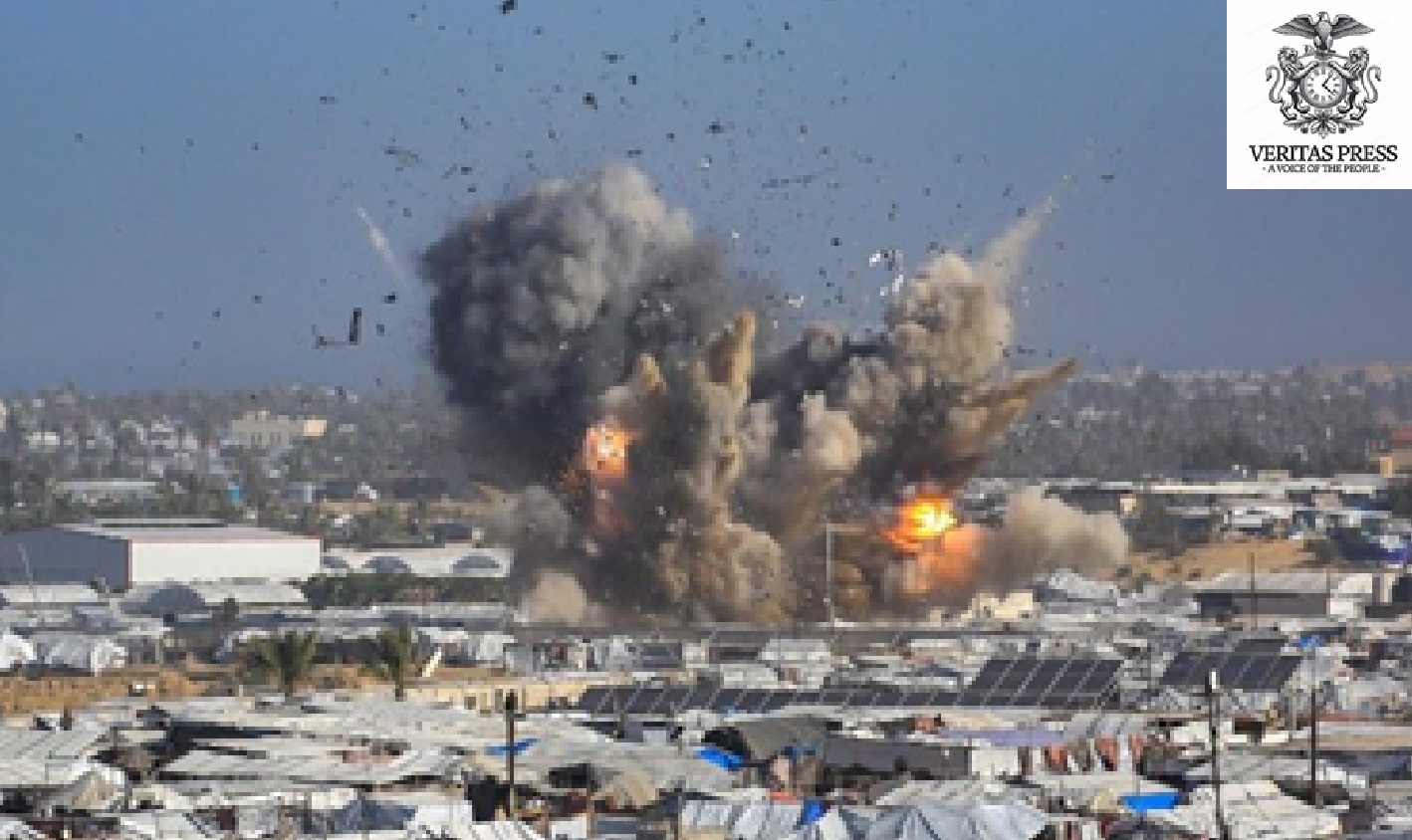
According to a report by the Israeli newspaper Haaretz, Military Chief of Staff Eyal Zamir has, in recent weeks, approved several operational plans presented by the Southern Command. Senior officers are reportedly pressing the political leadership to green-light a new phase that would see forces enter areas previously untouched by ground operations. These include the densely packed refugee camps of central Gaza, Nuseirat, Bureij, and Maghazi, as well as the Al-Mawasi “humanitarian zone” on the southern coast where hundreds of thousands of displaced Palestinians have been concentrated by Israeli evacuation orders, and large swathes of Gaza City that were ostensibly cleared earlier in the war.
A retired senior Israeli defence official, speaking on condition of anonymity because he was not authorised to discuss operational planning, told this reporter: “The concept is not just to re-enter, but to hold territory indefinitely. The political echelon is debating the cost, but the army is ready. It sees the current ceasefire merely as an operational pause.”
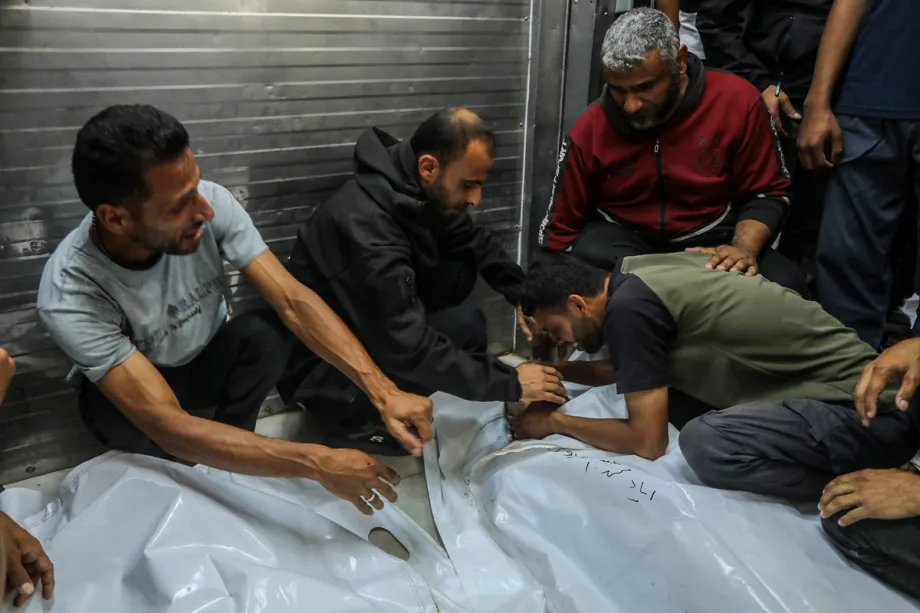
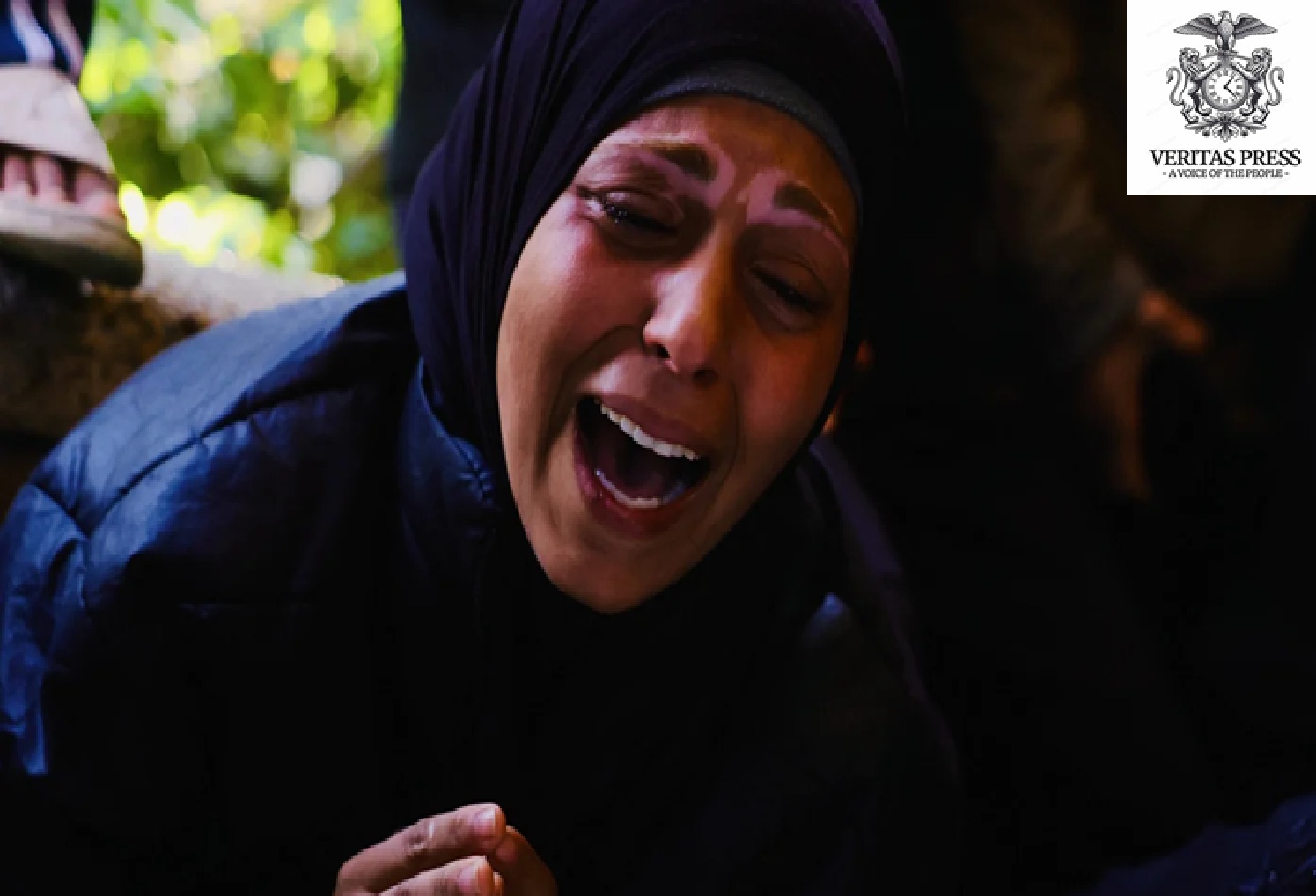
Relatives mourn the loss of Palestinians Iyad Nofal and Ahmed Maarouf, who were killed in an attack by the Israeli army on tents housing displaced people in the Mawasi area of Khan Yunis, Gaza, Palestine on June 08, 2026. [Abed Rahim Khatib – Anadolu Agency]
Haaretz’s military correspondent quoted an unnamed General Staff officer saying, “If the cabinet gives the order, we will go into places we did not go before. This is a different scale. This is occupation 2.0.”
The plans dovetail with Prime Minister Benjamin Netanyahu’s statement last week that he had instructed the military to “take control of 70% of the Gaza Strip” as a “start.” The remark, delivered in a closed-door Knesset committee meeting and later leaked to Israeli media, has been met with international silence, even though it signals an intent to permanently redraw Gaza’s boundaries, effectively shrinking the already blockaded enclave to a rump territory unable to sustain its population.
Ceasefire In Name Only: A Body Count That Keeps Climbing.
The October 2025 ceasefire, brokered after 24 months of genocidal warfare that has killed more than 72,988 Palestinians, according to the Health Ministry, has been violated by Israel more than 3,200 times, per Palestinian monitoring groups. The Gaza Health Ministry stated on Tuesday that eight more Palestinians were killed in the preceding 24 hours, bringing the post-ceasefire death toll to at least 978, including over 300 children, women, and the elderly. Another 3,097 have been wounded.
“Every day brings a funeral,” said Umm Ahmad al-Batran, a mother of six sheltering in a flimsy tent in Al-Mawasi. “We fled here because the army told us it was safe. Now they are talking about entering Al-Mawasi. Where do we go? Into the sea? They have taken everything. Even the ceasefire is a lie.”
On Wednesday, Abdullah Abu Mustafa died of wounds sustained three days earlier when an Israeli strike hit his vehicle on Salah al-Din Road near Al-Mazra’a School in Deir al-Balah. Witness Samir al-Habil, a taxi driver who pulled Abu Mustafa from the burning wreckage, told WAFA: “It was a civilian car. There was no warning, no drone buzz. The missile just came. He was burning. He asked me to tell his children he loved them.” Medical sources confirmed Abu Mustafa, a father of four and a vegetable vendor, had no known political or military affiliations.
Another Palestinian was shot and wounded by Israeli forces west of Nuseirat Camp on the same day. The shooting occurred near the so-called Netzarim Corridor, the fortified military road that bisects the Strip and which Israel has systematically widened since the ceasefire, contrary to withdrawal commitments.
The United Nations High Commissioner for Human Rights, Volker Türk, condemned the relentless violence in a statement this week: “The unrelenting pattern of killings reflects Israel’s sweeping impunity. Palestinians are still being killed and injured in what is left of their homes, shelters and tents of displaced families, on the streets, in vehicles, at a medical facility and in a classroom.”
Ajith Sunghay, head of the UN human rights office in the occupied Palestinian territories, offered a visceral summation in an interview: “It is difficult enough to navigate life in chronic displacement in the ruins of Gaza, under blockade, and after Israeli attacks virtually destroyed every essential system: healthcare, education, food production, law enforcement and civil order. Continuing military attacks on a population living under these conditions is unthinkable. My team documents atrocity after atrocity, and yet the international community acts as though these are mere regrettable incidents rather than systematic crimes.”
A Shrinking Enclave: The Map Of De Facto Annexation.
In mid-March, Israeli forces quietly circulated updated maps to humanitarian organisations. The documents, obtained by this reporter, show that Israel has unilaterally pushed 11% beyond the “yellow line” of demarcation agreed under the October ceasefire. The move brings 64% of the Gaza Strip, rather than the 53% stipulated, under direct Israeli military control. The additional territory includes strategic high ground, agricultural borderlands, and the remaining segments of the Salah al-Din highway, severing north-south connectivity for civilians.
“This is not a temporary security measure,” said Dr. Hagar Shezaf, a geographer and researcher with the Israeli NGO B’Tselem, who has tracked territorial changes since October 2023. “Israel is building permanent infrastructure, paved military roads, forward operating bases, communication towers. The language of temporary buffer zones is a legal fig leaf. What we are witnessing is creeping annexation, exactly the pattern seen in the West Bank over decades.”
The 70% control target floated by Netanyahu, if implemented, would leave approximately 2 million Palestinians corralled in 30% of the Strip, an area roughly equivalent to the size of Manhattan, with no seaport, no airport, and borders controlled entirely by Israel. Gaza’s electricity grid, water network, and sewage systems, already pulverised, would be almost impossible to reconstitute under such conditions, fulfilling what Israeli Defence Minister Israel Katz has called “voluntary migration.”
In a speech at a settler conference in April, Katz said: “Our ultimate objective is to create conditions where Gaza’s population chooses to leave. We must make life there intolerable, not a life, but an existence of permanent misery. That is the lever that will solve the demographic problem.” The statement, captured on video, was condemned by 14 European foreign ministries as “inflammatory and contrary to international law,” but no concrete measures followed.
Dr. Nadia el-Kholy, a Palestinian legal scholar at the Institute for Palestine Studies, does not mince words: “Voluntary migration under conditions of starvation, bombardment, and denial of shelter is not voluntary. It is a forcible transfer. Under Article 49 of the Fourth Geneva Convention, it is a grave breach. Under the Rome Statute, it is a war crime and a crime against humanity. Katz is openly confessing to a policy of ethnic cleansing, and the world looks away.”
The Strangulation Of Aid And The Calculation Of Famine:
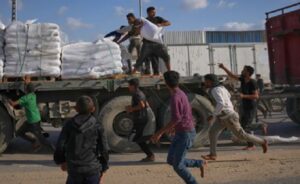
The ceasefire agreement pledged 600 trucks of aid and commercial goods per day. According to UNRWA and the World Food Programme, the daily average since October 2025 has been just 84 trucks. Israel has blocked fuel, construction materials, and medical equipment deemed “dual-use.” Water desalination units, urgently needed as Gaza’s aquifer has been contaminated by seawater intrusion and untreated sewage, sit rotting in Egyptian warehouses, denied entry permits.
“Israel uses humanitarian aid as a weapon,” said Philippe Lazzarini, UNRWA Commissioner-General, in a press briefing last month. “We are being forced to manage the unmanageable. Doctors operate without anaesthesia. Children die from preventable diseases because we cannot bring in vaccines. This is not a logistical problem; this is a deliberate policy to break the population’s will.”
A Médecins Sans Frontières surgeon in Khan Younis, who requested anonymity for security reasons, described amputating the gangrenous leg of a 12-year-old boy with only paracetamol as pain relief. “His name was Youssef. He looked at me and said, ‘Doctor, will I be able to run again?’ I lied and said yes. He died of sepsis two days later because we ran out of broad-spectrum antibiotics. I have nightmares. I write protocols for treating wounds that I know I cannot follow because the medication isn’t there.”
The Integrated Food Security Phase Classification (IPC) Famine Review Committee warned in its latest assessment that parts of northern Gaza are in “Phase 5, Catastrophe,” with famine imminent if the aid blockade persists. Since the report’s release, restrictions have tightened further.
The Cairo Talks: A Smoke Screen For Military Escalation.
Three days into a new round of ceasefire negotiations in Cairo, mediated by Egypt, Hamas and other Palestinian factions delivered a blunt message to mediators: Israel must halt all attacks, allow the flow of aid, and withdraw to the October ceasefire lines before any discussion of phase two can proceed in earnest.
A senior Hamas official told Reuters, “Israel refuses to end attacks on civilians in Gaza, allows less than 15% of the agreed trucks, and continues to occupy more land every day. We are being asked to negotiate over a future governance framework while our people are being slaughtered and starved. The sequencing is a joke. The ceasefire must be implemented before we can discuss what comes next.”
Egyptian mediators, frustrated by Israeli intransigence and wary of regional instability, privately acknowledge the impasse but persist in the process. A European diplomat familiar with the Cairo talks said, “The Americans and Europeans are pushing for a political horizon to calm things down, but the Israeli side is not engaging in good faith. They want to discuss disarmament of Hamas and the future of Gaza as if the occupation and ongoing violations don’t exist. It’s surreal. It’s like negotiating the renovation of a house while the contractor is burning it down.”
Simultaneously, Palestinian Authority Prime Minister Mohammed Mustafa met with a high-level European delegation in Ramallah this week to launch the eighth EU-Palestine Investment Platform. In a pointed address, Mustafa called on Europe to move beyond statements. “Last month alone, 1,659 settler attacks were recorded in the West Bank. The Israeli government is openly accelerating annexation. Clearance revenues are withheld, and the economy has contracted 30%. Our people are being killed in Gaza under a ceasefire you helped broker. Words are not enough. We need European pressure that has teeth, sanctions, suspension of trade agreements, recognition of the State of Palestine with consequences.”
Michael Karnitschnig, acting director-general for the Middle East at the European Commission, reaffirmed the EU’s “unwavering commitment” to the two-state solution and opposition to “unilateral measures.” The language, unchanged for decades, was met with thinly veiled frustration by Palestinian officials. One advisor to Mustafa, speaking anonymously, said: “The European platform is a Potemkin village. You host a conference on private sector investment while the private sector is being systematically destroyed. It’s an exercise in looking busy while Rome burns.”
Voices From A Land Under Siege:
On the ground, the dissonance between diplomatic language and lived reality is shattering.
Sara al-Masri, 29, a poet and English teacher sheltering in a UNRWA school in Nuseirat Camp, recounted the terror of recent nights. “The drones buzz constantly, a grinding sound that never leaves your skull. Two nights ago, a quadcopter fired on a group of teenagers who were just sitting against the wall, charging a phone from a solar panel. One boy, Hamza, 16, was killed instantly. I cleaned his blood off the wall with water we could not afford to waste. When your life is reduced to wiping away the remains of a child with polluted water, you understand that the world has abandoned you.”
In the rubble-strewn streets of Shuja’iyya, east of Gaza City, Abu Khalil, an elderly fisherman, watches the sea from a shattered window. “I fished for 40 years. Now the sea is off-limits. The Israelis shoot at anything that moves beyond the surf. My sons are dead. My boat is matchsticks. They don’t want us to live. They don’t even want us to dream of the sea. What kind of existence is this? This is not a ceasefire. This is a slow death, designed to be invisible to the world.”
International aid workers, their numbers decimated by Israeli strikes on clearly marked humanitarian convoys and facilities, speak of a system poised to collapse entirely. “The attacks on us are not mistakes,” said a senior logistics coordinator for a major INGO, speaking via encrypted message. “We give coordinates. We coordinate movements. And still, our people are targeted. At some point, you have to accept that this is the point. They want us out so that the last thin barrier between the population and total annihilation is removed.”
The UN’s Office for the Coordination of Humanitarian Affairs (OCHA) reported last week that over 60% of all humanitarian movements in May were denied or impeded by Israeli authorities, the highest rate since the ceasefire. The report notes a “pattern of deliberate obstruction” that has forced agencies to suspend medical evacuations and food distributions in multiple areas.
The Silence Of The “International Community” And The Architecture Of Impunity:
What emerges from an examination of the past eight months is a clear strategy: use the ceasefire framework to absorb international pressure while incrementally imposing irreversible facts on the ground. Netanyahu’s 70% plan, Katz’s “voluntary migration” rhetoric, and the military’s new invasion blueprints are not disconnected ambitions; they form a coherent whole.
Professor Omer Bartov, an Israeli historian of genocide currently teaching at Brown University, drew a stark historical parallel: “The pattern is textbook. You declare a ceasefire, then you systematically violate it while blaming the other side. You squeeze the population into smaller and smaller zones under the guise of security, and then, when the diplomatic process collapses, you present the next military operation as a ‘necessity’ to clear the ‘terrorist infrastructure’ from those very zones you forced civilians into. This is not military strategy; it is demographic engineering designed to make Gaza unlivable.”
The International Criminal Court (ICC) prosecutor, whose arrest warrant applications for Netanyahu and former Defence Minister Yoav Gallant remain pending before the Pre-Trial Chamber, was recently urged by over 150 international law professors to seek additional charges for the crime of apartheid and forcible transfer. The court has been paralysed by political pressure and threats of sanctions from the United States, leading critics to accuse it of a double standard in administering international justice.
“The US and its allies have created a parallel legal universe where Israel is exempt from the rules that bind all other nations,” said Kenneth Roth, former executive director of Human Rights Watch. “The result is not just the suffering of Palestinians; it is the accelerating collapse of the post-World War II human rights order. Every war criminal is watching. The message is clear: if you have the right friends, you can do anything.”
Connecting The Dots: Gaza And The West Bank.
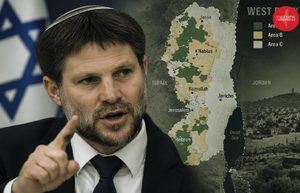
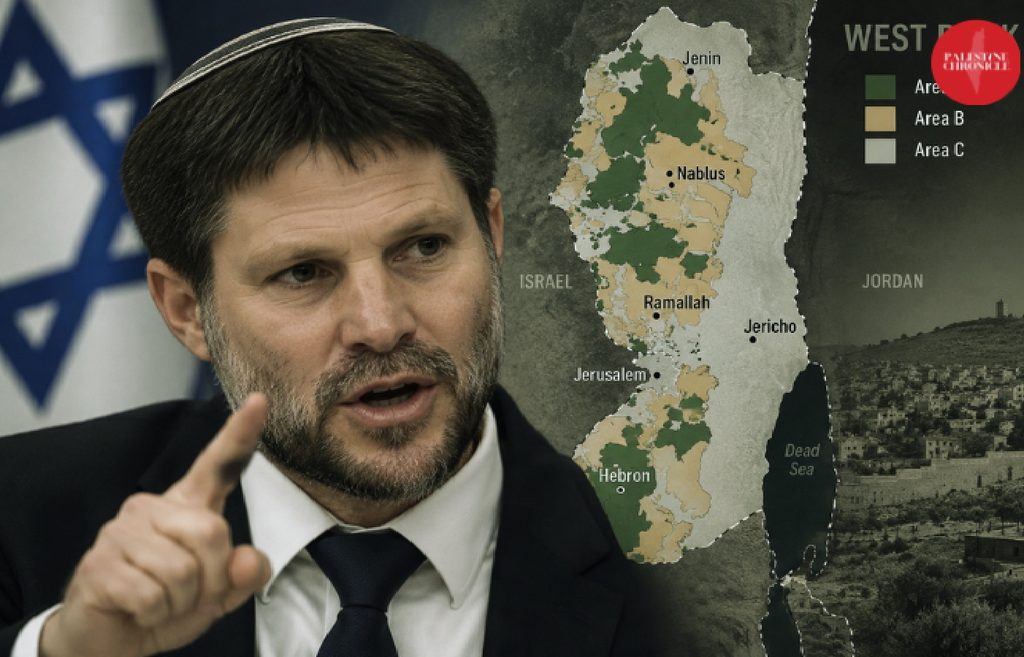
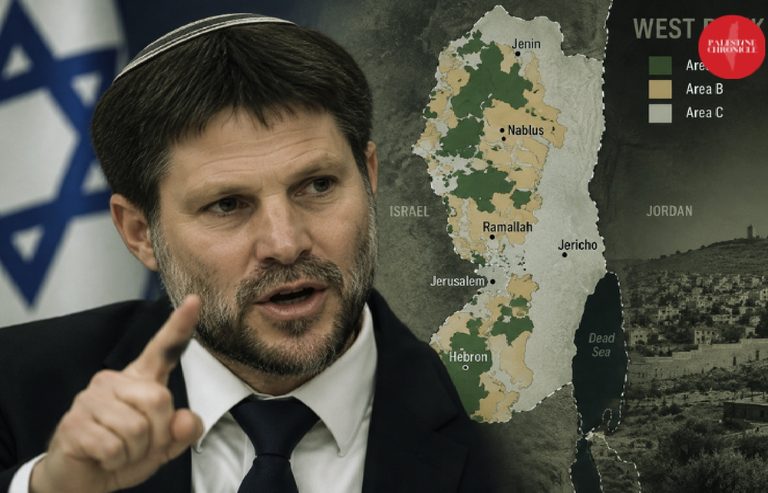
While international attention is focused on the Gaza catastrophe, Prime Minister Mustafa’s reference to 1,659 settler attacks in a single month in the West Bank reveals a deliberate, coordinated acceleration of violence across occupied Palestine. The Israeli government has approved the construction of 12,000 new settlement housing units since the ceasefire, expanded the jurisdiction of settler-only municipal councils, and ramped up demolitions of Palestinian homes and herding communities in Area C. Finance Minister Bezalel Smotrich’s recent declaration that “2026 will be the year of sovereignty over Judea and Samaria” is the clearest indication that formal annexation is on the near-term agenda.
The connection is not coincidental. “The assault on Gaza and the settlement surge are two fronts of the same war,” explained Diana Buttu, a Palestinian lawyer and former legal advisor to the PLO. “Gaza is being rendered uninhabitable and ungovernable. The West Bank is being physically carved up and absorbed. Together, they constitute the complete destruction of the territorial basis for any viable Palestinian state. The EU Investment Platform meeting in Ramallah was taking place literally as settlers were setting fire to Palestinian fields in Huwara, under military protection. You cannot invest in an economy that the same international community is allowing to be strangled.”
The View From Israel: A Society Consumed.
Within Israel, dissent over the renewed military push is growing but remains marginalised. The Israeli press, notably Haaretz, has published critical analyses and editorials calling the expanding war a “forever campaign” that will “consume Israel morally and strategically.” Yet public discourse is dominated by a nationalist consensus amplified by right-wing television channels and social media.
A group of former senior Israeli security officials, the “Commanders for Israel’s Security” movement, issued a statement on Monday warning that “the refusal to define a political end-state, combined with open-ended military control over 2 million Palestinian civilians, is a recipe for an unending insurgency and deepening international isolation.” The statement was blacked out by several major Hebrew news sites, an indication of the media’s capitulation to government pressure.
A young Israeli reservist who recently returned from a deployment along the Netzarim Corridor, speaking to this reporter on condition of complete anonymity, described a sense of moral vertigo. “We were told there was a ceasefire, that we were just preventing ‘illegal movement.’ But every night, we received coordinates of ‘threats’ and called in strikes. People were killed. I don’t know if they were fighters or families; no one told us. We were discouraged from asking. One night, an entire building was levelled. The next day, the intelligence officer said ‘militant infrastructure’ and walked away. I’m not sure I believe that anymore. But what can I do? I’m a soldier.”
A Road To Accountability?
The judicial path remains blocked by geopolitical realities. The International Court of Justice (ICJ), in its 2024 advisory opinion, found Israel’s prolonged occupation, including its actions in Gaza following the 2005 disengagement, to be unlawful and in breach of the prohibition on the acquisition of territory by force. The United Nations General Assembly overwhelmingly adopted a resolution calling for an arms embargo and sanctions. Yet not a single Western state has acted.
In the United States, the Biden-era “ironclad commitment” to Israel’s security has been inherited and intensified by the current administration, which has accelerated weapons transfers while publicly mouthing concerns about civilian casualties. A leaked State Department cable from April 2026, published by The Intercept, reveals that mid-level diplomats concluded that Israel has systematically violated the terms of U.S. arms export agreements, but that the finding was buried for “political reasons.” The cable’s author, a veteran Foreign Service officer, wrote: “We are complicit. This is a stain that will define our foreign policy for a generation.”
Aid workers in Gaza, when asked about the prospect of justice, offer a hollow laugh. “We are not waiting for the ICC,” said Dr. Ahmad al-Sharif, a physician at the Al-Awda Hospital in Jabalia, which continues to operate despite being repeatedly shelled. “Our patients are dying today. Our children are starving today. Justice delayed is death delivered. We are tired of words.”
Epilogue: The Silence Before The Storm.
As night falls over central Gaza, the sky hums with surveillance drones. Families in Nuseirat camp, in Deir al-Balah, in Al-Mawasi, huddle in darkness, saving their phone batteries, rationing water, listening for the sound that might precede the end. The military plans sit on desks in Tel Aviv, signed and ready, awaiting a political decision that seems, by all accounts, imminent. The diplomats in Cairo issued another bland statement about “constructive discussions.” The trucks remain stalled at the Rafah crossing.
Abdullah Abu Mustafa’s family buried him today in a shallow grave dug into the sand near the sea, because the cemeteries are full and the Israeli bulldozers have desecrated the old ones. His wife, Umm Abdullah, spoke to a local journalist between sobs: “They killed my husband during a ceasefire. They talk about peace in Cairo. What peace? For whom? I buried him with my hands because the gravediggers are all dead. There is no peace. There is only waiting to die.”
Her words, raw and unmediated, are the truest dispatch from Gaza. And they expose, with brutal clarity, the moral bankruptcy of a global order that can contemplate investment platforms while a people is methodically destroyed, that can draft ceasefire resolutions while marking new military targets, that can mouth concern while shipping the bombs. The article on the ceasefire is inked and signed. The reality is written in blood, updated every day, and ignored by a world that has chosen, once again, to look away.
For The Secure Submission Of Documentation, Testimonies, Or Exclusive Investigative Reports From Any Global Location, Please Utilise The Following Contact Details For Our Investigations Desk: enquiries@veritaspress.co.uk or editor@veritaspress.co.uk
Help Support Our Work:
Popular Information is powered by readers who believe that truth still matters. When just a few more people step up to support this work, it means more lies exposed, more corruption uncovered, and more accountability where it’s long overdue.
Help Protect Independent Journalism, Which Is Currently Under Attack.
If you believe journalism should serve the public, not the powerful, and you’re in a position to help, becoming a DONATOR or a PAID SUBSCRIBER truly makes a difference.
DONATION APPEAL: If You Found This Reporting Valuable, Please Consider Supporting Independent Journalism.
Help Support Our Work – We Know, We Know, We Know …
Seeing these messages is annoying. We know that. (Imagine what it’s like writing them … )
Your support fuels our fearless, truth-driven journalism. In unity, we endeavour to amplify marginalised voices and champion justice, irrespective of geographical location.
But it’s also extremely important. One of Veritas Press’s greatest assets is its reader-funded model.
1. Reader funding means we can cover what we like. We’re not beholden to the political whims of a billionaire owner. We are a small, independent and impartial organisation. No one can tell us what not to say or what not to report.
2. Reader funding means we don’t have to chase clicks and traffic. We’re not desperately seeking your attention for its own sake: we pursue the stories that our editorial team deems important and believe are worthy of your time.
3. Reader Funding: enables us to keep our website and other social media channels open, allowing as many people as possible to access quality journalism from around the world, particularly those in places where the free press is under threat.
We know not everyone can afford to pay for news, but if you’ve been meaning to support us, now’s the time.
Your donation goes a long way. It helps us:
Keep the lights on and sustain our day-to-day operations
Hire new, talented independent reporters
Launch real-time live debates, community-focused shows, and on-the-ground reporting
Cover the issues that matter most to our communities, in real time, with depth and integrity
We have plans to expand our work, but we can’t do it without your support. Every contribution, no matter the size, helps us stay independent and build a truly people-powered media platform.
If you believe in journalism that informs, empowers, and reflects the communities we serve, please donate today.
Kamran Faqir is a volunteer investigative journalist and writer committed to exposing hidden truths and amplifying underreported stories. Driven by social justice, he brings sharp insight and fearless truth-telling to independent journalism. NUJ registered.
SEATTLE, TEHRAN — The U.S. Department of Homeland Security (DHS) will allow Iran’s national football team to enter the country 48 hours before their critical World Cup match against Egypt on Friday, a modest concession in a tournament where Team Melli’s travel conditions have sparked claims of oppression and competitive disadvantage.