Kamran Faqir is a volunteer investigative journalist and writer committed to exposing hidden truths and amplifying underreported stories. Driven by social justice, he brings sharp insight and fearless truth-telling to independent journalism. NUJ registered.
Article Date Published:
Article Date Modified:
20 minutes
Views:565
Listen to this article
Help support our mission, donate today and be the change. Every contribution goes directly toward driving real impact for the cause we believe in.
I. The Phantom Strike That Redrew The Map
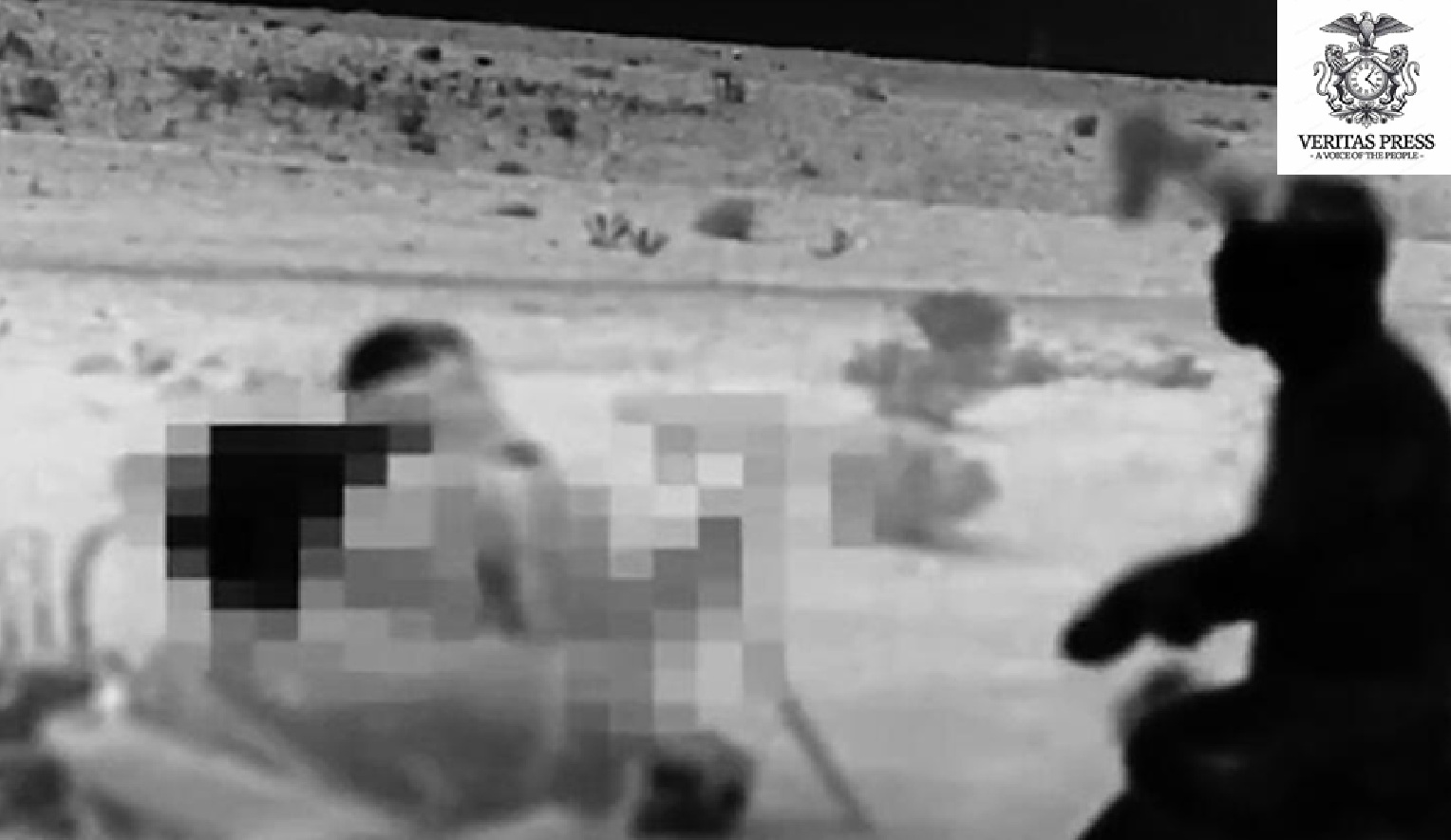
LONDON, JERUSALEM, TEHRAN – At exactly 3:07 a.m. on June 13, 2025, a young Iranian known to his Mossad handlers as “S.T.” pressed the firing button on a shoulder-launched missile in the industrial outskirts of southern Tehran. Within seconds, an S-300 air-defence battery, part of the Revolutionary Guards’ ring of steel around the capital, vanished in a white flash and a thunderclap of collapsing steel. The thermal camera footage, grainy and silent, showed helmeted figures moving with choreographed precision, but these were not Israeli commandos. They were Iranian civilians, trained on a secret base in the Negev, who had slipped back into their homeland, reassembled their weapons from smuggled parts, and activated themselves with a single encrypted message: “The lion has risen.”
That night, 70 similar teams, recruited from Iran, Iraq, Azerbaijan, and the Kurdish diaspora, struck 47 pre-planned targets across the Islamic Republic: air-defence batteries, ballistic-missile launchers, communications nodes, and the concealed entrances of underground nuclear sites. Within three hours, a corridor of relative aerial freedom was carved over Tehran, permitting the Israeli Air Force to conduct nearly 1,800 sorties without losing a single aircraft.
Operation Rising Lion, as Israel later codenamed it, marked the largest known wartime activation of a non-Israeli covert combat force in modern intelligence history. A year later, a mosaic of interviews with 10 former and serving Israeli intelligence officials, Western diplomatic cables, Iranian dissident testimonies, and reports from human rights organisations reveals the full operational anatomy, its strategic aftershocks, and a legal and ethical reckoning that is only now beginning.
II. The Biometric Revolution: Why David Barnea Built A Shadow Army.
The architect of this campaign was David Barnea, the 61-year-old former Sayeret Matkal commando who took over the Mossad in June 2021. From his first weeks in office, Barnea pushed an organisational revolution that colleagues call the “biometric shift.” Its premise was blunt: the era of Israeli “blue-and-white” operatives masquerading in enemy territory with forged passports was over.
The January 2010 assassination of Hamas arms smuggler Mahmoud al-Mabhouh in Dubai was the watershed. More than 20 Mossad personnel had entered the emirate on doctored Western passports. Within 48 hours, Dubai police chief Dhahi Khalfan Tamim released CCTV footage of the team and their aliases, triggering a diplomatic firestorm. “After Dubai, the face of every Israeli operative was potentially on a global biometric watchlist,” a former senior Mossad division head said. “We realised we needed local actors who could pass through a facial-recognition scanner without alarm bells.”
Barnea’s reform, enacted over the resignation threats of four division chiefs, split the service’s human-intelligence directorate into three new bodies: a recruitment division for mass agent acquisition, an operational division specialising in sabotage and assassination, and a strategic-operations division for complex, high-risk missions. At the same time, he tripled the Technology Directorate, adding cyber, artificial-intelligence, and cloud-penetration units. A new Influence Directorate was quietly established to run psychological-warfare campaigns aimed at destabilising the Iranian regime from within.
“Barnea came in with a single conviction,” said a former Israeli national-security official who observed the reforms. “He believed the Mossad could bring down the ayatollahs, not in a single strike, but by arming and directing the very people who hate them most.”
III. The Making Of An Agent: “S.T.” And The Foreign Legion.
One of those people was S.T., a working-class engineering student from a town near Tehran. In late 2022, he and several classmates were seized by the Basij militia during the Mahsa Amini protests and taken to a detention centre where, according to an Israeli handler who debriefed him, they were “beaten with cables, given electric shocks, and held for 19 days in cells without light.” S.T. was released, but his fury did not dissipate.
Months later, a relative living in Europe mentioned his case to an Israeli intelligence officer operating under a diplomatic cover. An encrypted Signal message followed, then a vetted flight to a third country. In a safe house, a Mossad case officer made a simple offer: “Help us change your country, and we will take care of your family forever.” S.T. accepted, asking only that his parents and sister be relocated to Canada if he were killed.
He was flown to Israel, a country he had been taught to regard as a “cancerous tumour”, and spent nine months learning to assemble missiles from components disguised as automobile parts, fly mini-drones armed with fragmentation warheads, and evade counter-intelligence sweeps. He was one of 230 Iranian nationals who passed through similar training pipelines between 2022 and mid-2025, according to Israeli security sources. At least 120 of them were inserted back into Iran before June 13, living as ordinary students, taxi drivers, or shopkeepers, awaiting activation.
Recruitment, multiple Mossad veterans explained, leaned heavily on Iran’s ethnic mosaic. “Forty per cent of Iran is not Persian, Kurds, Azeris, Baluchis, Arabs,” a former senior officer said. “We found willing partners in communities that have felt the regime’s boot on their necks for decades.” Others were motivated by money: payments of $100,000 to $500,000, or promises of medical care abroad for sick relatives. Still others were blackmailed after being caught in honey-trap operations in Turkey or the UAE.
“Convincing someone to commit treason is a slow chisel,” the former officer added. “First, you ask them to take a photograph. Then, leave a USB drive. By the time the big request comes, they’ve already crossed a psychological Rubicon, or we have enough leverage that they can’t refuse.”
IV. The Smuggled Arsenal: How Weapons Travelled Undetected.
The logistical feat was as audacious as the recruitment. Dismantled missiles, warheads, communications gear, and explosives were transported into Iran over 18 months in “thousands of small shipments,” concealed inside industrial machinery, commercial electronics, and even agricultural products. Israeli planners, working with unwitting Kurdish and Azeri truck drivers, exploited informal border trade routes from Iraq’s Kurdistan Region and Azerbaijan’s autonomous Nakhchivan exclave.
“Some of the metallic components were listed on customs manifests as ‘water-pump parts’ or ‘pistons for tractor engines,’” a former Mossad logistics officer said. “Our tech teams designed fragmentation sleeves that looked like innocuous metal piping. Only a specialist would suspect them.”
By late May 2025, the commando teams had received the last of their gear. On June 1, the mission’s operational nerve centre at Mossad headquarters in Glilot issued a “standby” alert via an encrypted broadcast. The agents were instructed to await final coordinates and a precise H-Hour.
V. The Opening Act: How Air Defences Fell Silent.
At 2:58 a.m. on June 13, S.T. and his two-man cell reached the edge of a Revolutionary Guards Aerospace Force base 20 km south of the Fordow nuclear site. They assembled a man-portable ground-to-air missile in less than four minutes. “We had practised the sequence more than 200 times,” a declassified after-action report would note. “The men didn’t speak. They worked like a machine.”
Simultaneously, other teams launched kamikaze drones and mortars at radar installations, command bunkers, and ballistic-missile transporter-erector-launchers (TELs) from Mahdasht to Semnan. One cell, made up of three Azeri brothers, fired a Spike-NLOS missile, previously smuggled in segments, directly into the operations centre of the Guards’ Air Defence Division, killing its commander, Brig. Gen. Reza Alizadeh, as he was trying to coordinate a response.
Crucially, the ground assaults were synchronised with a massive cyber-deception operation. Israeli military hackers, operating from Unit 8200 and the Mossad’s cyber division, penetrated the Iranian military’s secure communication network and transmitted a fake order, apparently from Chief of General Staff Mohammad Bagheri, summoning the entire senior command of the Guards’ Aerospace Force to an underground bunker near Kermanshah at 4:00 a.m. When 20 commanders, including three chiefs of staff, arrived and the blast-proof doors sealed, four Israeli F-35I Adir jets already airborne obliterated the facility with earth-penetrating munitions.
“The decapitation of the command structure was what made the IAF’s corridor sustainable,” said Maj. Gen. (ret.) Amos Yadlin, a former head of Israeli military intelligence, in a June 2025 interview with the Haaretz defence supplement. “Without it, you would have seen a coordinated counter-air campaign that could have downed several aircraft.”
By dawn, according to the Israeli military’s final strike assessment, more than half of Iran’s 3,000 ballistic missiles and 80% of their launchers had been destroyed, along with 38 air-defence batteries and 12 nuclear-related sites, including the surface installations above the Fordow enrichment halls. The nuclear centrifuge halls themselves, buried under 90 meters of mountain rock, remained largely intact, but the sites’ ventilation, power, and transport infrastructure were critically damaged.
VI. David Barnea’s War: The Man Behind The Bunker.
Inside the Kirya, the IDF’s underground command bunker in Tel Aviv, Mossad chief Barnea watched the live feeds alongside Prime Minister Benjamin Netanyahu and Chief of Staff Eyal Zamir. Witnesses told colleagues that Barnea, typically unflappable, remained silent and tense until the first feeds showed the foreign agent teams hitting their targets. Then he smiled, visibly, repeatedly. “He looked like a man who had just watched a decade of his life’s work pay off in 45 minutes,” a person in the room recalled.
Barnea’s satisfaction was strategic as much as operational. Rising Lion was the final validation of his reform: a non-Israeli combat arm acting at a scale that produced strategic, not merely tactical, effect. The night also vindicated his insistence that the IDF embrace offensive operations against Iran proper rather than chasing proxy movements in Gaza and Lebanon.
Yet that very self-confidence had repeatedly put him at odds with the IDF high command. Documents reviewed in this investigation and interviews with five former military officials reveal a bitter standoff in late 2023 over the “Fordow Plan”, an earlier Mossad scheme to neutralise the underground enrichment halls with a ground assault by a larger force of Iranian agents, backed by Israeli special forces. Defence Minister Yoav Gallant appointed a committee headed by former defence minister Shaul Mofaz, which warned that the plan risked “a strategic catastrophe” if the assault force were exposed and slaughtered inside Iranian territory. Another review by former national security adviser Yaakov Nagel was similarly equivocal. Barnea froze preparations, a decision he did not communicate in detail to then-Chief of Staff Herzi Halevi, triggering what one source called “a shouting match that nearly ended a 30-year relationship.”
“Halevi believed Barnea was a lone-wolf operator, presenting the prime minister with ready-made adventures the IDF couldn’t support,” said a former General Staff officer. “Barnea believed Halevi was paralysed by caution.” The dispute still reverberates in the sealed rooms of the Knesset’s Foreign Affairs and Defence Committee.
VII. The Civilian Toll And The Cries From The Ground:
Israel’s military censor has prevented the publication of total Iranian casualties from Rising Lion’s first 72 hours. Iranian officials initially claimed 3,400 dead, a figure widely dismissed as propaganda. Western intelligence estimates reviewed by the Financial Times in July 2025 put the toll at between 1,100 and 1,400, roughly half of them military personnel and the rest civilians residing near nuclear and missile sites.
But human-rights organisations have documented a disturbing number of civilian deaths from the commando strikes. In the village of Kashkoyeh, south of Natanz, a missile from a ground team aimed at a nearby radar station detonated prematurely, killing seven members of a farming family. The Iranian government has refused to allow UN investigators access, but local journalists who reached the area by motorbike filmed children’s bodies wrapped in blankets.
“We heard the explosion and thought it was an earthquake,” Zahra Hosseini, a 34-year-old schoolteacher from Kashkoyeh, said by telephone in a strained voice. “When we ran out, my neighbour’s house was gone. All of them, gone. And then people whispered, ‘The Israelis used our own countrymen to do this.’”
Iranian state television aired forced “confessions” from two alleged captured agents, a man and a woman, who claimed to have been recruited via Instagram and trained in Israel. Human Rights Watch called the confessions “patently coerced” and warned of a wave of summary executions. The Geneva-based Centre for Civil and Political Rights documented at least 16 executions of dual nationals or ethnic minorities on espionage charges in the six months following the attack.
VIII. The Influence Directorate: A Blueprint For Regime Change, Derailed.
Perhaps the most secretive element of Barnea’s strategy was the Influence Directorate, tasked with fomenting a popular uprising that would finish what bombs and missiles started. On February 11, 2025, during a White House meeting with President Donald Trump, Netanyahu and Barnea, participating via secure video, outlined a plan to trigger a Kurdish insurgency in Iran’s northwest as a catalyst for broader rebellion.
According to two U.S. officials who later described the meeting to the New York Times, Barnea presented a list of potential Iranian opposition figures, including former President Mahmoud Ahmadinejad, an avowed enemy of Israel, as a possible transitional figurehead. “The Mossad argued that Ahmadinejad still carries weight with the working class and the Basij,” one official said. “It was a purely transactional analysis, shocking to several people in the room.” Barnea also proposed inserting Iraqi Kurdish Peshmerga fighters with Israeli air support to seize border crossings and declare a “liberated zone.”
Trump, initially enthusiastic, was swayed by Turkish President Recep Tayyip Erdoğan, who learned of the plan via Turkish intelligence and warned that a Kurdish uprising would destabilise Turkey’s southeast and undermine NATO cohesion. The White House ordered a halt. The Kurdish operation evaporated.
Nevertheless, the Influence Directorate has not stopped. Iranian dissidents in London and Berlin told this reporter that Mossad-linked shell companies have funded a network of Instagram and Telegram channels with nearly 12 million followers, disseminating anti-regime satire, economic analyses highlighting inflation and corruption, and encrypted safety guides for protests. In May 2026, during renewed demonstrations in Isfahan over water shortages, protesters were seen using a Mossad-designed app that provides routing to evade Basij checkpoints.
Narges Mohammadi, the imprisoned Nobel Peace Prize laureate, smuggled out a statement in April 2026: “We welcome any support that weakens the repression machine. But let us be clear: the fate of Iran will be decided by Iranians, not by a foreign intelligence service’s algorithm.”
IX. The Legal And Moral Reckoning:
International legal scholars are increasingly grappling with the novel questions raised by Israel’s use of locally recruited commandos. Adil Haque, a professor at Rutgers Law School and author of Law and Morality at War, stated: “If these agents were Iranian citizens who took up arms on their own soil at the behest of a foreign power, then under the laws of armed conflict they could be considered combatants, but only if they were part of an organised armed group with a responsible command. If not, they may be unlawful combatants or even saboteurs, and their actions could be attributed to Israel, raising questions of state responsibility for violations of Iranian sovereignty.”
The UN Special Rapporteur on extrajudicial executions, Morris Tidball-Binz, called in September 2025 for an independent investigation into “alleged perfidy and the use of civilians to carry out military acts while not wearing distinctive insignia,” a potential breach of Additional Protocol I to the Geneva Conventions, which Israel has not ratified but which reflects customary international law.
Amnesty International issued a report in January 2026 titled “Weaponising the Discontent: Israel’s Exploitation of Iranian Civilians,” concluding that the Mossad’s recruitment of individuals under conditions of economic desperation or psychological trauma may constitute “indirect coercion” in violation of the right to free consent. The Israeli Ministry of Justice declined to comment, but a Mossad legal advisor who spoke anonymously said: “Every recruit signed a consent form in their native language. We do not force anyone. We offer a choice.”
X. The Unfinished Nuclear Shadow.
For all the operational brilliance of Rising Lion, Iran’s nuclear program has not been eliminated. IAEA inspectors, who regained partial access in February 2026 under a provisional agreement, verified that the underground halls at Fordow and the newer tunnel complex near Natanz suffered only superficial damage. Centrifuges, dismantled in advance or protected by depth, survived. Enriched uranium stockpiles at 60% purity remain substantial.
“They lost 12 to 18 months of breakout capacity,” a Western diplomat in Vienna said. “But that’s not dead. It’s a delay.” The same diplomat, speaking on condition of strict anonymity, added that the Israeli strike may have accelerated Iran’s determination to rebuild hidden, redundant facilities, “deeper and more dispersed than before.”
In May 2026, U.S. and Iranian negotiators in Oman concluded a preliminary framework to freeze enrichment at 60% in exchange for phased sanctions relief, throwing Barnea’s regime-change ambitions into doubt. On May 22, Barnea delivered a closed-door briefing to the Knesset Foreign Affairs and Defence Committee. “An agreement that leaves any enrichment capability on Iranian soil is a license to build a bomb the moment the ink dries,” he is reported to have said, according to leaked minutes. “The current draft is worse than the JCPOA.”
XI. The Human Fallout: Voices From Inside Iran.
To understand the psychological scar left by the commando raids, I reached out through intermediaries to Iranians who knew some of the recruited agents. Amir, a mechanical engineer in Tabriz whose cousin was arrested for allegedly assisting the attack, agreed to speak via a VoIP app with his voice altered.
“My cousin was no spy. He was a stupid, angry kid who hated the morality police after they beat his sister,” Amir said. “He met someone on Telegram who offered him money and a visa. He didn’t know the missiles would kill people in Kashkoyeh. When he found out, he vomited. Now his whole family is in Evin Prison. The Israelis used him and then flew away.”
The Iranian government has used the attacks to portray all dissent as treason. Ali Shamkhani, the secretary of the Supreme National Security Council, said in a December 2025 speech: “Every Iranian who even clicks ‘like’ on a dissident post is a potential Mossad asset. The nation must be on high alert.” This narrative, activists warn, is chilling civil society and enabling a new wave of repression.
Yet defiance endures. On the night of the Kashkoyeh memorial in October 2025, women in several villages removed their headscarves and chanted: “Neither the regime, nor Israel, we want our country back.”
XII. The Mossad’s Next Chapter.
On June 10, 2026, Barnea will step down after exactly five years. His successor, Maj. Gen. Roman Gofman, Netanyahu’s former military secretary, inherits an organisation transformed, but also one facing a profound internal reckoning. The biometric revolution succeeded beyond imagination, yet senior Mossad officers worry that the “foreign legion” model is unsustainable. “We burned a lot of networks to pull off Rising Lion,” said a serving intelligence officer. “Recruitment in Iran is now ten times harder. The regime has seen our playbook.”
A new generation of Iranian counter-intelligence officers, trained by Russian and Chinese advisors, has deployed AI-driven social-network analysis and mass surveillance to hunt for sleeper teams. At least nine more Iranian-born agents were arrested and executed in April 2026 alone, according to the Iran Human Rights Documentation Centre.
Meanwhile, the moral controversy is intruding into the Israeli public debate. In January 2026, B’Tselem and Yesh Din published a joint statement accusing the Mossad of “outsourcing war crimes to the occupied and oppressed,” drawing a parallel to earlier recruitment of Palestinians as collaborators. Prominent novelist and peace activist David Grossman wrote in Haaretz: “When we turn the victims of tyranny into our weapons, we lose something essential, the ability to see the humanity of those we ask to kill for us.”
The Mossad does not publicly debate such critiques. But in a rare March 2026 interview with the Israeli public broadcaster Kan, Barnea offered a glimpse of his worldview: “We did not create the Iranian people’s suffering. The mullahs did. We gave some of them a tool to fight back. If that makes us cynical, then every intelligence service in history is cynical. I prefer to say we gave them agency.”
As the Middle East inches toward a fragile interim accord, one thing is certain: the ghost of Rising Lion will haunt the region for years. Iran’s deepest nuclear bunkers may still stand, but the secret war has irreversibly moved inside. And the line between spy and citizen, between liberator and manipulator, has blurred beyond recognition.
Source:Veritas Press C.I.C. | Multi News Agencies
This article is based on interviews in Tel Aviv, London, Washington, and Dubai, as well as documentation from Israeli military sources, Western intelligence assessments, and Iranian human rights groups. The names S.T. and Amir have been altered to protect their identities.
Submissions:
For The Secure Submission Of Documentation, Testimonies, Or Exclusive Investigative Reports From Any Global Location, Please Utilise The Following Contact Details For Our Investigations Desk: enquiries@veritaspress.co.uk or editor@veritaspress.co.uk
Help Support Our Work:
Popular Information is powered by readers who believe that truth still matters. When just a few more people step up to support this work, it means more lies exposed, more corruption uncovered, and more accountability where it’s long overdue.
Help Protect Independent Journalism, Which Is Currently Under Attack.
If you believe journalism should serve the public, not the powerful, and you’re in a position to help, becoming a DONATOR or a PAID SUBSCRIBER truly makes a difference.
DONATION APPEAL: If You Found This Reporting Valuable, Please Consider Supporting Independent Journalism.
Help Support Our Work – We Know, We Know, We Know …
Seeing these messages is annoying. We know that. (Imagine what it’s like writing them … )
Your support fuels our fearless, truth-driven journalism. In unity, we endeavour to amplify marginalised voices and champion justice, irrespective of geographical location.
But it’s also extremely important. One of Veritas Press’s greatest assets is its reader-funded model.
1. Reader funding means we can cover what we like. We’re not beholden to the political whims of a billionaire owner. We are a small, independent and impartial organisation. No one can tell us what not to say or what not to report.
2. Reader funding means we don’t have to chase clicks and traffic. We’re not desperately seeking your attention for its own sake: we pursue the stories that our editorial team deems important and believe are worthy of your time.
3. Reader Funding: enables us to keep our website and other social media channels open, allowing as many people as possible to access quality journalism from around the world, particularly those in places where the free press is under threat.
We know not everyone can afford to pay for news, but if you’ve been meaning to support us, now’s the time.
Your donation goes a long way. It helps us:
Keep the lights on and sustain our day-to-day operations
Hire new, talented independent reporters
Launch real-time live debates, community-focused shows, and on-the-ground reporting
Cover the issues that matter most to our communities, in real time, with depth and integrity
We have plans to expand our work, but we can’t do it without your support. Every contribution, no matter the size, helps us stay independent and build a truly people-powered media platform.
If you believe in journalism that informs, empowers, and reflects the communities we serve, please donate today.
Kamran Faqir is a volunteer investigative journalist and writer committed to exposing hidden truths and amplifying underreported stories. Driven by social justice, he brings sharp insight and fearless truth-telling to independent journalism. NUJ registered.
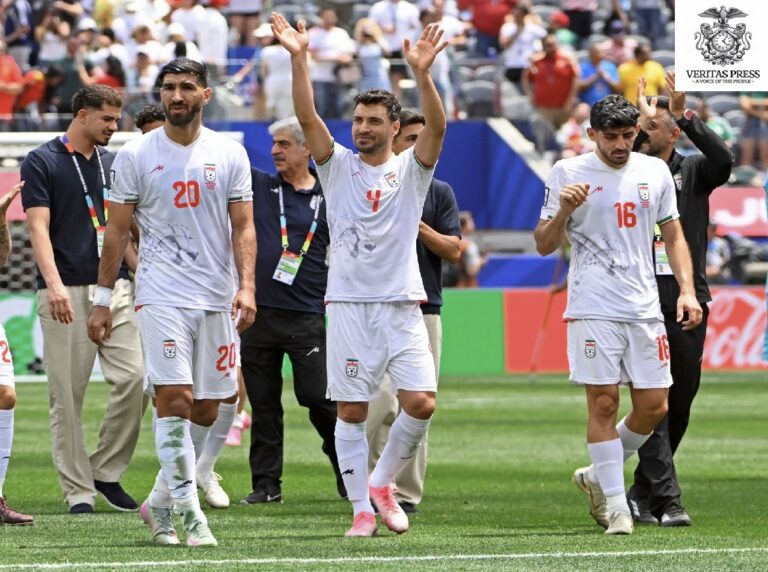
SEATTLE, TEHRAN — The U.S. Department of Homeland Security (DHS) will allow Iran’s national football team to enter the country 48 hours before their critical World Cup match against Egypt on Friday, a modest concession in a tournament where Team Melli’s travel conditions have sparked claims of oppression and competitive disadvantage.