




Author:
Help support our mission, donate today and be the change. Every contribution goes directly toward driving real impact for the cause we believe in.
‘A Treacherous Agreement That Squanders Lebanon’s Sovereignty And Legitimises Continued Israeli Occupation’. The Palestinian BDS National Committee Joins A Growing Chorus Of Lebanese And Regional Voices In Rejecting The Washington Framework As A Betrayal Of National Rights, A Criminalisation Of Resistance, And A Blueprint For Perpetual Israeli Tutelage Over Lebanese Territory And Decision-Making.
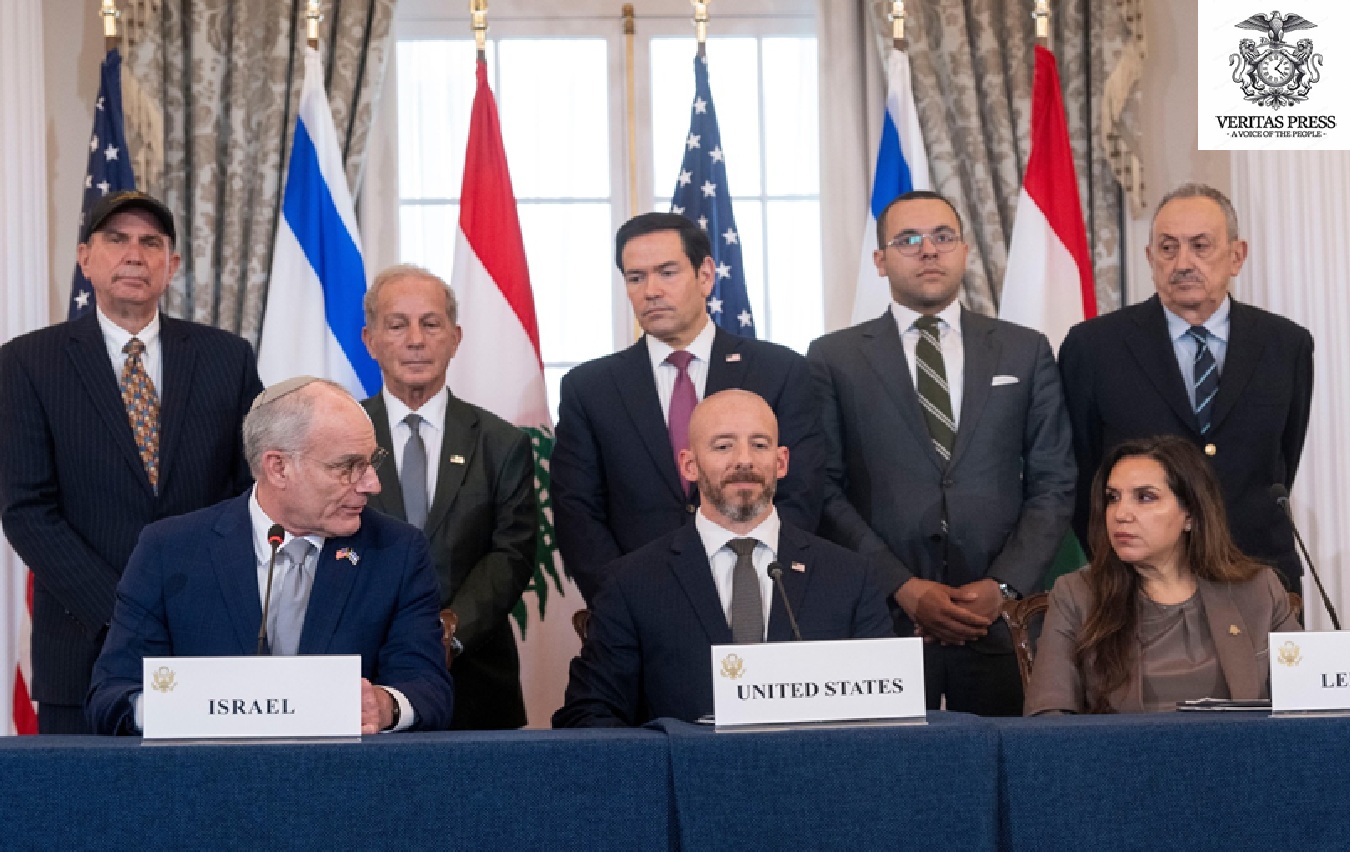
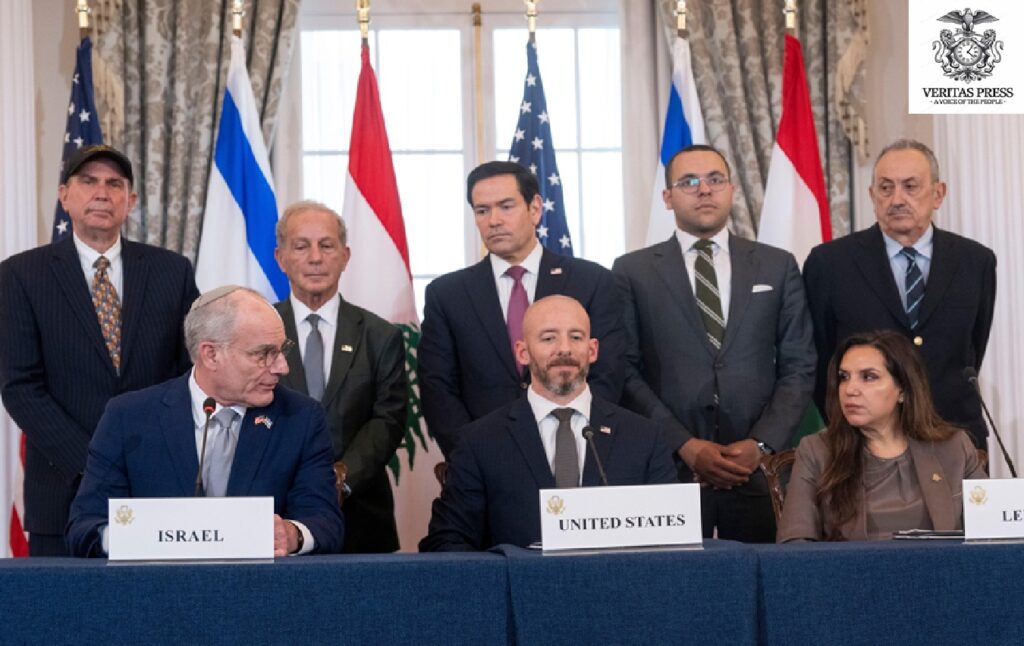
BEIRUT/WASHINGTON — The framework agreement signed under American sponsorship between Lebanese and Israeli representatives on June 27 has ignited a firestorm of opposition across Lebanon and the broader region, uniting an unlikely coalition of parliamentary leaders, resistance factions, religious scholars, and the Palestinian-led Boycott, Divestment and Sanctions (BDS) movement in a chorus of denunciation. Branded a “treacherous agreement,” a “document of submission,” and “null and void” by its critics, the deal has exposed Lebanon’s profound internal fractures while raising fundamental questions about sovereignty, the right to resist occupation, and the future of nearly a million displaced civilians.
Beneath the diplomatic language of “progressive redeployment” and “verified disarmament” lies what multiple Lebanese political forces, civil society groups, and regional observers describe as an institutionalisation of Israeli military presence and an American-Israeli veto over Lebanese internal affairs. This investigation, drawing on statements from signatory parties, parliamentary officials, resistance leaders, religious bodies, and grassroots activists, reveals the deep anxieties and geopolitical calculations that have turned a framework for negotiation into what Parliament Speaker Nabih Berri has called “a conspiracy and sedition.”
The Anatomy Of A Deal: What The Framework Actually Says.
The agreement, brokered over five rounds of direct talks that began in April despite Hezbollah’s objections, creates a sequenced process ostensibly designed to end the state of war between Lebanon and Israel. According to the text released by the US State Department, the Lebanese Armed Forces would assume control of territory in “pilot zones” pending the “verified disarmament of non-state groups”, a clear reference to Hezbollah. Only then would Israeli forces “progressively redeploy out of” southern Lebanon.
But critics point to what the text does not say. There is no fixed timeline for Israeli withdrawal. There is no mechanism for independent verification of Hezbollah’s disarmament; that judgment appears to lie with Israel itself. And most explosively, the return of more than one million displaced Lebanese to their villages and towns in the south is made conditional on Israeli satisfaction with Lebanese authorities’ suppression of resistance activities.
“This makes the return of our people dependent on the satisfaction of the fascist Israeli government,” the BDS National Committee stated on June 29. “This is a dangerous precedent in the history of the Arab-Zionist conflict.”
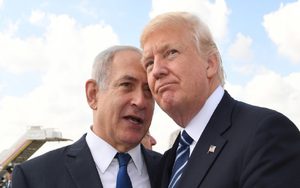
Israeli Prime Minister Benjamin Netanyahu, celebrating the deal as a major achievement, confirmed the maximalist interpretation his critics feared. The agreement, he said, allows Israeli forces to continue occupying southern Lebanon if Hezbollah does not disarm, and he explicitly linked the framework to the “liquidation” of the Lebanese resistance, language that has since been cited by Lebanese opponents as proof of the agreement’s true intent.
Berri’s Warning: ‘It Won’t Be Implemented.’
Perhaps the most consequential intervention came from Parliament Speaker Nabih Berri, the veteran head of the Shiite Amal Movement and a key Hezbollah ally whose political survival instinct has shaped Lebanese politics for decades. In comments to the pro-Hezbollah daily Al-Akhbar on June 29, Berri described the agreement bluntly: “dictates.”
“The most dangerous aspect of the agreement,” Berri warned, “is not only its political content, but the potential for it to incite internal divisions and draw the Lebanese into a confrontation among themselves.”
Then, The Definitive Line: “The Agreement Won’t Be Implemented.”
Berri’s statement carries institutional weight. As Speaker, he controls the legislative agenda. His rejection signals that the agreement, signed by Lebanon’s ambassador to Washington, may never pass through the constitutional processes required to give it legal force. The government of President Joseph Aoun and Prime Minister Nawaf Salam, who have pursued face-to-face talks with Israel over Hezbollah’s fierce objections, now faces a political reality where the most powerful Shiite leader has declared their diplomatic achievement dead on arrival.
Berri also tied Lebanon’s fate explicitly to the US-Iran track. “The Iran-US negotiations are the only realistic opportunity to secure Israeli withdrawal from Lebanon,” he said. “Any attempt to separate Lebanon from the US-Iran track would prolong Israeli occupation.”
That framing, echoed by Hezbollah and the Association of Muslim Scholars, represents a direct challenge to the government’s strategy of bilateral engagement with Israel and underscores how the framework agreement has become entangled in the broader geopolitical confrontation between Washington and Tehran.
Hezbollah: ‘Null And Void’.
Hezbollah’s response was swift and unequivocal. Secretary-General Naim Qassem, speaking on Saturday, June 28, described the agreement as “humiliating, shameful, and a surrender of sovereignty,” declaring it “null and void.”
“The framework agreement in Washington is a grave blunder by the government,” Qassem said. “It legitimises Israel’s continued military presence in southern Lebanon and could eventually lead to the annexation of occupied territory.”
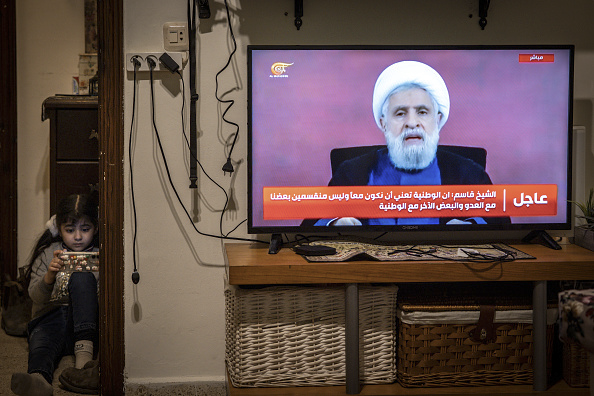
The process involves recognising Israeli settlements and their military occupation as legitimate.
Hezbollah’s statement insisted the group had adhered to the ceasefire “until now” but reserved the right “to defend its homeland and its people.” The group continues to demand that Beirut quit the face-to-face talks with Israel and instead rely on the Iran-US memorandum of understanding as the sole diplomatic framework.
Tensions on the ground reflect the fragility of the moment. On the night of June 28, the Israeli military announced it had destroyed a 200-metre-long Hezbollah tunnel in southern Lebanon, and on June 29 struck what it called three Hezbollah command centres in response to “violations” of the ceasefire. Hezbollah’s response, that it remained committed to the truce while reserving its right to self-defence, captures the volatile ambiguity of a situation where the framework agreement exists on paper but has changed nothing on the ground.
In Beirut’s southern suburbs, supporters gathered on Friday night to protest. “This deal is humiliating and shameful,” one resident, who asked not to be named fearing repercussions, told this reporter. “We will not accept that our return home depends on the whim of Netanyahu.” Others, however, expressed a weary hope that any diplomatic process might reduce the Israeli strikes that have devastated the south.
The BDS Movement: ‘Treacherous Agreement’.
The Palestinian BDS National Committee issued its most comprehensive regional statement on the agreement on June 29, connecting the Lebanese framework to the broader architecture of Israeli occupation and what it called the “colonial expansionist project of Greater Israel.”
The BDS statement systematically dismantled the deal’s stated premises. The committee described the framework as a “treacherous agreement” that “squanders Lebanon’s sovereignty and legitimises the continued Israeli occupation of Lebanese territory,” including the Shebaa Farms and Kfar Shouba Hills, areas that even the United Nations recognises as occupied. It highlighted the criminalisation of resistance as a violation of international law, which affirms the right of peoples under foreign occupation to resist, including through armed struggle.
“The agreement criminalises the legitimate right, under international law, of the Lebanese people to resist foreign occupation,” the committee stated, adding that it “completely ignores Lebanese and Palestinian national rights,” including the right of return for Palestinian refugees, a community numbering hundreds of thousands in Lebanon’s camps.
The BDS drew a direct line to the Oslo Accords, the 1993 agreement that was marketed as a path to peace but instead oversaw the largest expansion of Israeli settlements in the occupied West Bank. “Previous agreements marketed as peace did not stop displacement, ethnic cleansing or settlement expansion,” the statement noted. “Aggression and colonialism are the root cause of oppression, and therefore of resistance, not its result.”
The committee also presented stark casualty figures: since early March 2026, Israeli attacks have killed 4,246 Lebanese, including dozens of soldiers and state relief workers, wounded 12,190, damaged 17 hospitals, and forced three hospitals to close. These numbers, attributed to official Lebanese sources, have not been independently verified by this publication but are consistent with reporting from humanitarian agencies operating in southern Lebanon.
Crucially, the BDS warned of a yet-unpublished security annex that “may contain deeper betrayal by Lebanese authorities, potentially igniting the fire of internal conflict, as Berri has warned.” The call for escalated “comprehensive boycott campaigns” against Israel and complicit institutions echoes the movement’s foundational strategy but also signals a potential widening of targets to include the Lebanese state itself if it is perceived as an implementing partner of occupation.
Religious Authorities: ‘A Document Of Submission And Betrayal’.
The Association of Muslim Scholars in Lebanon (Tajammu al-Ulama al-Muslimin) issued a statement on June 29 that went further than any political statement in its direct challenge to the government’s legitimacy. The agreement, the scholars said, represents “a document of submission and betrayal” that violates the Lebanese constitution and grants legitimacy to Israel’s continued presence.
The language was deliberately incendiary. “Any alignment by the authorities with the enemy to dismantle the Resistance constitutes treason,” the statement read. It called for “the removal of the political authority through constitutional and legal means”, a formulation that, while stopping short of calling for armed action, represents the most direct threat yet to the government from a respected religious body.
The scholars specifically referenced the “Islamabad track”, the diplomatic framework that has emerged alongside the US-Iran negotiations, and urged Iran’s leadership to adhere strictly to the memorandum of understanding that places Israeli withdrawal at the centre of any regional ceasefire. This is not merely theological posturing; it reflects the organisational and ideological ties between Lebanon’s Muslim clerical establishment and the broader Axis of Resistance that includes Iran, Hezbollah, and allied forces across the region.
Regional Echoes: Yemen, Houthis And The Axis Of Resistance.
The condemnation spread rapidly beyond Lebanon. The Yemeni Scholars Association, in a statement on June 29, described the signing as a “great betrayal and supreme act of treason,” warning that it could “fuel internal divisions in Lebanon and serve the interests of the Israeli occupation.” The statement is significant: Yemen’s Ansar Allah movement, more commonly known as the Houthis, has been a critical component of the Axis of Resistance’s military pressure on Israel, launching long-range strikes that have disrupted Israeli shipping and drawn American and British airstrikes.
Ansar Allah leader Sayyed Abdul-Malik al-Houthi used a televised address to declare Yemen “fully prepared for any future regional escalation” and to warn against participation in any US-led military campaign aimed at supporting Israeli occupation. He explicitly linked the Lebanese framework to the situation in Palestine, stating that “coordination with the Axis of Resistance continues regarding developments in Lebanon and Palestine.”
This regional coordination is not rhetorical. Since the outbreak of renewed hostilities in March, Houthi strikes have been calibrated in tandem with Hezbollah’s operations, creating a multi-front dynamic that Israeli military planners have acknowledged as their most significant strategic challenge. The framework agreement’s attempt to decouple Lebanon from this broader confrontation is precisely what Berri, Hezbollah, and now the Houthis are refusing.
The Unseen Security Annex And The Spectre Of 1983.
Multiple sources who spoke to this publication, including individuals close to the negotiations, expressed alarm about the contents of a security annex that remains unpublished. The BDS statement directly referenced this annex, warning it “may contain deeper betrayal” and echoing Berri’s fear that it could “ignite internal conflict.”
The historical parallel invoked by the BDS is instructive. In 1983, the May 17 Agreement between Lebanon and Israel, also US-brokered, collapsed spectacularly after mass popular mobilisation, backed by Syria and Lebanese resistance forces, forced its abrogation. The agreement’s failure marked a turning point in Lebanon’s civil war and demonstrated the limits of American diplomacy when confronting determined local opposition.
“The Lebanese national forces’ success in bringing down the May 17, 1983 agreement with Israel is the model,” the BDS statement recalled. “Real legitimacy comes only from the people, not from the US administration, the Israeli settler-colonial regime or imperial powers.”
The current government’s gamble is that the correlation of forces has changed. Hezbollah was significantly weakened in the 2024 war, its leadership decimated, its arsenal degraded. The Lebanese state, backed by substantial Western and Gulf support, has been pursuing a policy of consolidating its monopoly on armed force. President Aoun, in a phone call with President Trump on June 28, expressed hope that Washington would press Israel to withdraw from southern Lebanon, a statement that reveals the government’s dependence on American goodwill even as it faces a domestic legitimacy crisis.
The Displaced: A Million Lives As Bargaining Chips.
At the heart of the framework agreement is a human catastrophe that has received insufficient attention. More than one million Lebanese, predominantly from the Shia communities of the south but also from Christian and Sunni villages in the border region, remain displaced. Their homes, farms, and livelihoods lie in areas currently under Israeli military occupation or within the cordon sanitaire that Israeli forces have established.
Under the framework, their return is conditioned on Israeli satisfaction with the Lebanese state’s suppression of Hezbollah. “This makes the return of our people to their villages dependent on the satisfaction of the fascist Israeli government,” the BDS statement noted.
Fatima, a 43-year-old mother of four from Bint Jbeil who now lives in a cramped Beirut apartment with three other displaced families, told this reporter: “They tell us we can go home when Israel is satisfied. But Israel will never be satisfied. They want our land without us on it. This agreement tells us to wait forever.”
Her sentiment is echoed across the displacement centres that have sprung up in Beirut’s southern suburbs, the Bekaa Valley, and even as far north as Tripoli. Relief workers describe a population that is exhausted, traumatised, and increasingly radicalised by the experience of displacement and the perceived indifference of the international community.
A Government Divided Against Itself:
The Lebanese administration that dispatched an ambassador to sign the agreement is itself a reflection of the country’s fractured politics. President Joseph Aoun, a Maronite Christian and former army commander, has positioned the agreement as “a first step” towards restoring sovereignty. Prime Minister Nawaf Salam, a Sunni Muslim and former president of the International Court of Justice, brings international credibility but limited domestic political weight.
Yet the state’s writ barely extends beyond certain neighbourhoods of Beirut. The army, widely respected as a national institution, is under-resourced and would face an impossible task if asked to disarm Hezbollah forcibly. The security services are penetrated by political factions. And the parliament is led by a man who has declared the agreement “won’t be implemented.”
This is the fundamental weakness that critics of the framework identify: it is an agreement between a state that exists and one that largely does not, Lebanon is a state in legal fiction, but its sovereignty is fragmented among sectarian powers, armed groups, and foreign patrons. The framework pretends otherwise, and in doing so, its opponents argue, it creates the conditions for its own failure.
The Larger Architecture: Greater Israel And The Regional Dimension.
The BDS statement placed the Lebanese framework within what it called “the colonial expansionist project of Greater Israel”, a reference to an ideological current in Israeli politics that envisions extending Israeli sovereignty over parts of Lebanon, Syria, Jordan, Egypt, Saudi Arabia and Iraq, in addition to historic Palestine.
While many analysts dismiss such language as hyperbolic, recent Israeli actions have given it resonance. Israeli forces have advanced into southern Syria beyond the 1974 disengagement line, establishing a presence that shows no sign of being temporary. The ongoing genocide in Gaza, the term used by the BDS and a growing number of international human rights organisations, has killed tens of thousands and displaced nearly two million. In the West Bank, settlement expansion and settler violence have accelerated dramatically, with cabinet ministers openly advocating annexation.
Against this backdrop, the framework agreement reads to its critics not as a pathway to peace but as the formalisation of military gains achieved through war. “The Israeli genocide of our people in Gaza, the ethnic cleansing in the West Bank, including Jerusalem, and continued attacks on peoples across the region confirm the goal of imposing the colonial expansionist project,” the BDS stated.
Boycott, Divestment, Sanctions: The Call To Action.
The BDS committee concluded its statement with a call for “all popular, national and civil forces in Lebanon and the Arab region” to reject the agreement through “popular and peaceful means,” to escalate “comprehensive boycott campaigns” against Israel and complicit institutions, and to uphold the rights of Lebanese and Palestinians, “foremost among them the right of return, ending the occupation, and liberating all occupied Arab lands.”
This is not merely rhetorical. The BDS movement has demonstrated its capacity to mobilise grassroots pressure, particularly through academic and cultural boycotts that have isolated Israeli institutions internationally. Targeting the Lebanese state for complicity would represent a significant escalation, potentially affecting reconstruction funding, international loans, and the operations of multinational corporations in Lebanon.
The movement also warned that the agreement opens the door to American and Israeli intervention in Lebanon’s social and economic structures, including “reconstruction, funding for charities and social institutions, and restrictions on regional roles that do not align with US and Israeli interests.” This speaks to a concern among Lebanese civil society that the post-war reconstruction process will be used as a lever to reshape the country’s political economy in ways that entrench dependency and undermine resistance-oriented social institutions.
What Comes Next: A Country On The Brink.
Lebanon stands at a precipice. The framework agreement, whatever its diplomatic architects intended, has become a catalyst for the crystallisation of opposition forces that span the political spectrum, from the parliamentary establishment represented by Berri, through the armed resistance of Hezbollah, to the religious authorities of the Muslim Scholars Association, the Palestinian solidarity movement of BDS, and the regional coordination of the Axis of Resistance.
The government in Beirut faces an impossible choice: proceed with an agreement that the most powerful forces in the country have declared illegitimate and unenforceable, or abandon a diplomatic process that has the backing of the United States, Europe, and much of the international community.
If history is a guide, the lesson of 1983 looms large. That agreement collapsed not because it was defeated in parliament or at the negotiating table, but because it was rejected in the streets, in the villages of the south, and by a population that refused to accept an Israeli occupation dressed in diplomatic clothing. Whether today’s Lebanon has the capacity for a similar mobilisation, and at what cost, remains the unanswered question hanging over a framework that has united opponents in condemnation but not yet in action.
Source: Veritas Press C.I.C. | Multi News Agencies
Help Support Our Work By Donating
Popular Information is powered by readers who believe that truth still matters. When just a few more people step up to support this work, it means more lies exposed, more corruption uncovered, and more accountability where it’s long overdue.
Help Protect Independent Journalism, Which Is Currently Under Attack.
If you believe journalism should serve the public, not the powerful, and you’re in a position to help, becoming a DONATOR or a PAID SUBSCRIBER truly makes a difference.
DONATION APPEAL: If You Found This Reporting Valuable, Please Consider Supporting Independent Journalism.
Your support fuels our fearless, truth-driven journalism. In unity, we endeavour to amplify marginalised voices and champion justice, irrespective of geographical location. We operate independently, without any financial backing from billionaires.
But it’s also extremely important. One of Veritas Press’s greatest assets is its reader-funded model.
1. Reader funding means we can cover what we like. We’re not beholden to the political whims of a billionaire owner. We are a small, independent and impartial organisation. No one can tell us what not to say or what not to report.
2. Reader funding means we don’t have to chase clicks and traffic. We’re not desperately seeking your attention for its own sake: we pursue the stories that our editorial team deems important and believe are worthy of your time.
3. Reader Funding: enables us to keep our website and other social media channels open, allowing as many people as possible to access quality journalism from around the world, particularly those in places where the free press is under threat.
We know not everyone can afford to pay for news, but if you’ve been meaning to support us, now’s the time.
Your donation goes a long way. It helps us:
- Keep the lights on and sustain our day-to-day operations
- Hire new, talented independent reporters
- Launch real-time live debates, community-focused shows, and on-the-ground reporting
- Cover the issues that matter most to our communities, in real time, with depth and integrity
We have plans to expand our work, but we can’t do it without your support. Every contribution, no matter the size, helps us stay independent and build a truly people-powered media platform.
If you believe in journalism that informs, empowers, and reflects the communities we serve, please donate today.
Help By Donating Today
Submissions:
For The Secure Submission Of Documentation, Testimonies, Or Exclusive Investigative Reports From Any Global Location, Please Utilise The Following Contact Details For Our Investigations Desk: enquiries@veritaspress.co.uk or editor@veritaspress.co.uk
GENEVA — A United Nations fact-finding mission has concluded there are “reasonable grounds to believe”
Iran’s GDP is projected to contract by 5.4 to 6.1% in 2026, its worst performance
The Trump administration is preparing a $2.8 billion weapons package for Israel containing 40,000 2,000-pound

Film alleges mass civilian deaths are routinely built into military decisions amid Israel’s genocidal war
The Israeli rights group says violence, displacement, economic strangulation, and settlement expansion form part of

Houthi forces have captured the historic Red Sea port of Mocha and are advancing on
London’s historic sanctions against Israeli settlements mark a watershed moment in UK foreign policy, but
With 95% of Gaza’s population now wholly dependent on aid and more than 90% stripped
India calls for Kashmir and Ladakh to appear only on its official map after a
ISLAMABAD – In the high-stakes political theatre of Pakistan, the battleground has shifted from the