Kamran Faqir is a volunteer investigative journalist and writer committed to exposing hidden truths and amplifying underreported stories. Driven by social justice, he brings sharp insight and fearless truth-telling to independent journalism. NUJ registered.
Original Article Date Published:
Article Date Modified:
14 minutes
Views:311
Listen to this article
Help support our mission, donate today and be the change. Every contribution goes directly toward driving real impact for the cause we believe in.
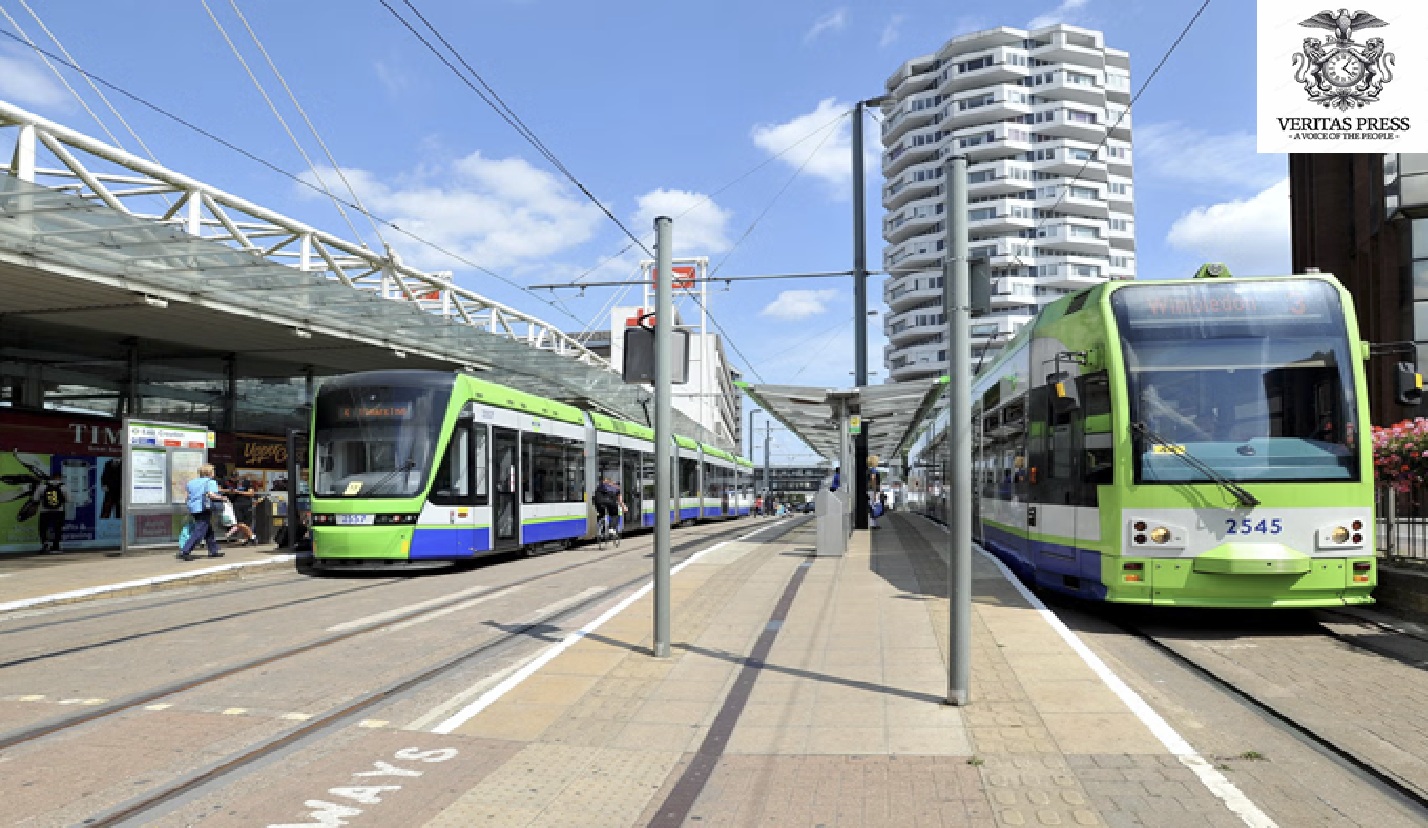
LONDON, UK – On an August afternoon in 2022, Reuben Abakah, a 19-year-old furniture delivery worker, approached a footpath crossing near Croydon’s Waddon Marsh tram stop. He was riding an e-scooter, his hood pulled up against the weather. He did not slow down. He did not look until the final moment. The tram, travelling at 59 kilometres per hour (37 mph), struck him with a force that would prove fatal three days later in hospital.
Nearly four years on, the legal machinery has finally begun to turn. A High Court claim filed on behalf of Abakah’s family seeks damages exceeding £200,000 from Tram Operations Limited (TOL), the FirstGroup subsidiary that operates London Trams on behalf of Transport for London (TfL). The case, made public on 22 April 2026, lays bare a catalogue of alleged systemic failures that transform what a coroner labelled an “accident” into something far more troubling: a foreseeable tragedy waiting to happen.
A Death In Broad Daylight:
The bare facts are not in dispute. Reuben Abakah was crossing the Waddon Marsh West footpath crossing on 22 August 2022 when he was hit by a tram driven by Michelle Bishop. The 19-year-old had his hood up and did not slow down as he entered the crossing at the same time as the tram. He died of his injuries three days later.
An inquest at South London Coroner’s Court in Croydon concluded in August last year that he died as a result of an accident. No criminal proceedings have been brought against the driver, and the family’s civil claim does not target Michelle Bishop personally.
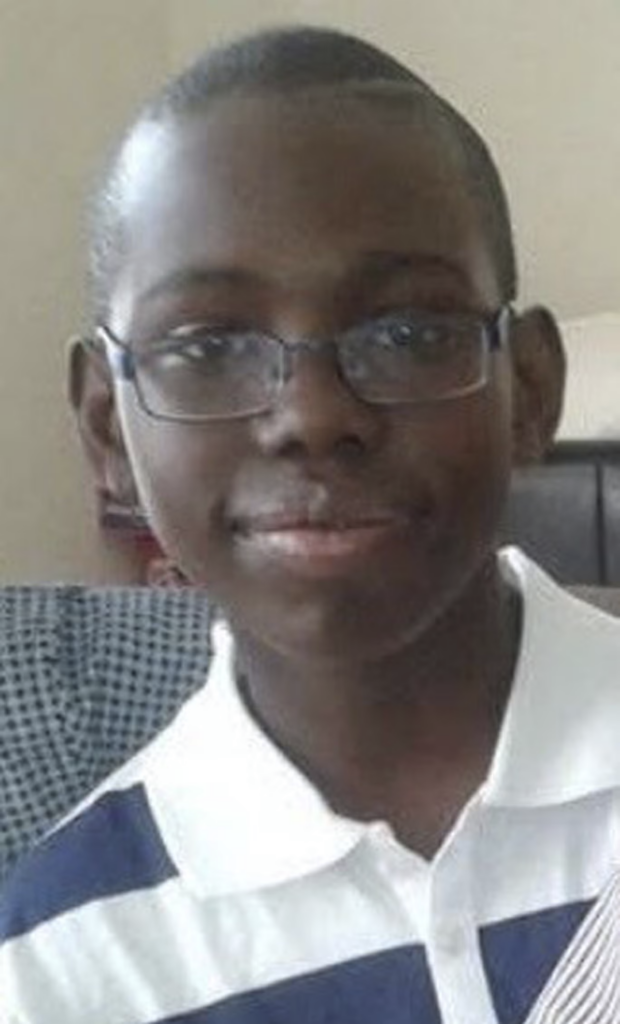
Reuben Abakah
But the family’s lawyers argue that the inquest’s conclusion of “accidental death” obscures a more complex reality: one in which the tram driver had ample time to see Abakah, the tram’s audible warnings were too quiet and too late, and the design of the crossing itself actively steered users into harm’s way.
The High Court Claim: Seconds That Made The Difference.
The claim, filed in the High Court in London, alleges that Reuben Abakah was visible to the tram driver “well before” he crossed the tracks. The document paints a damning picture of the seconds leading up to impact, built on forensic analysis of the tram’s data recorders and the crossing’s acoustic environment.
Michelle Bishop first sounded her warning bell 2.0 seconds before the collision. She sounded her horn 1.4 seconds before the crash. Both warnings, the claim argues, were sounded too late to be “acted upon” by a pedestrian in Abakah’s position. More alarmingly, the sound level emitted by the bell was below the ambient background noise at the crossing, and the levels of both the bell and horn were “materially below the recommended band”. In effect, even if Abakah had been listening, he may not have heard the warnings above the general hubbub of the urban environment.
The driver’s braking came even later. She applied the service brake, the standard brake used during normal operations, 0.8 seconds before impact. The hazard brake, a more aggressive system designed for emergencies, followed just 0.1 seconds later. At 37 mph, a tram requires a substantial distance to stop; these fractions of a second were never going to be enough.
The family claims that Bishop failed to keep a “proper lookout” and did not recognise the “developing hazard” as Abakah approached the crossing. She did not operate the tram “at a safe speed in the circumstances” or use its audible warnings or brakes effectively.
A Crossing Designed To Mislead:
Perhaps the most troubling aspect of the case lies not in what the driver did or did not do, but in the physical environment that shaped both her actions and Abakah’s. The Waddon Marsh West crossing features a chicane, a deliberately meandering path intended to slow users and make them more aware of their surroundings. But according to the family’s legal claim, this chicane failed in its fundamental purpose: it did not cause users to naturally turn towards the direction of approaching eastbound trams, such as the one that hit Abakah.
This design flaw meant that a pedestrian or e-scooter rider approaching from the direction Abakah took would have their back to oncoming trams. By the time they turned to face the tracks, the tram could already be upon them. It is a classic case of what safety engineers call a “latent error”, a hazard built into the infrastructure that waits for the right combination of human behaviour and timing to trigger catastrophe.
Reuben Abakah’s father, Frederick Woode, put it simply and devastatingly: “The crossing should also be altered so that pedestrians like Reuben do not have their backs to approaching vehicles”.
The Speed Question: A Post‑Tragedy Fix.
The speed limit for trams using the Waddon Marsh crossing has since been reduced from 70 km/h (43 mph) to 50 km/h (31 mph). The reduction, while welcome, prompts an uncomfortable question: if the lower speed limit is safe now, why was the higher limit considered safe before Abakah’s death?
This is a pattern that has haunted Croydon’s tram network before. After the 2016 Sandilands derailment, in which a tram entered a curve at 73 km/h in a 20 km/h zone, killing seven and injuring 61, TfL and TOL implemented a raft of safety measures, including additional speed restrictions, enhanced speed monitoring, and an automated braking system across the fleet. Yet the Waddon Marsh crossing, just a few miles from Sandilands, remained a 43 mph zone until a teenager died there.
Frederick Woode’s words carry the weight of a father who has studied the details of his son’s death: “I know nothing can bring Reuben back, but I believe the tram should not have been travelling as fast as it was”.
The Ghost Of Sandilands: CCTV Cameras That Never Came.
The 2016 Croydon tram crash was a watershed moment for tram safety in Britain. The Rail Accident Investigation Branch (RAIB) issued a series of recommendations, among them that installing CCTV cameras inside drivers’ cabs should be “considered” to aid inquiries into future incidents.
Osbornes Law, the firm representing Abakah’s family, says it has seen no evidence that such cameras have been fitted. This is not a new revelation. In the immediate aftermath of Sandilands, it emerged that none of Croydon’s 35 trams had CCTV cameras pointing at the driver. The forward-facing and internal CCTV cameras fitted on the tram that derailed were apparently not working at the time of the crash.
Nearly a decade later, the absence of in-cab cameras remains a glaring gap in the network’s safety architecture. Without such footage, investigators in 2022 had to rely on data recorders, witness statements, and physical evidence to reconstruct what happened in the cab in the seconds before Abakah was hit. The driver’s own account, while no doubt given in good faith, cannot be independently verified against what a camera might have shown: where she was looking, what she saw, and when she saw it.
Ben Posford, the family’s solicitor and head of catastrophic injury at Osbornes Law, is no stranger to Croydon’s tram safety failings. He represented the families of five of the seven victims of the Sandilands crash, and he has been openly critical of what he sees as a systemic failure to learn lessons. “Following the 2016 Croydon tram crash in which seven people died, the Rail Accident Investigation Branch recommended that installing CCTV cameras inside drivers’ cabs should be considered to aid inquiries into future incidents. We have seen no evidence that cameras have been fitted,” the firm stated.
“That’s Not How Health And Safety Works”:
At the heart of the family’s legal argument is a principle that Posford has articulated with characteristic clarity: Reuben Abakah’s own mistake does not absolve the system that killed him.
“It shouldn’t have mattered that Mr Abakah didn’t look properly,” Posford said. “That’s not how health and safety works, and hasn’t done for a very long time. He didn’t look until the last minute, and he made an error there. From time to time, people are going to make an error. You have to have health and safety measures in place that account for human error, that account for zoning out”.
This is the language of modern safety science. It recognises that human beings are fallible, that we daydream, that we check our phones, that we pull up our hoods against the rain and forget to look both ways. A safe system is one that anticipates and mitigates these inevitable lapses, not one that punishes them with death.
The fact that Abakah was riding an e-scooter, a mode of transport that exists in a grey regulatory zone in the UK, adds another layer of complexity. E-scooters are not legal for use on pavements or roads except as part of government-approved rental trials. But as Posford’s argument implies, the regulatory status of Abakah’s vehicle is beside the point: a tram crossing should be safe for any legitimate user, whether on foot, on a bicycle, or on a rented e-scooter.
The Broader Pattern: Tram Safety In Croydon.
The Waddon Marsh case does not exist in isolation. It is the latest chapter in a longer, darker story about tram safety in Croydon.
In 2023, TfL and Tram Operations Limited were fined a total of £14 million at the Central Criminal Court over the Sandilands derailment, having pleaded guilty to health and safety failings. The judge in that case described the crash as “an accident waiting to happen.” Yet here, six years after Sandilands and four years after Abakah’s death, the same operator stands accused of further negligence at a different location on the same network.
The RAIB’s 2022 annual report highlighted “user worked crossing safety” as one of seven areas of concern across the rail industry. The report noted that crossings used by pedestrians and cyclists, especially those that rely on users to look and listen for approaching trains or trams, remain a persistent source of risk. The Waddon Marsh crossing fits this description precisely.
Local political figures have long voiced concerns about tram safety. Sarah Jones, the Labour MP for Croydon Central (which includes the Sandilands site), has campaigned for new laws including “death by dangerous driving on the tramways” and has accused the government of dragging its feet on implementing RAIB recommendations. Yet the pace of change remains glacial.
The Official Response: Silence And Sympathy.
TfL’s response to the High Court claim has been characteristically guarded. Mark Davis, TfL’s general manager for London Trams, said: “Our thoughts and deepest sympathies remain with the family and friends of Reuben Abakah, who tragically lost his life in August 2022 following a collision between his e-scooter and a tram in Croydon. We are aware that the family are currently taking legal action against our operator, so we cannot comment further while these proceedings are ongoing”.
Tram Operations Limited has not issued a separate statement, referring all inquiries to TfL. FirstGroup, the parent company, has also remained silent on the specifics of the case.
The absence of public comment from the operator is legally understandable but politically fraught. For a family seeking not just compensation but accountability and systemic change, the silence of those who run the network can feel like a second injury.
What Happens Next:
The High Court claim will now proceed through the civil justice system. If the case goes to trial, it will offer a rare public examination of the safety culture on London’s only tram network. The court will have to weigh competing narratives: the family’s account of systemic negligence against the operator’s likely defence that the primary cause was Abakah’s own failure to look.
But even if the family secures the damages they seek, the £200,000 figure is a fraction of what a life is worth, and a fraction of the £14 million fine levied over Sandilands. For Frederick Woode, the money is secondary. “My one wish is that lessons are learned from this and changes are made before anyone else loses their life,” he said.
The changes he seeks are specific and achievable: slower tram speeds at pedestrian crossings, redesigned chicanes that force users to face oncoming trams, audible warnings that can actually be heard above ambient noise, and in-cab CCTV to ensure that when the next incident occurs, investigators have more than a data log to work with.
Conclusion: A Test Of Accountability.
The death of Reuben Abakah is a tragedy that exposes the fault lines in Britain’s approach to tram safety. It is a story of a young man who made a fatal mistake, but also of a system that failed to protect him from the consequences of that mistake. It is a story of a crossing that funnelled users into danger, of a tram travelling at a speed that left no margin for error, and of an operator whose safety record has been repeatedly questioned.
The High Court claim is more than a demand for compensation. It is an attempt to force a reckoning, to make Tram Operations Limited and Transport for London confront the gap between their stated commitment to safety and the reality on the ground at Waddon Marsh. For the family, and for the wider Croydon community that still lives in the shadow of Sandilands, the question is simple: will this death finally be the one that changes things, or will it join the list of tragedies that prompted expressions of sympathy but no meaningful reform?
As Ben Posford put it, “You have to have health and safety measures in place that account for human error.” The measure of a just and safe transport system is not that it eliminates all mistakes, that is impossible, but that it ensures those mistakes are survivable. On 22 August 2022, at a footpath crossing in Croydon, that measure was not met.
Source: Multiple News Agencies
Submissions:
For The Secure Submission Of Documentation, Testimonies, Or Exclusive Investigative Reports From Any Global Location, Please Utilise The Following Contact Details For Our Investigations Desk: enquiries@veritaspress.co.uk or editor@veritaspress.co.uk
Help Support Our Work:
Popular Information is powered by readers who believe that truth still matters. When just a few more people step up to support this work, it means more lies exposed, more corruption uncovered, and more accountability where it’s long overdue.
Help Protect Independent Journalism, Which Is Currently Under Attack.
If you believe journalism should serve the public, not the powerful, and you’re in a position to help, becoming a DONATOR or a PAID SUBSCRIBER truly makes a difference.
DONATION APPEAL: If You Found This Reporting Valuable, Please Consider Supporting Independent Journalism.
Help Support Our Work – We Know, We Know, We Know …
Seeing these messages is annoying. We know that. (Imagine what it’s like writing them … )
Your support fuels our fearless, truth-driven journalism. In unity, we endeavour to amplify marginalised voices and champion justice, irrespective of geographical location.
But it’s also extremely important. One of Veritas Press’s greatest assets is its reader-funded model.
1. Reader funding means we can cover what we like. We’re not beholden to the political whims of a billionaire owner. We are a small, independent and impartial organisation. No one can tell us what not to say or what not to report.
2. Reader funding means we don’t have to chase clicks and traffic. We’re not desperately seeking your attention for its own sake: we pursue the stories that our editorial team deems important and believe are worthy of your time.
3. Reader Funding: enables us to keep our website and other social media channels open, allowing as many people as possible to access quality journalism from around the world, particularly those in places where the free press is under threat.
We know not everyone can afford to pay for news, but if you’ve been meaning to support us, now’s the time.
Your donation goes a long way. It helps us:
Keep the lights on and sustain our day-to-day operations
Hire new, talented independent reporters
Launch real-time live debates, community-focused shows, and on-the-ground reporting
Cover the issues that matter most to our communities, in real time, with depth and integrity
We have plans to expand our work, but we can’t do it without your support. Every contribution, no matter the size, helps us stay independent and build a truly people-powered media platform.
If you believe in journalism that informs, empowers, and reflects the communities we serve, please donate today.
Kamran Faqir is a volunteer investigative journalist and writer committed to exposing hidden truths and amplifying underreported stories. Driven by social justice, he brings sharp insight and fearless truth-telling to independent journalism. NUJ registered.
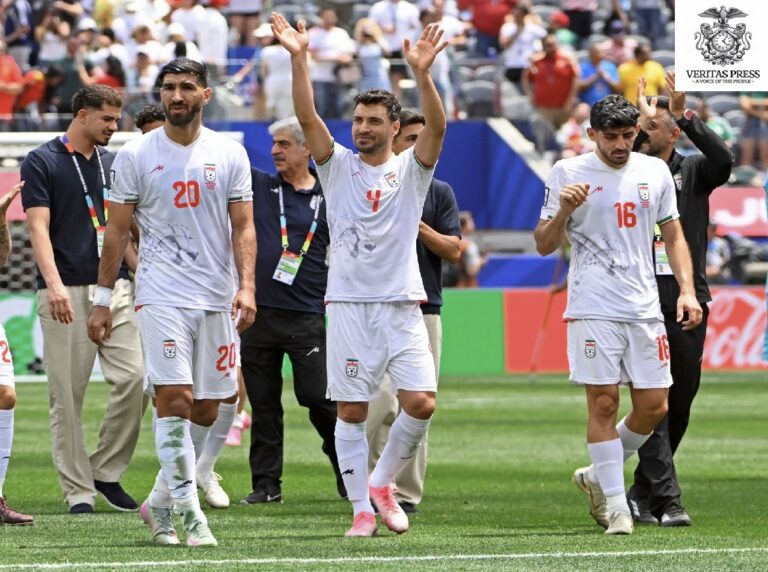
SEATTLE, TEHRAN — The U.S. Department of Homeland Security (DHS) will allow Iran’s national football team to enter the country 48 hours before their critical World Cup match against Egypt on Friday, a modest concession in a tournament where Team Melli’s travel conditions have sparked claims of oppression and competitive disadvantage.