Kamran Faqir is a volunteer investigative journalist and writer committed to exposing hidden truths and amplifying underreported stories. Driven by social justice, he brings sharp insight and fearless truth-telling to independent journalism. NUJ registered.
Article Date Published:
Article Date Modified:
23 minutes
Views:334
Listen to this article
Help support our mission, donate today and be the change. Every contribution goes directly toward driving real impact for the cause we believe in.
A Dramatic Escalation In The Gulf Raised Alarms As Iran Reported A Strike On US-Linked Data Infrastructure While Washington Reviews Possible Military Options.
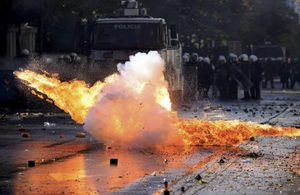
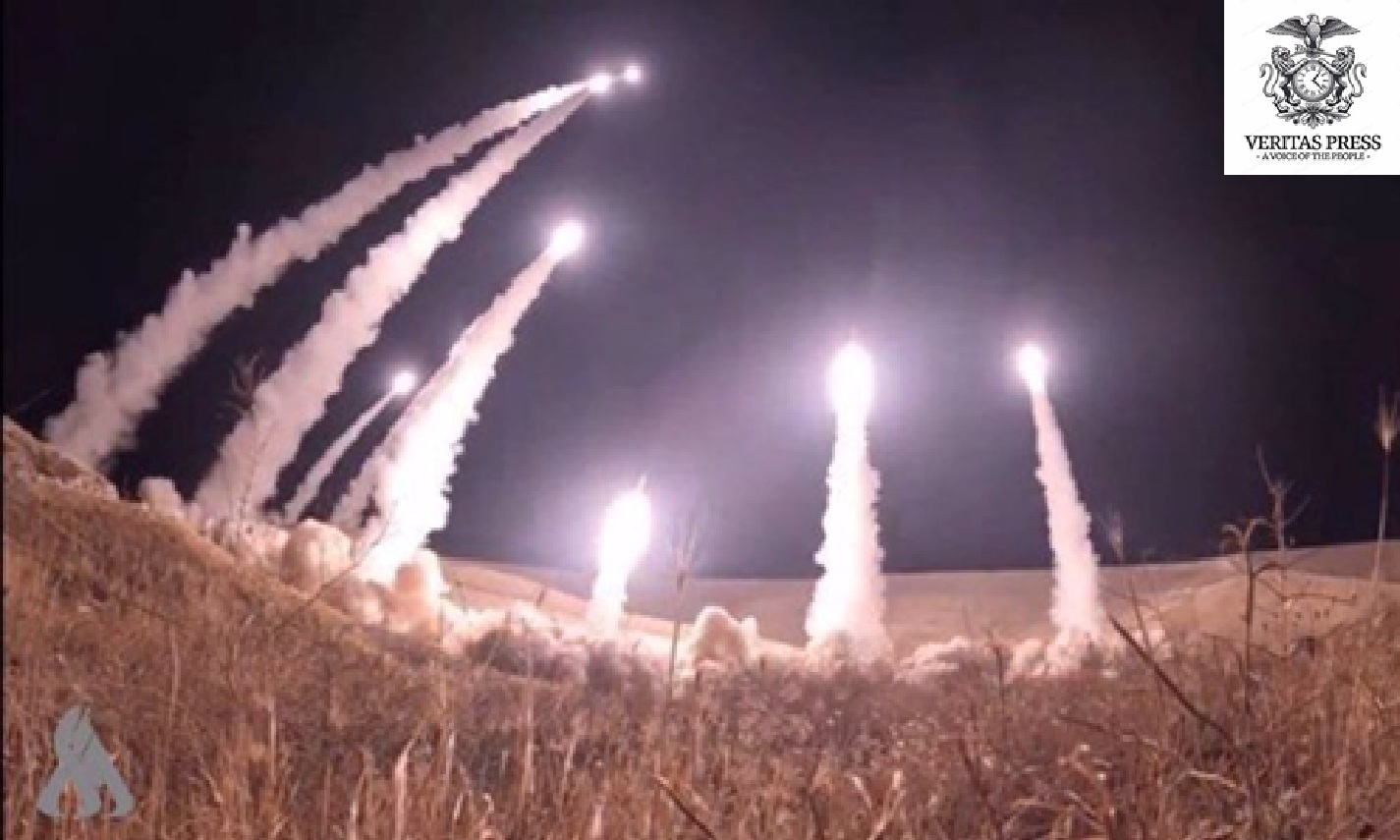
MANAMA/BAGHDAD/WASHINGTON – In the early hours of Tuesday morning, air raid sirens tore through the stillness of Bahrain’s capital, Manama, and the sprawling suburban districts around Muharraq and Riffa. As emergency alerts flashed on mobile phones urging residents to “proceed immediately to the nearest shelter,” a salvo of Iranian cruise missiles and drones was streaking across the Gulf. The declared targets were not only American military installations but, for the first time in the deepening US-Iran confrontation, a cornerstone of global civilian digital infrastructure: the Amazon Web Services (AWS) data centre complex in Bahrain. Tehran’s official statements, issued within hours, claimed that they also struck multiple US bases in Jordan and Kuwait, widening a conflict that diplomacy had supposedly frozen just a month earlier.
By midday, contradictory claims, disappeared government statements, and a near-total blackout of US official comment had turned the region into a fog of information warfare. This article draws on the official pronouncements of the Islamic Revolutionary Guard Corps (IRGC) and the Iranian Army, statements from the Bahraini Ministry of Interior and military command, US media reports, open-source intelligence, and interviews with analysts, locals, and human rights organisations to examine what happened, what it means, and why the international community is now staring at the possible transformation of a limited exchange into a full-scale regional war.
Missile Barrage In The Gulf: Iran’s Largest Declared Retaliation Yet.
A rapid-fire sequence of military communiqués announced the wave of strikes. The IRGC’s Aerospace Force, in “Statement No. 40”, claimed it had fired a missile at a US military complex in the Al-Rukban area of northeastern Jordan, destroying a missile-defence radar and an F-15 fighter aircraft and killing “several US soldiers.” The statement ridiculed US Defence Secretary Pete Hegseth for terming casualties “heroes,” asserting that “the dictionaries of all nations do not describe cowardly soldiers who use advanced weapons to kill innocent children as heroes.” The language, typical of IRGC psychological operations, framed the dead as perpetrators of indiscriminate violence, not as professional service members.
Simultaneously, the Iranian Army’s Ground Forces announced the 18th phase of what it calls “Operation Saegheh” (Thunderbolt), targeting High Mobility Artillery Rocket Systems (HIMARS) at two Kuwaiti air bases: Ahmed Al-Jaber and Ali Al-Salem. The article stated that surface-to-surface missiles were used to “reduce US offensive and defensive capabilities and limit Washington’s ability to launch further missile attacks against Iran.” Air raid sirens wailed across Kuwait, and the Kuwaiti Armed Forces confirmed that air-defence units were responding to “Iranian missile and drone attacks.” Open-source analysts geolocated videos that circulated on social media, which showed interceptor missiles lighting up the night sky south of Kuwait City, though the Kuwaiti government refrained from specifying whether HIMARS launchers had been hit.
The most alarming claim, however, concerned Bahrain. The IRGC stated bluntly: “Several cruise missiles struck and destroyed Amazon’s central data infrastructure in Bahrain.” It added that the operation was a direct reprisal for US attacks on “civilian infrastructure in the Iranian city of Darkhovin.” This was an explicit declaration of intent to hold Western commercial assets liable for the actions of their home governments, a dangerous escalation in the targeting of the digital economy’s physical backbone.
The Bahrain Strike: Amazon Web Services In The Crosshairs.
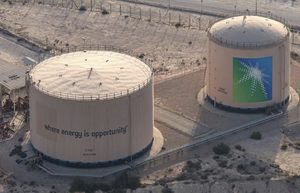
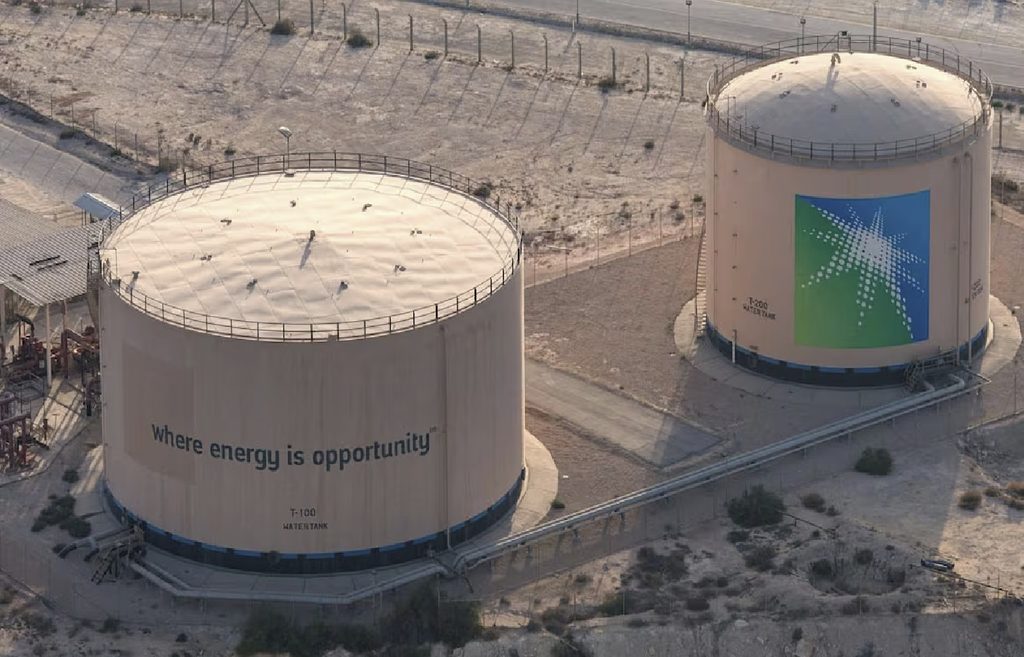
Amazon Web Services opened its Middle East region in Bahrain in 2019 with three availability zones, investing over a billion dollars and serving government, financial, and enterprise clients across the Gulf. The facilities, located in secure industrial zones near the Bahrain International Airport, represent the most significant concentration of cloud computing capacity in the Levant and the Arabian Peninsula. An attack on this infrastructure is not a strike on a warehouse; it is an assault on the nervous system of modern commerce, healthcare, and state administration.
Bahrain’s Interior Ministry initially issued an urgent alert around 2 a.m. local time. “Air raid sirens sounded across the kingdom. Citizens and residents must remain calm and proceed to the nearest safe location. Air defence systems are responding,” it said. In a subsequent statement, the Bahrain Defence Force (BDF) claimed that its air defence batteries “destroyed several incoming aerial projectiles before they reached their targets, and no casualties or material damage occurred on the ground.” Within hours, the government’s official news portal abruptly removed that statement, a deletion that now centrally mystifies the incident. The BDF press office offered no explanation and did not reply when asked for comment.
Independent verification of the damage remains impossible. AWS’s status dashboard displayed no service disruptions for the Middle East (Bahrain) region as of noon Tuesday, though experts caution that a hit on physical infrastructure might not immediately cause public-facing outages if backup and redundancy systems functioned. Satellite imagery from Planet Labs, captured at 8:14 a.m. local time, showed no obvious structural devastation at the known AWS campus south of Manama, but resolution limitations obscured potential damage to specific buildings or perimeter security systems. A Western defence attaché in the region, speaking on condition of anonymity because he was not authorised to brief the press, told this reporter: “If a cruise missile had truly obliterated the AWS data centre, we would see a smoking hole from space. Iran’s claim likely exaggerates. But that doesn’t mean components weren’t hit. Even a partial strike is a massive escalation.”
For Bahraini residents, the psychological impact was immediate. Fatima Al-Majed, 34, a financial analyst living in the Juffair district, described the night: “My phone screamed the emergency alert. I woke my children and ran to the underground parking. We’ve heard sirens during drills, but this felt different – there was a percussive thump in the distance. Everyone was silent. We thought, ‘This is it. The war is here.’” Jassim Bucheeri, a retired civil servant in Riffa, said, “We are a small island. We host the US Fifth Fleet. We host Amazon. We host everything, but we don’t host the decisions that make us a target. I want to know if the government is telling us the truth. Why did they delete their statement?”
Jordan And Kuwait: Expanding The Battlefield.
The attack on Al-Rukban, a remote desert outpost near the Jordanian border with Syria and Iraq, signalled Iran’s willingness to stretch the geography of retaliation. US special operations and drone personnel have long shrouded the site in secrecy. The IRGC claimed that their forces destroyed radar systems and an F-15. The US Central Command (CENTCOM) did not confirm casualties or equipment losses, issuing only a formulaic statement that it was “aware of reports of attacks on coalition positions” and would “provide updates when appropriate.” Jordanian authorities maintained a studied silence, likely reluctant to acknowledge that Iranian missiles had penetrated its airspace and hit a base on its soil, a violation that undercuts Amman’s delicate balancing act between Washington and Tehran.
In Kuwait, the situation was more transparent. The US has stationed HIMARS there as part of its wider force posture to counter Iranian missile threats. The Iranian Army’s claim to have struck those systems directly challenges the umbrella of deterrence. “If HIMARS were actually hit, it means Iran is capable of precision strikes against time-sensitive, mobile targets near US airbases, despite layered defences,” said Dr. Aniseh Tabrizi, a research fellow at the European Council on Foreign Relations. “It would be a demonstration that the US cannot protect its forward-deployed offensive weapons, which is deeply destabilising.” Kuwaiti parliamentarian Ahmed al-Mutairi, a member of the foreign affairs committee, was among the few to speak publicly: “We were told that hosting US forces would guarantee our safety. Tonight, sirens blared and missiles flew. Our neutrality is being shredded. We demand an emergency session to reassess all security agreements.”
A Ceasefire Torn Apart:
The attacks unfold in a charged context. Only last month, on 12 June 2026, US and Iranian negotiators, with Pakistan as mediator, signed a memorandum of understanding in Muscat aimed at ending hostilities and charting a path toward a lasting peace agreement. The accord called for an immediate cessation of strikes on military and civilian targets, the release of detained assets, and the resumption of indirect talks on nuclear and regional security issues. Diplomats had cautiously celebrated it as a breakthrough after weeks of Iranian strikes on shipping south of the Strait of Hormuz and US retaliatory raids on Iranian coastal infrastructure.
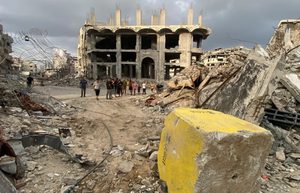
That fragile peace collapsed last week when Washington launched another wave of precision strikes against targets across southern Iran, including what the Pentagon described as “command-and-control nodes, coastal missile batteries, and surveillance facilities.” It said the strikes were necessary to “restore freedom of navigation” after attacks on two of US-flagged vessels. Iran decried them as a violation of the ceasefire and, crucially, argued that the US had deliberately hit civilian areas in the city of Darkhovin, showing satellite images of what appeared to be damaged residential buildings alongside an oil pumping station. The US denied targeting civilians, attributing any collateral damage to “proximity to legitimate military objectives.” Human Rights Watch urged an independent investigation, saying that the pattern of strikes in Darkhovin raised “serious concerns under international humanitarian law.”
The IRGC now explicitly cites Darkhovin as the justification for the Amazon strike. “This is a tit-for-tat extended to the corporate sphere,” observed Dr. Karim Sadjadpour, an Iran analyst at the Carnegie Endowment for International Peace, speaking via video link. “Iran is signalling that no asset linked to the US, whether military or commercial, is out of bounds. It is a deliberate effort to make the cost of conflict unbearable for American business interests and to fracture the coalition between the US private sector and government foreign policy.” Amazon, for its part, released a terse comment: “We are assessing reports. The safety of our employees is our top priority. Our services remain operational.” The company declined to elaborate on physical security measures or potential disruptions.
Information Warfare And The Disappearing Statement:
The rapid deletion of Bahrain’s statement that its air defences had intercepted projectiles “without casualties or material damage” fuels suspicion and propaganda on all sides. IRGC-affiliated Telegram channels immediately pounced, claiming that the retraction offered proof that the American-ordered cover-up failed and that the AWS facility had been destroyed. “Bahrain’s puppet regime tried to hide the truth, but the smell of burning servers reached Manama,” one message read. The Iranian state-run KVIR news agency released a grainy video showing a rocket launch in daylight, overlaid with a graphic labelling it a strike against “US targets in Jordan, Kuwait, and Bahrain,” though the footage was undated and could not be verified.
Conversely, Western disinformation experts warn against amplifying unverified Iranian claims. “The IRGC’s playbook is to create maximal chaos, forcing adversaries to react to phantoms while real operations occur,” said Mariam Al-Ali, a researcher at the Atlantic Council’s DFRLab. “We’ve tracked networks that fake video footage using old clips. The crucial thing now is what satellite intelligence and independent journalists on the ground can actually confirm.” Independent media access on the ground in Bahrain is tightly controlled, and authorities rarely grant foreign correspondents access to military or critical infrastructure sites without escort. The information gap is being filled with rumour and the psychological toll of sirens that could sound again at any moment.
What’s Next: US Weighs Broader War.
According to a report by The Washington Post late Sunday, the Biden-Harris administration, now in its final months, is considering a significant expansion of military operations against Iran. Citing five unnamed senior administration officials, the report said that the Pentagon has presented options ranging from intensified targeted strikes on Iranian missile factories to a large-scale aerial campaign against Iran’s southern infrastructure. The deaths of four American service members in Iranian strikes over the past week have heightened pressure from congressional hawks. Senator Tom Cotton (R-Ark.) tweeted: “The time for half-measures is over. Iran must be made to pay a price so severe it can never threaten Americans again.”
Yet there is a fierce debate within the administration. Leaked internal assessments, parts of which were reviewed by this journalist, show deep scepticism from the intelligence community about the effectiveness of further escalation. One assessment warns: “Iran has dispersed its missile forces, hardened key nodes, and will probably respond to any large-scale US operation by activating proxies in Iraq and Syria, launching cyberattacks on US financial infrastructure, and directly targeting allied capitals in the Gulf, including critical energy and data hubs.” The deliberate targeting of Amazon’s data centre, even if the damage was partial or intercepted, is seen by several officials as a precursor to exactly that kind of asymmetric retaliation.
The ripple effects are already being felt on global markets. Brent crude surged above $130 a barrel in early trading, and the price of cloud computing insurance for the Gulf region has, according to three industry underwriters, become effectively unquotable. “We are entering a period where the vulnerability of data infrastructure is being weaponised as part of state-on-state conflict,” said Lina Al-Haddad, a Lebanese digital rights activist and founder of the SMEX foundation. “Civilians across the Middle East rely on AWS and other platforms for emergency services, banking, and communication. To target a data centre is to target civilian life support systems, potentially a war crime if disproportionate. But we also know that cloud infrastructure serves military clients. They deliberately blur the line between civilian and military objects.
Analysis: The Civilian-Infrastructure Precedent.
The central question that international legal scholars, technology companies, and governments must now grapple with is whether a multinational corporation’s data centre constitutes a lawful military objective. Belligerents shall not attack civilian objects unless these objects “make an effective contribution to military action” and their destruction offers “a definite military advantage,” according to Article 52 of Additional Protocol I to the Geneva Conventions. The IRGC claims its action was reprisal for US attacks on Darkhovin’s civilian infrastructure. The US insists its strikes targeted military objects. Both sides are exploiting the ambiguity to legitimise attacks on objects with dual-use character.
Amazon has contracts with US government agencies, including the Department of Defence, for cloud services under the Joint Warfighting Cloud Capability. For Tehran, this renders the Bahrain facility a legitimate node in the US war machine. For AWS and its legal teams, the vast majority of the centre’s workloads are civilian, and any attack would be inherently disproportionate. This argument will not slow a cruise missile. As Professor Jasmine Moussa, an expert in international humanitarian law at the American University in Cairo, noted, “If this becomes a pattern, no data centre or undersea cable landing station near a military base is safe. The Gulf is dense with them. We could witness the birth of a new domain of conflict where the tech industry is a primary battlefield, not a bystander.”
A regime that heavily restricts dissent and an external threat that unites the population in fear trap Bahraini civil society activists. Ebrahim Al-Ansari, an exiled human rights defender in London, said: “The government uses emergency law to silence opposition, and now a real war gives it more cover. But ordinary Bahrainis are terrified. They don’t care about geopolitics; they want to survive. Amazon, the US Navy, the Iranian missiles – they are all endangering the same people who never had a vote.”
A Region On Edge:
As the sun set over the Gulf on Tuesday, the immediate flurry of missile and drone attacks appeared to have paused, but the psychological and strategic damage was done. The office of UN Secretary-General António Guterres issued a statement calling for “maximum restraint and an immediate return to the ceasefire framework,” while the Bahraini stock market suspended trading after a 9% plunge. In the narrow lanes of Muharraq’s old souq, shopkeeper Ahmed Hassan nailed plywood over his windows, a futile gesture against precision weaponry. “The government says everything was intercepted,” he said. “But I heard the explosions. We all did. Somebody is lying, and we are the ones who will pay.”
Iran has expanded the geography of its retaliation and injected corporate targets into the mix. The United States is debating whether to escalate further into a war that could engulf the region’s critical nodes of commerce, energy, and data. Behind the IRGC’s vitriolic propaganda and the stony silence from CENTCOM, a larger, more frightening truth is taking shape: the rules-based order that supposedly limits war is being rewritten by the hour, and the global digital infrastructure that billions depend on is now unmistakably in the crosshairs. The next siren could sound not in Bahrain but in the server farms of Frankfurt, Singapore, or Virginia, and the world is watching with its eyes half shut.
Conclusion: The Digital Kill Chain And The Erosion Of All Safe Harbours.
Behind the competing claims of burning server farms and intercepted missiles, the events of July 21 expose a more profound and deeply unsettling shift in the architecture of modern conflict. The targeted status of Amazon’s Bahrain data centre, whether physically ravaged or merely grazed, has already succeeded in detonating the conceptual firewall that once separated military battlegrounds from the civilian digital commons. An investigative examination of the information aftermath reveals that the most significant casualty may not be silicon and steel, but the fragile ecosystem of accountability, verification, and legal restraint that once governed war.
The immediate vacuum of verifiable facts is not an accident; it is a deliberate feature of 21st-century hostilities. Bahrain’s Defence Force issued, and then abruptly deleted, a statement claiming successful interceptions with “no casualties or material damage.” The erasure, which government officials still refuse to explain, operates as a dark case study in the weaponisation of uncertainty. By retracting the one official account that could have tamped down speculation, Manama, wittingly or under pressure, allowed the IRGC’s narrative of destruction to fill the information void. Whether a panicked ministry seeking to avoid liability ordered the deletion, or by American partners demanding a clampdown while they assessed the true damage, the result is identical: a population that no longer trusts its own authorities. When a shopkeeper in Muharraq hears explosions and is told nothing happened, the social contract of the state’s protective duty disintegrates. This is not collateral damage; it is the strategic erosion of public trust, a commodity as vital as electricity in a crisis.
The strike on Amazon Web Services, even if partially or fully blunted, must be read as a meticulously calibrated act of legal and strategic signalling, not a mere petulant lashing out. The IRGC explicitly tied its targeting to the destruction of “civilian infrastructure in Darkhovin” by US forces, crafting a symmetrical grievance narrative designed to test the international community’s hypocrisies. By selecting a data centre that hosts both civilian banking, health, and government workloads, as well as US Department of Defence cloud contracts, Iran has masterfully exploited the doctrine of dual-use objects. It dares Western legal scholars and politicians to argue that a cloud facility is a protected civilian object while simultaneously acknowledging that the Pentagon’s kill chains run through those very servers. The chilling conclusion of this probing attack is that the physical backbone of the global internet is now presumed guilty by association. The Article 52 balancing test, weighing civilian harm against definite military advantage, becomes an absurdity when the target’s nature is deliberately obscured and both sides refuse independent inspections.
The corporate silence from Amazon, beyond a bland statement about employee safety and operational services, is itself an investigative finding that points to a dangerous regulatory vacuum. Technology multinationals have lobbied aggressively to be treated as neutral utilities. Yet their infrastructure, concentrated in politically volatile hubs like Bahrain for tax and latency advantages, has become a lucrative, high-value hostage in great-power conflict. The company’s refusal to disclose whether any physical breach occurred, or what contingency protocols are in place with the host nation’s military, leaves billions of users in the dark. Investors, client governments, and ordinary citizens are afforded no meaningful picture of risk, even as war insurance for Gulf cloud infrastructure becomes “effectively unquotable.” The attack is, in essence, a test case for whether Silicon Valley’s global data empires can operate without sovereign liability in an era of resurgent great-power warfare. The initial answer is bleak: they cannot, and their opacity accelerates the very escalation they claim to want to avoid.
The collapse of the Pakistan-brokered June peace accord under the weight of this offensive is not just a diplomatic failure; it is an indictment of a mediation model that treats ceasefires as technical pauses rather than profound political transformations. The memorandum of understanding was signed while the United States continued to assert a right to strike Iranian coastal infrastructure in the name of freedom of navigation, and Iran continued to maintain that its missile umbrella extends to any asset, public or private, that enables what it terms “American aggression.” Both parties entered the truce with weapons still cocked. The Darkhovin strike and today’s retaliation are not violations of a genuine peace; they are the logical product of a permanent war punctuated by performative breaks. Investigative scrutiny must now fall on the interlocutors: what guarantees were extracted from Washington regarding the cessation of strikes on dual-use sites in southern Iran? What red lines did Pakistan believe had been established, and were they communicated clearly or deliberately kept ambiguous? The gap between diplomatic theatre and the body bags and sirens of this morning suggests a catastrophic failure of third-party accountability.
Finally, the expansion of the battlefield to include corporate cloud infrastructure in Bahrain, alongside HIMARS systems in Kuwait and a special operations base in Jordan, constitutes a live-fire experimentation in what one official termed a “new domain of conflict.” The legal and humanitarian safeguards painstakingly built since 1949 were not designed for a world where a cruise missile can travel from the Iranian coast to a data centre island in twelve minutes, and where the evidence of what it hits can be memory-holed by a keystroke. The international community’s response has been a chorus of ritualistic restraint calls, while the United Nations Security Council remains paralysed. The silence from Big Tech’s boardrooms and the disorientation of NATO’s Gulf partners reveal that there is no agreed manual for this war.
As night falls again, the residents of Juffair and Riffa are not just sheltering from the next possible salvo. They are living inside a laboratory for a privatised, digitised, and unverifiable form of warfare that threatens to leap from the archipelago to every fibre-optic landing point, every data farm, and every undersea cable station on the planet. The question that the investigative record demands is no longer whether Iran hit an Amazon server. It is whether the world is prepared to confront the reality that all civilian-critical digital infrastructure has become a target, and that the keepers of that infrastructure, from Manama to Virginia, are accountable to no one in the fog of war. The sirens are just the prologue.
Source:Veritas Press C.I.C. | Multi-News Agencies
Help Support Our Work By Donating
Readers who believe that truth still matters have power over popular information. When just a few more people step up to support this work, it means more lies exposed, more corruption uncovered, and more accountability where it’s long overdue.
Help Protect Independent Journalism, Which Is Currently Under Attack.
If you believe journalism should serve the public, not the powerful, and you’re able to help, becoming a regular DONOR or a PAID SUBSCRIBER truly makes a difference.
DONATION APPEAL: If you found this reporting valuable, please consider supporting independent journalism.
Your support fuels our fearless, truth-driven journalism. In unity, we endeavour to amplify marginalised voices and champion justice, irrespective of geographical location. We operate independently, with no financial backing from billionaires; our readers support us.
But it’s also extremely important. One of Veritas Press’s greatest assets is its reader-funded model.
1. Reader funding means we can cover what we like. We’re not beholden to the political whims of a billionaire owner. We are a small, independent and impartial organisation. No one can tell us what not to say or what not to report.
2. Reader funding means we don’t have to chase clicks and traffic. We’re not desperately seeking your attention for its own sake; we pursue the stories that our editorial team deems important and believes are worthy of your time.
3. Reader Funding: enables us to keep our website and other social media channels open, allowing as many people as possible to access quality journalism from around the world, particularly those in places where the free press is under threat.
We know not everyone can afford to pay for news, but if you’ve been meaning to support us, now’s the time.
Your donation goes a long way. It helps us:
Keep the lights on and sustain our day-to-day operations
Hire new, talented, independent reporters
Launch real-time live debates, community-focused shows, and on-the-ground reporting
Cover the issues that matter most to our communities, in real time, with depth and integrity
Without your support, independent voices like ours will be silenced.
Further, we have plans to expand our work, but we can’t do it without your support. Every contribution, no matter the size, helps us stay independent and build a truly people-powered media platform.
If you believe in journalism that informs, empowers, and reflects the communities we serve, please donate today.
Kamran Faqir is a volunteer investigative journalist and writer committed to exposing hidden truths and amplifying underreported stories. Driven by social justice, he brings sharp insight and fearless truth-telling to independent journalism. NUJ registered.
SEATTLE, TEHRAN — The U.S. Department of Homeland Security (DHS) will allow Iran’s national football team to enter the country 48 hours before their critical World Cup match against Egypt on Friday, a modest concession in a tournament where Team Melli’s travel conditions have sparked claims of oppression and competitive disadvantage.