Kamran Faqir is a volunteer investigative journalist and writer committed to exposing hidden truths and amplifying underreported stories. Driven by social justice, he brings sharp insight and fearless truth-telling to independent journalism. NUJ registered.
Article Date Published:
Article Date Modified:
22 minutes
Views:435
Listen to this article
Help support our mission, donate today and be the change. Every contribution goes directly toward driving real impact for the cause we believe in.
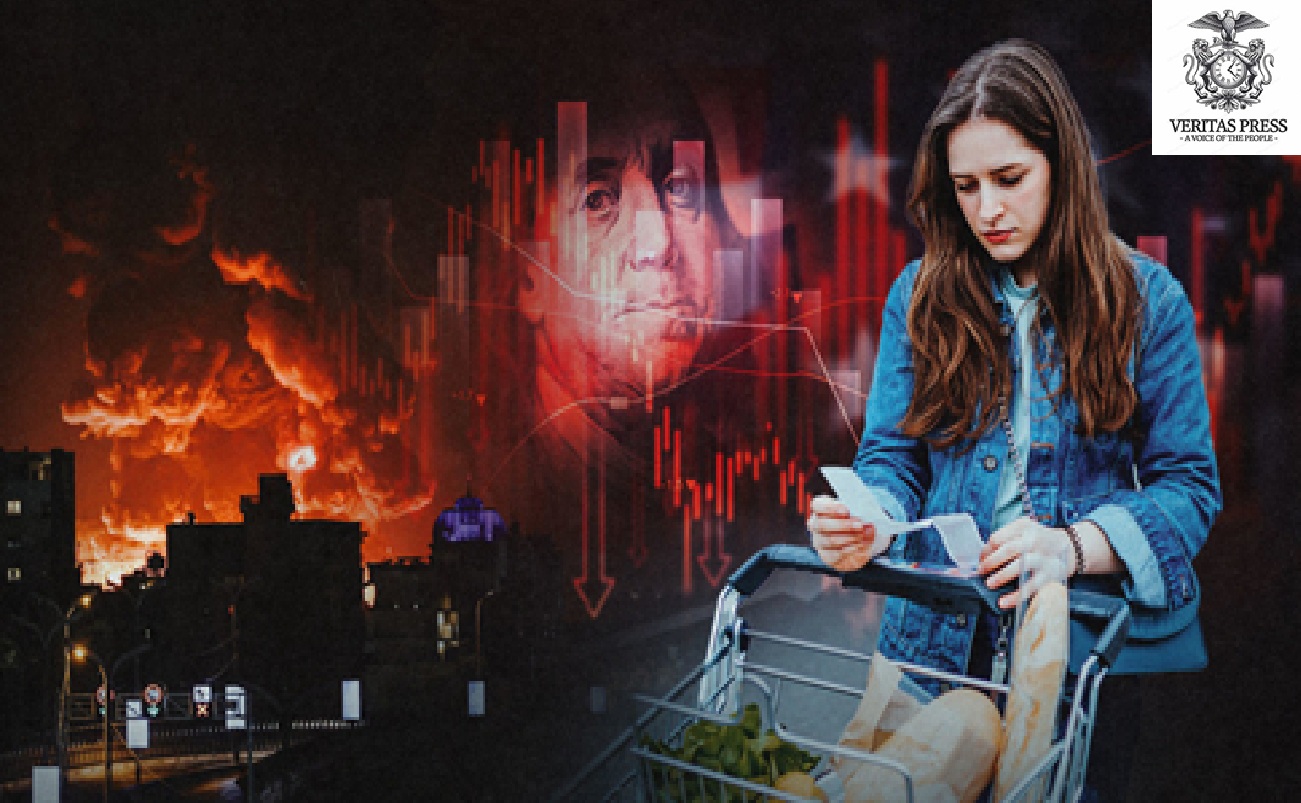
As The Hidden Costs Of The Iran War Bleed Into Every Grocery Bill And Fuel Tank, A Nation’s Economic Pain Tells A Story Washington Won’t Admit.
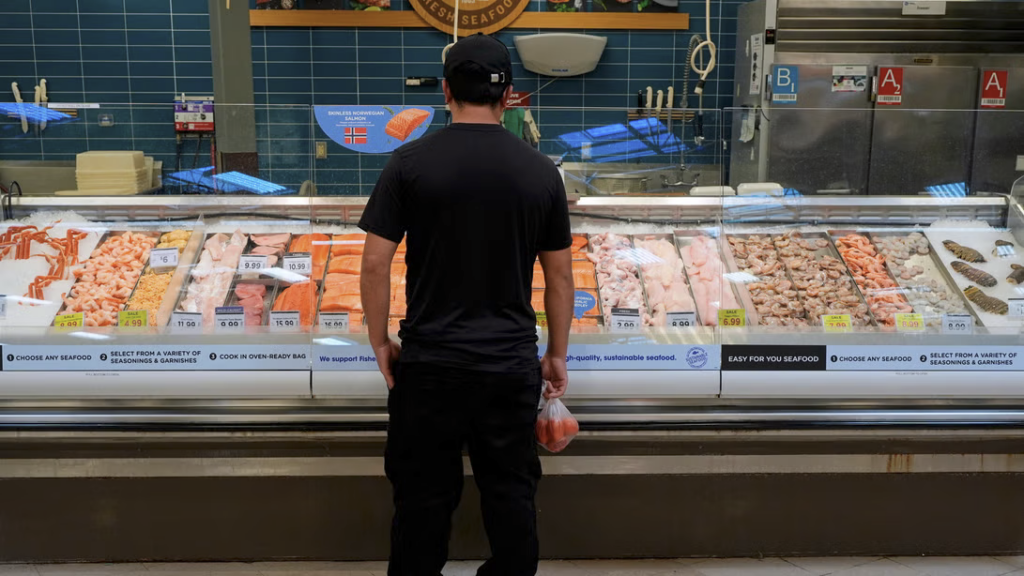
WASHINGTON — Tanya Vasquez paused in the cereal aisle of a Food Lion in Gastonia, North Carolina, on Wednesday, calculator app open on her phone. A box of store-brand cornflakes that cost $3.49 a year ago now scanned at $4.79. A gallon of milk, $4.15. Ground beef, nearly $7 a pound. The single mother of two tallied up the damage and put the cereal back.
“I used to fill the cart and still have money left for gas,” she said, shifting her toddler onto her hip. “Now I’m doing math in my head before I even touch anything. Gas, food, electricity, it’s everything. And you turn on the TV and see our president saying how great the numbers are.”
The numbers Donald Trump called “great” this week, the May Consumer Price Index showing headline inflation at a three-year high of 4.2%, are, for tens of millions of households, a ledger of quiet desperation. The official data, released by the Bureau of Labour Statistics on Wednesday, confirmed what supermarket receipts and fuel pump displays have been screaming since late February: the U.S.-Israeli war on Iran, and the effective closure of the Strait of Hormuz, is imposing a brutal, regressive tax on American life. And the worst, according to a broad consensus of economists, industry leaders, food bank directors, and farmers interviewed for this story, is almost certainly still ahead.
The 4.2% year-on-year inflation figure tells only the surface of a deeper structural shock. Energy prices accounted for more than 60% of the monthly rise in the CPI, the BLS said, with gasoline alone jumping 40.5% from a year earlier. Fuel oil soared 58.9%. Food-at-home prices rose 2.7%, but beneath that headline, staples have become luxury items: tomatoes up 32%, lettuce up nearly 25%, beef up 16%, instant coffee up 24%. Airline fares, driven by jet fuel costs, have climbed 27% in a year. On the same day the CPI dropped, Brent crude oil futures again flirted with $95 a barrel, and West Texas Intermediate touched $90.
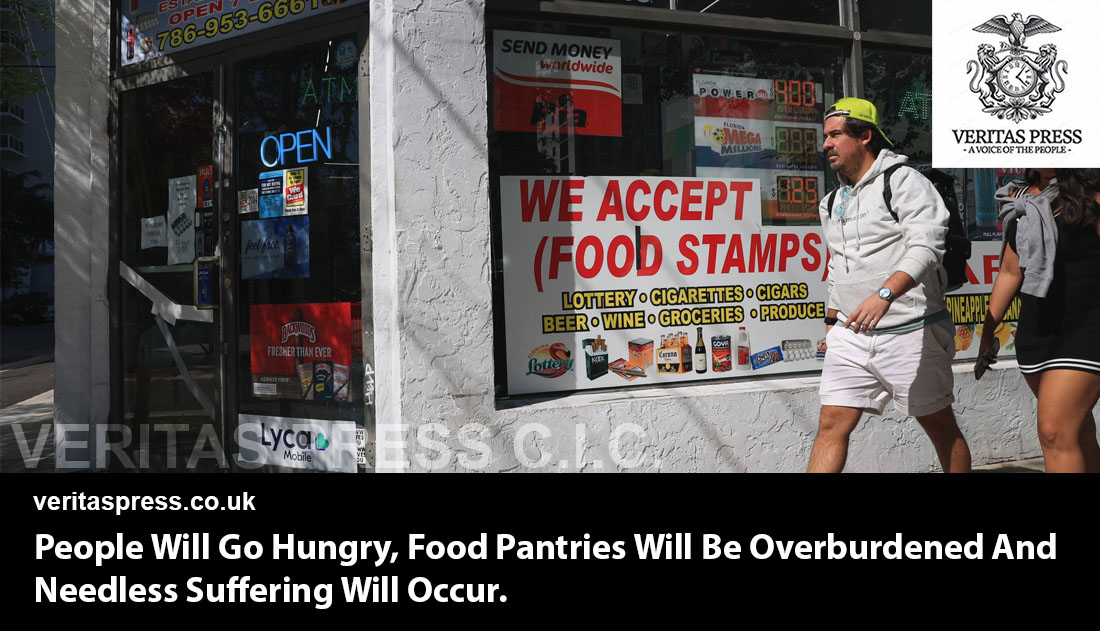
US grocery prices rose in April, but gas spikes weren’t the only reason
The illegal war, launched by Trump in late February with the stated goal of preventing Iran from obtaining a nuclear weapon, is entering its fourth month. Peace terms offered by the administration remain vague; Tehran continues to fire on vessels and regional targets. Hormuz, through which about a fifth of the world’s oil normally passes, remains a militarised chokepoint. On Thursday, U.S. forces carried out a new wave of airstrikes. The conflict has already added an estimated $59 billion to America’s fuel bills, according to a CNBC analysis of Moody’s Analytics data, roughly $750 per household. Rural families are paying an extra $26 a week for gasoline compared with prewar levels, the Centre for American Progress calculated.
Yet on Tuesday, boarding Air Force One, the president offered his assessment: Fuel prices are “not very high, relatively speaking.” When the 4.2% inflation print landed, he told reporters, “I love inflation,” before forecasting that costs will “come down like a rock” once oil flows freely. He touted a secret operation to move tankers through the strait. “It was worth it to me,” Trump said.
“That comment, ‘I love inflation’, will be on attack ads from now until November,” said Alex Jaquez, a former member of the White House National Economic Council under Joe Biden, in a statement to Al Jazeera. “This month’s CPI print offers no relief to working families, who are being forced to pinch pennies and tighten belts.”
The Pump Shock That Rewired Household Budgets:
For all the White House’s messaging, the numbers tattooed on roadside signs across America tell a different story. The national average for a gallon of regular gasoline stood at $4.16 on Thursday, according to AAA, down from a mid-May peak of $4.49 but still $1.17 higher than the $2.98 recorded on February 28, the day the first bombs fell on Iranian nuclear facilities. In California, prices have breached $5.50. A fill-up that cost $45 in February now runs $60 to $70.
“We’re sounding the alarm,” Mike Sommers, CEO of the American Petroleum Institute, told Fox Business last week, pointing to fuel inventories he described as nearing critical lows. “If this strait stays closed, we’re looking at a scenario much uglier than what we’ve seen so far.”
Industry sources say some administration officials have dismissed these warnings, noting that crude has not approached the $200-a-barrel levels briefly predicted at the war’s onset. But with Iran-backed militias continuing to target tankers and maritime insurers refusing war-risk cover for Hormuz transits, a sustained supply shock is grinding through the economy.
At the Sparrow Market in Ann Arbor, Michigan, owner Raymond Campise has watched his delivery invoices climb week after week. “All our vendors, meat, produce, dry goods, they’ve added fuel surcharges in the last month,” he said. “For an independent market operating on narrow margins, even small increases can have a major impact.”
That impact is now cascading into consumer behaviour. Dollar General CEO Todd Vasos told analysts this month that the chain is expanding the number of items priced at $1 or less, including frozen food, as shoppers trade down from traditional grocers. “When that gas price hits that $4 mark and then crosses it and then sustains for a while, you start to see that trade-in come in and you start to see that our core customer needs us most,” he said.
The Numerator Consumer Sentiment Tracker this week recorded U.S. consumer confidence at a four-year low. More Americans say their finances will worsen in the next twelve months than say they will improve. The decline spans generations and ethnicities.
The Grocery Aisle Is A War Zone:
The spike in food prices is not simply a fuel story, though diesel, up 61% year-on-year, according to AAA, is the blood of the agricultural supply chain, powering the fishing boats, tractors, and long-haul trucks that move 83% of U.S. agricultural products. The Strait of Hormuz is also a critical artery for fertiliser: roughly 30% of global fertiliser shipments normally pass through it. That tap is now cut.
“Most of what we’re seeing now in the food price chain probably predates the conflict,” said Ken Foster, professor of agricultural economics at Purdue University. “We’re cautiously waiting to see what the June numbers and the May numbers might show in terms of the extent to which energy shocks in the Strait of Hormuz and shipping blockades are going to impact food prices.” He added a dark timeline: higher costs to produce, process, store, and transport food take three to six months to hit supermarket shelves. “If the conflict were to last longer, we might see more coming online as fertiliser prices start to impact longer-term planting decisions and cropping decisions.”
Bernhard Dalheimer, an assistant professor at Purdue specialising in trade, stressed that the picture is more complex than an energy shock alone. U.S. trade policies under Trump, including the 17% duty on fresh tomatoes from Mexico imposed in July 2025, have already pushed consumer prices for tomatoes up 40% in the 12 months before April. Dry weather in the West, coupled with multi-year drought impacts, has tightened beef supplies, pushing prices up 15% year-on-year. Coffee, up 18.5%, reflects global production shortfalls from extreme weather in Brazil and Vietnam.
But the war is the accelerant. The Southern Shrimp Alliance, which represents shrimpers across eight states, reported that some boats have not left the dock this spring because the expected catch cannot cover diesel costs. Fuel typically accounts for 30% to 50% of shrimping expenses. Because U.S. shrimpers supply only 6% of domestic consumption, they have almost no power to pass on costs. “They’re just tying up,” said an Alliance spokesperson.
Perhaps the most ominous signal lies in the fertiliser pipeline. Many U.S. farmers had already secured supplies before the war began, cushioning the 2026 planting season. But if the strait remains closed into the autumn, the 2027 crop cycle faces a severe cost shock that will compound through every link in the food chain. “I expect the Iran conflict to impact the coming years’ food prices through a couple of channels,” Foster said. “Energy costs, transportation, handling, packaging. And then fertiliser. That’s the sleeper.”
‘I Don’t Think About Americans’ Financial Situation’:
The disconnect between the lived experience of inflation and the president’s rhetoric has become a defining feature of the 2026 election cycle. Last month, when asked whether the financial struggles of ordinary Americans factored into his war calculus, Trump was blunt: “I don’t think about Americans’ financial situation. I don’t think about anybody. I think about one thing: We cannot let Iran have a nuclear weapon.”
His approval rating on the economy now stands at a net negative 34%, according to an Economist/YouGov poll released this week. Only 29% approve of his handling of the issue, while 63% disapprove, the worst economic marks of his political career. In his first term, more Americans approved than disapproved of his economic performance. The numbers, with midterm elections five months away, are setting off alarm bells among Republican strategists.
“It’s not just bad vibes about the economy now; there are real financial pressures, especially on middle-class and lower-income households,” said Heather Long, chief economist at Navy Federal Credit Union. Her analysis of BLS data highlights that real wage growth has now declined for two straight months, dropping 0.1% in May even as costs climb. “The frustration for many Americans is that so many of the basics are up in price right now, gas, food, electricity, and medical care are all clear pain points.”
At America First Credit Union’s charitable foundation in Ogden, Utah, executive director Amber Greenwell coordinates food and diaper drives across six western states. “There is substantial growth in families who need more food resources as well as diaper resources,” she said. “The cost of gas, housing, and groceries have risen sharply here. Families who were just getting by are now in crisis.”
In Oronoco, Minnesota, Beth Benike, founder of small baby-products company Busy Baby, has seen inflation and shipping costs eat her margins. After being hammered by tariffs last year, her business now struggles with fuel surcharges that have doubled shipping expenses. Sales have declined, and she recently cut a full-time employee to part-time hours. Her customer base is shifting. “Grandparents have a little more disposable income than the generation that’s having babies,” she said. “That’s who’s buying now.”
The Hidden Balance Sheet: Savings, Credit, And Survival:
Beneath the macro data, household balance sheets are fraying. Americans are increasingly dipping into savings to sustain spending. The personal saving rate has fallen near historic lows. Credit card delinquencies are rising, particularly among younger and lower-income borrowers. The Federal Reserve Bank of New York’s latest quarterly report on household debt, due next month, is expected to show a further uptick in 90-day delinquencies on auto loans and credit cards.
“What we’ve got is hot, sticky and persistent underlying inflation with the dispersion of price increases broadening again, instead of narrowing,” Diane Swonk, chief economist at KPMG, said in an interview with CNN this week. She warned that the CPI data does not yet reflect the full pass-through of war-related supply chain ruptures. “We’ve yet to hit the full effects of the war on food prices.”
Omair Sharif, chief economist at Inflation Insights, cautioned against reading too much into the slight month-on-month cooling in grocery prices. “I don’t think we’re anywhere near out of the woods yet,” he said. “The increases were stronger under the hood.” He pointed to the cost of services, child care, home health care, and dental care, all rising well above a rate consistent with the Fed’s 2% target. Bill Adams, chief U.S. economist at Fifth Third Commercial Bank, attributed part of that services inflation to the administration’s ongoing immigration crackdown, which has tightened labour markets in care-economy sectors and pushed wages and prices higher.
The human architecture of this crisis is visible at food banks from Phoenix to Pittsburgh. Feeding America, the nation’s largest hunger-relief organisation, reported this month that visits to its network of 200 food banks have surged 22% since February, reversing a post-pandemic decline. “The line outside our doors now includes families who never thought they’d need us,” said a spokesperson who asked not to be named because the organisation is cautious about appearing political. “These are working families. They have jobs. They just can’t make the math work.”
The Fed’s Terrible Choice:
Kevin Warsh, the new chair of the Federal Reserve, presides over his first policy meeting next week with a dilemma that makes his predecessor’s post-pandemic tightening look straightforward. Inflation is running at more than double the central bank’s target, yet the primary driver, a foreign-policy-induced energy shock, is largely outside monetary tools’ reach. Raising rates aggressively to curb demand-side inflation could tip the economy into recession without easing pump prices. Doing nothing risks letting expectations become unanchored.
Financial markets have already priced in the shift. CME FedWatch now assigns a near-zero chance of a rate cut at next week’s meeting, where the benchmark rate is expected to hold at 3.5% to 3.75%. By October, markets see a 38% probability of a quarter-point hike to 3.75% to 4%, with a further tail risk of rates hitting 4.25%. Goldman Sachs this week pushed its forecast for the first rate cut to mid-to-late 2027.
“We are talking about the possibility of rate increases, and that’s inflation control and that depresses the price of gold,” said Aleksandar Tomic, associate dean at Boston College, commenting on the metal’s recent decline to a two-month low of $4,151 per ounce.
The S&P 500 has fallen in seven of the last nine trading sessions, shedding more than 6% since the May CPI print. The Dow has tumbled deeper. Corporate bond spreads are widening. Mortgage rates, which had briefly dipped below 6.5% earlier this year, are now back above 7.2%, freezing the housing market.
“If the Fed is forced to hike into a war-driven supply shock, the historical playbook is ugly,” said a senior economist at a large asset manager who requested anonymity because he is not authorised to speak publicly. “You risk crushing the very demand that’s keeping the job market afloat, and you still have a geopolitical wildcard that can spike oil $20 overnight. There’s no clean path.”
A Promise Unkept, An Election Looming:
In the 2024 campaign, Trump repeatedly pledged to halve energy costs within a year of taking office and to crush grocery inflation by unleashing domestic production. Eighteen months into his second term, gasoline costs more than $4 a gallon, food prices are up more than 20% cumulatively since he took office, and the war he launched is the primary accelerant. The president now finds himself praising the very inflation numbers he once weaponised against Biden.
At a rally in Las Vegas last week, Trump attempted to reframe the pain. “We’re paying a little more at the pump, sure, but that’s the price of strength,” he said. “Biden left us a mess, and we’re cleaning it up. When Hormuz opens, and it will, believe me, you’ll see prices drop like a rock.”
But such rhetoric is wearing thin even among his own voters. In focus groups conducted by Republican pollster Whit Ayres, shared with this reporter on condition of anonymity, swing voters in suburban Maricopa County, Arizona, repeatedly cited “the cost of everything” as their top concern. “They don’t blame Trump for Iran having a nuclear program, but they do blame him for the price of eggs and gas,” one participant’s summary noted.
“People feel it in their bones,” said Maria Echaveste, a former senior White House official under President Bill Clinton who now runs a policy centre focused on working families. “You can’t spin a $70 fill-up. You can’t spin the fact that a pot roast is now a luxury. This is not theoretical economics. It’s the texture of daily life.”
What Comes Next:
Even if a ceasefire were announced tomorrow, the logistics of clearing the Strait of Hormuz of mines, unexploded ordnance, and sunken vessels would take months. The insurance market would take longer to normalise. The fertiliser already lost this spring cannot be recovered. The food price impacts already locked into the supply chain will continue to materialise on grocery shelves well into 2027.
“Ending the war in Iran will help to moderate inflation, but the worst is likely still to come for rising food prices,” Long, of Navy Federal, said in an emailed analysis this week. The Bank of America research team, in a note to clients, concurred: “Most of the tariff-driven inflation has run its course, but supply chain pressures are building from the Iran war.”
The Bureau of Labour Statistics’ next CPI report, for June, will be released on July 15. By then, the Federal Reserve will have signalled its rate path, and the campaign for November’s midterms will be in full fury. If the numbers again surprise to the upside, the political cost of a war justified in national security terms but paid for in grocery bills and gas tanks may prove impossible to contain.
In Gastonia, Tanya Vasquez loaded her two children into a used sedan with a quarter-tank of gas and a trunk holding fewer groceries than she’d hoped. “I don’t care about Hormuz or nuclear weapons,” she said, voice flat. “I care about feeding my kids. Tell me why that’s not national security.”
Conclusion: The Invisible Ledger.
The May inflation report, reduced to a four-point-two on the White House teleprompter, does not capture the woman in Gastonia who handed back a box of cornflakes. It cannot measure the shrimper in Louisiana who never left the dock this spring, or the father in Phoenix who, for the first time, stood in a food bank line after his shift. These are the entries in a hidden ledger, one that the president refuses to read, and one his administration has actively obscured beneath a fog of bellicose rhetoric and performative optimism.
The investigative thread that runs through every data point, every interview, every oil futures tick, is the deliberate refusal to reckon with the domestic cost of foreign policy. The war on Iran was sold as an existential necessity, a last resort to deny Tehran a nuclear weapon. Yet from its first hours, its primary impact on American soil has been a regressive, grinding tax on the working poor and the precarious middle. Energy costs, the administration insisted, were a temporary side effect. Three months later, the Strait of Hormuz remains a militarised graveyard, the energy complex is in structural shock, and economists warn that the food price wave has barely begun to crest. Temporary has become structural. Side effects have become the story.
What makes this not merely an economic calamity but a moral failure is the active choice at its centre. President Trump’s admission, “I don’t think about Americans’ financial situation”, was not a gaffe. It was an unguarded articulation of a worldview that separates imperial ambition from household survival, as though the two operate in distinct moral universes. His subsequent declaration that he “loves inflation” because the numbers validated his energy narrative was not tone-deaf; it was a glimpse into a mentality that sees inflation not as the erosion of a home health aide’s wages or the evaporation of a family’s grocery budget, but as a line on a chart that can be spun.
The deeper structural critique is that this war, like so many before it, is being financed on the backs of those least able to absorb the cost, while the beneficiaries, the oil majors, the defence contractors, the maritime-security profiteers, are insulated from the consequences. API CEO Mike Sommers sounds an alarm about fuel inventories, but the industry’s quarterly earnings are swelling with every barrel that transits through the chaos. The Strait of Hormuz closure has introduced a risk premium that funnels billions into corporate balance sheets. Meanwhile, the working family paying $26 extra per week for fuel is not compensated for that loss; they simply consume less, save less, and fall behind.
The administration’s narrative, that inflation will “come down like a rock” once the war ends, is a cruel sleight of hand. Even if hostilities ceased tomorrow, the logistical, actuarial, and psychological damage to global shipping would take months to unwind. The fertiliser shipments lost this spring cannot be retroactively applied to the soil. The price increases already embedded in wholesale contracts will cascade through supermarket aisles well into 2027. The promise of relief is a temporal illusion, dangled to blunt the political fallout ahead of November, with no guarantee that the strait will be safe in a month, let alone a year. The administration is asking Americans to absorb a punishing present in exchange for a future it cannot secure.
And then there is the question of accountability, or its absence. The same president who once campaigned on slashing energy costs by half now stands before cameras and tells struggling citizens that $4.16 per gallon is “not very high, relatively speaking.” Relatively to what? To the record peaks of a global oil shock caused by another war, on another continent, under his predecessor? The rhetorical sleight is a quiet admission: the benchmark for economic success has shifted. Pain is relative, and as long as the president is the one drawing the comparison, the pain of others is invisible.
In the end, the investigative critique returns to the faces behind the data, to Tanya Vasquez and millions like her, for whom “national security” is not an abstraction but the daily math of whether the children eat or the tank gets filled. A nation that wages war on the other side of the world while telling its own citizens that their financial survival is not a factor in the calculus of power has lost the plot of what security means. The Strait may one day reopen, the bombs may stop, and the CPI may moderate. But the ledger of what was extracted from those who had no say in the war, that debt will not be repaid by a presidential press release. It will linger in the savings accounts drained, the credit cards maxed, the meals skipped, and the quiet, accumulating resentment of a people told that their suffering was the price of strength, while the strong cashed the checks.
For The Secure Submission Of Documentation, Testimonies, Or Exclusive Investigative Reports From Any Global Location, Please Utilise The Following Contact Details For Our Investigations Desk: enquiries@veritaspress.co.uk or editor@veritaspress.co.uk
Help Support Our Work:
Popular Information is powered by readers who believe that truth still matters. When just a few more people step up to support this work, it means more lies exposed, more corruption uncovered, and more accountability where it’s long overdue.
Help Protect Independent Journalism, Which Is Currently Under Attack.
If you believe journalism should serve the public, not the powerful, and you’re in a position to help, becoming a DONATOR or a PAID SUBSCRIBER truly makes a difference.
DONATION APPEAL: If You Found This Reporting Valuable, Please Consider Supporting Independent Journalism.
Help Support Our Work – We Know, We Know, We Know …
Seeing these messages is annoying. We know that. (Imagine what it’s like writing them … )
Your support fuels our fearless, truth-driven journalism. In unity, we endeavour to amplify marginalised voices and champion justice, irrespective of geographical location.
But it’s also extremely important. One of Veritas Press’s greatest assets is its reader-funded model.
1. Reader funding means we can cover what we like. We’re not beholden to the political whims of a billionaire owner. We are a small, independent and impartial organisation. No one can tell us what not to say or what not to report.
2. Reader funding means we don’t have to chase clicks and traffic. We’re not desperately seeking your attention for its own sake: we pursue the stories that our editorial team deems important and believe are worthy of your time.
3. Reader Funding: enables us to keep our website and other social media channels open, allowing as many people as possible to access quality journalism from around the world, particularly those in places where the free press is under threat.
We know not everyone can afford to pay for news, but if you’ve been meaning to support us, now’s the time.
Your donation goes a long way. It helps us:
Keep the lights on and sustain our day-to-day operations
Hire new, talented independent reporters
Launch real-time live debates, community-focused shows, and on-the-ground reporting
Cover the issues that matter most to our communities, in real time, with depth and integrity
We have plans to expand our work, but we can’t do it without your support. Every contribution, no matter the size, helps us stay independent and build a truly people-powered media platform.
If you believe in journalism that informs, empowers, and reflects the communities we serve, please donate today.
Kamran Faqir is a volunteer investigative journalist and writer committed to exposing hidden truths and amplifying underreported stories. Driven by social justice, he brings sharp insight and fearless truth-telling to independent journalism. NUJ registered.
SEATTLE, TEHRAN — The U.S. Department of Homeland Security (DHS) will allow Iran’s national football team to enter the country 48 hours before their critical World Cup match against Egypt on Friday, a modest concession in a tournament where Team Melli’s travel conditions have sparked claims of oppression and competitive disadvantage.















































j2hpmx
s0dywh
lq6ygx
6hoi36
xaidf9