








Author:
Help support our mission, donate today and be the change. Every contribution goes directly toward driving real impact for the cause we believe in.
Muslim Families Accuse Walsall Council Of Disregarding Religious Traditions As Long-Running Cemetery Row Reignites.
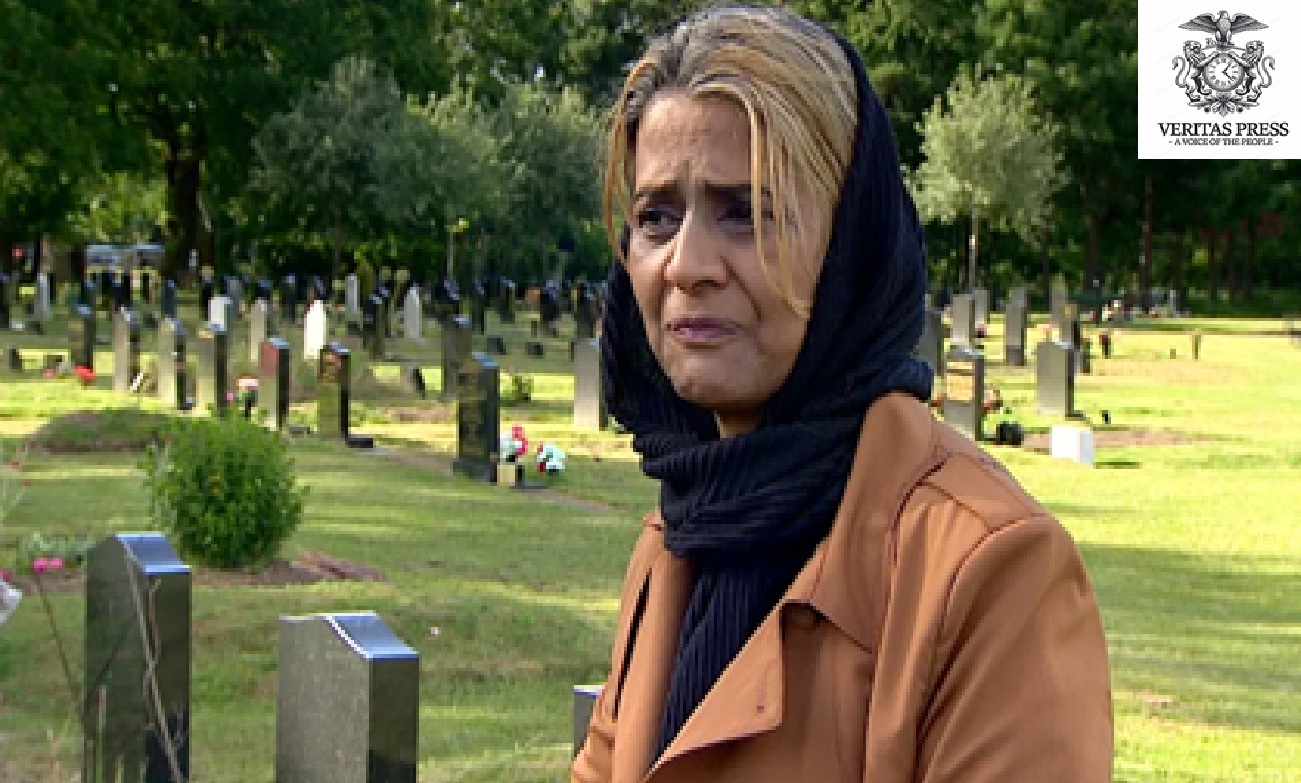
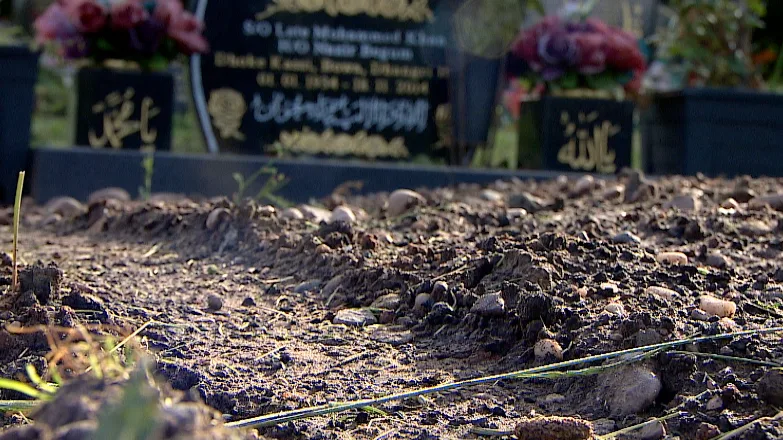
WALSALL — When Shazia Kausar visited her father’s grave at Streetly Cemetery earlier this year, she expected to find a familiar place of remembrance. Instead, she found the raised mound of earth removed, the stone edging gone, and the grave flattened.
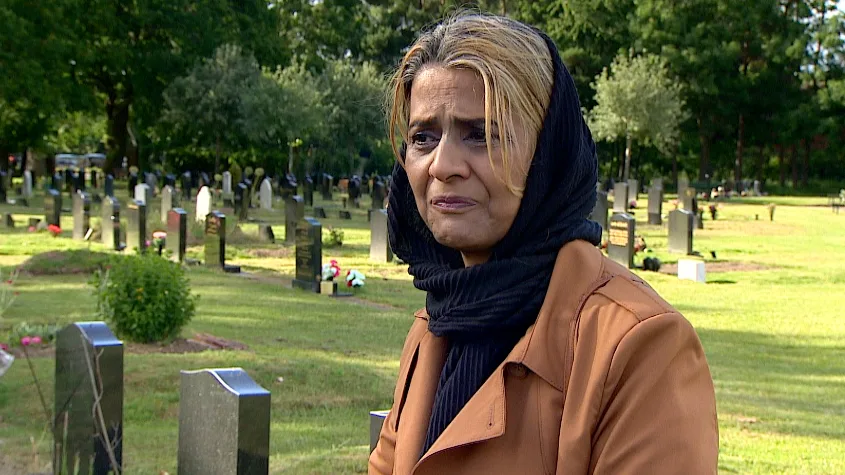
“What have they done to my dad’s grave?” she asked.
“My dad’s mound has been flattened. That is a disgrace, that has really upset me. It’s shocking, very emotional, very hurt by what I’ve seen.
“Don’t you see how emotionally impacted on us? Don’t they respect our religion? Our religion says it’s got to have a mound.”
For Kausar, the changes represented far more than routine cemetery maintenance. They struck at a deeply personal connection to her father and, she says, at a religious tradition intended to preserve the dignity of the deceased.
Her anger reflects a growing dispute between Muslim families and Walsall Council over cemetery regulations at Streetly Cemetery, where officials have been removing what they describe as unauthorised grave surrounds, borders and other features as part of routine inspections and safety checks.
The controversy has reopened a long-running conflict that stretches back years and has raised broader questions about how local authorities balance uniform cemetery rules with the religious and cultural practices of increasingly diverse communities.
“The message Walsall Council is giving me is, ‘we’re not bothered about your feelings, about how you feel’,” Kausar said.
For grieving families, the issue is not simply about landscaping or maintenance standards. It is about dignity, faith, remembrance and the right to honour loved ones according to religious traditions.
A Long-Simmering Dispute:
The roots of the Streetly Cemetery controversy stretch back to 2019, when Walsall Council won a landmark legal challenge against a resident who wanted to install a marble surround around his father’s grave.
The authority argued that cemetery regulations requiring a uniform appearance were necessary for safety, accessibility and maintenance. The courts ultimately sided with the council.
Yet while the legal battle may have ended, the social and emotional dispute never disappeared.
Many Muslim families continued to maintain raised grave surrounds, flower beds and soil mounds. For them, these features were not ornamental additions but expressions of religious observance and respect.
The recent enforcement campaign has therefore reignited tensions that many believed had never been resolved.
Campaigner Mehboob Matloob, whose brother is buried at Streetly Cemetery, questioned why authorities waited years before taking action.
“A couple of weeks ago, they started enforcing, we got calls from relatives to say the flower-beds and edging had been taken off,” he said.
“The question is, after seven years, you’ve decided to enforce something that you could have enforced from day one?”
His comments highlight one of the central criticisms levelled against the council: if the regulations were always considered necessary, why were families allowed to install and maintain such features for years without significant intervention?
Critics argue that the delay created an expectation that these practices were tolerated, making the recent removals feel abrupt and punitive.
Communication Failures Fuel Anger:
Many residents say the dispute has been exacerbated by what they view as poor communication from the council.
Imran Ahmed, whose uncle was buried at Streetly Cemetery in 2023, said many families learned about the removals through neighbours and community networks rather than direct notification.
“The fact is, we weren’t made aware. We still haven’t had a letter come through to us,” he said.
“I’m hearing from other people that they have had letters, were given 28 days, and I’m just dreading this letter coming.”
Such complaints have become a recurring theme among affected families.
Bereavement experts often note that graves are not simply physical plots but places of profound emotional significance. Any alteration can therefore be experienced not as an administrative adjustment but as a deeply personal intrusion.
For many residents, the issue is not solely what was removed, but how it was removed and whether families were genuinely consulted beforehand.
The Religious Significance Of The Grave Mound:
At the centre of the controversy is a broader debate about how public institutions accommodate religious practices.
Many Muslim families at Streetly Cemetery believe the raised mound of soil, often referred to as a qabr, is rooted in Islamic burial traditions. The mound serves both symbolic and practical purposes: clearly marking the grave and discouraging people from walking over the burial site.
Families also argue that raised edging helps define the grave’s boundaries and protects it from accidental disturbance.
“Our religion says it’s got to have a mound,” Kausar said.
Local campaigners and community members insist these features are not decorative enhancements but important expressions of religious identity and respect for the deceased.
While Islamic practices vary across communities and interpretations, many Muslims view visible grave demarcation as a longstanding tradition.
The dispute has therefore evolved into a wider conversation about religious accommodation and cultural recognition in public spaces.
Council Defends Enforcement:
Walsall Council rejects suggestions that it is targeting any particular community.
The authority says routine inspections and safety checks have been taking place across council-managed cemeteries and that the removal of unauthorised grave surrounds forms part of a longstanding policy.
Council leader Elaine Williams defended the council’s position.
- “The council has a duty to ensure all cemeteries are safe, accessible and maintained consistently for everyone who visits,” she said.
- “This is not a new policy, and it is not targeted at any one group.
- “Where graves do not comply with the regulations, families are contacted and given time to act before any items are removed.
- “Residents must be reassured that the council is applying the same rules fairly, consistently and respectfully, and in accordance with the law.”
From the council’s perspective, uniform regulations help ensure that cemeteries remain safe, accessible and manageable for all visitors.
Officials maintain that consistency is essential and that exceptions can create operational difficulties and potential safety concerns.
Equality, Faith And The Limits Of Uniformity:
The controversy has exposed a deeper question facing local authorities across Britain: does treating everyone the same always result in fairness?
Supporters of the council’s approach argue that rules must apply equally to all residents. They contend that cemetery regulations exist for practical reasons and that allowing individual variations could create maintenance, accessibility and safety challenges.
Critics counter that identical treatment does not necessarily produce equitable outcomes.
Many point to councils elsewhere in Britain that have developed designated Muslim burial sections accommodating religious practices while still meeting maintenance and safety requirements.
For campaigners, the issue is not whether cemeteries should have rules but whether those rules can be applied flexibly enough to respect cultural and religious differences.
The debate reflects broader challenges facing public institutions in increasingly diverse communities.
How should councils balance operational efficiency with religious accommodation?
How can authorities maintain consistency without appearing insensitive to minority communities?
And what happens when administrative policies collide with deeply held beliefs about death, memory and dignity?
A Failure Of Foresight?
One of the most persistent criticisms concerns what campaigners describe as selective enforcement.
If grave surrounds and mounds were incompatible with regulations, residents ask why they remained in place for years.
The sudden decision to remove them has led some families to question whether authorities underestimated the emotional and cultural significance attached to the graves.
Critics argue that earlier engagement with local communities could have prevented the dispute from escalating.
Instead, what might have been a conversation about cemetery design and religious accommodation evolved into a confrontation marked by anger, mistrust and accusations of disrespect.
For many families, the issue has become symbolic of a wider disconnect between local government decision-making and the communities affected by those decisions.
More Than A Cemetery Dispute: When Bureaucracy Collides With Bereavement.
The conflict at Streetly Cemetery is about far more than grass, soil, stone borders or cemetery maintenance regulations. At its core, it is a story about how public institutions exercise authority over communities during some of the most vulnerable and emotionally charged moments of their lives.
For Walsall Council, the issue is framed as one of safety, accessibility, consistency and compliance with long-established cemetery regulations. Officials insist they are applying rules fairly and equally across all communities, maintaining standards designed to ensure cemeteries remain safe and manageable for everyone who visits.
Yet for many grieving families, the controversy is not about regulation. It is about dignity, faith, memory and the right to honour loved ones according to deeply held religious traditions.
The dispute, therefore, raises uncomfortable questions that extend well beyond Streetly Cemetery itself.
If these regulations were considered essential, why were grave surrounds, flower beds and raised mounds allowed to remain in place for years? If they represented genuine safety concerns, why did enforcement appear sporadic rather than consistent? And if families were properly consulted and notified, why do so many relatives describe learning about removals only after arriving at the graves of their loved ones?
These questions matter because public trust is not built solely on legal authority. It is built on legitimacy, transparency and confidence that institutions understand the communities they serve.
While the council may have been acting within its legal powers, legality alone does not automatically generate public confidence, particularly when decisions affect matters as sensitive as death, religion and grief.
At the heart of the controversy lies a broader challenge facing local authorities across Britain: the tendency to confuse uniformity with fairness.
A policy may apply equally to everyone on paper while affecting communities very differently in practice. For many Muslim families, the grave mound and edging were not decorative additions or aesthetic preferences. They were visible expressions of religious observance, intended to mark and protect a burial site and demonstrate respect for the deceased.
Treating such features as administrative irregularities rather than religious and cultural practices inevitably transformed what might have been a routine maintenance issue into a dispute about recognition, identity and belonging.
Critics argue that the council’s approach exposed a wider institutional blind spot frequently encountered in local government. Diversity is often acknowledged in policy documents and public statements, yet minority communities frequently find themselves consulted only after controversy erupts rather than before decisions are implemented.
What makes the Streetly dispute particularly striking is that it was largely foreseeable.
The legal battle of 2019 had already demonstrated the strength of feeling surrounding Muslim burial practices. Community concerns had been raised repeatedly. The significance of grave mounds and surrounds was well understood by both campaigners and officials. Yet despite years of warning signs, meaningful dialogue appears to have lagged behind enforcement.
For affected families, this created the impression that administrative convenience had been prioritised over cultural understanding and human sensitivity.
Campaigners argue that the controversy was not inevitable. Other councils across Britain have found ways to accommodate Islamic burial traditions while maintaining safety standards and operational requirements. The question raised by residents is not whether rules should exist, but whether those rules could have been implemented through consultation, flexibility and partnership rather than enforcement first and discussion later.
The Streetly dispute, therefore, exposes a wider tension within modern public administration: how institutions respond when standardised regulations encounter the realities of an increasingly diverse society.
Equal treatment does not always mean identical treatment. Fairness is not necessarily achieved through rigid uniformity. In many cases, genuine equality requires public bodies to recognise and accommodate difference where reasonable and practical.
For many Muslim families in Walsall, that recognition came too late.
A grave is not merely a piece of public land governed by regulations. It is a place where faith, memory and mourning converge. It is where children visit parents, siblings remember one another, and families maintain bonds with those they have lost.
That reality explains why what may appear to outsiders as a dispute over cemetery maintenance generated such profound emotional responses.
For Shazia Kausar, the flattening of her father’s grave mound was not simply the removal of soil. It represented the alteration of a sacred space and, in her view, a failure to understand the significance attached to it.
Years after the original legal dispute, the arguments continue because the underlying issue was never truly about earthworks, stone edging or cemetery management. It was about whether a community felt heard, respected and included in decisions affecting its dead.
A council can amend regulations, restore landscaping or revise procedures. What is far harder to rebuild is trust once families come to believe that the institutions responsible for caring for the dead have failed to understand the living.
That may be the most enduring lesson of the Streetly Cemetery controversy.
The dispute serves as a reminder that bereavement is not an administrative process but a human experience. When public authorities approach matters of grief primarily through the language of compliance, enforcement and regulation, they risk overlooking the emotional, cultural and religious realities that communities attach to their places of remembrance.
For many families at Streetly Cemetery, the scars left by the removals extend far beyond the graves themselves. They have become a symbol of a deeper struggle over recognition, dignity and belonging.
And while the council may argue that the matter concerns consistency and safety, many residents see something else: a cautionary example of what happens when bureaucracy collides with bereavement, and when institutions fail to appreciate that public trust, once disturbed, can be far more difficult to restore than any mound of earth.
Source: Veritas Press C.I.C. | Multi News Agencies
Submissions:
For The Secure Submission Of Documentation, Testimonies, Or Exclusive Investigative Reports From Any Global Location, Please Utilise The Following Contact Details For Our Investigations Desk: enquiries@veritaspress.co.uk or editor@veritaspress.co.uk
Help Support Our Work:
Popular Information is powered by readers who believe that truth still matters. When just a few more people step up to support this work, it means more lies exposed, more corruption uncovered, and more accountability where it’s long overdue.
Help Protect Independent Journalism, Which Is Currently Under Attack.
If you believe journalism should serve the public, not the powerful, and you’re in a position to help, becoming a DONATOR or a PAID SUBSCRIBER truly makes a difference.
DONATION APPEAL: If You Found This Reporting Valuable, Please Consider Supporting Independent Journalism.
Help Support Our Work – We Know, We Know, We Know …
Seeing these messages is annoying. We know that. (Imagine what it’s like writing them … )
Your support fuels our fearless, truth-driven journalism. In unity, we endeavour to amplify marginalised voices and champion justice, irrespective of geographical location.
But it’s also extremely important. One of Veritas Press’s greatest assets is its reader-funded model.
1. Reader funding means we can cover what we like. We’re not beholden to the political whims of a billionaire owner. We are a small, independent and impartial organisation. No one can tell us what not to say or what not to report.
2. Reader funding means we don’t have to chase clicks and traffic. We’re not desperately seeking your attention for its own sake: we pursue the stories that our editorial team deems important and believe are worthy of your time.
3. Reader Funding: enables us to keep our website and other social media channels open, allowing as many people as possible to access quality journalism from around the world, particularly those in places where the free press is under threat.
We know not everyone can afford to pay for news, but if you’ve been meaning to support us, now’s the time.
Your donation goes a long way. It helps us:
- Keep the lights on and sustain our day-to-day operations
- Hire new, talented independent reporters
- Launch real-time live debates, community-focused shows, and on-the-ground reporting
- Cover the issues that matter most to our communities, in real time, with depth and integrity
We have plans to expand our work, but we can’t do it without your support. Every contribution, no matter the size, helps us stay independent and build a truly people-powered media platform.
If you believe in journalism that informs, empowers, and reflects the communities we serve, please donate today.
Donate Today:
GENEVA — A United Nations fact-finding mission has concluded there are “reasonable grounds to believe”

Iran’s GDP is projected to contract by 5.4 to 6.1% in 2026, its worst performance

The Trump administration is preparing a $2.8 billion weapons package for Israel containing 40,000 2,000-pound
Film alleges mass civilian deaths are routinely built into military decisions amid Israel’s genocidal war

The Israeli rights group says violence, displacement, economic strangulation, and settlement expansion form part of

Houthi forces have captured the historic Red Sea port of Mocha and are advancing on
London’s historic sanctions against Israeli settlements mark a watershed moment in UK foreign policy, but
With 95% of Gaza’s population now wholly dependent on aid and more than 90% stripped
India calls for Kashmir and Ladakh to appear only on its official map after a
ISLAMABAD – In the high-stakes political theatre of Pakistan, the battleground has shifted from the

























9voex5