Kamran Faqir is a volunteer investigative journalist and writer committed to exposing hidden truths and amplifying underreported stories. Driven by social justice, he brings sharp insight and fearless truth-telling to independent journalism. NUJ registered.
Article Date Published:
Article Date Modified:
13 minutes
Views:392
Listen to this article
Help support our mission, donate today and be the change. Every contribution goes directly toward driving real impact for the cause we believe in.
HATAY, TURKEY / ASHKELON, ISRAEL – In the bustling espresso houses of Antakya, the ancient city rebuilt after the devastating 2023 earthquakes, the talk is no longer solely of aftershocks and reconstruction. “My son just completed his military service in Kilis,” says Mehmet, 56, a retired textile trader who declines to give his surname. “He tells me the border is no longer just about Syria. They told them, ‘Be ready for the south as well.’ The south means Israel. This is not a drill.”
Six hundred miles away, in the Israeli coastal city of Ashkelon, Sarah, a mother of three who lived through Hamas’s October 7 massacre and the subsequent rocket barrages, watches the news with a different kind of dread. “We thought the danger was from Gaza, from Hezbollah, maybe Iran. Now they say Turkey is becoming a military superpower, and Erdoğan threatens us every week. How many fronts can one country have?”
For more than a decade, the relationship between Ankara and Jerusalem has been a volatile pendulum swinging between tactical cooperation and venomous hostility. But since the Gaza war of 2023-2024, that pendulum has shattered entirely. A relentless war of words, turbocharged by Turkish President Recep Tayyip Erdoğan’s invocation of a “Greater Israel” threat to Anatolia itself, has combined with a massive Turkish rearmament programme, a proxy competition in post-Assad Syria, and a series of hair-trigger naval incidents in the Eastern Mediterranean to create a geopolitical powder keg unlike any seen between the two former allies. The question is no longer whether Turkey and Israel are on a collision course, but whether the guardrails that once prevented open war between these military heavyweights have permanently dissolved.
“After Gaza And Ramallah, They Will Set Their Sights On Anatolia”
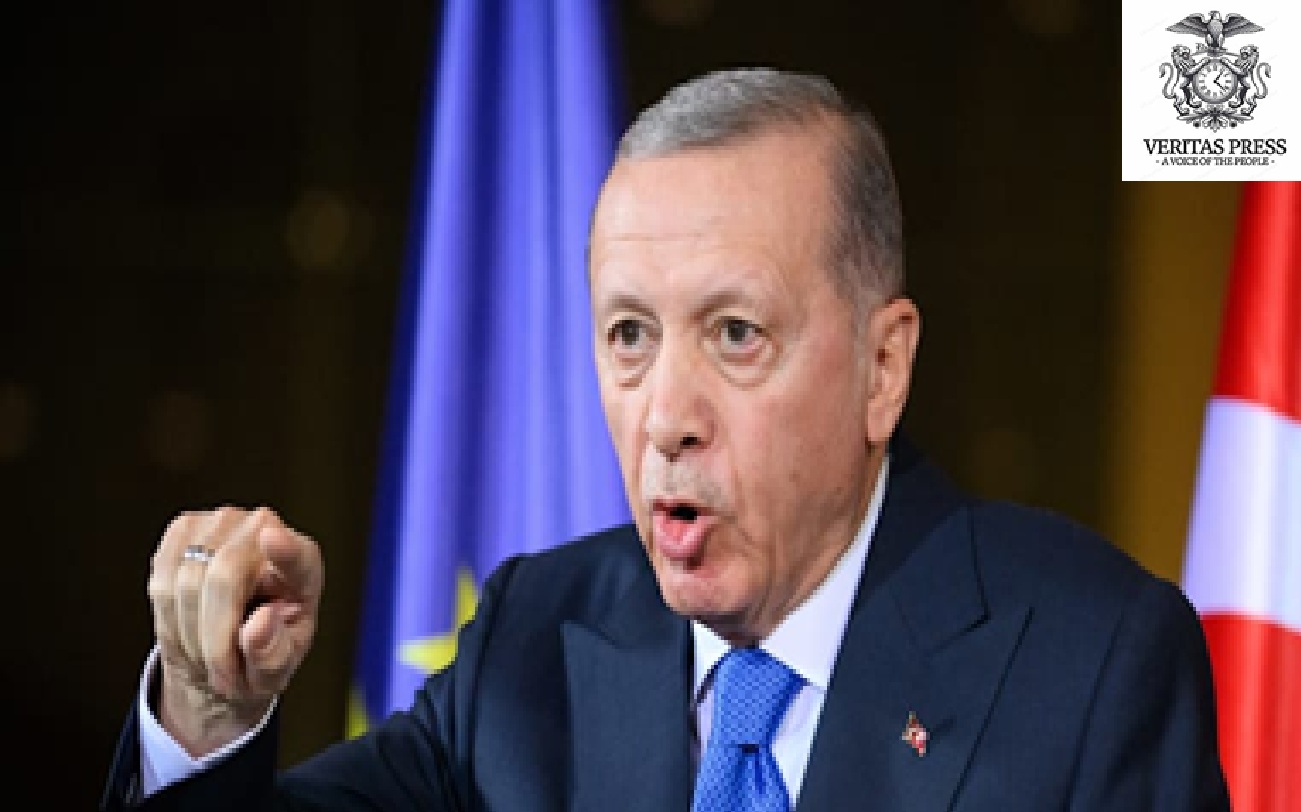
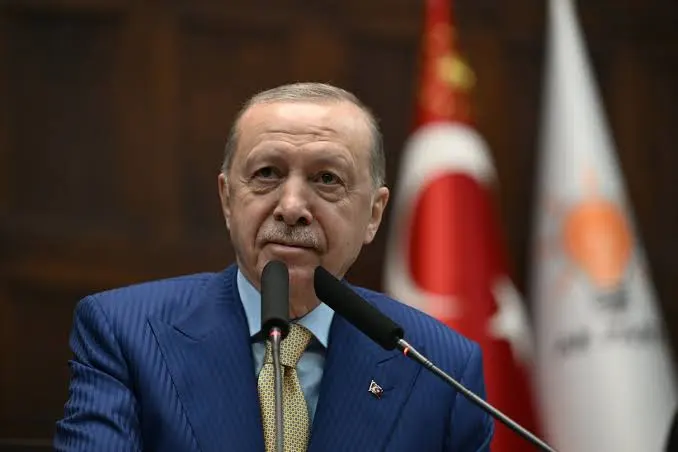
The rhetorical escalation that so alarms analysts was crystallised on October 1, 2024, at the opening of the new Turkish parliamentary term. President Erdoğan, addressing lawmakers in Ankara, declared: “If Israel’s expansionism is not halted, it will one day set its sights on our homeland, Anatolia, after Gaza and Ramallah.” He brandished a map, aides later clarified it depicted the contested concept of “Greater Israel” circulated in some fringe religious nationalist circles, and claimed that Prime Minister Benjamin Netanyahu’s government harboured explicit ambitions extending from the Nile to the Euphrates. “They are openly saying they will reach our lands,” Erdoğan thundered. “Do not think it is far away. We must be prepared.”
The speech sent shockwaves through diplomatic channels. Israeli Foreign Minister Israel Katz fired back on X: “Erdoğan is following in the footsteps of Saddam Hussein and threatening to attack Israel. Just let him remember what happened there and how it ended.” Katz later explicitly accused Erdoğan of “cooperating with Iran and propping up Hamas terrorists in Istanbul.” The verbal volley exposed a deeper ideological chasm: Erdoğan’s embrace of Palestinian armed resistance as “brothers in a just struggle,” versus Israel’s designation of Hamas as a genocidal enemy whose political leadership, hosted in Doha and often transiting Turkey, must be eliminated.
“This is no longer a mere diplomatic spat,” Dr. Soner Çağaptay, director of the Turkish Research Program at The Washington Institute, tells me via video link from Washington. “Erdoğan is actively stoking a narrative that Israel’s ultimate target is Turkish soil. It is an extraordinary claim without military foundation, but it serves a potent domestic and regional purpose. It casts Turkey as the next potential victim, justifies massive defence spending, and positions Ankara as the vanguard of Sunni Muslim resistance to Israeli expansion. The danger is that if you say something often enough, you start believing it, and building the military infrastructure to act on it.”
Rearmament, Risk, And The Prospect Of War:
Ankara’s rearmament drive, which long predates the current crisis, has now shifted into overdrive. Turkey’s defence and aerospace exports reached $7.1 billion in 2024, according to official statistics, a staggering leap from $248 million in 2002. The country has commissioned its first aircraft carrier, TCG Anadolu, capable of deploying Bayraktar TB3 drones and, eventually, the home-grown Kaan fifth-generation fighter jet. A second amphibious assault ship is under construction. The MİLGEM corvette programme has produced cutting-edge warships now patrolling the Eastern Mediterranean. Long-range Gezgin cruise missiles, with a range exceeding 1,000 kilometres, are in advanced development, a capability that would put Israeli strategic sites within reach from Turkish naval platforms or Syrian bases.
“Turkey is transitioning from a consumer of military technology to a global producer,” Professor Haluk Görgün, head of the Turkish Defence Industry Agency, stated at an Istanbul arms fair in May 2026. “Our indigenous defence products now cover everything from microchips to missile systems. We are ready for any scenario our nation requires.” While Görgün did not name Israel directly, the subtext was impossible to miss.
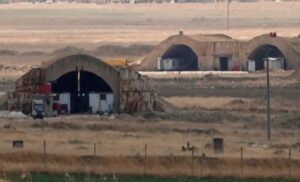
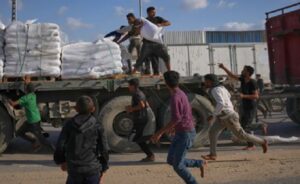
To understand the strategic calculus, I travelled to Syria, where the battlefield has become an open-air laboratory for Turkish-Israeli tensions. Since the fall of the Assad regime in December 2024, Ankara has emerged as the dominant external power shaping the new Syrian government in Damascus. Turkish military bases dot the north. Turkish construction firms are rebuilding shattered cities. Turkish drones fly reconnaissance over Idlib and Homs. Israel, meanwhile, has executed a scorched-earth campaign against the remnants of Assad’s strategic arsenal, chemical weapon facilities, air defence batteries, long-range missiles, and expanded its occupation of the Syrian Golan Heights deeper into Quneitra province. In multiple incidents in 2025, Israeli airstrikes hit convoys that Turkish officials claimed were carrying humanitarian aid; Israeli intelligence sources countered that they were transporting dual-use equipment to Iranian-aligned militias.
A Syrian defence official in the new Damascus government, speaking on condition of anonymity because he was not authorised to communicate with foreign media, told me: “We are caught between two powers who see our soil as their chessboard. The Turks demand we sever all contact with Hezbollah remnants; the Israelis demand no Turkish military presence south of the M4 highway. When Israeli jets bomb a warehouse outside Homs, we find it was a Turkish logistics hub that Turkey never officially acknowledged. How can we build a state under these conditions?”
The Mediterranean Tinderbox:
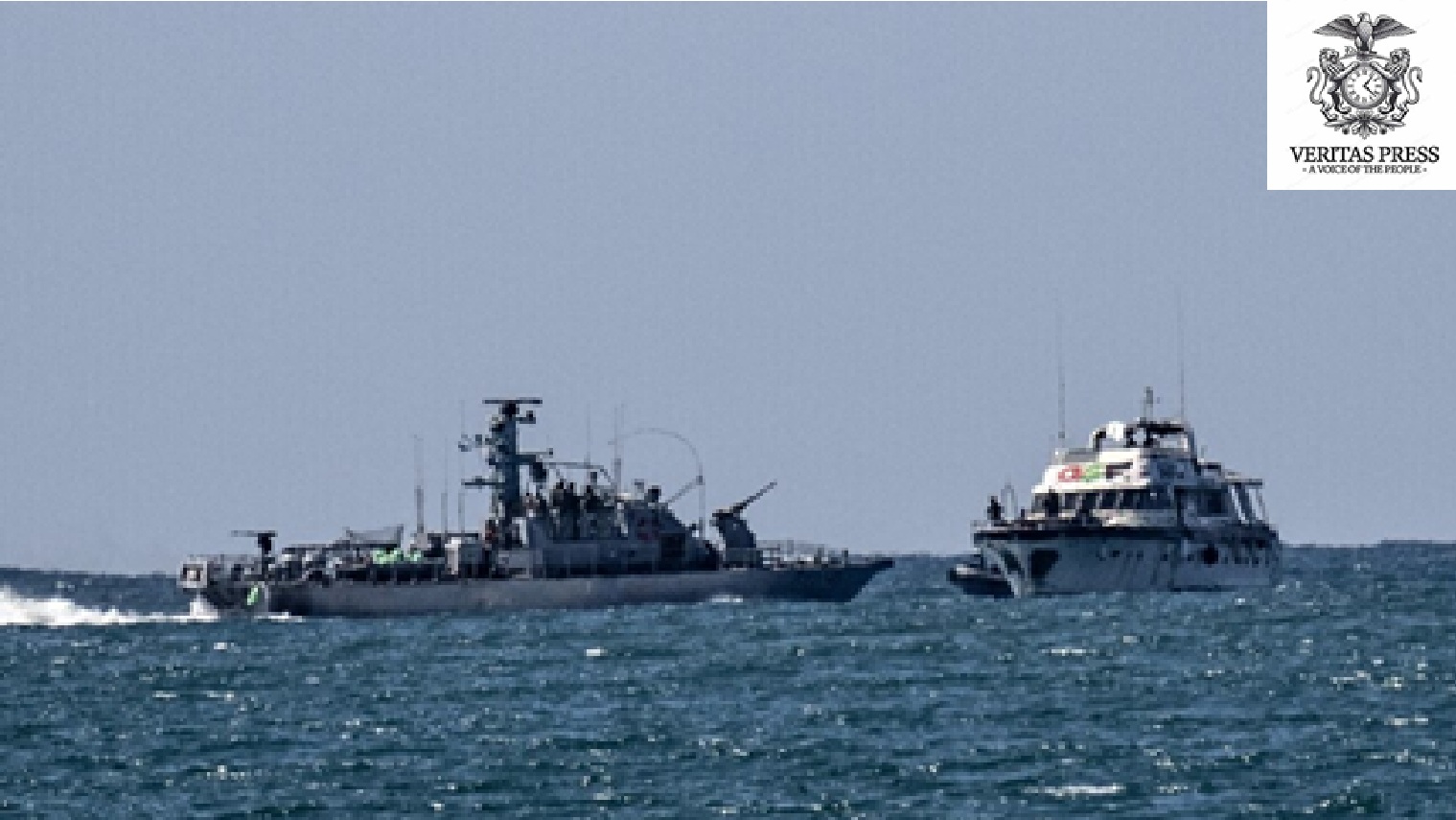
But it is the blue waters of the Eastern Mediterranean that have become the most combustible arena. In early June 2026, a Turkish MİLGEM-class corvette, the TCG Büyükada, approached within two nautical miles of the Israeli-operated Leviathan gas platform, well inside what Israel considers its exclusive economic zone under agreements with Cyprus and Egypt. The Israeli Navy dispatched a Sa’ar 6-class corvette and a helicopter, which fired warning shots across the Turkish vessel’s bow. The Büyükada altered course after a tense 90-minute standoff, but the damage was done.
“This was not a random navigation error,” a senior Israeli naval officer, speaking on background, told a security briefing in Tel Aviv. “We tracked the Büyükada from the moment it departed Mersin. Its trajectory was deliberate, designed to test our red lines. The next time, the captain may choose to hold his ground. What then?”
Turkey’s Foreign Ministry released a sharply worded statement: “Our vessels will continue to exercise freedom of navigation in international waters. Israel’s harassment of a NATO member’s warship is a reckless provocation. We remind Israel that its so-called maritime claims are not recognised by Turkey.” Ankara dispatched a formal note to the UN Security Council and announced joint maritime drills with Lebanon – a move widely interpreted as signalling its willingness to project power directly adjacent to Israeli waters.
The International Crisis Group, in a May 2026 report titled Eastern Mediterranean Tinderbox: Turkey-Israel Tensions After Assad, warned that the two militaries lack a direct deconfliction hotline. “During the 2023-2024 Gaza conflict, Russian-mediated channels prevented inadvertent clashes between Israel and Iran-backed forces in Syria. No such channel exists between Israel and Turkey. A single mistaken torpedo launch, a drone shot down, could cascade into full-scale naval and air combat within hours.”
A War Of Words As Domestic Theatre:
Many seasoned observers remain sceptical that either side genuinely seeks war. “Erdoğan is a master of domestic consolidation through foreign crises,” argues Dr. Lisel Hintz, an assistant professor of international relations at Johns Hopkins SAIS, in a phone interview. “His approval ratings dipped sharply after the 2024 municipal elections. The Gaza war allowed him to reposition himself as the ‘Voice of the Ummah,’ a role he craves. The ‘Greater Israel’ narrative is not based on any real Israeli defence white paper; it’s a fundraising and rallying cry for his conservative base. Yet, the line between cynical brinkmanship and accidental war is notoriously thin.”
“In Israel,” she continues, “the far-right elements of Netanyahu’s coalition have long dreamed of a decisive blow against Turkish influence, which they see as neo-Ottoman encroachment. But the IDF is stretched thin: occupation duties in Gaza, Lebanon, and a simmering West Bank insurgency, plus the Iran shadow war. A full-scale conflict with a NATO member with a 500,000-strong army and a burgeoning drone fleet would be strategically insane. Yet, insanity is not a great variable to bet against in this region.”
Ali, a 32-year-old anti-war activist in Istanbul who participated in the 2025 “Not a Single Bullet More” protests in Kadıköy, tells me over çay: “The government screams about Greater Israel, but they are buying tanks and warships while people queue for bread and rent assistance. The lira is collapsing, and they want us to fear a war that only they are talking about. My father was a conscript who died fighting the PKK in the ’90s. My generation doesn’t want to die in the Mediterranean for Erdoğan’s ego or Netanyahu’s expansionism.”
In Israel, Michal, a 40-year-old member of the peace group Standing Together, expresses parallel frustrations: “We held a vigil in Tel Aviv last month, ‘Jews and Arabs Refuse to Be Enemies,’ with Turkish flags alongside Palestinian flags. We know Erdoğan is no saint, he oppresses Kurds and journalists. But the Netanyahu government is using Turkey as a new bogeyman to justify permanent war footing and to distract from the failure to bring our hostages home. War with Turkey? It would be a catastrophe neither people wants.”
What Happens Next?
As of June 2026, the immediate crisis has been temporarily defused by urgent American and German diplomatic intervention. US Secretary of State, in a statement, called for “immediate establishment of a Turkish-Israeli military-to-military communication channel to prevent catastrophic miscalculation.” German Chancellor, whose country is both a major Israeli security guarantor and home to Europe’s largest Turkish diaspora, flew to Ankara and Jerusalem this week for shuttle diplomacy.
Yet the underlying drivers of conflict are accelerating. Turkey’s Defence Minister announced on June 11 the “Anatolian Phoenix 2026” exercise, a massive combined-arms drill in the Hatay and Mersin provinces with 30,000 troops, amphibious landings, and integrated drone swarms. The official scenario, according to a briefing, involves repelling an “expansionist naval power seeking to seize strategic assets in the Eastern Mediterranean.” No prizes for guessing who that is meant to simulate.
Meanwhile, Israel’s Knesset advanced a bill this week declaring “any foreign military presence within 100 kilometres of Israel’s maritime economic zone a hostile act,” a thinly veiled reference to Turkish naval assets. The Israeli Air Force has been carrying out simulated strikes on S-400-like targets over the Mediterranean, Turkish officials note.
The greatest fear among seasoned diplomats is not an intentional declaration of war, but a cascade of tactical incidents that political leaders find impossible to de-escalate without losing face. A drone shot down, a frigate hit, a commando raid gone wrong on a Syrian highway, any could be the 1914 moment for the Eastern Mediterranean.
“We are watching a slow-motion tragedy,” a veteran European intelligence officer, who requested anonymity due to the sensitivity of his role, told me in Brussels. “Turkey has legitimate security interests and a right to self-defence. Israel has legitimate fears of encirclement. But both sides have decided that portraying the other as an existential threat serves short-term political needs. The rhetoric is outracing reason. Someone will blink, but what if they blink too late?”
Back in Antakya, Mehmet sips the last of his coffee and stares toward the Mediterranean, barely forty kilometres away. “War? My son is an engineer. He wants to design bridges, not bomb them. But the politicians talk of land and glory, and the young men go. We are no different from anywhere else in this ancient land, except this time, both sides have weapons that can reach each other’s homes in minutes. May God protect us from our leaders.”
The sun sets over the Levant, and the warships of two proud nations remain at sea, their captains awaiting orders that both capitals have sworn they will never give, while doing everything to make them inevitable.
For The Secure Submission Of Documentation, Testimonies, Or Exclusive Investigative Reports From Any Global Location, Please Utilise The Following Contact Details For Our Investigations Desk: enquiries@veritaspress.co.uk or editor@veritaspress.co.uk
Help Support Our Work:
Popular Information is powered by readers who believe that truth still matters. When just a few more people step up to support this work, it means more lies exposed, more corruption uncovered, and more accountability where it’s long overdue.
Help Protect Independent Journalism, Which Is Currently Under Attack.
If you believe journalism should serve the public, not the powerful, and you’re in a position to help, becoming a DONATOR or a PAID SUBSCRIBER truly makes a difference.
DONATION APPEAL: If You Found This Reporting Valuable, Please Consider Supporting Independent Journalism.
Help Support Our Work – We Know, We Know, We Know …
Seeing these messages is annoying. We know that. (Imagine what it’s like writing them … )
Your support fuels our fearless, truth-driven journalism. In unity, we endeavour to amplify marginalised voices and champion justice, irrespective of geographical location.
But it’s also extremely important. One of Veritas Press’s greatest assets is its reader-funded model.
1. Reader funding means we can cover what we like. We’re not beholden to the political whims of a billionaire owner. We are a small, independent and impartial organisation. No one can tell us what not to say or what not to report.
2. Reader funding means we don’t have to chase clicks and traffic. We’re not desperately seeking your attention for its own sake: we pursue the stories that our editorial team deems important and believe are worthy of your time.
3. Reader Funding: enables us to keep our website and other social media channels open, allowing as many people as possible to access quality journalism from around the world, particularly those in places where the free press is under threat.
We know not everyone can afford to pay for news, but if you’ve been meaning to support us, now’s the time.
Your donation goes a long way. It helps us:
Keep the lights on and sustain our day-to-day operations
Hire new, talented independent reporters
Launch real-time live debates, community-focused shows, and on-the-ground reporting
Cover the issues that matter most to our communities, in real time, with depth and integrity
We have plans to expand our work, but we can’t do it without your support. Every contribution, no matter the size, helps us stay independent and build a truly people-powered media platform.
If you believe in journalism that informs, empowers, and reflects the communities we serve, please donate today.
Kamran Faqir is a volunteer investigative journalist and writer committed to exposing hidden truths and amplifying underreported stories. Driven by social justice, he brings sharp insight and fearless truth-telling to independent journalism. NUJ registered.
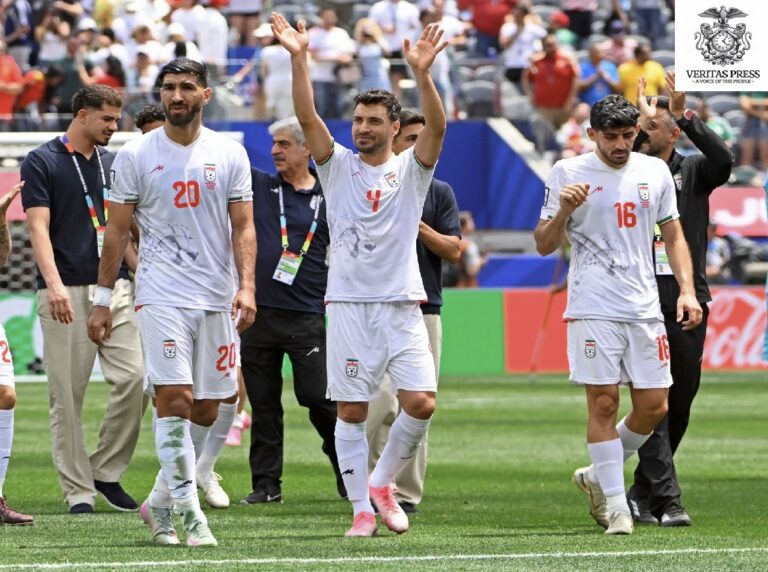
SEATTLE, TEHRAN — The U.S. Department of Homeland Security (DHS) will allow Iran’s national football team to enter the country 48 hours before their critical World Cup match against Egypt on Friday, a modest concession in a tournament where Team Melli’s travel conditions have sparked claims of oppression and competitive disadvantage.