Kamran Faqir is a volunteer investigative journalist and writer committed to exposing hidden truths and amplifying underreported stories. Driven by social justice, he brings sharp insight and fearless truth-telling to independent journalism. NUJ registered.
Original Article Date Published:
Article Date Modified:
28 minutes
Views:378
Listen to this article
Help support our mission, donate today and be the change. Every contribution goes directly toward driving real impact for the cause we believe in.
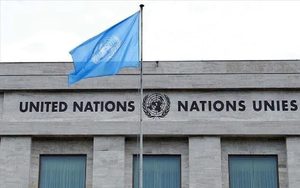
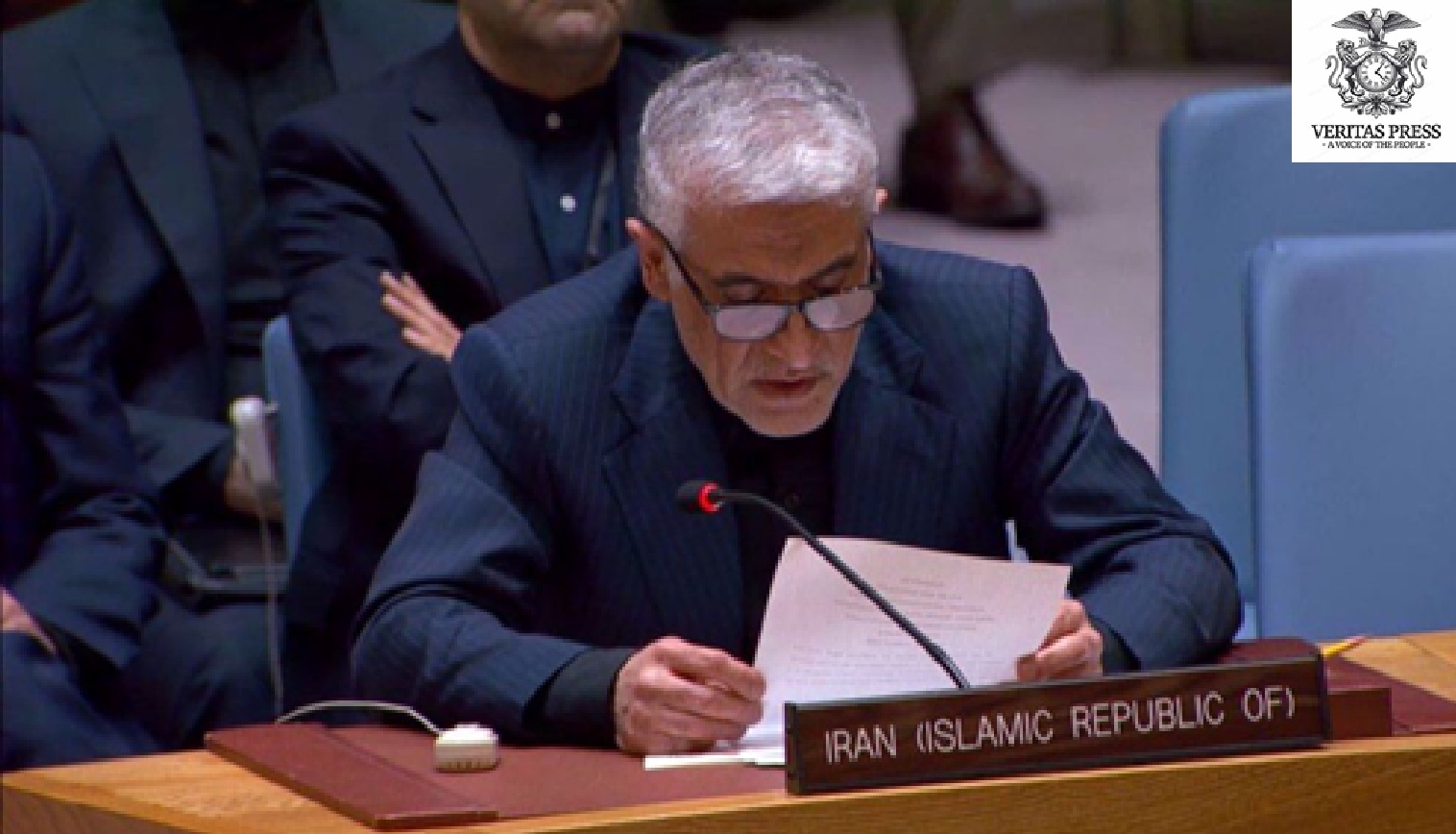
TEHRAN / UNITED NATIONS — As the smouldering wreckage of the latest U.S.-Israeli military campaign against Iran continues to be catalogued in Tehran’s intelligence dossiers, the Islamic Republic has opened a second front, one fought not with drones and ballistic missiles, but with legal briefs, diplomatic cables, and meticulously documented accusations of complicity levelled directly at its Arab neighbours across the Persian Gulf. In a formal letter to the United Nations Security Council dated May 22, 2026, Iran’s ambassador Amir Saeid Iravani named Qatar, Bahrain, Kuwait, Saudi Arabia, the United Arab Emirates, and Jordan as active participants in what he called a “premeditated, unprovoked, and unjustified war of aggression.” The 1,200-word submission, obtained in full by this publication, demands “full reparation” for material and moral damages and signals a tectonic shift in how Tehran intends to weaponise international law against the U.S.-led regional order.
The letter’s arrival at the UN headquarters in New York coincided with a swirl of diplomatic activity across three continents. Pakistan’s army chief held long, closed-door meetings in Tehran. A Qatari delegation shuttled between Doha and the Iranian capital carrying what officials described as “U.S. coordination.” Foreign ministers from Turkey, Oman, Iraq, and Japan held urgent phone calls with their Iranian counterpart, Abbas Araghchi, within a 48-hour window. Meanwhile, oil markets shuddered, gold dipped, and the Strait of Hormuz, that slender chokepoint through which a fifth of the world’s petroleum transits, once again became the fulcrum upon which global economic stability precariously balanced.
This investigation reconstructs the legal architecture of Iran’s accusations, examines the on-the-ground reality of alleged Gulf collaboration, and interrogates whether the flurry of diplomacy represents a genuine path toward de-escalation or a prelude to an even more dangerous phase of the conflict.
I. The Letter Of Indictment: A Legal Roadmap For Reparations.
Ambassador Iravani’s letter to Secretary-General António Guterres and Security Council President Fu Cong is remarkable not merely for its accusatory tone but for the forensic precision with which it constructs a case under three distinct pillars of international law: the prohibition on the use of force under Article 2(4) of the UN Charter, the definition of aggression codified in General Assembly Resolution 3314, and the doctrine of state responsibility for aiding internationally wrongful acts as articulated in Article 16 of the International Law Commission’s Draft Articles.
“The unlawful use of force and attacks by the United States and Israeli regime against Iran, with the complicity, aid, and assistance of the States on the southern shores of the Persian Gulf, constitute egregious and widespread violations of jus ad bellum and jus in bello,” Iravani wrote.
The letter systematically dismantles the legal justifications offered by Kuwait and Bahrain in their own earlier submissions to the Council (documents S/2026/382 and S/2026/391). Those two nations, along with other Gulf Cooperation Council members, had argued that any actions they took fell within the inherent right of self-defence under Article 51 of the Charter. Iravani dismissed this claim as “manifestly invalid,” arguing that the true victim of aggression was Iran itself, and that the cited states had instead committed acts qualifying as aggression under Article 3(f) of Resolution 3314, namely, “the action of a State in allowing its territory, which it has placed at the disposal of another State, to be used by that other State for perpetrating an act of aggression against a third State.”
To substantiate these claims, the Iranian envoy pointed to a trove of public statements by senior American officials. He specifically cited the commander of U.S. Central Command (CENTCOM), who had acknowledged that several Gulf states operated “literally side by side with the United States” during the war. U.S. President Donald Trump, Iravani noted, “repeatedly commended ‘Middle East allies’ for their partnership, cooperation, and coordination throughout the course of the military acts of aggression against Iran.” The letter identified the forms of cooperation as including the provision of military bases and facilities, logistical and operational support, intelligence-sharing, air defence coordination, and airspace access.
“These letters once again fail to acknowledge the crucial and decisive fact that the United States and the Israeli regime have committed acts of aggression and conducted unprovoked and unlawful attacks against Iran,” Iravani stated, rebuking the Kuwaiti and Bahraini attempts to shift blame onto Tehran.
The demand for reparations is open-ended. “Despite the failure of the Security Council to hold the States on the southern shores of the Persian Gulf and the Hashemite Kingdom of Jordan accountable… they are under an obligation as responsible States to make full reparation to the Islamic Republic of Iran, including compensation for all material and moral damage caused by their internationally wrongful acts.”
International law experts consulted for this investigation described the Iranian submission as unusually sophisticated, and potentially difficult for the named states to dismiss outright.
“The Iranians have done their homework,” said Dr. Nazanin Ansari, a professor of public international law at the University of London who has advised states in proceedings before the International Court of Justice. “They’ve tied the factual admissions of U.S. military commanders directly to the legal criteria for state responsibility. When the CENTCOM commander says Gulf states operated ‘side by side’ with American forces, that’s not just a political statement, it’s potential evidence in any future adjudication, whether at the ICJ or an arbitral tribunal.”
Ansari added that Article 16 of the ILC Articles, while not a treaty provision, is widely regarded as reflecting customary international law. “If Iran can prove that these states knowingly provided facilities or assistance with full awareness that the U.S. was engaged in an unlawful use of force, then those states have incurred international responsibility. That’s the precise legal logic Iran is deploying.”
Ii. The Gulf States’ Defence And The Silences Between The Lines:
Kuwait’s May 4 letter and Bahrain’s May 7 letter to the Security Council, while not publicly released in full, have been described in diplomatic circles as attempting to frame their actions as defensive measures taken in coordination with the United States under existing bilateral security agreements. A Kuwaiti diplomat, speaking on condition of anonymity because of the sensitivity of the matter, told this reporter that “Kuwait does not participate in aggression. Any facilities provided were consistent with our international obligations and strictly for the defence of Kuwaiti territory and regional stability.”
Yet the Iranian letter exposes a critical vulnerability in this argument: the temporal and geographic scope of the U.S. military operations. If American and Israeli strikes targeted Iranian territory, deep inside Iran, including, according to multiple reports, nuclear research facilities near Isfahan and IRGC command centres in Kermanshah, then the claim that Gulf cooperation was purely “defensive” becomes legally tenuous. Iran’s letter explicitly notes that the cooperation included “participation in military activities directed against Iranian territory and interests,” not merely actions to protect Gulf airspace.
“There’s a sharp distinction between allowing overflight for defensive patrols over international waters versus providing basing, refuelling, and targeting intelligence for offensive strike packages penetrating Iranian airspace,” said retired U.S. Air Force Colonel Mark Hensley, now a senior fellow at the Centre for Strategic and International Studies. “If the latter occurred, and it appears from public reporting that it did, then these nations would be hard-pressed to argue they were merely exercising self-defence. They would be complicit in what Iran considers acts of aggression.”
The inclusion of Jordan on the list adds a further dimension. Amman’s historical role as a quiet facilitator of intelligence cooperation and airspace access for Israeli operations has long been an open secret. But formal naming in a UN document, with attendant legal implications, forces the Hashemite Kingdom into an uncomfortable spotlight. Jordan’s government did not immediately respond to requests for comment.
III. On the Ground: How Gulf Assistance Materialised.
Investigative reporting by this and other outlets, supplemented by analysis of open-source intelligence, satellite imagery, and statements from security officials, has pieced together the operational contours of Gulf complicity during the three-week U.S.-Israeli campaign, codenamed, according to leaked Pentagon documents, “Operation Iron Tempest.”
At Al Udeid Air Base in Qatar, home to CENTCOM’s forward headquarters, U.S. B-2 Spirit stealth bombers and F-35 Lightning II fighters were forward-deployed in the weeks preceding the strikes. Qatari officials, when pressed by Al Jazeera in April, stated that “all operations from Al Udeid are conducted in accordance with the U.S.-Qatar defence cooperation agreement and are directed against terrorist threats, not sovereign states.” But flight tracking data analysed by independent monitoring group Airwars showed a dramatic spike in heavy bomber sorties originating from Al Udeid, coinciding precisely with the initiation of strikes against Iranian targets. Qatar’s ambassador to the UN did not respond to questions submitted for this article.
In Saudi Arabia, the King Khalid Military City and Prince Sultan Air Base served as logistics hubs for the rapid movement of munitions and personnel. A Saudi defence ministry spokesman denied that the Kingdom’s facilities were used for “offensive operations against Iran,” but declined to elaborate on what specific limitations were placed on American use of those bases.
The United Arab Emirates’ Al Dhafra Air Base hosted U.S. intelligence, surveillance, and reconnaissance (ISR) platforms, including RQ-4 Global Hawk drones and RC-135 Rivet Joint signals-intelligence aircraft, whose real-time targeting data was essential for the precision strikes on Iranian air defence systems and missile storage sites. An Emirati official, speaking on background, said the UAE “remains committed to the safety and security of the region” and that “all cooperation is defensive in nature.”
Kuwait provided staging grounds for U.S. Army air defence units that were repositioned to protect critical infrastructure, but Iran alleges that these same assets were used to shield Israeli aircraft transiting the northern Gulf. Bahrain, host to the U.S. Navy’s Fifth Fleet, provided the maritime command-and-control backbone for operations that included the interdiction of Iranian vessels and, critically, in Iran’s view, the enforcement of a de facto blockade that Tehran says has prevented the delivery of essential goods, including food and medicine.
“The blockade is an act of collective punishment,” said Mahdi Hosseini, a merchant from the port city of Bandar Abbas, interviewed by phone as he surveyed containers stranded at dockside. “We have ships waiting for weeks, unable to clear customs because the Americans threaten the shipping lines with secondary sanctions and the Gulf states refuse to let Iranian-flagged vessels refuel in their waters. This isn’t just about the bombing, it’s economic strangulation.”
The human cost is mounting. Dr. Fatemeh Karimi, a physician at a hospital in Ahvaz, told this reporter that medicine shortages have become acute. “We are running out of basic chemotherapy drugs. Patients are dying not from the war directly, but from the silent war of sanctions and blockade that the Gulf states are helping to enforce. The world needs to know this.”
IV. Diplomacy In The Shadow Of War: Pakistan And Qatar Step In.
While the legal volleys fly in New York, a parallel track of high-stakes diplomacy has unfolded in the region, with Pakistan and Qatar emerging as the principal interlocutors.
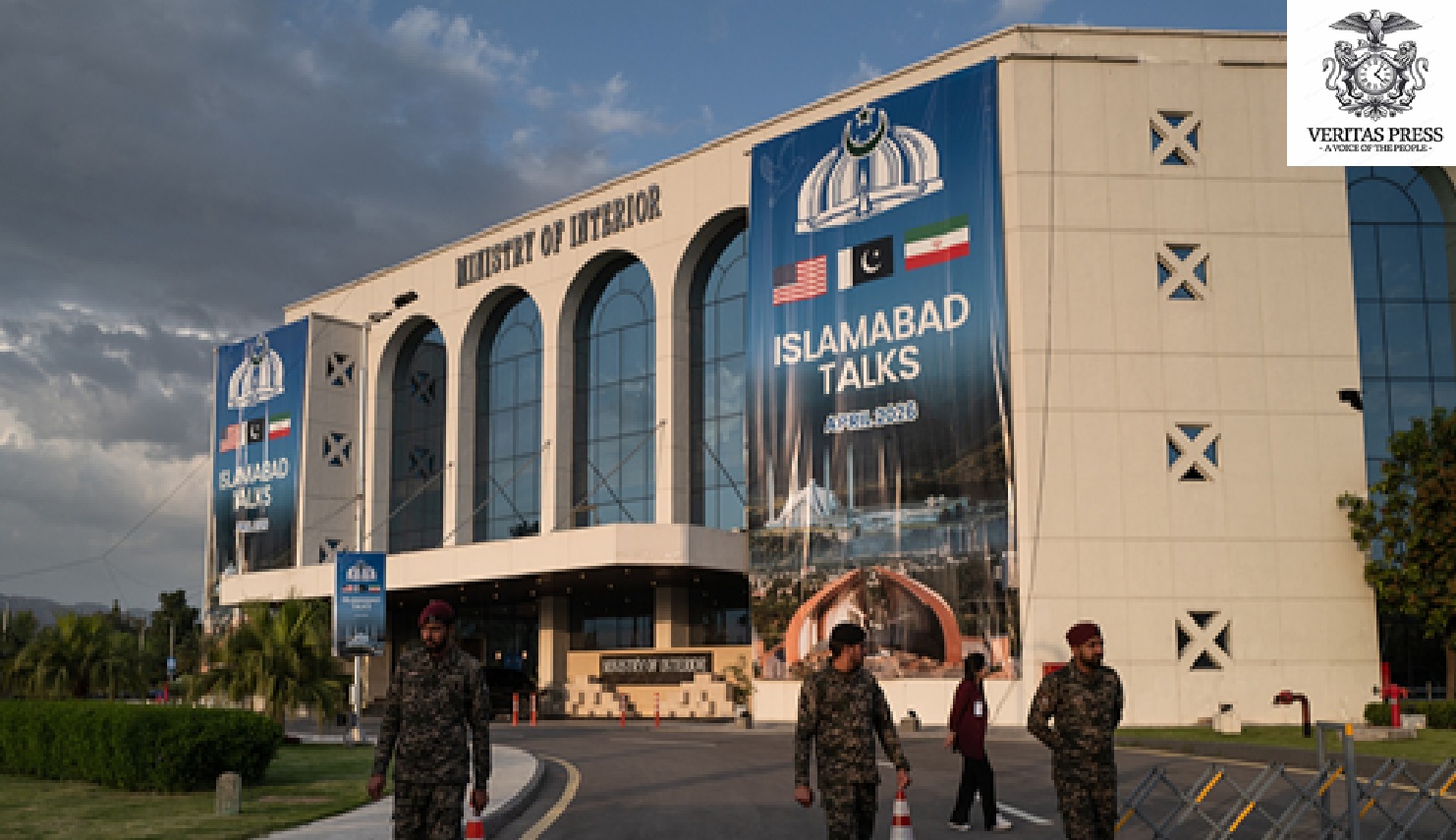
On May 20, Pakistan’s Army Chief Field Marshal Asim Munir made an unannounced visit to Tehran for what official readouts described as “extended consultations” with Foreign Minister Abbas Araghchi. The meeting, lasting over four hours, went far beyond the usual courtesy call. According to a Pakistani security source with knowledge of the talks, Munir carried a detailed proposal for a phased de-escalation: an immediate cessation of hostilities, followed by the lifting of the blockade, guarantees for the free flow of oil through the Strait of Hormuz, and the initiation of direct U.S.-Iran talks under joint Pakistani-Qatari auspices.
“Pakistan has unique leverage,” said Ayesha Siddiqa, a Pakistani security analyst and author of Military Inc. “Islamabad shares a long border with Iran, hosts a significant Baloch population that Tehran watches closely, and has its own experience mediating between adversarial powers. The Iranians trust the Pakistani military establishment more than they do most Western or Arab capitals.”
Foreign Ministry spokesman Esmail Baghaei, in a press briefing on May 21, formally designated Pakistan as the “official mediator” between Tehran and Washington, a statement that caught many Western diplomats off guard and signalled that Pakistan had supplanted traditional intermediaries like Oman and Switzerland for this specific channel.
Simultaneously, a Qatari delegation arrived in Tehran with what Reuters, citing diplomatic sources, described as “U.S. coordination to help finalise a possible agreement.” Qatari Prime Minister and Foreign Minister Mohammed bin Abdulrahman Al Thani subsequently held a phone call with Araghchi on the evening of May 22.
Abdullah Bandar Al-Otaibi, a professor of political science at Qatar University, told Al Jazeera that Doha’s role is complementary to Pakistan’s. “Qatar maintains working relationships with Hamas, the Taliban, and the Iranian leadership, but also hosts the largest U.S. military base in the region. It is uniquely positioned to maintain an atmosphere of trust precisely because it is inside the U.S. security umbrella yet outside the axis of outright anti-Iran hostility that defines Riyadh and Abu Dhabi’s posture.”
Yet the path to a deal is strewn with seemingly insurmountable obstacles and deception.
V. The Iranian Precondition: Total Cessation, Unblockaded Hormuz, And Sanctions Relief
In an exclusive interview with Al Jazeera, a senior Iranian official, speaking on condition of anonymity because of the sensitivity of the ongoing diplomacy, laid out Tehran’s irreducible demands with stark clarity.
“Halting the war on all fronts is the main precondition for any negotiation,” the official said. “No final deal has been reached, and ending the U.S. blockade and securing stability in the Strait of Hormuz are Iran’s principal objectives. The release of frozen assets and the removal of oil export sanctions are not considered details; they are central.”
The official stressed that “Iran’s armed forces do not concern themselves with the intentions of the other parties; they plan based on the worst-case scenarios.”
This uncompromising position was echoed by Araghchi in his whirlwind round of phone diplomacy. In separate calls on Friday, May 22, with Turkish Foreign Minister Hakan Fidan, Qatari Prime Minister Al Thani, and Iraqi Foreign Minister Fuad Hussein, the Iranian minister “discussed the latest regional developments and the existing diplomatic initiatives and efforts aimed at preventing tensions from escalating further and bringing the U.S.-Israeli war of aggression to an end,” according to a readout from the Iranian Foreign Ministry. On Saturday morning, Araghchi spoke with his Omani counterpart Badr Al Busaidi and later with Japanese Foreign Minister Toshimitsu Motegi.
Turkish Foreign Minister Fidan, whose country shares Iran’s concerns about Kurdish separatism and seeks to maintain energy cooperation, reportedly urged Araghchi to “keep the door open to diplomacy” and offered Ankara as a venue for future talks. The Turkish readout, more circumspect, noted that Fidan “emphasised the importance of refraining from steps that could further destabilise the region.”
But the yawning gap between the two sides’ starting positions remains. U.S. Secretary of State Marco Rubio, in comments to reporters on May 21, acknowledged “limited progress” but warned that “we still have a long way to go.” Rubio reiterated Washington’s insistence that any agreement must include verifiable limits on Iran’s uranium enrichment program and its ballistic missile development, demands that Iran has thus far refused to discuss until the immediate war conditions are lifted.
“Rubio wants to keep the military pressure on while extracting nuclear concessions,” said Dr. Mohammad Sadegh Koushki, a Tehran University professor and commentator close to the Iranian negotiating team. “This is the same failed formula of the past two decades. Tehran has learned that giving in under pressure only invites more pressure. That’s why the precondition of ending the war is non-negotiable.”
VI. The Strait Of Hormuz: The World’s Beating Heart And Its Chokepoint.
No aspect of the current crisis has rattled global markets and concentrated the minds of world leaders more than the fate of the Strait of Hormuz. The narrow waterway, only 21 nautical miles wide at its narrowest point, is the conduit for approximately 20% of global petroleum consumption. Disruption there sends shockwaves through every economy on earth.
Iran’s letter to the Security Council and its negotiators’ statements repeatedly emphasise the Strait’s stability as a core objective. But the subtext is unmistakable: Iran possesses the capacity to close the Strait unilaterally, or at least to severely disrupt traffic, and this leverage is not being wielded lightly.
“There’s a carefully calibrated messaging campaign here,” said Captain (Ret.) John Bradford, a former U.S. naval intelligence officer now with the S. Rajaratnam School of International Studies in Singapore. “Tehran is signalling that it is the guarantor of Hormuz’s security, not the United States or its Gulf allies. By framing the blockade as a U.S.-Gulf operation that Iran is heroically resisting, they flip the narrative: Iran becomes the defender of the global commons, while the U.S. and its partners are the disruptors.”
On May 19, the U.S. Navy’s Fifth Fleet reported that an Iranian patrol vessel had “harassed” a U.S.-flagged oil tanker transiting the Strait, forcing it to alter course. Iran’s Revolutionary Guard Corps Navy (IRGCN) countered that the tanker was illegally carrying sanctioned Iranian oil and was being escorted out of Iranian territorial waters. The incident, though minor in military terms, sent Brent crude futures above 98% per barrel in intraday trading, before settling at 96.40-a 4% jump on the day.
“The markets are terrified,” said Karen Petrosyan, an energy analyst at Goldman Sachs. “Every time a tanker is challenged, every time a statement is issued threatening Hormuz, the risk premium spikes. A sustained disruption would be catastrophic, think $150 per barrel oil within two weeks, global recession, and mass instability in import-dependent developing countries.”
The UN spokesperson, in a rare comment on the geopolitical dimensions of the crisis, emphasised “the vital importance of keeping the Strait of Hormuz open and ensuring the unimpeded transit of shipping.” The statement, while not naming any party, was widely interpreted as a warning to Iran against escalation, but Tehran has skillfully turned that logic on its head by blaming the blockade on U.S.-Gulf cooperation.
VII. Security Council Resolution 2817: A Disputed Mandate.
The Iranian letter takes specific aim at Security Council Resolution 2817, adopted earlier in 2026, which called for, among other measures, the suspension of Iran’s uranium enrichment activities and the cessation of what it termed “destabilising regional activities.” Iran has denounced the resolution as a “one-sided, biased, selective” instrument adopted in “bad faith” and inconsistent with the UN Charter.
Iravani’s letter cites the International Court of Justice’s 1971 Advisory Opinion on Namibia, in which the ICJ held that Security Council decisions are binding only when “in accordance with the Charter.” This is an audacious legal manoeuvre: Iran is essentially asserting that it can judge the legality of Council resolutions and refuse compliance if they contravene fundamental Charter principles, a position that, if widely adopted, could unravel the Council’s already fragile authority.
“This is a very dangerous argument for the maintenance of the international legal order,” said Professor Ansari. “But it’s not without precedent. States have defied Security Council resolutions on the grounds that they were ultra vires. The problem is that there’s no objective arbiter to determine whether a resolution is ‘in accordance with the Charter.’ That ambiguity is what Iran is exploiting.”
The letter argues that the Council cannot “disregard the unlawful use of force, acts of aggression, and grave violations of international humanitarian law by the United States and the Israeli regime, as well as the complicity of States that have either facilitated such wrongful acts against Iran or have directly participated therein, and to require Iran as a victim of aggression inter alia to give up its customary right of self-defense.”
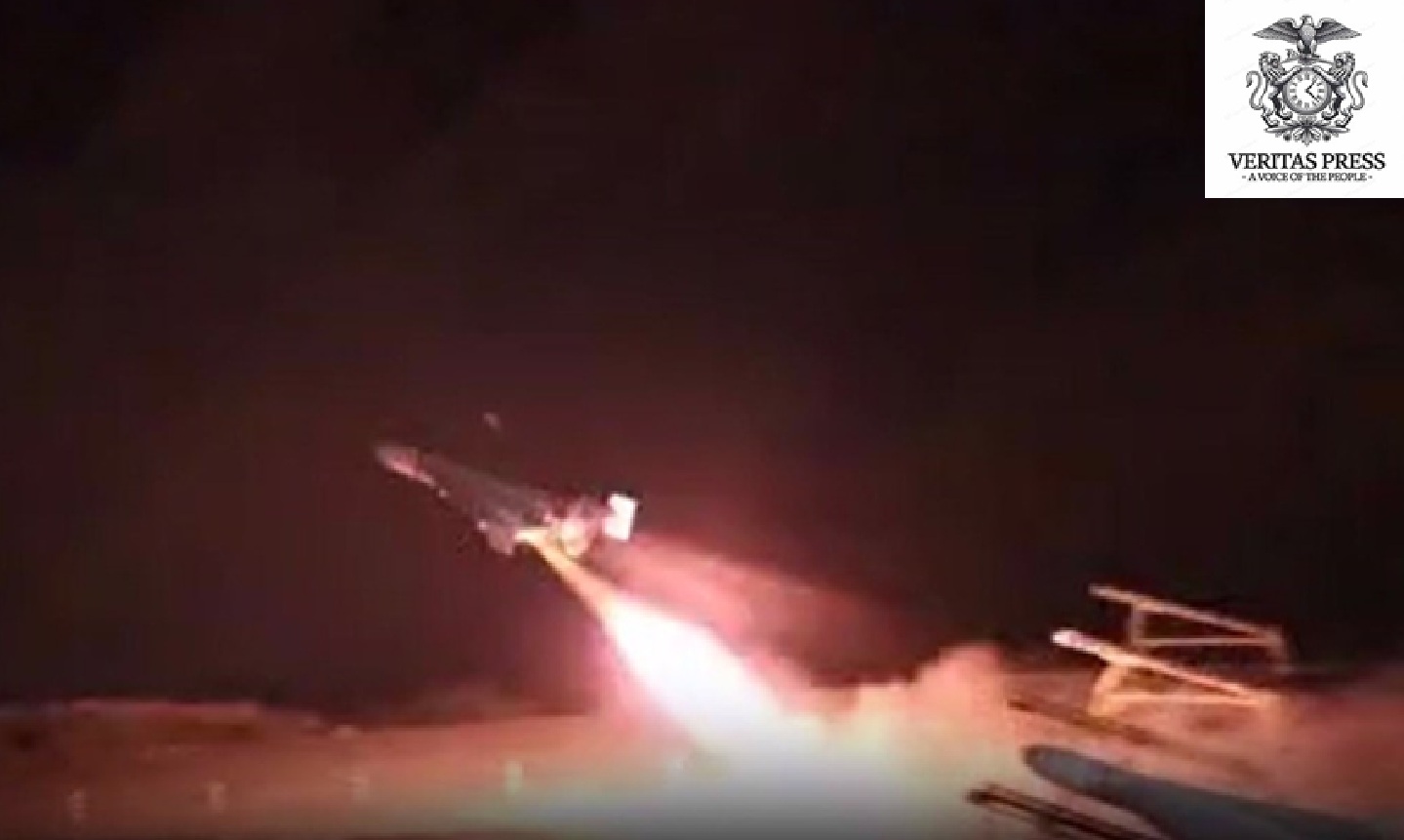
This framing, Iran as the victim exercising legitimate self-defence, is the core of Tehran’s legal and political strategy. It seeks to shift the debate from Iran’s nuclear program to the aggression it has suffered, and to portray its own military responses (which have included missile strikes against U.S. bases in Iraq and Syria and drone attacks on Israeli positions in the Golan Heights) as legitimate countermeasures under the law of armed conflict.
VIII. Voices From The Ground: Those Who Bear The Cost.
Beyond the legal briefs and the diplomatic communiqués, the war and the subsequent blockade are exacting a devastating toll on civilian populations in Iran, and, increasingly, in the very Gulf states accused of complicity.
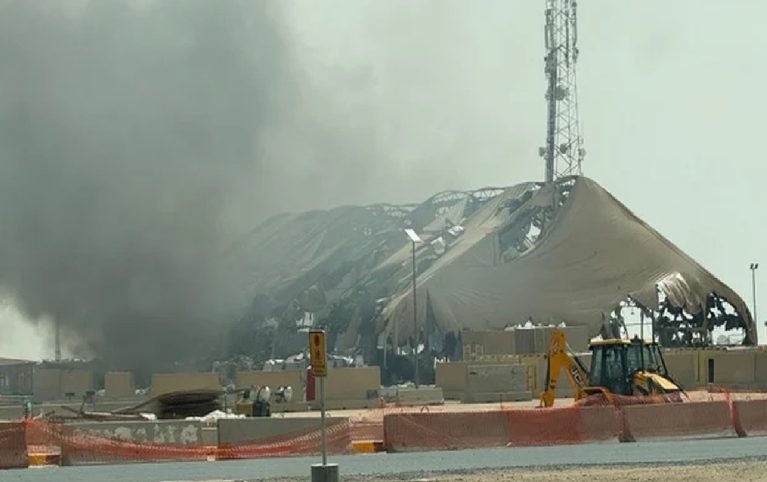
In the southern Iranian city of Bushehr, home to one of the country’s main nuclear facilities that was struck in the early days of the campaign, the electricity grid has been crippled. “We have power for maybe four hours a day,” said Hossein, a 54-year-old fisherman who gave only his first name. “The power plant was damaged. They say it was the Americans and the Israelis, but everyone here knows the Arabs let them use their airspace. We see the contrails. We hear the jets coming from across the water.”
Hossein’s boat has been tied up for weeks. “The Revolutionary Guards won’t let us fish in some areas. They say it’s too dangerous, there could be mines or submarines. How am I supposed to feed my family? The price of bread has doubled. Rice is triple. If this continues, people will starve.”
His anger is directed at both the attackers and their regional enablers. “We have no quarrel with the ordinary people of Kuwait or Bahrain. But their rulers, they have sold their souls. They think they are safe behind American shields, but they are just making themselves targets.”
In Kuwait City, the mood is tense. The government has imposed strict media censorship on reporting about the war, but rumours and social media videos circulate widely. A Kuwaiti human rights activist, speaking via encrypted messaging from an undisclosed location, described a “climate of fear.”
“The government says we are defending our sovereignty. But many Kuwaitis are asking: what sovereignty? We have allowed our country to become a launchpad for a war that has nothing to do with us. Iranian missiles can reach Kuwait City in minutes. We are being put in the crossfire by our own leaders.”
Bahraini pro-democracy activist Maryam al-Khawaja, exiled in London, issued a statement calling the Bahraini government’s cooperation with the U.S.-led strikes “a betrayal of the Bahraini people, who have no interest in a war with Iran. The Al Khalifa regime is using this conflict to further entrench its repression and to justify its iron-fisted rule.”
In Jordan, where the government treads a delicate line between its peace treaty with Israel, its reliance on U.S. aid, and a population deeply sympathetic to the Palestinian cause and often hostile to any cooperation with Israel, the naming of the Kingdom in Iran’s letter has sparked a political firestorm. Jordan’s Muslim Brotherhood issued a statement on May 22 calling on the government to “immediately cease any and all military cooperation with the Zionist entity and the United States that could drag Jordan into a regional war.” Protests in Amman’s al-Baqa’a refugee camp drew thousands on Friday, with demonstrators chanting, “No to the war on Iran, yes to Palestine.”
“The King is in a very difficult position,” said Dr. Oraib Rantawi, director of the Amman-based Al Quds Centre for Political Studies. “He cannot openly defy Washington, but he cannot afford to alienate his own people or make an enemy of Iran at a time when Jordan’s economy is already on the brink. Iran’s letter makes this balancing act infinitely harder.”
IX. Analysis: A New Legal Front In Asymmetric Warfare.
Iran’s strategy in submitting its detailed, legally-argued letter to the UN Security Council reflects a broader evolution in the Islamic Republic’s approach to asymmetric warfare. Unable to match the United States and Israel in conventional military terms, and wary of triggering a full-scale conflict that could devastate its infrastructure, Tehran is increasingly turning to lawfare, the use of international legal instruments and fora to constrain, delegitimise, and exact costs from its adversaries.
“This is Iran’s equivalent of lawfare,” said Dr. Reza Nasri, an Iranian international lawyer and commentator who has been following the case. “By painstakingly documenting the complicity of neighbouring states and framing it within the established categories of state responsibility, Iran is doing several things simultaneously. It is building a legal record for potential adjudication. It is sowing political division between the U.S. and its Gulf partners by forcing them onto the defensive. It is appealing to the global South and to international civil society with a narrative of victimhood and legal rectitude. And it is laying the groundwork for future reparations claims that could, at a minimum, serve as bargaining chips in negotiations.”
The efficacy of this strategy remains to be seen. The Security Council, paralysed by U.S. veto power, is unlikely to take any concrete action against the named states. The International Court of Justice would require consent from the parties to hear a contentious case, consent that Kuwait, Bahrain, Saudi Arabia, the UAE, Qatar, and Jordan are highly unlikely to grant. But the court of international public opinion may be a different matter.
“The legal arguments are not frivolous,” said Professor Ansari. “They are serious and well-constructed. Whether or not they succeed in a formal tribunal, they succeed in the information space. Every diplomat, every journalist, every civil society organisation that reads this letter will now have a framework for understanding the conflict that is much more Iran-favourable than the dominant Western narrative.”
X. The Diplomatic Window: Narrow, But Not Yet Closed.
Despite the bellicose legal posturing and the on-the-ground tensions, there are tentative signs that both Tehran and Washington recognise the catastrophic consequences of diplomatic failure.
A senior Pakistani official, speaking on condition of anonymity, told this reporter that Field Marshal Munir’s visit had yielded “a potential framework” for a phased agreement. Under the reported outline, the first phase would see an immediate and verifiable cessation of hostilities, including an end to U.S. and Israeli airstrikes, a halt to Iranian retaliatory missile and drone attacks, and the lifting of the naval blockade. Phase two would involve the release of a tranche of frozen Iranian assets held in escrow accounts in Oman and Switzerland, along with a temporary waiver for oil exports up to a specified volume. Phase three would commence broader negotiations on Iran’s nuclear program, sanctions relief, and regional security arrangements, including the status of Hormuz.
“The framework exists on paper,” the Pakistani official said. “The difficulty is sequencing and verification. The Iranians don’t trust that the Americans will follow through. The Americans don’t trust that the Iranians will stop enriching once the pressure is off. It’s the classic prisoner’s dilemma played out with nuclear weapons and oil markets.”
Qatar’s role, the official added, “is to provide the lubricant, money, mediation venues, backchannel assurances, and a direct line to the White House that bypasses the usual bureaucratic hurdles.”
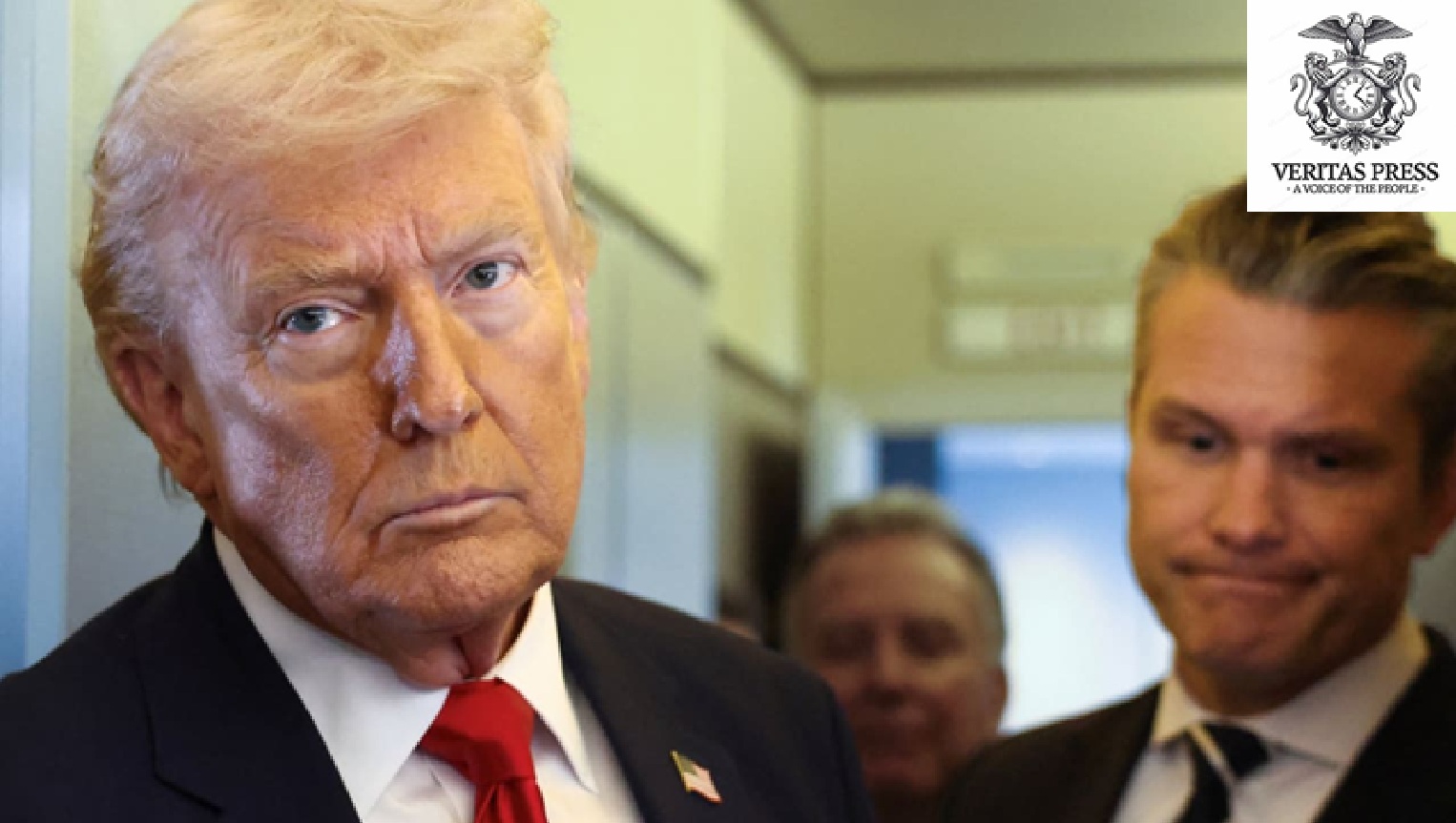
U.S. President Donald Trump, for his part, has oscillated between threats, deception and overtures. In a Truth Social post on May 21, he wrote: “Iran is very eager to make a deal. They have no choice; their economy is in shambles. But I will only accept a deal that truly prevents them from ever getting nuclear weapons and stops their support for terrorism. If they won’t agree, we will continue our campaign until they do. We have never been stronger, and the Gulf states are standing with us!”
The threat of continued military operations hangs over the diplomacy. On May 22, the Pentagon confirmed that U.S. and Israeli aircraft had conducted precision strikes on what it called “IRGC Quds Force weapons storage facilities” near the Syrian-Iraqi border, a strike that, while outside Iranian territory proper, Iran views as part of the larger campaign. Iran’s Foreign Ministry condemned the strike as “further proof of aggressive intent” and warned that “those who provide bases and airspace for these crimes will not escape responsibility.”
Conclusion: A Region On The Precipice.
The region stands at a crossroads that is both terrifying and, paradoxically, hopeful. The legal architecture Iran has constructed, the diplomatic channels Pakistan and Qatar have nurtured, and the universal fear of an uncontrolled escalation in the Strait of Hormuz have created a moment where a limited understanding might be within reach. But that moment is fragile, and the gravitational pull toward wider war remains powerful.
For the ordinary people of Iran, Iraq, Kuwait, Saudi Arabia, the UAE, Bahrain, Qatar, and Jordan, people who had no say in the decisions that brought their nations to this brink, the stakes could not be higher. The echoes of previous Gulf wars, of the 2003 Iraq invasion, of the decades of proxy conflict that have scorched the earth from Yemen to Syria, all serve as grim reminders that when great powers and regional rivals clash, it is the innocents who suffer most.
“We have lived through war before,” said Um Ahmed, a 61-year-old grandmother in Baghdad’s Karrada district, who remembers the Iran-Iraq War of the 1980s, the 1991 Gulf War, the 2003 invasion, and the ISIS onslaught. “Every time, the leaders tell us it is necessary. Every time, they promise it will make us safer. And every time, we bury our children. I pray that this time, this time, the men in suits will find a way before the bombs find us.”
As Iran’s UN ambassador’s letter is circulated as an official Security Council document, as Araghchi’s phone line hums with the voices of foreign ministers seeking a way out, and as the warships patrol the tense waters off Hormuz, the world watches and waits.
Source:Veritas Press C.I.C. | Multi News Agencies
Submissions:
For The Secure Submission Of Documentation, Testimonies, Or Exclusive Investigative Reports From Any Global Location, Please Utilise The Following Contact Details For Our Investigations Desk: enquiries@veritaspress.co.uk or editor@veritaspress.co.uk
Help Support Our Work:
Popular Information is powered by readers who believe that truth still matters. When just a few more people step up to support this work, it means more lies exposed, more corruption uncovered, and more accountability where it’s long overdue.
Help Protect Independent Journalism, Which Is Currently Under Attack.
If you believe journalism should serve the public, not the powerful, and you’re in a position to help, becoming a DONATOR or a PAID SUBSCRIBER truly makes a difference.
DONATION APPEAL: If You Found This Reporting Valuable, Please Consider Supporting Independent Journalism.
Help Support Our Work – We Know, We Know, We Know …
Seeing these messages is annoying. We know that. (Imagine what it’s like writing them … )
Your support fuels our fearless, truth-driven journalism. In unity, we endeavour to amplify marginalised voices and champion justice, irrespective of geographical location.
But it’s also extremely important. One of Veritas Press’s greatest assets is its reader-funded model.
1. Reader funding means we can cover what we like. We’re not beholden to the political whims of a billionaire owner. We are a small, independent and impartial organisation. No one can tell us what not to say or what not to report.
2. Reader funding means we don’t have to chase clicks and traffic. We’re not desperately seeking your attention for its own sake: we pursue the stories that our editorial team deems important and believe are worthy of your time.
3. Reader Funding: enables us to keep our website and other social media channels open, allowing as many people as possible to access quality journalism from around the world, particularly those in places where the free press is under threat.
We know not everyone can afford to pay for news, but if you’ve been meaning to support us, now’s the time.
Your donation goes a long way. It helps us:
Keep the lights on and sustain our day-to-day operations
Hire new, talented independent reporters
Launch real-time live debates, community-focused shows, and on-the-ground reporting
Cover the issues that matter most to our communities, in real time, with depth and integrity
We have plans to expand our work, but we can’t do it without your support. Every contribution, no matter the size, helps us stay independent and build a truly people-powered media platform.
If you believe in journalism that informs, empowers, and reflects the communities we serve, please donate today.
Kamran Faqir is a volunteer investigative journalist and writer committed to exposing hidden truths and amplifying underreported stories. Driven by social justice, he brings sharp insight and fearless truth-telling to independent journalism. NUJ registered.
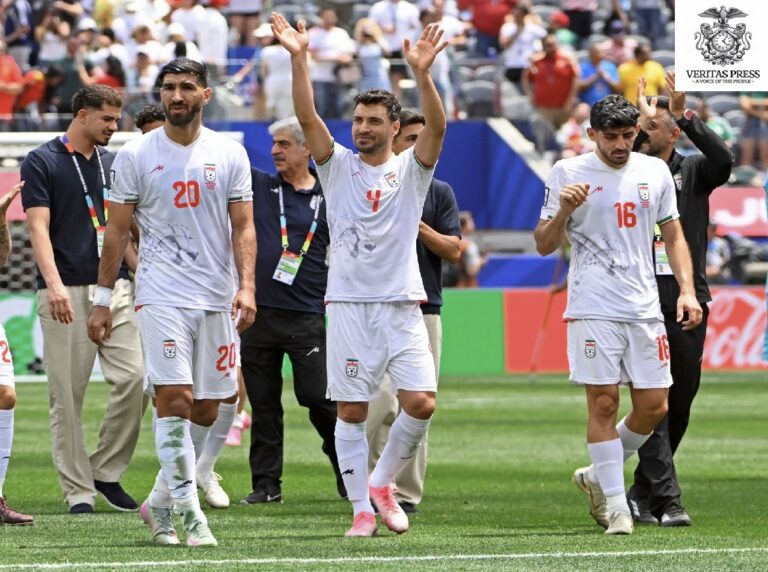
SEATTLE, TEHRAN — The U.S. Department of Homeland Security (DHS) will allow Iran’s national football team to enter the country 48 hours before their critical World Cup match against Egypt on Friday, a modest concession in a tournament where Team Melli’s travel conditions have sparked claims of oppression and competitive disadvantage.