Kamran Faqir is a volunteer investigative journalist and writer committed to exposing hidden truths and amplifying underreported stories. Driven by social justice, he brings sharp insight and fearless truth-telling to independent journalism. NUJ registered.
Original Article Date Published:
Article Date Modified:
21 minutes
Views:301
Listen to this article
Help support our mission, donate today and be the change. Every contribution goes directly toward driving real impact for the cause we believe in.
An Analysis Of The May 18 Attack, The Heroes It Claimed, The Teenagers Radicalised Online, And The Political Climate That Normalised Anti-Muslim Bigotry.
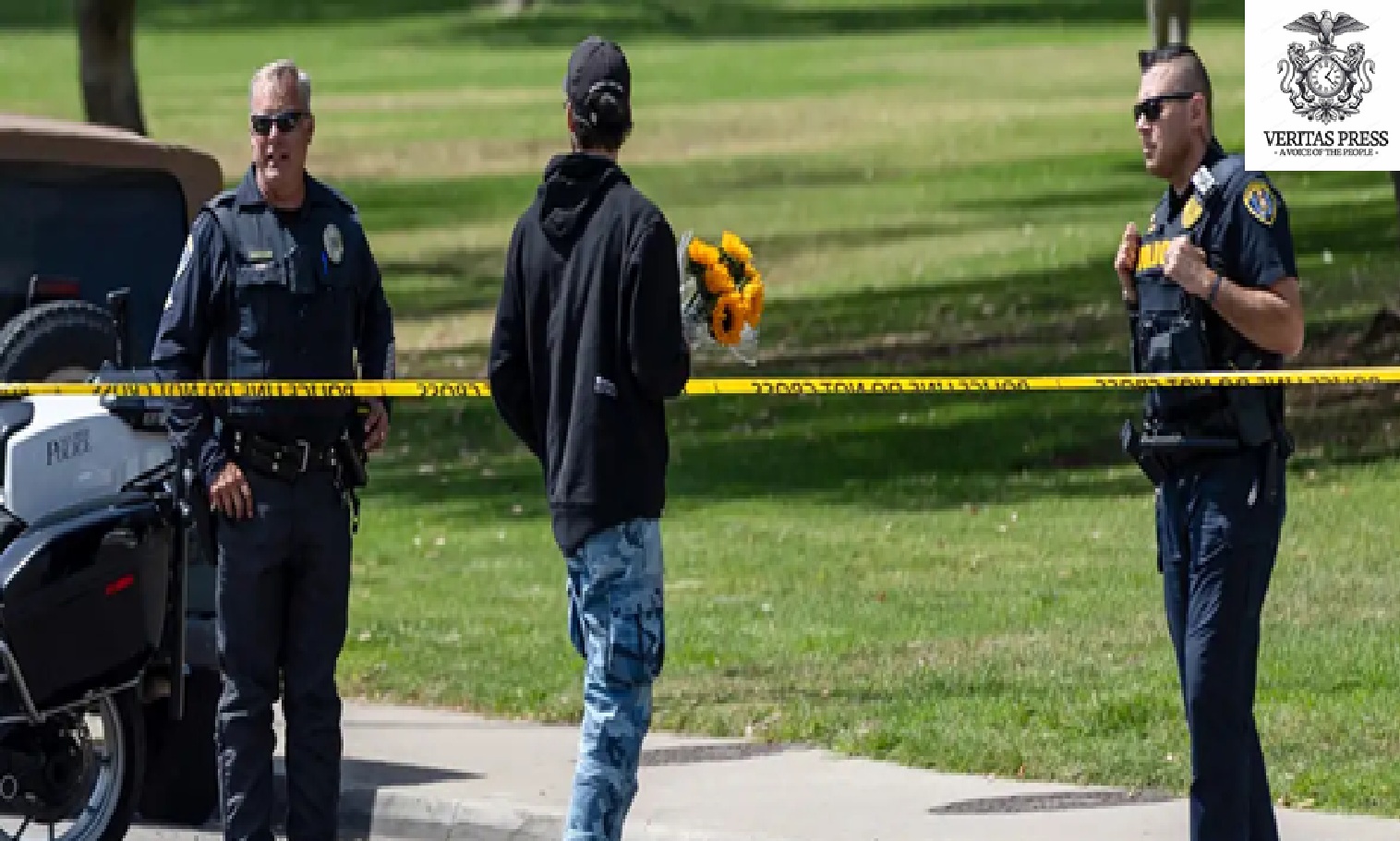
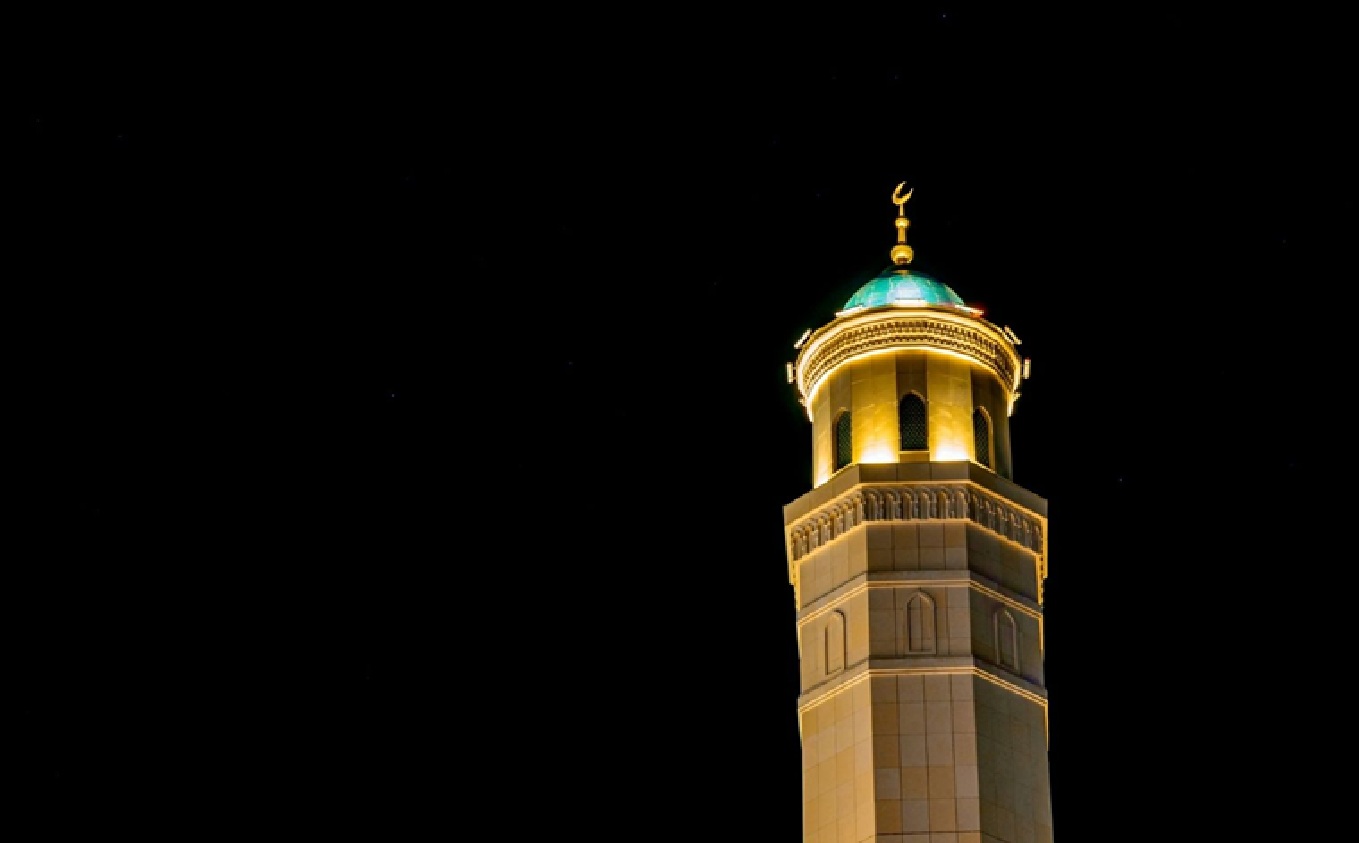
SAN DIEGO, Calif. — The morning of Monday, May 18, 2026, began with a mother’s desperate 911 call. Before it ended, three men lay dead on the sun-scorched pavement outside the Islamic Centre of San Diego, two teenage gunmen had taken their own lives in a parked car a few blocks away, and a community that had long felt the encroaching shadow of Islamophobia was left to count its martyrs.
Amin Abdullah, 51, a security guard and father of eight, was the first to confront the attackers. Mansour Kaziha, 78, the mosque’s longtime caretaker, was on the phone with police when he was gunned down. Nader Awad, 57, who lived across the street and attended prayers “every single day”, ran towards the gunfire in an effort to divert worshippers from harm. All three were killed in what authorities are now investigating as a hate crime, the deadliest attack on a Muslim house of worship in the United States since the Christchurch-inspired massacre of 2019, and a grim milestone in a year that has seen anti-Muslim bigotry reach levels not recorded since the aftermath of 9/11.
This investigation, drawing on police briefings, FBI disclosures, exclusive interviews with victims’ families and community leaders, and a review of hundreds of pages of data on hate speech and extremist violence, reveals a tragedy that was not born in isolation. It was incubated in the algorithmic radicalisation chambers of the internet, enabled by a gaping loophole in America’s firearm laws, and, most damningly, fertilised by a political establishment that has increasingly treated anti-Muslim rhetoric as an acceptable electoral strategy.
The Attack: Eleven Minutes That Shattered A Morning.
Police logs obtained by this reporter show that at 9:42 a.m., a woman in the suburban neighbourhood of Clairemont dialled emergency services. Her 17-year-old son, she told the dispatcher, was suicidal, had run away from home, and had taken several of her weapons and her vehicle. She had found a note whose contents she could not fully comprehend, but which radiated a terrifying finality.
San Diego Police Chief Scott Wahl, visibly shaken during a press conference later that day, described how the threat level “began to elevate” as officers pieced together fragments of information. The boy, later identified in news reports as Cain Clark, had met an 18-year-old accomplice, Caleb Vazquez, online. The two were “fully armoured” with handguns, rifles, and tactical gear when they descended upon the Islamic Centre of San Diego at 11:43 a.m.
“We were racing to find them,” Wahl said. “Two hours after that mother’s call, the shooting started.”
The mosque, the largest in San Diego County and home to the Al Rashid School, was in the midst of its weekday routine. Inside the school building, children as young as five were reciting Quranic verses. Outside, Amin Abdullah was at his post, a position he had held for more than a decade, and one he took with a gravity that bordered on the sacred.
Witnesses and investigators have since reconstructed the sequence. As the attackers approached the complex, Abdullah shouted warnings, triggering the lockdown drills that the centre had practised several times a year. He was shot and wounded but continued to engage. “He was afraid that if he were on his break, something bad will happen,” his daughter Hawaa Abdullah told reporters, describing how her father often refused to eat during shifts so as not to be caught off guard. “He saved his food until after he left the job.”
Abdullah’s sacrifice bought precious minutes. Mansour Kaziha, the 78-year-old Syrian-born caretaker known to everyone as Abu Ezz, dialled 911 and attempted to shepherd people away from the entrance. Nader Awad, who lived across Eckstrom Avenue and whose wife teaches at the mosque’s school, heard the shots and sprinted toward the building. He intercepted several worshippers arriving for midday prayers and redirected them away from the line of fire.
All three men were shot multiple times at close range. By the time a phalanx of up to 100 officers entered the complex, breaching doors to clear rooms where children and staff huddled in silence, the attackers had fled.
“I’ll tell you what got me,” Chief Wahl said, his voice cracking. “Watching kids come running out, just thankful to be alive.”
The gunmen were discovered roughly half a mile away, dead inside the vehicle reported stolen by Clark’s mother. Both had apparently turned their weapons on themselves. No police officer discharged a firearm during the incident.
The Victims: Three Lives Of Devotion.
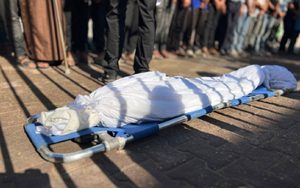
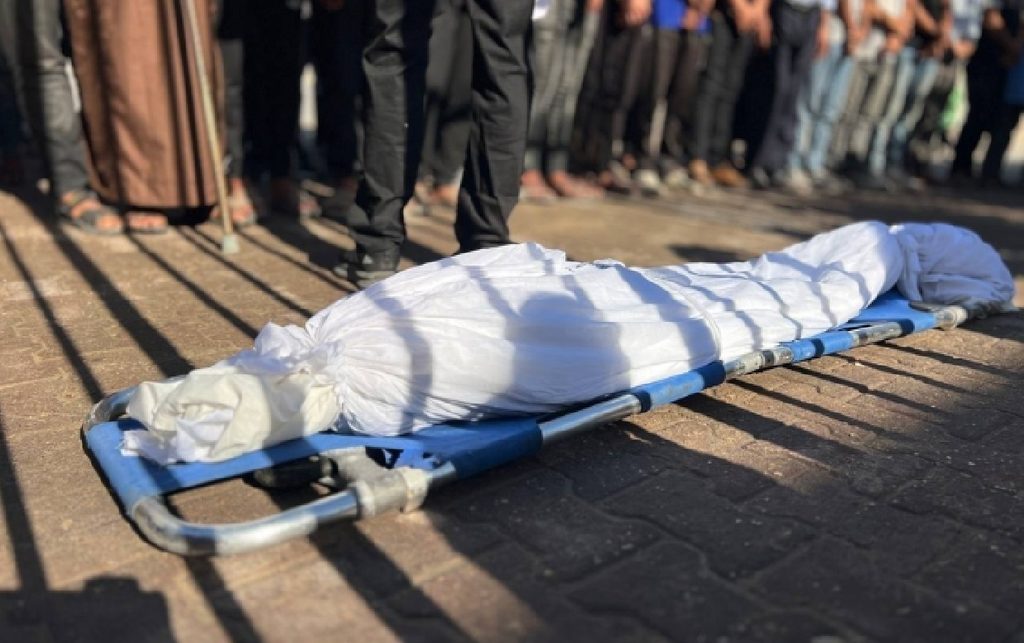
Within hours, the Islamic Centre named the dead. “We call them our brothers in the community. We call them our martyrs and our heroes,” said Imam Taha Hassane at a vigil attended by more than a thousand mourners on Tuesday evening.
Amin Abdullah, a Black American raised in a Christian household, had discovered Islam as a young man after graduating high school. A 2019 YouTube video shows him recounting his spiritual journey with the wide-eyed wonder of someone who had found a purpose larger than himself. “Amin was born a Muslim to an African American mother. He was as American as one can get. He was also as Muslim as one can be,” wrote Kashif-ul-Huda, a biotech professional and former colleague, in an essay for Al Jazeera. “He was killed by guns fired by two young American men.”
At a news conference surrounded by family, Hawaa Abdullah described her father as her “best friend” and a role model who taught his eight children that service was the highest form of worship. “He wanted to defend the innocent,” said Shaykh Uthman Ibn Farooq, who had known Abdullah since the 1990s and recently accompanied him on the pilgrimage to Mecca.
Mansour Kaziha had been a fixture at the Islamic Centre since its construction in the 1980s. Ahmed Shabaik, chairman of the mosque’s board of directors, called him “a cornerstone, a pillar of this masjid.” Originally from Syria, Kaziha was married with five adult children and had spent decades doing “everything”, running the gift shop, preparing the pre-dawn suhoor meals during Ramadan, cooking for the nightly iftar feasts, and fixing whatever broke. His son Yasser, speaking at the vigil, said his father “taught us to expect hardships and push through them to fill our individual purposes just like he did.”
Nader Awad, 57, was described by Imam Hassane as a man who “is every single day at the Islamic Centre, joining the prayers every single day.” When the shooting began, he did what instinct and faith demanded: he left the safety of his home and ran toward the danger. “He diverted some people who were coming to the masjid at the time,” Shabaik said. His wife, a teacher at the school, was inside the building he died trying to protect.
“Their absence leaves a void that can never truly be filled,” the mosque wrote in a statement. A fundraising campaign for the victims’ families and others affected by the attack had raised over $300,000 by Wednesday morning.
The Attackers: Radicalised In Plain Sight.
The identities of the suspects, Cain Clark, 17, and Caleb Vazquez, 18, were not officially released by authorities, but multiple news outlets and public records have confirmed their names. FBI Special Agent Mark Remily, who heads the San Diego Field Office, told reporters Tuesday that investigators had uncovered a “manifesto” and “various writings” in which the pair expressed a “broad hatred” toward numerous races and religions.
“These subjects did not discriminate on who they hated,” Remily said. Searches of two residences yielded an arsenal: 30 firearms, a crossbow, tactical gear, ammunition, and numerous electronic devices. The weapons used in the attack were registered to one of the suspects’ parents. “Exactly how they … were able to obtain them is still under investigation,” Remily added, in an acknowledgement that will do little to reassure gun-control advocates who have long warned about the inadequacy of safe-storage laws.
Clark was a senior at the San Diego Unified School District’s virtual learning academy and had been on track to graduate this spring. He had not attended in-person classes since 2021 but participated on the wrestling team at Madison High School in 2024. School officials said he had no disciplinary record. Neighbours Marne and Ted Celaya told reporters they saw Clark hours before the shooting, waving as he drove away alone in a car. “He seemed normal,” Marne Celaya said. “You never think something like this is happening behind closed doors.”
The FBI confirmed the two had met and been radicalised online, though Remily declined to specify which platforms or ideologies were documented in their writings, citing the ongoing investigation. A tip line has been opened, and agents are still seeking information about the pair’s movements and associations in the weeks leading up to the massacre.
What is already clear is that the attack was not triggered by a specific grievance against the Islamic Centre. Chief Wahl said there was “no specific threat” against the mosque; rather, investigators found evidence of “generalised hate rhetoric.” In other words, the teenagers were not radicalised by a single event but by an ecosystem, one that has, over the past several years, grown increasingly toxic for American Muslims.
Despite the severity of the acts, they have seemingly downplayed the situation, shifting the classification from a deliberate act of terrorism to a more generalised category of hate crime.
The Climate Of Hate: Political Rhetoric And Its Consequences.
The shooting occurred exactly one week before Eid al-Adha, the Feast of the Sacrifice, which marks the culmination of the annual Hajj pilgrimage. It came amid a geopolitical inferno, the ongoing war with Iran, the smouldering aftermath of Israel’s war on Gaza, and a domestic political landscape in which anti-Muslim rhetoric has become not merely tolerated but, in some quarters, actively encouraged.
The numbers are staggering. The Council on American-Islamic Relations (CAIR) recorded 8,683 anti-Muslim and anti-Arab complaints in 2025, the highest in the organisation’s 30-year history. That figure represents an almost vertical climb from the 8,061 complaints logged in 2023 and extends a trend that, CAIR research director Corey Saylor notes, “remains at all-time highs.” Thirty-three of those incidents in 2025 explicitly targeted Islamic institutions, mosques, community centres, and schools.
“Islamophobia is an acceptable form of hate in the United States,” Saylor told TIME in an interview published shortly after the San Diego attack. “A large number of elected officials … have smeared Muslims.”
The evidence is not hard to find. In February 2026, Representative Randy Fine of Florida posted on X that “the choice between dogs and Muslims is not a difficult one” and followed it days later with: “We need more Islamophobia, not less.” Representative Brandon Gill of Texas called for halting “Muslims immigrating to America.” Both men remain in office, their remarks unchallenged by party leadership.
A report released in April by the Centre for the Study of Organised Hate (CSOH) documented a 1,450% surge in anti-Muslim social media posts by Republican elected officials from February 2025 to March 2026. The researchers catalogued more than 1,100 posts classified as anti-Muslim bigotry. “Words have consequences,” said Mohamed Gula, interim CEO of the Muslim advocacy group Emgage Action, in a statement responding to the shooting. The statement felt less like a rhetorical flourish than a diagnosis.
The week before the attack, Republicans in Congress held hearings titled “Sharia-Free America”, a revival of the long-standing trope that Muslims seek to supplant the U.S. Constitution with Islamic religious law. The hearings, widely covered by right-wing media, aired unchecked claims that Muslim communities represented a fifth column. Mainstream outlets, for their part, have historically framed Islam overwhelmingly through the lens of terrorism, a bias that researchers say has tangible effects on public attitudes and the psychological well-being of Muslim Americans.
A study by CSOH found that in the first six days of the U.S.-Iran war, Islamophobic posts on X jumped from an average of 2,000 per day to 6,000. A 2025 poll found that 63% of American Muslims reported experiencing religious discrimination, with many saying they encounter at least one such incident every year since 2016. “In late 2023 through 2024, what we really saw is that events overseas seem to be driving Islamophobia here,” Saylor said. In 2025, “there was a pivot to a rise in anti-Muslim sentiment among elected officials.”
The psychological toll is profound. Research conducted after Trump’s 2017 travel ban targeting several Muslim-majority countries found that Muslim Americans skipped primary care appointments while emergency room visits rose. A 2015 study revealed that nearly one-third of Muslim Americans had experienced discrimination in health care settings, from providers dismissing their pain to insensitivity about hijab and modesty. In a 2023 study, one participant described a mental health professional “quick to attribute problems” to religion. In a 2024 study of 325 Muslim Americans who had used psychological services, 56% worried about provider bias; 57% feared being misunderstood.
The Security Guard Who Refused To Eat On Shift:
Amin Abdullah’s story illuminates another dimension of this tragedy: the quiet, everyday heroism of American Muslims who have internalised the need to protect their communities from a threat their country has not adequately confronted.
Abdullah greeted every visitor to the mosque with “as-salamu alaikum”, peace be upon you, and a smile, said Mahmood Ahmadi, a longtime attendee. He had worked at the Islamic Centre for more than a decade, long before the security protocols that are now standard at mosques across the country. He knew the children by name, remembered the faces of regulars, and took his responsibility so seriously that he would skip meals on duty.
“He wanted to save his food until after he left the job because he was afraid that if he were on his break, something bad would happen,” Hawaa Abdullah said.
When the attackers arrived, Abdullah did not run. He radioed the school administrators, triggering the lockdown that Imam Hassane credits with saving “the lives of everyone in the school.” Then he moved toward the threat. Police Chief Wahl was unambiguous: “It’s fair to say his actions were heroic. Undoubtedly, he saved lives today.”
Abdullah’s death exposes the cruel paradox of security in American houses of worship. Mosques, synagogues, and Black churches have been forced to become fortresses, investing in armed guards, surveillance systems, and active-shooter drills, while political leaders often hesitate to name the ideology that makes such measures necessary. The Islamic Centre practised lockdowns several times a year. “It worked, you know,” Hassane said. “The lives of the kids were saved. The lives of everyone in the school were saved, and we’re so grateful for that.”
Gratitude, in this context, is an insufficient word. A community should not have to be grateful that its drills were effective; it should be outraged that they were necessary.
The Law Enforcement Response And Uncomfortable Questions:
The police response was swift and, by all accounts, disciplined. Officers arrived within four minutes of the first report and entered the complex in force. No shots were fired by law enforcement. The suspects were found dead from self-inflicted wounds. “No officers discharged their weapons,” Wahl emphasised, a detail that will be weighed carefully in a country still reckoning with police violence in Black and brown communities.
Yet the investigation has already exposed uncomfortable truths. The mother of one attacker had alerted police nearly two hours before the shooting, warning that her son was suicidal, armed, and in possession of her vehicle. Officers were actively searching the neighbourhood when the attack began. Whether the tragedy could have been prevented if the warning had been escalated differently will be a central question for the after-action reviews that are now underway.
The FBI’s discovery of a “manifesto” and extensive arsenal also raises questions about how two teenagers, one still a minor, accumulated 30 firearms, tactical gear, and a crossbow without attracting more scrutiny. Remily confirmed the weapons used in the attack were registered to a parent, but the specifics of how the suspects accessed them remain murky. California has some of the strictest gun laws in the nation, including safe-storage requirements; the fact that a suicidal 17-year-old was able to arm himself so thoroughly suggests either a catastrophic failure of compliance or a legal framework still too porous to stop a determined teenager.
Equally troubling is the ideological blind spot in federal counterterrorism strategy. The Trump administration’s most recent counterterrorism framework identifies three “major types” of threat: narco-terrorists and transnational gangs; Islamist terrorists; and violent left-wing extremists. Right-wing extremism, which, according to a September 2025 analysis by the Centre for Strategic and International Studies, accounted for 152 attacks and 112 deaths over the past decade, far outpacing violence by left-wing or Islamist actors, is conspicuously absent from the document. The Cato Institute found that from 2020 to September 2025, right-wing terrorists were responsible for 54% of all politically motivated murders in the United States.
The San Diego attackers’ “broad hatred” may not fit neatly into one ideological box, but the environment that incubated them, a digital and political cesspool of anti-Muslim, anti-immigrant, and racially charged rhetoric, is unmistakably a product of the far right. The refusal of federal authorities to name this reality has become a pattern that communities on the receiving end of such violence find increasingly indefensible.
Community Resilience And The Long Road Ahead:
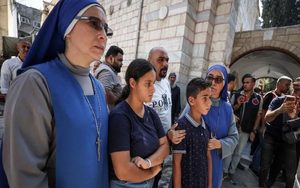
The day after the shooting, the pavement outside the Islamic Centre was covered in flowers, hand-drawn signs, and flickering candles. Hundreds gathered for a vigil, their grief raw and unmediated. Maya, a seventh-grader who had known the victims from family gatherings and Ramadan celebrations, told reporters through tears: “He sacrificed his life to save everyone else’s.”
A man who identified himself only as Jesus said he would be back at the mosque as soon as it reopened. “The Islamophobia going on in this country, that’s not going to stop me from praying five times a day, it’s not going to stop me from standing with my community,” he declared. “If anything, it’s making me want to do it more.”
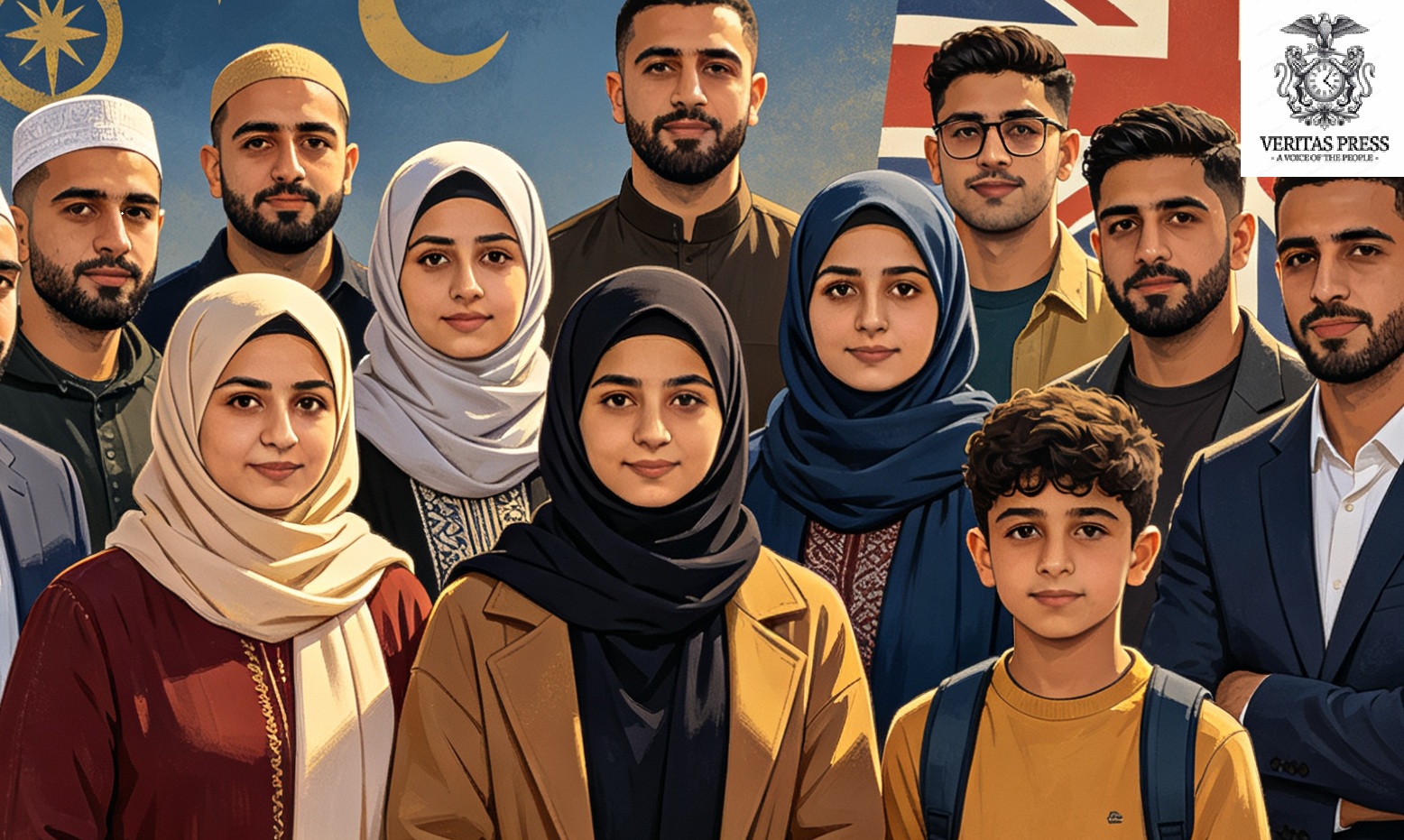
Imam Hassane, speaking at a news conference on Tuesday, struck a note of forbearance that was as much theological as it was political. “All of us are responsible for spreading the culture of tolerance, the culture of love,” he said. The statement was generous, perhaps too generous, but it reflected a community that has long understood that its very survival depends on refusing to mirror the hatred directed at it.
Behind the scenes, however, the fear is palpable. Muslim American organisations have reported a surge in calls to their hotlines since the attack. Parents are asking whether it is safe to send their children to Islamic schools. Worshippers are weighing whether attending Eid prayers next week is worth the risk. The psychological infrastructure of a community already stretched thin, by discrimination, by geopolitical trauma, by the daily microaggressions of life in a country that often treats them as a security threat, is groaning under the weight of one more massacre.
Mental health professionals working within Muslim communities have been scrambling to respond. Digital directories of Muslim therapists have been shared widely. Training modules developed at Stanford University to help clinicians understand Islamic norms and confront their own biases have seen a spike in demand. Grassroots mental health literacy programmes, teaching community members to recognise symptoms of depression and anxiety, have been mobilised. But these efforts, however vital, are a bandage on a wound that keeps being reopened by policymakers and pundits who have made anti-Muslim bigotry a central plank of their public personas.
Conclusion: A Reckoning Deferred.
The San Diego mosque massacre will, in the coming days, generate the familiar cycle of thoughts-and-prayers statements, candlelit vigils, and incremental security upgrades. Governor Gavin Newsom said he was “horrified by today’s violent attack” and declared that “hate has no place in California.” New York Mayor Zohran Mamdani, the first Muslim to hold that office, warned that “Islamophobia endangers Muslim communities across this country” and called for a confrontation with “the politics of fear and division.” The FBI has promised a thorough investigation. The mosque has launched a fundraiser. The news vans will eventually move on.
But the deeper reckoning, the one that connects the dots between a congressman’s tweet, a teenager’s algorithmic rabbit hole, a parent’s unlocked gun safe, and three men bleeding out on the steps of their sanctuary, remains as elusive as ever.
Amin Abdullah, Mansour Kaziha, and Nader Awad did not die because of a single hateful individual. They died because the United States has allowed hate to become ambient, a background hum of political discourse that periodically erupts into violence, at which point the nation performs its rituals of mourning and moves on. They died because a 17-year-old could be radicalised online, arm himself with his mother’s weapons, and fall through every crack in a system that was supposedly designed to catch him. They died because three Muslim men who ran toward danger to save others were deemed less worthy of protection than the Second Amendment rights of gun owners who cannot be bothered to secure their arsenals.
On Wednesday, the surviving family members will begin preparing for funerals instead of Eid celebrations. The children who fled the mosque, holding hands and “just thankful to be alive,” will carry the memory of that morning for the rest of their lives. And the country that failed them will, once again, have to decide whether it is willing to confront the hatred in its midst, or whether the next massacre is simply a matter of time.
Source:Veritas Press C.I.C. | Multi News Agencies
Submissions:
For The Secure Submission Of Documentation, Testimonies, Or Exclusive Investigative Reports From Any Global Location, Please Utilise The Following Contact Details For Our Investigations Desk: enquiries@veritaspress.co.uk or editor@veritaspress.co.uk
Help Support Our Work:
Popular Information is powered by readers who believe that truth still matters. When just a few more people step up to support this work, it means more lies exposed, more corruption uncovered, and more accountability where it’s long overdue.
Help Protect Independent Journalism, Which Is Currently Under Attack.
If you believe journalism should serve the public, not the powerful, and you’re in a position to help, becoming a DONATOR or a PAID SUBSCRIBER truly makes a difference.
DONATION APPEAL: If You Found This Reporting Valuable, Please Consider Supporting Independent Journalism.
Help Support Our Work – We Know, We Know, We Know …
Seeing these messages is annoying. We know that. (Imagine what it’s like writing them … )
Your support fuels our fearless, truth-driven journalism. In unity, we endeavour to amplify marginalised voices and champion justice, irrespective of geographical location.
But it’s also extremely important. One of Veritas Press’s greatest assets is its reader-funded model.
1. Reader funding means we can cover what we like. We’re not beholden to the political whims of a billionaire owner. We are a small, independent and impartial organisation. No one can tell us what not to say or what not to report.
2. Reader funding means we don’t have to chase clicks and traffic. We’re not desperately seeking your attention for its own sake: we pursue the stories that our editorial team deems important and believe are worthy of your time.
3. Reader Funding: enables us to keep our website and other social media channels open, allowing as many people as possible to access quality journalism from around the world, particularly those in places where the free press is under threat.
We know not everyone can afford to pay for news, but if you’ve been meaning to support us, now’s the time.
Your donation goes a long way. It helps us:
Keep the lights on and sustain our day-to-day operations
Hire new, talented independent reporters
Launch real-time live debates, community-focused shows, and on-the-ground reporting
Cover the issues that matter most to our communities, in real time, with depth and integrity
We have plans to expand our work, but we can’t do it without your support. Every contribution, no matter the size, helps us stay independent and build a truly people-powered media platform.
If you believe in journalism that informs, empowers, and reflects the communities we serve, please donate today.
Kamran Faqir is a volunteer investigative journalist and writer committed to exposing hidden truths and amplifying underreported stories. Driven by social justice, he brings sharp insight and fearless truth-telling to independent journalism. NUJ registered.
SEATTLE, TEHRAN — The U.S. Department of Homeland Security (DHS) will allow Iran’s national football team to enter the country 48 hours before their critical World Cup match against Egypt on Friday, a modest concession in a tournament where Team Melli’s travel conditions have sparked claims of oppression and competitive disadvantage.