



Help support our mission, donate today and be the change. Every contribution goes directly toward driving real impact for the cause we believe in.
Iran has categorically rejected a recent resolution adopted by the Arab League, saying “no attempt to shield the perpetrators of aggression” will absolve those responsible of their international obligations.
A Region At War With Itself, And International Law:
TEHRAN – The extraordinary Arab League resolution adopted in late April 2026 and Iran’s blistering rejection of it in early May represent far more than a routine diplomatic exchange. This is a high-stakes struggle to define the narrative of a conflict that has already killed a supreme leader, shattered Gulf cities, and pushed the Middle East to the edge of a conflagration unseen in decades. At its core lies a profoundly uncomfortable question that international law has never satisfactorily answered: When one side launches a devastating, unprovoked attack that decapitates a nation’s leadership, and that nation’s retaliation inevitably spills over onto neighbours who facilitated the original strike, who precisely is the aggressor?
The Arab League, meeting in an emergency virtual session under Bahrain’s presidency on April 21, answered that question unequivocally: Iran is. Tehran’s response, channelled through UN Ambassador Amir Saeid Iravani and Foreign Ministry spokesman Esmaeil Baghaei, offers a radically different framing: Iran is the victim of an unlawful war of aggression, and the Gulf states that provided airspace, bases, and intelligence are legally complicit. Both sides are wielding the language of international law not as a shield, but as a cudgel. The result is a diplomatic stalemate of potentially catastrophic proportions.
The Trigger: February 28, And The Death Of A Supreme Leader.
The timeline matters because the legal arguments depend on it. On February 28, 2026, the United States and Israel launched coordinated strikes on Iran that Israeli military chief Lt. Gen. Eyal Zamir described as targeting “hundreds of targets across Iran” in an operation planned for months. The attacks struck Revolutionary Guard command facilities, air defence systems, missile sites, and, crucially, a high-security compound in Tehran where Iran’s supreme leader, Ayatollah Ali Khamenei, was meeting with senior military officials.
Khamenei’s death was not immediately confirmed by Iranian authorities, who initially insisted he was “safe and sound”. But within days, Iran acknowledged the 86-year-old leader had been killed, along with an entire tier of Iran’s military and security establishment: army chief of staff Gen. Abdol Rahim Mousavi, Defence Minister Gen. Aziz Nasirzadeh, Revolutionary Guard commander Maj. Gen. Mohammad Pakpour, and top security adviser Ali Shamkhani. The assassinations represented the most devastating decapitation strike against a sovereign state in modern history, a fact that Iran’s diplomatic apparatus has placed at the centre of its legal argument.
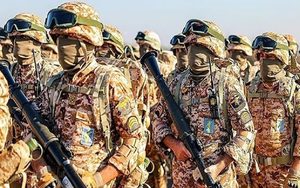
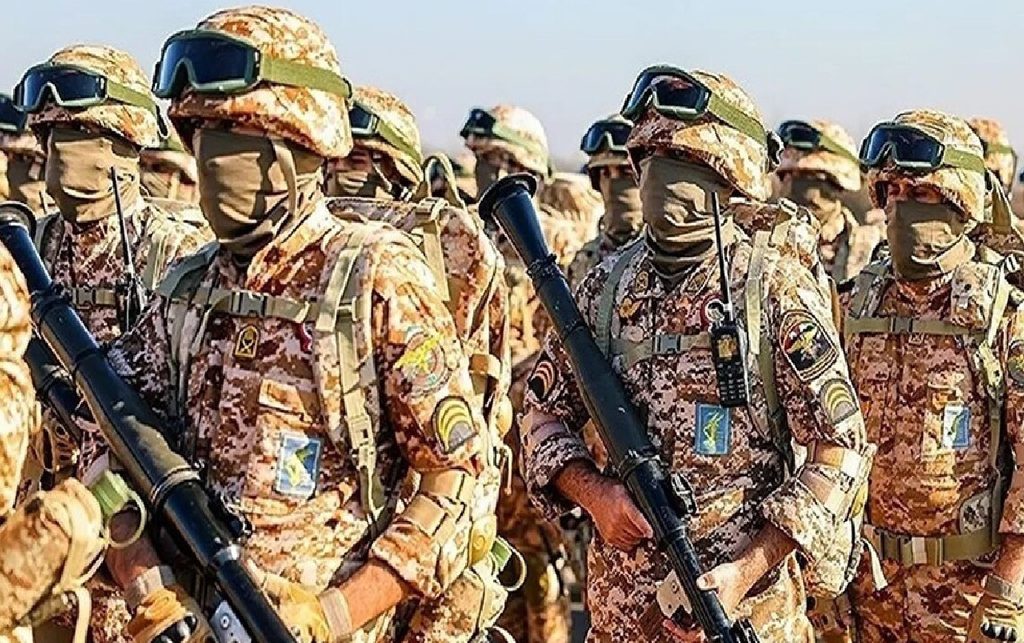
Iran’s response was immediate and overwhelming. “You have crossed our red line and must pay the price,” parliamentary speaker Mohammad Bagher Qalibaf declared. “We will deliver such devastating blows that you yourselves will be driven to beg”. The Revolutionary Guard launched what it called its “most intense offensive operation” ever, firing waves of ballistic missiles and drones not only at Israel but at American military installations across the Gulf, in Bahrain, Kuwait, Qatar, Saudi Arabia, and the UAE.
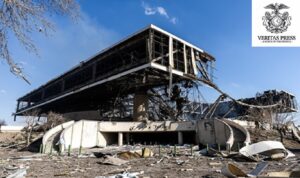
By the time a Pakistan-brokered ceasefire took hold on April 8, the damage was extensive. In the UAE, shrapnel from Iranian missiles killed at least one person, while debris from aerial interceptions caused fires at Dubai’s main port and on the facade of the iconic Burj Al Arab hotel. Saudi Arabia reported Iranian strikes on its capital, Riyadh and the oil-rich eastern province. Jordan said it “dealt with” 49 drones and ballistic missiles. In Israel, a woman in the Tel Aviv area died after being wounded in an Iranian missile attack.
The Arab League Resolution: Compensation, Condemnation, And A Unified Front.
The April 21 Arab League meeting, formally chaired by Bahraini Foreign Minister Abdullatif bin Rashid Al Zayani, was the third emergency session of Arab foreign ministers since the crisis began, a reflection of how seriously the Gulf states view the Iranian threat. The resolution that emerged was uncompromising.
It condemned Iran’s attacks on Jordan, the UAE, Bahrain, Saudi Arabia, Oman, Qatar, Kuwait, and Iraq as “unlawful and condemnable,” specifying that ballistic missiles and drones had been used. It declared that Iran bears “full international responsibility” for all resulting losses and damages and is obliged under international law to provide “full reparation”. It specifically condemned Iran’s closure of the Strait of Hormuz and threats to close the Bab el-Mandeb Strait, calling such actions a “clear violation of international law and a direct threat to global energy security and trade”. It called for the establishment of a mechanism to document violations, assess damages, and pursue compensation through diplomatic and legal channels.
Bahrain’s foreign minister framed the issue in stark terms. Iran’s actions, Al Zayani said, had “disrupted maritime traffic, threatened energy security, food and medicine supplies, and harmed global trade and the world economy”. At a separate UNESCO Executive Board meeting in Paris, Bahraini ambassador Issa Abdulaziz Al Jassim went further, accusing Iran of attacks that resulted in civilian casualties and damage to “schools and universities,” warning that repeated strikes were “putting education systems, media infrastructure, and cultural heritage at increasing risk”.
Arab League Secretary-General Ahmed Aboul Gheit delivered perhaps the most pointed message. Arab countries, he declared, “will never be held hostage by Iran for regional score-settling.” He emphasised that freedom of navigation in international waterways, including the Strait of Hormuz, is guaranteed under international law and that Tehran “cannot take control of it.”
The resolution also reaffirmed the inherent right of Arab states to self-defence, individually or collectively, under Article 51 of the UN Charter, a direct nod to the legal justification the Gulf states are preparing should the conflict escalate further.
Iran’s Counter-Argument: “Aiding And Abetting The Aggressor”.
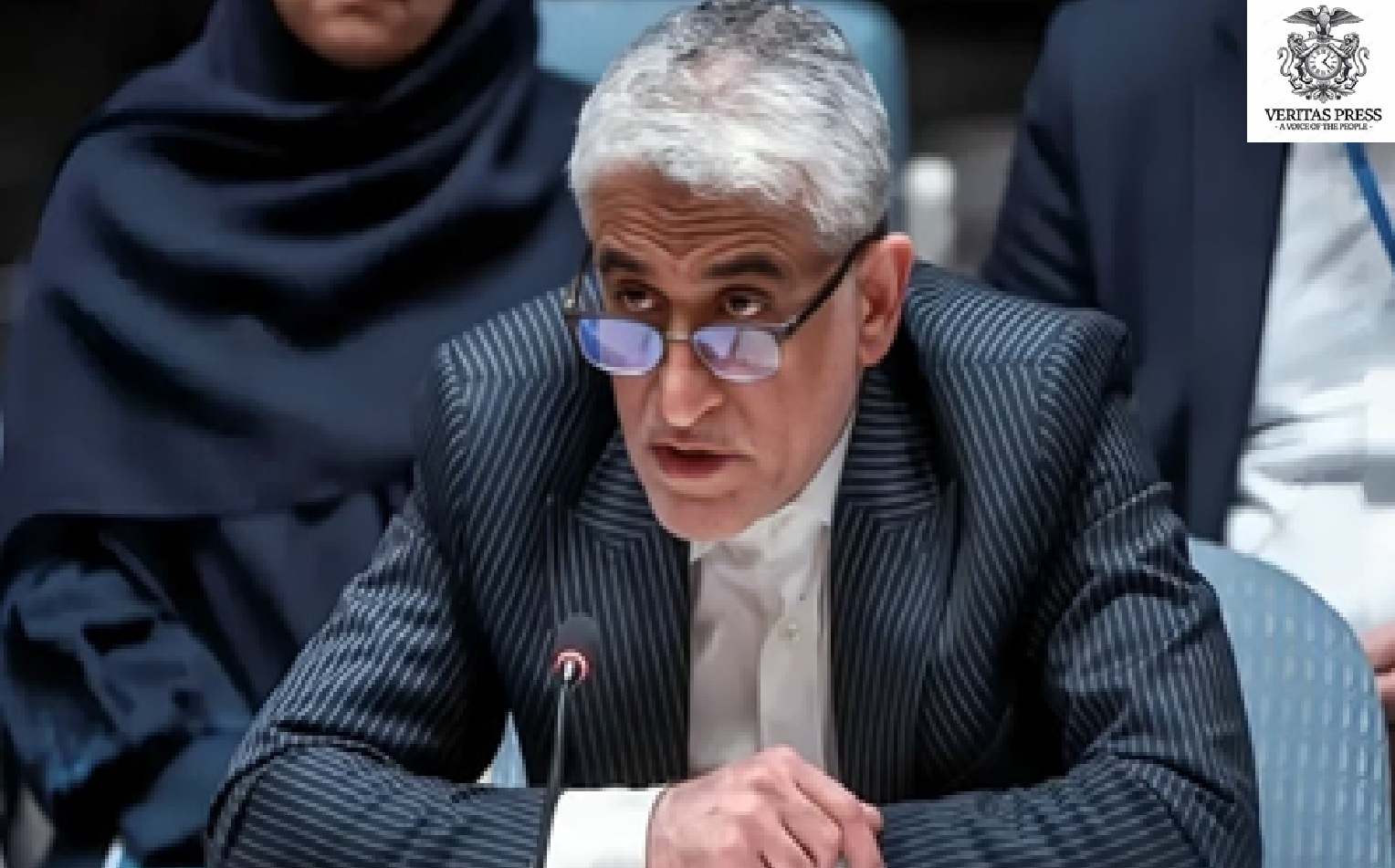
Iran’s response, transmitted through Ambassador Iravani’s May 5 letter to the UN Security Council and Secretary-General, is a masterclass in turning international law back against its accusers. The Islamic Republic “categorically and unequivocally rejects this resolution in its entirety, together with the unfounded, misleading, and politically motivated allegations contained therein,” Iravani wrote.
The letter’s central legal argument is devastatingly simple. The Arab League resolution, Iravani asserts, “willfully disregards the undeniable root causes” of the crisis and “omits a central fact, namely that the United States and Israel have perpetrated acts of aggression against Iran’s sovereignty and territorial integrity in violation of international law and the UN Charter” . The resolution, he argues, seeks to “distort both the factual record and the applicable legal framework by falsely attributing responsibility to Iran, which is a victim of an unlawful war of aggression”.
Crucially, Iravani did not stop at restating Iran’s right to self-defence under Article 51. He went further, explicitly naming the states he accuses of complicity: Qatar, Bahrain, Kuwait, Saudi Arabia, the United Arab Emirates, and Jordan. These countries, the letter states, played a role in “aiding and abetting the aggressor”. This was not an offhand accusation. Iran had already, in mid-April, formally demanded compensation from these same states, claiming they had violated international obligations by enabling attacks on Iranian territory.
Foreign Ministry spokesman Esmaeil Baghaei reinforced the message in more operational language. “Those regional governments that have in any way, whether by facilitating access, providing bases, or offering logistical or intelligence support, placed their territory and facilities at the disposal of the military actions of the United States and the Zionist regime against the Islamic Republic of Iran, bear international responsibility for the consequences of these actions and must be held to account.”
Baghaei also broadened the diplomatic frame, linking the current crisis to what he called the “chronic instability and insecurity in the West Asia region” resulting from “the presence and military interventions of extra-regional actors, as well as the continuation of occupation and the colonial plan to annihilate Palestinians.” Feigning ignorance of this reality, he warned, “will merely cause the continuation and escalation of insecurity.”
The Proxy Threat: An Internal Front Opens.
While the diplomatic war plays out at the UN, a quieter but potentially more destabilising threat has been developing inside the Gulf states themselves. In late March, just weeks after the initial strikes, Gulf countries issued a joint statement condemning not only direct Iranian attacks but also those carried out “through their proxies and armed factions they support in the region”.
The evidence has been mounting. Kuwait announced it had foiled a plot to kill state leaders, arresting six suspects believed to be associated with Hezbollah. Qatar said it had dismantled two cells involving more than ten people linked to the Iranian regime. Bahrain arrested several individuals accused of espionage for Iran. These arrests have stoked fears that Iran may be activating sleeper cells across the region as the conflict drags on.
Analysts emphasise that the current threat level has not yet reached that of the Iran-Iraq war era, when militant cells attacked Kuwait and operated in Saudi Arabia. But the potential trajectory is alarming. Bilal Saab, senior managing director of the Trends US thinktank and a former Pentagon official during the first Trump administration, provided a sobering assessment to The Guardian: “If this war escalates, the worst-case scenario for the Gulf countries is Iran activating their sleeper cells and these Shia militia movements in the region. We haven’t seen them act on the threat fully yet, but there are some signs of dormant cells becoming active… We could see a whole lot more if things really escalate”.
Saab identified this as potentially “the number one existential threat for the Gulf states,” noting: “They are already dealing with the external threat of Iran’s missiles and drones, but things really fall apart when they also have to fight an internal foe. Then they are faced with a battle on two fronts”.
Also in late March, Yemen’s Houthis confirmed launching a missile strike on Israel, the first time the group had admitted involvement in the war. The Houthis, who receive weapons from Iran, represent yet another front in a rapidly expanding conflict.
The Strait Of Hormuz: The Global Economic Lever.
The Arab League resolution’s specific focus on the Strait of Hormuz reflects a dimension of the crisis that extends far beyond the region. A third of worldwide oil exports transported by sea passed through the Strait in 2025. Iran’s threat to close the waterway, and its reported actions to disrupt shipping, represent the most potent economic weapon in Tehran’s arsenal.
Al Zayani framed the issue in terms that resonate globally: the strait’s closure threatens not only energy security but also food and medicine supplies, harming “global trade and the world economy”. The Arab League resolution called on the UN Security Council to act to protect regional security and guarantee freedom of navigation, a direct appeal to the international community to treat the strait as a global commons rather than a regional bargaining chip.
Iran, for its part, frames its actions in the Strait as legitimate defensive measures under international law. Iravani’s letter “reiterated the country’s legal position regarding its right to self-defence under international law, including measures taken in the Persian Gulf and the Strait of Hormuz”. This framing sets up a legal collision course: If Iran’s self-defence argument is valid, then its actions in the strait are lawful. If not, they constitute a violation of the Law of the Sea and potentially an act of war against the entire global trading system.
Analytical Assessment: A Legal Quagmire With No Referee.
The competing legal arguments expose a fundamental weakness in the international legal architecture: There is no mechanism for definitively adjudicating the question of who started a war when the facts are contested, and the stakes are existential.
The Arab League’s position rests on a straightforward proposition: Iran fired missiles at sovereign Arab states, killing civilians and damaging infrastructure; Iran therefore bears responsibility and must pay compensation. This framing treats Iran’s retaliation as the primary wrongful act and discounts, or actively ignores, the American-Israeli strikes that preceded it.
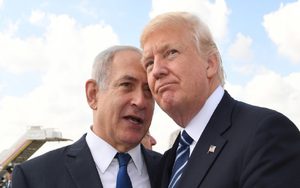
Iran’s counter-argument is equally straightforward but more legally complex: The U.S. and Israel committed an act of aggression by assassinating Iran’s head of state and senior military leadership. Iran’s response was legitimate self-defence under Article 51. The Gulf states that facilitated the original attack bear “international responsibility” as accomplices. Their demand for compensation is therefore not merely unfounded but perverse—an attempt to “shield the perpetrators of aggression from accountability”.
What makes this legal dispute uniquely intractable is that both sides can cite Article 51 with some plausibility. The Gulf states that intercepted Iranian missiles over their territory were undeniably exercising self-defence against incoming attacks. But equally, Iran’s right to respond to an armed attack on its territory, particularly one that killed its supreme leader, is well-established in international law. The critical question is proportionality, and Iran’s sprawling retaliation against multiple neighbouring states arguably stretches that doctrine to its breaking point.
The proxy dimension adds another layer of legal ambiguity. If Iran is indeed activating cells in Gulf states, those actions constitute intervention in the internal affairs of sovereign states, a violation of the non-intervention principle that Iran itself invokes against the U.S. and Israel. Yet proving attribution for proxy attacks is notoriously difficult, and Iran’s ambassador has not directly addressed the proxy arrests in his public communications.
The Prospects: Ceasefire, Stalemate, Or Escalation.
The Pakistan-brokered ceasefire of April 8 and the subsequent peace talks in Islamabad on April 11 represent the most tangible diplomatic progress to date, but their fragility is evident. The first round of talks between the Iranian and U.S. delegations concluded after 21 hours without agreement. The Arab League’s resolution, and Iran’s strident rejection of it, suggest that the diplomatic track is hardening rather than softening.
Several scenarios present themselves. The most optimistic is that the ceasefire holds, the compensation demands become a subject for negotiation rather than confrontation, and the legal arguments are channelled into a protracted international arbitration process that provides a face-saving exit for all sides. The most pessimistic is that the diplomatic impasse deepens, Iran concludes that the international community is siding with the aggressors, and the Strait of Hormuz becomes a permanent battleground.
What is clear from the current trajectory is that neither side can afford to back down publicly from its legal position. For the Arab League, acknowledging Iran’s self-defence argument would mean accepting that hosting American bases carries legally cognizable risks, a precedent no Gulf state is prepared to set. For Iran, accepting the compensation demands would mean admitting that its retaliation was unlawful, a concession that would undermine the regime’s domestic legitimacy at a moment of extraordinary vulnerability following Khamenei’s death.
The tragedy is that international law, designed precisely for moments like this, is proving incapable of resolving the most fundamental question: Who is the aggressor when everyone claims to be acting in self-defence? The answer, for now, depends entirely on where you sit.
Source: Multiple News Agencies
Submissions:
For The Secure Submission Of Documentation, Testimonies, Or Exclusive Investigative Reports From Any Global Location, Please Utilise The Following Contact Details For Our Investigations Desk: enquiries@veritaspress.co.uk or editor@veritaspress.co.uk
Help Support Our Work:
Popular Information is powered by readers who believe that truth still matters. When just a few more people step up to support this work, it means more lies exposed, more corruption uncovered, and more accountability where it’s long overdue.
Help Protect Independent Journalism, Which Is Currently Under Attack.
If you believe journalism should serve the public, not the powerful, and you’re in a position to help, becoming a DONATOR or a PAID SUBSCRIBER truly makes a difference.
DONATION APPEAL: If You Found This Reporting Valuable, Please Consider Supporting Independent Journalism.
Help Support Our Work – We Know, We Know, We Know …
Seeing these messages is annoying. We know that. (Imagine what it’s like writing them … )
Your support fuels our fearless, truth-driven journalism. In unity, we endeavour to amplify marginalised voices and champion justice, irrespective of geographical location.
But it’s also extremely important. One of Veritas Press’s greatest assets is its reader-funded model.
1. Reader funding means we can cover what we like. We’re not beholden to the political whims of a billionaire owner. We are a small, independent and impartial organisation. No one can tell us what not to say or what not to report.
2. Reader funding means we don’t have to chase clicks and traffic. We’re not desperately seeking your attention for its own sake: we pursue the stories that our editorial team deems important and believe are worthy of your time.
3. Reader Funding: enables us to keep our website and other social media channels open, allowing as many people as possible to access quality journalism from around the world, particularly those in places where the free press is under threat.
We know not everyone can afford to pay for news, but if you’ve been meaning to support us, now’s the time.
Your donation goes a long way. It helps us:
- Keep the lights on and sustain our day-to-day operations
- Hire new, talented independent reporters
- Launch real-time live debates, community-focused shows, and on-the-ground reporting
- Cover the issues that matter most to our communities, in real time, with depth and integrity
We have plans to expand our work, but we can’t do it without your support. Every contribution, no matter the size, helps us stay independent and build a truly people-powered media platform.
If you believe in journalism that informs, empowers, and reflects the communities we serve, please donate today.
GENEVA — A United Nations fact-finding mission has concluded there are “reasonable grounds to believe”
Iran’s GDP is projected to contract by 5.4 to 6.1% in 2026, its worst performance
The Trump administration is preparing a $2.8 billion weapons package for Israel containing 40,000 2,000-pound

Film alleges mass civilian deaths are routinely built into military decisions amid Israel’s genocidal war
The Israeli rights group says violence, displacement, economic strangulation, and settlement expansion form part of

Houthi forces have captured the historic Red Sea port of Mocha and are advancing on
London’s historic sanctions against Israeli settlements mark a watershed moment in UK foreign policy, but
With 95% of Gaza’s population now wholly dependent on aid and more than 90% stripped
India calls for Kashmir and Ladakh to appear only on its official map after a
ISLAMABAD – In the high-stakes political theatre of Pakistan, the battleground has shifted from the