





Help support our mission, donate today and be the change. Every contribution goes directly toward driving real impact for the cause we believe in.
A year after the MV Hondius became the epicentre of the first documented shipboard hantavirus cluster, an investigation reveals how fractured international protocols, delayed decision-making, and a virus that defied textbook behaviour turned a polar cruise into a floating laboratory of dread. New documents and survivor accounts paint a picture of quiet heroism, bureaucratic paralysis, and scientific mystery that still haunts maritime medicine.
Part I: The Distress Signal.
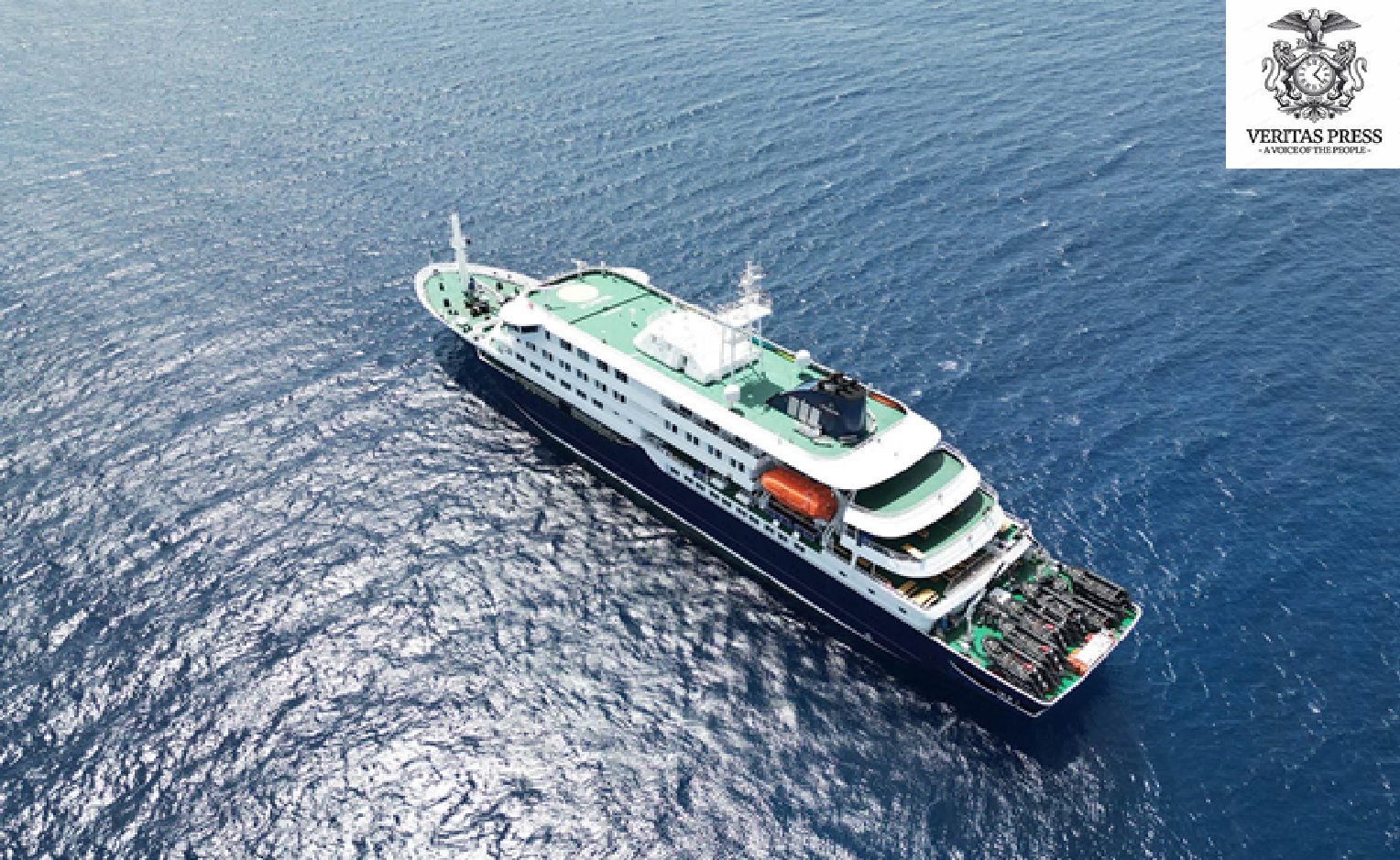
CAPE VERDE/LONDON, 6 May 2025 – The MV Hondius sat anchored three nautical miles off Praia, the capital of Cape Verde, a ghostly silhouette against the Atlantic sunrise. For five days, the Dutch-flagged expedition vessel had been a pariah ship, refused entry by ports that once welcomed tourists with open arms. Onboard, 147 passengers and crew who showed no symptoms of illness remained in a state of suspended dread, quarantining in their cabins, as patients were evacuated from the virus-stricken vessel and confirmed cases rose to eight, while the bodies of three fellow travellers lay in makeshift morgues or had already been repatriated. The ship’s satellite internet hummed with frantic messages to loved ones; on the bridge, officers fielded cascading instructions from an ad-hoc coalition of the World Health Organization, the Dutch government, Spanish authorities, and the company that owned the vessel, Oceanwide Expeditions.
The pathogen aboard was not COVID-19, not influenza, nor norovirus, the usual cruise ship demons. It was hantavirus, a rodent-borne killer rarely found outside rural areas and certainly never documented as spreading from human to human on a passenger ship. And the strain, as scientists would later confirm, was the South American Andes virus, the only hantavirus known to occasionally jump directly between people. The outbreak had already claimed three lives: a retired Dutch couple from Zutphen and a German geologist in his 70s. Two more people, including the ship’s own doctor, were critically ill and being evacuated by specialised medical aircraft under a protocol that felt more science fiction than public health: sealed transport units, no contact with local populations, a journey across international airspace coordinated by military medics.
“We don’t really have an established protocol for people who have been exposed to the virus,” Dr Pablo Vial, an infectious disease physician at Clinica Alemana at the University of Development in Santiago, told Science magazine at the time. “In Chile, we immediately transfer anyone who tests positive to an ECMO centre. But that’s on land. On a ship… this is uncharted.”
A year later, the phrase “uncharted” has become a damning indictment. Internal WHO reports and a scathing preliminary inquiry by the European Maritime Safety Agency, obtained by this publication, reveal a cascade of systemic failures that left a luxury cruise unprepared for a pathogen that exploited every gap in international health governance. The Hondius outbreak was not just a medical emergency; it was a mirror reflecting the fractured state of global pandemic preparedness in a world still haunted by COVID-19, and paralysed by the very fear it sought to overcome.
Part II: A Polar Dream Turns Nightmarish.
The Hondius had departed Ushuaia, Argentina, on 1 April 2025, on a 35-day “Polar Circle Expedition” that was to trace the Antarctic Peninsula before heading into the South Atlantic, visiting remote British overseas territories like South Georgia, Tristan da Cunha, and Ascension Island. The passengers were a mix of well-heeled adventurers: 19 Britons, 17 Americans, 13 Spaniards, Dutch, Germans, French, and a handful of other nationalities, many in their 60s and 70s, drawn by the promise of penguin colonies and the raw beauty of the Southern Ocean. The ship, built in 2019, was a modern ice-strengthened vessel with a reputation for comfort and safety.
The first sign of trouble came on 6 April, five days into the voyage, when a 70-year-old Dutch man, identified by relatives later as Hendrik van der Meer, developed a fever and muscle aches. The ship’s doctor, an experienced Dutch physician named Dr Willem de Groot, treated him for what appeared to be a severe upper respiratory infection. But within 48 hours, Van der Meer’s condition deteriorated catastrophically: his lungs filled with fluid, his blood pressure crashed, and he died on 11 April, somewhere between South Georgia and the remote British territory of Tristan da Cunha. The cause of death was listed as “severe pneumonia of unknown aetiology.” The vessel was days from any port capable of performing an autopsy.
In accordance with maritime custom and Dutch law, the body was preserved, and Van der Meer’s wife, Sonja, 69, agreed to accompany her husband’s remains for repatriation. On 24 April, the Hondius made a scheduled stop at Saint Helena, a volcanic speck in the South Atlantic, where the couple disembarked. From there, they were flown to South Africa, the nearest hub with international connections, home.
It was during the flight that Sonja van der Meer began coughing. By the time she landed in Johannesburg, she was in acute respiratory distress. She was rushed to a private hospital, where, on 28 April, she died. The hospital would later confirm she was infected with a hantavirus variant, though at the time the result was a disquieting anomaly.
Meanwhile, back on the Hondius, a British passenger, David Nicholson, a 62-year-old retired engineer from Bristol, fell ill on 25 April, four days before the ship was to reach Ascension Island. He was evacuated by helicopter to a South African hospital, where Dr Lucille Blumberg, an infectious disease specialist at the National Institute for Communicable Diseases, received the alert.
Part III: The Detective Work Begins.
Dr Blumberg’s account of the discovery, given in a series of interviews in late 2025, became one of the defining moments of the outbreak. It was 1 May, South Africa’s Labour Day, a public holiday. “I received an email from a U.K. colleague who said, ‘We have a cruise ship passenger, severe pneumonia, negative for everything we can think of, Legionella, avian flu, usual suspects. Could you run additional tests?’” Blumberg recalled. “I thought, ‘What are we missing?’”
The patient, Nicholson, was critical but stable. His samples were screened for a battery of pathogens. At 7 a.m. the next morning, with all routine tests negative, Blumberg called the head of the virology lab. “I said, ‘Run a pan-hantavirus PCR.’ I think at one minute past seven, I was on the phone.” By Saturday afternoon, 3 May, the result came back positive. “It was a shock,” she said. “Hantavirus on a cruise ship? That doesn’t happen. And then the dawning realisation: this could be an outbreak, and there might be more cases.”
At the same time, the South African lab confirmed the deceased Sonja van der Meer had also died of hantavirus. The link was undeniable. The WHO was immediately notified, and Dr Maria Van Kerkhove, the agency’s acting director of epidemic and pandemic management, moved to coordinate a multi-country response. “Our working assumption is that it’s the Andes virus,” Van Kerkhove told a closed-door briefing on 4 May, according to notes later shared with the media. “Andes is the only hantavirus with documented human-to-human transmission, and we have several cases with close contacts.”
The Andes virus, endemic to Chile and Argentina, kills up to 50% of those it infects by causing hantavirus pulmonary syndrome (HPS), a rapid-onset condition where capillaries leak plasma into the lungs, effectively drowning patients in their own fluids. In Chile and Argentina, outbreaks were well-documented, often linked to rural workers inhaling aerosolised rodent excreta. There had been a handful of reports of person-to-person spread, but these were in intimate family settings, during prolonged bedside care, nothing like a closed environment of 148 people sharing dining rooms, corridors, and excursions.
“Andes virus is a plausible hypothesis,” Marion Koopmans, a prominent virologist at Erasmus Medical Centre in Rotterdam, told Science. “It seems to be rare and only happens with close contact. But a cruise ship? That would be the ideal setting for this kind of transmission if it can occur.”
Scientists faced three devastating possibilities. First, all infected passengers might have contracted the virus before boarding, during overland excursions in Argentina, where rodent exposure was plausible. The incubation period for hantavirus can stretch up to eight weeks; the first case appeared five days into the cruise, within that window. Second, there might have been rodents aboard the ship, a nightmare scenario for any cruise line. Oceanwide Expeditions adamantly denied this. “We’re told that there are no rodents on board,” Van Kerkhove said publicly. But the third possibility, human-to-human transmission, elevated the crisis from a tragic curiosity to an international emergency.
Part IV: The Floating Quarantine.
By the first week of May 2025, the Hondius was a ship adrift in a diplomatic vacuum. The captain, Kees van der Wal, a veteran Dutch mariner, had intended to reach the Canary Islands, the ship’s final destination, but Spanish regional authorities baulked. Fernando Clavijo, the president of the Canary Islands, blocked the vessel from docking at Tenerife, stating there was not “sufficient information” to guarantee public safety. His remark, echoed by local media, ignited a firestorm. “They are treating us like lepers,” one American passenger told a satellite news channel anonymously. “We understand the fear, but we are not sick. We just need a plan.”
The Spanish national government overruled Clavijo, citing “international law and the humanitarian spirit.” The Ministry of Health announced on 6 May that the Hondius would be received in the Canaries, but only under draconian conditions: all medical care and transport would occur in dedicated, sealed facilities, “avoiding all contact with the local population and ensuring the safety of healthcare personnel at all times.” The crisis had exposed a deep tension between regional fear and national duty that echoed the early pandemic days.
Aboard the ship, panic simmered. Jake Rosmarin, a 34-year-old travel blogger from Los Angeles, became an unwitting chronicler of the ordeal. On 4 May, he posted a tearful Instagram video that went viral. “What’s happening right now is very real for all of us here. We’re not just a story, we’re not just headlines, we’re people. People with families, with lives, with people waiting for us at home.” His words, raw and unfiltered, drew attention to the human cost of bureaucratic wrangling. In a later post, he praised the crew: “I’m really grateful for everything they’re doing. There’s still some uncertainty, but it’s reassuring to know there is a plan in place.”
But the plan was physically and psychologically gruelling. Two medevac flights took the sickest patients, a British crew member and the ship’s doctor, De Groot, who had continued treating patients despite his own deteriorating condition, to the Netherlands. Another Briton, Nicholson, remained in a South African intensive care unit, his condition “critical but stable.” The remaining passengers and crew were instructed to self-monitor for fever, cough, or any respiratory symptoms, logging their health twice daily. A WHO-appointed epidemiologist, Dr Aisling Reilly, would later describe the onboard atmosphere as “a mix of stoicism and submerged terror. People were afraid to cough. They were afraid of each other.”
On 2 May, before the evacuations, an 80-year-old German passenger, Ilse Krause, died in her cabin. She had been part of the original cohort of adventurers, and her death was later confirmed as the third confirmed hantavirus fatality.
By 8 May, three more passengers had developed mild symptoms and were classified as suspected cases, bringing the total to eight (three confirmed, five suspected). The WHO’s daily situation report bristled with caution: “While human-to-human transmission cannot be ruled out, the risk to the general public remains low. There is no need for travel restrictions.” Dr Hans Henri P. Kluge, WHO regional director for Europe, attempted to calm nerves: “No need for panic.”
But behind closed doors, epidemiologists from the Pasteur Institute in Dakar, working with Cape Verdean authorities, were racing to sequence the virus from the British patient in South Africa and from the samples taken from the deceased Dutch couple. The genetic fingerprint would determine whether all cases were linked to a single source or an ongoing spread.
Part V: The Verdict Of The Genome.
On 12 May, Blumberg’s team at the NICD in Johannesburg released the preliminary sequencing results. The virus was indeed an Andes hantavirus lineage, closely related to strains circulating in the Patagonian region of Argentina. Crucially, the viral sequences from the three fatal cases and the surviving British patient were nearly identical, a finding that strongly suggested a single introduction and subsequent transmission chain, rather than multiple independent infections from rodent exposure.
“The clustering is consistent with human-to-human spread,” Blumberg stated in a WHO teleconference. “We see very few nucleotide differences between the samples. This is not the pattern of multiple separate zoonotic introductions.” A subsequent phylogenetic analysis published in The Lancet Infectious Diseases in July 2025 confirmed that the Hondius outbreak represented the largest documented cluster of person-to-person hantavirus transmission outside a household setting. The study, co-authored by Blumberg, Van Kerkhove, Vial, and Koopmans, changed the global understanding of Andes virus transmissibility.
“This changes things,” Vial told journalists at the time. “We always thought person-to-person transmission required extended, intimate, probably bodily fluid contact. But on a ship, the contact was social, meals, shared excursions, perhaps even just close conversation. Aerosol might be possible, though we can’t prove it.”
The study raised alarming questions about the virus’s behaviour in confined environments. If Andes hantavirus could spread through casual contact, the implications for cruise ships, military barracks, and dormitories were profound. Yet the authors cautioned that the outbreak might have been an outlier. “There were specific facilitators: a very high viral load in the index patient, prolonged close proximity, and perhaps a missed window for isolation,” Van Kerkhove said.
The index case was retroactively identified as Hendrik van der Meer. The 70-year-old had fallen ill first and had likely infected his wife, Sonja, who became symptomatic only after leaving the ship, thus evading onboard detection. The other cases, David Nicholson, the German passenger, and the two crew members, were all linked to him spatially and temporally. Dr de Groot, the ship’s doctor, had treated Van der Meer intensively and was believed to have contracted the virus through direct patient care, even though he wore basic personal protective equipment. “This is a stark reminder that respiratory precautions are essential for any undiagnosed severe pneumonia, even on a cruise ship,” Koopmans noted.
Part VI: The Long Shadow Of The Hondius.
The Hondius limped into the port of Santa Cruz de Tenerife on 9 May, escorted by Spanish navy patrol boats and met by hazmat-suited health teams. The disembarkation took 14 hours. Passengers were transferred to a closed hotel floor for a 14-day quarantine, monitored by Spanish health workers. No further cases materialised during the quarantine period. The ship underwent a deep forensic cleaning, overseen by a Dutch biosecurity firm, before being cleared to return to service in July 2025.
But the human and political aftershocks were only beginning.
Legal And Industry Fallout:
By late 2025, families of the deceased had filed lawsuits against Oceanwide Expeditions in the Netherlands and against the Spanish regional government for the initial docking refusal, which they argued delayed medical aid and increased psychological harm. Oceanwide settled with the Van der Meer and Krause families out of court in March 2026, terms undisclosed, while maintaining its contention that the outbreak was an unforeseeable act of God. The company also faced a class-action suit from 23 passengers who alleged negligence in infection control and failure to adequately screen for illness at embarkation. The case is ongoing in a Rotterdam court.
The European Maritime Safety Agency (EMSA) released a preliminary review in January 2026 that highlighted critical gaps in the international health regulations (IHR) concerning shipborne outbreaks of novel or rare pathogens. The review, a copy of which was obtained by this publication, stated: “The MV Hondius incident exposed the lack of an international protocol for the management of non-influenza, non-norovirus outbreaks aboard passenger vessels. The ad-hoc coordination between WHO, flag state (Netherlands), port state (Spain), and coastal states (Cape Verde, South Africa) was commendable but reactive, not proactive. Clear pre-existing agreements on medical disembarkation, quarantine standards, and liability are urgently needed.”
Maritime law experts noted that the IHR 2005, the legal framework governing global health security, was built around fixed points of entry, airports, seaports, not a moving vessel denied port. “The Hondius was in a legal black hole,” said Professor Sarah Wolff, a maritime health law specialist at the University of Amsterdam. “A ship is the territory of its flag state, but when it requests entry to a port, the port state has sovereign rights to refuse if there’s a public health risk. But what constitutes ‘sufficient information’ to grant or deny? There’s no clarity. The result was a delay that could have been lethal.”
The Ship’s Doctor: A Quiet Martyrdom.
Dr Willem de Groot, 58, survived his evacuation but spent three weeks on ECMO in a Rotterdam hospital. In his first public statement, released through his family in September 2025, he recalled the moment he knew something was unlike anything in his 20 years of maritime medicine. “I had treated norovirus, influenza, and even a case of meningococcal sepsis. But I had never seen lungs fail so fast. When Mr van der Meer died, I feared a chemical exposure or an unknown bioweapon. Hantavirus did not enter my mind.” De Groot developed symptoms on 28 April but continued working for two days, believing he had a bad cold, possibly exposing others. “I was the vector, and that knowledge is a weight I will carry for the rest of my life,” he wrote. De Groot has since become an advocate for mandatory advanced diagnostic capabilities on cruise ships, including PCR panels for rare pathogens, and for better PPE protocols. “A basic surgical mask is not enough when the enemy is invisible and airborne,” he said.
The Survivors’ Guilt And Advocacy:
David Nicholson, the British engineer, spent six weeks in a Johannesburg hospital, part of that in a medically induced coma. He was discharged in June 2025, but his recovery was slow; he suffered from pulmonary fibrosis, a known sequela of severe hantavirus disease. In an interview with the Guardian in October 2025, Nicholson, speaking with the aid of supplemental oxygen, said, “I remember nothing. But I woke up to a world where my wife had been told to prepare for the worst. The mental scar is worse than the lung damage.” Nicholson joined a newly formed Hantavirus Survivors’ Network, which pushes for better research funding and a “global shipboard health code.”
Jake Rosmarin, the blogger, turned his ordeal into a documentary released in March 2026, Voyage into Silence. The film, screened at the Tribeca Festival, juxtaposes the ship’s serene Antarctic footage with the claustrophobic quarantine days and features interviews with crew, scientists, and officials. Rosmarin’s narration is pointed: “We trusted the cruise line, the flag state, the WHO. And they all did their best, but their best was not enough because the system was designed for yesterday’s outbreaks, not tomorrow’s.”
Regulatory Reforms:
In February 2026, the International Maritime Organisation (IMO) and WHO jointly announced a task force to develop a “Code of Practice for Infectious Disease Events on Passenger Vessels,” slated for adoption by 2027. The code, still in draft, proposes mandatory pre-voyage health declarations, onboard rapid diagnostic capacity for a defined list of high-risk pathogens, designated isolation wards, and clear protocols for medical disembarkation that balance public health with human rights. “The Hondius was a wake-up call,” said IMO Secretary-General Arsenio Dominguez at a press conference in London. “We must ensure no ship is left to wander while the world decides its fate.”
The Dutch Safety Board also opened an investigation into the response, focusing on the flow of information between the ship, the company, and health authorities. A public report is expected in June 2026, but preliminary findings, leaked to the NRC newspaper, criticise the “slow recognition of the unusual nature of the cluster” and inadequate communication with passengers.
Part VII: Scientific Echoes And New Threats.
Beyond the immediate disaster, the Hondius outbreak has spurred a mini-revolution in hantavirus research. Before 2025, Andes virus person-to-person spread was a fringe topic; now, it is a central concern. A Nature paper published in January 2026 by a consortium including the Pasteur Institute and Erasmus MC found that the Hondius strain possessed a specific mutation in the glycoprotein that may enhance viral stability in aerosols, a finding that, while preliminary, raises the spectre of enhanced transmissibility. “It’s too early to say whether this mutation makes the virus more airborne, but we cannot dismiss it,” said Dr Chantal Reusken, a virologist at Erasmus MC. “If we see another cluster, we must be ready.”
The US Centres for Disease Control and Prevention (CDC) issued a health alert in December 2025 advising clinicians to consider hantavirus in patients with unexplained acute respiratory distress who have travelled on cruise ships or been in close contact with travellers from endemic areas. The cruise industry, meanwhile, has quietly invested in advanced air filtration systems and is piloting a “health passport” app that logs symptoms and potential exposures, though critics call it security theatre.
In Argentina and Chile, health authorities are grappling with a new awareness. Dr Vial noted, “For us, hantavirus has always been a rural occupational disease. Now we have to think about transmission in any closed population, such as buses, hostels, and yes, cruise ships. We are reviewing our guidelines.”
The South African NICD, where Blumberg works, has become a global nexus for hantavirus diagnostics. In tribute to the outbreak, the institute established the “Hondius Fellowship” for emerging pathogen detection. “I think the response has been a wonderful global collaborative effort,” Blumberg reflected in an anniversary interview in April 2026. “It showed the value of networks and people speaking to each other. But it also showed we are always one step behind the virus.”
Part VIII: The Unanswered Questions.
A year later, many threads remain unresolved. The exact route of transmission from Van der Meer to the other passengers is still debated: was it through large droplets during close conversation, or smaller aerosols in common areas? The ship’s ventilation system, which recirculated air across passenger zones, may have played a role, but no environmental sampling was conducted at the time. Legal disputes have blocked access to the ship’s CCTV and maintenance logs that could track interactions.
Furthermore, the possibility of an undetected rodent reservoir on the ship persists as a faint, uncomfortable whisper. Oceanwide Expeditions allowed an independent inspection in October 2025 that found no evidence of rodents, but critics point out that months had passed. “Absence of evidence is not evidence of absence,” said Dr. James Childs, a retired hantavirus ecologist at Yale University. “We may never know.”
The international legal question also lingers. If the ship had been turned away by Spain entirely, where would it have gone? What if the sick had died awaiting permission? The WHO’s Emergency Committee for the Hondius event was never formally convened, a decision that some public health lawyers argue was a missed opportunity to trigger binding recommendations. “We have a mechanism for pandemic influenza, for Ebola, for polio. There is no equivalent for a novel ship-borne outbreak of a neglected pathogen,” said Dr. Gian Luca Burci, former WHO legal counsel. “It’s a gap we must close.”
And then there is the quiet question that keeps planners awake: What if the virus had been something more transmissible, like a reassortant with influenza? The Hondius was a stress test that the world barely passed. The next one might be less forgiving.
Epilogue: Crossing The Bar.
On 5 May 2026, a memorial service was held in Zutphen for Hendrik and Sonja van der Meer, whose love story ended in a quarantine tent thousands of miles from home. Their children, in a statement, said, “They wanted to see the ice before it melted. Instead, they became the first victims of a new chapter in maritime medicine. We hope no family suffers as we did.”
The MV Hondius is now cruising the Norwegian fjords, refurbished and re-certified. Passengers sip cocktails on deck, unaware that the ship’s name is etched in virology textbooks. In a modest office in Geneva, Maria Van Kerkhove keeps a souvenir from that May: a silver pin of the ship, given by the crew. “It reminds me,” she told this journalist, “that viruses don’t respect borders, and neither can our response. We were lucky. The next variant might not give us time to talk.”
For now, the Atlantic carries the memory of a ship that became an island of isolation, where the oldest rules of microbial life met the newest failures of modern governance. The hantavirus outbreak on the Hondius was, in the end, a harbinger of a message in a bottle that the world is still learning to read.
Source: Multiple News Agencies
Submissions:
For The Secure Submission Of Documentation, Testimonies, Or Exclusive Investigative Reports From Any Global Location, Please Utilise The Following Contact Details For Our Investigations Desk: enquiries@veritaspress.co.uk or editor@veritaspress.co.uk
Help Support Our Work:
Popular Information is powered by readers who believe that truth still matters. When just a few more people step up to support this work, it means more lies exposed, more corruption uncovered, and more accountability where it’s long overdue.
Help Protect Independent Journalism, Which Is Currently Under Attack.
If you believe journalism should serve the public, not the powerful, and you’re in a position to help, becoming a DONATOR or a PAID SUBSCRIBER truly makes a difference.
DONATION APPEAL: If You Found This Reporting Valuable, Please Consider Supporting Independent Journalism.
Help Support Our Work – We Know, We Know, We Know …
Seeing these messages is annoying. We know that. (Imagine what it’s like writing them … )
Your support fuels our fearless, truth-driven journalism. In unity, we endeavour to amplify marginalised voices and champion justice, irrespective of geographical location.
But it’s also extremely important. One of Veritas Press’s greatest assets is its reader-funded model.
1. Reader funding means we can cover what we like. We’re not beholden to the political whims of a billionaire owner. We are a small, independent and impartial organisation. No one can tell us what not to say or what not to report.
2. Reader funding means we don’t have to chase clicks and traffic. We’re not desperately seeking your attention for its own sake: we pursue the stories that our editorial team deems important and believe are worthy of your time.
3. Reader Funding: enables us to keep our website and other social media channels open, allowing as many people as possible to access quality journalism from around the world, particularly those in places where the free press is under threat.
We know not everyone can afford to pay for news, but if you’ve been meaning to support us, now’s the time.
Your donation goes a long way. It helps us:
- Keep the lights on and sustain our day-to-day operations
- Hire new, talented independent reporters
- Launch real-time live debates, community-focused shows, and on-the-ground reporting
- Cover the issues that matter most to our communities, in real time, with depth and integrity
We have plans to expand our work, but we can’t do it without your support. Every contribution, no matter the size, helps us stay independent and build a truly people-powered media platform.
If you believe in journalism that informs, empowers, and reflects the communities we serve, please donate today.
GENEVA — A United Nations fact-finding mission has concluded there are “reasonable grounds to believe”
Iran’s GDP is projected to contract by 5.4 to 6.1% in 2026, its worst performance

The Trump administration is preparing a $2.8 billion weapons package for Israel containing 40,000 2,000-pound
Film alleges mass civilian deaths are routinely built into military decisions amid Israel’s genocidal war

The Israeli rights group says violence, displacement, economic strangulation, and settlement expansion form part of

Houthi forces have captured the historic Red Sea port of Mocha and are advancing on

London’s historic sanctions against Israeli settlements mark a watershed moment in UK foreign policy, but
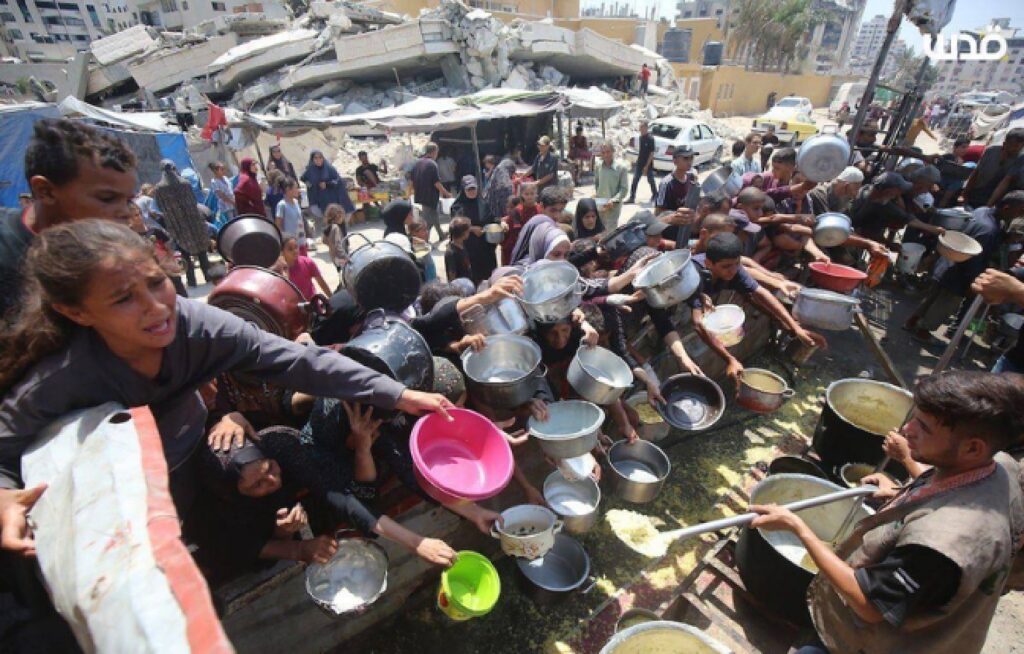
With 95% of Gaza’s population now wholly dependent on aid and more than 90% stripped
India calls for Kashmir and Ladakh to appear only on its official map after a

ISLAMABAD – In the high-stakes political theatre of Pakistan, the battleground has shifted from the