






Author:
Help support our mission, donate today and be the change. Every contribution goes directly toward driving real impact for the cause we believe in.
A Major Probe Reveals That Nearly One In Five Israeli-Labelled Food Shipments Entering The EU Originates In Illegal Settlements. With Fake Addresses, Mixed Cargoes And A State-Backed Compensation Scheme, The System Is Not An Accident; It Is Policy. European Consumers Are Unwittingly Bankrolling An Unlawful Territorial Regime While Palestinian Farmers Watch Their Land And Water Disappear.
EIN AL-BEIDA, OCCUPIED WEST BANK — Amer Abu Khader, 35, has never set foot on three plots of his family’s land. The fields lie just minutes from his home in the northern Jordan Valley village, yet they might as well be on another continent. Shortly after the 1967 Six-Day War, Israeli settlers fenced the plots into a new settlement called Mehola, and the Khader family has been locked out ever since.
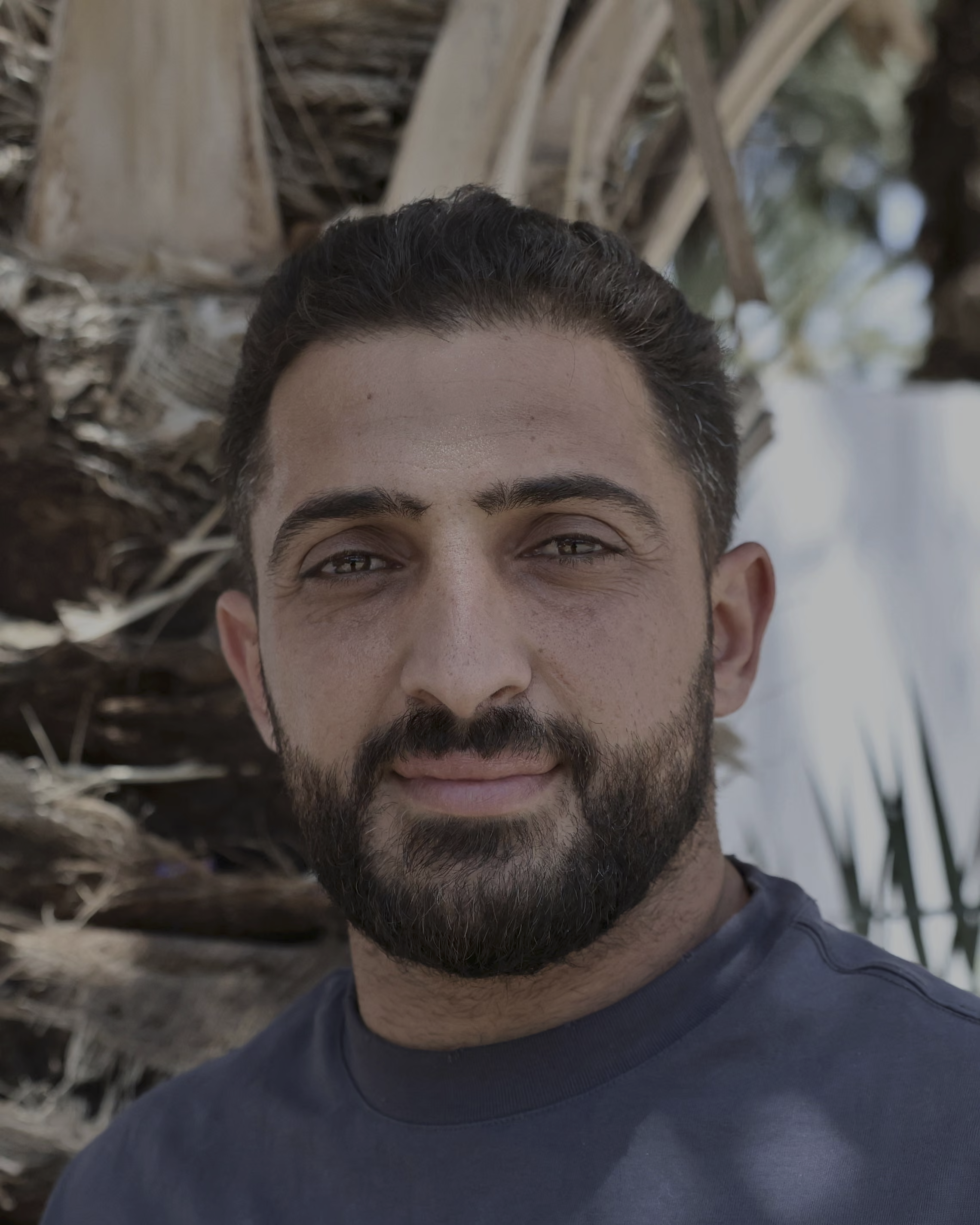
Amer Abu Khader’s family plot was now incorporated into the agricultural holdings of an Israeli firm, Global Echo said. Photograph: Quique Kierszenbaum/The Guardian
“We have all the documents proving that it belongs to us,” Khader says, standing on a dusty track overlooking the irrigated green strip that was once his inheritance. “Many of the owners are still alive and living in the area, yet their land was taken.”
What Khader could not have known, until now, is that those same fields have become part of a sophisticated supply chain quietly delivering settlement-grown produce to European supermarkets, falsely labelled as “Product of Israel.”
A bombshell investigation published this week by the U.S.-based legal non-profit Global Echo Litigation Centre reveals that the deception is not marginal, not occasional, but systematic. Drawing on more than 30,000 export documents, field investigations, interviews with whistleblowers and senior industry figures, and cross-referencing with Israeli government agricultural data, the 400-page report exposes a multi-layered scheme that effectively dissolves the legal distinction between Israel and the territories it occupies.
The numbers are stark. Of 6,827 agricultural shipments exported from Israel to the EU, the U.K., Norway and Switzerland between October 2017 and February 2026, 17.2% contained products originating in illegal settlements in the occupied West Bank or the annexed Syrian Golan Heights. For EU-bound shipments alone, the share climbs to 19.2%, nearly one in every five containers. Because exporters routinely disguise origin, the true figure is almost certainly higher.
The investigation identifies three interlocking methods of concealment: “hiding in plain sight,” where production addresses in settlements are correctly listed but the country of origin is falsely given as Israel; using “sham addresses” inside Israel’s recognised borders that bear no relation to actual growing sites; and “mingling,” where settlement produce is mixed with Israeli-grown goods in packing facilities and the entire batch shipped under a single Israeli label. Together, these techniques have allowed at least €13.1 million worth of mislabelled settlement goods, dates, citrus, avocados, herbs, and tahini to claim preferential tariff treatment reserved exclusively for Israeli products.
“This isn’t an aberration, and it’s not accidental,” said Emily Schaeffer Omer-Man, Global Echo’s executive director. “This is a system that the UK and the EU have perpetuated and agreed to.”
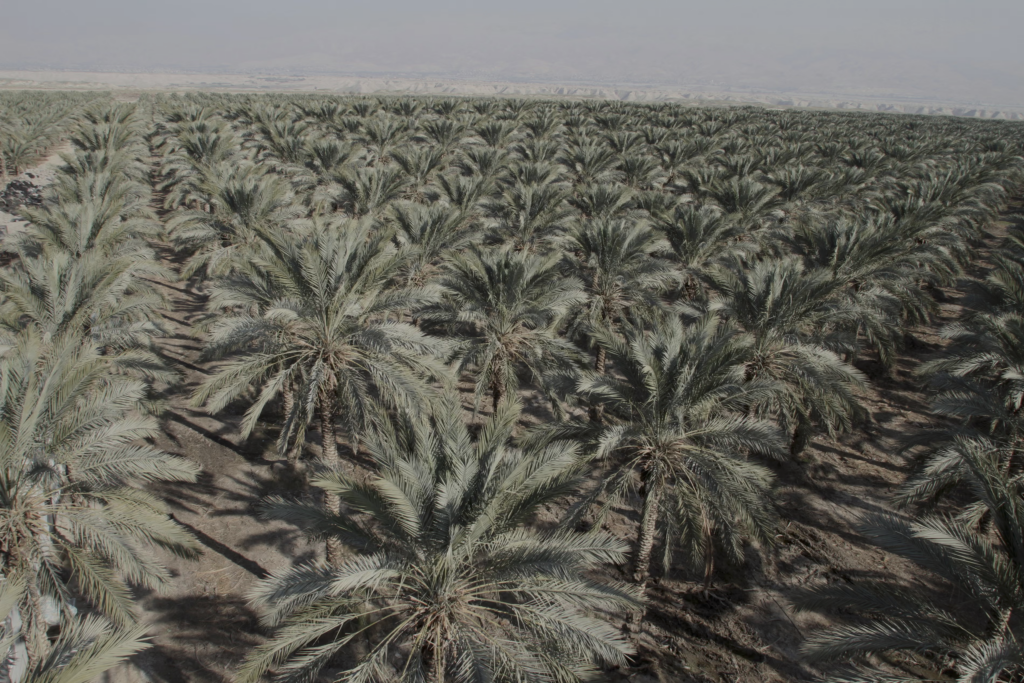
A System Built On Trust, And Exploited By Design:
At the heart of the scandal lies a 2005 technical arrangement between Israel and the European Union. To administer the 1995 EU-Israel free trade agreement, which slashed tariffs on Israeli agricultural exports, Brussels required Israeli exporters to list the postal code of the production site. The idea was simple: customs officials in Rotterdam, Antwerp or Felixstowe could check whether goods came from within Israel’s internationally recognised borders or from settlements, which are excluded from the trade preferences because the occupation is illegal under international law.
But the arrangement rests entirely on the self-declarations of Israeli exporters. It places the burden of detection on overstretched European customs authorities, few of whom have the time or local knowledge to decode Hebrew postcodes from remote West Bank outposts. The result, Global Echo found, is a system in which settlement goods pass through “hiding in plain sight,” their real location buried in fine print that no one checks.
Even more brazen are the fraudulent methods. Israeli businessmen themselves detailed how sham addresses and mingling worked during a 2015 Knesset committee hearing. “Together, these practices undermine the effective application of EU trade and policy rules by systematically obscuring territorial origin,” the Global Echo report concludes. “What emerges is not a story of isolated error, but of systematic concealment.”
The consequences ripple across supermarket shelves and national budgets. European consumers who might object to purchasing goods grown on occupied land are denied the ability to make an informed choice. A jar of Achva tahini, produced in a West Bank settlement, reaches stores labelled “Product of Israel”, despite a 2019 EU Court of Justice ruling that food from settlements must carry accurate origin labelling. Achva did not respond to requests for comment.
Meanwhile, when mislabelled goods slip through, they claim the lower tariffs reserved for Israeli products, depriving European treasuries of revenue. The overall effect, the report argues, is that “European trade continues to contribute materially to an unlawful territorial regime, in direct tension with EU law.” European shoppers and taxpayers are unknowingly subsidising the settlement economy.
The Secret Fund That Makes Tariffs Meaningless:
Even when European customs do manage to detect settlement origin and impose the higher tariff rate, Israel has a ready-made backstop. Since 2006, a secretive state compensation fund has reimbursed Israeli exporters for exactly those tariffs. Drawing on Israeli budget records, Global Echo estimates the payouts have totalled approximately €63 million over the life of the programme. This renders the EU’s differentiation policy “practically meaningless,” the report says.
The compensation scheme is the clearest evidence that the mislabelling is not simply private fraud but is facilitated by the Israeli state itself. Guidance from the Israeli tax authority effectively condones the “hiding in plain sight” method, even as it acknowledges that settlement products are ineligible for preferential tariffs. The result is a seamless economic pipeline that shields settlement agriculture from the consequences of its illegality.
“European trade continues to contribute materially to an unlawful territorial regime, in direct tension with EU law,” the report states. Settlement exports were “not the result of isolated lapses, but of a systemic failure of regulatory design, enforcement, and accountability.”
The Human Landscape Behind The Label:
The European trade in settlement produce is not an abstract policy failure. It is inscribed on the land of people like Amer Abu Khader and his neighbour, Mohamed Faiz Daraaq, 53. In Ein al-Beida, the physical traces of displacement are everywhere. The Khader family plot is now incorporated into the holdings of a major Israeli exporter that supplies the U.K. market, according to documents from the company and Israel’s agriculture ministry.
“We sell our produce in Nablus, Qabatiya and Jenin, but reaching those markets is difficult because checkpoints are frequently closed,” Daraaq says. “The spring near our land, which was an essential resource for our farming, has been taken from us. The settlers turned the area into a recreational site for themselves, with swings, seating areas and other facilities. It has become a place for their tourism and leisure.”
This microcosm reflects a larger, deliberate strategy. The settler population in the occupied West Bank has swelled by more than 50% since the only public estimate of settlement exports was provided by Israel to the World Bank 15 years ago, a figure that put the share at just 2.23%. Israeli leaders today are explicit about the role of agriculture in erasing the Green Line, the 1949 armistice boundary once seen as the basis for a future Palestinian state. “We are erasing the Green Line through agriculture in Judea and Samaria,” Finance Minister Bezalel Smotrich posted on X in 2024.
Support for settlement farming is paired with systematic restrictions on Palestinian agriculture, water confiscation, movement restrictions, land seizures, and violent settler attacks, all of which have escalated since the 7 October 2023 Hamas-led assault. The uprooting of Palestinian livelihoods is not a side effect of settlement expansion; it is its precondition.
Europe’s Gap Between Principle And Conduct:
The legal and political architecture is clear. The International Court of Justice, in its landmark July 2024 advisory opinion, ruled that Israel’s continued presence in the occupied Palestinian territories is unlawful and must end “as rapidly as possible.” The court explicitly called on all states to distinguish between Israel and the occupied territories in their dealings and to refrain from economic activities that sustain the occupation.
The EU, for its part, has for decades condemned settlements as illegal. It has imposed sanctions on individual violent settlers. In September 2025, the European Commission proposed suspending trade provisions of its association agreement with Israel, after a review found Israel in breach of the human rights clause. But EU governments have yet to agree to adopt the suspension. Spain, breaking ranks, imposed its own national ban on imports from settlements in the Palestinian territories at the end of 2025.
Yet the central instrument of economic leverage, the free trade agreement itself, remains untouched. The 2005 technical arrangement that enables the mislabelling has never been reformed. Customs authorities in Europe continue to accept Israeli-issued organic and plant health certificates for settlement produce, even though only Palestinian or Syrian authorities can lawfully certify goods grown in occupied territory. Global Echo found 31 organic certificates issued by Secal, an Israeli certifier approved by the EU, for produce from settlements. European customs also routinely waived through invalid phytosanitary certificates in over a quarter of cases reviewed.
“By trading with Israel’s illegal settlements, the EU is bankrolling the abuses it condemns on a near daily basis, including ethnic cleansing and apartheid,” said Claudio Francavilla, associate director for EU advocacy at Human Rights Watch, which is publicising the Global Echo report. “There is no legal way to trade with illegal settlements.”
In 2025, more than 160 NGOs and trade unions, including Human Rights Watch, called on European Commission President Ursula von der Leyen to “ban all trade and business between the EU and Israel’s illegal settlements” to comply with the ICJ ruling. The European Commission did not respond to requests for comment on the new investigation. The Israeli government, reached through multiple channels including the agriculture, foreign affairs ministries and its EU embassy, also remained silent.
The Law And The Ledger:
Michael Lynk, professor emeritus of law at Canada’s Western University and former UN special rapporteur for human rights in the occupied Palestinian territories, wrote the introduction to the Global Echo report. He describes the findings as exposing a “gap between European principle and conduct.”
“Europe has for decades deemed Israel’s settlements illegal,” Lynk writes. Yet it has never used its vast economic leverage to “attach meaningful consequences to that illegality.”
The failure is not merely moral. It is institutional. The EU’s differentiation policy, which on paper requires separate treatment for settlement products, has collapsed under the weight of its own contradictions. The burden of enforcement is placed on the very customs systems least equipped to carry it out. The economic incentive for exporters to cheat is amplified by a state compensation mechanism that insures them against any consequences. And the political inertia within the EU, where foreign policy requires consensus among 27 member states, has stymied every effort to move from rhetoric to meaningful action.
Global Echo is now seeking to force the issue through legal channels. The group has filed a lawsuit in the U.K. and is planning litigation in other European jurisdictions to compel customs and consumer protection authorities to act. It is demanding that HMRC review its controls on Israeli imports, warning that mislabelled settlement goods are not just an ethical scandal but a breach of domestic and European consumer law.
The Price Of Inaction:
The Global Echo investigation makes visible what has long been invisible: the intimate connection between the produce in European kitchens and the occupied fields of the Jordan Valley. Behind the false “Product of Israel” labels lies a machinery of displacement, subsidised by European tariffs, certified by invalid documents, and blessed by a political class that has chosen comfort over compliance.
“The scale of the settlement economy is obscured by Israel’s determination to prevent any economic or political distinction between citizens and companies in occupied territory and those inside its recognised borders,” the report states. That determination has found willing enablers in European capitals, where the gap between stated principles and actual policy has become a chasm.
For Amer Abu Khader, the question is not about trade statistics or ICJ opinions. It is about whether the land his family has owned for generations will ever be returned, and whether the consumers who unknowingly buy the fruit of those stolen fields will ever be told the truth. As Global Echo’s investigation forces that question onto the agenda, the answer will measure not just the integrity of Europe’s trade policy, but the sincerity of its commitment to international law.
Source: Veritas Press C.I.C. | Multi News Agencies
Help Support Our Work By Donating:
Popular Information is powered by readers who believe that truth still matters. When just a few more people step up to support this work, it means more lies exposed, more corruption uncovered, and more accountability where it’s long overdue.
Help Protect Independent Journalism, Which Is Currently Under Attack.
If you believe journalism should serve the public, not the powerful, and you’re in a position to help, becoming a DONATOR or a PAID SUBSCRIBER truly makes a difference.
DONATION APPEAL: If You Found This Reporting Valuable, Please Consider Supporting Independent Journalism.
Help Support Our Work – We Know, We Know, We Know …
Seeing these messages is annoying. We know that. (Imagine what it’s like writing them … )
Your support fuels our fearless, truth-driven journalism. In unity, we endeavour to amplify marginalised voices and champion justice, irrespective of geographical location.
But it’s also extremely important. One of Veritas Press’s greatest assets is its reader-funded model.
1. Reader funding means we can cover what we like. We’re not beholden to the political whims of a billionaire owner. We are a small, independent and impartial organisation. No one can tell us what not to say or what not to report.
2. Reader funding means we don’t have to chase clicks and traffic. We’re not desperately seeking your attention for its own sake: we pursue the stories that our editorial team deems important and believe are worthy of your time.
3. Reader Funding: enables us to keep our website and other social media channels open, allowing as many people as possible to access quality journalism from around the world, particularly those in places where the free press is under threat.
We know not everyone can afford to pay for news, but if you’ve been meaning to support us, now’s the time.
Your donation goes a long way. It helps us:
- Keep the lights on and sustain our day-to-day operations
- Hire new, talented independent reporters
- Launch real-time live debates, community-focused shows, and on-the-ground reporting
- Cover the issues that matter most to our communities, in real time, with depth and integrity
We have plans to expand our work, but we can’t do it without your support. Every contribution, no matter the size, helps us stay independent and build a truly people-powered media platform.
If you believe in journalism that informs, empowers, and reflects the communities we serve, please donate today.
Help Donate Today:
Submissions:
For The Secure Submission Of Documentation, Testimonies, Or Exclusive Investigative Reports From Any Global Location, Please Utilise The Following Contact Details For Our Investigations Desk: enquiries@veritaspress.co.uk or editor@veritaspress.co.uk
GENEVA — A United Nations fact-finding mission has concluded there are “reasonable grounds to believe”
Iran’s GDP is projected to contract by 5.4 to 6.1% in 2026, its worst performance
The Trump administration is preparing a $2.8 billion weapons package for Israel containing 40,000 2,000-pound

Film alleges mass civilian deaths are routinely built into military decisions amid Israel’s genocidal war

The Israeli rights group says violence, displacement, economic strangulation, and settlement expansion form part of

Houthi forces have captured the historic Red Sea port of Mocha and are advancing on

London’s historic sanctions against Israeli settlements mark a watershed moment in UK foreign policy, but
With 95% of Gaza’s population now wholly dependent on aid and more than 90% stripped
India calls for Kashmir and Ladakh to appear only on its official map after a
ISLAMABAD – In the high-stakes political theatre of Pakistan, the battleground has shifted from the