

Author:
Byline: Investigative Desk
Help support our mission, donate today and be the change. Every contribution goes directly toward driving real impact for the cause we believe in.
An escalating war of words and missiles pushes the world’s most critical oil chokepoint toward indefinite closure, as civilian deaths fuel outrage and the spectre of a wider regional conflagration looms.
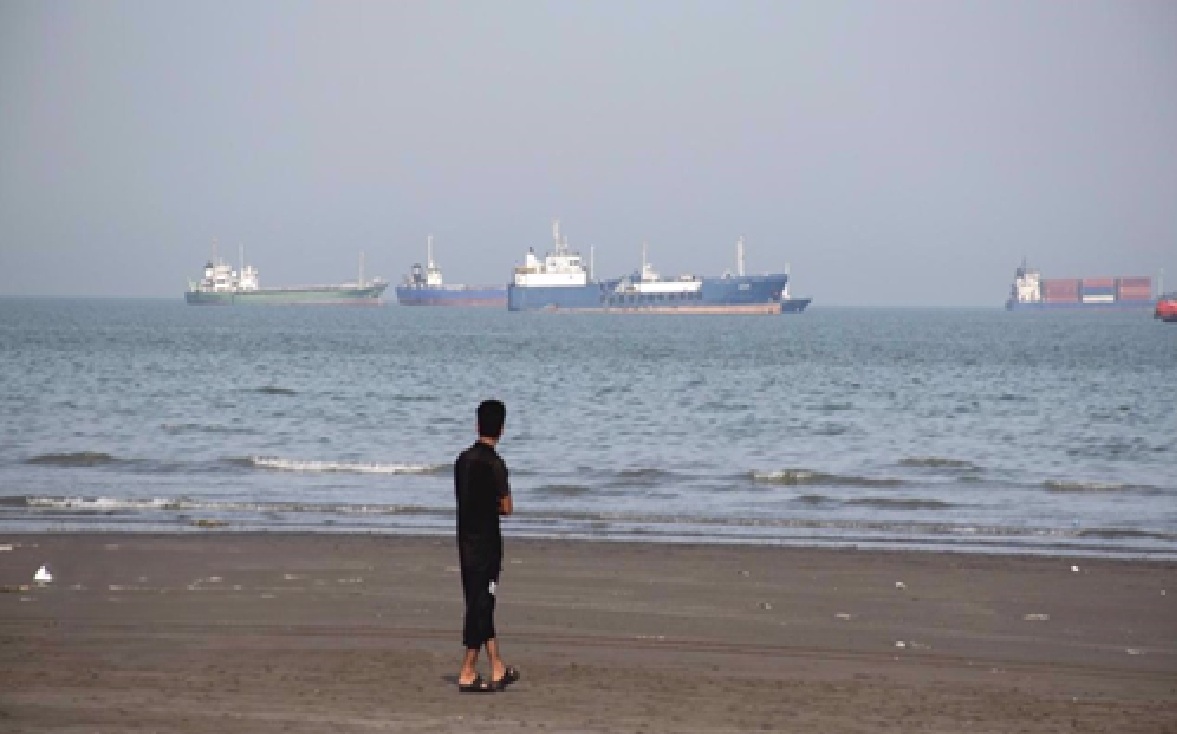
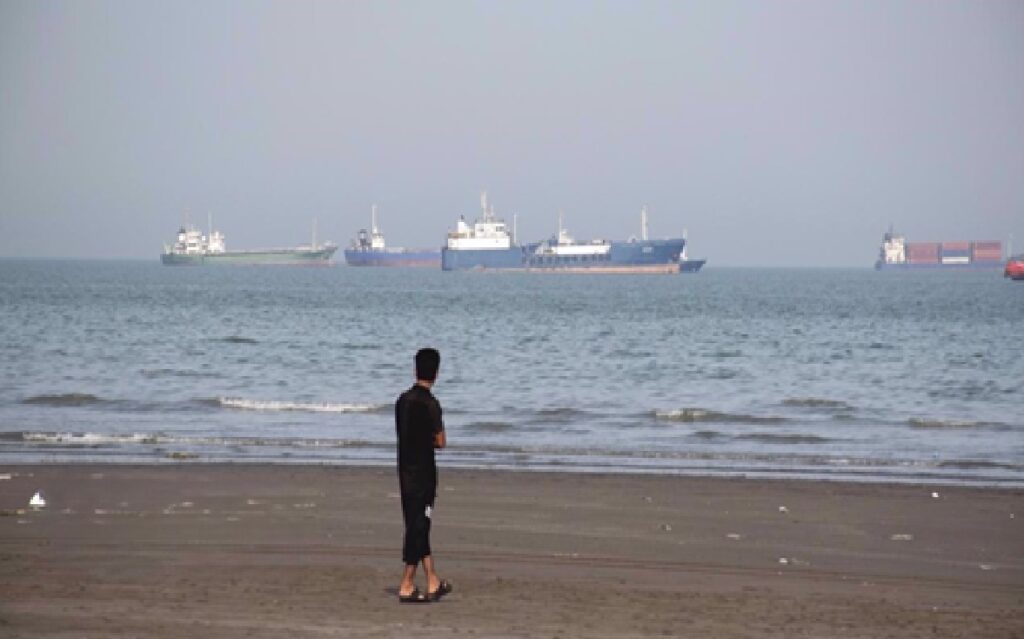
TEHRAN — The Islamic Revolutionary Guard Corps declared on Thursday that the Strait of Hormuz “is not re-openable” as long as the United States continues its military threats and maritime interference, effectively locking down the passage through which a fifth of the world’s oil usually transits. The announcement came hours after US forces overnight bombed several Iranian cities, including a residential neighbourhood on Qeshm Island that killed a two-year-old child and his parents, and as Tehran retaliated with a new barrage of missiles aimed at American bases in Kuwait, Bahrain, Jordan and Iraq’s Kurdistan Region.
The IRGC’s stark warning, broadcast on state media, pulls the two nations deeper into an armed confrontation that began in February 2026 when Washington and Israel launched a coordinated military campaign against Iran. A short-lived truce, the Islamabad Memorandum of Understanding, had briefly raised hopes that the waterway would reopen under Iranian-controlled arrangements. But the deal collapsed this week after the US, according to Tehran, attempted to carve out an “unsafe corridor” along Oman’s coast, circumventing Iranian authority and escorting tankers with American aircraft.
“The Strait of Hormuz is our territory, and the brave men of the IRGC Navy firmly control it. No outsider who has come from thousands of kilometres away will be allowed to interfere,” the IRGC statement read. “With the help of Almighty God, the aggressor will be punished today.”
The latest cycle of violence, which has sent crude prices rocketing past $150 a barrel and triggered emergency stockpile releases in consuming nations, raises profound legal and humanitarian questions. Investigative scrutiny reveals a pattern of brinkmanship on both sides, a peace agreement broken within weeks, and a civilian population trapped beneath the bombs.
A Deadly Night On Qeshm Island:
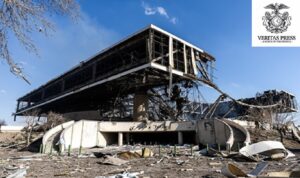
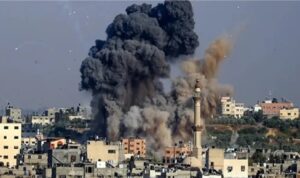
In the early hours of Thursday, missiles slammed into the port city of Qeshm on the island of the same name, a strategically vital but heavily populated area that has long housed both military sites and fishing communities. One missile reduced a modest two-storey home in the Salkh neighbourhood to rubble, killing Reza Yousefi, 34, his wife Maryam, 29, and their son Amir-Ali, aged two. Neighbours told local reporters that the family had been sheltering in the basement after days of strikes, but the blast – described as “colossal” by witnesses, left no chance of survival.
“I pulled out the body of the little boy myself. He was still in his mother’s arms,” said Gholamreza Rahbar, 58, a fisherman who rushed to the scene. “There was no military target here. Just a house, a family, a small shop. This is nothing but murder.” Footage verified by the London-based Centre for Information Resilience shows bloodied toys, a crushed stroller, and a woman’s hand protruding from concrete debris.
US Central Command confirmed a “heavy wave” of precision strikes it said were “directed exclusively at Iranian military infrastructure and missile storage sites” in response to what CENTCOM described as an attempted missile assault on American personnel stationed across the Middle East. The Pentagon did not directly address the civilian casualties on Qeshm but issued a statement expressing regret for “any unintended loss of life” while insisting “all targets were chosen to avoid collateral damage.” Independent weapons experts, however, have identified components consistent with a US-made Joint Direct Attack Munition (JDAM) in the Qeshm wreckage, raising questions about targeting intelligence.
Amnesty International’s Middle East director, Sarah Hashim, said in a statement that the killing of the toddler and his parents “must be independently investigated as a potential war crime. Attacking a civilian home cannot be hand-waved away with boilerplate language about military necessity.”
The Tanker Incident That Broke The Ceasefire:
The IRGC’s statement explicitly linked the renewed closure of the Strait of Hormuz to an incident that occurred on the night of Tuesday, 28 July. Two oil tankers, chartered by Asian refiners, according to shipping databases, attempted to navigate a southern route close to Omani territorial waters, a path that US naval aircraft had been actively encouraging since last week. The IRGC claims Washington unilaterally created the route, violating the Islamabad Memorandum of Understanding, and that it is “unsafe.”
The MoU, brokered in late June by Pakistan and Oman after three months of devastating conflict, had codified Iran’s right to manage all maritime traffic through the strait that is bound for nations deemed “aggressors or their supporters.” In return, Iran pledged to allow passage to vessels that accepted Iranian inspection arrangements. Crucially, the agreement recognised Iran’s sovereignty over the strait and tasked Tehran with lifting restrictions once hostilities ended. But no sooner was the ink dry than the US insisted its warships were not bound by the MoU and began testing alternative corridors, a move the IRGC called a deliberate provocation.
According to the IRGC account, the two tankers were “prompted by US aircraft” to attempt the transit. “One of the tankers caught fire, prompting both vessels to quickly reverse course,” the IRGC statement said, without clarifying whether an Iranian warning shot, a drone strike, or a technical malfunction caused the fire. Industry sources told Lloyd’s List that the vessel possibly struck a floating mine or was hit by a loitering munition. The tanker’s operator, a Singapore-based company, issued a brief statement saying the crew was “safe and the blaze extinguished” but declined to comment on the cause, citing “ongoing security investigations.”
Shipping insurers immediately raised the Gulf threat level to “Red, Extreme Risk,” effectively making any unescorted transit commercially uninsurable. The International Maritime Organisation (IMO) Secretary-General called the situation “a direct threat to global energy security and the freedom of navigation,” urging both sides to “establish immediate communication channels to avoid an environmental catastrophe.” More than 30 tankers, carrying an estimated 45 million barrels of crude and condensate, are now anchored on either side of the strait, their crews in limbo.
‘You Will Receive A Harsh Response’
Beyond reasserting control over the strait, the IRGC’s statement contained a blunt warning to any nation aiding the United States. “Countries that are involved in assisting the aggressor, if they do not correct their behaviour, will receive a harsh response,” it read. The phrasing is deliberately broad, but the targets are clear: Gulf Arab states hosting US military infrastructure.
Within hours of Thursday’s US strikes, Iranian Army and IRGC units launched multiple waves of what state television called “Operation Nasr 2” and “Operation Sa’eqeh” (Lightning). A mix of ballistic missiles and kamikaze drones struck US-run airbases at Ali Al Salem in Kuwait, Isa Air Base in Bahrain, Muwaffaq Salti Air Base in Jordan. Preliminary reports indicate significant damage to runways, fuel depots, and housing units. Kuwait’s government confirmed “several large explosions” near its main airbase and said it was “reviewing the presence of foreign forces on its soil.” Bahrain’s Interior Ministry reported no casualties but acknowledged “damage to joint-use infrastructure.” The US has not released an official damage assessment, but reports indicate that two American soldiers received treatment for minor injuries in Kuwait.
The spiralling tit-for-tat has placed Washington’s Arab allies in an increasingly untenable position. “We did not sign up for a war on our own territory,” a senior Kuwaiti diplomat told this reporter on condition of anonymity. “The US is using our land to hit Iran, and now Iran is hitting back. We are becoming a battlefield.”
The Legal And Economic Quicksand:
International legal experts point to a tangled web of violations that makes accountability nearly impossible. Professor Karim Medhat, a scholar of the law of the sea at the University of Tehran, argues that under the 1982 UN Convention on the Law of the Sea, Iran retains the right to regulate transit passage through its territorial waters when its national security is threatened, but a blanket closure of an international strait to all ships of certain nationalities is far more contentious. “The IRGC’s position that the strait is ‘our territory’ is legally inaccurate – the Strait of Hormuz is an international strait with a transit passage regime,” Medhat said. “But the US strategy of escorting vessels through an unagreed corridor after signing the MoU was a clear violation of the pact. Both sides are playing with fire, and the law of armed conflict is being shredded.”
Iran’s own justification rests on the Islamabad MoU, which it accuses the US of “violating from day one.” A copy of the memorandum, reviewed by this newspaper, states that “the Islamic Republic of Iran assumes the responsibility for removing navigational restrictions for vessels unaffiliated with the aggressors and their supporters, in accordance with arrangements to be mutually determined.” The US never formally recognised the MoU, calling it “political theatre,” but its negotiators initialled the text. That ambiguity is now fuelling the conflagration.
The economic consequences are cascading. Brent crude futures jumped 18% in a single session on the ICE Futures Europe exchange on Thursday, hitting $158 a barrel before settling at $152. Unleaded petrol prices in Europe and Asia have surged to record highs. Several major airlines announced emergency surcharges. Central bankers in capitals from Tokyo to Frankfurt are holding crisis talks. Fatih Birol, Executive Director of the International Energy Agency, warned that “the global economy is heading towards a supply-driven recession if the strait remains shut for more than a few weeks.”
A Human Catastrophe Unfolding:
On Qeshm Island, grief has mixed with fury. The funerals of the Yousefi family drew hundreds, many chanting anti-US slogans. “How can we ever feel safe again?” asked Fatemeh, a cousin of the dead mother, holding a photo of the toddler. “They came thousands of kilometres to kill a baby. What kind of monster does that?”
Save the Children issued an urgent appeal, saying the toddler’s death “must be a turning point.” “Amir-Ali was two years old. He had a name, a family, a future. Killing him is a war crime, full stop,” said the charity’s Iran country director. Since July began, UNICEF reported that at least 12 children have died across southern Iran. The majority of these children died in areas where the US says it only attacks military targets.
Human Rights Watch has called for the UN Security Council to mandate an international commission of inquiry. But the council remains paralysed, with Russia and China backing Iran’s position that the US violated the MoU, and the US wielding its veto to shield itself from accountability.
The Media And The Fog Of War:
Journalists operating inside Iran face severe restrictions. The government has revoked all independent reporting permits for foreign media in the south, relying solely on IRNA and IRGC-linked outlets. Authorities have detained at least two local journalists on Qeshm who documented the aftermath of the bombing, according to the Committee to Protect Journalists. Their whereabouts are unknown. CPJ’s Middle East coordinator, Juanita Reyes, said, “The world needs to see what is happening in Qeshm and elsewhere, but authorities on all sides are choking off the flow of information.”
An Uncertain Horizon:
As night fell on 30 July, the IRGC Navy announced it had deployed additional mine-laying vessels and coastal missile batteries along the Strait of Hormuz. “Threats and interventions will make the situation more difficult and more complicated,” the IRGC said, repeating its earlier warning. “The aggressor will be punished today.”
Whether the US will attempt another escorted convoy or escalate its bombing campaign remains the urgent question. Inside the Pentagon, officials are reportedly divided between those pushing for a “decisive blow” against Iran’s missile programme and those warning that further strikes could mire the US in a third Middle Eastern war in as many decades, this time with no prospect of a stable exit.
Meanwhile, ordinary people in Iran, Kuwait, Bahrain, and Iraq find themselves caught in the middle. A fisherman on Qeshm, staring at the spot where his neighbour’s home once stood, said simply, “They talk about straits, threats, MoUs. I talked about the child I buried today. Somebody must stop this madness.”
Veritas Press Investigative Analysis
Independent journalism examining global affairs, power, diplomacy and accountability.
Source: Veritas Press C.I.C. | Multi-News Agencies
Help Support Our Work By Donating
Readers who believe that truth still matters have power over popular information. When just a few more people step up to support this work, it means more lies exposed, more corruption uncovered, and more accountability where it’s long overdue.
Help Protect Independent Journalism, Which Is Currently Under Attack.
If you believe journalism should serve the public, not the powerful, and you’re able to help, becoming a regular DONOR or a PAID SUBSCRIBER truly makes a difference.
DONATION APPEAL: If you found this reporting valuable, please consider supporting independent journalism.
Your support fuels our fearless, truth-driven journalism. In unity, we endeavour to amplify marginalised voices and champion justice, irrespective of geographical location. We operate independently, with no financial backing from billionaires; our readers support us.
But it’s also extremely important. One of Veritas Press’s greatest assets is its reader-funded model.
1. Reader funding means we can cover what we like. We’re not beholden to the political whims of a billionaire owner. We are a small, independent and impartial organisation. No one can tell us what not to say or what not to report.
2. Reader funding means we don’t have to chase clicks and traffic. We’re not desperately seeking your attention for its own sake; we pursue the stories that our editorial team deems important and believes are worthy of your time.
3. Reader Funding: enables us to keep our website and other social media channels open, allowing as many people as possible to access quality journalism from around the world, particularly those in places where the free press is under threat.
We know not everyone can afford to pay for news, but if you’ve been meaning to support us, now’s the time.
Your donation goes a long way. It helps us:
- Keep the lights on and sustain our day-to-day operations
- Hire new, talented, independent reporters
- Launch real-time live debates, community-focused shows, and on-the-ground reporting
- Cover the issues that matter most to our communities, in real time, with depth and integrity
Without your support, independent voices like ours will be silenced.
Furthermore, we plan to expand our work, but we can’t do so without your support. Every contribution, no matter the size, helps us stay independent and build a truly people-powered media platform.
If you believe in journalism that informs, empowers, and reflects the communities we serve, please donate today.
Submissions:
For the secure submission of documentation, testimonies, or exclusive investigative reports from any global location, please utilise the following contact details for our Investigations Desk: mailto:enquiries@veritaspress.co.uk or mailto:editor@veritaspress.co.uk

Houthi forces have captured the historic Red Sea port of Mocha and are advancing on
London’s historic sanctions against Israeli settlements mark a watershed moment in UK foreign policy, but
With 95% of Gaza’s population now wholly dependent on aid and more than 90% stripped
India calls for Kashmir and Ladakh to appear only on its official map after a
ISLAMABAD – In the high-stakes political theatre of Pakistan, the battleground has shifted from the
Francesca Albanese says third states have an ICJ-mandated obligation to end Israel’s occupation. But with
As Israeli jets bomb a Syrian air base over alleged Turkish deployment plans, Ankara, Washington
QUSRA, OCCUPIED WEST BANK – In the rugged hills south of Nablus, a slow-motion displacement
Beneath the wreath-laying and “plunder” rhetoric lies a contest for Iraq’s logistical arteries and post-war
As mediators push for ceasefire extensions, airstrikes on police infrastructure reveal a strategic campaign to