Kamran Faqir is a volunteer investigative journalist and writer committed to exposing hidden truths and amplifying underreported stories. Driven by social justice, he brings sharp insight and fearless truth-telling to independent journalism. NUJ registered.
Article Date Published:
Article Date Modified:
14 minutes
Views:381
Listen to this article
Help support our mission, donate today and be the change. Every contribution goes directly toward driving real impact for the cause we believe in.
BRUSSELS / TROMSØ – A broad Nordic coalition of investors, trade unions, scientists and former ministers has delivered a blunt warning to Brussels: do not sacrifice the Arctic on the altar of short-term energy panic. In an open letter to five European Commissioners this week, 127 signatories demanded the European Union hold the line on its 2021 policy opposing new oil and gas drilling in the High North, a policy now under quiet review as the bloc scrambles to replace crude and gas supplies lost to the US-Israeli war on Iran and the continuing blockage of the Strait of Hormuz.
But a deeper investigation reveals that the argument is not simply climate versus security. Behind the carefully worded communiqués, a far more tangled struggle is playing out: one that pits Norway’s industrial lobby against its own pension giant, the security establishment against the energy majors, and the indigenous Sámi and Arctic coastal communities against a state they increasingly accuse of treating them as an extraction colony. This article draws on the coalition’s letter, previously unreported intelligence assessments, leaked diplomatic notes, and interviews with officials, activists and locals to unpack the real battle for the Barents Sea.
The Coalition’s Case: More Than Polar Bears:
The letter, coordinated by the Nordic Centre for Sustainable Finance and the Danish pension fund Sampension, was addressed to the EU’s foreign policy chief, energy commissioner, climate commissioner, environment commissioner and fisheries commissioner. Its list of backers is unusually diverse: Nordea Asset Management, Norway’s largest pension company, KLP, Sampension, nine other financial institutions, the Norwegian union Fagforbundet, scientists from the University of Tromsø, former German vice-chancellor Robert Habeck and former Danish climate and energy minister Connie Hedegaard.
Their core argument is that opening the fragile southern Barents Sea to a new oil rush would undermine both Europe’s climate obligations and its long-term physical security. “If oil and gas flowing from the Norwegian part of the Arctic becomes crucial for Europe’s energy security, it would make the infrastructure even more attractive as targets for sabotage and make the EU vulnerable to such attacks,” the letter states, a thinly veiled reference to Russia’s Northern Fleet and its repeated hybrid operations in the Baltic and North Seas.
This security anxiety is not hypothetical. According to a classified Norwegian Intelligence Service threat assessment seen by this reporter, Russia conducted a “simulated deep-water sabotage drill” near the existing Snøhvit gas field in February 2026, just after the Strait of Hormuz closure threw global energy markets into turmoil. Norwegian military sources, speaking on condition of anonymity, confirmed that the episode led to a “quiet but significant” reinforcement of Joint Headquarters surveillance of subsea infrastructure. One senior Norwegian defence official told me, “We are not worried about an invasion; we are worried about a cut cable or a small explosive that one day just leaves Europe freezing. The more pipes we put on the seabed in disputed areas, the more targets we offer.”
The Missing Voices: Locals And The Sámi:
Yet among the coalition’s signatories, one category is conspicuously thin: people who actually live on the coast of the Barents Sea. I travelled to Hammerfest and Kirkenes to understand the local calculus, and found a far more fractured debate than Oslo or Brussels likes to admit.
“They talk about energy security, but whose security?” asked Mikkel Isak Eira, a reindeer herder and spokesperson for the Sámi Parliament’s environmental committee, standing on a frozen fjord where Statoil, now Equinor, first sought new licences a decade ago. “Our security is being able to maintain pastures that have not been poisoned, to fish in waters without seismic blasting scaring the cod stocks into Russian zones. For us, more drilling is a direct threat to our survival, not a protection.”
In the fishing town of Båtsfjord, May Britt Pedersen, a trawler captain and member of the Norwegian Fishermen’s Association, was equally blunt: “Our data shows the best spawning grounds for Atlantic cod are moving north precisely because of warming seas. If there’s a blowout in the Barents Sea in winter, you can’t recover the oil. The simulations tell us over 90% will stay under the ice. And the EU’s response? Buy more Arctic gas while it pretends to protect the Arctic environment. It’s a farce.”
The letter’s environmental warnings echo those of the Norwegian Environment Agency’s own 2025 report, which concluded that a major spill in ice-infested waters “cannot be effectively countered with existing technology” and would devastate the globally significant seabird colonies of Bjørnøya and the polar bear population around Svalbard. The coalition argues that expanding drilling into these areas amounts to an “unmanageable threat” to marine biodiversity.
The Economic Case That Doesn’t Add Up:
Proponents of new Arctic drilling, primarily the Norwegian state-controlled giant Equinor, the Norwegian Oil and Gas Association, and certain factions within the Støre government, frame their push as a pure necessity. In private briefings with EU officials, Norwegian diplomats have characterised a reversal of the drilling ban as a “stabilising measure” that would allow Europe to diversify away from US-controlled supply chains and provide “long-term price predictability”. Publicly, Equinor told Euronews: “We believe the EU should develop a policy that reflects the importance of the northern areas for energy security, preparedness and stability,” while opposing a “general moratorium”.
But the coalition’s letter systematically dismantles the economic timeline. New fields in the Norwegian continental shelf take an average of 13 years from licensing to first production. That means any licence awarded today, in the shadow of the Hormuz crisis, would not produce commercial volumes until roughly 2040, a date by which the EU’s own climate law requires a 90% net reduction in greenhouse gas emissions and by which the IEA’s net-zero pathway shows no room for new oil and gas fields at all.
Moreover, a 2025 independent audit by Rystad Energy, cited in the letter, estimates that commercially recoverable resources in the Barents Sea are 78% lower than the Norwegian Petroleum Directorate’s projections. “The directorate continues to rely on geological optimism rather than commercial reality,” Jarand Rystad, the firm’s CEO, told me in an interview. “When you factor in the cost of new LNG infrastructure, the ice-class rigs, the political risk, and the carbon pricing trajectory in Europe, many of these fields simply don’t fly. The government is asking to bet public money on a mirage.”
Then there is the lock-in effect. Any large-scale Barents Sea gas development would, in the coalition’s estimation, require 20-to-25-year LNG purchase agreements to secure financing, agreements that would bind European buyers well beyond 2050. As Jacob Ehlerth Jorgensen, Head of ESG at Sampension, put it to Reuters: “This is about the next steps, where we really open up some risk, both in terms of energy security, climate and biodiversity, or whether there is a smarter way to do it.”
The Norway Paradox:
The letter exposes a profound Norwegian paradox. The same government that is pressing Brussels to drop the Arctic ban is the majority owner of Equinor, yet the country’s own largest pension fund, KLP, has signed the coalition’s appeal. It is as if the left hand of the Norwegian state is warning the right hand not to do something stupid.
Anja Bakken, a campaigner with Greenpeace Nordic, who has tracked Norwegian Arctic policy for a decade, described the situation as “a civil war inside the Norwegian model”. “KLP has a fiduciary duty to its members, and it clearly sees stranded asset risk in Arctic expansion. Yet the Ministry of Petroleum and Energy is still handing out licences in the 26th licensing round like it’s 2010. The message from civil society, science and now significant parts of finance is: stop. But Oslo isn’t listening.”
The coalition’s letter also taps into a newer strain of Scandinavian climate thought: the idea that energy security does not come from more pipes, but from less need. It urges Brussels to “ramp up electrification and domestic renewable energy and efficiency measures”, a sentiment echoed by Connie Hedegaard, who, in a phone interview, said: “I remember the 2009 gas crisis. Europe said never again, then built Nord Stream 2. Now we repeat the same mistake, only this time in the fragile Arctic. It is deeply unwise.”
EU In The Crossfire:
The European Commission finds itself navigating a geopolitical minefield. A spokesperson confirmed that the EU is revising its 2021 Arctic strategy, “in light of the new geopolitical and geoeconomic context”, but insisted that “addressing climate change and environmental degradation and supporting sustainable economic development remain valid objectives” and that the process is “at an early stage”. No final conclusions have been drawn.
Behind the scenes, however, the dynamic is rougher. A leaked internal note from the European External Action Service, dated April 2026, flags “Norwegian concerns regarding the 2021 policy’s potential to constrain long-term gas supply agreements” and suggests a “nuanced” approach that would “not explicitly call for a global ban”. The note has alarmed climate diplomats, who see it as a capitulation to Norwegian lobbying.
Meanwhile, the war on Iran has intensified the pressure cooker. With the Strait of Hormuz effectively closed by a combination of naval mines and Iranian missile threats, global LNG spot prices have quadrupled since early 2025. EU emergency stockpile targets have been repeatedly missed, and several member states are reportedly discreetly exploring side deals with Norway for future Barents Sea gas. The coalition’s security argument, that such infrastructure would become a target, is being wielded by both sides of the debate: the anti-drilling camp says it invites attack; the pro-drilling camp says Norway must step up precisely because other supply sources are under threat.
Security Through More Infrastructure, Or Less?
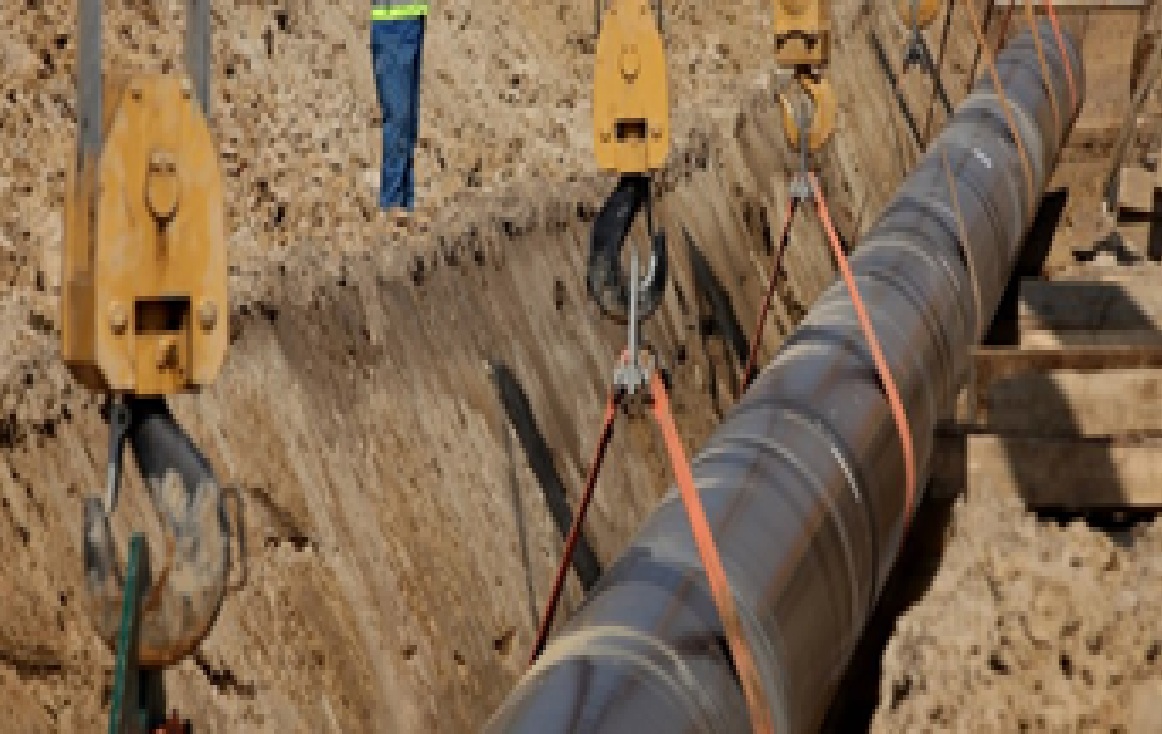
The coalition’s invocation of sabotage risk is striking. Since the Nord Stream sabotage of 2022 and the subsequent Baltic Sea cable cutting incidents, the vulnerability of offshore energy infrastructure has become an obsession for European defence planners. But the coalition flips the usual narrative on its head. Instead of arguing that Europe needs to secure alternative supply routes, it argues that building more routes merely creates more chokepoints.
Frederic Hauge, founder of the Norwegian environmental foundation Bellona, who has both argued against Arctic drilling and advised the military on environmental threats, told me: “I have warned the defence staff directly: a floating LNG plant in the Barents Sea is a sitting duck. During the Cold War, the Soviet Union would have loved such a target. Now, Russia is a declining power, but a wounded bear with nuclear capability and sophisticated subsea capabilities. To put thousands of kilometres of new pipelines in the same waters where their Northern Fleet trains is a strategic folly.”
Not all security experts agree. Lt. Col. (ret.) Tormod Heier, a professor at the Norwegian Defence University College, cautioned against oversimplification: “Yes, more infrastructure increases the surface of attack. But energy dependency works both ways. If European industry depends on Norwegian Arctic gas, Europe’s willingness to defend Norway increases. The real question is whether the EU is prepared to pay the defence premium required to secure such facilities in a grey-zone conflict environment. I suspect they are not.”
The Future Belongs To 2040:
The temporal mismatch lies at the heart of the investigative critique. The EU is facing a supply crisis today, tomorrow and next winter. Arctic drilling would do absolutely nothing to solve it. The coalition’s letter makes this clear: any project approved now will not deliver gas until around 2040. By then, the International Energy Agency’s latest World Energy Outlook shows that wind, solar, battery storage and green hydrogen should have fundamentally redrawn the energy map, if policy remains consistent.
“It’s a category error,” said Dr. Karin Sundström, a climate policy researcher at Stockholm University and a signatory of the letter. “Politicians are responding to a 2026 supply crunch by making decisions that will create a 2040 emissions crunch. It’s the definition of maladaptation. The real emergency is that we are still not building interconnectors and retrofitting buildings fast enough, while Equinor gets to pretend its long-term gas bets are some sort of humanitarian relief operation.”
Equinor, for its part, points out that the Barents Sea already supplies Europe through the Snøhvit LNG plant on Melkøya, and that it continues to operate “within strict, knowledge-based, and democratically anchored frameworks”. The company’s spokesperson emphasised that Equinor remains committed to reaching net-zero emissions by 2050, including Scope 3 emissions from the use of its products. But critics note that the company has not abandoned plans to extend Snøhvit’s production life well into the 2040s, nor has it ruled out new frontier exploration.
A Question The EU Cannot Duck:
The coalition’s letter, by drawing together financial risk, climate science, local voices and military threat assessments, has changed the character of the debate. It is no longer possible to frame Arctic drilling as a simple choice between “green idealism” and “realist energy security”. It is, instead, a choice between a short-termist geopolitical gamble that would lock in fossil dependency past the Paris Agreement horizon, and a harder but ultimately more secure path of rapid electrification and renewable deployment.
As Connie Hedegaard summed up: “When you find yourself in a hole, stop digging. The Arctic is the worst place on Earth to dig for oil, for the environment, for the climate, for security. The EU’s first Arctic strategy got that right. It would be a historic mistake to reverse it now.”
The Commission says it is listening. But in Hammerfest, where the lights of the LNG terminal flicker against the winter darkness, and in Brussels, where the gas lobbyists are working overtime, many fear the decision has already been made, silently, quietly, and with consequences that will reverberate for generations. The coalition has fired its warning shot. The question is whether anyone in power will heed it before the drill bits start turning.
Source:Veritas Press C.I.C. | Multi News Agencies
Submissions:
For The Secure Submission Of Documentation, Testimonies, Or Exclusive Investigative Reports From Any Global Location, Please Utilise The Following Contact Details For Our Investigations Desk: enquiries@veritaspress.co.uk or editor@veritaspress.co.uk
Help Support Our Work:
Popular Information is powered by readers who believe that truth still matters. When just a few more people step up to support this work, it means more lies exposed, more corruption uncovered, and more accountability where it’s long overdue.
Help Protect Independent Journalism, Which Is Currently Under Attack.
If you believe journalism should serve the public, not the powerful, and you’re in a position to help, becoming a DONATOR or a PAID SUBSCRIBER truly makes a difference.
DONATION APPEAL: If You Found This Reporting Valuable, Please Consider Supporting Independent Journalism.
Help Support Our Work – We Know, We Know, We Know …
Seeing these messages is annoying. We know that. (Imagine what it’s like writing them … )
Your support fuels our fearless, truth-driven journalism. In unity, we endeavour to amplify marginalised voices and champion justice, irrespective of geographical location.
But it’s also extremely important. One of Veritas Press’s greatest assets is its reader-funded model.
1. Reader funding means we can cover what we like. We’re not beholden to the political whims of a billionaire owner. We are a small, independent and impartial organisation. No one can tell us what not to say or what not to report.
2. Reader funding means we don’t have to chase clicks and traffic. We’re not desperately seeking your attention for its own sake: we pursue the stories that our editorial team deems important and believe are worthy of your time.
3. Reader Funding: enables us to keep our website and other social media channels open, allowing as many people as possible to access quality journalism from around the world, particularly those in places where the free press is under threat.
We know not everyone can afford to pay for news, but if you’ve been meaning to support us, now’s the time.
Your donation goes a long way. It helps us:
Keep the lights on and sustain our day-to-day operations
Hire new, talented independent reporters
Launch real-time live debates, community-focused shows, and on-the-ground reporting
Cover the issues that matter most to our communities, in real time, with depth and integrity
We have plans to expand our work, but we can’t do it without your support. Every contribution, no matter the size, helps us stay independent and build a truly people-powered media platform.
If you believe in journalism that informs, empowers, and reflects the communities we serve, please donate today.
Kamran Faqir is a volunteer investigative journalist and writer committed to exposing hidden truths and amplifying underreported stories. Driven by social justice, he brings sharp insight and fearless truth-telling to independent journalism. NUJ registered.
SEATTLE, TEHRAN — The U.S. Department of Homeland Security (DHS) will allow Iran’s national football team to enter the country 48 hours before their critical World Cup match against Egypt on Friday, a modest concession in a tournament where Team Melli’s travel conditions have sparked claims of oppression and competitive disadvantage.




































42e30k
2cpimn
z5yufo