Kamran Faqir is a volunteer investigative journalist and writer committed to exposing hidden truths and amplifying underreported stories. Driven by social justice, he brings sharp insight and fearless truth-telling to independent journalism. NUJ registered.
Article Date Published:
Article Date Modified:
19 minutes
Views:304
Listen to this article
Help support our mission, donate today and be the change. Every contribution goes directly toward driving real impact for the cause we believe in.
The October 2025 Truce, Its Systematic Collapse, And The International Architecture Of Impunity That Has Enabled More Than 900 Killings Since The Guns Were Supposed To Fall Silent.
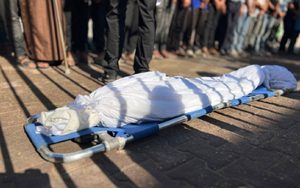
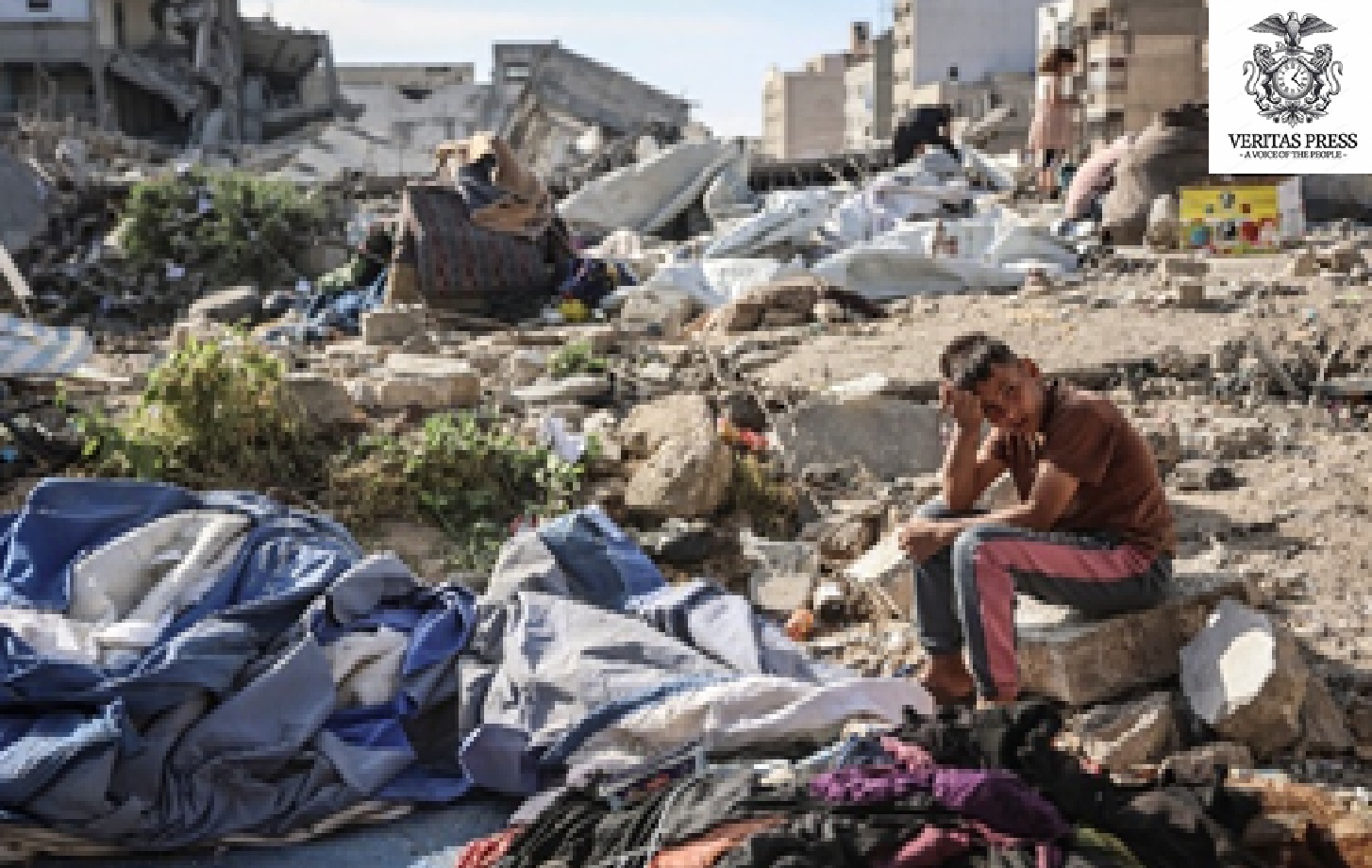
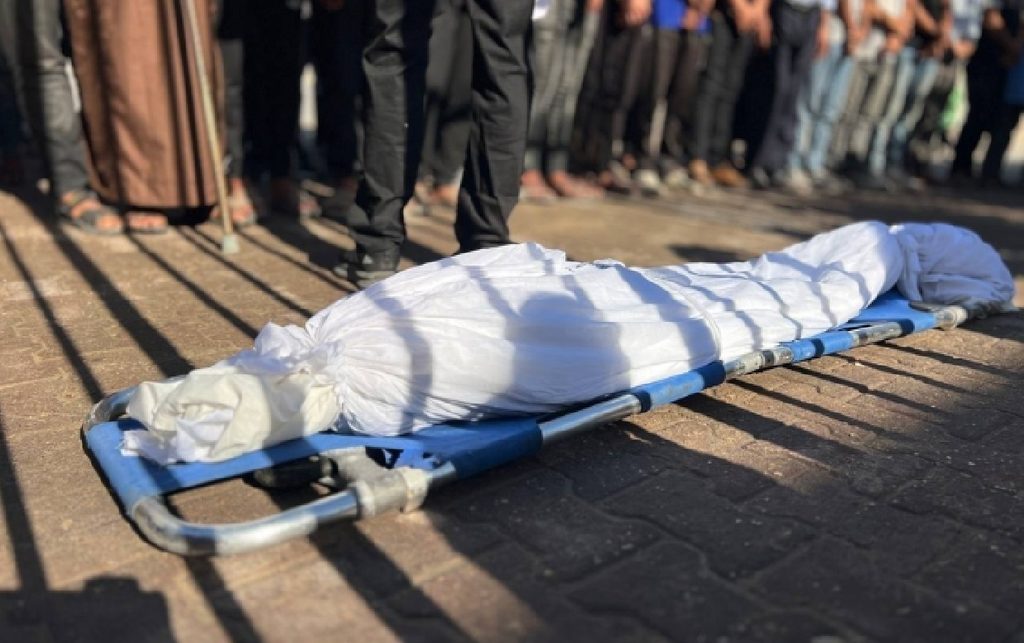
GAZA CITY — On the first morning of Eid al-Adha, as families across the Muslim world gathered to mark the Feast of Sacrifice, an Israeli missile tore through a residential apartment block in central Gaza City, turning celebration into a scene of carnage. By the time paramedics had pulled the dead from the rubble, ten Palestinians lay killed, among them two sisters, Nour, 12, and Yamen, 13, a 17-year-old girl, and an 81-year-old elder. The youngest victim was nine.
The strike, which targeted a home near the Municipal Park on Omar al-Mukhtar Street, was no aberration. It was the latest entry in a ledger of death that Gaza’s Government Media Office now tallies at 3,005 “serious violations” of the ceasefire agreement over 227 days, a truce that was supposed to end the bloodshed but has instead become a diplomatic veil draped over a continuing military campaign.
“It is all lies and nonsense that the war has stopped,” Abu al-Abd Odeh, a relative of slain Hamas armed wing chief Mohammad Odeh, told Reuters. “For the Palestinian people and the people of Gaza, there is no end to the war or improvement in the living situation. We do not feel anything tangible on the ground.”
This dispatch, drawing on testimony from survivors, medical workers, human rights investigators, and official data, reconstructs the anatomy of a ceasefire that never was, and examines how a combination of military impunity, political cover, and humanitarian strangulation has allowed a genocide to continue under a different name.
I. The Eid Massacre: Anatomy Of An Attack.
The strike on the residential building in central Gaza City occurred late Wednesday, on the first day of Eid al-Adha. Al Jazeera correspondent Hind Khoudary, reporting from the scene, described children playing in a nearby park when the missile struck. “Parents were reluctant to leave their homes or tents with their children due to fears they could be killed in Israeli attacks,” she said.
The Palestinian Red Crescent Society confirmed that its crews recovered four bodies and transported eighteen wounded from the site near Al-Israa Tower. By morning, the death toll had climbed to ten. Medical sources identified the victims as including women, children, and the elderly, civilians whose only crime was being present in their home on a religious holiday.
The Israeli military offered its now-familiar justification: it claimed to have targeted two senior Hamas members in northern Gaza. The newspaper Yedioth Ahronoth, citing unnamed security sources, alleged that the targets included the commander of Hamas’s northern Gaza brigade and the deputy commander of the Gaza City brigade. No names were disclosed. Hamas, as of the time of writing, has not commented on the claims.
But even if the Israeli account were accepted at face value, it would raise a question that has haunted every such strike since October 2025: what military calculus justifies obliterating an apartment building full of civilians, including multiple children, to kill two men whose deaths, by Israel’s own admission, have done nothing to alter the strategic balance? The answer, increasingly, is that there is none, only a policy of collective punishment dressed in the language of targeted operations.
II. The Ceasefire That Wasn’t: 3,005 Violations And Counting.
The October 2025 ceasefire, brokered with great fanfare by U.S. President Donald Trump, was heralded as a breakthrough: a three-phase deal that would see a halt to hostilities, a surge in humanitarian aid, and negotiations toward a permanent end to the war. Phase one entered into force. Phase two, which includes Hamas’s disarmament and Israeli military withdrawals, has never been implemented. Both sides are deadlocked in indirect talks, each accusing the other of bad faith.
On the ground, the numbers tell a devastating story. According to Gaza’s Government Media Office, as of Wednesday, Israel has committed 3,005 serious violations of the ceasefire over 227 days. These include airstrikes, artillery shelling, naval fire, drone attacks, incursions, and the continued blockade on the entry of fuel, food, and medicine.
“Since the ceasefire agreement entered into force and up to today, over a period of 227 days, the Israeli occupation has committed a total of 3,005 violations and serious breaches of the agreement,” the office stated. It noted that only 49,973 aid trucks had entered out of the 135,600 that were supposed to arrive, a compliance rate of barely 36%. Fuel deliveries fared even worse: just 14% of the agreed volume.
The human cost of these violations since October 2025: more than 900 Palestinians killed and over 2,700 wounded by Israeli fire, according to the Palestinian Ministry of Health. An additional 777 bodies have been recovered from beneath the rubble of earlier bombardments. The cumulative toll since October 7, 2023, now death toll exceeds 72,797 killed and over 172,821 wounded and maimed, a figure that does not include the thousands still trapped under collapsed buildings, unreachable by rescue teams crippled by equipment shortages and fuel restrictions.
III. A Week Of Bloodshed: From Maghazi To Khan Younis.
The Eid strike did not occur in isolation. It was the culmination of a week of escalating violence that underscored how the ceasefire has done nothing to arrest the killing.
On Tuesday, the Day of Arafah, one of the holiest days in the Islamic calendar, an Israeli drone fired a missile at a group of civilians in al-Maghazi refugee camp in central Gaza. Five Palestinians were killed. Medics and residents said the victims had emerged from their homes when an Israeli-backed Palestinian militia attempted to storm the area. The Israeli military said its troops had identified “armed terrorists” near the armistice line and carried out a strike to “remove the threat.”
The incursion by Israeli-backed armed groups, whom Hamas brands “collaborators”, has become a recurring flashpoint. Leaders of these factions, which operate in areas under Israeli military control, say their aim is to topple Hamas rule. But the result, as in Maghazi, is invariably the same: civilians pay the price.
Hamas spokesperson Hazem Qassem condemned the Maghazi strike as “a new massacre,” describing it as “a continuation of the genocide against the people of Gaza and violation of the ceasefire.” Qassem added a pointed critique of the international guarantors: “The Peace Council bears part of the responsibility due to its incapacity, silence, and adoption of the Israeli position.” Carrying out the killings on the Day of Arafah, he said, exposed “Israel’s racist reality and its disregard for the feelings of Muslims and their religious institutions.”
Later that same Tuesday, an Israeli airstrike hit a vehicle in Khan Younis, killing two Palestinians and wounding several others. The military described it as a “targeted strike” and provided no further details.
On Monday, the violence had already been underway. Ahmed Samir Farhat died of wounds sustained two days earlier in a strike on al-Mawasi, an area Israel had previously designated a “safe zone.” Hours later, another strike hit a tent in the same area, killing a woman and a young girl and injuring 17 others, mostly children. That evening, warplanes bombed a residential block in al-Nuseirat refugee camp after ordering several families to evacuate. Al-Awda Hospital received four wounded from strikes on Block 5.
By the time Gazans woke to Eid morning, the message was unmistakable: no place, no date, no designation, not even a safe zone or a religious holiday, offered protection.
IV.The Assassination Campaign: Decapitation Without Strategy.
Running parallel to the strikes on civilians is a concerted Israeli campaign to eliminate what remains of Hamas’s senior leadership. On Tuesday, just a day before the Eid massacre, an Israeli attack in Gaza City killed Mohammad Odeh, the newly appointed head of Hamas’s armed wing, the al-Qassam Brigades. His wife and son were also killed.
Prime Minister Benjamin Netanyahu said Odeh had served as Hamas’s head of intelligence at the time of the October 7, 2023, attacks. He had assumed command of the armed wing only the previous week, after Israel killed his predecessor, Izz al-Din al-Haddad, in a similar strike.
The assassination of successive military commanders, each one swiftly replaced, raises the question of strategic purpose. If the goal is to degrade Hamas’s operational capacity, the results are difficult to discern: Hamas continues to govern its sliver of coastal territory, its fighters continue to mount operations against Israeli forces, and its political wing remains the indispensable interlocutor in ceasefire negotiations. What the killings do achieve, however, is to sustain the cycle of violence, providing domestic constituencies in Israel with the appearance of action while deepening Palestinian trauma.
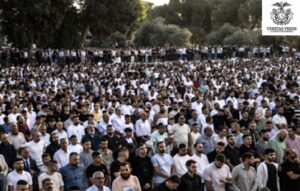
Hundreds of mourners attended Odeh’s funeral in Gaza City, where his relative Abu al-Abd Odeh gave voice to the exhaustion and despair of a population that has endured 20 months of relentless war. “We do not feel anything tangible on the ground,” he told Reuters. “There is no end to the war.”
V. The Released Detainees: “Their Condition Was Severe”
On Wednesday, even as the dead from the Gaza City strike were being counted, a quieter but no less damning process was unfolding at the Kerem Abu Salem crossing. Israeli authorities released fifteen Palestinian detainees from Gaza, including one woman, into the custody of the International Committee of the Red Cross. They were transported to Al-Aqsa Martyrs Hospital in central Gaza for medical examinations.
What the doctors found was, by multiple accounts, harrowing. Quds News Network reported that medical sources described the condition of the released detainees as “severe,” citing starvation and what they termed psychological and physical torture. The Red Cross, in a characteristically restrained statement, confirmed facilitating the transfer of the detainees and assisting in reconnecting them with their families. It noted that since 2023, it has facilitated more than 2,500 such releases.
These fifteen are the visible tip of an invisible iceberg. Thousands of Palestinians remain in Israeli detention, many held under administrative detention, internment without charge or trial, and denied access to legal counsel or independent medical examination. Reports of systematic abuse, including beatings, electric shocks, prolonged stress positions, and deliberate starvation, have been documented by human rights organisations, including B’Tselem, Addameer, and Amnesty International. The release of a handful of detainees, their bodies bearing the evidence of their treatment, offers a fleeting window into what thousands continue to endure in silence.
VI. The Missing: 2,900 Children Lost Beneath The Rubble
On Monday, the Palestinian Centre for the Missing and Forcibly Disappeared launched a correspondence campaign to Members of the European Parliament and international human rights organisations, timed to coincide with International Missing Children’s Day on May 25. Its findings are a catalogue of horror.
The Centre estimates that around 2,900 children in Gaza are missing or forcibly disappeared. Of these, approximately 2,700 are believed to be still trapped beneath the rubble of destroyed buildings, bodies unrecovered because of shortages of heavy equipment, restrictions on fuel, attacks on rescue teams, and the continued presence of Israeli forces in affected areas. This figure is part of a wider total of roughly 7,000 missing persons across the Strip, alongside 21,510 children confirmed killed.
Contact has been lost with around 200 children. Researchers have documented cases in which children were taken by Israeli forces and then vanished, their fate and place of detention never disclosed. Many of these disappearances clustered around aid distribution points and zones under Israeli military control. The Centre’s documentation shows children who had gone to collect flour during periods of extreme hunger, gathered firewood, or returned to destroyed homes to retrieve belongings, and never came back.
“The abandonment of thousands of children’s bodies beneath the rubble is a compounded violation of human dignity,” the Centre stated, warning that the absence of serious international measures to recover the dead and trace the missing only entrenched Israel’s impunity. It called for binding mechanisms to compel Israeli authorities to disclose the names, locations, and health conditions of detained children, and to allow the International Committee of the Red Cross immediate access.
VII. The Humanitarian Catastrophe: Aid As A Weapon.
Under the terms of the October 2025 ceasefire, 600 trucks of aid were to enter Gaza each day, including 50 carrying fuel. The reality has been a fraction of that, and over the past week, the gap has widened into a chasm. Out of 4,200 expected trucks, only 1,196 entered.
The Government Media Office warned ahead of Eid al-Adha of “an unprecedented escalation in the humanitarian catastrophe.” Available supplies no longer meet even minimum needs. Poverty is spreading, displacement is growing, and local production has collapsed. The systematic restriction of aid, fuel in particular, has crippled water desalination plants, sewage treatment, and hospital generators, creating a public health disaster that compounds the direct violence of airstrikes.
Gaza’s health system, already shattered by months of targeted attacks on hospitals, is now contending with a resurgence of preventable diseases, soaring rates of acute malnutrition among children, and a population of amputees and trauma survivors whose rehabilitation needs far exceed available capacity. The weaponisation of humanitarian access, throttling the supply of food, water, and medicine to a captive civilian population, is a form of collective punishment explicitly prohibited under international humanitarian law. It is also, by any honest measure, a core component of the ongoing genocide.
VIII. International Response: Condemnation Without Consequence.
On the diplomatic stage, the response to the continuing bloodshed has followed a pattern as predictable as the strikes themselves: expressions of concern, calls for restraint, and no meaningful action.
United Nations High Commissioner for Human Rights Volker Turk issued a sharp condemnation of Israel’s recent attacks, declaring that “the unrelenting pattern of killings” reflected “sweeping impunity.” He catalogued the contexts in which Palestinians continued to die: “in what is left of their homes, shelters and tents of displaced families, on the streets, in vehicles, at a medical facility and a classroom.” His words were among the strongest to emerge from a UN official since the ceasefire began, but words, as Gazans have learned, do not stop missiles.
The United States, which brokered the ceasefire and remains Israel’s primary arms supplier and diplomatic shield, has issued no equivalent condemnation. The Trump administration, which invested significant political capital in securing the October deal, has shown little appetite for holding Israel to its terms, a silence that speaks to the deeper architecture of impunity that has defined the American-Israeli relationship for decades.
The Arab states that are party to the ceasefire guarantees, including Egypt and Qatar, have expressed frustration through diplomatic channels, but have taken no steps to impose costs on Israel for its violations. The result is a “Peace Council” that Hamas spokesperson Qassem described as bearing partial responsibility “due to its incapacity, silence, and adoption of the Israeli position.”
IX. Analysis: The Political Logic Of A Perpetual “Ceasefire”
To understand why the ceasefire has failed so comprehensively, it is necessary to examine the political logic that sustains it. For Israel, the truce serves multiple purposes: it relieves international pressure, allows for a gradual drawdown of forces from the most costly fronts while retaining control over more than half of Gaza’s territory, and creates a framework in which continued military operations can be justified as “counterterrorism” or “enforcement actions” against ceasefire violations, real or manufactured.
For the United States, the ceasefire is a diplomatic achievement to be preserved in name even as its substance evaporates. Acknowledging its collapse would force uncomfortable choices between pressuring Israel to comply (politically costly) or openly abandoning the deal (diplomatically damaging). The path of least resistance is to maintain the fiction of a ceasefire while ignoring its daily violations.
For Hamas, the ceasefire is an imperfect but essential means of survival. It provides a reprieve from the intensity of the 2023-2025 military campaign, allows for the reconstitution of some organisational capacity, and keeps open the diplomatic channel that, however dysfunctional, remains the only avenue toward an eventual Israeli withdrawal. The group has no interest in declaring the ceasefire dead, even as its members are assassinated and its territory bombarded.
The tragedy is that this alignment of perverse incentives leaves Gaza’s civilian population trapped in a permanent state of neither-war-nor-peace: enough violence to kill and maim daily, enough aid restriction to deepen immiseration, but not enough political will on any side, or from any external power, to either enforce the ceasefire’s terms or admit its failure and chart an alternative path.
X. The Witnesses Speak:
For the people of Gaza, the numbers, 3,005 violations, 905 killed since October, 2,900 children missing, are abstractions. The reality is the weight of a dead child pulled from a collapsed apartment, the taste of flour scraped from a bombed-out warehouse, the scream of a mother who has lost not one but all of her children to the same war that the world insists has “calmed.”
Al Jazeera’s Hind Khoudary captured the mood in Gaza City after the Eid massacre: “Parents were reluctant to leave their homes or tents with their children.” On a day that should have been filled with laughter and prayer and the scent of festive food, the streets fell silent under the shadow of drones.
“We do not feel anything tangible on the ground,” Abu al-Abd Odeh had said, and in those eight words lies the indictment of an entire international system. A ceasefire that cannot be felt, that does not stop the bombs or open the crossings or return the missing, is not a ceasefire at all. It is a continuation of war by other means, and the world’s willingness to accept it as such is a measure of how cheaply Palestinian life is valued.
Epilogue: The Missing Return.
As this report went to publication, the fifteen released detainees were undergoing treatment at Al-Aqsa Martyrs Hospital. Their gaunt faces and hollow eyes told a story of months of deprivation. One, a middle-aged man who asked not to be named, told medics he had lost more than 30 kilograms during his imprisonment. Another, a woman in her twenties, was unable to speak, her wrists still bearing the deep furrows of plastic cuffs.
The Red Cross facilitated their transfer and family reconnections, a humanitarian function it has performed more than 2,500 times since 2023. But for the thousands still held, and for the families of the thousands still missing beneath the rubble, such operations are a drop in an ocean of grief.
“We demand the world to intervene,” said a spokesman for the Centre for the Missing. “These children are not numbers. They had names, dreams, families. They deserve to be found, alive or dead, and their families deserve the truth.”
As of Thursday morning, no international mechanism has been established to answer that demand. The ceasefire violations continue. The aid trucks remain stalled at the border. And in Gaza City, a family buries Nour and Yamen, sisters who wanted only to celebrate Eid.
Source:Veritas Press C.I.C. | Multi News Agencies
Submissions:
For The Secure Submission Of Documentation, Testimonies, Or Exclusive Investigative Reports From Any Global Location, Please Utilise The Following Contact Details For Our Investigations Desk: enquiries@veritaspress.co.uk or editor@veritaspress.co.uk
Help Support Our Work:
Popular Information is powered by readers who believe that truth still matters. When just a few more people step up to support this work, it means more lies exposed, more corruption uncovered, and more accountability where it’s long overdue.
Help Protect Independent Journalism, Which Is Currently Under Attack.
If you believe journalism should serve the public, not the powerful, and you’re in a position to help, becoming a DONATOR or a PAID SUBSCRIBER truly makes a difference.
DONATION APPEAL: If You Found This Reporting Valuable, Please Consider Supporting Independent Journalism.
Help Support Our Work – We Know, We Know, We Know …
Seeing these messages is annoying. We know that. (Imagine what it’s like writing them … )
Your support fuels our fearless, truth-driven journalism. In unity, we endeavour to amplify marginalised voices and champion justice, irrespective of geographical location.
But it’s also extremely important. One of Veritas Press’s greatest assets is its reader-funded model.
1. Reader funding means we can cover what we like. We’re not beholden to the political whims of a billionaire owner. We are a small, independent and impartial organisation. No one can tell us what not to say or what not to report.
2. Reader funding means we don’t have to chase clicks and traffic. We’re not desperately seeking your attention for its own sake: we pursue the stories that our editorial team deems important and believe are worthy of your time.
3. Reader Funding: enables us to keep our website and other social media channels open, allowing as many people as possible to access quality journalism from around the world, particularly those in places where the free press is under threat.
We know not everyone can afford to pay for news, but if you’ve been meaning to support us, now’s the time.
Your donation goes a long way. It helps us:
Keep the lights on and sustain our day-to-day operations
Hire new, talented independent reporters
Launch real-time live debates, community-focused shows, and on-the-ground reporting
Cover the issues that matter most to our communities, in real time, with depth and integrity
We have plans to expand our work, but we can’t do it without your support. Every contribution, no matter the size, helps us stay independent and build a truly people-powered media platform.
If you believe in journalism that informs, empowers, and reflects the communities we serve, please donate today.
Kamran Faqir is a volunteer investigative journalist and writer committed to exposing hidden truths and amplifying underreported stories. Driven by social justice, he brings sharp insight and fearless truth-telling to independent journalism. NUJ registered.
SEATTLE, TEHRAN — The U.S. Department of Homeland Security (DHS) will allow Iran’s national football team to enter the country 48 hours before their critical World Cup match against Egypt on Friday, a modest concession in a tournament where Team Melli’s travel conditions have sparked claims of oppression and competitive disadvantage.