



Author:
Help support our mission, donate today and be the change. Every contribution goes directly toward driving real impact for the cause we believe in.
A Deep-Dive Investigation Into The Evolution Of Extreme Right-Wing Terrorism, Its Digital Architecture, And The Communities Living Under Its Shadow.
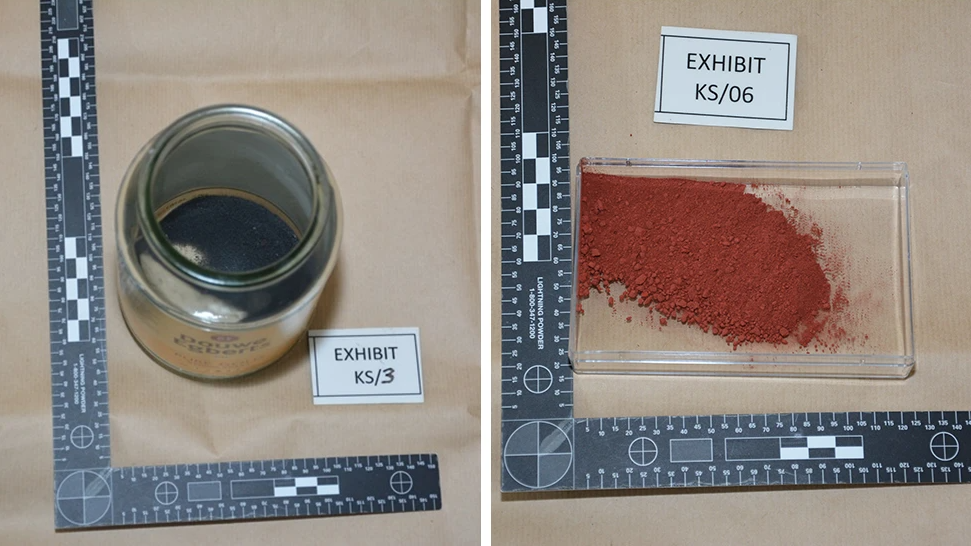
BIRMINGHAM, JULY 2026 – On a drizzly Tuesday morning in a nondescript magistrates’ court, a 17-year-old from Solihull, who cannot be named for legal reasons, entered a guilty plea to multiple terrorism offences. The teenager had downloaded bomb-making instructions, stockpiled components for explosive devices, and amassed a library of propaganda from The Base – the proscribed neo-Nazi accelerationist network. On a gaming chat server he frequented, he had shared a document titled “The Great Replacement: A Call to Arms”, littered with fantasies of cleansing Britain of its Muslim population. His barrister offered mitigation: he was lonely, radicalised online during the post-pandemic years, and had never physically met another extremist. The judge, passing a custodial sentence, remarked that the case represented “a disturbing new normal”.
This teenager is not an outlier. He is a data point in a pattern that counter-terrorism officials, community groups, and digital researchers have been desperately trying to map. The Base, founded in 2018 by an American organiser known as “Roman Wolf”, has transformed the landscape of extreme right-wing terrorism (ERWT) in the West. Proscribed in the United Kingdom in July 2021, alongside its ideological cousin Atomwaffen Division, it remains small in membership but vast in influence. Its accelerationist creed, the belief that society must be pushed into collapse through acts of terrorism to birth a white ethno-state, has leached from encrypted chatrooms into the smartphones of alienated young men across Britain. And for British Muslims, the threat is not abstract. It is etched into the architecture of their daily lives: the mosque they pray in, the headscarf worn by a sister, the Islamic school their children attend.
This article, drawing on months of conversations with security officials, deradicalisation practitioners, community activists, local imams, and former extremists, interrogates the anatomy of this threat. It examines how The Base operates, why its ideology disproportionately targets Muslims, and whether the state’s response is fit for purpose in an era when the most dangerous extremist cell might be a single bedroom in suburbia.
The Accelerationist Virus: Beyond Traditional Far-Right Politics.
To understand The Base, one must first shed the lazy assumption that the far right is a monolithic block of football hooligans, reactionary, myopic, close-minded, and disillusioned pensioners. Contemporary ERWT is a hydra of subcultures, each with distinct tactics and enemies. The European Union’s Terrorism Situation and Trend Report (TE-SAT) 2025 identified at least six ideological currents: neo-Nazi movements, anti-Islam and anti-migration groups, Identitarians, ultranationalist and neofascist organisations, sovereign citizen extremists, and single-issue misogynist networks like the incel movement. The Base sits squarely in the neo-Nazi camp, but it draws nourishment from all these roots, cross-pollinating grievances in online ecosystems.
Unlike earlier waves of skinhead nationalism or even the street-protest politics of the English Defence League, The Base embraces what one internal manifesto calls “leaderless resistance with a digital spine”. Its name is a direct, provocative translation of the Arabic al-Qaeda, a deliberate homage to the decentralised, cell-based terrorism it seeks to mirror. Where jihadist groups fused Salafi theology with operational flexibility, The Base fuses a cultish devotion to the writings of American neo-Nazi James Mason, author of the infamous Siege, with a tech-savvy, encrypted operational style.
“Accelerationism is the theological core,” explains Dr Hannah Pearce, senior research fellow at the Centre for the Study of Radicalisation at King’s College London. “It’s the conviction that liberal democracy is so corrupt and so irredeemable that it must be destroyed through chaos. They don’t want to reform the system; they want to burn it down, hoping that from the ashes a racially pure order will emerge. That makes them fundamentally different from the populist right parties we see in parliaments. It makes them terrorists.”
The Base’s training materials, leaked by anti-fascist researchers in 2020 and still circulating on fringe platforms in 2026, advocate for “lone wolf” attacks on critical infrastructure, assassinations, and the deliberate targeting of “symbolic soft targets” – a category that explicitly includes mosques, synagogues, and community centres. Members are instructed to undergo paramilitary fitness, practise operational security, and prepare for a coming “race war” that will be triggered by societal collapse. In leaked voice chats, members speak in almost millenarian terms about the collapse being imminent.
“Muslims Are The Existential Enemy”: The Great Replacement And Its Deadly Logic.
For British Muslims, The Base represents something more dangerous than a gang of nihilists. It is an ideological engine that casts them as the existential threat requiring elimination. The core narrative is the “Great Replacement” conspiracy theory, born in French far-right circles and amplified globally by figures like the Christchurch terrorist. It alleges that a deliberate, elite-driven project is replacing white Christian Europeans with non-white, predominantly Muslim immigrants, leading to the cultural and racial extinction of the West.
Tell MAMA, the national organisation that monitors anti-Muslim hatred, has tracked how this narrative translates into real-world violence. In their 2025 annual report, The Intersection of Hate, they documented a 43% increase in incidents targeting mosques and Islamic institutions compared to the previous year, with a sharp spike during periods of international conflict involving Muslim-majority nations. “We see a direct correlation between accelerationist propaganda spreading online and the nature of offline attacks,” says Iman Atta, Director of Tell MAMA. “When a young man downloads a Base manual that calls for the destruction of ‘the Dome of the Rock, and its imitators in the West’, a mosque in Manchester is not an abstraction. It becomes a target. Our data shows that women wearing hijab or niqab are disproportionately victimised, and that the language of replacement fuels the abuse they experience.”
The terror attacks bear this out. The Christchurch massacre of 2019, in which 51 Muslim worshippers were murdered, was saturated with The Great Replacement rhetoric, and the perpetrator’s manifesto is still venerated in Base-linked channels. Copycat attacks in Oslo, Buffalo, and Bratislava in subsequent years were directly inspired by that template. In the UK, counter-terrorism sources confirm that between 2022 and 2025, at least six disrupted ERWT plots involved suspects who had specifically cited the “Muslim threat” to British identity and had gathered intelligence on local mosques. In one 2024 case in Leicester, a 22-year-old man was convicted of planning to firebomb a Shia Islamic centre; his digital footprint revealed extensive engagement with The Base’s propaganda and a handwritten note declaring, “Every mosque is a military outpost.”
“We are the primary target, and we know it,” says Imam Qasim Mahmood of Birmingham’s Central Mosque, which has invested heavily in security hardening with the support of the Home Office’s Protective Security Scheme. “After every high-profile Islamist attack, our community braces for the backlash. But this is not just backlash. This is an organised doctrine that says my existence as a Muslim in Britain is a colonial invasion. Our young people are anxious. They read the Telegram channels. They know these groups exist.”
In addition, a particularly virulent strand of this propaganda is the deliberate falsification of crime statistics to paint Muslim men as uniquely predisposed to sexual violence. Across encrypted Base channels and fringe social media platforms, infographics circulate claiming that Muslim perpetrators commit the overwhelming majority of grooming gang and rape offences in the UK, figures often stripped of context, based on debunked amateur datasets, or fabricated outright. These narratives are not merely crude slurs; they are a calculated recruitment tool. “The white woman is the holy grail of the enemy,” reads one internal Base manual leaked in 2023, “and every rape by a migrant is a soldier in our war.” Tell MAMA and other monitoring organisations have documented how spikes in anti-Muslim hate crime frequently follow viral social media posts inflating isolated, horrifying cases into a pattern of systemic predation. Dr Hannah Pearce, a senior research fellow at the Centre for the Study of Radicalisation, explains that such falsehoods fuse the accelerationist obsession with racial purity to a perverse chivalry: “They paint themselves as defenders of white womanhood against a rapacious Muslim other. It’s a potent radicalisation cocktail for young men who already feel emasculated.” Yet official data consistently refutes the right-wing myth; the 2024 Crime Survey for England and Wales found that the vast majority of child sexual abuse is committed by white men, and multi-agency reviews of group-based offending stress that perpetrators come from all ethnic backgrounds. The Home Office’s own report on group-based child sexual exploitation explicitly cautions against ethnic profiling, noting that the data does not support the narrative of a Muslim monopoly on such crimes. Nevertheless, the lie persists, amplified by mainstream politicians who invoke “grooming gangs” in racially coded terms, providing a veneer of legitimacy that extremists then weaponise to justify violence against British Muslims. As Iman Atta of Tell MAMA puts it: “This weaponised falsehood is not a fringe obsession; it is at the very heart of how accelerationist terror groups dehumanise our community and groom their followers to kill.”
The Hyper-Masculine Pipeline: Gaming, Misogyny, And The Lonely Boy.
One of the most insidious evolutions, investigative reports reveal, is the weaponisation of hyper-masculinity and misogyny as a gateway into accelerationist extremism. While misogyny is not a terrorist ideology per se, it serves as a powerful emotional lubricant. The Base’s recruitment ecosystem, sprawling across gaming platforms like Discord, Roblox, and Steam, as well as encrypted apps, deliberately targets boys and young men grappling with isolation, rejection, and a crisis of identity. The online subculture of Siege fandom, which venerates Mason’s calls for a ruthless warrior elite, is steeped in contempt for women and sexual conquest as markers of racial vigour.
“They draw them in through fitness channels, ‘self-improvement’ programmes that descend into racism, and then the hardcore ideology,” explains Liam Duffy, a former right-wing extremist now working with the Exit UK deradicalisation charity. “I was 15 when I first encountered National Action material. But now, with The Base, it’s gamified. There are levels. You prove yourself by sharing propaganda, then by undertaking physical training, then by collecting ‘intel’ on targets. The misogyny is the hook. Boys who feel rejected by girls are told that feminism has emasculated them, that white women are being stolen by Muslim men, that the only way to reclaim manhood is through violent action. By the time they get to the hardcore, they’ve already absorbed a worldview where Muslims are the enemy, and women are objects of racial property.”
Duffy’s testimony is corroborated by a 2026 study from the Institute for Strategic Dialogue (ISD), which analysed 120 UK-based users of accelerationist Telegram channels. Over 80% were male, under 25, and had prior engagement in incel-adjacent forums or “manosphere” content. The study highlighted the role of “subversive exposure”: extremists infiltrate non-political gaming communities, post memes that skirt moderation, and gradually escalate the hateful content. “A 14-year-old on Minecraft doesn’t wake up one morning wanting to kill Muslims,” says ISD senior analyst Dr. Emily Reubens. “He gets invited to a server where edgy jokes normalise Holocaust denial. Then he’s directed to a YouTube fitness influencer who talks about the ‘decline of Western man’. Then a direct message drops a link to an encrypted group where open neo-Nazi manuals are shared. The algorithm does the rest.”
The State’s Response: Proscription, Prevention, And The Platform Gap.
The UK’s legal armoury has expanded. The Base was proscribed under the Terrorism Act 2000 in July 2021, making membership or support a criminal offence. The same year, the government designated the entire Atomwaffen Division network. Counter-Terrorism Policing (CTP) has confirmed that ERWT referrals now account for roughly a quarter of the Prevent caseload, a figure that has remained stubbornly high since 2020. In a rare on-the-record interview, Commander Dominic Murphy, head of CTP’s investigations unit, told reporters in February 2026: “We are arresting people almost every week linked to extreme right-wing ideology. The threat is persistent, and it’s becoming younger. We’re seeing a disturbingly high number of teenagers who have never been politically active but who’ve been radicalised entirely online. The Base is a constant presence in those investigations.”
Yet criticism mounts that the response remains reactive and overly reliant on content takedowns that extremists easily circumvent. Encryption and decentralised platforms: Element, SimpleX, even obscure forums on the dark web, allow The Base’s leadership cadre, believed to be operating between North America and Eastern Europe, to direct cells without detection. A 2026 joint investigation by European digital outlets revealed that a core organiser using the alias “Diogenes” had been running training camps in a Baltic state as recently as late 2025, with participants from the UK. “Proscription is vital, but it’s like playing whack-a-mole,” argues Sajid Khan, a community safety advisor and trustee of the Muslim Council of Britain’s security panel. “When you ban one group, the ideology morphs and reappears under a new banner. We need a much more aggressive approach to the platforms themselves. The Online Safety Act gives Ofcom powers, but so far, enforcement has been timid. If a gaming chatroom is incubating terrorists, the company must be held criminally liable.”
Local Muslim communities, too, voice frustration at what they see as a persistent double standard in public discourse. “When an Islamist-inspired attack happens, politicians line up to demand that Muslim communities ‘do more’ to root out extremism,” says Fatima Rajab, a Bradford-based activist and hate-crime caseworker. “But when a white teenager is arrested with a bomb factory targeting our mosque, there’s rarely a call for white communities to examine their sons. The burden is uneven. We are expected to be perpetually vigilant while also being the victims. It’s exhausting.”
A Future Written In Code: The Threat Ahead.
Where is this heading? Security services in a 2026 threat assessment, seen by this publication, warn that the fusion of accelerationist extremism with easily accessible AI tools could lower the barrier to catastrophic terrorism. “We have evidence that Base-affiliated individuals are experimenting with AI-generated deepfakes of communal leaders, and using large language models to refine bomb-making instructions and translate propaganda seamlessly,” the document states. “The potential for highly personalised radicalisation at scale is real.” Meanwhile, the broader erosion of social cohesion, stoked by political rhetoric on immigration and the weaponisation of anti-refugee sentiment, provides fertile soil. When mainstream figures speak of “invasion” and “enemies within”, the accelerationists hear validation.
Yet hope resides in the very communities targeted. The Bilaal Centre in East London, for instance, runs a digital resilience programme for young Muslims, teaching them to recognise and report extremist content while building theological literacy to counter narratives of perpetual victimhood. Interfaith networks, such as the Faiths Forum for London, have pioneered joint security patrols and dialogue initiatives that build trust. “The extremists want us isolated and afraid,” says Imam Mahmood. “The most radical act of resistance is to build bridges openly. We must not lock ourselves away.”
As the Solihull teenager begins his sentence, he leaves behind a trail of digital fingerprints that paint a portrait of a boy swallowed by a machine. His story is a warning: The Base may never command an army, but it has perfected the art of turning a nation’s own lost sons into weapons aimed squarely at its Muslim citizens. Combating that requires more than police raids and proscription orders. It demands a society that refuses to let hatred fester in the corners of the internet, that supports young men before they seek belonging in virtual death cults, and that listens, without deflection, when Muslims say: we are afraid, and we need you to see what they see.
As Iman Atta of Tell MAMA puts it, her voice weary but resolute: “We document every incident, every shattered window, every woman spat at, every online death threat. But behind every statistic is a human being living in a permanent state of hyper-vigilance. The Base might be a fringe group, but its ideas are a poison seeping into the mainstream. And until we treat that poison for what it is – an existential threat to our multi-faith democracy – we will continue to mourn.”
Conclusion: The Machinery Of Hate And The Failure To Dismantle It.
In the final analysis, the case of the Solihull teenager is not an anomaly to be lamented in isolation, but a symptom of a deep and festering wound in the body politic. This investigation has traced the trajectory of a threat that begins not with a military command structure but with a whisper in a gaming headset, a falsified statistic about rape, a meme that tells a lonely boy his whiteness is both a curse and a calling. The Base, as a proscribed organisation, may be small, but its ideological architecture has proven terrifyingly resilient. It has constructed a radicalisation pipeline that fuses hyper-masculine grievance, accelerationist nihilism, and a carefully curated library of anti-Muslim falsehoods, all delivered through platforms that the British state still seems unable or unwilling to truly police. And at the receiving end of that pipeline, consistently and deliberately, stand British Muslims.
What makes this moment particularly perilous is not merely the existence of extremist cells, but the cultural groundwater in which they swim. The deliberate fabrication of crime statistics, claiming that Muslim men are uniquely responsible for sexual violence, is not a fringe obsession; it is a strategic instrument of dehumanisation that bridges the gap between mainstream prejudice and terrorist violence. As this investigation has documented, Base manuals explicitly frame rape as a racialised act of war, and they are emboldened when politicians and media figures recycle the very narratives of “grooming gangs” that extremists weaponise. Dr. Hannah Pearce’s warning that such falsehoods “fuse the accelerationist obsession with racial purity to a perverse chivalry” exposes a radicalisation engine far more sophisticated than simple bigotry. It is a machinery that turns the genuine horror of child sexual exploitation into a recruitment sergeant for genocide.
The state’s response, however, has been marked by profound contradictions. Proscription orders and arrests have undoubtedly disrupted plots, and Commander Dominic Murphy is correct that the police are arresting right-wing extremists almost weekly. But a purely securitised response mistakes the fever for the disease. The Online Safety Act remains a paper tiger if Ofcom cannot or will not hold gaming and encrypted platforms criminally liable for the hate and terror manuals they incubate. More fundamentally, the government’s own rhetoric on immigration, border security, and national identity often echoes, in sanitised form, the same chords of “invasion” and “enemy within” that The Base orchestrates into symphonies of violence. A Home Office that rightly condemns accelerationism while simultaneously creating a hostile environment for refugees is not offering moral clarity; it is fertilising the soil that extremists cultivate.
There is also a searing injustice in the distribution of vigilance. Muslim communities, as Imam Qasim Mahmood and Fatima Rajab powerfully articulate, are expected to be both the canaries in the mine and the miners themselves, funding their own mosque security, enduring disproportionate abuse, and yet still called upon to “do more” when the bombs are planted by those who despise them. The double standard is not merely hypocritical; it is operationally dangerous. It alienates the very communities whose cooperation is essential for intelligence gathering, and it signals to the far right that their targets, not their violence, are the source of societal anxiety.
Looking forward, the fusion of accelerationist ideology with artificial intelligence tools, as flagged in the 2026 threat assessment, threatens to make the Solihull case a prologue rather than a cautionary tale closed. Deepfakes of imams inciting violence, AI-generated child sexual abuse material falsely attributed to Muslim men, perfectly translated propaganda that bypasses language barriers-all this is no longer science fiction. The Base’s ideological franchise is built to survive proscription precisely because it has never relied on membership cards; it relies on a digital ecosystem that will continue to radicalise lonely boys as long as the combination of algorithmic amplification, encrypted safe havens, and political indifference persists.
Ultimately, the fight against The Base is not a contest between the state and a handful of terrorists. It is a test of whether Britain is prepared to confront the continuum that runs from a tabloid headline about “Muslim rape gangs” to a teenager stockpiling explosives for a mosque. Until the country musters the honesty to see that connection, to treat anti-Muslim hatred not as a regrettable byproduct of free speech but as the recruiting fuel for terrorism, the machinery of hate will keep humming. And the next teenager who downloads a Base manual will not be the last. As Iman Atta of Tell MAMA says, with the weariness of someone who has documented the slaughter of too many sacred spaces: “We will continue to mourn until you see what they see, and until you care enough to stop it before the bomb is built.”
Source: Veritas Press C.I.C. | Multi News Agencies
Help Support Our Work By Donating
Popular Information is powered by readers who believe that truth still matters. When just a few more people step up to support this work, it means more lies exposed, more corruption uncovered, and more accountability where it’s long overdue.
Help Protect Independent Journalism, Which Is Currently Under Attack.
If you believe journalism should serve the public, not the powerful, and you’re in a position to help, becoming a DONOR or a PAID SUBSCRIBER truly makes a difference.
DONATION APPEAL: If You Found This Reporting Valuable, Please Consider Supporting Independent Journalism.
Your support fuels our fearless, truth-driven journalism. In unity, we endeavour to amplify marginalised voices and champion justice, irrespective of geographical location. We operate independently, without any financial backing from billionaires.
But it’s also extremely important. One of Veritas Press’s greatest assets is its reader-funded model.
1. Reader funding means we can cover what we like. We’re not beholden to the political whims of a billionaire owner. We are a small, independent and impartial organisation. No one can tell us what not to say or what not to report.
2. Reader funding means we don’t have to chase clicks and traffic. We’re not desperately seeking your attention for its own sake: we pursue the stories that our editorial team deems important and believes are worthy of your time.
3. Reader Funding: enables us to keep our website and other social media channels open, allowing as many people as possible to access quality journalism from around the world, particularly those in places where the free press is under threat.
We know not everyone can afford to pay for news, but if you’ve been meaning to support us, now’s the time.
Your donation goes a long way. It helps us:
- Keep the lights on and sustain our day-to-day operations
- Hire new, talented independent reporters
- Launch real-time live debates, community-focused shows, and on-the-ground reporting
- Cover the issues that matter most to our communities, in real time, with depth and integrity
We have plans to expand our work, but we can’t do it without your support. Every contribution, no matter the size, helps us stay independent and build a truly people-powered media platform.
If you believe in journalism that informs, empowers, and reflects the communities we serve, please donate today.
Submissions:
For The Secure Submission Of Documentation, Testimonies, Or Exclusive Investigative Reports From Any Global Location, Please Utilise The Following Contact Details For Our Investigations Desk: enquiries@veritaspress.co.uk or editor@veritaspress.co.uk
NEWCASTLE UPON TYNE — Health authorities have confirmed two separate cases of Hepatitis A among
Serbian Orthodox leader’s unprecedented intervention exposes the systematic erosion of Christianity’s oldest continuous community, and
GENEVA — A United Nations fact-finding mission has concluded there are “reasonable grounds to believe”
Iran’s GDP is projected to contract by 5.4 to 6.1% in 2026, its worst performance
The Trump administration is preparing a $2.8 billion weapons package for Israel containing 40,000 2,000-pound
Film alleges mass civilian deaths are routinely built into military decisions amid Israel’s genocidal war
The Israeli rights group says violence, displacement, economic strangulation, and settlement expansion form part of

Houthi forces have captured the historic Red Sea port of Mocha and are advancing on
London’s historic sanctions against Israeli settlements mark a watershed moment in UK foreign policy, but
With 95% of Gaza’s population now wholly dependent on aid and more than 90% stripped