Kamran Faqir is a volunteer investigative journalist and writer committed to exposing hidden truths and amplifying underreported stories. Driven by social justice, he brings sharp insight and fearless truth-telling to independent journalism. NUJ registered.
Original Article Date Published:
Article Date Modified:
20 minutes
Views:1,205
Listen to this article
Help support our mission, donate today and be the change. Every contribution goes directly toward driving real impact for the cause we believe in.
The Unravelling Of The US-Iran Truce, The Billions Held Hostage, And The Red Lines Being Drawn Across The Persian Gulf.
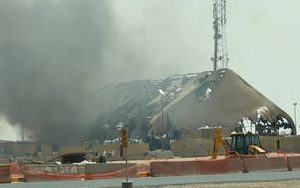
BANDAR ABBAS, IRAN — The explosions that rattled windows and nerves along Iran’s southern coastline on Monday night did more than shatter the fragile quiet of a seven-week ceasefire. They exposed, with the cold clarity of ordnance lighting up the Hormozgan sky, the fundamental bankruptcy of a diplomatic process that was supposed to have ended the bloodiest chapter in US-Iranian hostilities since the tanker wars of the 1980s.
What unfolded in the hours that followed, duelling narratives, scrambled jets, downed drones, and a cascade of threats calibrated to echo across global energy markets, reveals a confrontation that has metastasised far beyond the initial logic of February’s US-Israeli strikes. The war that began on February 28 with the assassination of Iran’s Supreme Leader and the bombing of its nuclear facilities has now entered a new, more dangerous phase: one in which the mechanisms designed to stop the killing are themselves becoming instruments of the next escalation.
PART I: The Anatomy Of A Violation.
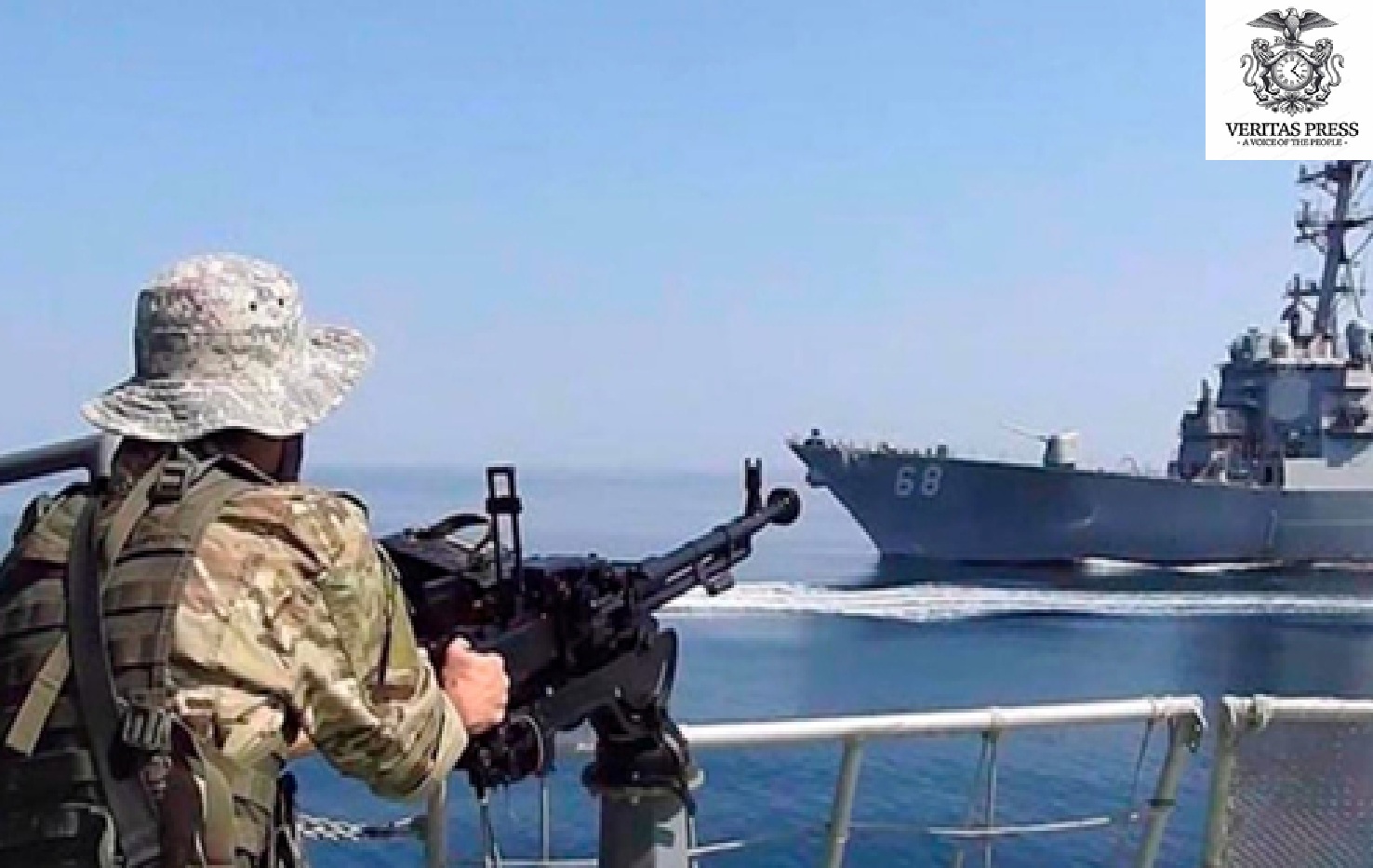
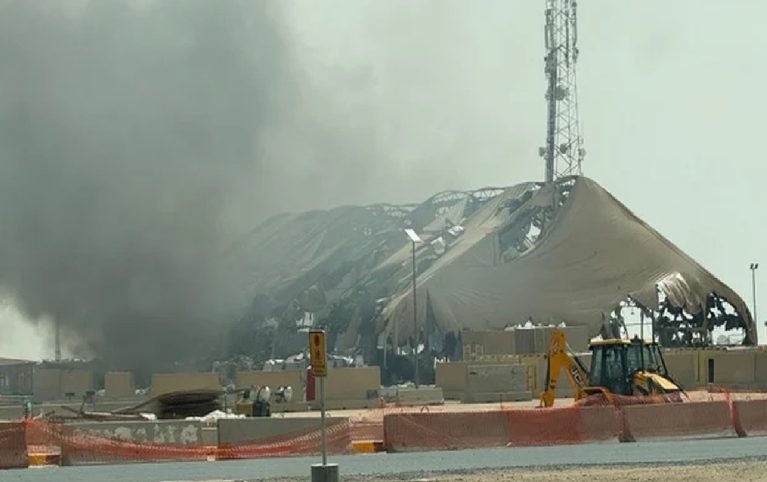
The sequence of events on Monday, May 25, remains fiercely contested in its details but devastatingly clear in its implications. According to US Central Command (CENTCOM) spokesman Timothy Hawkins, American forces conducted what he termed “self-defence strikes” targeting “missile launch sites and Iranian boats attempting to emplace mines” near the strategic port city of Bandar Abbas, which commands the eastern shore of the Strait of Hormuz.
The language was carefully chosen. “Self-defence strikes.” “Protecting our troops.” The rhetorical architecture of the American justification rests on an implicit claim: that Iranian forces were engaged in offensive minelaying operations that threatened US naval assets, and that Monday’s strikes were therefore reactive, proportionate, and consistent with the terms of the April 8 ceasefire.
Iran tells a radically different story, one that the physical evidence, as reported by multiple Iranian news agencies, appears to partially corroborate. Explosion-like sounds were reported not from a single, isolated military installation but across a broad arc of civilian-populated coastline: east of Bandar Abbas, near Sirik, near Jask. Mehr News Agency, which initially reported the blasts, moved quickly to reassure its audience that “the situation in the port city remains fully under control, with no cause for concern and normal activities continuing uninterrupted”, a formulation that inadvertently confirmed the abnormality of the circumstances requiring such reassurance.
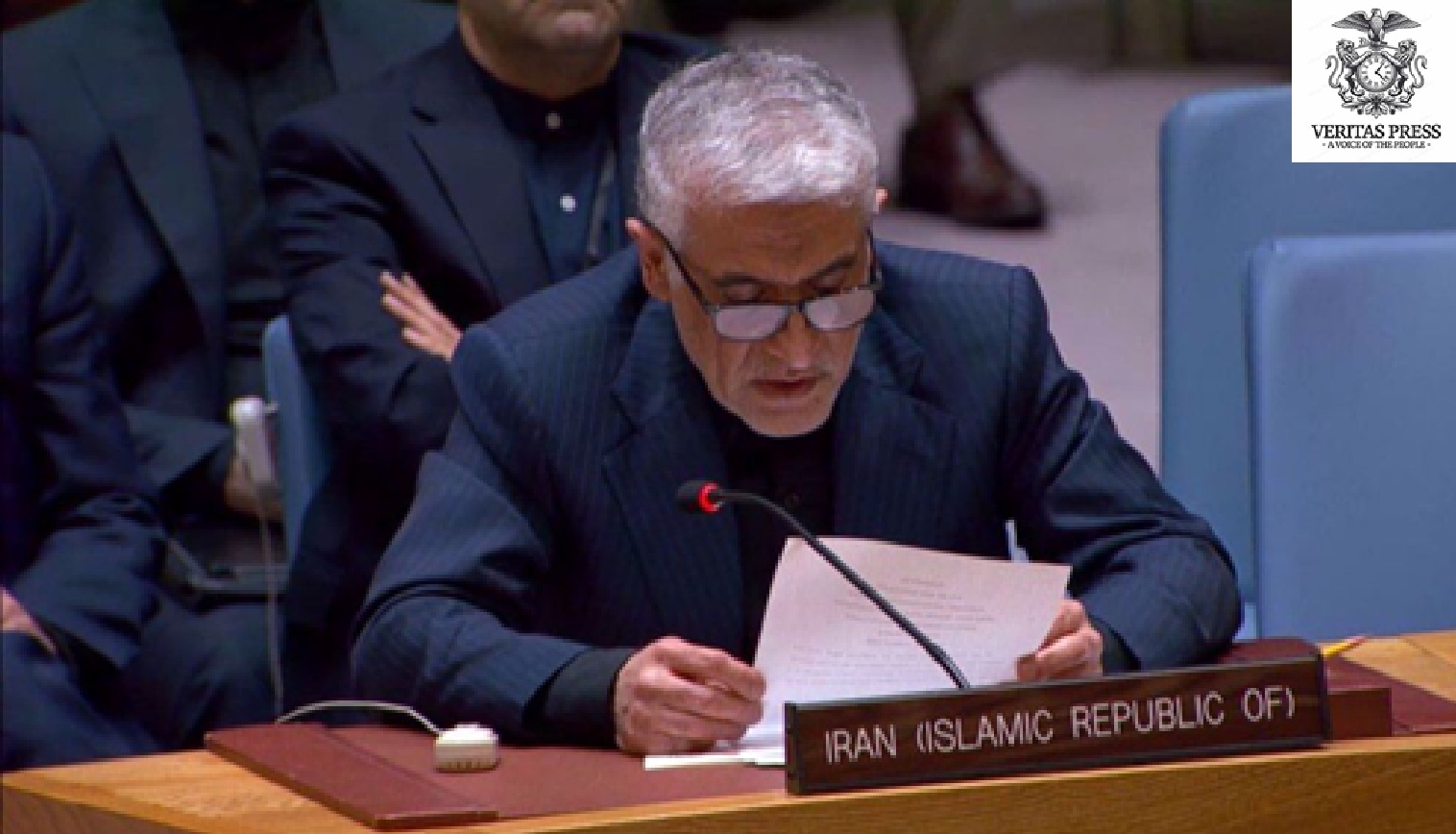
The Iranian Foreign Ministry’s response, released Tuesday morning, abandoned the careful ambiguity that had characterised earlier Iranian statements about ceasefire violations. It called the strikes “flagrant and unjustified” and accused Washington of exposing “the ill-will and bad faith of the United States’ ruling establishment before the Iranian nation, the peoples of the region, and the international community”.
The timing, the statement emphasised, was no coincidence: “The perpetration of these aggressive actions, coinciding with the ongoing diplomatic process mediated by Pakistan, has once again laid bare the ill-will and bad faith of the United States.”
This is the core of Iran’s accusation, not simply that the US violated the ceasefire, but that it did so while negotiations were actively underway, a move Tehran interprets as either a negotiating tactic of the crudest sort or evidence that Washington never intended to honour the truce in the first place.
PART II: The IRGC’s Calculus.
If the Foreign Ministry’s statement represented the diplomatic track, the Islamic Revolutionary Guard Corps (IRGC) communication that followed was its military corollary, and it carried implications that extend far beyond Monday’s exchanges of fire.
In a statement published by the Tasnim news agency, the IRGC announced that its air defence units had shot down a US MQ-9 Reaper drone over Persian Gulf waters and had “forced an RQ-4 Global Hawk surveillance drone and an F-35 stealth fighter to retreat from Iranian airspace”. The IRGC described the US incursion as “continuing its adventurist interventionist actions in the region and aggressive behaviour”.
The claim is significant on multiple levels. The MQ-9 Reaper is not merely a surveillance platform; it is a hunter-killer drone capable of carrying Hellfire missiles and guided bombs. It’s reported destruction represents a direct kinetic engagement between Iranian and American forces, the kind of incident that, in any other context, would be treated as an act of war.
The F-35 component is, if anything, more provocative. The F-35 Lightning II is the most advanced stealth fighter in the American arsenal, a fifth-generation aircraft designed specifically to penetrate sophisticated air defence networks. That Iranian air defence systems were able to detect, track, and “force to retreat” an F-35 represents both an operational achievement for Tehran and an intelligence failure for Washington, one that raises uncomfortable questions about the vulnerability of America’s premier combat aircraft to Iranian radar systems, likely bolstered by Russian and Chinese technology transfers in recent years.
The IRGC’s warning was calibrated for maximum strategic effect: “The Islamic Revolutionary Guard Corps warns against any violation of the ceasefire by the aggressive US military, and considers its right to reciprocal response to be legitimate and certain”.
PART III: The Shekarchi Doctrine.
But the most consequential Iranian statement of the past 48 hours came not from the Foreign Ministry or the IRGC, but from Brigadier General Abolfazl Shekarchi, the senior spokesman for Iran’s armed forces.
His words, carried by the semi-official Fars News Agency, represent the most explicit articulation of Iranian military doctrine since the February 28 attacks, and they introduce a threat vector that transforms the confrontation from a bilateral US-Iranian conflict into a global economic crisis-in-waiting.
“If the region enters another round of war,” Shekarchi said, “Iran’s response will extend beyond regional borders and will be much heavier and stronger”.
The phrase “beyond regional borders” is not hyperbole. It is a specific, doctrinal signal. Previous Iranian retaliatory operations, including the 100 waves of strikes under Operation True Promise 4, were geographically contained within the Middle Eastern theatre, targeting Israel, US bases in the Gulf, and allied facilities. A response that extends “beyond regional borders” implies targets in the Mediterranean, the Red Sea, potentially even the Indian Ocean or beyond. It suggests the activation of proxy networks and asymmetric capabilities that Iran has cultivated for decades but has, until now, refrained from fully unleashing.
Shekarchi then delivered the line that energy markets cannot ignore: if Iranian oil exports are blocked, Tehran will move to prevent the export of oil from the entire region.
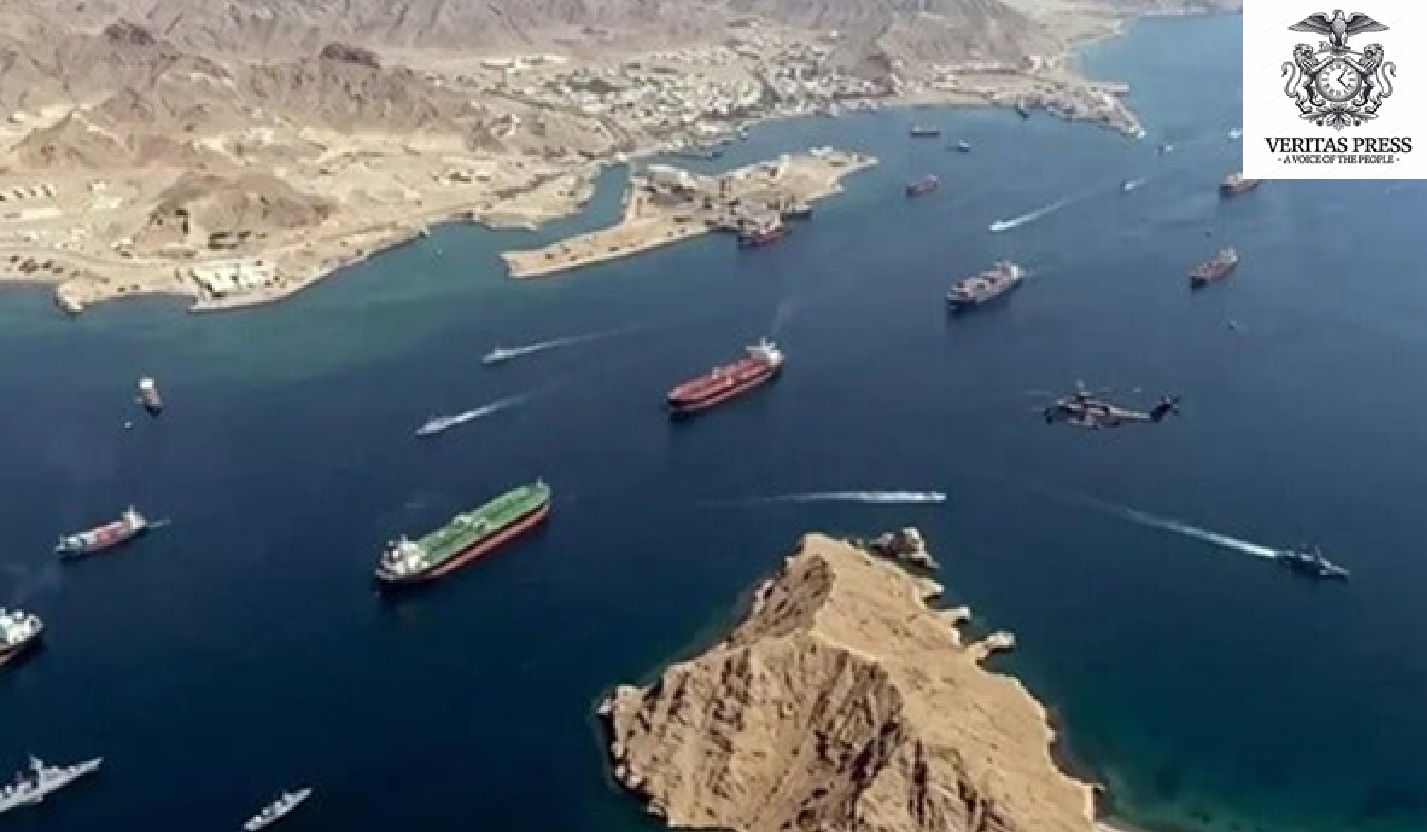
This is the Strait of Hormuz card played openly, without diplomatic euphemism. Approximately 20% of globally traded oil and nearly 30% of liquefied natural gas transits the strait daily. The economies most immediately vulnerable to its closure are not American, which has achieved near energy independence through domestic production, but Japanese, South Korean, Indian, and Chinese, the major Asian importers whose industrial economies depend on the uninterrupted flow of Gulf hydrocarbons.
Iran is telling the world, with unmistakable clarity: the costs of this war will not be borne by Tehran alone. They will be distributed globally, and every capital with a stake in stable energy prices, such as Beijing, Tokyo, Seoul, and New Delhi, has a direct national interest in preventing the next American strike.
PART IV: The Frozen Assets Impasse.
The military drama unfolding along the Hormozgan coast has overshadowed what may prove to be the substantive core of the diplomatic deadlock: money.
A detailed report by Iran’s Tasnim news agency, citing a source close to the negotiating team, has revealed the precise contours of Tehran’s financial demands, and they are staggering in both scale and specificity.
Iran is demanding the release of 24 billion in frozen assets. The terms, as outlined by Tasnim and confirmed by Xinhua, are explicit: $12 billion must be made available immediately upon the announcement of any memorandum of understanding, with the remaining $12 billion transferred within 60 days.
The figure is not arbitrary. It corresponds to Iranian funds frozen in foreign banks, primarily in South Korea, Japan, and Iraq, under the sanctions regime that the US has maintained and intensified since withdrawing from the Joint Comprehensive Plan of Action (JCPOA) in 2018. The funds represent oil revenues that Iran earned but could not access, a financial wound that has festered for nearly a decade and that Tehran now insists must be healed as a precondition for any lasting peace.
The mechanism for release reveals the extraordinary complexity of the negotiations. According to the Tasnim source, the primary point of contention between Iran and the United States concerns “the methodology for accessing these frozen resources, not whether the funds should be released, but how.
This is where Qatar enters the picture. The speaker of Iran’s parliament, Mohammad Baqer Qalibaf, travelled to Doha on Monday, accompanied by Foreign Minister Abbas Araghchi and Central Bank Governor Abdolnaser Hemmati. The composition of the delegation, the parliament speaker, the foreign minister, central bank governor, signals that this was not a routine diplomatic courtesy call. It was a financial negotiation conducted at the highest levels.
The Qatari mediation focuses on a specific technical problem: how to transfer $12 billion from frozen accounts to accessible ones without triggering US secondary sanctions on the financial sector. This is the same challenge that has been delivered in earlier efforts to release Iranians’ funds, a 2023 agreement to free $6 billion in South Korean-held assets for humanitarian purposes collapsed precisely because of implementation obstacles.
The Tasnim source acknowledged this history with unusual candour: “Given past experiences regarding the release of Iranian funds in South Korea and Qatar, emphasis was placed on carefully monitoring the implementation process to avoid repeating previous issues”.
The negotiations in Doha were described as “generally positive and contributed to progress in broader negotiations”, but the source added a crucial caveat: “Given the historical context of the US failure to uphold agreements, the Iranian negotiating team does not regard these developments as entirely conclusive and has consistently affirmed that while Iran is open to dialogue, it is prepared for all potential scenarios”.
PART V: The Mediators And Their Limits.
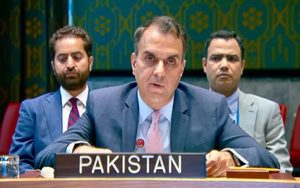
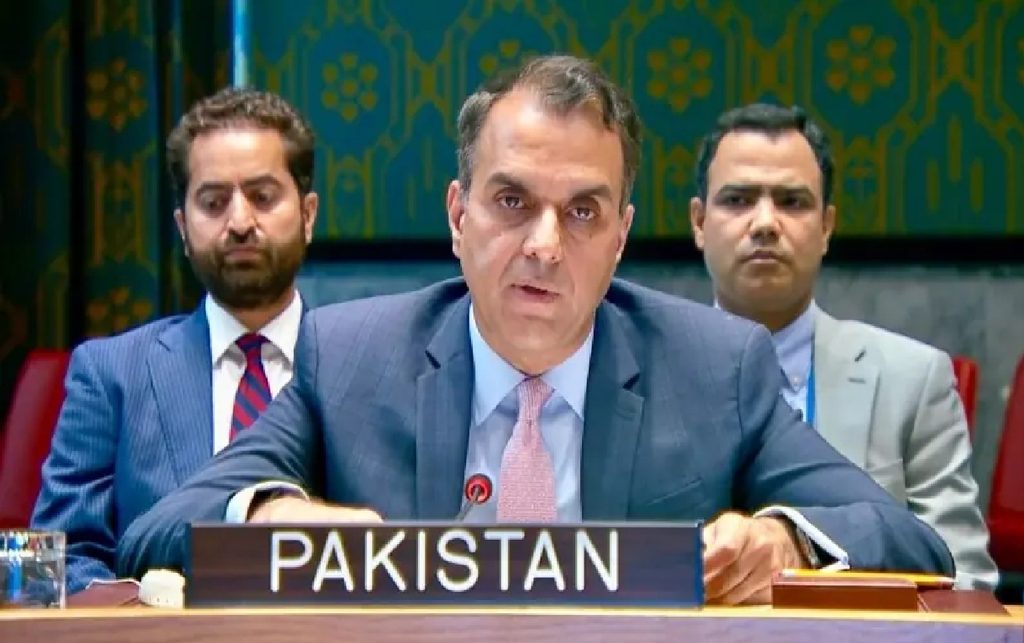
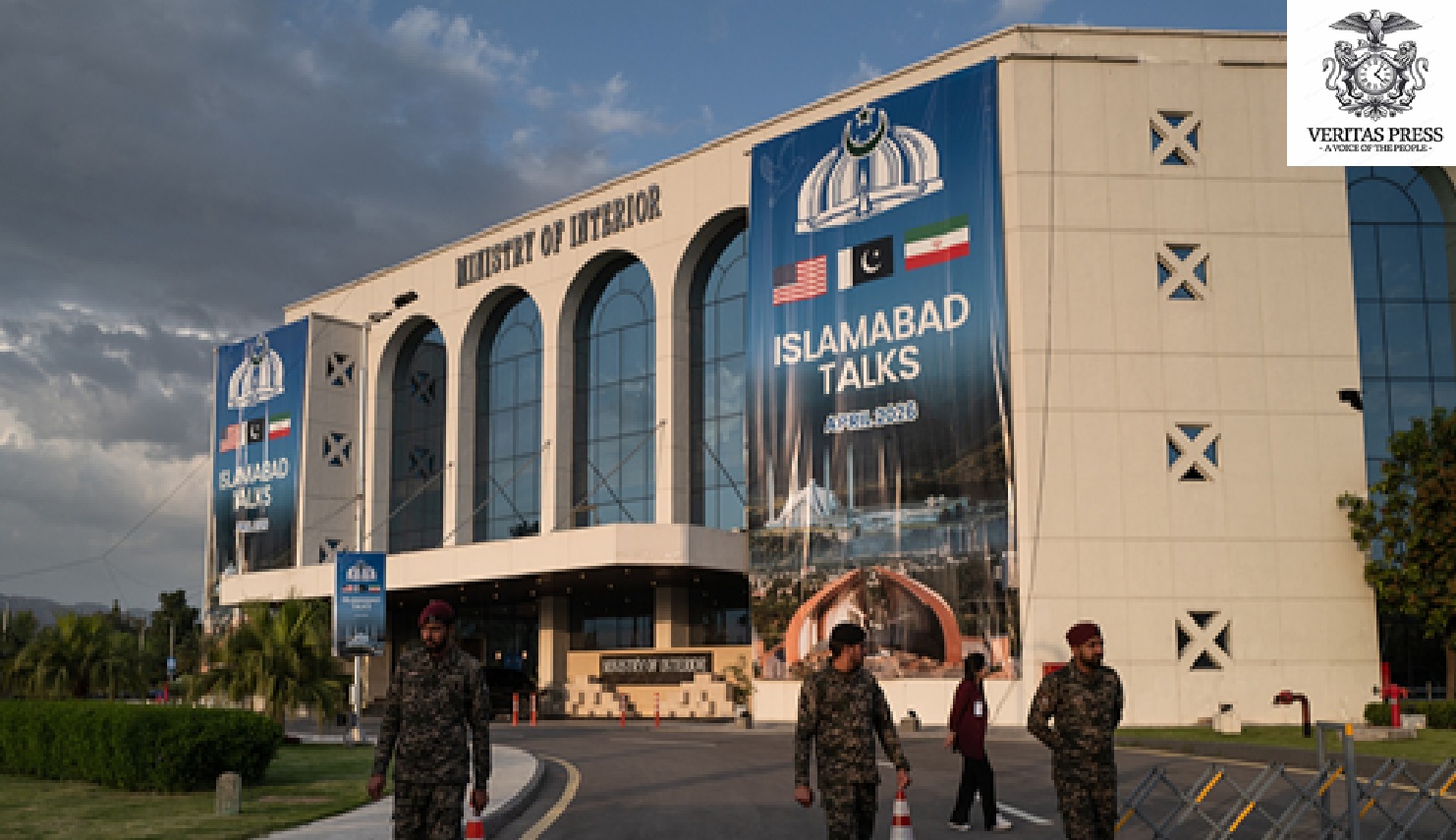
The diplomatic architecture of this conflict is unprecedented in modern history. Pakistan, not a traditional great power or established neutral arbiter, has emerged as the principal mediator, a role that reflects both Islamabad’s strategic interests and the unique access afforded by its relationships with both Washington and Tehran.
Prime Minister Shehbaz Sharif, in a meeting with Chinese Premier Li Qiang in Beijing on Monday, offered a cautiously optimistic assessment: “A lot of ground has already been covered. Things are moving in the right direction”. He specifically credited Pakistan’s army chief, Field Marshal Syed Asim Munir, for “going back and forth with the Iranian leadership and American leadership, along with Deputy Prime Minister Ishaq Dar”.
The personal diplomacy of military leaders, a field marshal shuttling between Tehran and Washington, underscores both the urgency of the crisis and the limitations of traditional diplomatic channels. When generals become diplomats, it is usually because the civilians have failed.
Pakistan’s motivation is not purely altruistic. As Sharif acknowledged, Pakistan is “a net importer of oil and oil products”; the Strait of Hormuz closure has hammered its economy, which was already reeling from years of crisis. Islamabad’s mediation is, in part, an act of economic self-preservation.
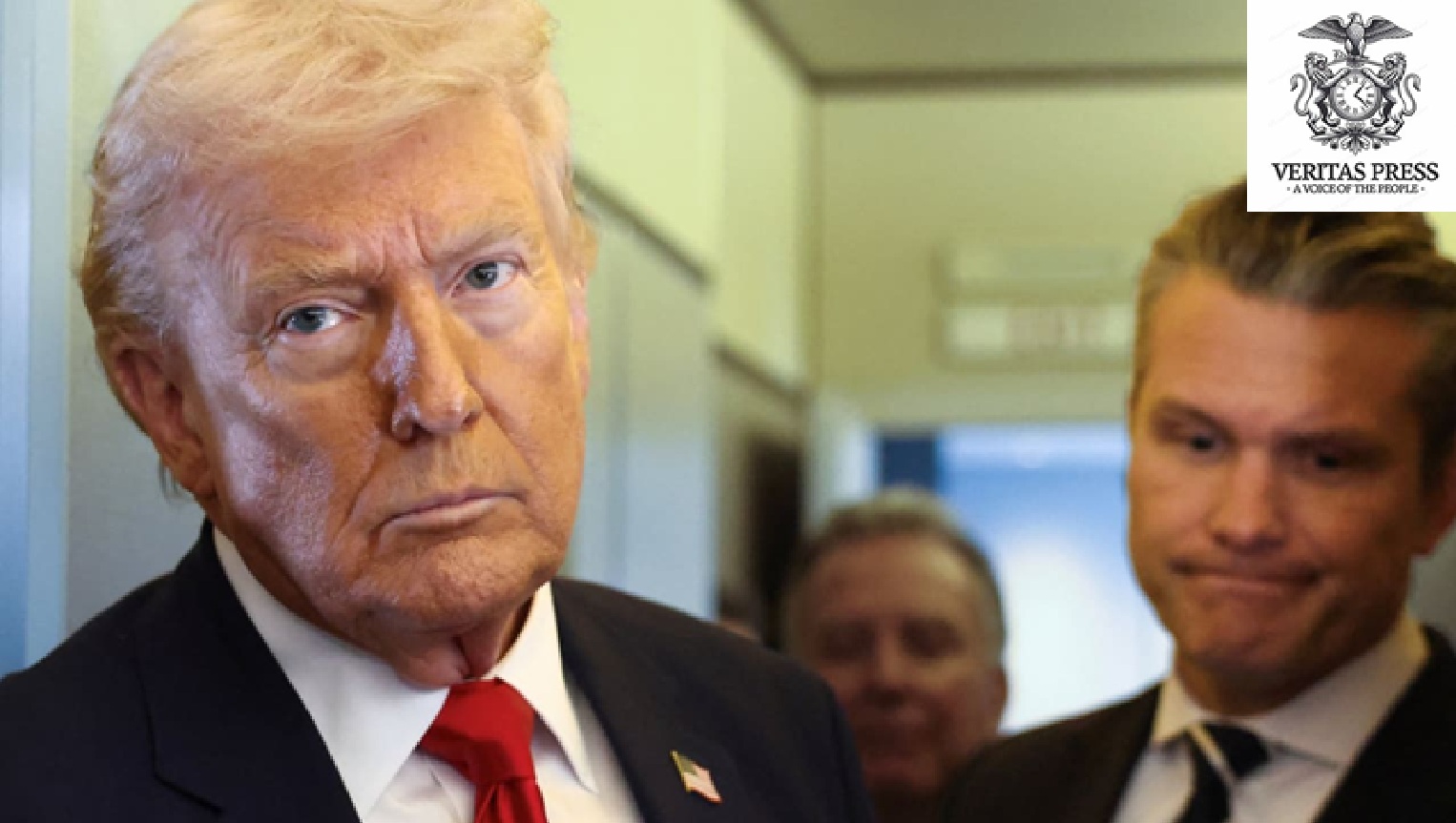
The broader diplomatic framework is even more complex. US President Donald Trump claimed on Saturday that an agreement had been “largely negotiated” and was “awaiting finalisation,” adding that a host of regional leaders, from Saudi Arabia’s Mohammed bin Salman to Turkey’s Recep Tayyip Erdogan, had been consulted. Trump’s characterisation was characteristically expansive: “An Agreement has been largely negotiated, subject to finalisation between the United States of America, the Islamic Republic of Iran, and the various other Countries”.
But Iran has already rejected a crucial element of Trump’s narrative. According to Fars News Agency, Tehran has made clear that it will not cede operational control of the Strait of Hormuz, even if tensions ease. “The management of the Strait of Hormuz, including shipping routes, timing of passage and permits, would remain exclusively under the authority of Iran,” the report stated.
This directly contradicts Trump’s claim that “the Strait of Hormuz will be opened”, a formulation that implies a return to the pre-war status quo of unrestricted passage. Iran’s counter-position is that it will permit traffic to return to pre-war levels but under Iranian management, a distinction that may prove unbridgeable.
PART VI: The New Regional Order.
Supreme Leader Mojtaba Khamenei, in a statement marking the culmination of the Hajj pilgrimage, articulated a vision that goes far beyond the tactical dispute over strait management or frozen assets.
Middle Eastern countries, Khamenei warned, would “no longer be a shield for American bases”, a direct threat to the network of US military installations that dot the Gulf, from Bahrain’s Naval Support Activity to Qatar’s Al Udeid Air Base, the largest American military facility in the Middle East.
Khamenei framed the current conflict as part of a civilisational struggle to shape “a new regional and global order” and called on Muslim-majority countries to cooperate in building that order.
This is the long game that Tehran is playing. The February 28 attacks and the subsequent war did not occur in a strategic vacuum. They represented, from Iran’s perspective, the latest iteration of a decades-long campaign to subordinate the Islamic Republic to American and Israeli power. The ceasefire negotiations, in this framing, are not merely about ending hostilities but about establishing the terms on which Iran will engage with the regional order that emerges from them.
President Masoud Pezeshkian, in a phone call with Kyrgyz President Sadyr Japarov on Tuesday, emphasised: “unity, convergence, and cooperation among Islamic and regional countries as an effective way to confront regional threats and crises”. He expressed appreciation for Kyrgyzstan’s opposition to a recent anti-Iran resolution at the UN Security Council, framing Bishkek’s position as evidence of “friendly relations, mutual respect, and the country’s independent and responsible approach to international developments”.
The outreach to Central Asian republics, the cultivation of Pakistani mediation, the careful signalling to China and India through the energy markets, these are not disparate diplomatic gestures. They form a coherent strategy of building a counter-hegemonic bloc that can resist American pressure while providing Iran with the economic lifelines it needs to survive sanctions.
PART VII:The Oil Weapon And Global Fallout.
Global markets are beginning to price in the possibility that the ceasefire will fail.
Brent crude oil prices climbed 2.7% on Monday to $95.7 per barrel, reflecting both the immediate disruption from the Strait of Hormuz tensions and the growing realisation that a diplomatic resolution may be farther off than Trump’s optimistic statements suggest.
The US 10-year Treasury yield declined by five basis points to 4.51%, a classic flight-to-safety move, while the US Dollar Index rose marginally to 99.1. Gold fell 0.9% to $4,531 per ounce, a counterintuitive move that may reflect profit-taking after a sustained rally, or the market’s assessment that the conflict will remain contained.
European markets showed greater sensitivity. Italy’s FTSE MIB reached a record level, driven by energy stocks, even as analysts warned that the European Central Bank could pursue additional tightening if “a lasting peace agreement in the Middle East is not achieved”. The German DAX 40 gained 2.01%, France’s CAC 40 rose 1.7, and Asian markets traded mixed amid what analysts termed “geopolitical uncertainty”.
Ryozo Himino, deputy governor of the Bank of Japan, acknowledged that “the timing of potential interest rate increases remained under assessment as markets continued to monitor developments in the Middle East”, a rare instance of a central bank explicitly linking monetary policy to a geopolitical crisis not directly involving its own country.
The global economic implications of a Strait of Hormuz closure extend far beyond oil prices. The Strait handles roughly 20% of globally traded oil and nearly a third of the world’s liquefied natural gas. A sustained disruption would trigger cascading effects through supply chains, shipping insurance markets, and energy-intensive industries from petrochemicals to agriculture.
Iran understands this. Shekarchi’s threat to block all regional oil exports if Iranian exports are impeded is not a bluff; it is a statement of strategic logic. The Strait of Hormuz is Iran’s ultimate deterrent, the one card that transforms a regional military confrontation into a global economic crisis. By playing it openly, Tehran is signalling that it will not be defeated through incremental escalation. Any further strikes will trigger consequences that no capital, not Washington, not Beijing, not Brussels, can ignore.
ANALYSIS: The Ceasefire As Strategic Fiction.
Stepping back from the day-to-day developments, a disturbing pattern emerges. The April 8 ceasefire, hailed at the time as a diplomatic breakthrough, has functioned less as a genuine cessation of hostilities than as a framework for managed confrontation.
Both sides have continued military operations. The US has conducted strikes that it describes as “self-defence.” Iran has engaged American drones and aircraft. Naval harassment, airspace incursions, and positioning manoeuvres have continued throughout the supposed truce.
The ceasefire’s true function may have been to prevent the conflict from escalating to a level that would trigger direct great-power intervention, particularly from China, which depends on Gulf energy supplies and has watched the crisis with barely concealed alarm. By maintaining the fiction of a diplomatic process, both Washington and Tehran have been able to pursue their military objectives while avoiding the international condemnation that would accompany an open, undeclared war.
But Monday’s events suggest that this delicate equilibrium is breaking down. The US strikes on Bandar Abbas, a major port city, not a remote military installation, crossed a threshold. The Iranian response, downing an MQ-9, threatening F-35s, and issuing a formal diplomatic condemnation, indicates that Tehran no longer considers the ceasefire an adequate shield for continued American operations. However, it was an aggressive act and a ceasefire violation presented as negotiations.
The Road Ahead:
Three scenarios present themselves.
First, a genuine diplomatic breakthrough. If the frozen assets issue can be resolved, if Qatar can devise a mechanism that satisfies both Iranian demands for access and American concerns about sanctions enforcement, the broader 14-point memorandum of understanding could be finalised within the 30-to-60-day timeframe that Foreign Ministry spokesman Esmaeil Baghaei outlined on Saturday. The Strait of Hormuz would reopen under Iranian management, oil prices would stabilise, and the febrile atmosphere in global markets would ease.
But this scenario requires trust, specifically, Iranian trust that the US will honour commitments that previous administrations have broken. Given the historical record, that trust is in desperately short supply.
Second, a frozen conflict. The ceasefire persists as a legal fiction while low-intensity hostilities continue. Both sides calibrate their operations to avoid triggering a full-scale resumption of the February-March war, but neither makes the concessions necessary for a lasting settlement. The Strait of Hormuz remains partially blocked, oil prices remain elevated, and the global economy adjusts to a new normal of permanent Gulf instability.
Third, an escalatory spiral. Another round of US strikes, or an Iranian response that targets American assets beyond the immediate theatre, triggers the “heavier and stronger” retaliation that Shekarchi has promised. The conflict expands beyond regional borders, drawing in proxies, allies, and potentially great powers. Oil prices spike above $120 per barrel. The global economy tips into recession.
Monday’s events did not determine which of these scenarios will materialise. But they made the first, the optimistic path, significantly less likely. When explosions echo over Bandar Abbas while negotiators sit in Doha discussing frozen assets, the distance between the battlefield and the bargaining table has become unbridgeably vast.
The ceasefire that was supposed to end the war has instead become its newest front. And the Strait of Hormuz, the narrow channel through which the world’s energy flows, has become the fulcrum on which the entire precarious architecture of regional peace now balances.
Source:Veritas Press C.I.C. | Multi News Agencies
Submissions:
For The Secure Submission Of Documentation, Testimonies, Or Exclusive Investigative Reports From Any Global Location, Please Utilise The Following Contact Details For Our Investigations Desk: enquiries@veritaspress.co.uk or editor@veritaspress.co.uk
Help Support Our Work:
Popular Information is powered by readers who believe that truth still matters. When just a few more people step up to support this work, it means more lies exposed, more corruption uncovered, and more accountability where it’s long overdue.
Help Protect Independent Journalism, Which Is Currently Under Attack.
If you believe journalism should serve the public, not the powerful, and you’re in a position to help, becoming a DONATOR or a PAID SUBSCRIBER truly makes a difference.
DONATION APPEAL: If You Found This Reporting Valuable, Please Consider Supporting Independent Journalism.
Help Support Our Work – We Know, We Know, We Know …
Seeing these messages is annoying. We know that. (Imagine what it’s like writing them … )
Your support fuels our fearless, truth-driven journalism. In unity, we endeavour to amplify marginalised voices and champion justice, irrespective of geographical location.
But it’s also extremely important. One of Veritas Press’s greatest assets is its reader-funded model.
1. Reader funding means we can cover what we like. We’re not beholden to the political whims of a billionaire owner. We are a small, independent and impartial organisation. No one can tell us what not to say or what not to report.
2. Reader funding means we don’t have to chase clicks and traffic. We’re not desperately seeking your attention for its own sake: we pursue the stories that our editorial team deems important and believe are worthy of your time.
3. Reader Funding: enables us to keep our website and other social media channels open, allowing as many people as possible to access quality journalism from around the world, particularly those in places where the free press is under threat.
We know not everyone can afford to pay for news, but if you’ve been meaning to support us, now’s the time.
Your donation goes a long way. It helps us:
Keep the lights on and sustain our day-to-day operations
Hire new, talented independent reporters
Launch real-time live debates, community-focused shows, and on-the-ground reporting
Cover the issues that matter most to our communities, in real time, with depth and integrity
We have plans to expand our work, but we can’t do it without your support. Every contribution, no matter the size, helps us stay independent and build a truly people-powered media platform.
If you believe in journalism that informs, empowers, and reflects the communities we serve, please donate today.
Kamran Faqir is a volunteer investigative journalist and writer committed to exposing hidden truths and amplifying underreported stories. Driven by social justice, he brings sharp insight and fearless truth-telling to independent journalism. NUJ registered.
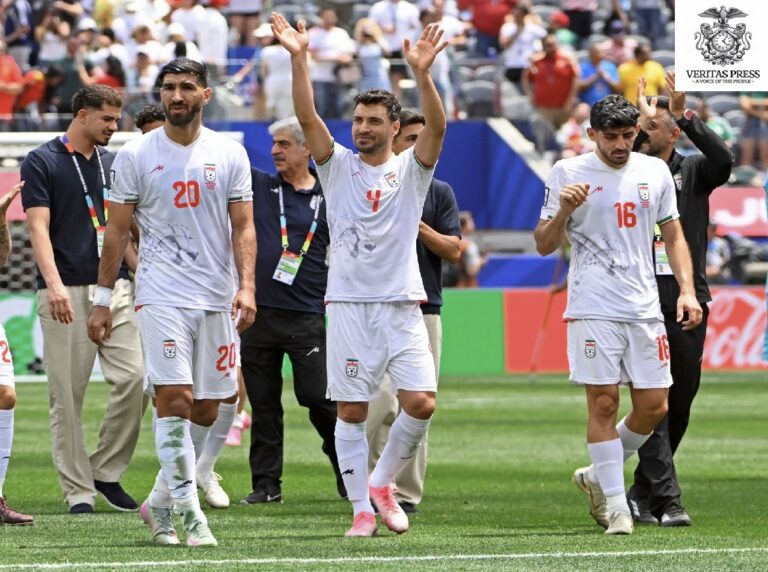
SEATTLE, TEHRAN — The U.S. Department of Homeland Security (DHS) will allow Iran’s national football team to enter the country 48 hours before their critical World Cup match against Egypt on Friday, a modest concession in a tournament where Team Melli’s travel conditions have sparked claims of oppression and competitive disadvantage.