











Author:
Help support our mission, donate today and be the change. Every contribution goes directly toward driving real impact for the cause we believe in.
As Cities Ration, Farmers Postpone Sowing And Data Centres Gulp Millions Of Litres, The Country’s Water Emergency Is Revealed To Be A Slow-Burning Failure Of Policy, Transparency And Political Courage.
MUMBAI / DELHI / TUSIANA – For the fourth consecutive summer, Sharda Pawar, a domestic worker in Mumbai’s eastern suburb of Ghatkopar, fills her buckets to the rhythm of the municipal timetable. “Water comes at six in the morning, low pressure, for just an hour. If you miss it, you buy from a tanker at triple the price,” she says, glancing at the plastic drums lined up in her single-room home. Across the courtyard, her neighbour points to a shared tap that ran dry by 7 a.m. “This has become our June, our July. Every year.”
Half a continent away from the boardrooms where India’s digital future is being plotted, millions of Sharda Pawars are learning that water is no longer a public good guaranteed by the state, but a commodity allocated by a brittle, unplanned system. And the summer of 2026 is shaping up to be another breaking point. The India Meteorological Department has already forecast a below-normal south-west monsoon, with the deficit concentrated in the central, southern and peninsular regions. Above-normal heatwave days in June have seared large swathes of the country. El Niño conditions, scientists warn, could tip into a Super El Niño cycle, heralding a long drought. The Union Agriculture Ministry has quietly activated contingency plans for 326 districts across 12 states.
Yet what is unfolding is not an act of God. Water shortage in India is, at its core, a product of political economy, a tapestry of policy choices, pricing failures and an obstinate refusal to treat water as the finite, life-determining resource it is. India is home to 18% of the world’s population but has access to only 4% of its fresh water. Since 2011, annual per capita water availability has slumped below 1,651 cubic metres, making the country officially “water-stressed” by the Falkenmark indicator. To call this a natural calamity is to miss the deeper architecture of the crisis.
‘Clean Cities, Contaminated Water’
The recent summer trajectory has become ritualised. Mumbai has institutionalised low-pressure water rationing; Pune, staring at depleting dam storage, has moved to an alternate-day supply. In parts of New Delhi this season, large families survived on a single 20-litre can for a day, as the Delhi Jal Board scrambled to deploy more than 1,000 tankers. Chennai’s 2019 “Day Zero”, when reservoirs emptied and municipal taps were switched off, was not a one-off but the culmination of rapid, unplanned urbanisation, predatory groundwater extraction and the absence of sustained scientific water management.
The paradox is starkest in India’s “cleanest cities”. A recent paper by researchers Bhushan and Barua in the Economic and Political Weekly (2026, Vol. 24, No. 13) takes a scalpel to this contradiction. Titled “Clean Cities, Contaminated Water”, the study documents how Indore and Ahmedabad, repeatedly ranked at the top of the national cleanliness surveys, have witnessed serious water contamination episodes. “The obsession with the visible and aesthetic has gutted the capacity of urban local bodies to manage the invisible but critical underground drainage and water systems,” the authors argue. They call for financial empowerment of city governments to overhaul sewage and water networks, an argument that has yet to stir political imagination.
Kaveh Madani, a globally recognised water scientist, describes the planetary condition as “water bankruptcy”: an acute shortage built up over decades of consumption far exceeding the ability of water bodies to replenish themselves. India, he and others note, is drawing down its hydrological capital at a pace that borders on the suicidal. Encouraging economic diversification towards sectors and industries that are not water-intensive is one obvious buffer. Instead, the country is racing in the opposite direction.
The Invisible Thirst Of AI:
In Tusiana village, near Greater Noida in Uttar Pradesh, the wells began running dry around the time the Yotta Data Centre Park started swallowing land and power. “We used to find water at 60 feet. Now we dig beyond 200 feet and still get nothing,” says Rajkumari Devi, a farm labourer whose family now depends on irregular tanker supplies. “They say it’s for computers that think like humans. But what about our children?”
Tusiana’s story mirrors that of Newton County in the US state of Georgia, where residents reported plunging well levels after Meta built a major data centre. These are not outliers; they are early tremors of a global reckoning. India, aspiring to be the data-centre capital of the world, added capacity from 0.4 gigawatts in 2020 to 1.5 GW by the end of 2025, a nearly fourfold leap. Deloitte estimates that another 8–10 GW could come online by 2030. Market research firm Arizton reported in September 2025 that 132 data centres were already operating, with 84 more projects planned across 17 cities by 2029. Prime Minister Narendra Modi, inaugurating an AI summit, invited the world to “store its data in India.” The Adani Group announced a $100 billion investment plan for hyperscale renewable-energy-powered centres; Microsoft, Amazon and Google have pledged billions more.
Beneath the hype sits an uncomfortable number. Karnataka’s Information Technology Minister Priyank Kharge told the state assembly in March 2026 that every megawatt of data-centre capacity requires about 2.5 crore litres of water annually. At India’s current capacity, that translates into roughly 37.5 billion litres of water a year. A single medium-sized data centre guzzles around 11.35 lakh litres every day. And as the mercury climbs, evaporation-based cooling systems, still the norm in a hot country, send much of that water irretrievably into the atmosphere.
“India is already the world’s largest extractor of groundwater, accounting for a quarter of global withdrawals. In many regions, extraction far exceeds recharge. Plonking data centres on top of that is like lighting a match near a powder keg,” says Himanshu Thakkar, coordinator of the South Asia Network on Dams, Rivers and People (SANDRP). He insists the industry must be compelled to take full responsibility for its water footprint, with mandatory public disclosure of consumption, sourcing and recycling rates. “Transparency is the bare minimum. Right now, we don’t even have that.”
The geographical concentration of the boom magnifies the risk. Maharashtra alone is projected to house nearly 45% of India’s data-centre power capacity, much of it along the Mumbai-Pune corridor. Yet the same state’s Vidarbha and Marathwada districts depend every summer on tankers just to survive. In Bengaluru, water is pumped over long distances and steep elevations from the Cauvery River; every additional litre demanded by a new server farm amplifies an already festering interstate water dispute. Southern cities are doubly vulnerable because groundwater reserves are critically stressed. The Morgan Stanley research report of September 2025 projected an elevenfold rise in global AI data-centre water demand by 2028, to 1,068 billion litres a year, much of it in water-scarce regions of India.
The gender dimension compounds the injustice. Across rural India, women bear the primary responsibility for fetching water. As groundwater tables plummet and sources recede, their journeys lengthen, stealing time from education, livelihoods and health. Water scarcity is simultaneously an environmental crisis and a daily violence against the lives of the poor.
Potential solutions are not lacking. Professor Arnab Bhattacharya of IIT Kanpur advocates dual-pipeline systems that separate freshwater from recycled water. Closed-loop cooling technologies, treated wastewater substitution and strict siting guidelines that prohibit data centres in overexploited groundwater zones are all technically feasible. “But they require investment, regulation and political will,” Bhattacharya says. “Without them, we are simply exporting our water to the world’s cloud.”
The ₹20 Lakh Crore Mirage:
Oddly, the water crisis is also being packaged as a historic investment opportunity. Analysts project that India’s water demand will double its supply by 2030, creating a market worth an estimated ₹20 lakh crore across infrastructure, purification, treatment and technology. Government missions and private equity are circling. On paper, the logic is seductive: massive unmet need plus public failure equals a giant business opening.
But water is not a consumer product. The monetisation of scarcity, if not framed by equity, risks deepening the chasm between those who can pay and those who cannot. In the slums of Mumbai, a tanker mafia already charges the poor far more per litre than the rich pay for piped water. A market-driven “solution” without robust public regulation will merely formalise this theft.
Policy courage means deploying price not to profit, but to signal value and discourage waste, and then protecting the vulnerable through cross-subsidies and lifeline tariffs. It means banning water-guzzling crops in drought-prone belts, regardless of the electoral cost. It means refusing to subsidise lift irrigation that mines fossil aquifers. It means mandating water recycling in every large urban and industrial establishment, and enforcing it. The late agricultural scientist M.S. Swaminathan’s vision of an “evergreen revolution”, increasing productivity per drop of water, land and time, while raising incomes and cutting input costs, remains the only sane agricultural pathway. But it demands investment, extension and a break from populist subsidy regimes that reward extraction over efficiency.
A Treaty In Tatters:
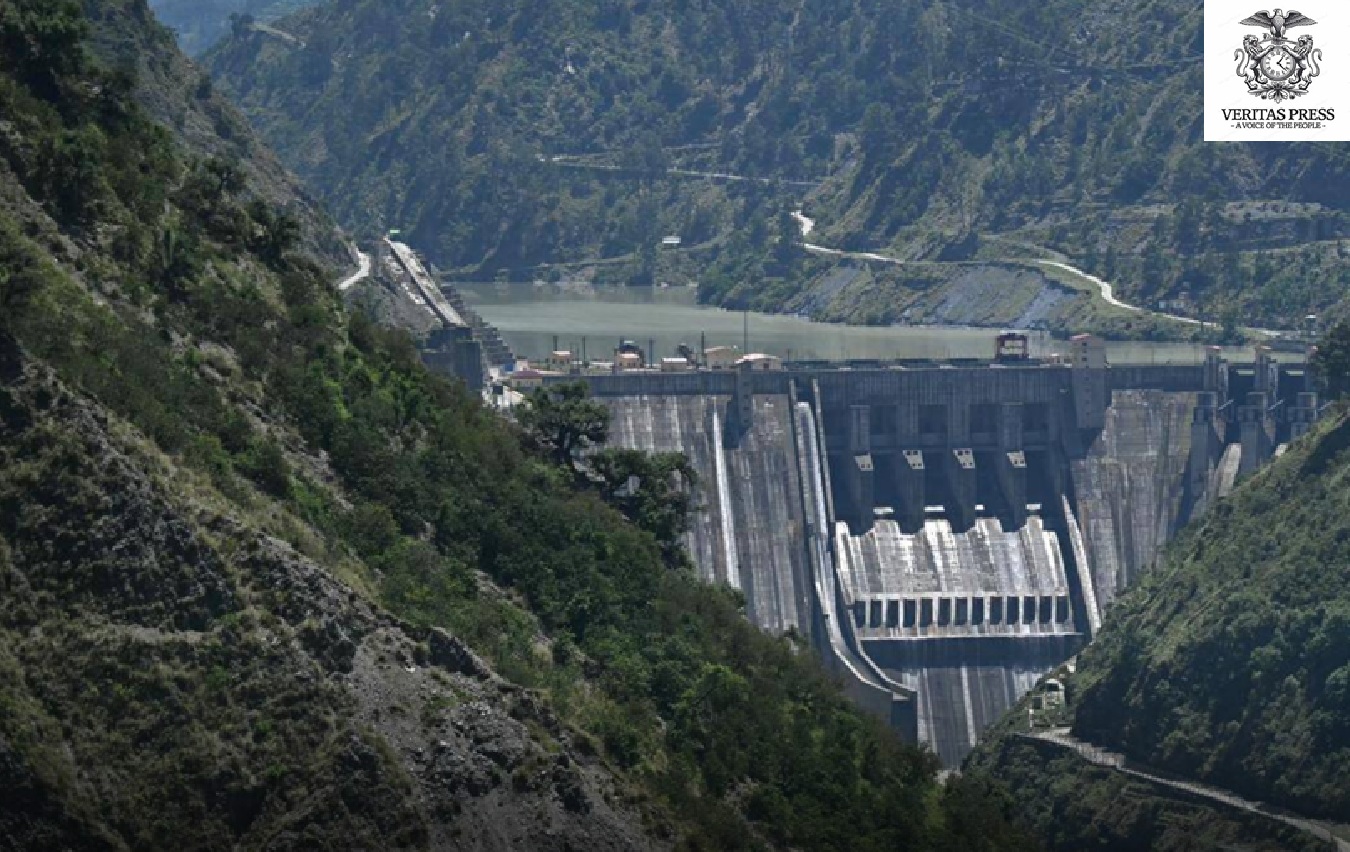
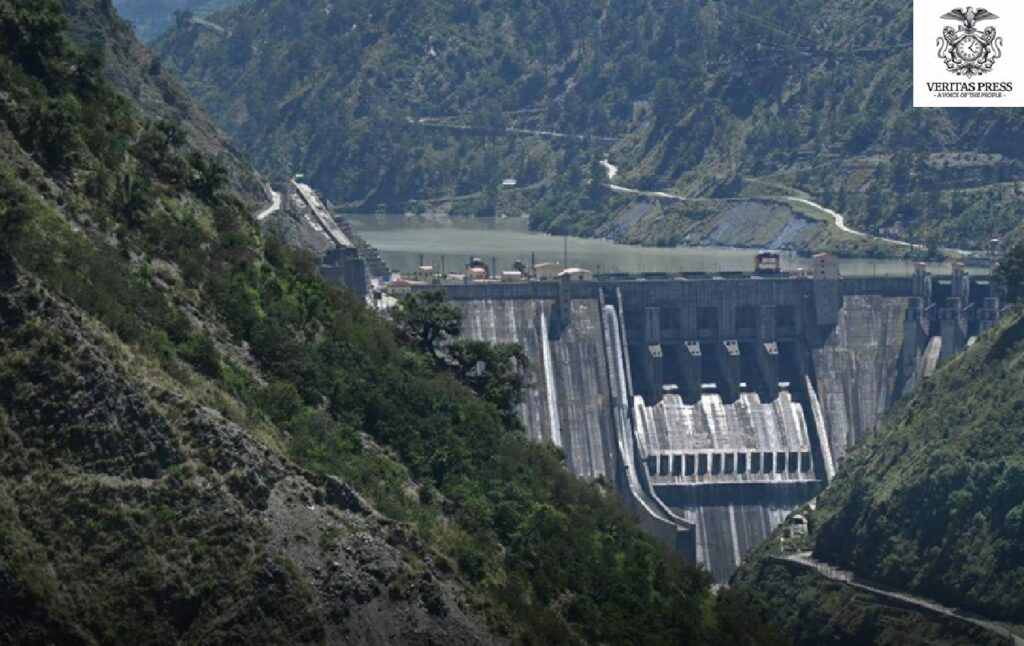
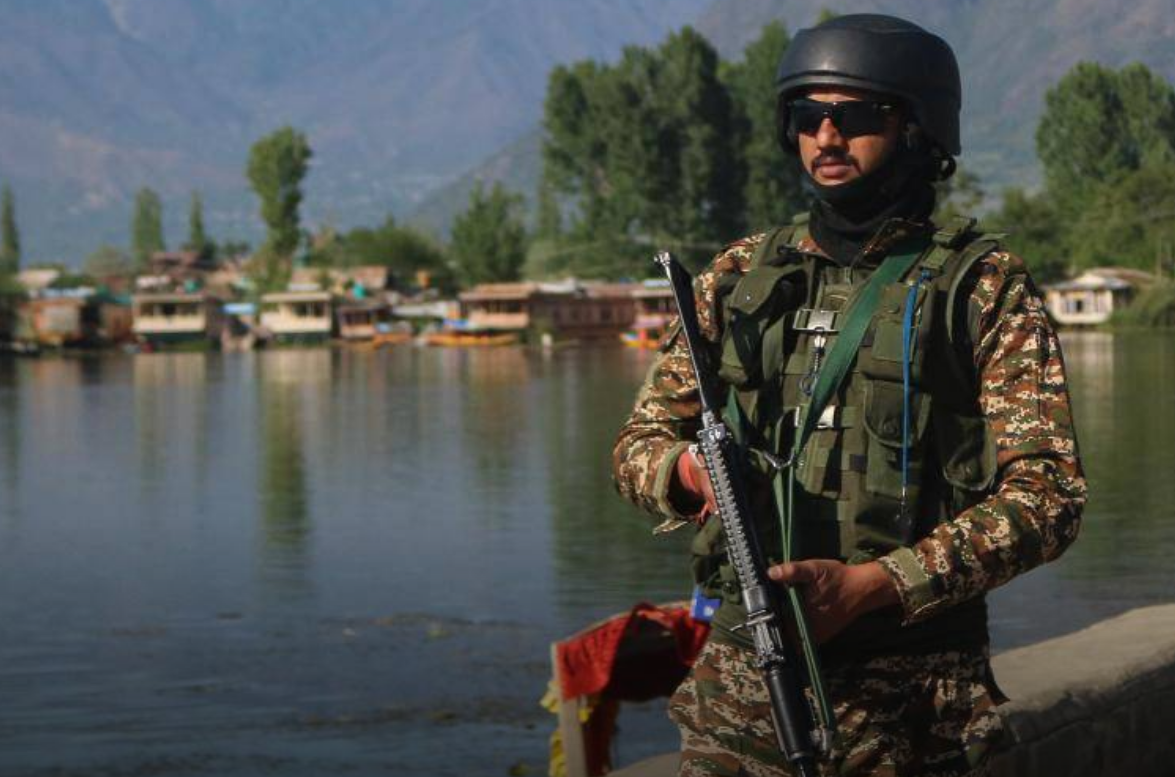
The crisis spills beyond national borders. After the April 2025 militant attack in Pahalgam, Kashmir, which India blamed on Pakistan, New Delhi took the unprecedented step of suspending its participation in the Indus Waters Treaty. It briefly restricted downstream flows from the Baglihar and Kishanganga dams, sending a shock through the diplomatic architecture that had survived three wars and six decades of hostility. The treaty, signed in 1960, had carved the basin’s six rivers between the two nations and established mechanisms for data sharing and dispute resolution. For millions of farmers and households on both sides, it was a lifeline.
Today, that lifeline is frayed almost to breaking. Hydrological shifts are accelerating: perennial snow and ice cover in the Indus basin declined by up to 24.8% between 2001 and 2021, while the Asian Summer Monsoon is growing more erratic. The treaty, however, is silent on climate change, glacial retreat and groundwater depletion. “We are operating a 1960s legal instrument in a climate-stressed basin of over 300 million people. It’s a recipe for unmanaged conflict,” says a water diplomacy expert with a UN-affiliated agency, who requested anonymity because of the sensitivity of the talks.
Global experience shows that cooperation, however difficult, remains possible. The Mekong River Commission, the Senegal River Basin’s OMVS and the partial recovery of the North Aral Sea all demonstrate that even deeply entrenched water conflicts can be eased when governance structures are strengthened, data is shared, and states recognise their interdependence. The Jordan-Israel water annex to their peace treaty has largely held despite repeated political crises. Rebuilding trust on the Indus, analysts argue, must start modestly: restoring real-time data exchange, reactivating the Permanent Indus Commission, jointly studying climate impacts and agreeing on cumulative assessments of hydropower projects. “Unilateral action raises the costs for both countries-flood defences, storage, groundwater management-but shared management can lower them,” the expert notes.
The Basic Minimum:
Back in Ghatkopar, Sharda Pawar has no time for geopolitics or AI. She has already missed the morning supply. She will now spend ₹50, a tenth of her daily wage, on a bucket of water from a neighbourhood vendor. “They tell us to save water,” she says, her voice flat. “But who is saving it for us?”
The course of rivers and aquifers has shaped human civilisation. The health of these waterbodies shapes the health of the planet and its beings. India cannot continue to treat them as political afterthoughts or as free raw material for a growth story that ignores ecological debt. What is needed is not merely technological fixes or market instruments, but a profound shift in the political economy of water: non-negotiable regulatory compliance, enforced transparency, democratic accountability and a cultural re-orientation that sees lakes and rivers as commons to be regenerated, not drains to be filled. The summer of 2026 is yet another warning. The question is whether the country has the political courage to hear it.
Source: Veritas Press C.I.C. | Multi News Agencies
Help Support Our Work By Donating
Popular Information is powered by readers who believe that truth still matters. When just a few more people step up to support this work, it means more lies exposed, more corruption uncovered, and more accountability where it’s long overdue.
Help Protect Independent Journalism, Which Is Currently Under Attack.
If you believe journalism should serve the public, not the powerful, and you’re in a position to help, becoming a DONATOR or a PAID SUBSCRIBER truly makes a difference.
DONATION APPEAL: If You Found This Reporting Valuable, Please Consider Supporting Independent Journalism.
Your support fuels our fearless, truth-driven journalism. In unity, we endeavour to amplify marginalised voices and champion justice, irrespective of geographical location. We operate independently, without any financial backing from billionaires.
But it’s also extremely important. One of Veritas Press’s greatest assets is its reader-funded model.
1. Reader funding means we can cover what we like. We’re not beholden to the political whims of a billionaire owner. We are a small, independent and impartial organisation. No one can tell us what not to say or what not to report.
2. Reader funding means we don’t have to chase clicks and traffic. We’re not desperately seeking your attention for its own sake: we pursue the stories that our editorial team deems important and believe are worthy of your time.
3. Reader Funding: enables us to keep our website and other social media channels open, allowing as many people as possible to access quality journalism from around the world, particularly those in places where the free press is under threat.
We know not everyone can afford to pay for news, but if you’ve been meaning to support us, now’s the time.
Your donation goes a long way. It helps us:
- Keep the lights on and sustain our day-to-day operations
- Hire new, talented independent reporters
- Launch real-time live debates, community-focused shows, and on-the-ground reporting
- Cover the issues that matter most to our communities, in real time, with depth and integrity
We have plans to expand our work, but we can’t do it without your support. Every contribution, no matter the size, helps us stay independent and build a truly people-powered media platform.
If you believe in journalism that informs, empowers, and reflects the communities we serve, please donate today.
Help By Donating Today
Submissions:
For The Secure Submission Of Documentation, Testimonies, Or Exclusive Investigative Reports From Any Global Location, Please Utilise The Following Contact Details For Our Investigations Desk: enquiries@veritaspress.co.uk or editor@veritaspress.co.uk
GENEVA — A United Nations fact-finding mission has concluded there are “reasonable grounds to believe”

Iran’s GDP is projected to contract by 5.4 to 6.1% in 2026, its worst performance

The Trump administration is preparing a $2.8 billion weapons package for Israel containing 40,000 2,000-pound

Film alleges mass civilian deaths are routinely built into military decisions amid Israel’s genocidal war

The Israeli rights group says violence, displacement, economic strangulation, and settlement expansion form part of

Houthi forces have captured the historic Red Sea port of Mocha and are advancing on
London’s historic sanctions against Israeli settlements mark a watershed moment in UK foreign policy, but
With 95% of Gaza’s population now wholly dependent on aid and more than 90% stripped
India calls for Kashmir and Ladakh to appear only on its official map after a
ISLAMABAD – In the high-stakes political theatre of Pakistan, the battleground has shifted from the


























8q0a5n
g99j3g
6o6gjq
uo0h75
1afuzk