




Author:
Help support our mission, donate today and be the change. Every contribution goes directly toward driving real impact for the cause we believe in.
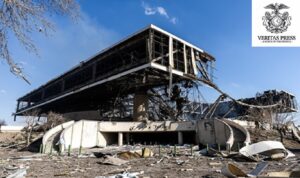
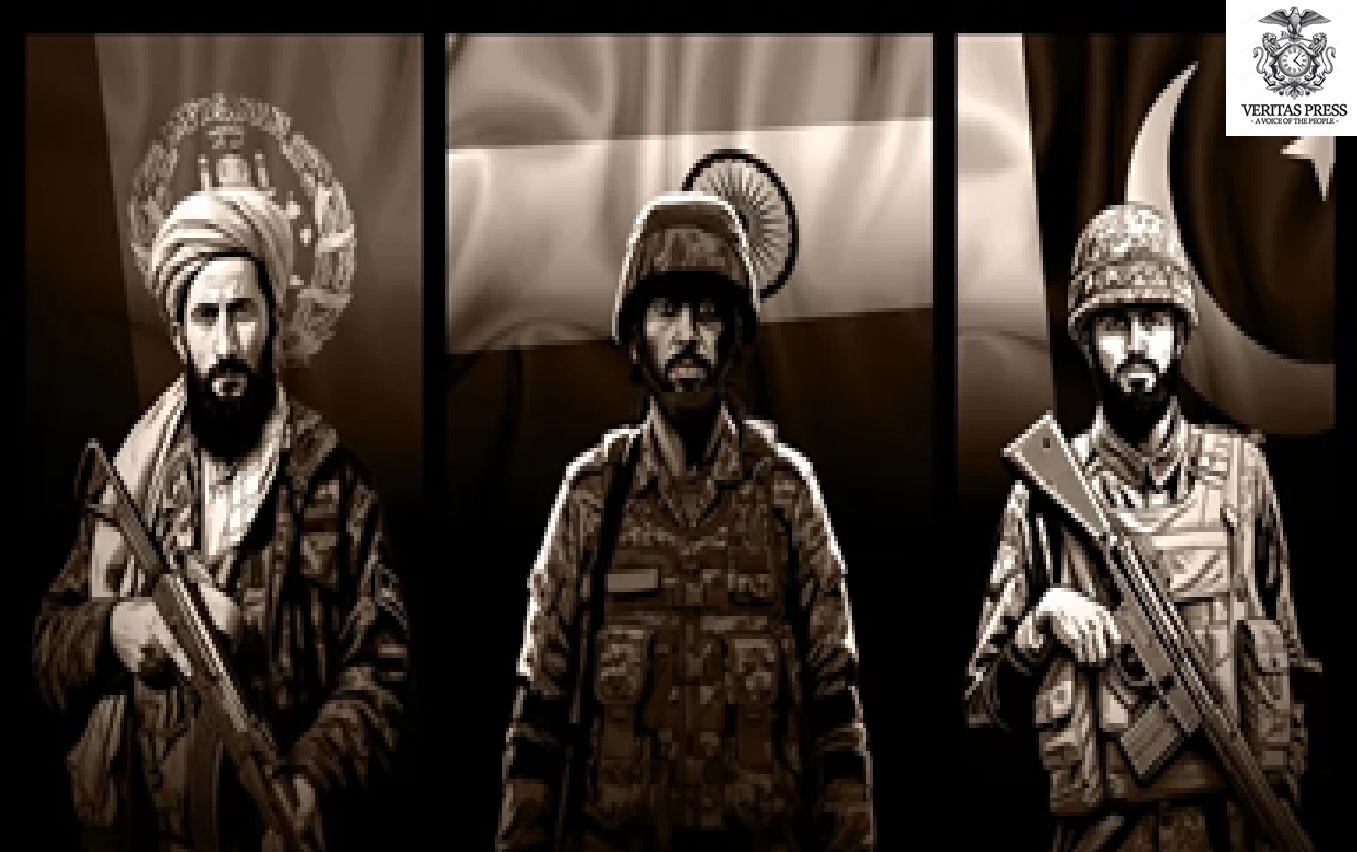
PESHAWAR / KABUL / NEW DELHI — The dust had barely settled on the Peshawar suicide blast of 24 June 2026, which ripped through a crowded market near the Khyber border checkpoint, killing 17 and wounding 40. The outlawed Tehreek-e-Taliban Pakistan (TTP) issued its usual claim of responsibility, couched in the familiar language of holy war. But in the corridors of Pakistan’s military headquarters in Rawalpindi, a far more intricate narrative is taking hold, one that traces the bloodshed not to a scattered insurgency, but to a deliberate, multi-layered campaign orchestrated by New Delhi, abetted by the de-facto rulers in Kabul, and increasingly enabled by the technological and intelligence might of Israel.
This is not the realm of fevered conspiracy. It is a framework now spoken aloud by Pakistani officials, analysed in security think-tanks, and whispered in the bazaars of Peshawar and Muzaffarabad. It weaves together four distinct but interlocking threads: a simmering war between Pakistan and Afghanistan; India’s alleged instigation of conflict through proxies in both Afghanistan and Kashmir; the Kashmir crisis as a manufactured obstacle to Pakistani stability; and an expanding India–Israel strategic embrace that targets Pakistan’s core.
Drawing on dozens of interviews with local residents, serving and retired officials, Kashmiri activists, intelligence assessments and the latest battlefield dispatches, this investigation uncovers the architecture of what many in Islamabad call a “generational siege” – a covert war designed not for a single victory, but for perpetual bleed.
The Undeclared War: Pakistan And Afghanistan.
The western frontier is no longer simply a restive borderland. In the first six months of 2026 alone, cross-border shelling along the Durand Line has killed at least 44 Pakistani soldiers and dozens of Afghan civilians, according to figures compiled by the independent Pakistan Institute for Conflict and Security Studies (PICSS). The deadliest recent exchange occurred on 14 June, when Pakistani posts in Kurram District came under what military logs described as “precision mortar fire” from positions inside Afghanistan’s Khost province. The Pakistan Army retaliated with artillery and drone strikes, claiming to have destroyed four “terrorist launch pads.” Kabul’s Taliban-led Ministry of Defence denounced the strikes as “naked aggression” and, in a notable escalation of rhetoric, hinted at reserving the right to respond “symmetrically”, language that diplomats fear could presage a wider confrontation.
On the ground in the border town of Torkham, the reality is even starker. “Every week there is firing. We sleep in our basements,” says Haji Naimat Ullah, a 62-year-old trader who has seen commerce across the historic gateway dwindle to a trickle. “The Taliban say they are brothers, but the rockets don’t carry family names.” His stall, once stacked with pomegranates and textiles from Kandahar, now sits half-empty. “My son was hit by shrapnel last month. The Pakistani soldiers took him to a hospital in Peshawar. The Afghan side did nothing.”
Officially, Pakistan and the Islamic Emirate of Afghanistan maintain diplomatic ties, but trust has collapsed. The core grievance is sanctuary. Pakistan insists that TTP leadership and thousands of fighters operate from Afghan soil, launching cross-border raids with near impunity. A confidential security assessment prepared for the National Security Committee in May, excerpts of which were shared with this reporter, catalogued 37 “high-confidence” cross-border attacks in 2026 that used weapons traced to “stockpiles left behind by NATO and, in several instances, newer Indian-origin munitions.” The document notes a disquieting pattern: improvised explosive devices now incorporate military-grade components that were not present in the region before the US withdrawal, including infrared triggers and Chinese-manufactured detonators that bear hallmarks of having been routed through third-country middlemen.
“The Afghan Taliban are either unwilling or unable to rein in the TTP. But our intelligence leaves little doubt: elements within the Afghan security apparatus are directly facilitating these attacks as a tool of pressure,” a senior Pakistani military official told me on condition of anonymity. “The question is, who benefits from keeping Pakistan’s western border ablaze?”
A follow-up question was met with a grim silence, then: “Look east.”
The Proxy War: India’s Invisible Hand.
For over two decades, India has cultivated deep ties with Afghanistan’s previous republican government and, more discreetly, with non-Pashtun powerbrokers and anti-Taliban factions. While Delhi has no formal relationship with the Taliban regime and publicly condemns its human rights record, particularly the erasure of women from public life, Islamabad alleges that India has adapted its proxy strategy to the post-2021 reality. Instead of backing the former Northern Alliance alone, India is accused of nurturing militant groups that can strike Pakistan from Afghan soil, including factions of the TTP and the Baloch Liberation Army (BLA).
“India instigated this war with Pakistan through proxies, first in Kashmir, now in Afghanistan. The objective is to stretch our military beyond its capacity and to internationalise the narrative that Pakistan is a failing state,” asserts Syed Zulfiqar Bukhari, a former special assistant to the prime minister on overseas Pakistanis, now a vocal commentator on strategic affairs. “When TTP commanders are treated in Indian hospitals, when their communications run through servers in Mumbai, this is not a coincidence. We have the data.”
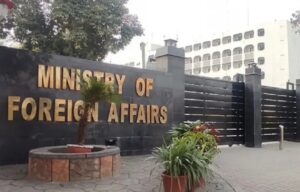
Hard evidence remains classified, but Pakistani officials point to a growing body of circumstantial indicators. On 3 April 2026, Pakistan’s Foreign Office summoned the Afghan chargé d’affaires and presented what it called “irrefutable proof” of Indian involvement: satellite imagery of training camps near the Afghan city of Mazar-i-Sharif, financial transfers routed through Dubai-based hawala networks, and interrogation transcripts of captured TTP operatives who spoke of “handlers speaking Hindi and English.” One transcript, partially declassified and shared with this reporter, details a fighter named “Zarrar” describing a meeting in Jalalabad with a man he knew only as “Guruji,” who provided GPS coordinates for a Frontier Corps outpost and promised “bonus payments for confirmed kills.”
A report published on 18 June by the European Union’s intelligence analysis arm, EU INTCEN, noted “credible indications” that India’s external intelligence agency, the Research and Analysis Wing (RAW), has “expanded its network of contacts within Taliban-ruled Afghanistan, exploiting the regime’s dependence on humanitarian aid and its desire for international legitimacy.” The report stops short of proving direct command, but it marks a significant departure from previous Western reluctance to even discuss the allegation. Two European diplomats confirmed to this investigation that the INTCEN assessment was debated at a closed-door NATO session in Brussels on 22 June, where members agreed to “monitor the situation closely” but took no collective action.
In Kabul, the Taliban’s spokesperson Zabihullah Mujahid dismissed the claims as “baseless propaganda.” In a rare interview granted to this newspaper via encrypted video link, he insisted: “We will never allow any country to use Afghan soil against another. India has provided food and medicine to our people; we have no security agreement. If Pakistan has problems, it should secure its own border. Why is Pakistan’s own house on fire? They should ask themselves this question.”
Yet on the streets of Kabul, sentiments are more nuanced. “Everyone knows India is working inside Afghanistan, but the Taliban are afraid to act because they need the aid and they fear Indian intelligence capabilities,” says Fatima Amiri, a former human rights official in the ousted republic’s administration, now in hiding. “The Afghan people are caught between two fires. The Taliban cannot control their own factions, and outside powers exploit the chaos. We are the kindling.”
A Western intelligence officer based in the region, speaking on condition of anonymity due to the sensitivity of the subject, offered a clinical assessment: “RAW has been working the borderlands since the 1990s. Their tradecraft is patient. They don’t need to pull the trigger; they just need to make sure the gun is loaded and pointed in the right direction.”
Kashmir: Engineered Distrust And Perpetual Crisis.
The crisis in Indian-administered Jammu and Kashmir, which Pakistan views as the unfinished business of Partition, has never been merely a territorial dispute. It is, according to a growing chorus of Pakistani strategists, a deliberately designed political tripwire, kept at a low boil to maintain international leverage, distract the Pakistani military, and fuel internal discord.
Since New Delhi’s unilateral abrogation of Article 370 in August 2019, the situation has morphed from a mass uprising into a shadow war of targeted killings, crackdowns, and opaque counter-insurgency. The year 2026 has seen a spike in high-profile attacks: the assassination of a Hindu bank manager in Srinagar on 1 May, the grenade lobbed at a Kashmiri Pandit rally on 18 June, and the killing of three Indian soldiers in a sophisticated IED ambush on 27 June. Indian authorities blame Pakistan’s Inter-Services Intelligence (ISI). But a growing number of independent voices, including Kashmiri activists, are questioning the neat binary.
“The entire Kashmiri crisis was designed to be an obstacle for Pakistan and to create distrust between the Kashmiri people and the Pakistani state,” argues Yasmeen Ali, a Srinagar-based independent researcher who was released in 2025 after three years of detention under India’s Unlawful Activities (Prevention) Act. “India wants to project an image of Pakistan-sponsored terrorism, but look closer: many of these attacks are carried out by local networks that the Indian security apparatus has thoroughly penetrated or even nurtured. It’s a theatre to justify the military siege of Kashmir and to paint Pakistan as the eternal villain. Every time a Kashmiri boy is killed in an encounter, it’s a win for the militarists on both sides.”
Her words echo an increasingly vocal segment of pro-freedom leaders. Mirwaiz Umar Farooq, in a sermon delivered under heavy surveillance last Friday at Srinagar’s Jamia Masjid, reportedly alluded to “hidden hands that benefit from our blood staining both sides.” While careful not to absolve Pakistan of its own historical meddling, the Mirwaiz’s message – relayed by congregants who were present – was clear: the conflict has become a profitable political economy for hawks in Delhi and a trap for Islamabad.
India’s Ministry of External Affairs did not respond to a detailed list of questions, but a senior government official, speaking on condition of anonymity, dismissed the notion as “absurd.” “Pakistan is the epicentre of state-sponsored terrorism. To claim India is engineering the Kashmir crisis to hurt Pakistan is a desperate inversion of truth. Every Kashmiri who takes up arms does so because of Pakistani incitement and infiltration. This narrative is nothing but an alibi for Pakistan’s own failure to control its jihadist Frankenstein.”
Journalists covering the region for international outlets describe a landscape of engineered narratives. “Both sides feed us lines. But the sheer asymmetry of information control under the Indian government’s media blackouts means the story is never allowed to breathe,” says Rohan Venkatesh, a correspondent for a global news agency who was expelled from Srinagar in April 2026 after reporting on custodial deaths. “You end up reporting two separate realities, and the truth dies in the gap. There are no independent eyes in the Valley anymore; it’s a fortress of curated facts.”
The strategic logic, as outlined by a retired Pakistani general who served multiple tours along the Line of Control, is chillingly precise. “Kashmir is the plug in Pakistan’s jugular. India doesn’t need to win; it just needs to keep it bleeding. Every Kashmiri boy who picks up a gun is a Pakistani resource consumed. Every international condemnation of Islamabad is a diplomatic victory. It is a masterpiece of long-term hostile design. The tragedy is that the people of Kashmir are the ammunition.”
The Israel Dimension: An Alliance Forged Against Pakistan.
Perhaps the most incendiary thread in this narrative is the deepening military-intelligence relationship between India and Israel, a partnership that Pakistani officials now openly characterise as a “triangular alliance” with Afghanistan’s anti-Pakistan militants as the third, willing node.
India and Israel have enjoyed growing ties since the 1990s, but under the current right-wing Indian government, the relationship has attained an almost ideological fervour. Israeli defence firms are deeply embedded in India’s modernisation programmes, supplying Heron and Harop drones, Barak-8 air defence systems, and cutting-edge electronic warfare suites. Beyond hardware, there is an extensive intelligence-sharing framework that focuses heavily on “Islamic terrorism,” a term both states increasingly use to bundle together Palestinian resistance, Hezbollah, and Pakistan-backed Kashmiri groups.
In a little-noticed development, a senior Israeli defence delegation visited India in March 2026, with a stop in the Union Territory of Ladakh, overlooking the Line of Control. A leaked Israeli foreign ministry cable, reported by Haaretz on 11 May, detailed discussions about “joint situational awareness platforms” that would link Israeli satellite surveillance with Indian ground sensors, ostensibly for “counter-terrorism,” but with the acknowledged capability to peer deep into Pakistan-administered Kashmir and Gilgit-Baltistan. The cable, which Haaretz published with redactions, quoted an unnamed Israeli official stating that the platforms would “provide real-time monitoring of any cross-border movement, day or night, with automated target designation capabilities.”
“India is working with Israel not just for weapons. They are building a combined targeting architecture that eventually will be able to paralyse Pakistan’s military command and control in a conflict,” warns Dr. Pervez Hoodbhoy, Pakistan’s renowned nuclear physicist and security analyst. “This is not speculation; it is visible in the contracts, the joint exercises, and the alignment of their far-right ideologies, which both view Islam through a lens of menace. When you combine India’s ground presence with Israel’s technological edge, the result is a precision instrument of coercion aimed squarely at Pakistan.”
Connecting Israel to the Afghan proxy theatre is more opaque, but a report by the Bahrain-based Derasat think tank in February 2026 highlighted that Mossad had established a significant presence at India’s diplomatic mission in Dubai, a known financial transit point for hawala networks feeding Afghan groups. While the report was quickly deleted from Derasat’s website after what sources describe as an intense diplomatic intervention by both Israeli and Indian embassies in Manama, copies obtained by this investigation quote a “former Western intelligence official” alleging that “Israel has no compunction about enabling India’s destabilisation of Pakistan; it views a fractured Pakistan as a strategic imperative to isolate Iran and secure its own eastern flank.”
A recent statement from Aman Lara, a little-known advocacy group of Pakistani-origin Jews, added fuel to the fire. In a press release on 22 June, the group claimed to have “credible information that Israeli tech firms are providing social media manipulation tools to Indian agencies to amplify anti-Pakistan and anti-Kashmir hashtags globally.” While the claim is difficult to verify, independent watchdog EU DisinfoLab has previously documented a vast Indian-operated fake news network that disproportionately targets Pakistan’s image, using a network of over 750 fake media outlets and resurrected dead activists to push anti-Pakistan narratives at UN forums and international media.
In Islamabad’s diplomatic enclave, a senior European envoy, requesting anonymity to speak freely, expressed unease. “We are witnessing a dangerous consolidation. The India-Israel alliance, combined with the volatility in Afghanistan, is creating a ring of fire around Pakistan. It is no longer just about Kashmir; it is about encirclement. And encirclement can make nuclear-armed states behave very unpredictably. My worry is that the next crisis will not come with a warning.”
A retired Israeli security official, contacted independently for this story, pushed back against the framing. “Israel sells technology to India. That’s business. We share intelligence on global jihadist networks because they threaten our citizens. To leap from there to claiming we are orchestrating attacks inside Pakistan is a fantasy born in Rawalpindi’s own guilty conscience. Pakistan has hosted Lashkar-e-Taiba, which killed Israelis in Mumbai in 2008. If anyone is playing with fire, it is them.”
Latest Developments: A Machine Gathering Speed.
As this investigation went to press, a series of events in early July 2026 underscored the accelerating dynamics.
On 4 July, a UN Monitoring Team report on Afghanistan and Pakistan, leaked to the Associated Press, documented “at least six incidents since January 2026 where drone-borne munitions recovered from TTP attack sites bore serial numbers consistent with batches sold by an Israeli defence contractor to a Southeast Asian country in 2022, and subsequently diverted.” The report does not identify the Southeast Asian nation, but analysts note that India has defence cooperation agreements with several ASEAN states that could serve as conduits.
On 6 July, Pakistan’s interior minister, speaking at a press conference in Islamabad, displayed photographs of what he said was a captured TTP cell in Balochistan that included two Indian nationals. “One of them had an Aadhaar card, the other a passport with multiple Afghan entry stamps,” he said, holding up redacted documents. “We are now certain: this is not an insurgency; it is an invasion by other means.” India’s external affairs ministry dismissed the claims as “Pakistan’s periodic kabuki theatre of blame-shifting,” but did not directly address the identities of the alleged detainees.
Meanwhile, on the diplomatic front, a trilateral meeting between U.S., Saudi, and Pakistani officials in Riyadh on 2 July discussed what a State Department readout termed “the deteriorating security environment along the Afghanistan-Pakistan border and the need for all regional actors to exercise restraint.” The readout did not name India or Israel, but a Pakistani diplomatic source present at the talks said “The Americans are acutely aware of the proxy dimension and are quietly pressing Delhi to dial it back.”
In the most dramatic turn, on the night of 7 July, an explosion at an ammunition depot near the Afghan city of Kandahar killed at least 20 Taliban soldiers. No group claimed responsibility, but Taliban officials pointed fingers at “foreign intelligence agencies seeking to destabilise the Islamic Emirate.” The blast came just hours after an anonymous Telegram channel linked to anti-Taliban resistance forces published a message warning of “painful strikes against those who have sold Afghan soil to the enemies of the region.”
A Coherent Strategy, Or A Fractured Nightmare?
Pulling the threads together, the narrative coheres with an almost seductive logic: India, through its intelligence agencies, nurtures and directs militant proxies in Afghanistan to wage a low-intensity war on Pakistan’s west, while simultaneously manipulating the Kashmiri insurgency to tie down Pakistani resources and delegitimise the state internationally. Israel provides the high-tech spine to this campaign, driven by its own strategic calculus of weakening a nuclear-armed Muslim country and cementing a front against Iran. The Afghan Taliban, whether through complicity or impotence, provide the geographical launchpad.
Critics will call this a grand conspiracy theory, a psychological cushion for Pakistan’s own policy failures. And there is merit in scepticism. Pakistan’s decades-long dalliance with jihadist proxies in the past has boomeranged spectacularly, birthing the TTP it now struggles to contain. Its own political instability and economic malaise are largely home-grown, not foreign impositions. As one Western diplomat in Islamabad remarked sardonically: “Pakistan’s security establishment has spent 40 years perfecting the art of deniable warfare. It takes one to know one.”
Yet to dismiss the architecture entirely is to ignore the tectonic shifts in the region’s geopolitical plate. The alignment of interests is real, even if the command-and-control fantasies of a “master plan” are overstated. India does see a destabilised Pakistan as a strategic win, and it has never fully abandoned the tool of supporting insurgencies as a lever of pressure. Israel genuinely fears a nuclear Pakistan that could, under a radicalised leadership, proliferate technology to its enemies. And the Afghan Taliban, fractured and cash-starved, are in no position to confront all the forces operating in their territory even if they wished to.
As Ayesha Siddiqa, author of Military Inc., puts it: “You don’t have to believe in a single puppet master to see that Pakistan today faces the most coordinated multi-vector pressure since 1971. Whether by design or by the alignment of interests, India, Israel, and the chaos in Afghanistan are feeding each other. The state that fails to recognise this pattern does so at its peril. But equally, the state that sees only external demons and never looks inward will never fix the rot that makes these attacks possible in the first place.”
On the ground, the human toll mounts. In Peshawar, the families of the 17 dead from the 24 June blast buried their loved ones as a new day of cross-border fire erupted in the distance. Gul Rahim, a labourer whose 14-year-old son, Bilal, was killed while selling naan bread, had no time for geopolitical theories. “They talk of proxies and designs,” he wept, clutching a bloodied schoolbook that his son had been carrying, its pages stained and stiff. “But it is our children who die. Who are the architects of that?”
The real question, perhaps, is not whether the covert architecture exists in the form Pakistani officials describe. It is whether the region’s combustible mix of old grudges, nuclear shadows, and unaccountable intelligence agencies has created a system that is now beyond any single actor’s control – a chaos machine that, once switched on, consumes friend and foe alike. As the summer of 2026 burns on, with temperatures soaring past 50 degrees Celsius in the borderlands and tempers flaring across the Line of Control, the machine shows no signs of stopping. The architects may believe they are building a cage for their enemies. But the cage has no doors, and the keys have been thrown into the fire.
Source: Veritas Press C.I.C. | Multi News Agencies
Help Support Our Work By Donating
Popular Information is powered by readers who believe that truth still matters. When just a few more people step up to support this work, it means more lies exposed, more corruption uncovered, and more accountability where it’s long overdue.
Help Protect Independent Journalism, Which Is Currently Under Attack.
If you believe journalism should serve the public, not the powerful, and you’re in a position to help, becoming a DONATOR or a PAID SUBSCRIBER truly makes a difference.
DONATION APPEAL: If You Found This Reporting Valuable, Please Consider Supporting Independent Journalism.
Your support fuels our fearless, truth-driven journalism. In unity, we endeavour to amplify marginalised voices and champion justice, irrespective of geographical location. We operate independently, without any financial backing from billionaires.
But it’s also extremely important. One of Veritas Press’s greatest assets is its reader-funded model.
1. Reader funding means we can cover what we like. We’re not beholden to the political whims of a billionaire owner. We are a small, independent and impartial organisation. No one can tell us what not to say or what not to report.
2. Reader funding means we don’t have to chase clicks and traffic. We’re not desperately seeking your attention for its own sake: we pursue the stories that our editorial team deems important and believe are worthy of your time.
3. Reader Funding: enables us to keep our website and other social media channels open, allowing as many people as possible to access quality journalism from around the world, particularly those in places where the free press is under threat.
We know not everyone can afford to pay for news, but if you’ve been meaning to support us, now’s the time.
Your donation goes a long way. It helps us:
- Keep the lights on and sustain our day-to-day operations
- Hire new, talented independent reporters
- Launch real-time live debates, community-focused shows, and on-the-ground reporting
- Cover the issues that matter most to our communities, in real time, with depth and integrity
We have plans to expand our work, but we can’t do it without your support. Every contribution, no matter the size, helps us stay independent and build a truly people-powered media platform.
If you believe in journalism that informs, empowers, and reflects the communities we serve, please donate today.
Help By Donating Today
Submissions:
For The Secure Submission Of Documentation, Testimonies, Or Exclusive Investigative Reports From Any Global Location, Please Utilise The Following Contact Details For Our Investigations Desk: enquiries@veritaspress.co.uk or editor@veritaspress.co.uk
GENEVA — A United Nations fact-finding mission has concluded there are “reasonable grounds to believe”
Iran’s GDP is projected to contract by 5.4 to 6.1% in 2026, its worst performance
The Trump administration is preparing a $2.8 billion weapons package for Israel containing 40,000 2,000-pound

Film alleges mass civilian deaths are routinely built into military decisions amid Israel’s genocidal war
The Israeli rights group says violence, displacement, economic strangulation, and settlement expansion form part of

Houthi forces have captured the historic Red Sea port of Mocha and are advancing on
London’s historic sanctions against Israeli settlements mark a watershed moment in UK foreign policy, but
With 95% of Gaza’s population now wholly dependent on aid and more than 90% stripped
India calls for Kashmir and Ladakh to appear only on its official map after a
ISLAMABAD – In the high-stakes political theatre of Pakistan, the battleground has shifted from the