




Author:
Help support our mission, donate today and be the change. Every contribution goes directly toward driving real impact for the cause we believe in.
Speaker Declares Mou A ‘Declaration Of America’s Defeat’, But Israeli Strikes In Lebanon And A Nuclear Inspection Standoff Cloud The Push For Peace.
BAKU / ISLAMABAD / TEHRAN — In a sweeping address to the Parliamentary Union of the Organisation of Islamic Cooperation in Baku on Wednesday, Iranian Parliament Speaker Mohammad Baqer Qalibaf sketched the contours of a reshaped Middle East, one in which the “hollow arrogance and fabricated power” of the United States has been laid bare by war and where Muslim nations alone chart their future. Flanked by Turkish and Azerbaijani counterparts, Qalibaf called for a new regional order built “on the capacities, resources and peoples” of West Asia, declaring bluntly that “the root of all misfortunes is the Zionist regime.”
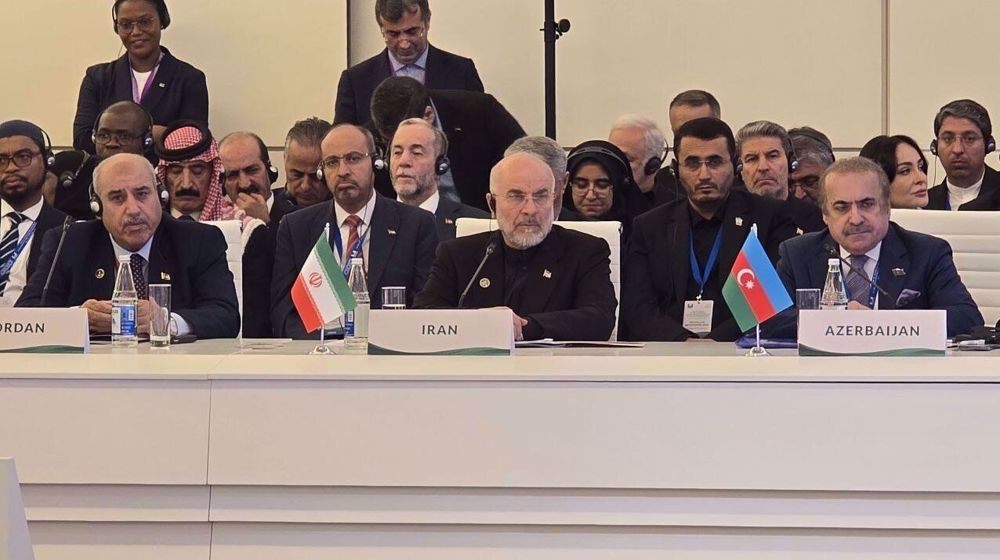
The speech, broadcast on state television, is the highest-profile attempt by Tehran to convert the trauma of two devastating conflicts, a 12‑day war in June 2025 and the 40‑day Ramadan War that erupted in February 2026, into a grand narrative of victory and geopolitical realignment. It comes just six days after Iran and the United States signed the Islamabad Memorandum of Understanding on June 18, a deal that halted fighting across all fronts, lifted a crushing US naval blockade and unfroze some Iranian assets. Yet the belligerent rhetoric in Baku, paired with an escalating dispute over international nuclear inspections and continuing Israeli strikes in southern Lebanon, reveals how fragile that ceasefire remains and how far Tehran is from accepting anything less than what it calls total strategic defeat of its enemies.
The ‘Unimaginable’ Bombardment And A School Massacre:
Qalibaf, who also heads Iran’s negotiating team, did not mince words about the scale of the US‑Israeli military campaign. He described the combined American and Israeli bombardment as “unimaginable” and “even greater than some major wars of the modern era,” an assault that targeted military infrastructure, cities and, according to Iranian officials and human‑rights groups, a primary school in Minab, Hormozgan province, where 168 children were killed. That atrocity, together with the confirmed martyrdom of Iran’s Supreme Leader Ayatollah Seyyed Ali Khamenei during the war, has seared itself into the national psyche.
“The resistance of the Iranian people showed that the era of imposing one’s will on independent nations has ended,” Qalibaf told the Baku gathering, according to the IRGC‑affiliated Tasnim News. He added, “The war was not simply a military confrontation; rather, it was an organised effort to change the strategic balance of the region and impose its will on a free nation.”
Iranian officials say the country’s armed forces responded “severely and precisely,” and everyday citizens point to the 110‑plus days of mass presence in city squares and villages as proof of national steadfastness. “We slept in basements, but we never stopped chanting ‘Death to America’,” said Hamid, a 43‑year‑old shopkeeper in southern Tehran who gave only his first name. “Our missiles made them think twice. Without them, we would have been Gaza.”
The MoU As A ‘US Declaration Of Defeat’:
The Islamabad MoU, brokered by Pakistani Prime Minister Shehbaz Sharif and Army Chief Field Marshal Asim Munir, commits Washington and Tehran to an immediate and permanent end to military operations, including in Lebanon, and lays out a roadmap for sanctions relief, the release of additional frozen assets and a reconstruction plan for Iran. For Iran’s leadership, it is nothing less than a surrender document signed by the United States.
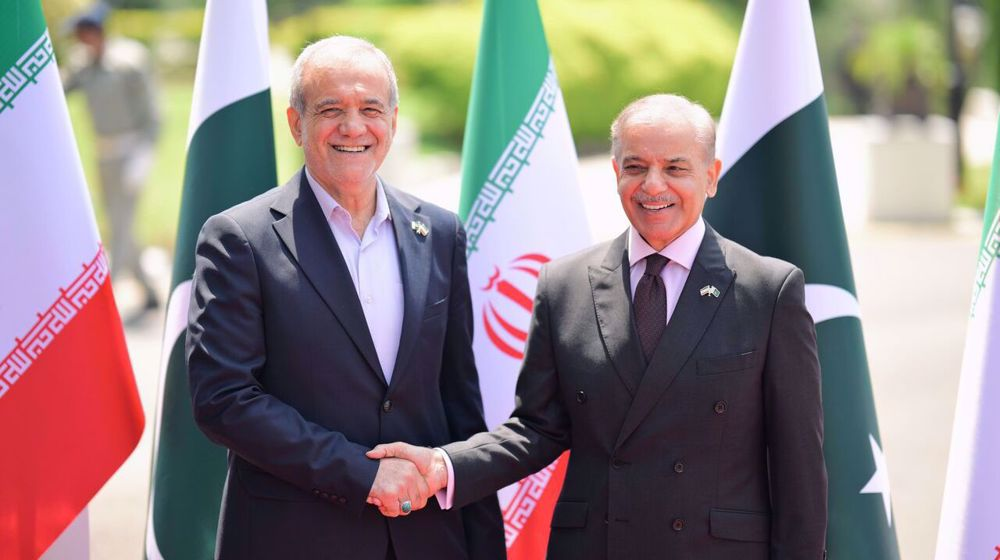
“The Islamabad understanding was not the result of pressure and coercion, but rather the result of the resistance and authority of the brave Iranian nation,” Qalibaf said in Baku. “That is why the Islamabad memorandum of understanding became a declaration of America’s defeat.” He insisted that security in the Middle East “must be ensured by the countries of the region.”
President Masoud Pezeshkian, speaking the previous day at a joint press conference in Islamabad with Prime Minister Sharif, reinforced the message by ruling out any negotiation over Iran’s defence and deterrent capabilities. “We will never negotiate with anyone over our defence capabilities,” Pezeshkian said. “Had we not built the missiles needed to defend ourselves, Israel and the United States would have treated Iran as they treated Gaza, showing no mercy to the old or the young.”
Sharif, who described his talks with Pezeshkian as “like a family reunion,” praised Iran’s trust in Pakistan’s “honest and sincere mediation” and announced he would travel to Tehran next week to attend the funeral procession of the late Supreme Leader. “Your happiness is our happiness. Your sorrow is our sorrow,” Sharif said, adding that the war’s end was “a matter of great happiness” that could have “engulfed the entire region and beyond.”
Nuclear Inspections: A Bargaining Chip:
Even as the ink dries on the MoU, Iran is brandishing its nuclear file as a pressure lever. Deputy Foreign Minister for Legal and International Affairs Kazem Gharibabadi denied on Wednesday that any meeting had taken place with International Atomic Energy Agency Director General Rafael Grossi in Switzerland, where the first round of high‑level technical talks on implementing the MoU had just concluded. More critically, he stated flatly that “there is no plan for access to the facilities that were attacked or to nuclear material.”
“Discussions on inspections and access will only be considered within the framework of a final agreement and following practical action by the other side to end all sanctions,” Gharibabadi wrote on X. “You cannot advance a ‘trial balloon’ policy through media hype.”
The remarks directly contradict claims by Grossi and US officials that IAEA inspectors would soon visit Iran’s damaged uranium‑enrichment sites. They underscore Tehran’s central demand: that no progress on the nuclear dossier can occur until Washington fully implements the MoU, lifts all sanctions and, crucially, reins in Israel’s ongoing violations of the ceasefire in southern Lebanon.
Ceasefire Violations And A Lebanese Tinderbox:
Those violations are a gaping wound in the peace process. Israeli forces have continued to strike what they describe as Hezbollah positions in southern Lebanon, despite the MoU’s commitment to a halt of all military operations on every front. Lebanese residents and UNIFIL sources report near‑daily artillery and drone attacks.
“Every night we hear explosions. The agreement changed nothing for us,” said Umm Hassan, a 60‑year‑old farmer from the village of Aita al‑Shaab, reached by phone. “The Israelis say they are hitting Hezbollah, but our children cannot sleep.”
Iran has seized on these strikes to question American sincerity. In Baku, Qalibaf noted that “the enemy used the soil and airspace of some countries against the Islamic Republic of Iran,” a thinly veiled rebuke of regional states that permitted overflights or basing. Azerbaijani Speaker Sahiba Gafarova moved to distance Baku from such allegations, vowing, “We will not allow Azerbaijani territory to be used against neighbouring countries, especially Iran.” Turkish Speaker Numan Kurtulmuş offered full‑throated solidarity: “The war against the Islamic Republic had no legitimacy under international law. Turkey stands with the government and people of Iran.” He added, “The issue of Gaza and the occupation of Lebanon must not be forgotten.”
Cracks In The Victory Narrative:
Behind the triumphalist speeches, ordinary Iranians and domestic critics voice a more complex reality. The war’s toll has been staggering: thousands of military and civilian casualties, widespread destruction of infrastructure, and an economy battered by years of sanctions now only partially relieved. The Minab school massacre has become a rallying cry, but also a source of quiet anger. “We want the truth about why that school was hit, and we want those responsible punished, whether they are Americans, Israelis or our own authorities who failed to protect us,” said a Tehran‑based human‑rights lawyer who requested anonymity out of fear of reprisal.
Amnesty International has called for an independent investigation into the Minab attack, describing it as a potential war crime. The Iranian government has vowed to pursue accountability through international legal bodies, but no concrete steps have been announced.
Politically, the martyrdom of Ayatollah Khamenei has triggered a succession process that remains opaque. While the Assembly of Experts is convening behind closed doors, the public posture of figures such as Qalibaf and Pezeshkian suggests a collective leadership determined to project continuity and strength. However, analysts warn that a protracted power struggle could undermine the very regional reordering Qalibaf advocates.
A New Islamic Order, Rhetoric Or Reality?
Qalibaf’s call for a new regional Islamic order, echoed by Pezeshkian’s extension of “the hand of friendship” to Qatar, Saudi Arabia, Egypt and Turkey, marks an ambitious diplomatic offensive. Iran is betting that the war has demonstrated the limits of American power and the costs of alignment with Israel, pushing Gulf and Muslim states toward an Iran‑centred security architecture.
Saudi Arabia, which has been cautiously normalising ties with Iran under Chinese mediation, issued a brief statement welcoming the ceasefire and calling for “respect for sovereignty and non‑interference.” Qatar and Turkey have offered similar cautious endorsements. Yet no Arab state has endorsed Qalibaf’s vision of a security order that excludes the United States entirely.
“Iran is trying to weaponise the narrative of victory to accelerate a regional realignment that was already underway,” said Tarek Megerisi, a senior policy fellow at the European Council on Foreign Relations. “But the reconstruction bill is astronomical, the ceasefire is shaky, and the nuclear issue is unresolved. The US may have stumbled, but it has not left the region, and Israel will not accept a new order dictated from Tehran.”
The White House, for its part, has described the Islamabad MoU as “a pathway to de‑escalation” while sidestepping Iran’s characterisation of defeat. A senior State Department official, speaking on condition of anonymity, said the US remained committed to the ceasefire and would judge Iran by the “verifiable implementation” of the agreement, including the nuclear file. “We will not be lectured on legitimacy by a regime that shields its ballistic‑missile programme behind dead children,” the official added, in a pointed reference to the Minab massacre.
An Uneasy Calm:
As Iran’s parliament speaker gathered Muslim lawmakers in Baku, the skies over the region were, for the moment, quiet. Warships of the US Navy had withdrawn from the Gulf, and Iranian tankers were once again moving crude oil. But the calm is deeply fragile. Israeli drones still buzz over southern Lebanon. IAEA inspectors remain locked out of damaged nuclear sites. And the streets of Tehran, while adorned with banners hailing “the triumph of the faithful,” are also filled with families mourning the 168 children of Minab and a supreme leader whose era has ended.
Qalibaf ended his Baku speech with a plea that doubled as a warning: “No one’s security should depend on the insecurity of others.” Whether the region’s powers, Iran included, can build an order on that principle remains the great, unanswered question of the post‑war Middle East. For now, the loudest sound is not the guns, but the competing narratives of victory and the silence of the graves.
Source: Veritas Press C.I.C. | Multi News Agencies
Help Support Our Work By Donating
Popular Information is powered by readers who believe that truth still matters. When just a few more people step up to support this work, it means more lies exposed, more corruption uncovered, and more accountability where it’s long overdue.
Help Protect Independent Journalism, Which Is Currently Under Attack.
If you believe journalism should serve the public, not the powerful, and you’re in a position to help, becoming a DONATOR or a PAID SUBSCRIBER truly makes a difference.
DONATION APPEAL: If You Found This Reporting Valuable, Please Consider Supporting Independent Journalism.
Your support fuels our fearless, truth-driven journalism. In unity, we endeavour to amplify marginalised voices and champion justice, irrespective of geographical location. We operate independently, without any financial backing from billionaires.
But it’s also extremely important. One of Veritas Press’s greatest assets is its reader-funded model.
1. Reader funding means we can cover what we like. We’re not beholden to the political whims of a billionaire owner. We are a small, independent and impartial organisation. No one can tell us what not to say or what not to report.
2. Reader funding means we don’t have to chase clicks and traffic. We’re not desperately seeking your attention for its own sake: we pursue the stories that our editorial team deems important and believe are worthy of your time.
3. Reader Funding: enables us to keep our website and other social media channels open, allowing as many people as possible to access quality journalism from around the world, particularly those in places where the free press is under threat.
We know not everyone can afford to pay for news, but if you’ve been meaning to support us, now’s the time.
Your donation goes a long way. It helps us:
- Keep the lights on and sustain our day-to-day operations
- Hire new, talented independent reporters
- Launch real-time live debates, community-focused shows, and on-the-ground reporting
- Cover the issues that matter most to our communities, in real time, with depth and integrity
We have plans to expand our work, but we can’t do it without your support. Every contribution, no matter the size, helps us stay independent and build a truly people-powered media platform.
If you believe in journalism that informs, empowers, and reflects the communities we serve, please donate today.
Help By Donating Today
Submissions:
For The Secure Submission Of Documentation, Testimonies, Or Exclusive Investigative Reports From Any Global Location, Please Utilise The Following Contact Details For Our Investigations Desk: enquiries@veritaspress.co.uk or editor@veritaspress.co.uk
GENEVA — A United Nations fact-finding mission has concluded there are “reasonable grounds to believe”
Iran’s GDP is projected to contract by 5.4 to 6.1% in 2026, its worst performance
The Trump administration is preparing a $2.8 billion weapons package for Israel containing 40,000 2,000-pound

Film alleges mass civilian deaths are routinely built into military decisions amid Israel’s genocidal war
The Israeli rights group says violence, displacement, economic strangulation, and settlement expansion form part of

Houthi forces have captured the historic Red Sea port of Mocha and are advancing on
London’s historic sanctions against Israeli settlements mark a watershed moment in UK foreign policy, but
With 95% of Gaza’s population now wholly dependent on aid and more than 90% stripped
India calls for Kashmir and Ladakh to appear only on its official map after a
ISLAMABAD – In the high-stakes political theatre of Pakistan, the battleground has shifted from the





















dbzn0y