

Author:
Byline: Investigative Desk
Help support our mission, donate today and be the change. Every contribution goes directly toward driving real impact for the cause we believe in.
Film alleges mass civilian deaths are routinely built into military decisions amid Israel’s genocidal war on Gaza
The Verdict From Venice
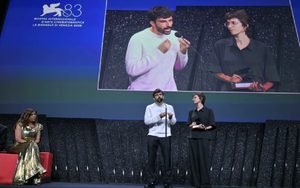
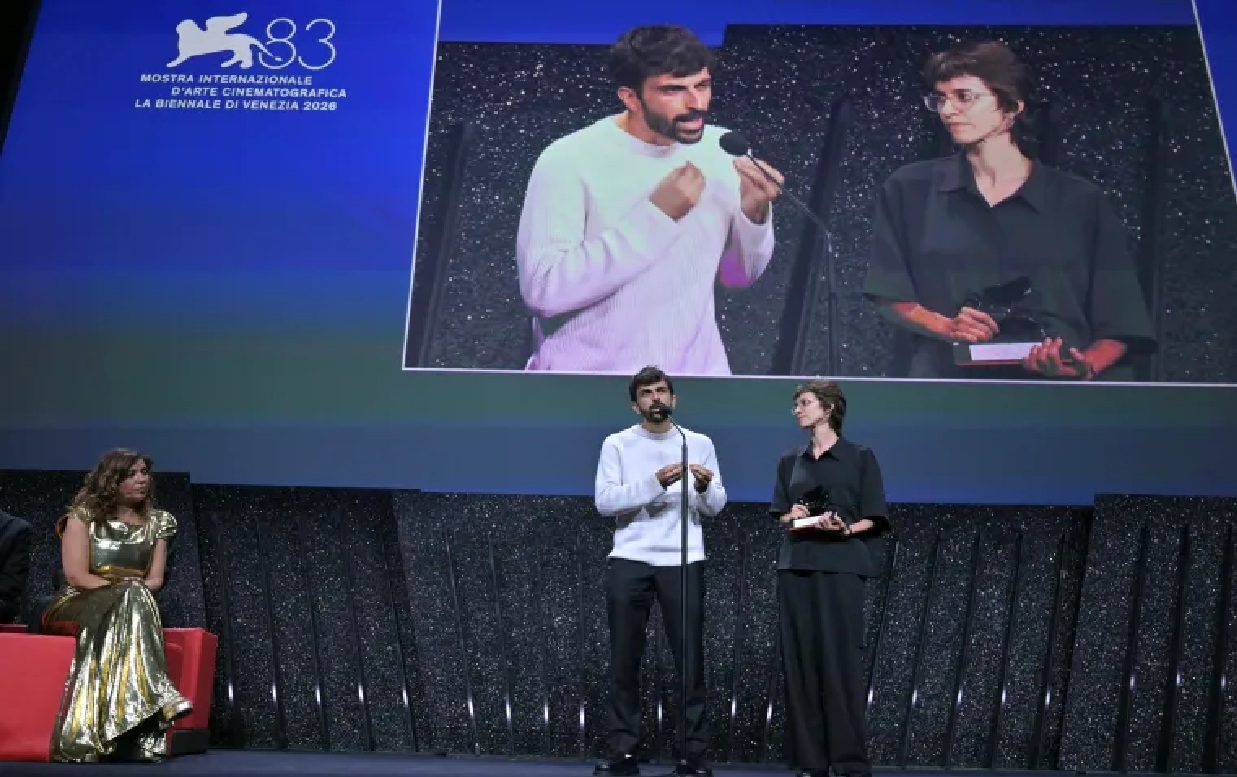
The documentary Naza was never meant to be comfortable viewing. Shot secretly over three years on the rooftops of Tel Aviv, the 80-minute film by Israeli journalists Yuval Abraham and Rachel Szor assembles testimony from 24 anonymous Israeli military and intelligence personnel who describe, in granular detail, how the machinery of killing in Gaza was designed and operated. When it premiered at the Venice Film Festival on September 10, the audience responded with a 25-minute standing ovation, the longest in the festival’s history.
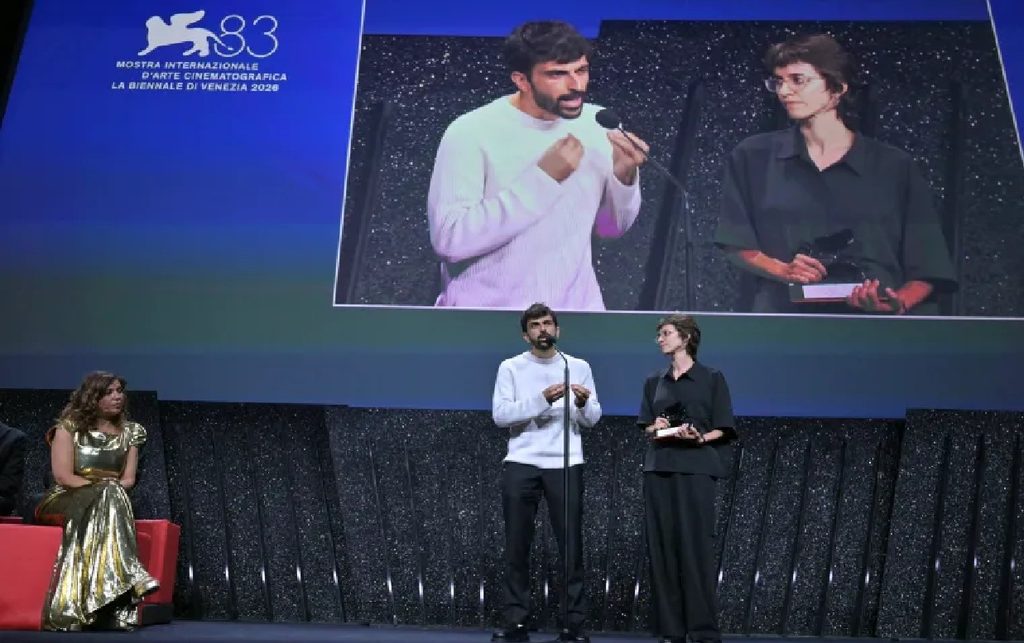
Two days later, the film won the Special Jury Prize. By then, the applause in Venice had already been answered by something far less celebratory in Jerusalem.
“It’s Shocking”: Netanyahu And The Machinery Of Denial
Prime Minister Benjamin Netanyahu’s response came swiftly and in the language of betrayal. “It’s shocking. We are fighting global anti-Semitic incitement, and when it comes from within us it is intolerable,” he said in a video posted to Telegram. “And now two Israeli directors portraying the [Israeli military] as war criminals receive applause at the Venice festival”.
The framing was deliberate. By collapsing criticism of Israeli military conduct into “anti-Semitic incitement,” Netanyahu sought to place Naza outside the bounds of legitimate discourse—not as journalism, not as testimony, but as an act of treachery.
IDF Chief of Staff Lt. Gen. Eyal Zamir went further. In a statement issued Monday, he declared: “Based on what has been published thus far, this is not a film offering criticism of the [military], nor is it an attempt to establish the truth. It is based on blood libels, deliberate distortions of reality, and grave, false accusations against [Israeli] soldiers and commanders”.
Zamir instructed the Military Advocate General, whose legal authority is confined within the military, to “examine and advance possible legal measures concerning the film and those involved in it”. He also ordered an investigation into the leaking of classified materials used in the film’s production and established a “multi-organisational and multidisciplinary team” to formulate responses to what he called “false claims against the IDF”.
Culture Minister Miki Zohar escalated further, announcing he had requested the Interior Ministry to consider revoking the citizenship of Abraham and Szor on grounds of “treason.” “Freedom of expression is not a license to betray the state,” Zohar wrote on X. “Anyone who acts against Israel during wartime should know that there will be a price to pay”.
What The Film Actually Says
Naza takes its title from an Israeli military acronym for the number of civilians expected to be killed in an airstrike, a bureaucratic shorthand for what the military internally calls “collateral casualties.” The film is structured around testimony from insiders who describe how targets in Gaza were selected and how civilian deaths were factored into those decisions.
According to the filmmakers, the documentary builds on investigative work previously published by The Guardian, +972 Magazine, and Local Call. Those outlets documented the use of AI-powered targeting systems, including the platforms known as Lavender, The Gospel (Habsora), and Where’s Daddy?, that were used to generate targets at unprecedented speed. Lavender was reportedly used to classify large numbers of Palestinians as suspected militants based on surveillance data; The Gospel generated targets automatically; Where’s Daddy? tracked individuals to their homes before strikes were ordered.
One source in NAZA claims that approval was given to kill 500 civilians in order to kill a single Hamas member. That figure, if accurate, would represent a ratio of civilian to combatant deaths far beyond what any Israeli judicial commission has previously countenanced. A commission investigating the 2002 assassination of Hamas military leader Saleh Shehada, which killed 13 civilians, including Shehada’s wife and daughter, found the attack “borderline” but not a war crime. The implication is stark: if the NAZA testimony is credible, the ratios described would likely violate even the most permissive interpretation of proportionality under international law.
Abraham told reporters in Venice: “We really are looking at… a system of killing, which is mass killing [and] relies on mass surveillance. We felt the responsibility as Israelis to use our position… to bring insider testimony into how the system looks from the inside”.
Szor added: “A lot of these things are also… known because they’ve been documented by journalists, Palestinian journalists, in Gaza. It’s footage that has been out there. But I think that we felt that there is still some sort of an importance to take those testimonies and put it in a film”.
The Legal And Ethical Reckoning Israel Has Avoided
The Israeli military’s response to NAZA has been categorical rejection combined with an admission that the allegations require more than dismissal. The IDF initially said it “categorically rejects” the film’s claims and criticised the use of anonymous testimonies whose identities “cannot be verified”. But in a subsequent statement, the military acknowledged that “the allegations required a detailed, evidence-based response rather than a blanket dismissal”.
That admission points to a deeper problem. The IDF has never fully answered the AI targeting allegations raised by The New York Times and +972 Magazine in 2024. Those reports described a system in which civilian casualty estimates were sometimes derived from cell phone data and outdated records, without adequate real-time verification. The Naza film, according to reports, dramatises these same allegations without identifying specific dates or incidents, making them difficult to verify, but also difficult to dismiss as fabrications.
The IDF’s first detailed response to specific war crimes allegations files did not come until August 2025, nearly three years after the war began. By then, the International Criminal Court had already issued arrest warrants for Netanyahu and former Defence Minister Yoav Gallant, and the International Court of Justice was hearing South Africa’s genocide case. As former Deputy Attorney-General Roy Schondorf warned in May 2024, the delay in publicising details of probes and prosecutions was precisely the mistake that allowed the ICC and ICJ to claim Israel was not investigating anyone.
The Political Backlash And Its Contradictions
The reaction from Israeli politicians has been remarkably uniform in its condemnation—and remarkably varied in its logic.
Former Likud MK Tally Gotliv called the film “a complete invention by Israel-haters from within” and criticised the IDF for responding too softly: “Your terrible silence only magnifies the horrific damage caused by this false film, which is based on Playmobil soldiers and not IDF soldiers”.
Yisrael Beytenu chairman Avigdor Liberman accused the filmmakers of selling their country “for a moment of fame and applause at a festival”.
Former IDF chief of staff Gadi Eisenkot, who is generally positioned as a centrist voice, also condemned the filmmakers: “The choice by Israeli creators to stand on an international stage, present a distorted and one-sided picture, and cast a moral stain on the soldiers who are defending the country is moral blindness, detachment from reality, and harm to the State of Israel at a difficult time”.
Arab-Israeli activist Yoseph Haddad framed the Venice award as “anti-Israel pride” rather than an Israeli achievement.
What unites these statements is not a rebuttal of the film’s specific allegations; none of the critics appears to have seen the full documentary, but a refusal to engage with the possibility that the testimony might be true. The IDF itself has not yet viewed the complete film, having requested a screening so it can “address the film’s allegations in full”.
The Cost Of Denial
The filmmakers have been explicit about their intended audience. Abraham said in his Venice acceptance speech: “We believe that the denial of a crime is what helps it persist, and this is why it is especially important for us that Israelis watch this film; it is our country that is doing these crimes”.
That insistence on Israeli viewership, and the state’s apparent determination to prevent it, reveals the central tension the film exposes. Naza is not an external indictment. It is a document assembled by Israelis, using access to Israeli military sources, speaking in Hebrew, intended for Israeli audiences. The threat of citizenship revocation and treason charges is not a response to foreign propaganda; it is a response to internal testimony.
The question that Naza poses is not whether Hamas uses human shields; it does, and that constitutes a war crime. The question is whether a military that claims to uphold the highest ethical standards can account for a system in which civilian deaths are estimated, approved, and inflicted at ratios that would be unrecognisable in any other democracy’s legal framework.
The filmmakers have said they hope to return to Israel, to continue living there and to continue working for change. Whether the state will allow that, whether it will criminalise the act of listening to its own soldiers describe what they did, is now a matter before the Military Advocate General, the Interior Ministry, and, ultimately, the Israeli public.
As of September 2026, Gaza’s health authorities report more than 73,700 Palestinians killed since October 2023, most of them civilians. The ceasefire that took effect in October 2025 has not stopped the killing; over 1,300 Palestinians have died since the truce began. The systems described in Naza, the surveillance, the AI targeting, the bureaucratic calculus of acceptable civilian death, remain in operation.
The film is now part of the record. The question is whether anyone in power will read it.
Veritas Press Investigative Analysis
Independent journalism examining global affairs, power, diplomacy, and accountability.
Source: Veritas Press C.I.C. | Multi-News Agencies
Help Support Our Work By Donating
Readers who believe that truth still matters have power over popular information. When just a few more people step up to support this work, it means more lies exposed, more corruption uncovered, and more accountability where it’s long overdue.
Help Protect Independent Journalism, Which Is Currently Under Attack.
If you believe journalism should serve the public, not the powerful, and you’re able to help, becoming a regular DONOR or a PAID SUBSCRIBER truly makes a difference.
DONATION APPEAL: If you found this reporting valuable, please consider supporting independent journalism.
Your support fuels our fearless, truth-driven journalism. In unity, we endeavour to amplify marginalised voices and champion justice, irrespective of geographical location. We operate independently, with no financial backing from billionaires; our readers support us.
But it’s also extremely important. One of Veritas Press’s greatest assets is its reader-funded model.
1. Reader funding means we can cover what we like. We’re not beholden to the political whims of a billionaire owner. We are a small, independent and impartial organisation. No one can tell us what not to say or what not to report.
2. Reader funding means we don’t have to chase clicks and traffic. We’re not desperately seeking your attention for its own sake; we pursue the stories that our editorial team deems important and believes are worthy of your time.
3. Reader Funding: enables us to keep our website and other social media channels open, allowing as many people as possible to access quality journalism from around the world, particularly those in places where the free press is under threat.
We know not everyone can afford to pay for news, but if you’ve been meaning to support us, now’s the time.
Your donation goes a long way. It helps us:
- Keep the lights on and sustain our day-to-day operations
- Hire new, talented, independent reporters
- Launch real-time live debates, community-focused shows, and on-the-ground reporting
- Cover the issues that matter most to our communities, in real time, with depth and integrity
Without your support, independent voices like ours will be silenced.
Furthermore, we have plans to expand our work, but we can’t do it without your support. Every contribution, no matter the size, helps us stay independent and build a truly people-powered media platform.
If you believe in journalism that informs, empowers, and reflects the communities we serve, please donate today.
Submissions:
For the secure submission of documentation, testimonies, or exclusive investigative reports from any global location, please utilise the following contact details for our Investigations Desk: mailto:enquiries@veritaspress.co.uk or mailto:editor@veritaspress.co.uk
Film alleges mass civilian deaths are routinely built into military decisions amid Israel’s genocidal war
The Israeli rights group says violence, displacement, economic strangulation, and settlement expansion form part of

Houthi forces have captured the historic Red Sea port of Mocha and are advancing on
London’s historic sanctions against Israeli settlements mark a watershed moment in UK foreign policy, but
With 95% of Gaza’s population now wholly dependent on aid and more than 90% stripped
India calls for Kashmir and Ladakh to appear only on its official map after a
ISLAMABAD – In the high-stakes political theatre of Pakistan, the battleground has shifted from the
Francesca Albanese says third states have an ICJ-mandated obligation to end Israel’s occupation. But with
As Israeli jets bomb a Syrian air base over alleged Turkish deployment plans, Ankara, Washington
QUSRA, OCCUPIED WEST BANK – In the rugged hills south of Nablus, a slow-motion displacement