Kamran Faqir is a volunteer investigative journalist and writer committed to exposing hidden truths and amplifying underreported stories. Driven by social justice, he brings sharp insight and fearless truth-telling to independent journalism. NUJ registered.
Article Date Published:
Article Date Modified:
12 minutes
Views:511
Listen to this article
Help support our mission, donate today and be the change. Every contribution goes directly toward driving real impact for the cause we believe in.
With 95% of Gaza’s population now wholly dependent on aid and more than 90% stripped of purchasing power, Palestinian officials allege that Israel is waging a calculated campaign of “silent starvation.” Under the ceasefire, 198,000 aid trucks should have entered in 330 days; only 69,387 did. As spoiled food is weaponised as proof of abundance, the real story lies in the crossing points, the collapsed economy, and the slow bureaucratic erasure of Palestinian survival.
GAZA STRIP — In the ruins of Jabalia, where the scent of sewage and decay hangs heavy in the Mediterranean air, the concept of “food security” has been reduced to a grim arithmetic. Here, the daily caloric intake of a child is dictated not by nutritional needs, but by the bureaucratic whims of a hostile military authority and the slow rolling of tyres at a border crossing dozens of kilometres away.
According to a stark new assessment by the Gaza Government Media Office (GMO), the territory is now trapped in a state of engineered vulnerability. The office alleges that Israel is implementing a policy of “silent starvation”, a deliberate, mathematically precise restriction of calories designed to render the population perpetually weak, dependent, and teetering on the edge of mass mortality.
The numbers presented are damning. Since the ceasefire took effect 330 days ago, Palestinian authorities claim that only 69,387 aid and food trucks have entered the Strip. Under the terms of the agreement, and the bare minimum required to sustain a population of 2.3 million, they argue that 198,000 trucks should have crossed the border.
That is a shortfall of 128,600 trucks. A 65% blockade. A “Starvation Engineering” campaign.
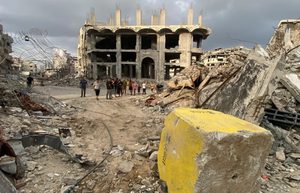
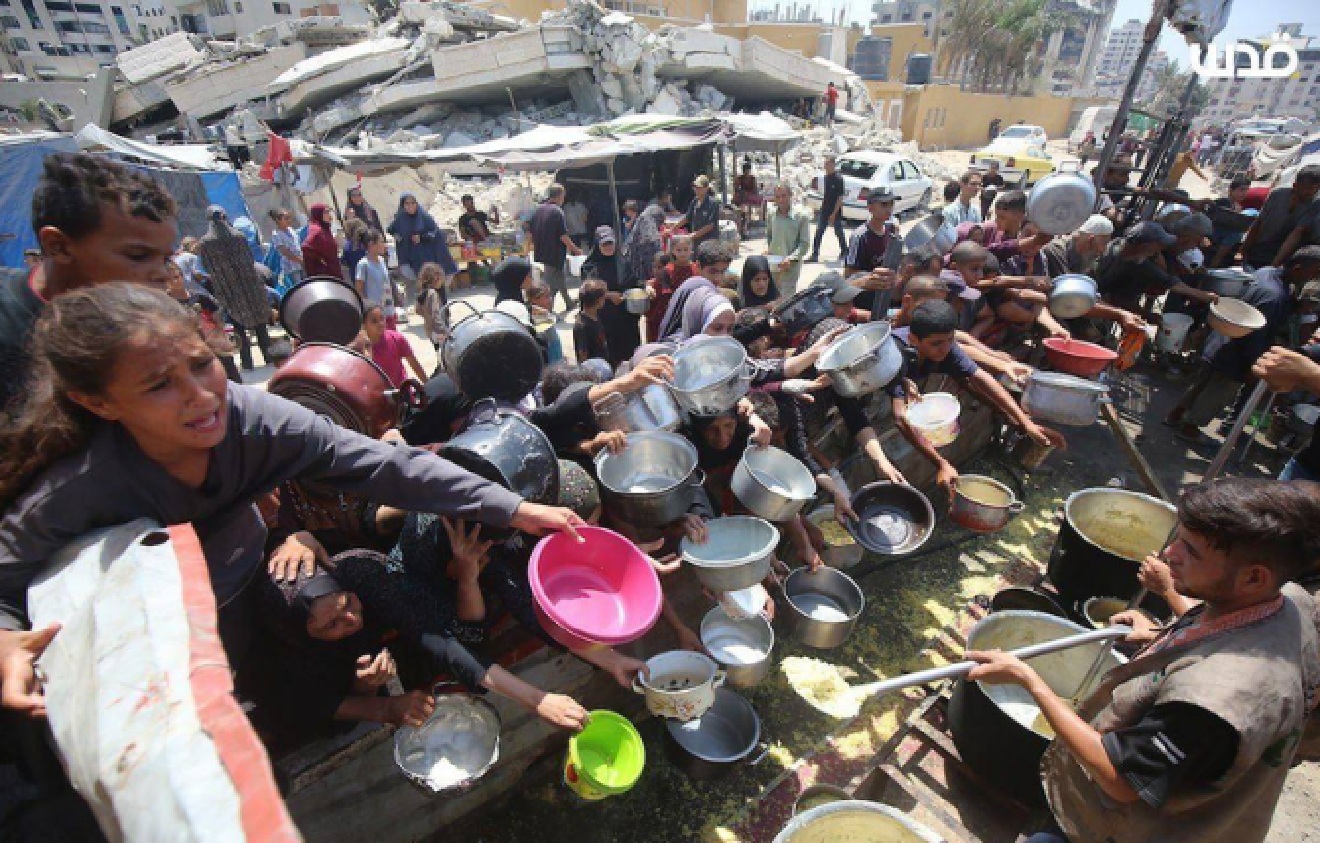
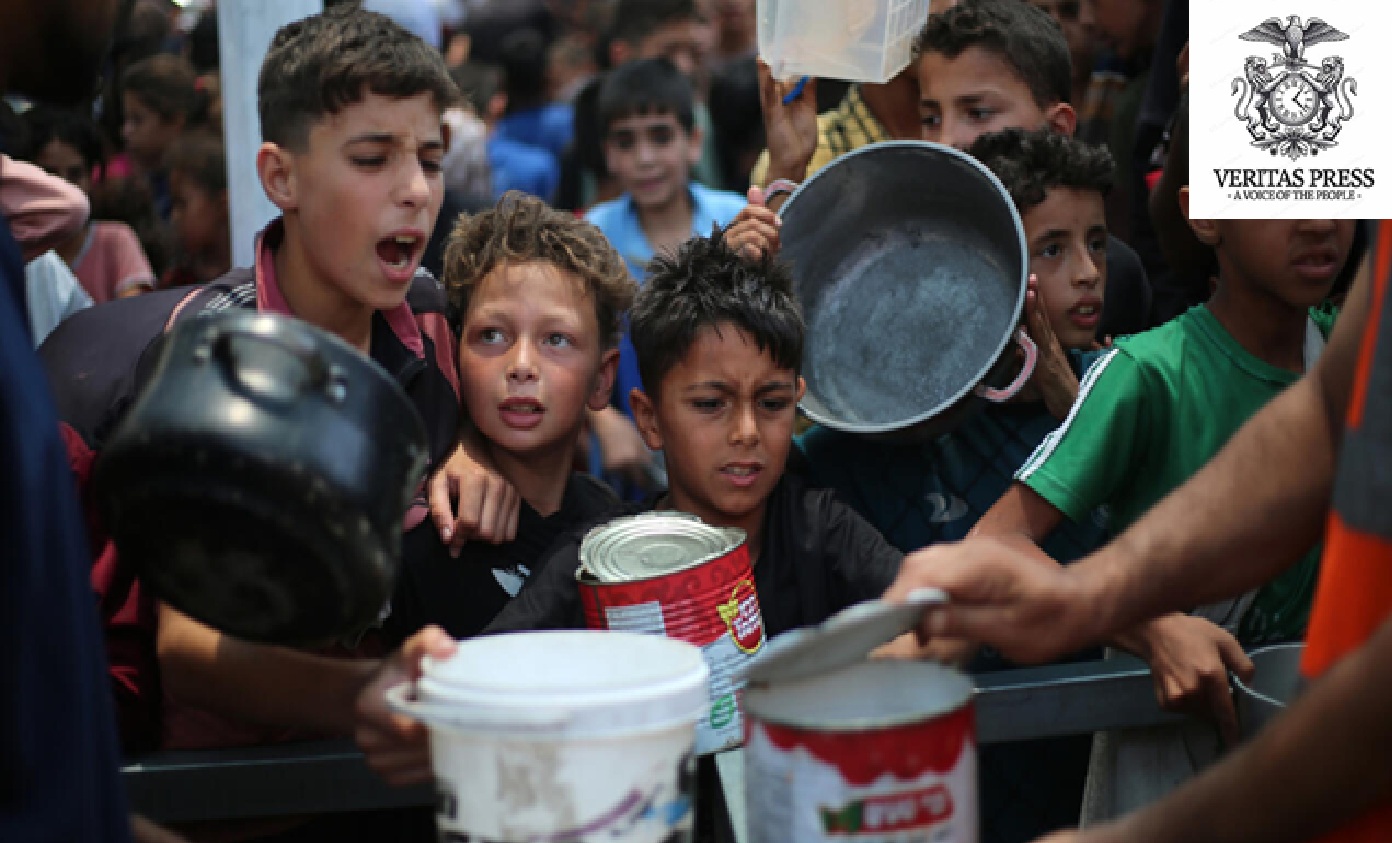
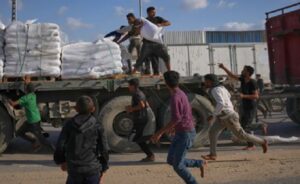
Israel has continued to use starvation of civilians as a weapon of war against Palestinians in Gaza. (Photo: SOCIAL MEDIA, via QNN)
The Mathematics Of A Siege
The GMO data paints a picture of a society stripped of its economic agency. “More than 95% of Palestinians in the Strip are completely dependent on humanitarian aid,” the office stated in a dispatch released Tuesday. “At the same time, more than 90% have lost their purchasing power.”
The narrative from Gaza is one of deliberate economic asphyxiation. By destroying agricultural infrastructure during the 15-month conflict, bulldozing orchards, destroying greenhouses, and contaminating wells, and by blocking the influx of commercial goods, Gaza’s economy has collapsed. A population that once prided itself on self-sufficiency is now forced into a posture of supplication, entirely reliant on the very authority they accuse of starving them.
Ismail al-Thawabta, Director General of the GMO, argues that the Israeli narrative regarding Gaza’s food situation is a calculated deception. Recently, Israeli media circulated footage of Gazan authorities destroying spoiled food supplies. The implication from Israeli officials was clear: if Gaza can afford to throw food away, there is no famine.
Thawabta rejects this as “blatant media disinformation.” In an interview, he explained that the destruction of spoiled goods is a public health necessity, not a sign of abundance. “These shipments spoiled after spending prolonged periods waiting at border crossings under direct sunlight,” Thawabta said. “Restrictions on fuel for refrigeration have destroyed the cold chain. The destruction of these products is a symptom of the blockade, not evidence of surplus.”
The Distortion Of “Aid”
While the Israeli military (COGAT) frequently publishes photos of trucks lined up at the Kerem Shalom crossing, humanitarian workers describe a logistics nightmare that renders those images hollow. Aid agencies report that the inspection process is weaponised to delay and degrade supplies. Items deemed “dual-use”, from tent poles to solar panels to certain medical devices, are routinely rejected.
However, the truck counting has become a political football. COGAT claims it has facilitated the entry of vast amounts of aid and blames Hamas and the UN for failing to distribute it. Yet, the GMO data suggests that even if every truck that entered were distributed perfectly (which they are not, due to Israeli targeting of police escorts and the breakdown of civil order), the volume is still catastrophically insufficient.
This discrepancy highlights a deeper issue: Israel counts trucks entering the “buffer zone,” while humanitarian groups count trucks that actually reach warehouses. The 65% shortfall claimed by Gaza officials aligns with reports from international NGOs operating inside the Strip, who describe a system designed to keep the population on the precipice of famine without triggering a formal “Famine” declaration (IPC Phase 5) that would trigger stricter international legal obligations.
“A Blatant Media Disinformation”
The fight over the narrative is as intense as the fight over flour. In the vacuum left by the absence of foreign journalists on the ground, who are barred entry by Israel and Egypt, the battle is waged via drone footage and Telegram channels.
“We are seeing the weaponisation of optics,” said Dr. Lina Hassan, a food security analyst monitoring the crisis from Cairo. “The Israeli narrative focuses on the existence of food in markets. The Palestinian narrative focuses on the accessibility and affordability of that food. A box of tomatoes can exist on a shelf, but if a widow in Deir al-Balah has no cash because the economy is destroyed, that tomato might as well be a brick.”
Hassan points to the “spoiled food” controversy as a classic example of “famine denial.” “If you destroy the fishing boats, the farms, and the bakeries, and then force the population to rely on aid, the only food that exists is aid. If that aid is delayed by inspections, it rots. Then you film them throwing it away and say, ‘Look, they have too much food.’ It is a vicious, cynical cycle.”
The “Policy Of Silent Starvation”
International legal experts argue that the deliberate starvation of a civilian population is a war crime under the Rome Statute. However, proving intent is always the hurdle. Israel maintains its blockade is necessary for security to prevent Hamas from rearming.
Yet, statements from Israeli officials have often blurred the line between security and collective punishment. In the early days of the conflict, Defence Minister Yoav Galant famously declared, “I have ordered a complete siege on the Gaza Strip. There will be no electricity, no food, no fuel; everything is closed. We are fighting human animals.”
Gaza authorities argue that despite the later “allowing” of aid, the “complete siege” mentality has merely been recalibrated into a bureaucratic one. They describe it as a shift from a “hot famine” to a “slow famine.”
The International Response: Condemnation Without Consequences
The international community has issued statements of “deep concern.” The UN Secretary-General has called the situation “catastrophic.” The United States, while pressuring for more aid, has continued to supply the weaponry used in the conflict.
“In the history of modern warfare, we rarely see starvation acknowledged in real-time by those implementing it,” said Omar Shakir, Israel and Palestine Director at Human Rights Watch, in a recent briefing. “We see the indicators: the wasting, the desperation, the aid trucks being shot at by settlers or held up at crossings. But the machinery continues to turn because there is no accountability.”
The GMO has called on the UN Security Council to enforce the ceasefire terms. However, analysts suggest that the current geopolitical climate, distracted by conflicts in Europe and elsewhere, has allowed the Gaza crisis to fade into a background hum of suffering, punctuated by occasional flare-ups.
The Human Substrate
Statistics, however, fail to capture the texture of the crisis. At a makeshift distribution centre in Khan Younis, crowds surge toward a truck carrying flour. The desperation is palpable; elbows are thrown, children are passed overhead.
“We are treated like animals fighting over scraps,” said Mahmoud, a father of four who waited eight hours for a bag of flour. “They say we are terrorists because we fight for food? What would you do if your child was eating grass?”
The “silent starvation” is not just physical; it is psychological. It is the erosion of dignity that comes from standing in line for hours for a can of beans. It is the despair of a father who cannot put bread on the table.
Conclusion
As the ceasefire teeters on the edge of collapse and negotiations stall, the people of Gaza remain trapped in a statistical purgatory. Israel insists aid is flowing; Gaza insists it is a trickle. Behind the duelling press releases and the pixelated drone footage lies a population pushed to the very limits of human endurance, not by accident, but by design.
The GMO’s accusation of “Starvation Engineering” is not merely a rhetorical flourish; it is an attempt to reframe the debate from “how much aid is enough” to “why is the flow of food being used as a lever of war.” It is a challenge to the international community to look beyond the arithmetic of truck counts and confront the brutal reality of a people being slowly, deliberately suffocated.
Yet, the response from the global community has been one of performative concern and strategic silence. The United Nations issues statements of “deep alarm.” The Security Council convenes, deliberates, and adjourns. Western capitals express “concern” while continuing to supply the very munitions shamelessly that have reduced Gaza to rubble. The language of diplomacy has become a shield behind which the machinery of starvation continues to operate with impunity.
Meanwhile, the Muslim world, bound by faith and history to the Palestinian cause, remains fractured, its collective power dissipated through division and distraction. While Gaza’s children forage for wild grass and queue for hours under a merciless sun, Muslim nations are consumed by internal rivalries, entangled in negotiations over meagre objects and bureaucratic protocols, and paralysed by the geopolitical interests that bind them to the very powers enabling the siege. These divisions are not accidental; they are orchestrated, nurtured, and exploited by those who benefit from a fragmented Islamic world incapable of unified action.
The result is a vacuum of moral leadership into which the silence of complicity has settled like dust over the ruins of Gaza. The world watches. It documents. It issues reports. And it does nothing.
Whether the international community continues to observe the starvation of a population from the comfortable distance of a satellite feed, or finally summons the courage to act, remains the defining question of this dark chapter in the Levant. For now, the answer is written in the hollow eyes of Gaza’s children, and in the deafening silence of a world that has chosen to look away.
Veritas Press Investigative Analysis Independent journalism examining global affairs, power, diplomacy, and accountability.
Source:Veritas Press C.I.C. | Multi-News Agencies
Help Support Our Work By Donating
Readers who believe that truth still matters have power over popular information. When just a few more people step up to support this work, it means more lies exposed, more corruption uncovered, and more accountability where it’s long overdue.
Help Protect Independent Journalism, Which Is Currently Under Attack.
If you believe journalism should serve the public, not the powerful, and you’re able to help, becoming a regular DONOR or a PAID SUBSCRIBER truly makes a difference.
DONATION APPEAL: If you found this reporting valuable, please consider supporting independent journalism.
Your support fuels our fearless, truth-driven journalism. In unity, we endeavour to amplify marginalised voices and champion justice, irrespective of geographical location. We operate independently, with no financial backing from billionaires; our readers support us.
But it’s also extremely important. One of Veritas Press’s greatest assets is its reader-funded model.
1. Reader funding means we can cover what we like. We’re not beholden to the political whims of a billionaire owner. We are a small, independent and impartial organisation. No one can tell us what not to say or what not to report.
2. Reader funding means we don’t have to chase clicks and traffic. We’re not desperately seeking your attention for its own sake; we pursue the stories that our editorial team deems important and believes are worthy of your time.
3. Reader Funding: enables us to keep our website and other social media channels open, allowing as many people as possible to access quality journalism from around the world, particularly those in places where the free press is under threat.
We know not everyone can afford to pay for news, but if you’ve been meaning to support us, now’s the time.
Your donation goes a long way. It helps us:
Keep the lights on and sustain our day-to-day operations
Hire new, talented, independent reporters
Launch real-time live debates, community-focused shows, and on-the-ground reporting
Cover the issues that matter most to our communities, in real time, with depth and integrity
Without your support, independent voices like ours will be silenced.
Furthermore, we have plans to expand our work, but we can’t do it without your support. Every contribution, no matter the size, helps us stay independent and build a truly people-powered media platform.
If you believe in journalism that informs, empowers, and reflects the communities we serve, please donate today.
SEATTLE, TEHRAN — The U.S. Department of Homeland Security (DHS) will allow Iran’s national football team to enter the country 48 hours before their critical World Cup match against Egypt on Friday, a modest concession in a tournament where Team Melli’s travel conditions have sparked claims of oppression and competitive disadvantage.