Kamran Faqir is a volunteer investigative journalist and writer committed to exposing hidden truths and amplifying underreported stories. Driven by social justice, he brings sharp insight and fearless truth-telling to independent journalism. NUJ registered.
Article Date Published:
Article Date Modified:
12 minutes
Views:1,133
Listen to this article
Help support our mission, donate today and be the change. Every contribution goes directly toward driving real impact for the cause we believe in.
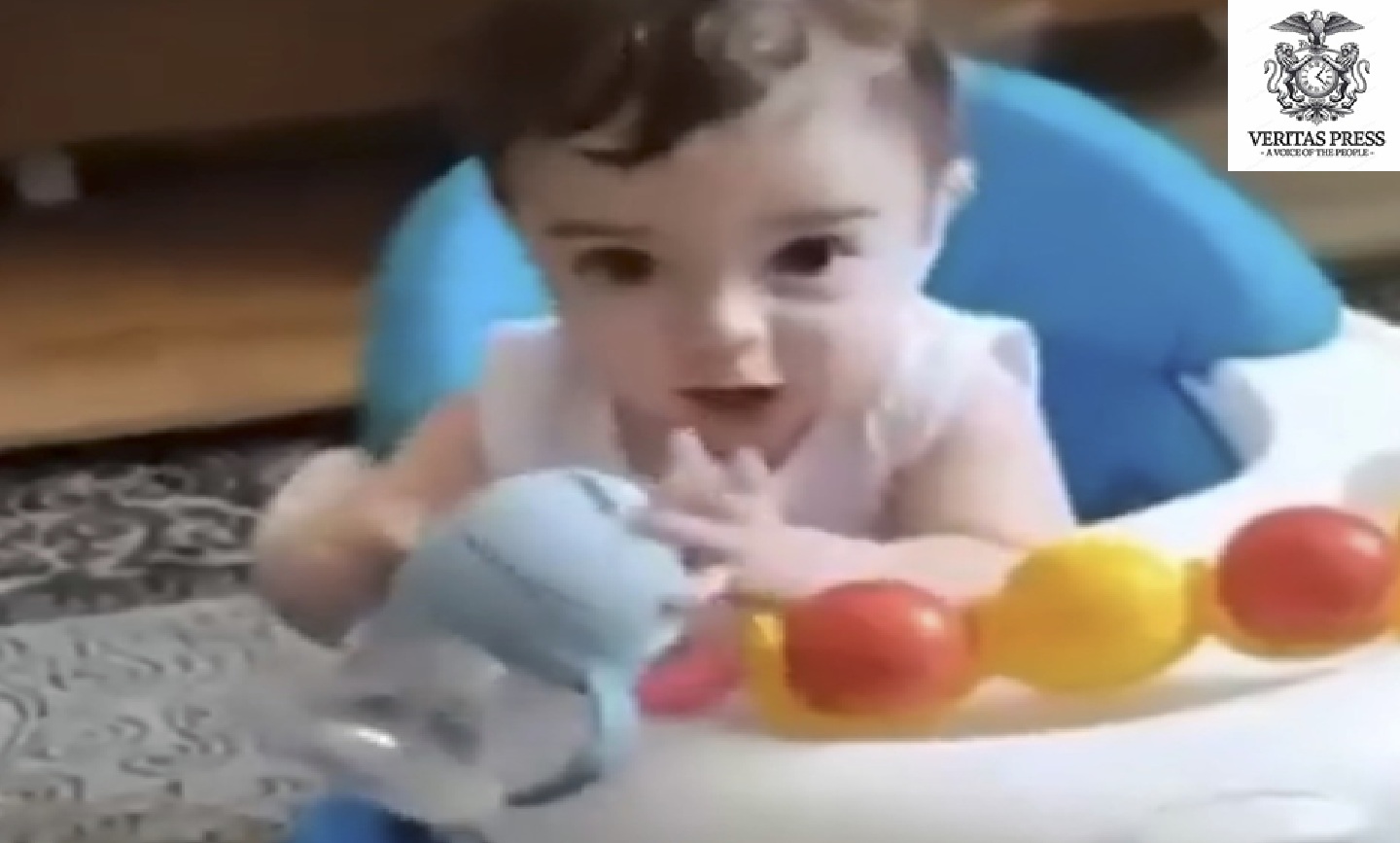
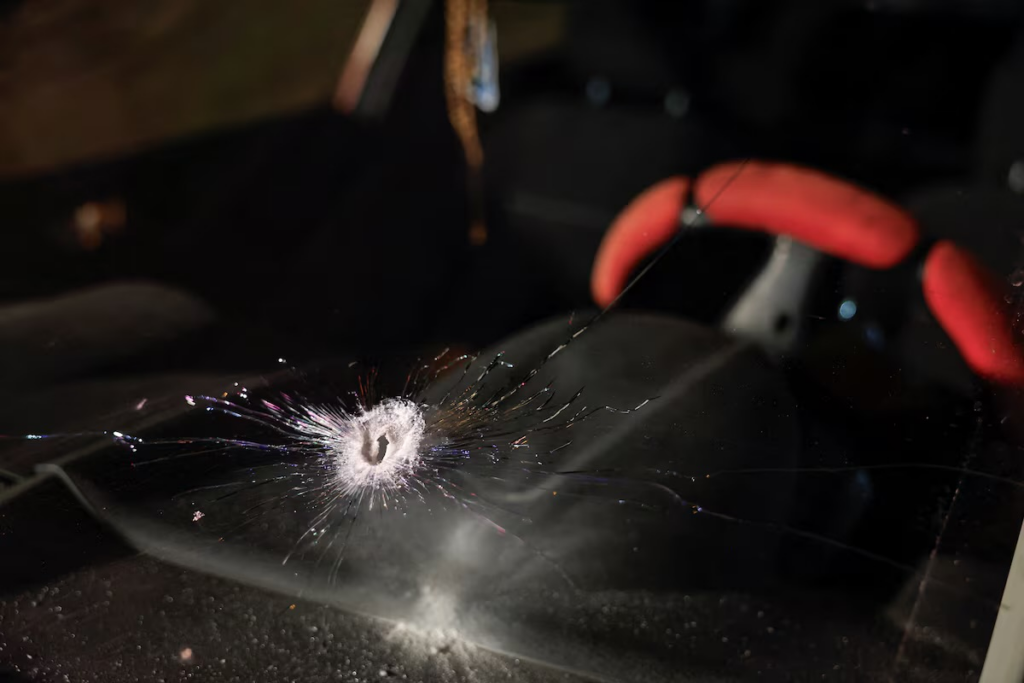
HEBRON, OCCUPIED WEST BANK — The bullet that killed seven-month-old Sam Fahd Abu Haikal on Friday evening did not discriminate. It shattered the windshield of the family’s white sedan, tore through his father’s right hand, then ripped into the infant’s face, traversed his skull, and finally lodged itself in his mother’s cheek, depositing shrapnel perilously close to her heart. One round, four lives destroyed.
Sam had turned seven months old that very day. His family was driving from Bethlehem to Hebron to celebrate with his mother’s relatives. They never arrived. Instead, the infant’s tiny body, wrapped in a Palestinian flag, was carried into a mosque at noon on Saturday for funeral prayers, his father Fahd Abdul Aziz Abu Haikal, a lecturer at Bethlehem University, weeping as he clutched the baby’s half-brother before the ambulance took Sam for burial.
What happened in the Wadi al-Hariya neighbourhood of Hebron on June 5, 2026, is both a singular tragedy and a devastatingly familiar episode in the occupied West Bank, where a metastasising culture of lethal impunity has claimed the lives of more than 1,150 Palestinians since October 2023, among them at least 239 children, with scarcely a whisper of meaningful accountability.
The Incident: Contested Narratives, One Dead Baby.
The Abu Haikal family’s account is stark and consistent. Feryal Abu Heikal, the baby’s grandmother, who was riding in the car, told the Palestinian news agency WAFA that the vehicle was “completely stopped” near Checkpoint 17 in the Tel Rumeida area south of Hebron when they spotted Israeli military vehicles and soldiers in the distance. “We saw them and stopped the car,” she said. Then, without warning, the shooting began.
“One bullet struck my grandson, traversed his face and crossed his head, striking his mother’s cheek where it lodged,” the grandmother recounted. The same round grazed the father’s finger. “There was no danger or justification for firing,” she insisted. “What kind of army in the world does this? … What happened to my grandson can’t be easily forgotten.”
The father, speaking to Associated Press journalists at Al-Ahly Hospital in Hebron, described the bullet’s trajectory in clinical, shattered detail: “It entered the child’s face on the right side and exited on the left, then passed directly into his mother’s face and exited on the other side, with shrapnel lodged near her heart.” His wife, he said, remained in critical condition, unaware that the son who had marked seven months of life just hours earlier was dead.
The Israeli military’s version, issued in a statement on X, deployed the passive, sanitised language that has become the hallmark of such incidents. “During operational activity,” soldiers “perceived a vehicle accelerating toward them.” They responded with “single shots toward the vehicle.” An initial inquiry, the military acknowledged, found that “those injured were uninvolved civilians.” The incident, it added, is “under review.”
Left unaddressed is a fundamental question: if the vehicle was accelerating toward soldiers as a threat, why was the point of impact the windshield directly in front of the driver and passengers, rather than the engine block or tyres? Why did a family that stopped at a distance, inside a civilian car with a grandmother and an infant, present a threat that warranted lethal force? And how, precisely, do “single shots” cause a bullet to pass through three human beings?
These are not questions the Israeli military is likely to answer in any substantive way. They rarely are.
A Pattern Engraved In Blood:
To treat the killing of Sam Abu Haikal as an isolated event is to ignore the gruesome mosaic of violence that has defined Israel’s operations in the occupied West Bank since the Hamas-led attack of October 7, 2023. The numbers alone are staggering: according to the Palestinian Health Ministry, over 1,152 Palestinians have been killed in the West Bank since that date, with more than 11,885 wounded. The UN Office for the Coordination of Humanitarian Affairs (OCHA) reported that between October 7, 2023, and April 22, 2026, 1,081 Palestinians, at least 235 children, were killed in the occupied West Bank, including East Jerusalem. At least 48 were killed in the first four months of 2026 alone. By UN figures, Israeli forces and settlers killed 230 Palestinians in the West Bank in the entirety of 2025.
The killing of the Abu Haikal infant is the latest in a horrifying lineage of families annihilated in their vehicles. In March 2026, Israeli forces fired on a car carrying the Bani Odeh family in the northern West Bank town of Tammun. Killed were 37-year-old Ali Khaled Bani Odeh, his 35-year-old wife Waad Othman Bani Odeh, their seven-year-old son Othman, and five-year-old Mohammed. Two other children, eight-year-old Mustafa and eleven-year-old Khaled, were lightly wounded by shrapnel.
Khaled Bani Odeh, the eldest surviving child, offered testimony that should haunt the international community. He recounted that an Israeli soldier pulled him from the bullet-riddled vehicle after the shooting. “He said, ‘We killed some dogs,’ removed me from the vehicle and beat me,” Khaled said. The soldier then interrogated the traumatised boy, demanding to know who else was in the car. “When I said, ‘my mother, father and brothers,’ he started yelling at me, calling me ‘liar, liar.’”
Dehumanisation is not a byproduct of occupation; it is its engine. And when that dehumanisation migrates from rhetoric to trigger fingers, it produces dead babies and orphaned children.
“Killing Like We Haven’t Killed Since 1967”
Perhaps no single statement captures the prevailing ethos within the Israeli military’s West Bank command more chillingly than the boast made by the army chief in the territory in May 2026. His troops, he declared, were “killing like we haven’t killed since 1967”, a reference to the Six-Day War that brought the West Bank under Israeli military occupation. The remark, reportedly made in a closed briefing and later leaked, included an explicit acknowledgement that soldiers were fatally shooting Palestinian stone-throwers.
This is not a bug in the system. It is the system operating as designed.
Israel’s military justice apparatus, meanwhile, functions as a near-perfect shield for perpetrators. The Israeli human rights organisation Yesh Din has documented that Israeli soldiers accused of harming Palestinians were indicted in fewer than 1% of the 2,427 complaints alleging wrongdoing filed between 2016 and 2024. Fewer than one in a hundred cases result in an indictment. The message to the ranks is unambiguous: you may kill with impunity.
The “initial inquiry” and “under review” formulation deployed in the Abu Haikal case is a well-worn mechanism for dissipating outrage while ensuring that nothing ever happens. Investigations drift for years, if they conclude at all. Families are left to bury their dead, then bury their hope for justice.
The Settler Dimension:
The killing of Sam Abu Haikal occurred in Tel Rumeida, a flashpoint neighbourhood in Hebron where Israeli settlers, protected by a heavy military presence, live embedded among Palestinian residents. This arrangement, settlers armed and backed by soldiers, Palestinians subjected to checkpoints, surveillance, and open fire, is a microcosm of the broader colonial architecture of the West Bank.
More than 700,000 Israeli settlers now live in the occupied West Bank and East Jerusalem, territories seized in 1967 and regarded by the overwhelming majority of the international community as illegally occupied. Settlement expansion has accelerated dramatically under the current Israeli government, and settler violence has surged in parallel. On the same Saturday that Sam Abu Haikal was buried, the Palestinian Red Crescent reported that eight people were wounded in settler attacks on the town of Huwara, near Nablus, suffering injuries from tear gas inhalation and rubber-coated metal bullets.
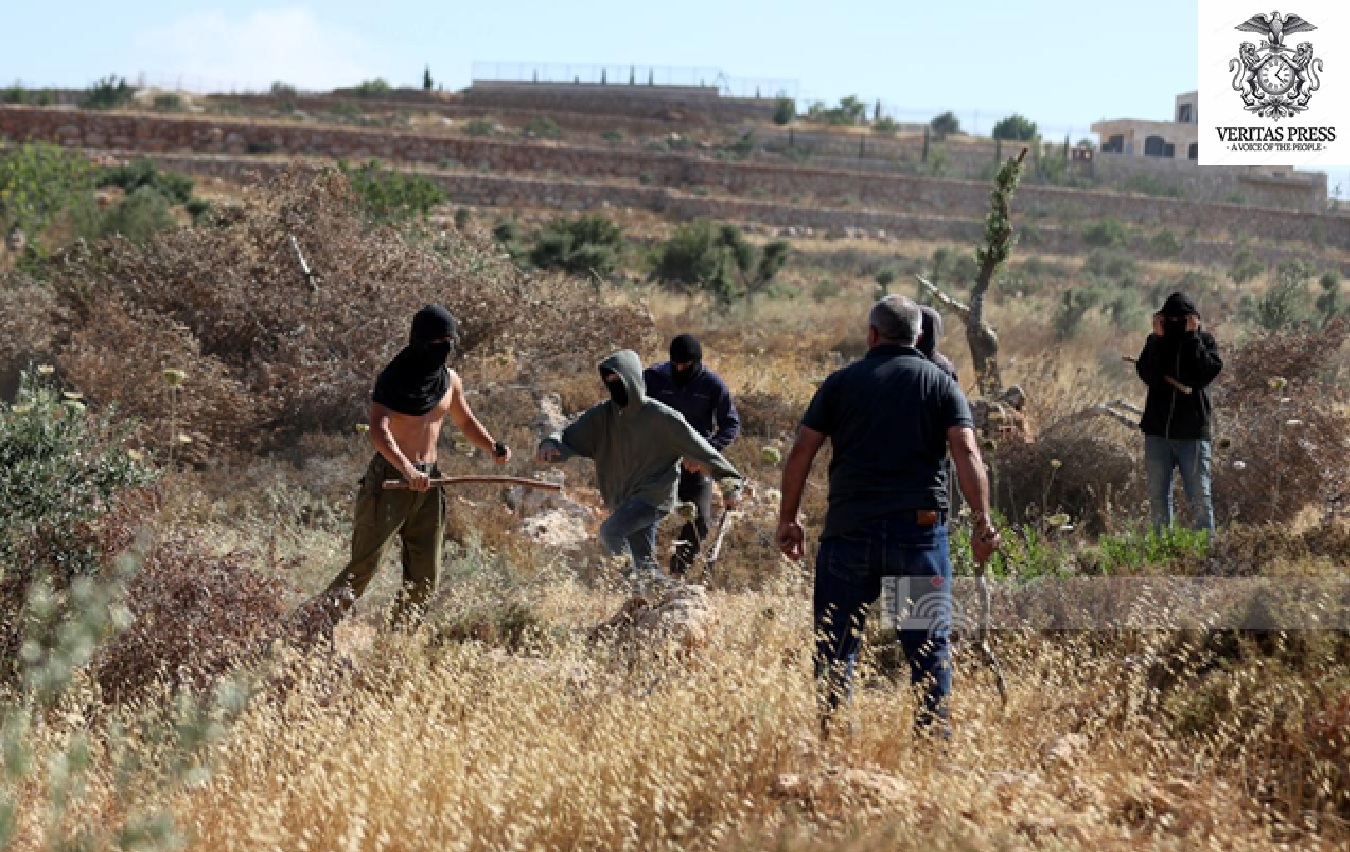
Settler pogroms, burning homes, uprooting olive trees, and shooting at Palestinian farmers are no longer aberrations but a near-daily reality, often conducted under the protective gaze of soldiers who either stand by or actively participate.
International Response: Shock, Sadness, And Silence.
The British Consulate in Jerusalem issued a statement on X expressing that it was “shocked and saddened” by the killing of the infant, calling for an “immediate and transparent investigation and accountability.” It is the sort of carefully worded demarche that has accompanied every such killing for decades, a ritual of diplomatic performance that has yielded precisely zero accountability.
No sanctions follow. No ambassadors are withdrawn. No arms embargoes are imposed. The weapons that tore through the Abu Haikal family’s car, likely American-supplied, as the vast majority of Israel’s military arsenal originates from the United States, continue to flow unimpeded. The international community’s condemnations function as a pressure-release valve, allowing governments to signal concern without ever altering the structural conditions that produce dead Palestinian children.
The Legal Void:
Under international humanitarian law, the willful killing of a civilian is a grave breach of the Geneva Conventions, constituting a war crime. The use of lethal force against a vehicle that was stopped, posed no imminent threat, and contained an infant and a grandmother cannot be squared with the principles of distinction, proportionality, and precaution that form the bedrock of the law of armed conflict.
But international law in Palestine-Israel is a fiction, a parchment barrier shredded daily. The International Criminal Court has faced relentless political pressure from the United States and Israel to abandon any meaningful investigation into alleged war crimes. The UN Security Council is paralysed by the American veto. The International Court of Justice’s advisory opinion deeming the occupation unlawful has been met with Israeli defiance and international shrugs.
In this vacuum, Israeli commanders feel emboldened to speak openly about “killing like we haven’t killed since 1967.” Soldiers feel licensed to call murdered children “dogs.” And a seven-month-old baby can be shot through the face on his half-birthday because a soldier perceived, or claimed to perceive, a threat from a stationary car.
The Architecture Of Impunity:
What the killing of Sam Fahd Abu Haikal reveals is not merely a single trigger-happy soldier or a rogue unit. It reveals a system in which Palestinian life has been systematically devalued to the point of worthlessness, a system where rules of engagement are so permissive, and accountability so absent, that shooting at a family car has become a banal, almost bureaucratic act, complete with the requisite public relations statement about a “review.”
The grandmother’s question hangs in the air, unanswered: “What kind of army in the world does this?”
The answer, documented in blood and buried under diplomatic platitudes, is an army that has been permitted to operate beyond the reach of law, beyond the constraints of conscience, beyond even the pretence of protecting civilian life. An army that kills babies and then investigates itself. An army whose own commander boasts of killing at a scale unseen since 1967.
And an international community that continues to express shock and sadness while ensuring that nothing changes, leaving Palestinian families to grieve their infants, and to wonder who among their surviving children will be next.
For The Secure Submission Of Documentation, Testimonies, Or Exclusive Investigative Reports From Any Global Location, Please Utilise The Following Contact Details For Our Investigations Desk: enquiries@veritaspress.co.uk or editor@veritaspress.co.uk
Help Support Our Work:
Popular Information is powered by readers who believe that truth still matters. When just a few more people step up to support this work, it means more lies exposed, more corruption uncovered, and more accountability where it’s long overdue.
Help Protect Independent Journalism, Which Is Currently Under Attack.
If you believe journalism should serve the public, not the powerful, and you’re in a position to help, becoming a DONATOR or a PAID SUBSCRIBER truly makes a difference.
DONATION APPEAL: If You Found This Reporting Valuable, Please Consider Supporting Independent Journalism.
Help Support Our Work – We Know, We Know, We Know …
Seeing these messages is annoying. We know that. (Imagine what it’s like writing them … )
Your support fuels our fearless, truth-driven journalism. In unity, we endeavour to amplify marginalised voices and champion justice, irrespective of geographical location.
But it’s also extremely important. One of Veritas Press’s greatest assets is its reader-funded model.
1. Reader funding means we can cover what we like. We’re not beholden to the political whims of a billionaire owner. We are a small, independent and impartial organisation. No one can tell us what not to say or what not to report.
2. Reader funding means we don’t have to chase clicks and traffic. We’re not desperately seeking your attention for its own sake: we pursue the stories that our editorial team deems important and believe are worthy of your time.
3. Reader Funding: enables us to keep our website and other social media channels open, allowing as many people as possible to access quality journalism from around the world, particularly those in places where the free press is under threat.
We know not everyone can afford to pay for news, but if you’ve been meaning to support us, now’s the time.
Your donation goes a long way. It helps us:
Keep the lights on and sustain our day-to-day operations
Hire new, talented independent reporters
Launch real-time live debates, community-focused shows, and on-the-ground reporting
Cover the issues that matter most to our communities, in real time, with depth and integrity
We have plans to expand our work, but we can’t do it without your support. Every contribution, no matter the size, helps us stay independent and build a truly people-powered media platform.
If you believe in journalism that informs, empowers, and reflects the communities we serve, please donate today.
Kamran Faqir is a volunteer investigative journalist and writer committed to exposing hidden truths and amplifying underreported stories. Driven by social justice, he brings sharp insight and fearless truth-telling to independent journalism. NUJ registered.
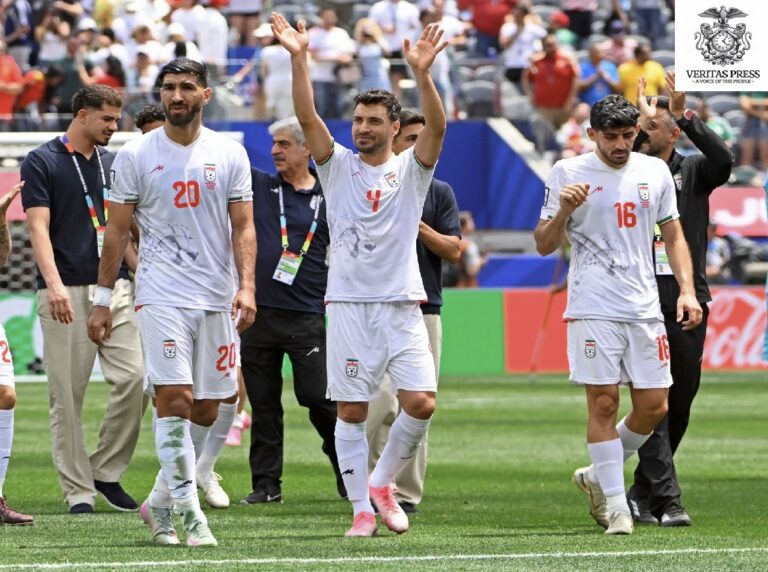
SEATTLE, TEHRAN — The U.S. Department of Homeland Security (DHS) will allow Iran’s national football team to enter the country 48 hours before their critical World Cup match against Egypt on Friday, a modest concession in a tournament where Team Melli’s travel conditions have sparked claims of oppression and competitive disadvantage.