Kamran Faqir is a volunteer investigative journalist and writer committed to exposing hidden truths and amplifying underreported stories. Driven by social justice, he brings sharp insight and fearless truth-telling to independent journalism. NUJ registered.
Article Date Published:
Article Date Modified:
12 minutes
Views:195
Listen to this article
Help support our mission, donate today and be the change. Every contribution goes directly toward driving real impact for the cause we believe in.
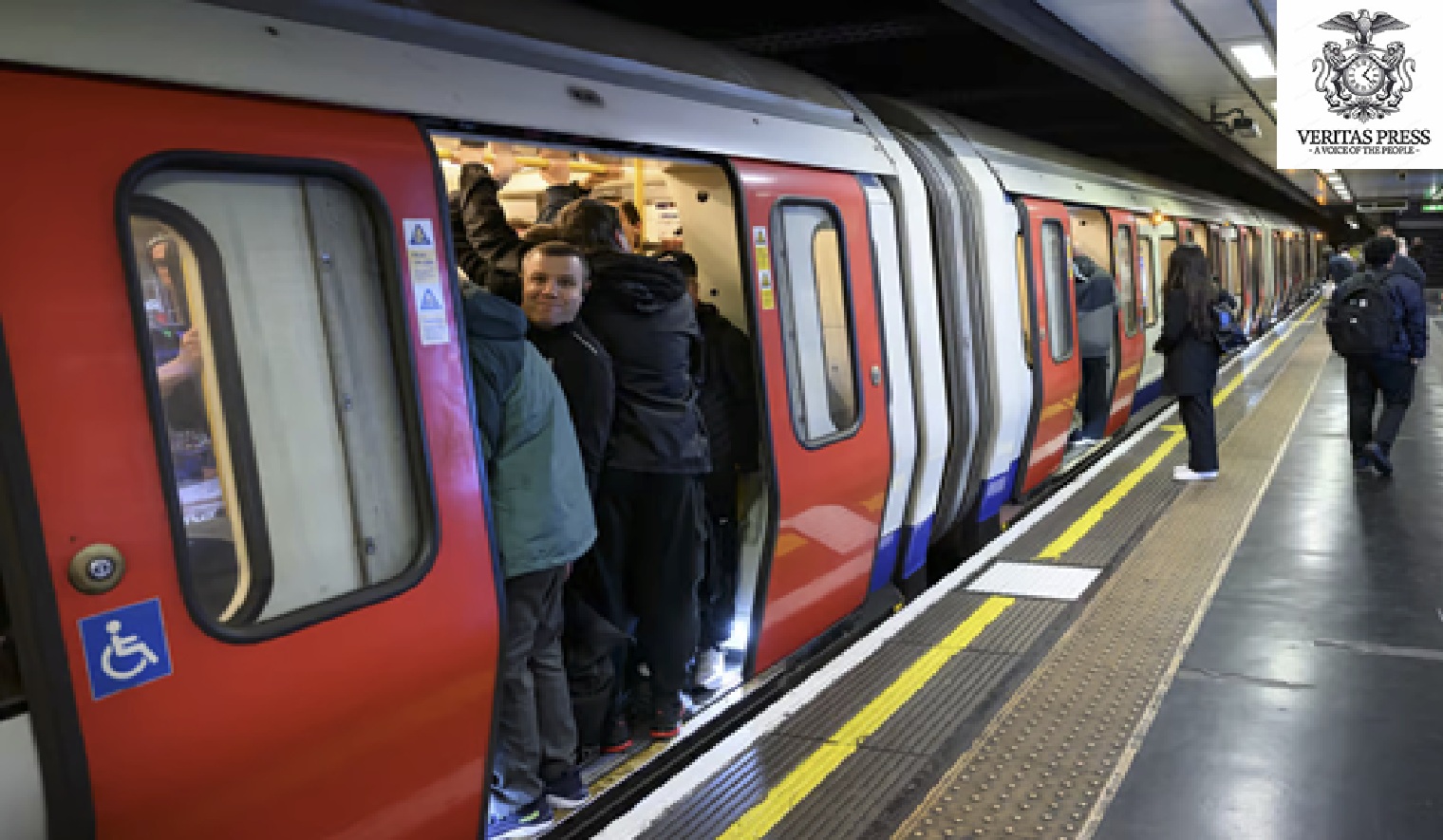
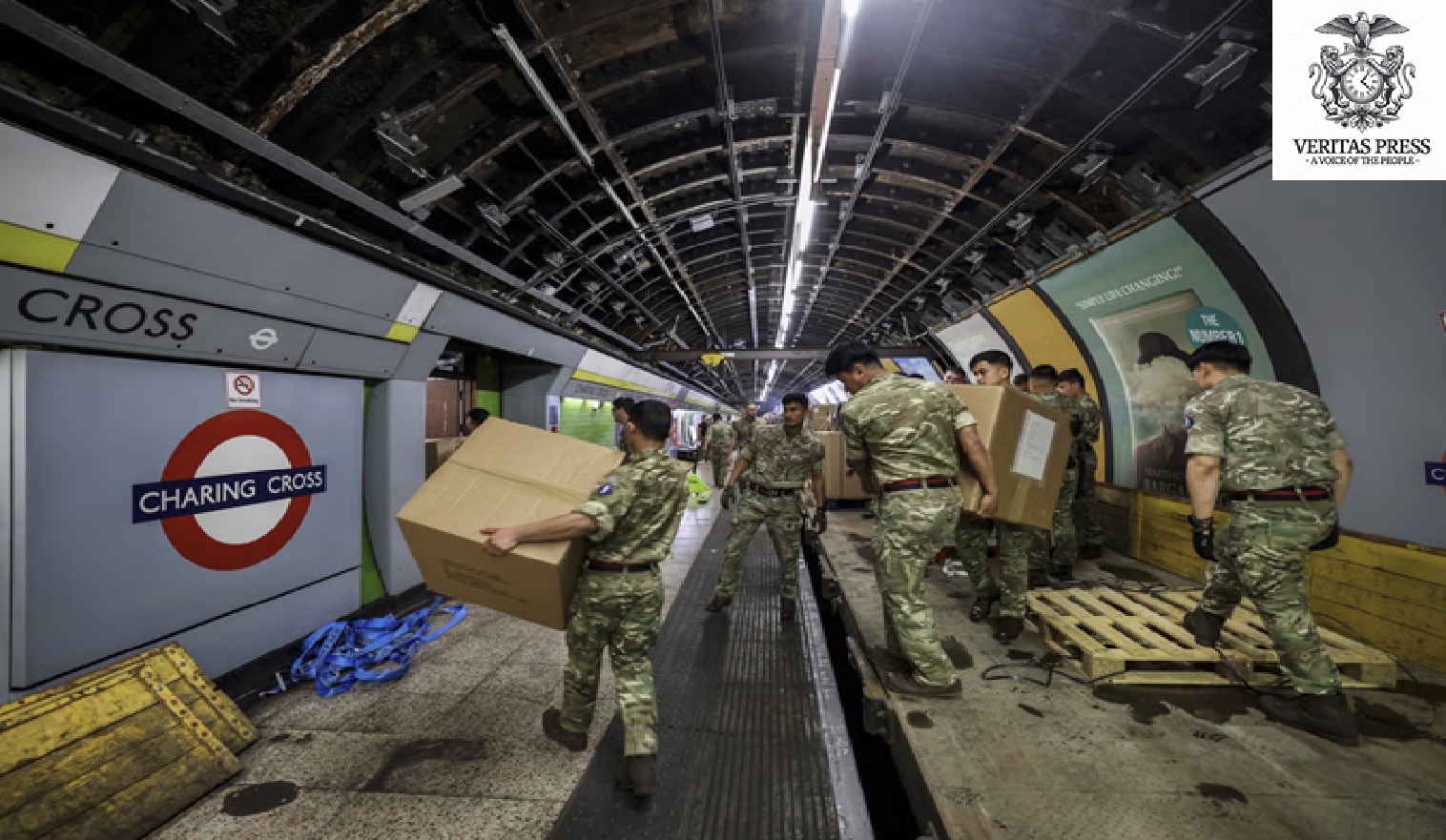
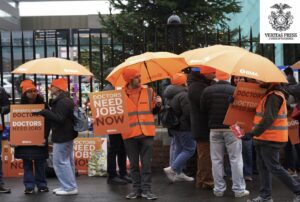
LONDON –The clock is ticking towards the biggest test yet for London’s fractured transport workforce. In less than six hours, the first of two 24-hour Tube strikes is due to begin, threatening to bring the capital to a standstill, not because of a pay row, but because of a deeply ideological and increasingly bitter dispute over how drivers work. At its heart is a proposal that sounds like a workers’ utopia: a voluntary four-day work week. Yet the reality, exposed through leaked memos, rival union tensions, and the lived experience of drivers, is a mess of fatigue, fractured solidarity, and a city bracing for chaos.
On Monday afternoon, officials from the Rail, Maritime and Transport union (RMT) sat across the table from Transport for London (TfL) bosses at the conciliation service Acas in a last-ditch bid to avert the walkouts. The talks broke up without a breakthrough. Two hours later, RMT General Secretary Eddie Dempsey issued a blunt instruction to his members: do not turn up. “Members are instructed NOT TO BOOK ON for any shifts that commence between 00:01 hours until 23:59 hours on Tuesday 2nd June 2026,” the internal memo read, a similarly uncompromising command for Thursday 4th June. Dempsey called for “another show of strength and solidarity.” On the ground, however, that solidarity is showing dangerous cracks.
The Faultline: Aslef Says Yes, RMT Says No.
The core of the dispute is a new framework for implementing a shorter working week for Tube drivers. It is not the principle of a four-day work week that divides the workforce; both unions have long championed it, but the detail. In a significant move, the drivers’ union Aslef, which represents the majority of train operators on the Underground, has already accepted the conditions set out by London Underground. Its members ratified the deal after what sources describe as “exhaustive safety validation.” RMT, which retains a strong driver grade within its broader transport membership, has refused.
An RMT spokesperson set out the union’s position starkly: “Our members have raised serious concerns around fatigue, longer shifts, reduced flexibility and the impact these proposals could have in a safety-critical role.” A union insider, speaking on condition of anonymity, was more visceral: drivers have “very real” fears about “spending longer hours in the driver cab, becoming more fatigued, losing flexibility around their shifts and the impact that could have on a role where safety has to come first.” The RMT argues the TfL model compresses too many hours into fewer days, extending individual shift lengths beyond safe cognitive limits, eroding rest periods, and imposing roster changes that strip drivers of control over their work-life balance.
But that narrative is fiercely contested. London Underground insists the four-day week is entirely voluntary, a modernisation of rostering that maintains strict safety cases. “No driver will be forced onto a compressed shift pattern,” a TfL spokesperson told me. “We have worked meticulously with Aslef and our own safety teams to ensure every proposed roster change passes the same rigorous fatigue risk assessments as our current operations. The RMT’s claims do not match the evidence.” Aslef’s acceptance lends powerful weight to that position. Finn Brennan, Aslef’s district organiser, said in a statement last week: “Our members have scrutinised the modelling. We are satisfied that the safeguards, including mandatory break structures and absolute caps on continuous driving, protect both passengers and staff. This agreement delivers a genuine improvement in quality of life without compromising safety.”
The Acas Collapse And Dempsey’s Hardline:
Monday’s Acas talks were always a long shot. The RMT arrived demanding fundamental renegotiation: not just tweaks to fatigue monitoring, but a recognition of the union’s collective bargaining primacy over any roster changes, effectively a veto. TfL, buoyed by Aslef’s agreement, was never going to yield that ground. The breakdown was swift. One source familiar with the discussions described an “atmosphere of mutual frustration, the RMT felt they were being sidelined, TfL believed the RMT was trying to unpick a deal another union had legitimately made.”
What happened next revealed Dempsey’s strategy. His memo, leaked to The Standard, contained an extraordinary phrase. He told members that RMT local reps had left a meeting with LU officials in “fury” after failing to gain any changes. The memo not only instructs drivers not to book on, but pointedly thanks them in advance for their “solidarity”, a rhetorical shield against the reality that support for the walkout appears weaker than in previous industrial battles. During the last round of action in April, more than half of the services still operated, with significant numbers of RMT drivers crossing picket lines. Some insiders believe a further softening has occurred.
“There is a real split in the rank and file,” a veteran RMT driver at a major west London depot told me, asking not to be named because he fears disciplinary action. “A lot of us can see the Aslef deal is decent. We’re being asked to strike against a four-day work week that most of us actually want, just because the leadership doesn’t like the way it was introduced. I’ve got a mortgage. I can’t afford to lose two days’ pay for a battle about union politics.” Another driver at a north London depot was more defiant: “Eddie’s right. If we let TfL impose rosters without our agreement, they’ll erode everything we’ve fought for. Fatigue is real, eight-and-a-half hours in the tunnel, that’s not just a number. Safety comes before convenience.”
The Commuter Crush And Public Anger:
For the millions of Londoners who rely on the Tube, the nuance of intra-union politics is irrelevant. The strikes, from 00:01 to 23:59 on Tuesday 2 June and again on Thursday 4 June, will inflict deep pain. TfL has confirmed the Piccadilly and Circle lines will be completely suspended. The Metropolitan line will see no service between Baker Street and Aldgate, and the Central line will be severed between White City and Liverpool Street. The rest of the network will run a skeleton service, with virtually no trains before 6:30 am or after 9 pm, and severe gaps in between. The Elizabeth line, DLR, London Overground, and trams will operate normally, but are expected to be “crush-loaded to dangerous levels,” according to one station supervisor.
At King’s Cross on Monday evening, the mood was a mixture of resignation and fury. Sarah Jenkins, a 42-year-old healthcare assistant from Leytonstone, was staring at a journey planning app. “I start my shift at St Thomas’ at 7 am. I’m now looking at a bus, two overground trains, and a 20-minute walk. It’ll take two hours. Last time, I was late and got a warning. It’s not fair, we’re caught in someone else’s war.” Business groups were scathing. The London Chamber of Commerce and Industry warned the strikes would cost the capital’s hospitality and retail sectors an estimated £60 million over the two days, compounding the fragile post-pandemic recovery. “This is a self-inflicted wound on the city at a time when we need confidence, not chaos,” said Chief Executive Karim Fatehi.
Transport activists and passenger groups have highlighted an uncomfortable truth: the RMT’s action disproportionately affects those who cannot work from home. “Strikes are a fundamental right, but they must be a last resort,” said Emma Gibson, director of London TravelWatch. “When one union has reached a safety-assured agreement, and another is walking out, the public is entitled to ask who is really driving this dispute. Right now, commuters feel like collateral damage in an internal labour movement struggle.”
Safety, Spin, And The Real Story In The Cab:
To probe the RMT’s core safety claim, I spoke to Dr. Philippa Turner, an independent human factors and fatigue risk specialist who has consulted for rail regulators. “Compressing a 35-hour week into four days typically yields shifts of 8.75 hours. That is within standard industry limits, provided proper rest breaks and task rotation are built in. The question is whether the specific Tube environment, monotony, tunnel vision, and high cognitive load imposes a different fatigue curve. Without seeing TfL’s risk assessment, I can’t adjudicate, but if Aslef’s safety reps have signed off, it suggests the modelling is robust.” Turner added a crucial point: “Fatigue is individual. A voluntary system allows drivers who don’t feel capable to opt out. That should be the safety valve. If the RMT’s real concern is that the system won’t be genuinely voluntary in practice, through roster pressure or career consequences, then that’s a legitimate issue, but it’s not the one they’re articulating loudly.”
This hints at the deeper, unspoken dispute. The RMT’s anger may be less about fatigue and more about a loss of institutional power. Since the pandemic, TfL has moved towards more direct engagement with Aslef on driver-specific matters, a consequence of the complex bargaining landscape. The RMT, a multi-sector union, fears being outmanoeuvred. One ex-TfL industrial relations manager, now a consultant, told me: “This is a classic demarcation fight dressed as a safety dispute. Dempsey needs to show his driver members he’s still the one in control. If Aslef settles and gets the credit for delivering a four-day week, why would any driver stay in the RMT? The strike is as much about membership retention as working hours.”
What Happens Next?
With the Acas path closed and the strike instruction firm, the immediate future is locked in. Tuesday will see a vastly diminished network, a scramble for buses and cycles, and an anxious watch on whether the RMT’s picket lines hold. The key variable is turnout. If, as in April, a substantial minority of drivers, perhaps those sympathetic to the Aslef deal, refuse to strike, TfL might be able to run more services than predicted, weakening the RMT’s leverage. Conversely, a strong shutdown would force Mayor Sadiq Khan to intervene more forcefully. So far, the Mayor’s office has called on both sides to “keep talking” and has publicly supported TfL’s position that the four-day work week is a positive, modern working practice.
On Thursday, the same script repeats. Beyond that, the dispute could escalate. The RMT has a mandate for further action. Meanwhile, Dempsey’s language will be scrutinised: his instruction “NOT TO BOOK ON” is a direct, clear directive that leaves little room for individual conscience. If drivers cross picket lines in significant numbers, the union’s internal disciplinary processes may be tested. Some have already spoken to lawyers about potential breaches of trade union law because the ballot may not accurately reflect current sentiment.
For Londoners, the immediate horizon is two days of travel misery, a test of patience, and a puzzle: how did a policy meant to improve life for workers end up pitting them against each other and bringing the city to a halt? The answer lies not in a simple tale of safety versus progress, but in the tangled web of union rivalry, the battle for relevance, and the grim reality that even the most progressive reforms have casualties when trust collapses. On Tuesday morning, the silence on the Piccadilly line will be the loudest signal yet that London’s transport peace is dangerously fragile.
Source:Veritas Press C.I.C. | Multi News Agencies
Submissions:
For The Secure Submission Of Documentation, Testimonies, Or Exclusive Investigative Reports From Any Global Location, Please Utilise The Following Contact Details For Our Investigations Desk: enquiries@veritaspress.co.uk or editor@veritaspress.co.uk
Help Support Our Work:
Popular Information is powered by readers who believe that truth still matters. When just a few more people step up to support this work, it means more lies exposed, more corruption uncovered, and more accountability where it’s long overdue.
Help Protect Independent Journalism, Which Is Currently Under Attack.
If you believe journalism should serve the public, not the powerful, and you’re in a position to help, becoming a DONATOR or a PAID SUBSCRIBER truly makes a difference.
DONATION APPEAL: If You Found This Reporting Valuable, Please Consider Supporting Independent Journalism.
Help Support Our Work – We Know, We Know, We Know …
Seeing these messages is annoying. We know that. (Imagine what it’s like writing them … )
Your support fuels our fearless, truth-driven journalism. In unity, we endeavour to amplify marginalised voices and champion justice, irrespective of geographical location.
But it’s also extremely important. One of Veritas Press’s greatest assets is its reader-funded model.
1. Reader funding means we can cover what we like. We’re not beholden to the political whims of a billionaire owner. We are a small, independent and impartial organisation. No one can tell us what not to say or what not to report.
2. Reader funding means we don’t have to chase clicks and traffic. We’re not desperately seeking your attention for its own sake: we pursue the stories that our editorial team deems important and believe are worthy of your time.
3. Reader Funding: enables us to keep our website and other social media channels open, allowing as many people as possible to access quality journalism from around the world, particularly those in places where the free press is under threat.
We know not everyone can afford to pay for news, but if you’ve been meaning to support us, now’s the time.
Your donation goes a long way. It helps us:
Keep the lights on and sustain our day-to-day operations
Hire new, talented independent reporters
Launch real-time live debates, community-focused shows, and on-the-ground reporting
Cover the issues that matter most to our communities, in real time, with depth and integrity
We have plans to expand our work, but we can’t do it without your support. Every contribution, no matter the size, helps us stay independent and build a truly people-powered media platform.
If you believe in journalism that informs, empowers, and reflects the communities we serve, please donate today.
Kamran Faqir is a volunteer investigative journalist and writer committed to exposing hidden truths and amplifying underreported stories. Driven by social justice, he brings sharp insight and fearless truth-telling to independent journalism. NUJ registered.
SEATTLE, TEHRAN — The U.S. Department of Homeland Security (DHS) will allow Iran’s national football team to enter the country 48 hours before their critical World Cup match against Egypt on Friday, a modest concession in a tournament where Team Melli’s travel conditions have sparked claims of oppression and competitive disadvantage.