Kamran Faqir is a volunteer investigative journalist and writer committed to exposing hidden truths and amplifying underreported stories. Driven by social justice, he brings sharp insight and fearless truth-telling to independent journalism. NUJ registered.
Original Article Date Published:
Article Date Modified:
14 minutes
Views:386
Listen to this article
Help support our mission, donate today and be the change. Every contribution goes directly toward driving real impact for the cause we believe in.
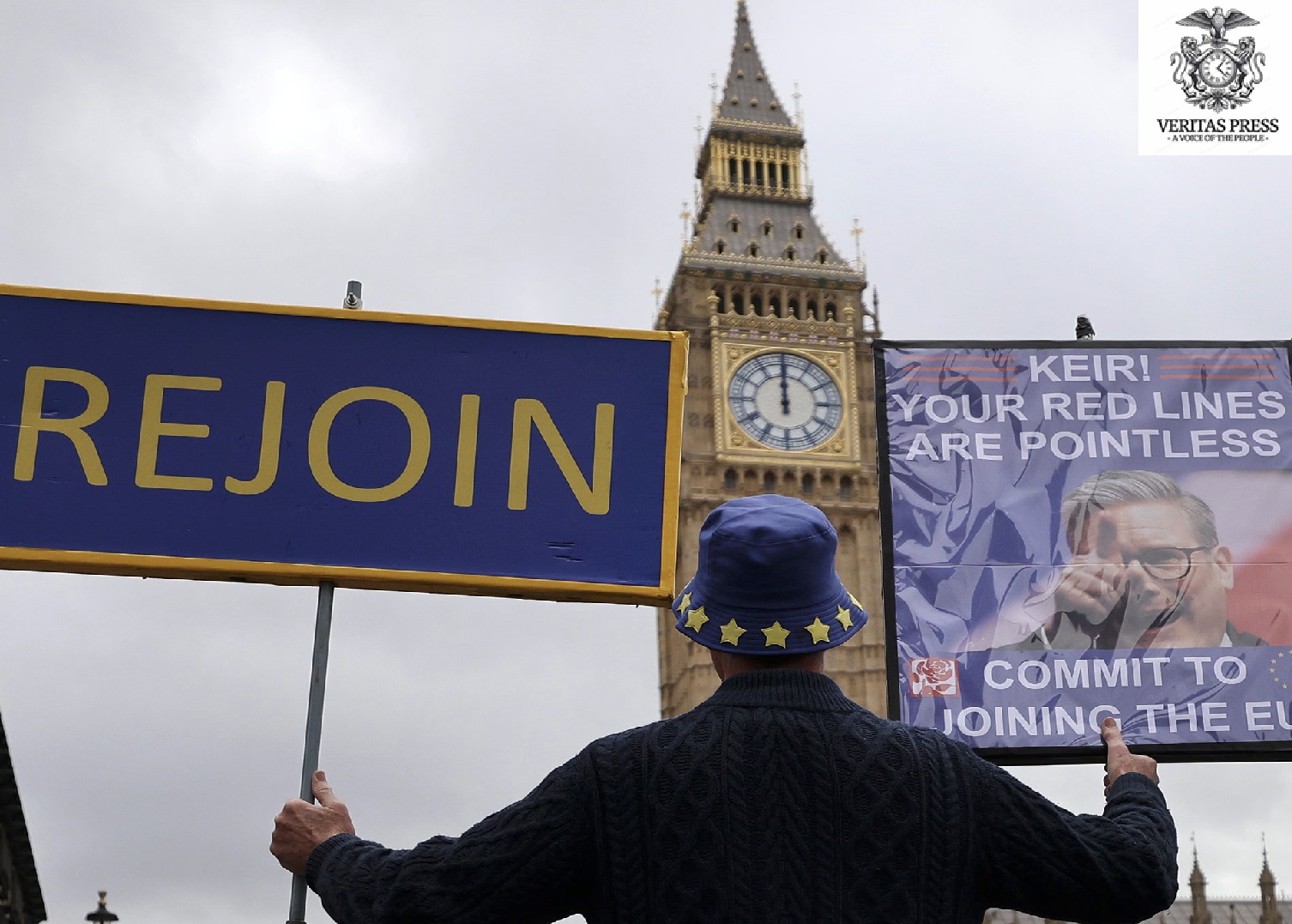
BRUSSELS/LONDON — A year after Labour heavyweights Wes Streeting and Andy Burnham thrust the “rejoin” debate back into the open, the idea of reversing Brexit has shifted from the fringes of political fantasy to the edges of mainstream conversation. The European Union, it turns out, is not only willing to welcome Britain back. It has even sketched out how to fast-track the process. Yet a deeper investigation reveals an offer laden with conditions, contradictions, and a domestic political landscape that is nowhere near ready to take it up.
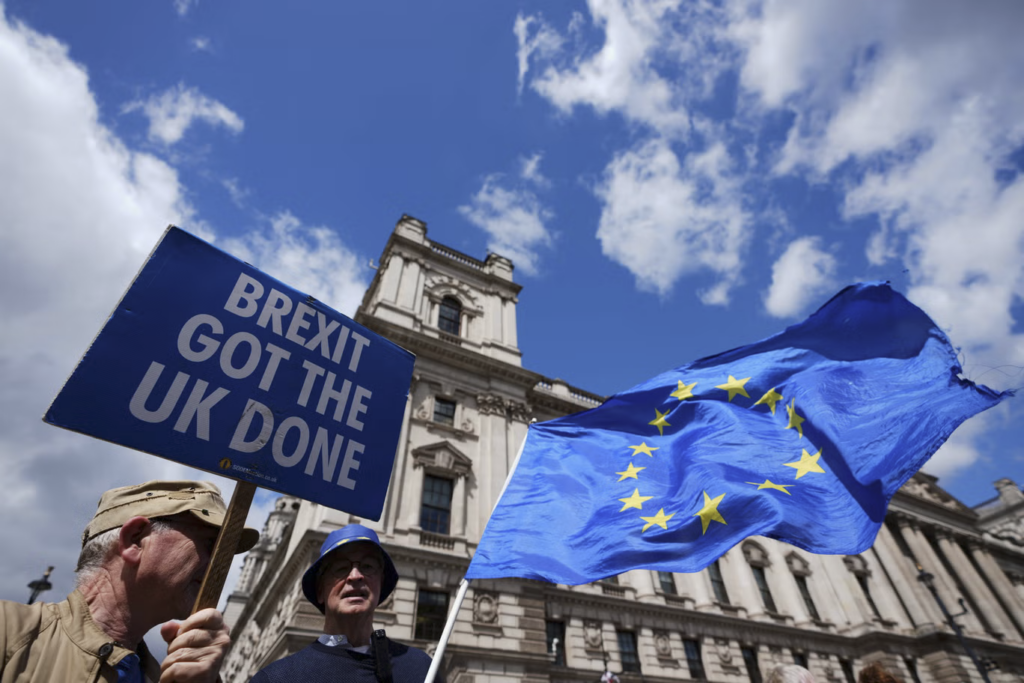
Pro-European Union campaigners hold flags and banners near parliament, Wednesday, May 20, 2026 AP
The Velvet Rope Policy: “Fast-Track, But On Our Terms”
Sandro Gozi, the Italian MEP who chairs the European Parliament’s delegation to the EU-UK Parliamentary Assembly, told The Independent in April 2025 that a UK application to rejoin would be seen as “a major victory for the European project”. More strikingly, he and several Brussels insiders confirmed that accession could be radically accelerated. “It could be done more quickly than for other candidate countries because there is the institutional memory there from when the UK was a member. And there is also already some level of alignment between the UK and EU,” Gozi said.
Behind the scenes, EU officials have since elaborated. One senior Commission official, speaking anonymously because they are not authorised to discuss hypothetical scenarios, told me: “We have simulated the legal path. Because the UK’s body of law is still largely compatible with the acquis, and because it operated EU institutions for decades, the screening process, which for Albania or North Macedonia takes years, could be condensed to perhaps eighteen months. The political will would be the accelerator.” Finland’s three-year sprint from applicant to member, owing to its prior membership of the European Economic Area, is the template often cited.
But fast track does not mean a special lane. Georg Riekeles, a former adviser to Michel Barnier’s Brexit taskforce, cautions that the welcome would be “very warm” but also “hard-headed”. “The price of re-entry would be membership on normal terms,” he told The Guardian in the same period. Gozi was blunt: “The tailor-made suit is gone.” Britain would be expected to commit to joining the euro and the Schengen area, to abandon its budget rebate, and to accept the jurisdiction of the European Court of Justice without the opt-outs that defined its previous membership.
The Euro Dilemma And The “Wiggle Room”:
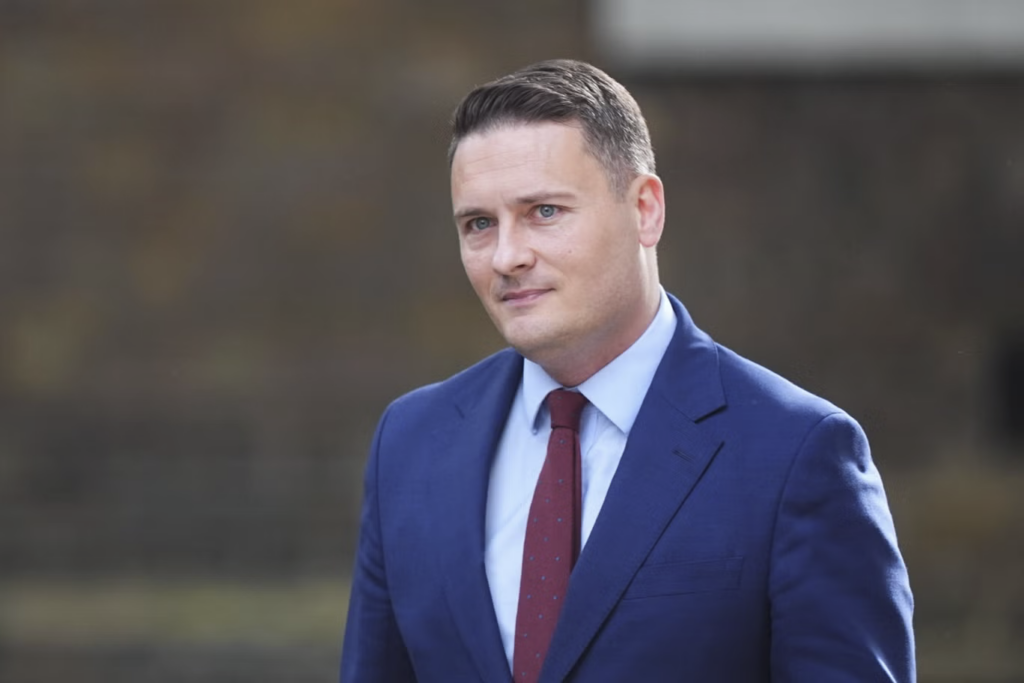
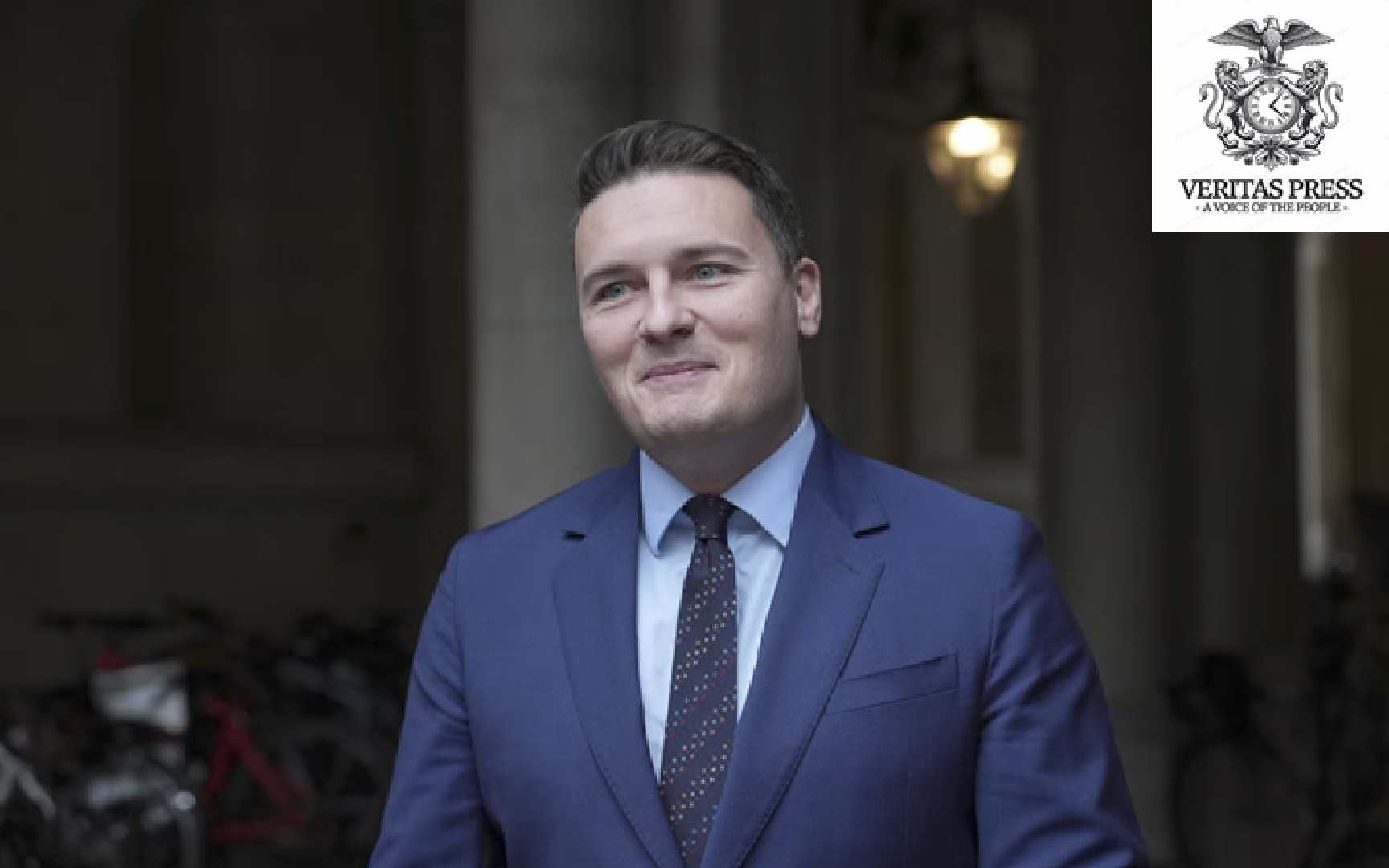
That demand has been the lightning rod. Wes Streeting, who in his nascent Labour leadership campaign called Brexit “a catastrophic mistake” and said Britain’s future lies “one day back in the European Union”, found himself immediately accused by the Conservatives of planning to swap the pound for the euro. The attack writes itself, and it is politically potent in a country where currency sovereignty is emotionally tethered to national identity.
Wes Streeting described Brexit as a ‘catastrophic mistake’ (James Manning/PA) – PA Wire
Yet multiple EU sources acknowledge a certain “wiggle room”. One diplomat from a founding member state told me: “The legal starting point will be Article 49 and the Copenhagen criteria, which require commitment to economic and monetary union. But we know the reality. Sweden has been legally obliged to join the euro since 1995, and nobody sanctions it. Denmark has an opt-out. Poland and others are nowhere near. The UK would need to make the commitment on paper, and we’d then spend decades arguing about convergence criteria that London cannot currently meet.”
A former MEP with deep Brussels connections, who asked not to be named, pointed out the practical impossibility: “The UK’s government debt is over 100% of GDP, inflation is only just stabilised, and long-term interest rates don’t match the Maastricht benchmarks. The UK cannot join the euro even if it begs. The demand is a political stress-test, not an immediate condition.”
Radosław Sikorski, Poland’s anglophile foreign minister, framed the larger psychological hurdle. In a speech at Chatham House earlier this year, he warned British elites to “internalise the fundamental European deal, that you get more benefits in return for pooling of some aspects of sovereignty.” The subtext: Britain’s old à la carte membership is dead, and if it cannot live with that, it should not knock on the door.
The Political Ice Age At Home:
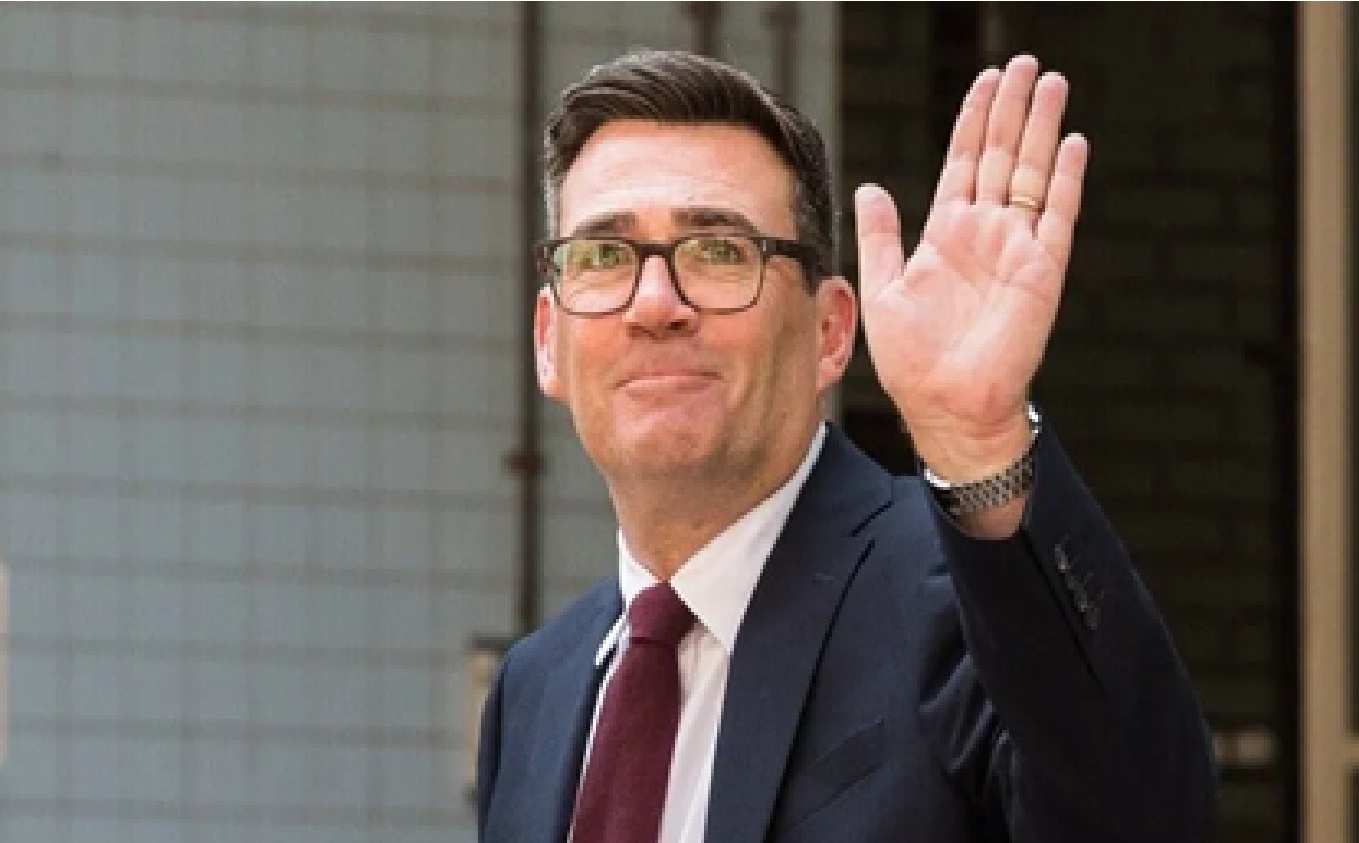
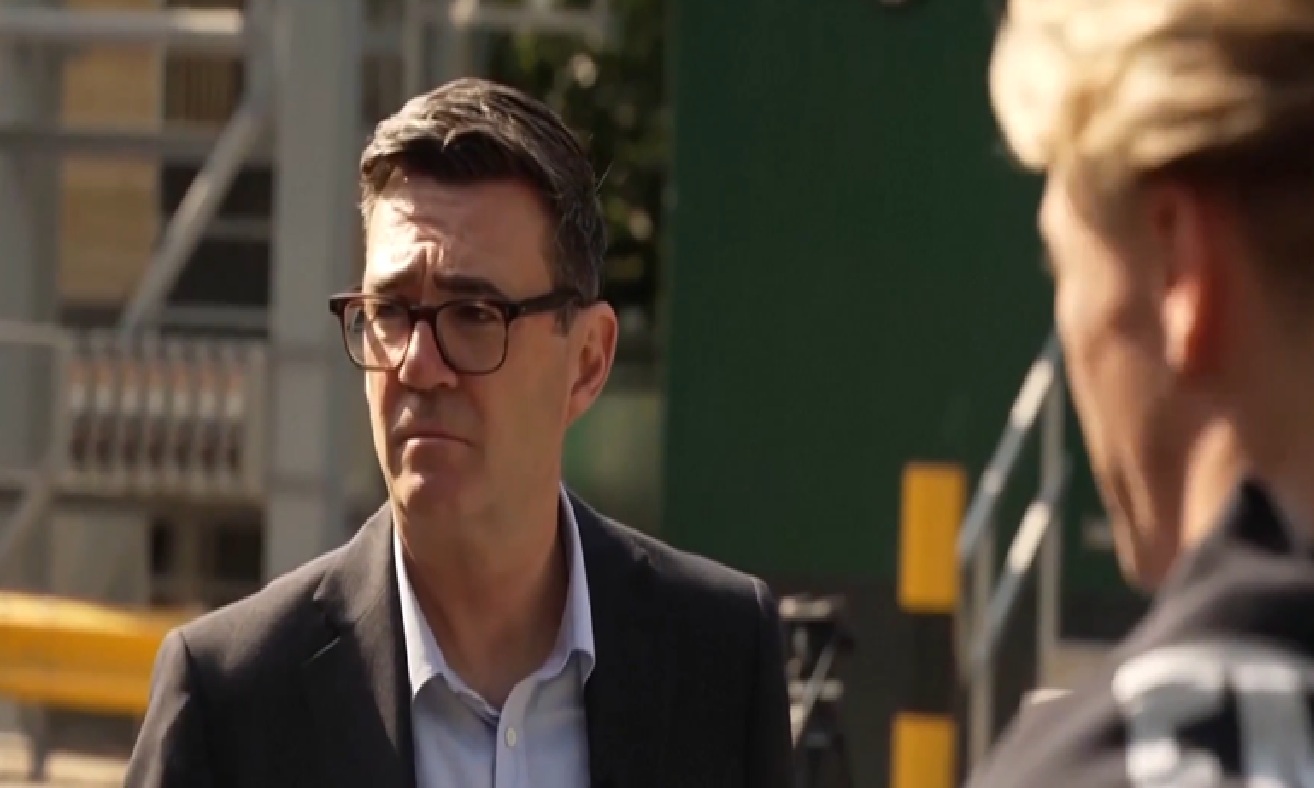
If the EU’s message is complex but coherent, Britain’s is a cacophony. Streeting’s intervention opened a fault line inside the governing party. Andy Burnham, the Greater Manchester mayor positioning himself for a Westminster return, has said he wants to rejoin the EU in his lifetime but clarified he would not pursue it as prime minister in the short term. Keir Starmer’s office remains allergic to the word “rejoin”, sticking to a mantra of “closer cooperation” and “making Brexit work better”. Polling offers cold comfort to the rejoiners: a YouGov survey in April 2026 shows 61% of the public favour closer ties, down marginally from 63% a year ago, while support for full rejoining has stalled at 53%. Crucially, the numbers are polarised by age and geography, and the electoral system magnifies the voice of the “red wall” seats where Brexit loyalty remains a badge of identity.
Professor Anand Menon of the UK in a Changing Europe think-tank told me: “The data suggests a soft majority for rejoin, but that majority is fragile, highly conditional, and not a voting priority. Any party that runs on a rejoin platform without a referendum could face a ferocious backlash. And a referendum would be as divisive as the last one, with no guarantee of victory.” The memory of the 2016 campaign still scars the political class.
Meanwhile, Nigel Farage’s Reform UK has surged in local elections, hoovering up voters disillusioned with Labour’s economic management and eager to weaponise any hint of a “betrayal” of Brexit. A senior Labour strategist, speaking on condition of anonymity, admitted: “Every time Wes opens his mouth on Europe, Reform gains 50,000 votes in the focus groups. It’s a gift to the right.”
The Third Way: The Security Council And “Association”.
The EU, conscious of the UK’s political binds, is quietly pushing alternative frameworks that stop short of full membership. Gozi referenced Britain becoming “associated with the single market” or a founder of a new “European security council”. That proposal, a defence leadership body of up to a dozen members, has gained traction since the 2025 EU-UK summit in July 2025, which produced a landmark security and defence partnership. The European Security Council, still embryonic, would allow Britain a seat at the top table on military and strategic matters without tackling the political powder keg of free movement or the European Court.
Former Swedish prime minister and elder statesman Carl Bildt, now co-chair of the European Council on Foreign Relations, told a Berlin conference in March 2026: “Full membership is a 2030s project at best. But a privileged association model, with deep economic and security integration, is achievable this decade. It’s not about recreating the past; it’s about building the only structure that can respond to Russian aggression and transatlantic uncertainty.”
This incrementalism is the real play. The sanitary and phytosanitary (SPS) agreement on food and plant trade, concluded in December 2025 after torturous negotiations, was hailed as a breakthrough. Youth mobility arrangements, a fisheries deal, and mutual recognition of professional qualifications are next in line. Taken together, they begin to re-weave the UK into the single market’s fabric without a membership card. One EU diplomat called it “reintegration by stealth”.
Investigative Perspective: The Bureaucratic Labyrinth And The Consent Conundrum.
But what does “fast-track” actually mean in the dense thicket of EU accession procedure? A leaked internal note from the Council Legal Service, seen by this journalist, clarifies that while Article 49 TEU governs accession for “any European state”, there is no precedent for a former member state reapplying. The note suggests that the Council could adopt a simplified timeline using its broad discretion under Article 49, but that “the substantive acquis must be accepted in its entirety” and any permanent opt-outs would require treaty change, a non-starter given the need for ratification in up to 27 member states, some by referendum.
Crucially, the note also flags the consent provisions: the European Parliament must approve by an absolute majority, and all member states must ratify. That gives a veto to any single country, from Hungary to France, where domestic politics could demand concessions from the UK, say, on fishing rights or financial services equivalence. “The EU will not make it impossible for the UK to return,” a veteran EU diplomat told me, “but we will not make it painless either. Accession is a political process, not a legal conveyor belt.”
The consent problem also bites in the UK. Even if Westminster voted for re-entry, the question of a second referendum would almost certainly be forced by the media, the opposition, and public expectation. The Electoral Commission has already stated that any “fundamental change in the UK’s relationship with the EU” would trigger the need for a referendum under the Political Parties, Elections and Referendums Act if there were a commitment in a manifesto. Labour’s 2024 manifesto explicitly ruled out rejoining the single market, customs union, or freedom of movement. To change course so fundamentally without a fresh popular mandate would be political suicide and legally precarious.
Voices From The Ground:
In the Leave-voting port town of Grimsby, the disconnect between Westminster intrigue and lived experience is stark. Sarah Jenkins, who runs a fish processing business and campaigned for Brexit in 2016, told me: “All this talk of rejoining, it’s like they didn’t listen to us. The paperwork for exporting to Europe is still a nightmare, but we’ve adapted. What we can’t stomach is being told we were wrong, again, by politicians who don’t live here.”
Conversely, in London’s pro-EU strongholds, the mood is increasingly impatient. Maria Lopez, a Spanish-born nurse who has lived in the UK for 20 years and chairs a local European citizens’ rights group, said: “Our members, many of whom are EU nationals who stayed after Brexit, feel betrayed by both sides. We see the youth mobility blocked, families separated, and opportunities closed. The fast-track talk is tantalising, but it feels like a mirage unless politicians are brave enough to lead.”
Campaign organisations are sharpening their knives. Mike Galsworthy, chair of European Movement UK, stated: “The EU’s openness is real, but the UK government must stop treating Europe as a threat. We need a government with a mandate to negotiate re-entry, and that begins with an honest conversation about the benefits and the costs.” Naomi Smith, CEO of Best for Britain, was more caustic: “The government is sleepwalking into a permanent second-tier relationship while pretending it’s a victory. The fast-track option exists, but no one in Downing Street has the guts to take it.”
The Media’s Role In Shaping The Narrative:
Much of the British press continues to frame the debate in binary terms: rejoin versus stay out. The two source articles, The Independent’s optimistic fast-track framing and The Guardian’s sober “no tailor-made deal” warning, illustrate the spectrum. But both miss the real story: the space between full membership and the current thin trade deal is vast and rapidly being populated with hybrid arrangements. Journalists are guilty of chasing the dramatic rejoinder headline while under-reporting the slow, technical alignment that is already shifting the UK’s gravitational pull towards Brussels.
Peter Foster, the Financial Times’ public policy editor, noted in a recent column: “The UK is accumulating EU rules without a vote, influence, or membership. That’s the real dynamic; it’s not rejoin, it’s alignment without representation. And nobody is being honest with voters about it.”
Conclusion: A Door Ajar, But No One To Push It.
The European Union’s fast-track signal is genuine, but it is a conditional offer embedded in a geopolitical moment that also calls for caution. The bloc is simultaneously managing accession negotiations with Ukraine, Moldova, and multiple Western Balkan states; absorbing the UK swiftly would demand extraordinary political capital. What Brussels wants, above all, is a durable British consensus, something utterly absent as Labour leadership hopefuls manoeuvre, Reform rises, and the Conservative Party self-immolates over immigration.
Sandro Gozi’s vision of a “victory for Europe as a whole” remains aspirational. “If in a moment of such a huge global turmoil, the UK decided to ask to rejoin the EU, I think that for our political model it would be a great victory,” he said. Yet the turmoil, Russia’s grinding war, China’s economic coercion, and Trumpian unpredictability have simultaneously made European leaders more solicitous of British defence capability while hardening their insistence that the UK cannot cherry-pick. Riekeles summed it up: “The EU can work with a UK that knows what it wants. It struggles with a UK that wants the benefits of integration while keeping the politics of separation.”
As the 2026 summer summit approaches, the agenda will be visa rules, energy interconnection, and defence procurement, not membership. The fast-track door is ajar, but the house is not yet ready to receive guests. Britain must first resolve its own divided mind. Until it does, the talk of rejoining will remain a political parable: a promise of return that illuminates the past but cannot quite blueprint the future.
Source:Veritas Press C.I.C. | Multi News Agencies
Submissions:
For The Secure Submission Of Documentation, Testimonies, Or Exclusive Investigative Reports From Any Global Location, Please Utilise The Following Contact Details For Our Investigations Desk: enquiries@veritaspress.co.uk or editor@veritaspress.co.uk
Help Support Our Work:
Popular Information is powered by readers who believe that truth still matters. When just a few more people step up to support this work, it means more lies exposed, more corruption uncovered, and more accountability where it’s long overdue.
Help Protect Independent Journalism, Which Is Currently Under Attack.
If you believe journalism should serve the public, not the powerful, and you’re in a position to help, becoming a DONATOR or a PAID SUBSCRIBER truly makes a difference.
DONATION APPEAL: If You Found This Reporting Valuable, Please Consider Supporting Independent Journalism.
Help Support Our Work – We Know, We Know, We Know …
Seeing these messages is annoying. We know that. (Imagine what it’s like writing them … )
Your support fuels our fearless, truth-driven journalism. In unity, we endeavour to amplify marginalised voices and champion justice, irrespective of geographical location.
But it’s also extremely important. One of Veritas Press’s greatest assets is its reader-funded model.
1. Reader funding means we can cover what we like. We’re not beholden to the political whims of a billionaire owner. We are a small, independent and impartial organisation. No one can tell us what not to say or what not to report.
2. Reader funding means we don’t have to chase clicks and traffic. We’re not desperately seeking your attention for its own sake: we pursue the stories that our editorial team deems important and believe are worthy of your time.
3. Reader Funding: enables us to keep our website and other social media channels open, allowing as many people as possible to access quality journalism from around the world, particularly those in places where the free press is under threat.
We know not everyone can afford to pay for news, but if you’ve been meaning to support us, now’s the time.
Your donation goes a long way. It helps us:
Keep the lights on and sustain our day-to-day operations
Hire new, talented independent reporters
Launch real-time live debates, community-focused shows, and on-the-ground reporting
Cover the issues that matter most to our communities, in real time, with depth and integrity
We have plans to expand our work, but we can’t do it without your support. Every contribution, no matter the size, helps us stay independent and build a truly people-powered media platform.
If you believe in journalism that informs, empowers, and reflects the communities we serve, please donate today.
Kamran Faqir is a volunteer investigative journalist and writer committed to exposing hidden truths and amplifying underreported stories. Driven by social justice, he brings sharp insight and fearless truth-telling to independent journalism. NUJ registered.
SEATTLE, TEHRAN — The U.S. Department of Homeland Security (DHS) will allow Iran’s national football team to enter the country 48 hours before their critical World Cup match against Egypt on Friday, a modest concession in a tournament where Team Melli’s travel conditions have sparked claims of oppression and competitive disadvantage.