





Help support our mission, donate today and be the change. Every contribution goes directly toward driving real impact for the cause we believe in.
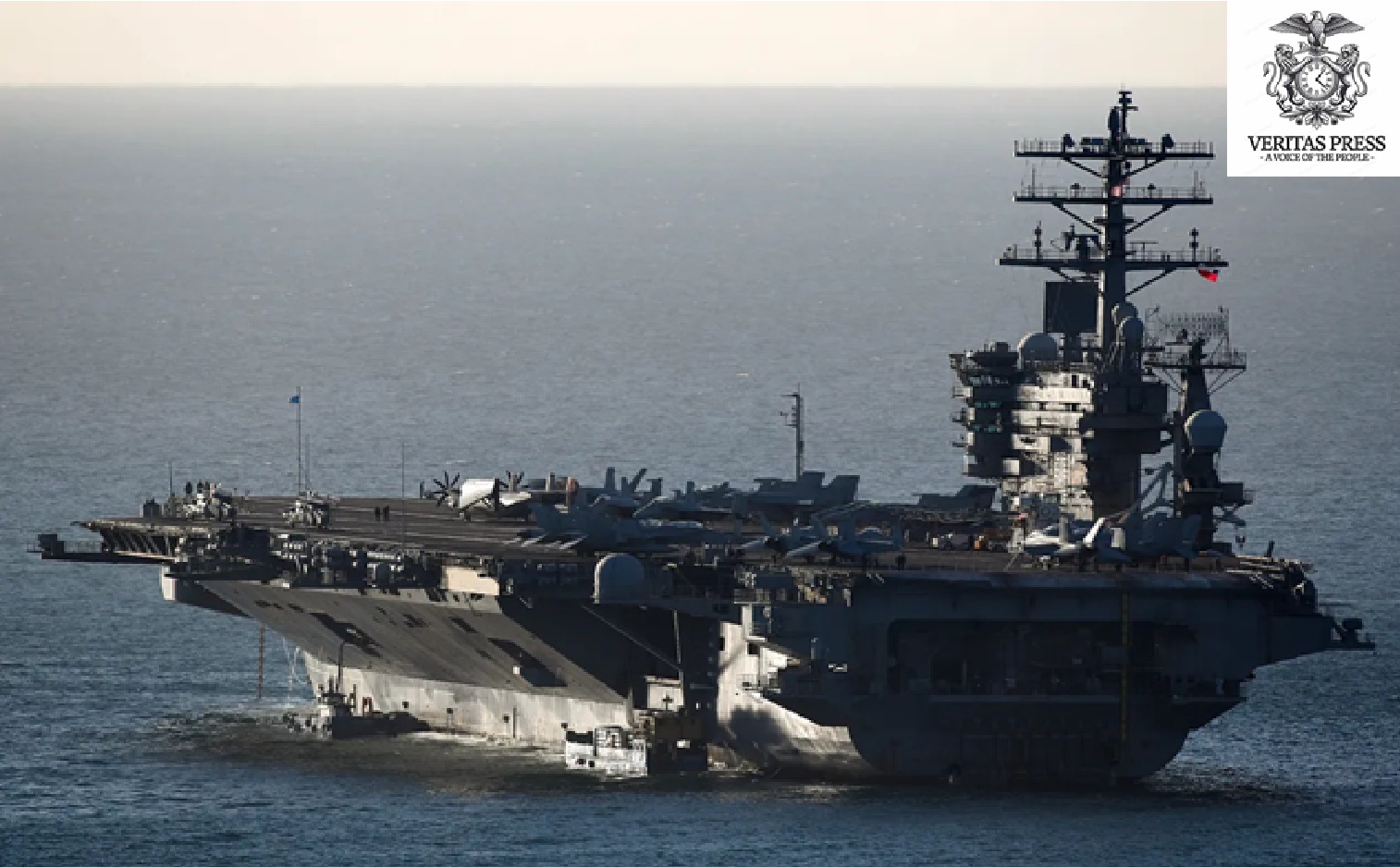
Two Missiles Have Struck A US Navy Vessel Near The Strategic Strait Of Hormuz After It Ignored Warnings From Iran’s Naval Forces, According To A Report.
TEHRAN/WASHINGTON – “Two missiles hit US Navy vessel after it ignored Iran’s warning,” reads like a blaring headline from the semi-official Fars News Agency, thrusting the Strait of Hormuz back into the centre of a rapidly escalating geopolitical maelstrom. The news, two Iranian missiles reportedly slamming into a US Navy frigate near the strategic port of Jask, ricocheted across global markets like a gunshot. Yet, within minutes, a flat, blanket denial from the United States Central Command (CENTCOM) left the world grappling not just with the possibility of a new military flashpoint, but with a deeper, more unsettling reality: a “post-truth” war where facts themselves are the first casualty.
The Spark: Operation Project Freedom.
The dramatic incident, whether real or fabricated, is inextricably linked to the launch of Operation Project Freedom. US President Donald Trump announced this massive naval deployment, framing it in humanitarian terms. The goal was to “liberate the movement of ships,” guiding some 2,000 vessels and their 20,000 seafarers stranded in the Persian Gulf since the US-Israel military assault on Iran began on February 28.
The scale is immense: 15,000 military personnel, guided-missile destroyers, and more than 100 aircraft assigned to punch a hole through Iran’s de facto blockade. Iran quickly framed Project Freedom as an act of war. The Chairman of Iran’s parliamentary National Security Committee, Ebrahim Azizi, declared unequivocally, “Any American interference in the new maritime regime of the Strait of Hormuz will be considered a violation of the ceasefire”. Tehran’s position was absolute: “The Strait of Hormuz and the Persian Gulf will not be managed by Trump’s delusional posts,” Azizi stated, adding the strait is “not a place for rhetoric”.
The Jask Narrative: Reality Or Psychological Operation?
In this hair-trigger environment, Fars News dropped its bombshell, claiming the US “vessel, which had been sailing through the Strait of Hormuz today in violation of traffic and shipping security near Jask, was targeted by a missile attack after ignoring a warning”. The stories were vivid: the US frigate “was forced to turn back and flee the area”. The Commander of Iran’s Khatam al-Anbiya Central Headquarters, Major General Ali Abdollahi, reinforced the new reality, warning, “any foreign armed force, especially the invading US army, if they intend to approach and enter the Strait of Hormuz, will be subjected to attack”.
The Counter-Narrative: A Stark Contradiction.
US Central Command issued a dispassionate retort: “No US Navy ships have been struck. U.S. forces are supporting Project Freedom and enforcing the naval blockade on Iranian ports”. A senior US official confirmed to The Jerusalem Post that the story was entirely false, part of a pattern of disinformation: earlier claims of strikes on the USS Abraham Lincoln were similarly debunked when CENTCOM noted the missiles “didn’t even come close”. Belying this clinical denial, global markets immediately treated the story as real. Brent crude prices spiked by over 5% to a four-year high of $114 per barrel within minutes.
A Tapestry Of Escalation:
This confrontation did not occur in a vacuum.
- Diplomatic Impasse: Behind the military manoeuvres lies a stalled peace process mediated by Pakistan. A two-week ceasefire on April 8 failed to yield a lasting truce during the Islamabad talks on April 11. Trump extended the ceasefire without a new deadline but remains dissatisfied. Iran is insisting on a permanent end to war, the release of frozen assets, and the removal of sanctions.
- Economic Warfare: A US-enforced naval blockade targeting Iranian ports since April 13 has already turned away 49 commercial vessels. This economic pincer has been met with Iran’s IRGC unilaterally expanding its claimed “Hormuz control zone” to now overlap with Oman and UAE territorial waters, including the previously safe haven of Fujairah.
- A Broader Conflict: Fierce fighting continues on other fronts, with Israel expanding operations in Gaza and Lebanon. Despite the chaos, initial peace plan proposals continue to be exchanged via Pakistan.
The Strait As A Weapon Of Perception:
From an investigative standpoint, the Jask incident is the most serious challenge yet to the fragile ceasefire. The strategic logic for Iran to fabricate such a story is sound, allowing them to look strong domestically and test the US resolve without launching an actual attack. However, an actual, limited engagement cannot be entirely discounted given the provocations; a failed Iranian missile salvo that missed a US warship, spun by Tehran for propaganda purposes, could explain CENTCOM’s specific denial that anything was “struck”.
A critical piece of corroborating evidence, the United Kingdom Maritime Trade Operations (UKMTO) report that a civilian bulk carrier was attacked by “multiple small boats” just 11 nautical miles west of Sirik, confirms that the waters around the strait are a live-fire zone, lending a chilling plausibility to the chaos described in the Fars report.
Conclusion: The Battle For Truth And Oil.
The “Battle of Jask” is a dangerous escalation in a war of perception where narrative control directly drives physical conflict and economic chaos. Regardless of whether a US warship was actually struck by a missile or by a well-crafted falsehood, the effect is the same. As both sides enter the 66th day of a war that has blockaded a fifth of the world’s oil supply, the Strait of Hormuz remains not just a chokepoint for energy, but a chokepoint for reality itself. The only certainty is that in this volatile new landscape, a spark, whether real or imaginary, has the power to ignite a catastrophic fire.
Source: Multiple News Agencies
Submissions:
For The Secure Submission Of Documentation, Testimonies, Or Exclusive Investigative Reports From Any Global Location, Please Utilise The Following Contact Details For Our Investigations Desk: enquiries@veritaspress.co.uk or editor@veritaspress.co.uk
Help Support Our Work:
Popular Information is powered by readers who believe that truth still matters. When just a few more people step up to support this work, it means more lies exposed, more corruption uncovered, and more accountability where it’s long overdue.
Help Protect Independent Journalism, Which Is Currently Under Attack.
If you believe journalism should serve the public, not the powerful, and you’re in a position to help, becoming a DONATOR or a PAID SUBSCRIBER truly makes a difference.
DONATION APPEAL: If You Found This Reporting Valuable, Please Consider Supporting Independent Journalism.
Help Support Our Work – We Know, We Know, We Know …
Seeing these messages is annoying. We know that. (Imagine what it’s like writing them … )
Your support fuels our fearless, truth-driven journalism. In unity, we endeavour to amplify marginalised voices and champion justice, irrespective of geographical location.
But it’s also extremely important. One of Veritas Press’s greatest assets is its reader-funded model.
1. Reader funding means we can cover what we like. We’re not beholden to the political whims of a billionaire owner. We are a small, independent and impartial organisation. No one can tell us what not to say or what not to report.
2. Reader funding means we don’t have to chase clicks and traffic. We’re not desperately seeking your attention for its own sake: we pursue the stories that our editorial team deems important and believe are worthy of your time.
3. Reader Funding: enables us to keep our website and other social media channels open, allowing as many people as possible to access quality journalism from around the world, particularly those in places where the free press is under threat.
We know not everyone can afford to pay for news, but if you’ve been meaning to support us, now’s the time.
Your donation goes a long way. It helps us:
- Keep the lights on and sustain our day-to-day operations
- Hire new, talented independent reporters
- Launch real-time live debates, community-focused shows, and on-the-ground reporting
- Cover the issues that matter most to our communities, in real time, with depth and integrity
We have plans to expand our work, but we can’t do it without your support. Every contribution, no matter the size, helps us stay independent and build a truly people-powered media platform.
If you believe in journalism that informs, empowers, and reflects the communities we serve, please donate today.
The Trump administration is preparing a $2.8 billion weapons package for Israel containing 40,000 2,000-pound

Film alleges mass civilian deaths are routinely built into military decisions amid Israel’s genocidal war
The Israeli rights group says violence, displacement, economic strangulation, and settlement expansion form part of

Houthi forces have captured the historic Red Sea port of Mocha and are advancing on
London’s historic sanctions against Israeli settlements mark a watershed moment in UK foreign policy, but
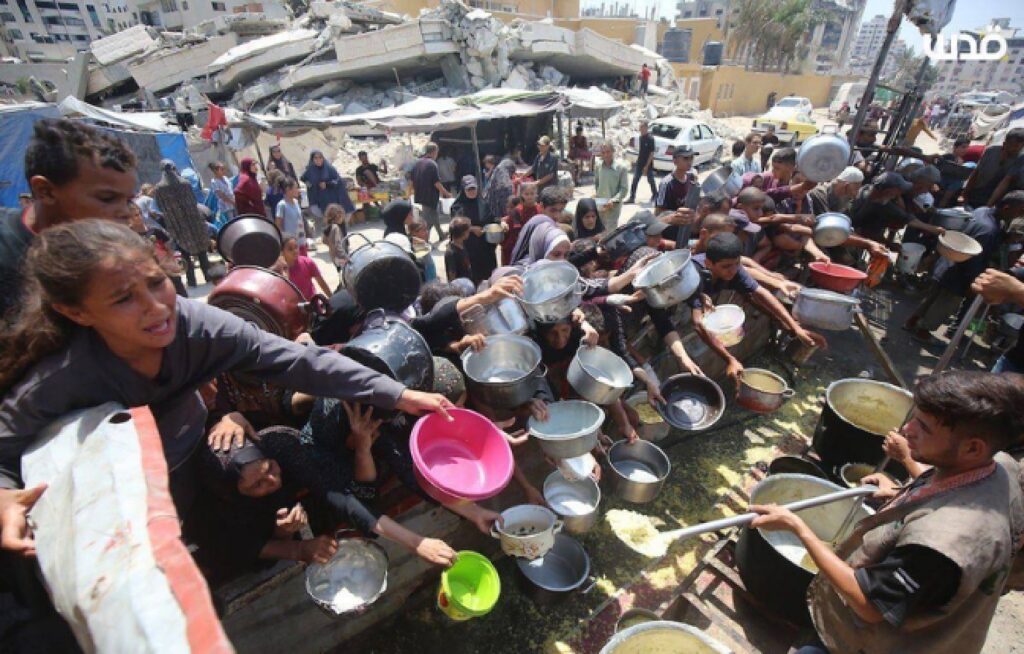
With 95% of Gaza’s population now wholly dependent on aid and more than 90% stripped
India calls for Kashmir and Ladakh to appear only on its official map after a
ISLAMABAD – In the high-stakes political theatre of Pakistan, the battleground has shifted from the
Francesca Albanese says third states have an ICJ-mandated obligation to end Israel’s occupation. But with
As Israeli jets bomb a Syrian air base over alleged Turkish deployment plans, Ankara, Washington