




Help support our mission, donate today and be the change. Every contribution goes directly toward driving real impact for the cause we believe in.
An Investigative Analysis of the Unravelling Truce, the Disarmament Ultimatum, and the Healthcare Catastrophe
GAZA – The ceasefire that halted Israel’s devastating military campaign in Gaza has become a legal and political fiction. More than 200 days into a truce that was supposed to open a pathway to reconstruction and political resolution, the reality on the ground is one of creeping annexation, systematic ceasefire violations, and an ultimatum designed, according to Palestinian officials and independent analysts, to achieve through diplomatic coercion what two years of military force could not: the complete political surrender of the Palestinian resistance. As Israeli forces expand their territorial control to nearly 60% of the Strip and the security cabinet convenes to discuss resuming full-scale war, a parallel catastrophe unfolds in Gaza’s hospitals, where patients are dying not from bombs, but from the calculated deprivation of electricity, pacemakers, stents, and travel permits. This investigation maps the collision of military expansion, failed diplomacy, and a healthcare system in its death throes.
Part I: The Ceasefire That Never Was.
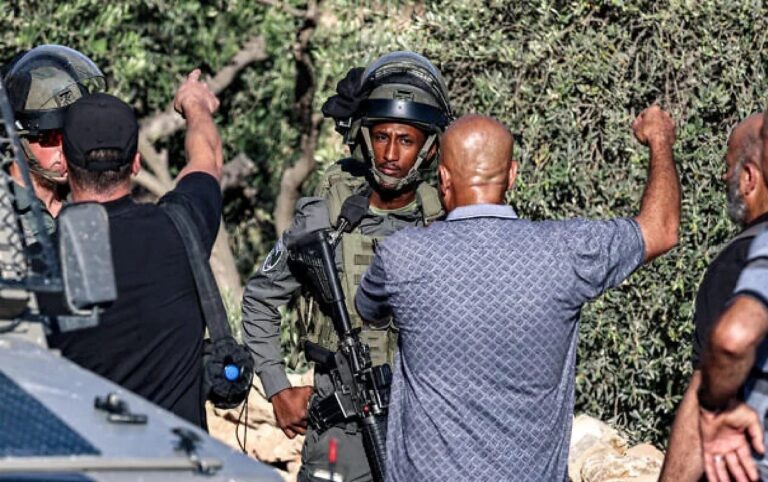
On Monday, May 4, 2026, day 207 of the truce, Musa Salem Fathi Al-Abyad, a 42-year-old Palestinian, was shot dead by Israeli forces in Beit Lahia, in the northern Gaza Strip. His body arrived at Al-Shifa Hospital in the morning hours. That same dawn, Israeli artillery shelled residential areas in eastern Khan Younis and the Zeitoun neighbourhood in southeastern Gaza, while drones buzzed low overhead.
Al-Abyad’s killing is not an anomaly. It is the 824th confirmed Palestinian death since the ceasefire was signed, according to the Palestinian Ministry of Health. At least 2,316 have been wounded during the truce period. In April 2026 alone, the Government Media Office in Gaza documented 377 Israeli violations, resulting in 111 dead and 376 injured.
These are not isolated incidents or “security operations,” as Israeli military statements typically frame them. They constitute a pattern of sustained military pressure that has fundamentally hollowed out the ceasefire’s meaning. Israeli gunboats fire off the coast of Khan Younis. Military vehicles push into areas east of the Tuffah neighbourhood. Homes and civilian facilities are demolished in the early hours of the morning.
Hamas, in a statement issued May 1, accused Israel of carrying out military operations “under the cover of the agreement,” imposing a “starvation policy” through the continued siege, and unilaterally shifting the Yellow Line, the ceasefire’s demarcation boundary, westward to swallow more Palestinian territory.
The Yellow Line was supposed to be fixed. Instead, it has become a moving frontier of occupation. Israeli forces now control 59% of the Gaza Strip, according to the original narrative, steadily regularising territorial gains through incremental violations that provoke international silence rather than condemnation. Forces initially deployed to the Lebanese front have been repositioned to Gaza and the occupied West Bank, signalling a strategic consolidation rather than a drawdown.
Part II: Disarmament As Political Surrender.
At the heart of the current crisis lies a diplomatic process that Palestinian negotiators and analysts describe as a carefully constructed trap.
Nickolay Mladenov, the high representative for the U.S.-backed Board of Peace, has been shuttling between Cairo, Istanbul, and Jerusalem with a single overriding objective: securing Hamas’s disarmament. The framework he has advanced, building on President Trump’s 21-point vision plan, requires the complete disarmament of Hamas and Islamic Jihad within 281 days across five stages. Humanitarian aid, reconstruction funding, and the opening of crossings are all strictly conditioned on the phased handover of weapons.
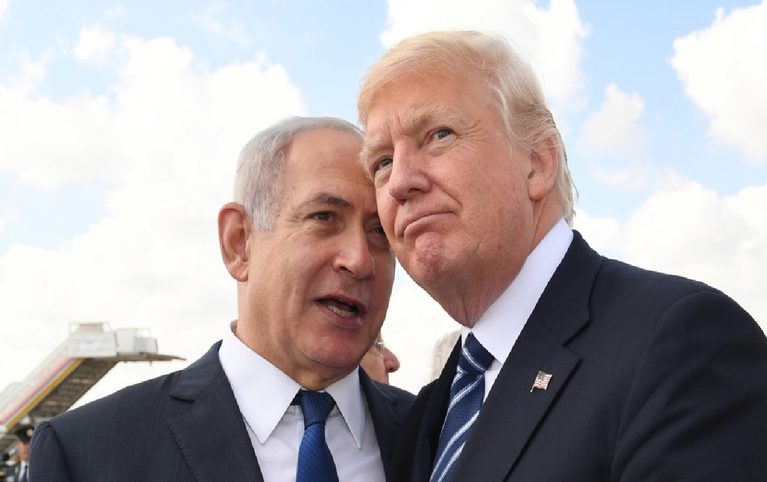
Israeli officials have been explicit about what they expect. “Hamas is not standing by the agreement on disarmament. We are holding discussions with mediators,” an Israeli official told the Kan public broadcaster on Saturday evening. The security cabinet was summoned to meet on Sunday to discuss resuming the war, a meeting Prime Minister Netanyahu later cancelled, though the threat remains live.
What the Israeli framing omits is that Palestinian factions did not simply “refuse” disarmament. They submitted a counter-proposal, conveyed to Egyptian and Turkish mediators on Friday, that tied weapons handover to political rights for the Palestinian people “within the national framework”, diplomatic shorthand for statehood and self-determination, and, critically, to commitments that “the people of Gaza would no longer be killed”.
The response from Washington and Tel Aviv was swift and unambiguous. “The mediators and the Americans both refused the Palestinian factions’ paper and passed threatening messages from the Americans to the Palestinian negotiating team,” a senior Palestinian source told Middle East Eye. The Palestinian proposal was dismissed outright, not negotiated.
“The central point of contention is the US and Israel’s insistence that Hamas and other resistance groups disarm before a technocratic government is established in Gaza,” the source added. For Palestinian factions, including Hamas, Palestinian Islamic Jihad, and the Popular Front for the Liberation of Palestine, this sequencing is unacceptable. Disarmament before political resolution is surrender, not peace.
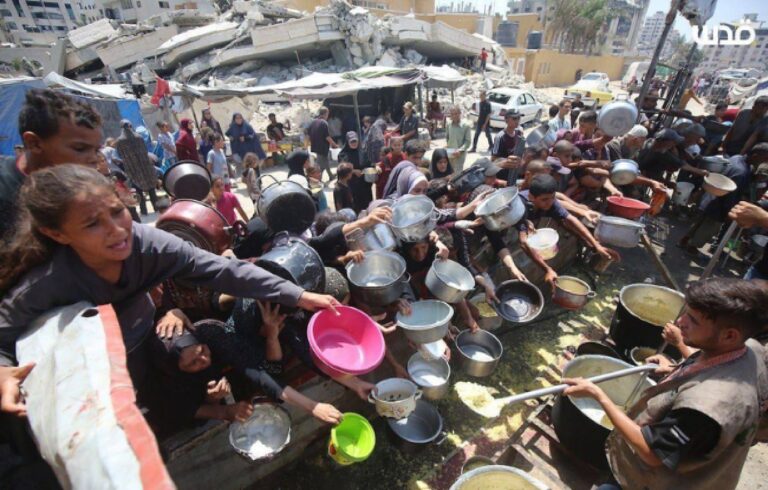
Abdul Jabbar Said, a member of Hamas’s political bureau, characterised the Mladenov framework to the Palestinian website Ultra Palestine as an attempt to enforce “complete political surrender.” The unified Palestinian front has instead insisted on full implementation of the first phase of the original ceasefire, including the entry of 600 aid trucks daily, a provision Israel has systematically violated since the agreement’s first days.
Part III: The Phantom Government.
The National Committee for the Administration of Gaza (NCAG), the technocratic body established in January 2026 to manage civilian affairs, was supposed to be the centrepiece of Gaza’s post-war transition. Led by Dr. Ali Shaath, the 15-member committee was tasked with overseeing healthcare, education, local governance, the judiciary, and public services, independent of direct political control.
Six months later, it barely exists as a functional entity.
Three of the neutral Palestinian technocrats selected by Mladenov have already submitted their resignations, citing the fact that they “have not been allowed to work.” Mladenov rejected the resignations, but frustration among committee members is described as acute. The NCAG’s members cannot even enter Gaza. Their entry requires field and security coordination through crossings controlled entirely by Israel, and “no official position has yet been issued by the body explaining the delay in its entry, and Israel has not commented on the matter”.
The NCAG issued a statement in February calling statements about institutional handover “a pivotal step,” but has been operating from Cairo, physically disconnected from the population it is supposed to govern. “We emphasise that full administrative, civilian, and police control by the NCAG is not merely procedural; the NCAG cannot be expected to carry responsibility without the full administrative, civilian, and police powers necessary to implement its mandate effectively,” the committee stated.
Analysts have described the strategy as an attempt to turn the NCAG into a proxy security arm for the occupation, a civilian facade behind which Israeli security control would be exercised. The resignation attempts suggest that some technocrats have recognised this dynamic and are unwilling to lend their legitimacy to it.
The broader Trump plan remains stalled on multiple fronts. The multinational stabilisation force has not been established. Billions in pledged funding have not materialised. Countries in Trump’s Peace Council “have been slow to transfer promised funds, and money that has arrived is only partial”.
Hamas has publicly stated its readiness to hand over administrative control to the NCAG, calling it “a pivotal step in fulfilling its mandate as the transitional administration of Gaza”. But the handover cannot take place under conditions of continued siege, military occupation, and the threat of renewed war.
Part IV: The Slow Death Of Gaza’s Healthcare System.
While diplomats debate disarmament timelines in Cairo hotels, a quieter catastrophe unfolds in Gaza’s remaining hospitals. The healthcare system is not merely strained; it is in terminal collapse, systematically deprived of the most basic requirements for sustaining life.
At Nasser Medical Complex in Khan Younis, 66-year-old Mohammad Al-Sa’ati has been lying in a hospital bed for two months, not for treatment, but because doctors fear he will die if he leaves. “I have been suffering from irregular heart rhythms for eight years, and I currently need a pacemaker, but it is unavailable. Doctors insist that I remain in the hospital out of concern for my life,” Al-Sa’ati told WAFA News Agency.
His condition represents a wider medical crisis. “My symptoms worsen in the absence of the device. I experience a sharp drop in heart rate, causing dizziness and recurrent fainting, leaving my condition unstable. My life is at risk, and no solution appears on the horizon”.
In a neighbouring ward, 67-year-old Fatima Rashid describes fluid accumulating in her lungs due to uncontrolled hypertension. Doctors have warned her of imminent stroke risk, but the medication she requires simply does not exist in Gaza. She underwent catheterisation a year and a half ago and was prescribed a specific medication to prevent restenosis, the narrowing of the cardiac stent. The medication never arrived. “The stent in my heart narrowed,” she said. “I feel that my death is near”.
Dr. Ashraf Hallas, Head of the Cardiology Department at Nasser Medical Complex, explained the scale of the collapse with clinical precision: “We are facing a severe shortage of medicines and equipment, particularly those required for catheterisation procedures, which has led to the suspension of around 80% of cases scheduled for treatment”.
Before the war, Gaza’s hospitals performed between five and eight catheterisations daily at Al-Shifa Medical Complex and the European Hospital, supplemented by private centres. Now, procedures are limited to a maximum of three per day, conducted at Al-Quds Hospital under a Ministry of Health contract, and “performed exclusively for critically ill patients, based on medical prioritisation”. The triage is not between illness levels but between those who might survive and those who will certainly die without intervention.
Even when procedures are performed, the shortages are so severe that doctors have been forced, at times, “to complete procedures without inserting stents”. The equipment shortage extends beyond consumables: electrocardiogram machines are “entirely unavailable,” echocardiography devices are scarce, and other diagnostic equipment has malfunctioned due to damage inflicted on health infrastructure during the war.
Dr. Atef Al-Hout, director of Nasser Medical Complex, issued a warning earlier than most. In April, he described the “dire consequences of a complete collapse” of medical services, citing the occupation authorities’ continued refusal to permit the entry of oils and supplies necessary for operating electricity generators. Without electricity, ventilators stop. Dialysis machines fail. Operating rooms go dark. The Ministry of Health acknowledged that the system “records daily deaths of injured people and patients who were waiting for permission to travel to receive treatment abroad”.
The numbers are staggering. According to Ministry of Health data, heart diseases now account for approximately 56% of total deaths in the Gaza Strip. Around 20,000 patients face severe difficulties accessing treatment. Some 1,400 wounded individuals have died while waiting for permission to travel outside the Strip. Each of these deaths represents not a battlefield casualty but a deliberate, bureaucratic fatality, a person who could have lived had Israel permitted medical supplies, equipment, or exit permits.
Part V: The Political Calculus Of Renewed War.
Why is Israel threatening to resume a war it has never truly stopped?
Israeli military analyst Amos Harel, writing in Haaretz, offers an unsparing assessment: the threat of resumed genocide is an electoral strategy. “The repeated recent leaks about Hamas’s growing strength in Gaza, followed by political statements, are not a coincidence; the government is preparing to launch a new attack on the Strip,” Harel wrote. He suggested that if Trump maintains a halt to assaults on Iran and Lebanon, Prime Minister Netanyahu, wanted by the International Criminal Court for war crimes, may seek to “keep the flame of war burning on other fronts, especially with general elections approaching next October”.
The electoral calendar casts a long shadow over security decisions. Netanyahu’s political survival has been tied to the perception of permanent conflict since October 2023. A prolonged ceasefire that opens space for political negotiation threatens the security narrative on which his coalition depends. Resuming military operations, even under conditions that would produce few strategic gains and massive civilian casualties, serves a domestic political logic that has little to do with security.
A senior official in the Israeli military’s General Staff told Channel 15 that an additional round of war was “almost inevitable,” citing two factors: the refusal of Palestinian factions to surrender their weapons and the alleged “failure” of the International Stabilisation Force. Both justifications deserve scrutiny.
On the first point, Hamas has, in fact, demonstrated a willingness to discuss partial, phased disarmament. According to officials familiar with the Cairo talks, the group is “willing in principle to discuss partial, phased disarmament involving heavy weapons, such as missiles, rockets, medium and heavy mortars, anti-tank missiles, heavy machine guns, drones and possibly large explosive devices” . It refuses to surrender light weapons, pistols, rifles, light machine guns, citing the genuine threat of revenge attacks from clan militias already operating “with encouragement and assistance from the Shin Bet and IDF”.
“The American and Israeli demand that Hamas and Islamic Jihad fully disarm has been met with total refusal so far,” one Israeli analysis noted. But Israel’s own reporting concedes that Hamas has moved from its traditional position of no disarmament whatsoever to a willingness to negotiate on heavy weapons, a shift that would, in a genuine negotiation, constitute a starting point rather than grounds for war.
On the second point, the “failure” of the international force, the force has never been properly established, funded, or deployed. Blaming its failure for the current impasse is circular logic: the conditions for its success have been systematically denied by the very party now citing failure as justification for escalation.
Part VI: The Unspoken Reality.
Behind the ostensible deadlock over disarmament sequencing lies a deeper conflict that neither Washington nor Tel Aviv nor their allies seems willing to acknowledge: the Palestinian factions’ insistence that any durable arrangement must address the political rights of the Palestinian people.
The demand is not merely rhetorical. It reflects a strategic calculation that disarmament without political horizon would leave Gaza’s population, more than 2 million people, most living in “near-inhuman conditions in shelters in central Gaza” , defenseless against an occupying power that has demonstrated, over two years of war and more than 200 days of “ceasefire,” that it will not be constrained by international law, ceasefire agreements, or the most basic norms of civilian protection.
The healthcare statistics tell this story more clearly than any political manifesto. When the Ministry of Health reports that heart disease accounts for 56% of deaths, it is reporting not on a natural epidemic but on a man-made one, the predictable consequence of destroying medical infrastructure, blocking equipment and medication, and denying patients the right to seek treatment abroad. The 1,400 wounded who died waiting for travel permits did not die from their wounds; they died from a policy.
Conclusion: The Shape Of What Comes Next.
The security cabinet meeting that was scheduled and then cancelled represents not a resolution but a deferral. The threat of renewed full-scale military operations remains operative, suspended over Gaza like the drones that continue to buzz over its shattered neighbourhoods.
The Mladenov framework, with its 281-day disarmament clock and its conditional aid provisions, remains on the table, but it is a table at which one party holds all the cards and the other holds only the right to refuse. Palestinian factions have refused the framework not because they reject peace, but because they recognise that what is being offered is not peace but a reconfiguration of annexation, occupation, a “technocratic” administration that would govern on behalf of an occupying power while Palestinian weapons, and with them, Palestinian political leverage, are systematically liquidated and enslaved.
Meanwhile, Mohammad Al-Sa’ati waits for a pacemaker that will not arrive. Fatima Rashid feels her death approaching. Dr. Ashraf Hallas performs catheterisations without stents. And the international community watches, issues statements, and processes the paperwork for a stabilisation force that exists mainly on paper.
The ceasefire was signed in October 2025. It is now May 2026. More than 72,000 Palestinians are dead. Some 171,000 are wounded. 90% of civilian infrastructure is destroyed or damaged. Reconstruction is estimated at $70 billion. And Israel’s security cabinet is discussing whether to resume the bombing.
The question is not whether the ceasefire can be saved. The question is whether it ever truly existed at all.
Source: Multiple News Agencies
Submissions:
For The Secure Submission Of Documentation, Testimonies, Or Exclusive Investigative Reports From Any Global Location, Please Utilise The Following Contact Details For Our Investigations Desk: enquiries@veritaspress.co.uk or editor@veritaspress.co.uk
Help Support Our Work:
Popular Information is powered by readers who believe that truth still matters. When just a few more people step up to support this work, it means more lies exposed, more corruption uncovered, and more accountability where it’s long overdue.
Help Protect Independent Journalism, Which Is Currently Under Attack.
If you believe journalism should serve the public, not the powerful, and you’re in a position to help, becoming a DONATOR or a PAID SUBSCRIBER truly makes a difference.
DONATION APPEAL: If You Found This Reporting Valuable, Please Consider Supporting Independent Journalism.
Help Support Our Work – We Know, We Know, We Know …
Seeing these messages is annoying. We know that. (Imagine what it’s like writing them … )
Your support fuels our fearless, truth-driven journalism. In unity, we endeavour to amplify marginalised voices and champion justice, irrespective of geographical location.
But it’s also extremely important. One of Veritas Press’s greatest assets is its reader-funded model.
1. Reader funding means we can cover what we like. We’re not beholden to the political whims of a billionaire owner. We are a small, independent and impartial organisation. No one can tell us what not to say or what not to report.
2. Reader funding means we don’t have to chase clicks and traffic. We’re not desperately seeking your attention for its own sake: we pursue the stories that our editorial team deems important and believe are worthy of your time.
3. Reader Funding: enables us to keep our website and other social media channels open, allowing as many people as possible to access quality journalism from around the world, particularly those in places where the free press is under threat.
We know not everyone can afford to pay for news, but if you’ve been meaning to support us, now’s the time.
Your donation goes a long way. It helps us:
- Keep the lights on and sustain our day-to-day operations
- Hire new, talented independent reporters
- Launch real-time live debates, community-focused shows, and on-the-ground reporting
- Cover the issues that matter most to our communities, in real time, with depth and integrity
We have plans to expand our work, but we can’t do it without your support. Every contribution, no matter the size, helps us stay independent and build a truly people-powered media platform.
If you believe in journalism that informs, empowers, and reflects the communities we serve, please donate today.
The Trump administration is preparing a $2.8 billion weapons package for Israel containing 40,000 2,000-pound

Film alleges mass civilian deaths are routinely built into military decisions amid Israel’s genocidal war
The Israeli rights group says violence, displacement, economic strangulation, and settlement expansion form part of

Houthi forces have captured the historic Red Sea port of Mocha and are advancing on
London’s historic sanctions against Israeli settlements mark a watershed moment in UK foreign policy, but
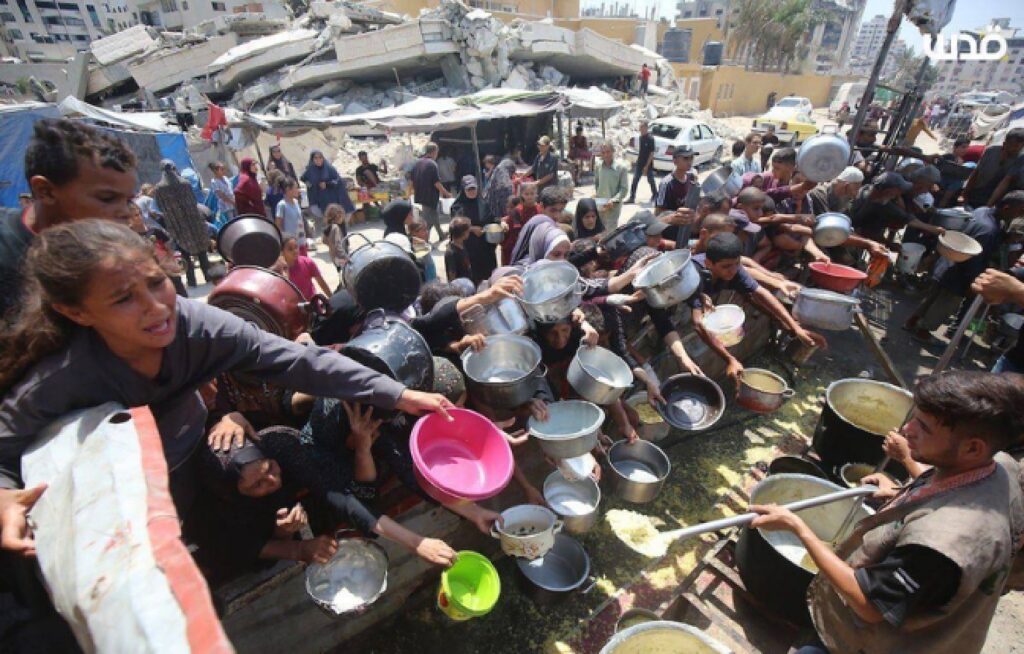
With 95% of Gaza’s population now wholly dependent on aid and more than 90% stripped
India calls for Kashmir and Ladakh to appear only on its official map after a
ISLAMABAD – In the high-stakes political theatre of Pakistan, the battleground has shifted from the
Francesca Albanese says third states have an ICJ-mandated obligation to end Israel’s occupation. But with
As Israeli jets bomb a Syrian air base over alleged Turkish deployment plans, Ankara, Washington