Kamran Faqir is a volunteer investigative journalist and writer committed to exposing hidden truths and amplifying underreported stories. Driven by social justice, he brings sharp insight and fearless truth-telling to independent journalism. NUJ registered.
Original Article Date Published:
Article Date Modified:
13 minutes
Views:396
Listen to this article
Help support our mission, donate today and be the change. Every contribution goes directly toward driving real impact for the cause we believe in.
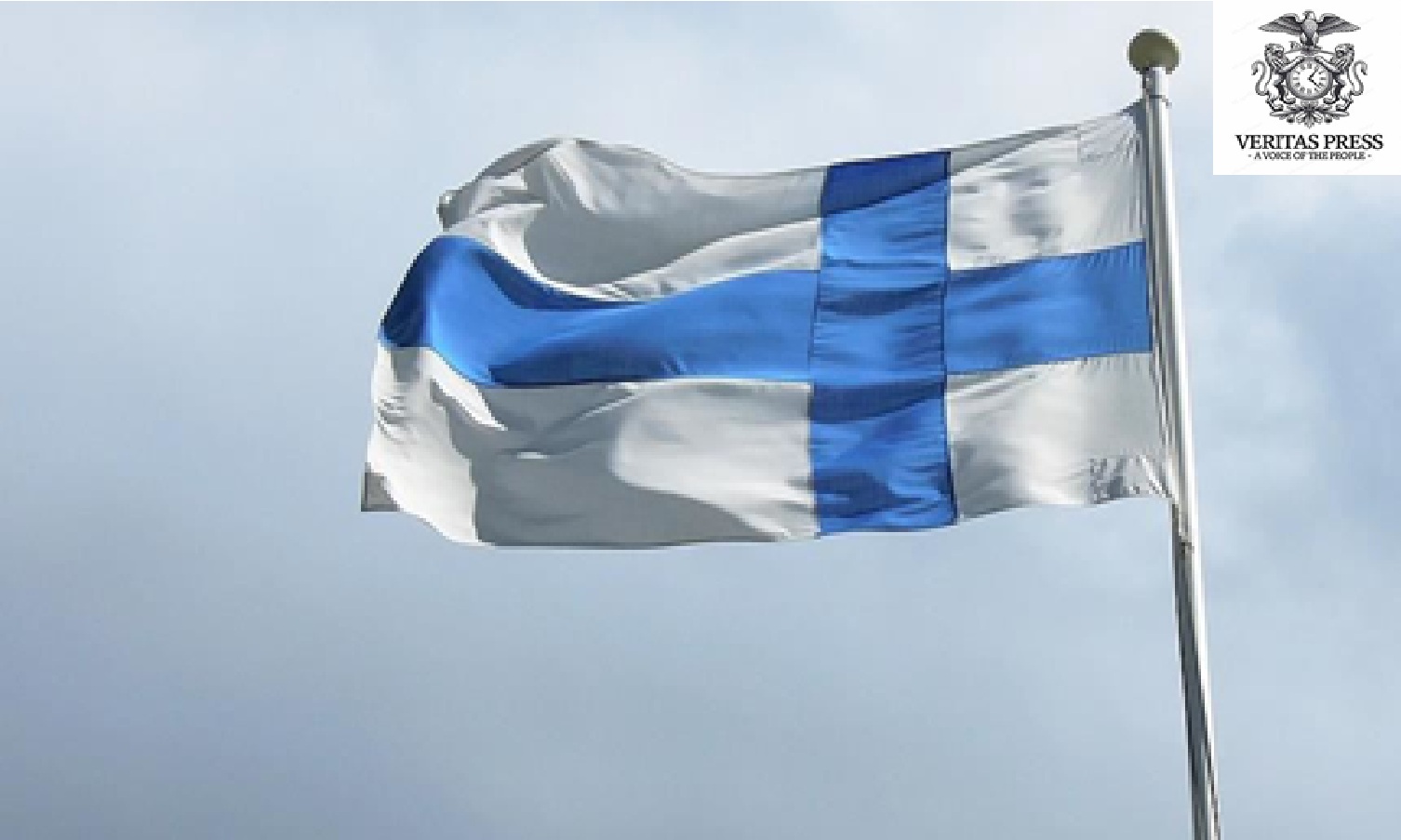
HELSINKI, FINLAND – For seven consecutive years, Finland has been crowned the “happiest country in the world” by the United Nations. It is a nation globally celebrated for its education system, gender equality, and high levels of social trust.
Yet within this Nordic utopia, a darker reality is festering.
As the Finnish government promotes record-low unemployment and a world-leading quality of life, Muslim and immigrant communities describe something starkly different: a slow, systemic marginalisation, what activists increasingly call a “silent, state-sanctioned siege of hatred.”
Islamophobia is rising. Structural discrimination is deepening. And across employment, education, and immigration systems, minorities are bearing the consequences.
Part I: The State Of Fear, A Record Surge In Hate And Hostility.
According to newly released data from Finland’s Police University College (Polamk), 1,808 suspected hate crimes were recorded in 2025, the highest since records began in 2008 and a 13% increase from 2023.
Nearly 70% of these cases were motivated by ethnicity or nationality.
The data paints a disturbing picture:
Syrians were the most targeted group
Ethnic Somalis followed closely
Crimes against disabled individuals surged by over a third
Researcher Jenita Rauta warned:
“The trend is concerning. The increase in hate crimes against people with disabilities reflects broader societal polarisation in which those in vulnerable positions are targeted.”
But the numbers only tell part of the story.
Most incidents are not occurring in physical spaces, but online, where Islamophobic rhetoric spreads rapidly, often unchecked. Social media has become a primary battleground for racial incitement, amplifying hostility far beyond isolated acts.
Crucially, Finland lacks standalone hate crime legislation. Under current law, a “hate motive” is merely an aggravating factor, not a distinct offence.
Legal experts warn this creates a dangerous gap:
“Extreme racism, assault, threats, and harassment is diluted in legal framing. It allows society to downplay what is actually happening.”
The trend line is unmistakable: Finland is facing an epidemic of intolerance. Yet, critics say, its political leadership continues to deny the scale of the crisis.
Part II: Islamophobia As Structure, Inequality In Work, Wages, And Opportunity.
Beyond headline-grabbing hate crimes lies a more entrenched reality: systemic Islamophobia embedded in Finland’s economic and social structures.
According to the European Union Agency for Fundamental Rights, 63% of Muslims in Finland report experiencing discrimination, one of the highest rates in Europe.
Employment And Wage Inequality:
Studies consistently show that applicants with “foreign-sounding” names face significantly lower callback rates, even when qualifications are identical.
Minority workers report:
Slower wage progression
Limited access to promotions
Concentration in lower-paying roles
A Somali-Finnish graduate described the pattern:
“You do everything right, education, language, experience. But still, you are not seen as equal.”
In industrial sectors, manufacturing, logistics, cleaning, and construction, the disparities are even more pronounced.
A worker in Tampere explained:
“We are hired easily for hard labour. But promotions? Those are for others.”
Labour advocates warn of a two-tier workforce, where minorities remain locked in precarious positions with limited upward mobility.
Education: Bias From The Beginning.
Discrimination begins early.
Research shows that immigrant and Muslim students in Finland face:
Higher rates of bullying
Lower expectations from teachers
Disproportionate placement in lower academic tracks
An educator acknowledged:
“There are biases, sometimes unconscious, sometimes not. It affects outcomes.”
These early disadvantages feed directly into employment inequality, creating a cycle that is difficult to escape.
Part III: Islamophobia Is Becoming Deeply Institutionalised In Europe — Finland As A Case Study.
Across Europe, Islamophobia is no longer confined to fringe movements or isolated acts of hate; it is increasingly embedded within state structures, political discourse, and public policy.
From restrictive immigration regimes to labour market exclusion and surveillance practices, a pattern is emerging in which anti-Muslim bias is being normalised at the institutional level.
Within this broader European trajectory, Finland stands out as a stark case study.
In a country long celebrated for equality and social cohesion, evidence now points to Islamophobia becoming deeply institutionalised, systematic, deeply embedded, and directly targeting Muslim minorities.
Data from the European Union Agency for Fundamental Rights underscores this shift. But beyond statistics, the Finnish case illustrates how institutionalisation operates in practice:
Immigration policy is shaped by religious bias, including efforts to restrict Muslim refugees
Labour markets structured by exclusion, limiting hiring, wage growth, and promotion
Education systems are reinforcing inequality from an early age
Political rhetoric legitimising discrimination rather than confronting it
What distinguishes this phase is not just the presence of Islamophobia, but its integration into governance itself.
In Finland, this is reflected in the alignment between far-right political narratives and administrative decision-making, where policies affecting Muslims are framed as security concerns, cultural preservation, or economic necessity.
Critically, this institutionalisation often operates subtly, through:
Bureaucratic discretion
Legal loopholes
Unequal enforcement of laws
The quiet normalisation of exclusionary practices
As a result, discrimination becomes harder to challenge, not because it is invisible, but because it is systemically embedded and politically defended.
Human rights organisations warn that this trend extends beyond Finland. Across Europe, Muslims are increasingly positioned as “outsiders” within their own societies.
If a country consistently ranked as the world’s happiest can simultaneously exhibit such deeply rooted inequality, it raises urgent questions about the credibility of European democratic values.
Finland is not an exception. It is a warning.
Part IV: The Government Of Prejudice, Racism At The Top.
The social climate cannot be separated from politics.
Since Prime Minister Petteri Orpo formed a coalition with the far-right Finns Party in 2023, Finland has witnessed repeated scandals involving senior officials.
Economic Affairs Minister Wille Rydman was exposed for racist messages referring to Somalis as “grass” and Arabs as “monkeys,” alongside remarks romanticising Nazi ideology.
Finance Minister Riikka Purra faced scrutiny for past writings advocating violence against immigrants and promoting the “Great Replacement” conspiracy theory.
In 2025, party figures described migrants as “low-quality,” with little meaningful consequence.
Instead of accountability, critics point to normalisation.
A widely mocked “anti-racism training” session underscored this failure:
Interior Minister Mari Rantanen said:
“I don’t know if I really learned anything.”
Purra added:
“I don’t recognise such thought patterns in myself.”
Human rights organisations, including Amnesty International, warn that such responses legitimise prejudice rather than challenge it.
Part V: The Muslim Quota Ban, Discrimination As Policy.
In 2025, Ombudsman Kristina Stenman revealed that Finland’s Interior Ministry had issued guidance to limit refugees from Muslim-majority countries.
“The discriminatory instructions were meant to prevent refugees from Muslim-majority countries from coming to Finland.”
Internal communications showed a preference for Christian-majority applicants, raising serious legal concerns.
Nine Muslim organisations responded:
“This is a politically driven attempt to change the fundamental principles of refugee policy.”
Despite this, authorities concluded the issue was merely “poorly handled.” Shortly after, Stenman was not reappointed, sparking accusations of political retaliation.
Part VI: The Ghost Mosque, Securitising Faith.
Institutional Islamophobia in Finland is not new; it is deeply rooted.
The failed Helsinki Grand Mosque project remains emblematic. Despite meeting planning requirements, it was rejected over vague “security concerns.”
Researchers concluded:
“The project was treated as a non-normal building.”
Unlike Christian institutions, Muslim initiatives faced extraordinary scrutiny, fuelled by suspicion and securitisation of Islamic identity.
Today, Helsinki still lacks a central mosque, an absence many view as symbolic of broader exclusion.
Part VII: Europe’s Verdict, Among The Worst.
The European Union Agency for Fundamental Rights ranks Finland third-worst in the EU for Muslim discrimination.
63% report discrimination
Only Austria and Germany rank higher
The agency warned:
“Islamophobia is not just a Muslim issue; it is a societal crisis that threatens European democracy and cohesion.”
Part VIII: Voices From The Ground.
For those affected, the crisis is deeply personal.
Sami, a Syrian refugee in Vantaa, said:
“He told me to go back to the desert. My children are Finnish, but they say we are not.”
The Finnish Islamic Council has called for urgent action.
Chairman Anas Hajjar stated:
“This is not just about hate crimes. It is about being blocked. from jobs, from opportunities, from belonging.”
Analysis: The Collapse Of The Finnish Brand.
The crisis is no longer domestic; it is international.
A 2025 racism scandal involving public figures mocking East Asians triggered backlash across Asia, forcing apologies from Prime Minister Orpo.
Analysts warned:
“Internal social failures are now foreign policy events.”
The Great Contradiction:
How can Finland be the “happiest country in the world” when:
Hate crimes are at record highs
Islamophobia is rising across institutions
Minorities face systemic barriers in jobs, wages, and education
Refugee and immigration policies show evidence of religious bias
The answer lies in who the system works for.
For many ethnic Finns, it delivers stability and prosperity. For many Muslims and immigrants, it delivers exclusion.
Conclusion: The Anatomy Of A Selective Utopia.
Finland’s global identity, as the world’s happiest, most equal, and most socially advanced nation, is not collapsing. It is being selectively upheld.
What this investigation reveals is not a contradiction, but a hierarchy.
At the top sits a model welfare state that functions with remarkable efficiency, for those who fit within its cultural and ethnic core. Beneath it lies a parallel reality where Muslims and immigrant communities encounter a system that is slower to protect, quicker to exclude, and increasingly willing to justify both.
This is not merely a question of rising hate crimes or inflammatory rhetoric. It is the convergence of multiple forces:
A political class that normalises or dismisses racism
Institutions that fail to enforce meaningful accountability
Labour markets that quietly entrench inequality
Immigration systems that filter belonging along religious lines
Education structures that reproduce disadvantage from childhood
Together, they form what rights advocates describe as structural racism that is systematic and deeply institutionalised, specifically targeting Muslim and other ethnic minorities, not always explicit, but embedded across the architecture of the state.
The most alarming dimension is not the existence of discrimination, but its denial at the highest levels of power.
When ministers accused of racist conduct remain in office, when discriminatory policies are reframed as administrative errors, and when oversight officials face quiet removal after exposing wrongdoing, the signal sent to society is unmistakable:
This is tolerable.
And when prejudice becomes tolerable, it becomes replicable.
The consequences are already visible.
In workplaces, minorities are locked into stagnant roles.
In schools, children internalise exclusion before they understand it.
In public spaces, identity becomes a trigger for hostility.
Online, hate circulates faster than accountability can follow.
This is how systemic discrimination sustains itself, not through a single policy, but through institutional indifference reinforced over time.
Internationally, the implications are equally stark. Finland’s credibility, its soft power, its diplomatic authority, its economic partnerships, rests heavily on its reputation as a moral outlier in an increasingly divided world. That reputation is now under strain.
Because the central question is no longer whether Finland performs well on global indices.
It is whether those indices are measuring reality or masking inequality.
A country can lead the world in happiness while simultaneously failing a significant portion of its population.
It can champion equality in principle while practising exclusion in policy. It can condemn discrimination abroad while minimising it at home.
This is the paradox Finland now embodies.
The danger is not that Finland will lose its status as a high-functioning society. The danger is that it will normalise a two-tier system, where equality is preserved for some and negotiable for others.
If left unaddressed, this trajectory does not simply erode minority rights. It reshapes the very meaning of democracy, belonging, and citizenship.
Because a society that defines happiness without inclusion is not stable, it is fragile.
And a system that denies its own injustices does not correct itself; it hardens them.
As scrutiny intensifies ahead of Finland’s next political cycle, the country faces a defining choice:
Not whether it remains the happiest nation in the world, But whether that happiness is built on universal dignity, or on the quiet exclusion of those pushed to its margins.
Source: Multiple News Agencies
Submissions:
For The Secure Submission Of Documentation, Testimonies, Or Exclusive Investigative Reports From Any Global Location, Please Utilise The Following Contact Details For Our Investigations Desk: enquiries@veritaspress.co.uk or editor@veritaspress.co.uk
Help Support Our Work:
Popular Information is powered by readers who believe that truth still matters. When just a few more people step up to support this work, it means more lies exposed, more corruption uncovered, and more accountability where it’s long overdue.
Help Protect Independent Journalism, Which Is Currently Under Attack.
If you believe journalism should serve the public, not the powerful, and you’re in a position to help, becoming a DONATOR or a PAID SUBSCRIBER truly makes a difference.
DONATION APPEAL: If You Found This Reporting Valuable, Please Consider Supporting Independent Journalism.
Help Support Our Work – We Know, We Know, We Know …
Seeing these messages is annoying. We know that. (Imagine what it’s like writing them … )
Your support fuels our fearless, truth-driven journalism. In unity, we endeavour to amplify marginalised voices and champion justice, irrespective of geographical location.
But it’s also extremely important. One of Veritas Press’s greatest assets is its reader-funded model.
1. Reader funding means we can cover what we like. We’re not beholden to the political whims of a billionaire owner. We are a small, independent and impartial organisation. No one can tell us what not to say or what not to report.
2. Reader funding means we don’t have to chase clicks and traffic. We’re not desperately seeking your attention for its own sake: we pursue the stories that our editorial team deems important and believe are worthy of your time.
3. Reader Funding: enables us to keep our website and other social media channels open, allowing as many people as possible to access quality journalism from around the world, particularly those in places where the free press is under threat.
We know not everyone can afford to pay for news, but if you’ve been meaning to support us, now’s the time.
Your donation goes a long way. It helps us:
Keep the lights on and sustain our day-to-day operations
Hire new, talented independent reporters
Launch real-time live debates, community-focused shows, and on-the-ground reporting
Cover the issues that matter most to our communities, in real time, with depth and integrity
We have plans to expand our work, but we can’t do it without your support. Every contribution, no matter the size, helps us stay independent and build a truly people-powered media platform.
If you believe in journalism that informs, empowers, and reflects the communities we serve, please donate today.
Kamran Faqir is a volunteer investigative journalist and writer committed to exposing hidden truths and amplifying underreported stories. Driven by social justice, he brings sharp insight and fearless truth-telling to independent journalism. NUJ registered.
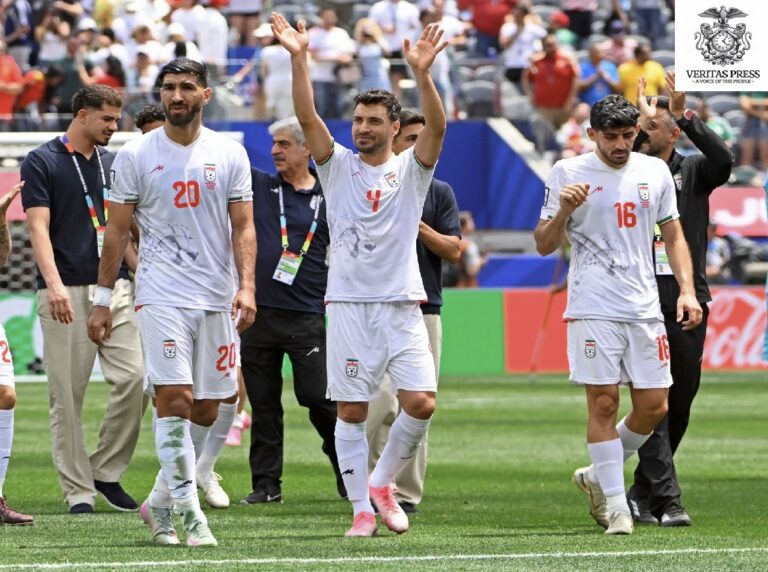
SEATTLE, TEHRAN — The U.S. Department of Homeland Security (DHS) will allow Iran’s national football team to enter the country 48 hours before their critical World Cup match against Egypt on Friday, a modest concession in a tournament where Team Melli’s travel conditions have sparked claims of oppression and competitive disadvantage.