Kamran Faqir is a volunteer investigative journalist and writer committed to exposing hidden truths and amplifying underreported stories. Driven by social justice, he brings sharp insight and fearless truth-telling to independent journalism. NUJ registered.
Listen to this article
Help support our mission, donate today and be the change. Every contribution goes directly toward driving real impact for the cause we believe in.
Article Date Published:
Article Date Modified:
15 minutes
Views:142
A deadly drone strike on a Kuwaiti air-defence facility killed two Italian Rheinmetall technicians, and Kuwait has blamed Iran. Still, Tehran categorically denies the attack, accuses Israel and the US of a false-flag operation designed to widen the war, and has offered a joint investigation that its accusers have so far not accepted. As European leaders demand “pressure” on Iran before any independent inquiry, and Israel pushes a contested chemical-weapons narrative that even some Israeli officials say does not justify immediate war, the episode raises a sharper question than attribution alone: whether the rush to judgement is being used to manufacture consent for another escalation.
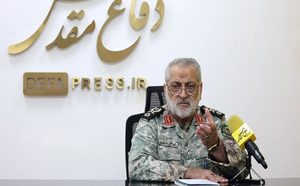
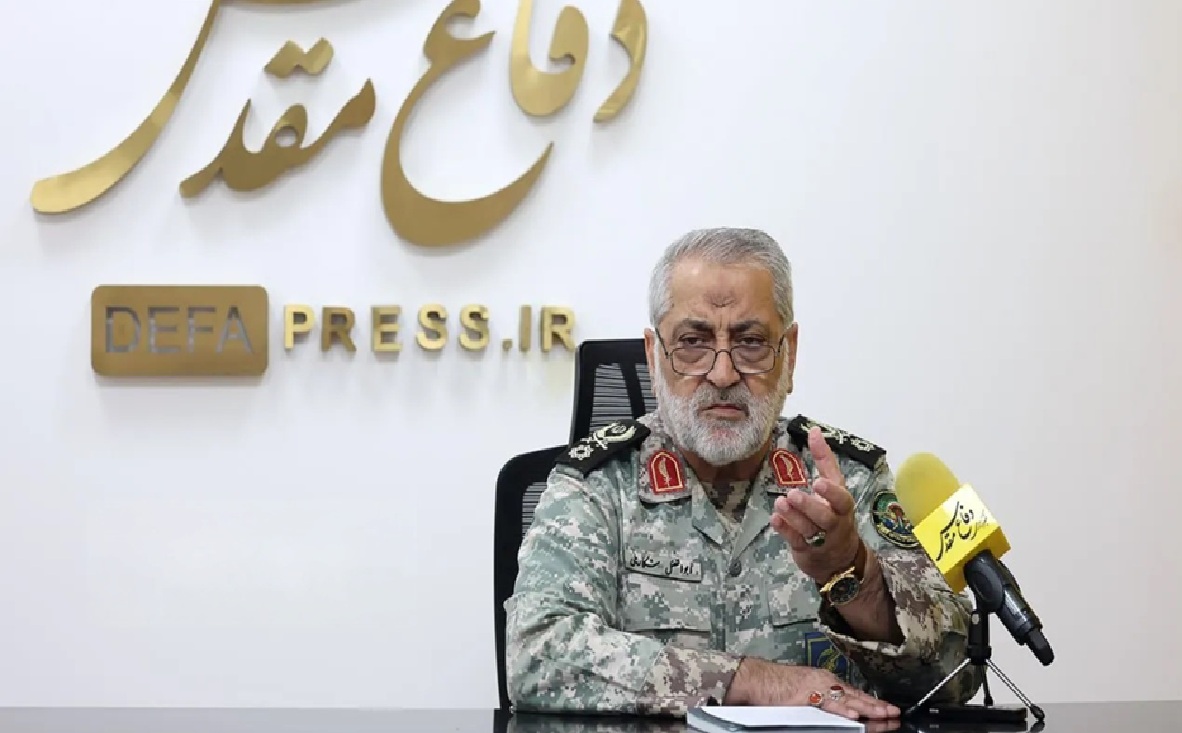
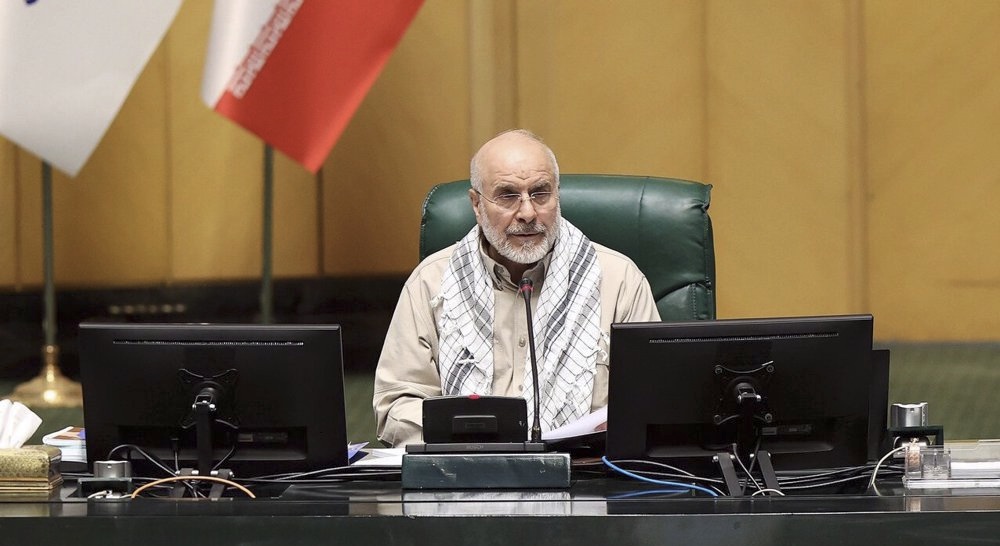
Senior spokesperson for Iran’s Armed Forces, Brigadier General Abolfazl Shekarchi. (File photo)
TEHRAN – The drone strike on a Kuwaiti air-defence facility that killed two Italian technicians on Thursday has produced two irreconcilable stories, and a diplomatic scramble that exposes how quickly a single explosion can be weaponised. Kuwait and Italy have pointed the finger at Iran. Iran has rejected the accusation “categorically and absolutely,” accused Israel and the United States of running a false-flag operation, and offered something its accusers have not: a joint investigation. The question now is whether the machinery of escalation will outrun the facts on the ground.
The Strike: What Kuwait Says Happened
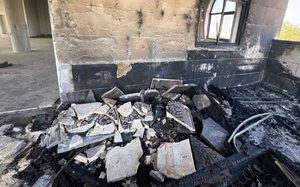
Kuwait’s military said its air defences detected and intercepted several drones targeting a “vital facility” on Thursday, with falling debris causing casualties. The two dead Italians were technicians employed by Rheinmetall Italia, working on the Skyguard air-defence system’s detection antennas. A Kuwaiti army captain and a Pakistani national were also wounded.
Kuwait’s Army described the incident as “heinous Iranian aggression”. Italy’s foreign ministry confirmed the deaths but did not initially attribute responsibility. Still, Foreign Minister Antonio Tajani later told the Senate that the technicians were at an air-defence surveillance station “targeted by Iranian drones”.
The timing is inseparable from the broader war. The strike came just over a week after Kuwait said it had repelled overnight Iranian drone attacks on an airbase hosting US forces, the first such strikes on the country in more than two months. Since the US-Israeli war against Iran began in late February, Kuwait has been repeatedly drawn into the crossfire, with its territory used to host US military assets and its airspace targeted by Iranian retaliation. Kuwait’s cabinet has reserved the right to “take all necessary measures to defend its territory and vital facilities,” citing UN Security Council Resolution 2817, which condemned Iranian attacks on Gulf states.
Iran’s Denial: ‘No Military Operation’, And A Counter-Accusation
Iran’s response was rapid and total. Brigadier General Abolfazl Shekarchi, senior spokesperson for the Armed Forces, said: “No military or offensive operation has been carried out by the Armed Forces of the Islamic Republic of Iran in the region”. He went further, framing the accusation as part of a pattern: “Given the history of hostile actions, as well as the role played by the Zionist regime and U.S. forces in employing ‘false flag’ tactics and engaging in reckless ventures in the region, such accusations should be interpreted as a pretext to conceal ongoing malevolence and as an attempt to exacerbate instability”.
Iran’s Foreign Minister Abbas Araghchi did not stop at denial. In a telephone call with his Kuwaiti counterpart, Sheikh Jarrah Jaber Al-Ahmad Al-Sabah, Araghchi expressed regret over the casualties and offered a joint investigation to “examine all aspects of the incident and identify its origin and the parties involved”. The Iranian Embassy in Rome also rejected the allegations as “completely unacceptable,” warning of “false-flag operations intended to widen the war, link confrontations in other regions to the Persian Gulf crisis, draw European countries into the war and further destabilise the area”.
The offer of a joint probe is politically significant. If Tehran were responsible, a joint investigation would be a trap of its own making. If it were not, or if the evidence were ambiguous, Kuwait’s or its Western partners’ refusal to accept the offer would itself become a data point for those who see a rush to judgment.
The Chemical Weapons Pivot: A Parallel Escalation
The Kuwait strike did not occur in a vacuum. It landed amid a parallel Israeli campaign to reframe the Iran threat around chemical weapons, a claim Iranian officials describe as a deliberate prelude to widening the war.
Israeli Defence Minister Israel Katz alleged on Tuesday that Iran is “in the process of developing chemical weapons” and vowed to stop it. Araghchi responded on X: “This warmonger shamelessly accuses Iran of developing and concealing such heinous weapons in pharmaceutical factories. The objective is audacious: to deceive the US into fighting yet another war on its behalf”.
Crucially, the chemical-weapons allegation is not uncontested inside Israel. Avigdor Liberman, a key ally of Israeli prime ministerial hopeful Gadi Eisenkot, said the claims were serious but that “from an intelligence and operational standpoint, there is no justification for an independent Israeli attack in the immediate term”. He accused caretaker Prime Minister Benjamin Netanyahu and Katz of a “lust for power” which had driven them “out of their minds”. Israeli broadcaster Kan reported that Israel had provided intelligence with the US and Gulf countries alleging Iran was considering chemical weapons use, but also that Israel had been aware of the alleged programme for more than a decade. This timeline raises its own questions about why the threat is being escalated now.
The chemical-weapons narrative and the Kuwait strike serve the same strategic function: they create a sense of imminent, unconventional threat that can justify expanded military action and pull the United States deeper into the conflict. Araghchi pointed to the asymmetry: Israel has refused to join conventions banning nuclear, chemical, or biological weapons, possesses hundreds of nuclear warheads, and has attacked seven countries in the region, while Iran is a member of the NPT and the OPCW and was itself a victim of chemical weapons during the Iran-Iraq war. That history does not make Iran innocent of all charges, but it makes the credibility gap a legitimate subject of scrutiny.
The European Reflex: Pressure Before Proof
European Commission President Ursula von der Leyen did not wait for an investigation. “We must step up pressure on Iran to put an end to these unacceptable attacks against its neighbours and our partners in the Persian Gulf,” she wrote on X, directly implicating Tehran in the deaths of the Italian nationals. Her intervention went further than Italian Prime Minister Giorgia Meloni’s statement, which expressed condolences without naming Iran or attributing responsibility.
The EU’s broader posture has already hardened. In earlier rounds of the war, the EU “strongly condemned” Iranian attacks on Kuwait and Bahrain, invoked Resolution 2817, and called for full respect for international law. The European reflex is understandable, given the dead Italians and the Gulf’s strategic importance. But it also carries a risk: by assigning guilt before a joint investigation can proceed, European leaders make it harder for Kuwait to accept Iran’s offer without appearing to capitulate to Tehran.
The Information War At Home
In Kuwait, the strike has produced not only grief but also a hardening of the information environment. Kuwait’s interior ministry has warned against filming or publishing videos of Iranian attacks and has arrested several people for “spreading false news.” Journalists have been detained after posting footage of missile and drone strikes. The Kuwaiti Progressive Movement, a local political group, has condemned the attacks “whether from Iran or any other party” and insisted on Kuwait’s sovereignty and independence. The official line is unambiguous. Space for independent verification is narrowing.
That matters for the investigative question underlying this episode. The physical evidence- drone fragments, flight paths, launch signatures- is in Kuwaiti and Italian hands. Iran’s offer of a joint investigation is the only public mechanism that would allow an outside party to examine that evidence alongside the accusing state. If the offer is rejected or ignored, the public will be left with competing official narratives and a body count, which is precisely the conditions under which false-flag operations and genuine attacks become indistinguishable.
The Question That Matters
The Kuwait strike may yet be attributed to Iran with forensic specificity. But the sequence is troubling: a deadly explosion; an instant attribution; a European demand for “pressure” before any investigation; a parallel Israeli chemical-weapons push that even some Israeli officials say does not justify immediate war; and an Iranian offer of joint verification that has, so far, been met with silence from the capitals that have already assigned blame.
Iran’s record in the region is not one of innocence, and its denial alone cannot settle the matter. But an investigative standard that applies only to Tehran is not an investigative standard at all. If Kuwait and its Western partners believe the evidence is decisive, the joint investigation Iran has proposed is the fastest way to prove it. If they refuse, the question will not be whether Iran is guilty. It will be what they are afraid the evidence might show.
Conclusion: The Real Scandal Isn’t The Strike, It’s The Refusal To Investigate It
The Kuwait drone strike killed two Italian technicians and wounded two others. That is a tragedy, and it requires accountability. But what has followed is not accountability. It is a choreography of blame—performed before the fragments were catalogued, before the flight paths were traced, before anyone outside Kuwait’s military and its Western partners had seen the evidence. Kuwait blamed Iran within hours. Ursula von der Leyen demanded “pressure on Iran” before any independent inquiry had begun. Italy’s foreign minister told the Senate the facility was “targeted by Iranian drones” while the physical evidence remained in Kuwaiti and Italian hands. And Israel—whose defence minister had just accused Iran of developing chemical weapons in pharmaceutical factories—found its narrative conveniently amplified by a European Commission president who did not wait for a joint investigation that Iran had publicly offered.
That offer is the inconvenient fact at the centre of this episode. Abbas Araghchi, Iran’s foreign minister, did not just deny involvement. He called his Kuwaiti counterpart, expressed regret over the casualties, and proposed a joint investigation to “examine all aspects of the incident and identify its origin and the parties involved.” If Tehran were guilty, that offer could be a trap of its own making. If Tehran were innocent, or if the evidence were ambiguous, the proposal would be the fastest route to the truth. Either way, the rational response from capitals that claim to want accountability would be to accept it, or at least to explain why they will not. Instead, the offer has been met with silence. That silence is more telling than any denial.
The chemical-weapons allegations follow the same pattern. Israel’s defence minister claimed Iran is “in the process of developing chemical weapons” and vowed to stop it. Avigdor Liberman, no dove, no friend of Tehran, said the claims were serious but that “from an intelligence and operational standpoint, there is no justification for an independent Israeli attack in the immediate term.” Israeli broadcaster Kan reported that Israel had known about the alleged programme for more than a decade. If the threat were as imminent as Katz claims, why has it surfaced now, in the middle of a war Netanyahu is struggling to sustain? Araghchi’s answer, that the objective is “to deceive the US into fighting yet another war on its behalf”, is self-serving, but the timing does not refute it. It is corroborated by it.
Meanwhile, inside Kuwait, the information environment is being sealed. The interior ministry has warned against filming or publishing videos related to Iranian attacks; journalists have been arrested for posting footage. The Kuwaiti Progressive Movement has condemned the attacks “whether from Iran or any other party” while insisting on Kuwait’s sovereignty. The official line is unambiguous. The space for independent verification is narrowing. This is not the behaviour of a state confident that the evidence will speak for itself. It is the behaviour of a state that has already decided what the evidence will say.
None of this makes Iran innocent. The Islamic Republic’s record in the region is not one of restraint, and its denials cannot settle the matter on their own. But an investigative standard that applies only to Tehran is not an investigative standard at all. It is a political instrument. And the instrument is being used to manufacture consent for another escalation—one that would draw Europe deeper into a war it did not start, that would pull the United States further into a conflict Netanyahu has been trying to widen for months, and that would further destabilise a Gulf region already living under the shadow of intercepted drones and falling shrapnel.
The question is no longer whether Iran attacked Kuwait. The question is why the capitals that have already assigned blame are refusing the one mechanism that could prove it. If the evidence is decisive, a joint investigation would confirm it within days. If it is not, the refusal to investigate is the story. The dead Italian technicians deserve the truth. So do the Kuwaiti captain and the Pakistani national who were wounded. So does every Gulf citizen whose airspace is being used as a battlefield. And so does the public in Europe and the United States, which is being asked to accept a new escalation on the strength of assertions that its proponents will not submit to independent scrutiny.
The rush to blame is not a search for justice. It is a search for a pretext. And the pretext is being built on the graves of the dead, before anyone has bothered to ask who put them there.
Veritas Press Investigative Analysis Independent journalism examining global affairs, power, diplomacy, and accountability.
Source:Veritas Press C.I.C. | Multi-News Agencies
Help Support Our Work
Readers who believe truth still matters can influence what gets out there. If just a few more people get on board, it means more lies come to light, more corruption is uncovered, and more accountability is achieved where it’s been utterly absent for far too long.
Help Protect Independent Journalism, Which Is Currently Under Attack.
If you think journalism should be for the public, not the powerful, and you can help, then becoming a regular DONOR or a PAID SUBSCRIBER makes a real difference.
DONATION REQUEST: If you’ve found this reporting useful, then please consider supporting independent journalism.
Your support is what enables our fearless, truth-based journalism. It’s our ambition to give a voice to the voiceless and to stand up for justice wherever it’s needed. We do this completely independently, with no billionaire backers. Our readers fund us.
But it’s absolutely vital. One of Veritas Press’s biggest assets is its reader-funded model.
1. Reader funding means we can do what we like. We’re not at the mercy of the political agenda of some billionaire owner. We’re a small, independent and completely impartial organisation. No-one can tell us what not to say or what not to report.
2. Reader funding means we don’t have to chase clicks and traffic. We’re not out there desperately trying to get your attention for its own sake. We’re going to tell the stories our editorial team feels are important and worth your time.
3. Reader funding: enables us to keep our website and our other social media channels open so that as many people as possible can access quality journalism from around the world, especially in those places where the free press is under threat.
We know not everyone can afford to pay for the news, but if you’ve been wanting to get behind us, now is the time.
Your donation goes a long way. It helps us:
Keep the lights on and sustain our day-to-day operations
Hire new, talented, independent reporters
Launch real-time live debates, community-focused shows, and on-the-ground reporting
Cover the issues that matter most to our communities, in real time, with depth and integrity
Without your support, independent voices like ours will be silenced.
We also intend to expand our work, but we can’t do that without your support. Every single one of your contributions, however big or small, enables us to remain independent and build a genuinely people-powered media platform.
If you believe in journalism that informs, that empowers, and that reflects the communities we serve, please donate today.
You Can Make Direct Bank Transfer Donations To
Bank Name: Bank Of Scotland
Account Name: Veritas Press C.I.C.
Sort code: 80-22-60
Account Number: 27540469
IBAN #: GB18-BOFS-6027-5404-69
Donate Online
Submissions
To safely submit documentation, testimonies, or exclusive investigative reports from anywhere in the world, please use the following contact details for our Investigations Desk: mailto:enquiries@veritaspress.co.uk or mailto:editor@veritaspress.co.uk.
SEATTLE, TEHRAN — The U.S. Department of Homeland Security (DHS) will allow Iran’s national football team to enter the country 48 hours before their critical World Cup match against Egypt on Friday, a modest concession in a tournament where Team Melli’s travel conditions have sparked claims of oppression and competitive disadvantage.