










Author:
Byline: Investigative Desk
Help support our mission, donate today and be the change. Every contribution goes directly toward driving real impact for the cause we believe in.
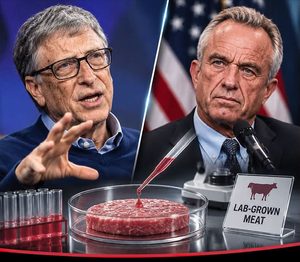
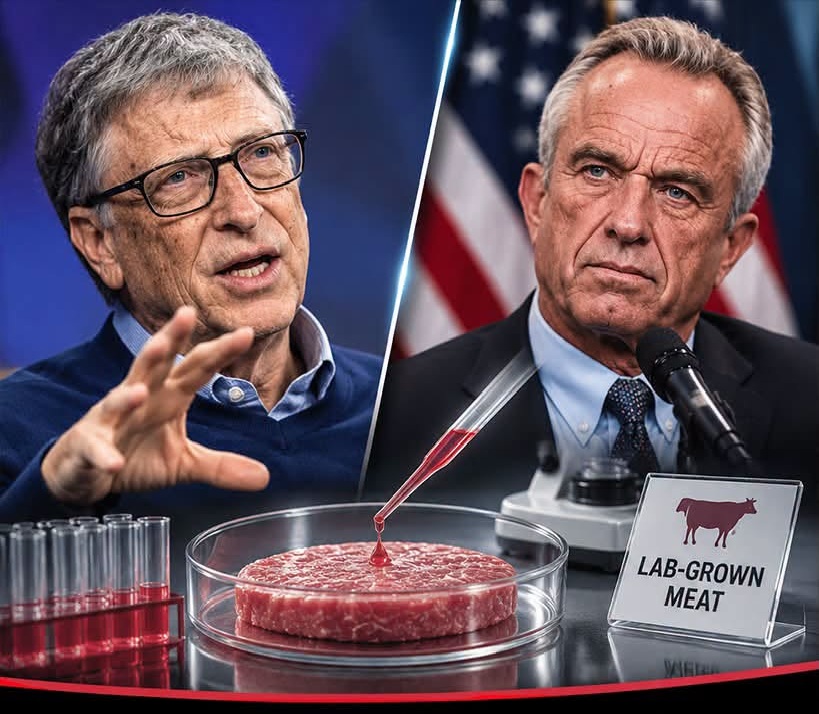
Should the government decide what Americans are allowed to eat, especially when the food comes from a laboratory? A year after the first cultivated-pork meatballs went on sale in a California supermarket, the answer is being written less by shoppers than by statehouses, courtrooms and a Health Secretary who has made no secret of his distaste for the technology.
A short report
- No federal ban on cultivated (“lab-grown”) meat exists, and Robert F. Kennedy Jr. has not publicly called for one.
- Eight states now ban or pause its sale, and a federal appeals court has upheld Florida’s ban.
- The industry’s lawyers say the bans are protectionism. Supporters say they defend ranchers, labelling it honesty and public trust.
- Meanwhile, the product is barely on sale anywhere, so the fight is largely about the future.
A Health Secretary’s “Amplified Concern”
The clearest signal from Washington came in April, at a Senate Appropriations subcommittee hearing. South Dakota Republican Sen. Mike Rounds, citing his state’s farmers and ranchers, asked Kennedy whether he shared his worries about “ultra-processed, lab-grown fake meat,” and how the FDA was evaluating such products. Rounds singled out a pork-fat-and-plant-protein “meatball” already sold to consumers.
Kennedy’s answer, published in Rounds’ own press release, was unambiguous in tone: he said he had “amplified concern” and promised the FDA’s oversight. As reported by the Rural Radio Network, he added that the products would face a high bar, needing to get through “a lot of scepticism” to show they are safe.
This is consistent with a long record. Politico reported before his confirmation that Kennedy had questioned the safety of lab-grown meat on X, calling it “ultra-processed,” and that no one knew what his arrival would mean for the clearance process. Green Queen, which covers the alternative-protein sector, noted that despite social-media rumours, Kennedy has never publicly demanded a ban. A vegan-advocacy analysis reached the same conclusion but warned that regulatory pressure “could function like a ban without ever being labelled as one.”
That is the crux of the federal concern. A formal prohibition would require legislation or a reversal of safety findings. Slower reviews, tougher data demands and political signalling require neither.
What The Federal Record Actually Shows
The regulatory system is not a free-for-all. Under a 2019 FDA–USDA agreement, the FDA oversees cell collection, cell banks and cell growth, while USDA’s Food Safety and Inspection Service takes over at harvest and handles inspection and labelling. Each clearance is product-specific.
According to the Good Food Institute, UPSIDE Foods (chicken), GOOD Meat (chicken), Wildtype (salmon) and Mission Barns (pork fat) hold U.S. clearances. One tracker counts five FDA clearances, though not every company has survived commercially. Believer Meats, for example, has ceased operations, a reminder that the market, not just the law, is a harsh judge.
For consumers, this matters: the products that exist have already passed federal safety review. The bans do not rest on a new finding that these foods are unsafe.
The Retail Reality: Barely A Handful Of Meatballs
On 1 November 2025, Mission Barns held what is described as the first retail sale of cultivated meat in a U.S. grocery store, at Berkeley Bowl West in California: eight meatballs, made from plant protein and cultivated pork fat, for $13.99, one pack per customer. Berkeley Bowl’s head meat buyer, Anthony LeBlanc, said the store had worked with the company for years and saw the product as an option for meat-loving and flexitarian customers.
It was a one-day event, followed by a few tasting sessions. Sprouts has since said on its website that it sells no cell-cultivated meat of any kind, having considered stocking Mission Barns in 2025 and decided against it. Wildtype’s salmon has appeared in restaurants, including Otoko in Austin, Texas.
This cuts two ways. Critics of the bans say it exposes the policy as pre-emptive: legislators are prohibiting something almost nobody can buy. Advocates of the bans reply that this is precisely the point of acting early.
The State Patchwork
By late 2026, eight states restrict the product: Florida, Alabama, Mississippi, Montana, Indiana, Nebraska, Texas and, most recently, South Dakota, whose five-year moratorium began on 1 July 2026 and runs to 30 June 2031. The laws differ. Florida’s makes it unlawful to manufacture for sale, sell or distribute cultivated meat, with penalties of up to 60 days in jail. Texas’s law, according to trade press, carries fines of up to $25,000 per day and potential felony charges for repeat violations. One tracker reports that Texas’s and Indiana’s measures are set to expire in 2027, and that Louisiana’s is on hold; readers should verify against the National Agricultural Law Centre before relying on those details.
Other states have chosen labelling instead. Arizona’s Andy Groseta Act, named for a cattle rancher, took effect on 12 September 2026 and requires products derived from cultivated cells to carry “cell-cultivated” or “cell-cultured” on the package. Georgia requires front-of-pack wording such as “lab-grown.” South Dakota and Nebraska have also barred state money or state purchasing from supporting the product.
Two dozen state legislatures have considered bans, according to Western Ag Network.
Labelling is a genuinely different policy from a ban. It leaves the decision with the shopper and gives them more information. That distinction sits at the heart of the “freedom to choose” argument.
The Stated Reasons, And The Revealed Ones
Supporters of bans offer several rationales. Florida Rep. Dean Black, a cattle rancher who pushed his state’s bill, told NBC News that cultivated meat is a national-security concern and that more research is needed on its nutritional content. In South Dakota, ranchers testifying at the Legislature described lab-grown meat as an attack on their livelihoods and said its food-safety implications are not yet fully understood. Texas Agriculture Commissioner Sid Miller, reacting to a court ruling against the state, called it “an assault on Texas ranchers” and a gift to Washington elites.
Those arguments mix two different claims: that the products might be unsafe, and that they threaten an industry. The first is a question for regulators and scientists, and federal agencies have already answered it for the cleared products. The second is economic protection, which is a legitimate topic of political debate but a harder sell as public-health policy.
There is also a revealing dissent from inside the cattle world. At a South Dakota hearing, a speaker for one livestock group said most of his members would never buy lab-grown meat, but that banning it would make them hypocrites, apparently out of concern for the free-market principles the group normally defends.
In Court: Protectionism Or Police Power?
The legal fight is where the philosophical question becomes concrete.
In Florida, UPSIDE Foods, represented by the Institute for Justice, argued that federal poultry law and the Commerce Clause bar a state from banning a federally inspected product. On 23 March 2026, a three-judge panel of the 11th U.S. Circuit Court of Appeals disagreed. The court reasoned that because the law does not regulate Upside’s ingredients, premises or operations, federal law does not preempt it. That ruling concerned a preliminary injunction, and the underlying case is not over, but it gives the other seven states a precedent to cite.
In Texas, UPSIDE and Wildtype sued in September 2025, a day after the ban took effect, arguing it violates the Commerce and Supremacy Clauses. In January 2026, a federal judge refused to dismiss the Commerce Clause claim, and the case moved into discovery. The Institute for Justice says it intends to prove the law is about shielding in-state agriculture rather than protecting Texas consumers, and notes that there are no cultivated-meat sellers based in Texas. A federal court in Florida has also been asked by state officials this summer to dismiss a separate constitutional challenge.
The pattern is worth noting: the industry has lost the first rounds in Florida and won a procedural round in Texas. Courts have not yet ruled on whether a state may ban a federally cleared food purely to protect local producers.
The Billionaires, The Lobby And The Rebrand
Cultivated meat is often framed as a billionaire’s project, with Bill Gates among its better-known backers, according to industry outlet Vegconomist. That framing is politically potent: it casts the debate as Big Tech versus family ranchers. But it is incomplete. The industry has also courted conservatives, and Politico documented its attempt to “rebrand” around innovation, American manufacturing and choice, with Upside executive Amy Chen acknowledging that for consumers the concept takes a moment to get used to.
And the other side has money and influence too. Conventional agriculture is a powerful, well-organised political constituency, particularly in the states that have moved first.
The Case For Consumer Choice
The strongest version of the argument is simple. If a food has passed science-based review, the burden should fall on the state to show a specific, evidence-based harm before it denies adults the right to decide. Nobody is compelled to buy cultivated meat. Conventional meat remains available. A well-run labelling regime lets sceptics avoid the product and lets curious shoppers try it.
This is also an argument about regulatory integrity. If a political appointee’s personal scepticism slows or blocks a process that is meant to be driven by evidence, the problem extends beyond one industry. Any food innovator, from fermentation startups to gene-edited crops, would face the same uncertainty.
The Case For Caution
Fairness requires the other side’s best arguments. Sceptics point out that FDA clearance is a narrow “no questions” consultation on specific products, not an endorsement, and that long-term data on novel food processes is thin. Rounds’ complaint is that hybrid products blending lab-grown fat with plant protein can be sold as “meatballs,” and honest labelling is a real consumer-protection issue. Some independent scientists question whether cultivated meat can deliver the emissions savings its promoters claim. And states have traditionally held broad police powers over food sold within their borders; the 11th Circuit just said so.
On Kennedy’s approach, supporters argue that an administration committed to “real food” is entitled to apply higher scrutiny to novel processed foods, and that scrutiny is not prohibition.
What to watch
- The Texas case: the discovery record on legislative motive could be decisive.
- The FDA pipeline: whether new consultations slow, stall, or proceed.
- Labelling vs. bans: whether more states follow Arizona’s model, or South Dakota’s.
- Sunset dates: reported 2027 expirations in Texas and Indiana.
- The market itself: with cost still high and at least one cleared company gone, consumers may settle the question before courts do.
Bottom Line
The “freedom to choose” argument is strongest where bans are justified by safety, but evidence is absent, and weakest where the real dispute is about labelling, or where critics have legitimate questions the data cannot yet answer. What is hard to defend is the idea that safety review and consumer choice are in tension: they should work together, with transparent standards, honest labels, and decisions made on evidence rather than on who has the louder lobby.
Sources And Caveats
Quotes are limited to short, verifiable statements from the sources below; I have not attributed any words that I could not trace. I could not find an on-the-record comment from Gates on this fight, from Kennedy since April, or recent national polling on consumer attitudes, and I did not invent any. Several tracker sites are secondary sources, so confirm state-law details with primary legal texts.
- Sen. Mike Rounds press release, “Rounds Receives Support for Oversight of Lab-Grown ‘Meat’ Products” (rounds.senate.gov)
- Rural Radio Network, “Rounds Raises Concerns on Cell-Cultivated Meat,” 23 April 2026 (rrfn.com)
- Green Queen, “RFK Jr: Lab-Grown Meat Must ‘Get Through A Lot of Scepticism’,” April 2026 (greenqueen.com.hk)
- Western Ag Network, 28 April 2026 (westernagnetwork.com)
- Politico (via Yahoo News), “Lab-grown meat rebrands itself to woo Trump — and RFK Jr.”
- NBC News, on Florida’s ban signing (nbcnews.com)
- National Hog Farmer and Farm Progress, on the 11th Circuit ruling and Texas case (nationalhogfarmer.com, farmprogress.com)
- Institute for Justice, Texas cultivated meat case pages (ij.org)
- Green Queen, “Judge Deals Early Blow to Texas in Lawsuit Over Cultivated Meat Ban”
- Good Food Institute, cultivated meat media kit (gfi.org)
- Green Queen and Fast Company, on the Berkeley Bowl sale
- South Dakota Searchlight, via Yahoo News, on the South Dakota legislative hearings
- Vegconomist, cultivated meat news (vegconomist.com)
- LifeMate Tech and Tallow trackers on state bans (secondary sources)
- Easy Everyday Recipes, 13 November 2026 (secondary)
Veritas Press Investigative Analysis
Independent journalism examining global affairs, power, diplomacy, and accountability.
Source: Veritas Press C.I.C. | Multi-News Agencies
Help Support Our Work
Readers who believe that truth still matters have power over popular information. When just a few more people step up to support this work, it means more lies exposed, more corruption uncovered, and more accountability where it’s long overdue.
Help Protect Independent Journalism, Which Is Currently Under Attack.
If you believe journalism should serve the public, not the powerful, and you’re able to help, becoming a regular DONOR or a PAID SUBSCRIBER truly makes a difference.
DONATION APPEAL: If you found this reporting valuable, please consider supporting independent journalism.
Your support fuels our fearless, truth-driven journalism. In unity, we endeavour to amplify marginalised voices and champion justice, irrespective of geographical location. We operate independently, with no financial backing from billionaires; our readers support us.
But it’s also extremely important. One of Veritas Press’s greatest assets is its reader-funded model.
1. Reader funding means we can cover what we like. We’re not beholden to the political whims of a billionaire owner. We are a small, independent and impartial organisation. No one can tell us what not to say or what not to report.
2. Reader funding means we don’t have to chase clicks and traffic. We’re not desperately seeking your attention for its own sake; we pursue the stories that our editorial team deems important and believes are worthy of your time.
3. Reader Funding: enables us to keep our website and other social media channels open, allowing as many people as possible to access quality journalism from around the world, particularly those in places where the free press is under threat.
We know not everyone can afford to pay for news, but if you’ve been meaning to support us, now’s the time.
Your donation goes a long way. It helps us:
- Keep the lights on and sustain our day-to-day operations
- Hire new, talented, independent reporters
- Launch real-time live debates, community-focused shows, and on-the-ground reporting
- Cover the issues that matter most to our communities, in real time, with depth and integrity
Without your support, independent voices like ours will be silenced.
Furthermore, we have plans to expand our work, but we can’t do it without your support. Every contribution, no matter the size, helps us stay independent and build a truly people-powered media platform.
If you believe in journalism that informs, empowers, and reflects the communities we serve, please donate today.
You Can Make Direct Bank Transfer Donations To
Bank Name: Bank Of Scotland
Account Name: Veritas Press C.I.C.
Sort code: 80-22-60
Account Number: 27540469
IBAN #: GB18-BOFS-6027-5404-69
Donate Online
Submissions
For the safe submission of documentation, testimonies, or exclusive investigative reports from anywhere in the world, please use the following contact details for our Investigations Desk: mailto:enquiries@veritaspress.co.uk or mailto:editor@veritaspress.co.uk.
Should the government decide what Americans are allowed to eat, especially when the food comes
More than 99% of the Strip shows indicators of potential contamination from heavy metals, asbestos,

Brussels Reset or Brexit Return? Downing Street calls it a done deal, but the SPS,

Three attacks, one system: how incitement from the top and impunity on the ground turned
No knives were found in the Operation Advance sweep, so the case for the tactic

Fuel at record highs, a Bank of England rate rise, and a January energy-bill jump
As Khan warns of a brain haemorrhage and Bushra Bibi petitions over her failing sight,
With Welsh Labour reeling from a historic Senedd defeat and Welsh exporters still counting the
COP31’s Credibility Gap: From a $305 Billion Adaptation Need to a $30 Billion Trickle, From

As Denmark’s Supreme Court weighs whether “non-Western” is a neutral statistic or a racial proxy,