A Federal Judge Has Accused The Trump Administration Of Waging A “Campaign To Intimidate” Election Officials. The Legal Rebukes Are Mounting, But So Is The Pressure.
A Federal Judge Has Accused The Trump Administration Of Waging A “Campaign To Intimidate” Election Officials. The Legal Rebukes Are Mounting, But So Is The Pressure.
Kamran Faqir is a volunteer investigative journalist and writer committed to exposing hidden truths and amplifying underreported stories. Driven by social justice, he brings sharp insight and fearless truth-telling to independent journalism. NUJ registered.
Listen to this article
Help support our mission, donate today and be the change. Every contribution goes directly toward driving real impact for the cause we believe in.
Article Date Published:
Article Date Modified:
12 minutes
Views:282
With days until the midterms, a federal judge has blocked the Justice Department from threatening election workers, calling out a campaign to intimidate officials and warning that the hunt for noncitizen voters risks disenfranchising lawful Americans.
Los Angeles Times via Getty Images
With just days until the midterm elections, a federal judge in California has issued a sweeping emergency order barring the Department of Justice and the Department of Homeland Security from threatening, coercing, or intimidating state and local election workers, a ruling that the judge herself framed as a necessary intervention to protect the “core tenet” of American democracy from a deliberate campaign of federal pressure.
The temporary restraining order, issued late Friday by U.S. District Judge Trina Thompson in the Northern District of California, blocks the administration from demanding that election officials in any state halt ballot processing, segregate ballots, or purge voters from rolls based on unverified claims of noncitizen voting. It also explicitly prohibits threats of criminal prosecution against election workers who are simply doing their jobs. The order expires on November 16, nearly two weeks after Election Day.
“One of the hallmarks of a fair election is the freedom to exercise the right to vote free from threat, fear or intimidation,” Thompson wrote in her opinion. “Election Day is around the corner. Ballots have already been issued. Americans have already begun voting. Workers have already begun processing ballots. Given the consequences of inaction, the Court sees no reason to delay its ruling”.
The ruling came in response to a lawsuit filed just a day earlier by a coalition of labour unions and civil rights groups, including the NAACP and the League of United Latin American Citizens (LULAC), who accused the administration of illegally weaponising federal law enforcement to interfere in the midterms. The Department of Justice quickly appealed the order to the 9th Circuit on Saturday afternoon and has scheduled a hearing for Monday.
The California Ballot Fight: A “Catastrophic” Pretext
The emergency order is the culmination of a weeks-long legal battle over the administration’s attempts to challenge the ballots of roughly 20,000 California voters it claims are “likely noncitizens.” The DOJ had demanded that California set aside those ballots and refrain from counting them until citizenship could be verified, a demand that state officials and multiple courts have rejected as both legally baseless and operationally dangerous.
On Friday, a three-judge panel of the 9th U.S. Circuit Court of Appeals, including Judge Mark J. Bennett, appointed by President Trump, upheld a lower court’s ruling blocking the DOJ’s request, warning that there was “no feasible way to identify and segregate the ballots of specific individuals without potentially catastrophic effects on the entire system”. The majority wrote that the administration’s attempts to seize control of the state’s election process could put the “entire tabulation process in jeopardy” and risk the “disenfranchisement of eligible voters”.
The administration has faced a series of losses in a last-ditch efforts to allegedly target noncitizen voters in California with just days left before Election Day Getty
The evidentiary basis for the administration’s claims has also collapsed under scrutiny. Two data scientists from the University of California, Los Angeles, analysed the 20,930 names flagged by the DOJ and found that more than 40% of the flagged ballots bear names that are not even found on the state’s voter rolls. Thousands of U.S. citizens appear to have been wrongly flagged as ineligible. The list, in other words, is not a precision instrument of election integrity—it is a dragnet that has swept up lawful voters.
“The Government Has Made Mistakes”: Chutkan’s Rebuke
The rebuke from the bench has not been confined to California. On Saturday, U.S. District Judge Tanya Chutkan in Washington, D.C., held a rare weekend hearing on a request from LULAC and the Electronic Privacy Information Centre to block the transmission of the administration’s voter data lists to states and localities. Her questioning was pointed, and her assessment of the administration’s track record was withering.
“The government has made no secret of their determination to purge the voter rolls of individuals they believe to be noncitizens,” Chutkan said. “Past efforts to do so have resulted in U.S. citizens being swept up into this law enforcement dragnet”. When a DOJ attorney conceded that “the government has made mistakes,” Chutkan did not let the admission pass lightly. She noted that in Nevada, the DOJ flagged 15,903 people as potential noncitizens; officials there ultimately confirmed that not a single one was ineligible. “The government’s been wrong,” she said. “In fact, they’ve very rarely been right”.
Chutkan also suggested that the administration’s targeting of states with higher numbers of minority citizens was difficult to characterise as anything other than discriminatory. “It looks like it’s targeting states with higher numbers of maybe citizens of certain descent,” she said. “It would be hard not to describe this as having a chilling effect on citizens’ desire to, or their willingness to, go out to the polls”.
Alaska: A “Doomsday Scenario” In Plain Sight
The administration’s legal offensive has extended far beyond California. In Alaska, the DOJ filed an extraordinary lawsuit, which President Trump said he personally directed, seeking to block the certification of the state’s U.S. Senate race if Republican incumbent Dan Sullivan loses to Democrat Mary Peltola. The suit hinged on the presence of a second candidate named Daniel J. Sullivan, a retired teacher, whom the administration accused of being a spoiler recruited to confuse voters.
On Sunday, Chief U.S. District Judge Sharon Gleason dismissed the case, ruling that the federal government lacked the authority to bring it and that the proposed remedy, segregating ballots and investigating voters’ intent, was unworkable without violating the right to a secret ballot. “The federal government offers no rebuttal to the concerns regarding preservation of the secrecy of voting and provides no explanation of how its request for ballot segregation and a court-ordered investigation by law enforcement officers into certain voters’ intent could be implemented while preserving the secrecy of the ballot,” Gleason wrote. The DOJ has appealed.
Attorney General Todd Blanche had defended the Alaska lawsuit in television interviews, insisting that “there could be a crime” and denying that the president was trying to meddle in the election. But the case was widely seen by legal experts as a pretext for pre-emptive delegitimisation of a potential Democratic victory. As Peter Keisler, a former acting attorney general under Republican President George W. Bush, put it: “For the department to be trusted in its law enforcement decisions, it has to ensure that people understand it does not take sides in political partisan disputes. And this has not only the appearance but the evident reality of taking sides”.
Breaking With Decades Of Tradition
What makes the current moment historically significant is not simply the substance of these legal challenges but the institutional rupture they represent. The Justice Department has traditionally observed a “quiet period” in the 90 days before an election, a norm designed to prevent federal prosecutors from influencing the outcome or casting doubt on the legitimacy of the vote. Under the Trump administration, that norm has been abandoned.
The department has sent letters to election officials in all 50 states threatening prosecution and jail time for failing to preserve ballot records. It has slashed the size of its Public Integrity Section, the career unit that historically advises on election-law questions, and suspended the requirement that federal prosecutors consult it on election-corruption probes. Unresolved disputes are now routed to Trump political appointees in the Deputy Attorney General’s Office, a direct role that former DOJ officials say the office has rarely, if ever, played in election investigations.
“It appears that the administration wants the department to have an impact that was previously prohibited,” said Mark Blumberg, who previously led the DOJ’s election response to civil rights threats and has since founded the Rule of Law Project. Lis Frost, a voting rights lawyer with the Elias Law Group, was even more direct: “The right-wing fringe outside groups are not going to have to do that this year because the DOJ is clearly standing ready and willing to do it”.
The DOJ’s public defence has been consistent: it is enforcing the law, not helping any campaign. “The Department isn’t helping any campaign. It’s enforcing the law,” spokesperson Kiersten Pels said in a statement. But the pattern of interventions, targeting Democratic-leaning states, filing cases with typo-ridden urgency in the final days of the campaign, and pursuing legal theories that courts across the ideological spectrum have rejected, has made that defence increasingly difficult to sustain.
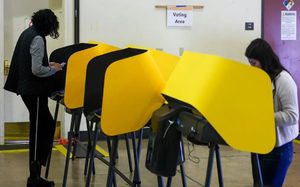
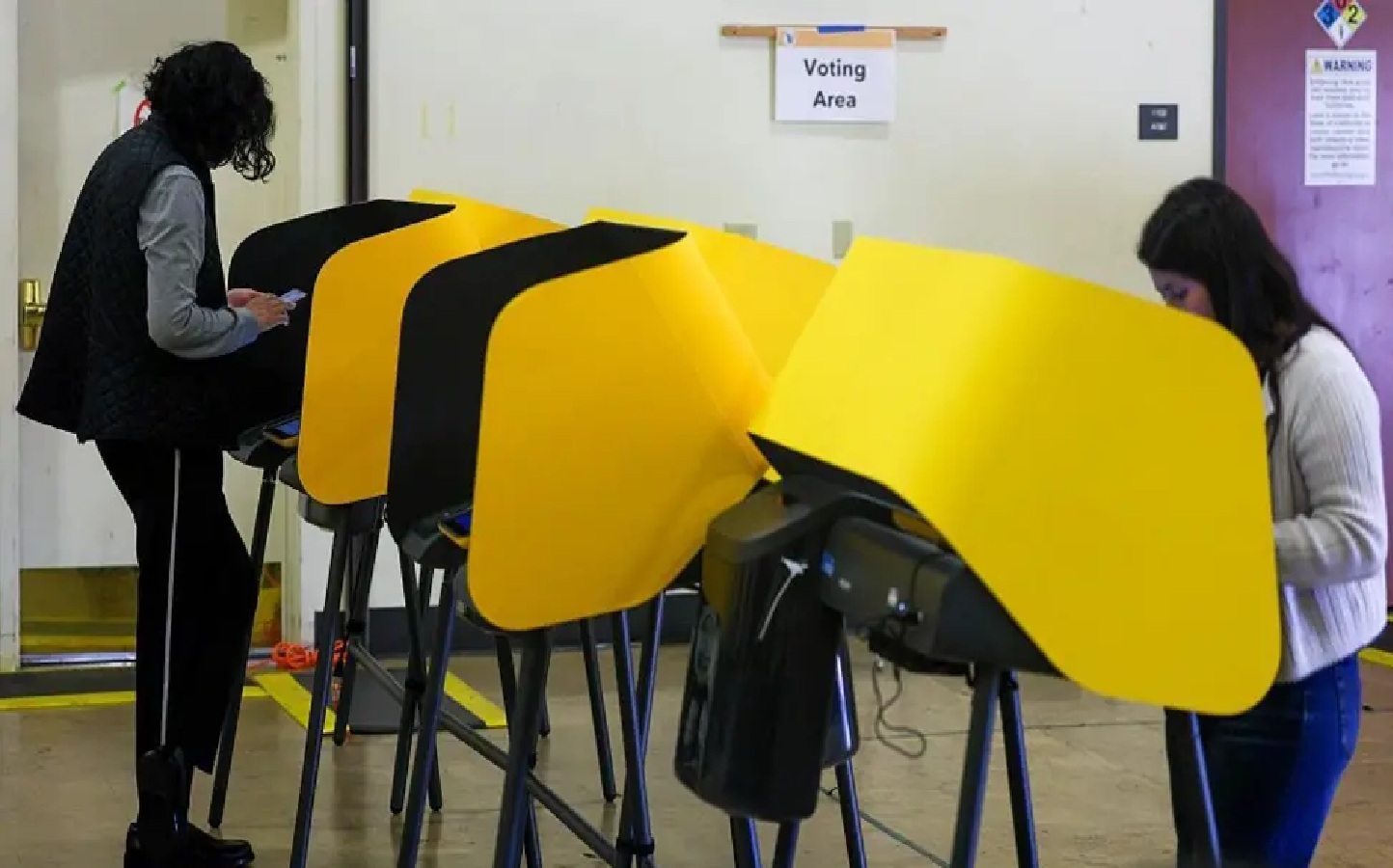
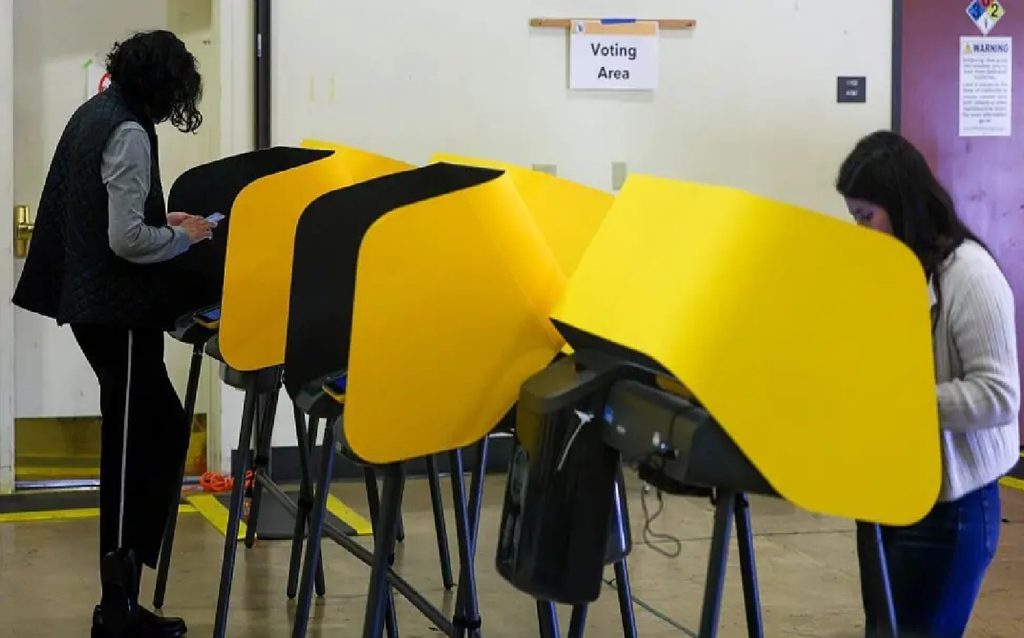
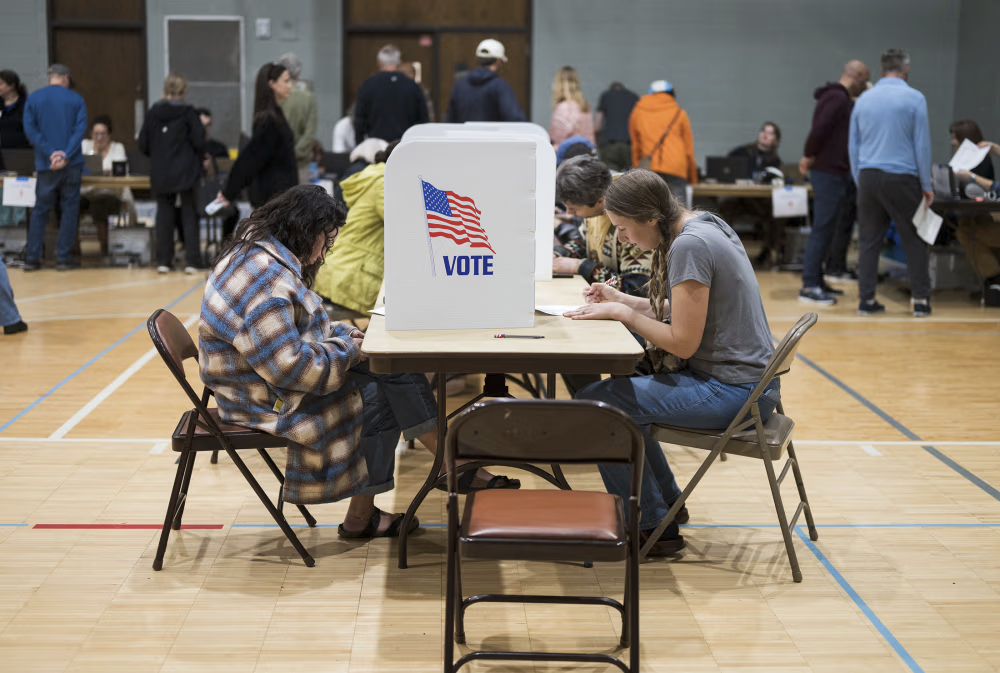
Voters at an early voting polling place in Minneapolis on Wednesday.Stephen Maturen / Getty
A Democracy Tested At The Ballot Box And In The Courts
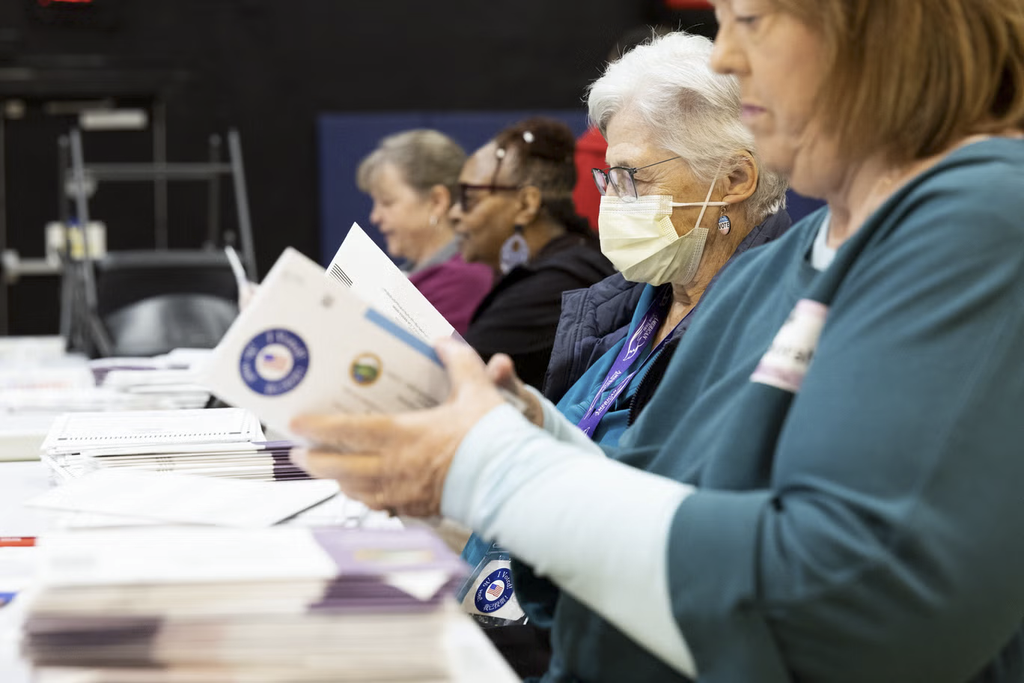
The practical consequences of the administration’s campaign are already being felt. Election workers in California and Washington state have been forced to operate under the threat of federal prosecution. Voters, particularly in communities of colour, have been left to wonder whether their ballots will be counted or their registrations challenged. And the courts, which have become the primary bulwark against the administration’s efforts, are being drawn into an escalating constitutional confrontation with just days to go before the vote.
Thompson’s order is temporary. The DOJ’s appeal is pending. The Alaska case is on appeal. The LULAC request before Chutkan awaits a ruling. The legal battles will almost certainly continue past Election Day, and the administration is reportedly considering legal action against additional states, possibly even after the votes are cast.
What is already clear, however, is that a federal judge has found that the administration’s conduct likely violated the Voting Rights Act of 1965, which prohibits “attempting to intimidate, threaten or coerce” officials facilitating the election process. “Although Defendants claim that their actions are designed to halt unlawful voting by noncitizens,” Thompson wrote, “their actions are likely to have the effect of interfering with election administration and disenfranchising lawful voters”.
That finding will outlast the temporary restraining order. It will be cited in the appeals, in the post-election litigation, and in the historical record of a moment when the machinery of American elections was tested not by foreign interference or technical failure, but by the deliberate deployment of federal law enforcement against the people who run them.
Veritas Press Investigative Analysis Independent journalism examining global affairs, power, diplomacy, and accountability.
Source:Veritas Press C.I.C. | Multi-News Agencies
Help Support Our Work
Readers who believe that truth still matters have power over popular information. When just a few more people step up to support this work, it means more lies exposed, more corruption uncovered, and more accountability where it’s long overdue.
Help Protect Independent Journalism, Which Is Currently Under Attack.
If you believe journalism should serve the public, not the powerful, and you’re able to help, becoming a regular DONOR or a PAID SUBSCRIBER truly makes a difference.
DONATION APPEAL: If you found this reporting valuable, please consider supporting independent journalism.
Your support fuels our fearless, truth-driven journalism. In unity, we endeavour to amplify marginalised voices and champion justice, irrespective of geographical location. We operate independently, with no financial backing from billionaires; our readers support us.
But it’s also extremely important. One of Veritas Press’s greatest assets is its reader-funded model.
1. Reader funding means we can cover what we like. We’re not beholden to the political whims of a billionaire owner. We are a small, independent and impartial organisation. No one can tell us what not to say or what not to report.
2. Reader funding means we don’t have to chase clicks and traffic. We’re not desperately seeking your attention for its own sake; we pursue the stories that our editorial team deems important and believes are worthy of your time.
3. Reader Funding: enables us to keep our website and other social media channels open, allowing as many people as possible to access quality journalism from around the world, particularly those in places where the free press is under threat.
We know not everyone can afford to pay for news, but if you’ve been meaning to support us, now’s the time.
Your donation goes a long way. It helps us:
Keep the lights on and sustain our day-to-day operations
Hire new, talented, independent reporters
Launch real-time live debates, community-focused shows, and on-the-ground reporting
Cover the issues that matter most to our communities, in real time, with depth and integrity
Without your support, independent voices like ours will be silenced.
Furthermore, we have plans to expand our work, but we can’t do it without your support. Every contribution, no matter the size, helps us stay independent and build a truly people-powered media platform.
If you believe in journalism that informs, empowers, and reflects the communities we serve, please donate today.
Submissions
For the safe submission of documentation, testimonies, or exclusive investigative reports from anywhere in the world, please use the following contact details for our Investigations Desk: mailto:enquiries@veritaspress.co.uk or mailto:editor@veritaspress.co.uk.
SEATTLE, TEHRAN — The U.S. Department of Homeland Security (DHS) will allow Iran’s national football team to enter the country 48 hours before their critical World Cup match against Egypt on Friday, a modest concession in a tournament where Team Melli’s travel conditions have sparked claims of oppression and competitive disadvantage.