Kamran Faqir is a volunteer investigative journalist and writer committed to exposing hidden truths and amplifying underreported stories. Driven by social justice, he brings sharp insight and fearless truth-telling to independent journalism. NUJ registered.
Listen to this article
Help support our mission, donate today and be the change. Every contribution goes directly toward driving real impact for the cause we believe in.
Article Date Published:
Article Date Modified:
26 minutes
Views:125
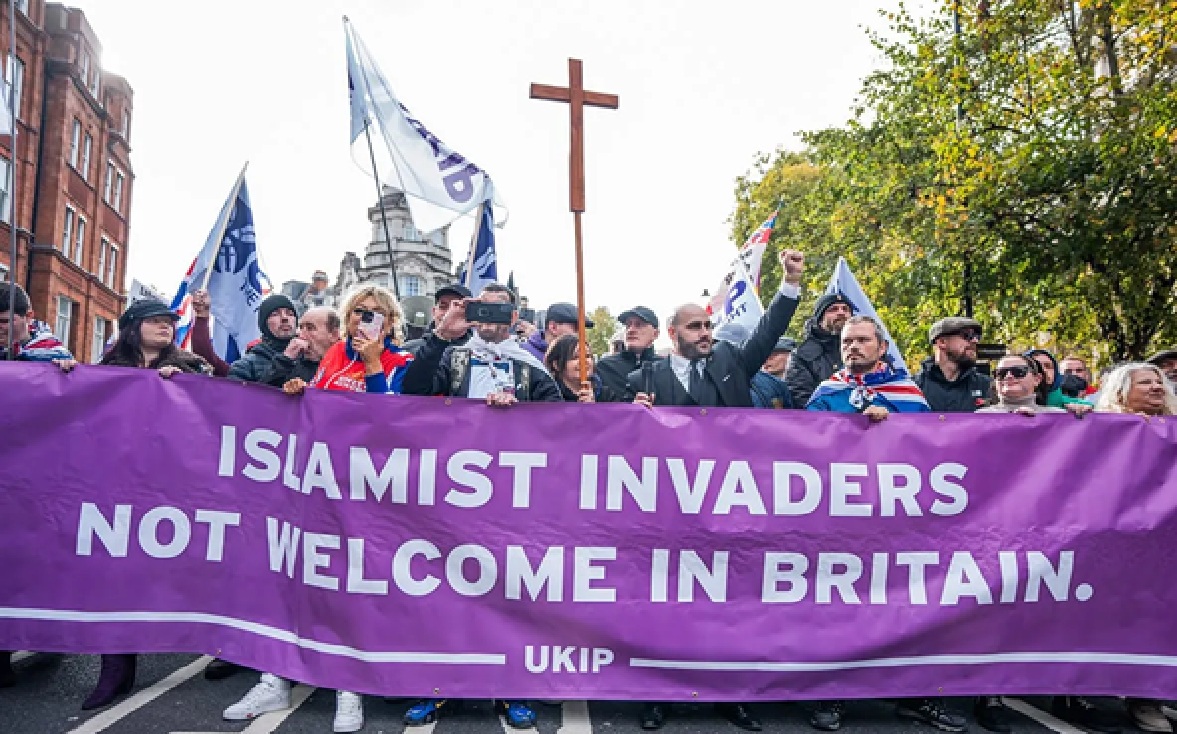
Record racist and religious hate crimes in England and Wales have risen for a second year running, anti-Muslim offences up 15%, antisemitic offences up 10%, as Tell MAMA and the British Muslim Trust warn of a sustained crisis fuelled by political scapegoating, street-level aggression and mosque-targeted violence. With undercover footage of Reform UK officials and repeated controversies involving Reform MPs raising questions about the mainstreaming of anti-Muslim rhetoric, and with Azerbaijan’s headscarf row showing that the policing of Muslim girls’ bodies remains a transnational contest over education, identity and rights, the evidence points to a failure of political leadership and the urgent need for a comprehensive hate crime and community cohesion strategy.
The latest Home Office statistics reveal a deeply troubling surge in racially and religiously motivated hate crimes across England and Wales, reaching record levels that expose fundamental failures in political leadership, community cohesion, and social protection. With a 7% overall increase and specific spikes targeting Muslim communities, these figures demand urgent, comprehensive government intervention rather than the piecemeal approaches that have characterised recent responses. The data arrives amid mounting evidence that inflammatory political rhetoric, including recent undercover footage of Reform UK officials and repeated controversies involving Reform MPs, is helping to normalise hostility against Muslim communities. Internationally, the controversy over Azerbaijan’s school uniform rules, which have seen Muslim girls reportedly turned away from classrooms over the headscarf, illustrates that the policing of Muslim women’s bodies remains a live and contested political question far beyond Britain’s shores.
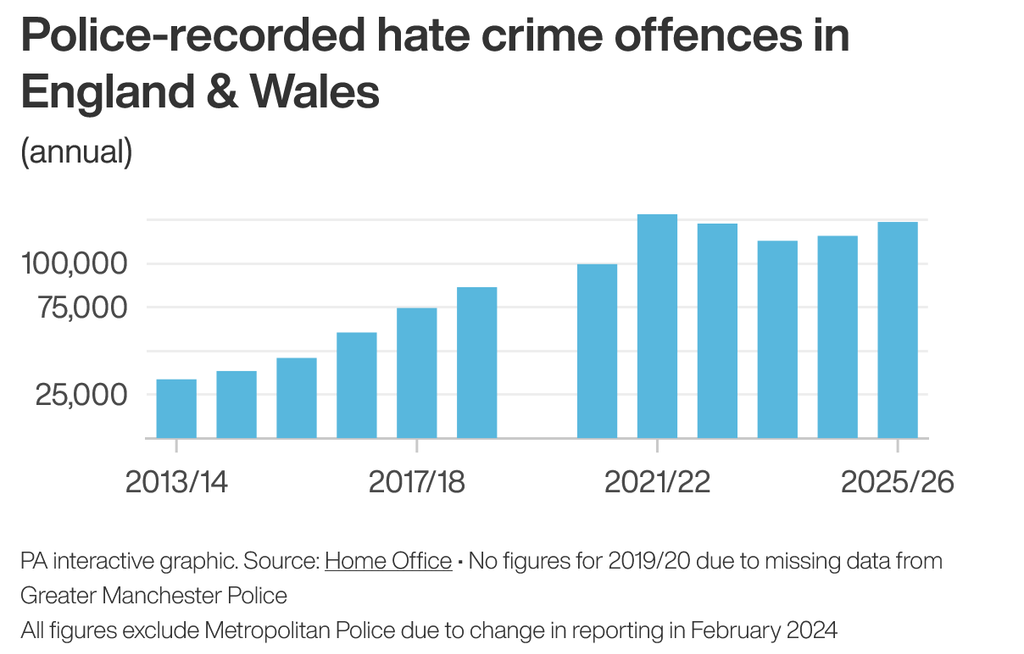
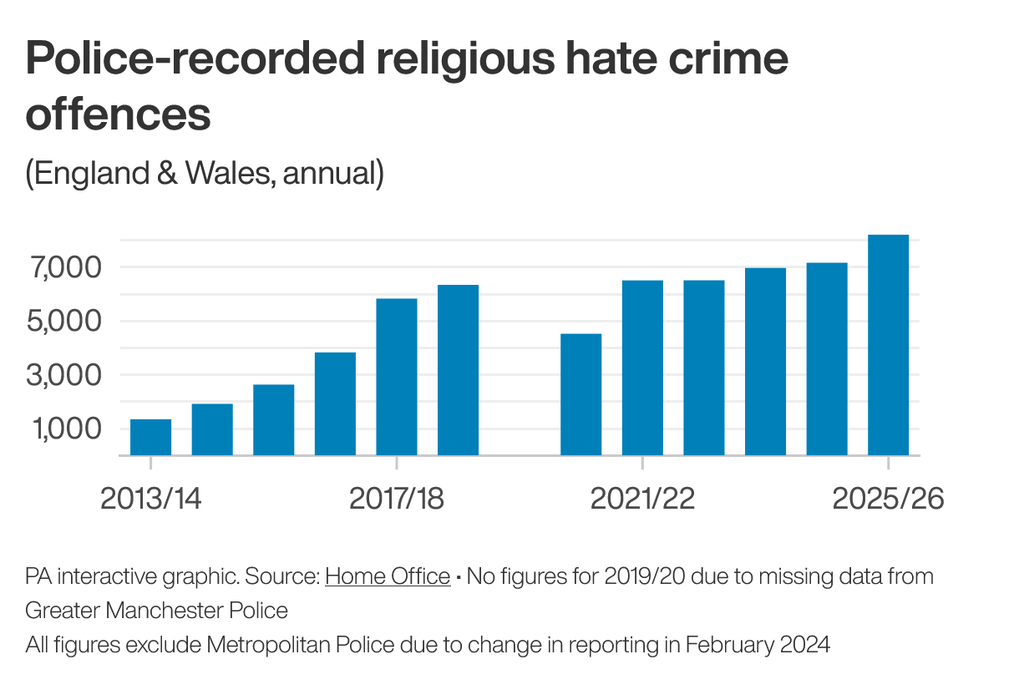
Police-recorded religious and race hate crimes hit record high
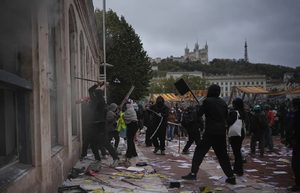
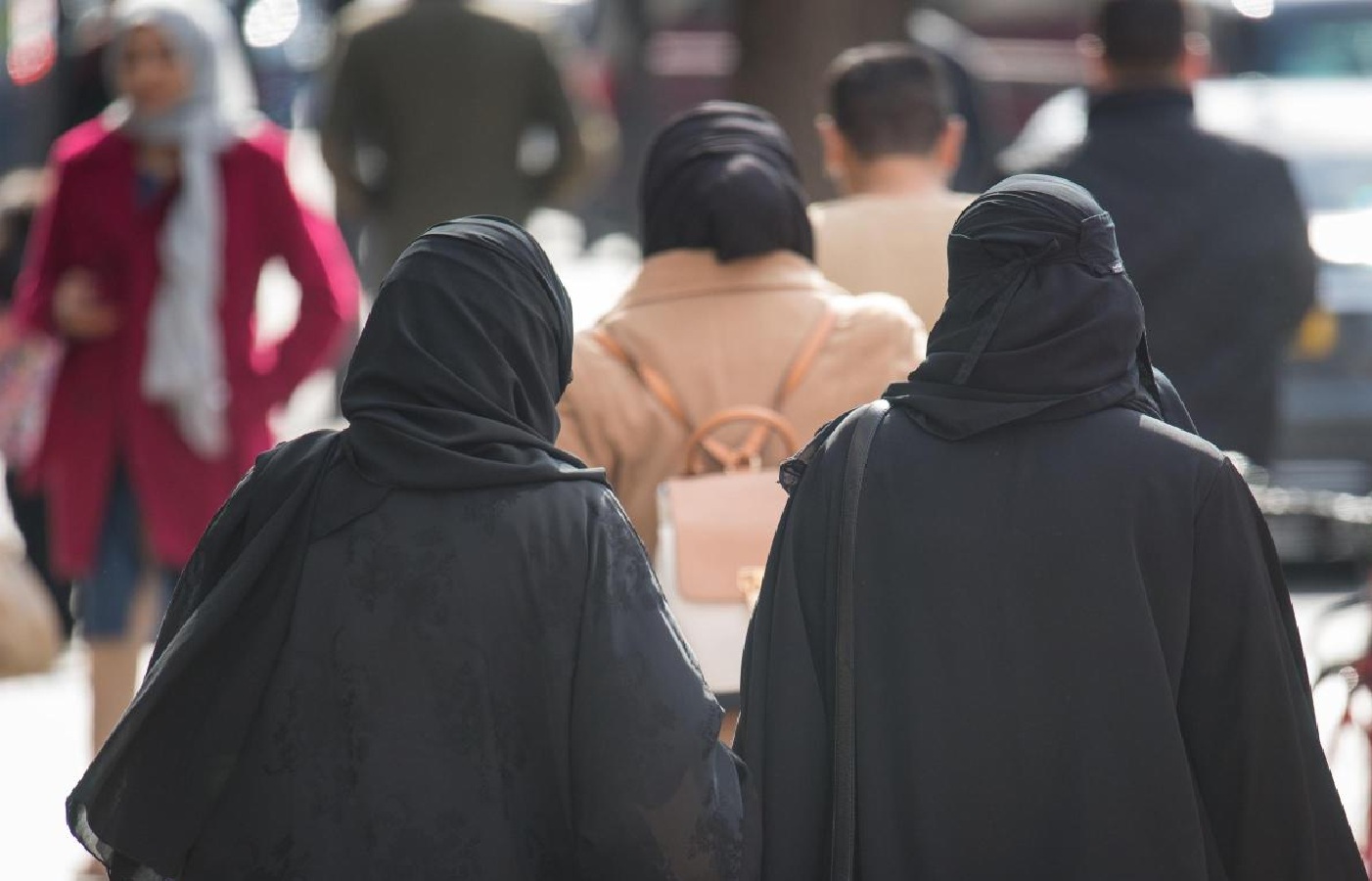
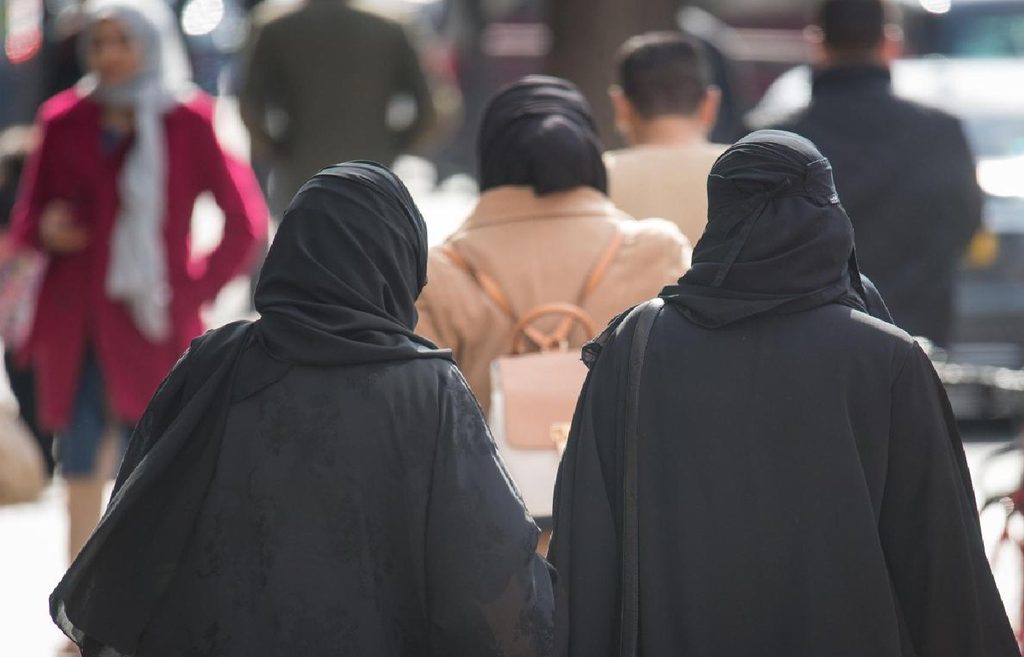
Hate crimes against Muslims rose to the highest annual level since this data was first collected (PA)
The Statistical Reality: Record Levels Of Hatred
Police recorded 146,825 hate crimes in England and Wales in the year ending March 2026, a 7% increase from the previous year, according to Home Office data released this week. Within these figures lie stark warnings about the state of community relations in modern Britain.
Racist hate crimes rose by 9% to 107,926 offences, while religiously aggravated hate crimes increased by 13% to 11,419 offences. When excluding Metropolitan Police data, because of methodological changes implemented in 2024 that rendered the force’s figures non-comparable to previous years, both categories reached their highest levels since records began in 2012: 90,378 racist hate crimes and 8,214 religious hate crimes, respectively.
The Home Office acknowledged the gravity of these findings, stating: “In the last 2 years, there has been a rise in hate crime offences that is not seen in the overall violent and public order offences trend. This may suggest there has been a genuine increase in hate crime offences over the last 2 years.”
Muslim Communities: A Sustained Assault
Within religious hate crimes, Muslim communities experienced a 15% rise, from 4,479 to 5,132 offences, accounting for 46% of all recorded religious hate crime. When controlling for population size, the disparity becomes even more pronounced: anti-Muslim hate crimes stood at 13 per 10,000 population, while antisemitic hate crimes reached 117 per 10,000.
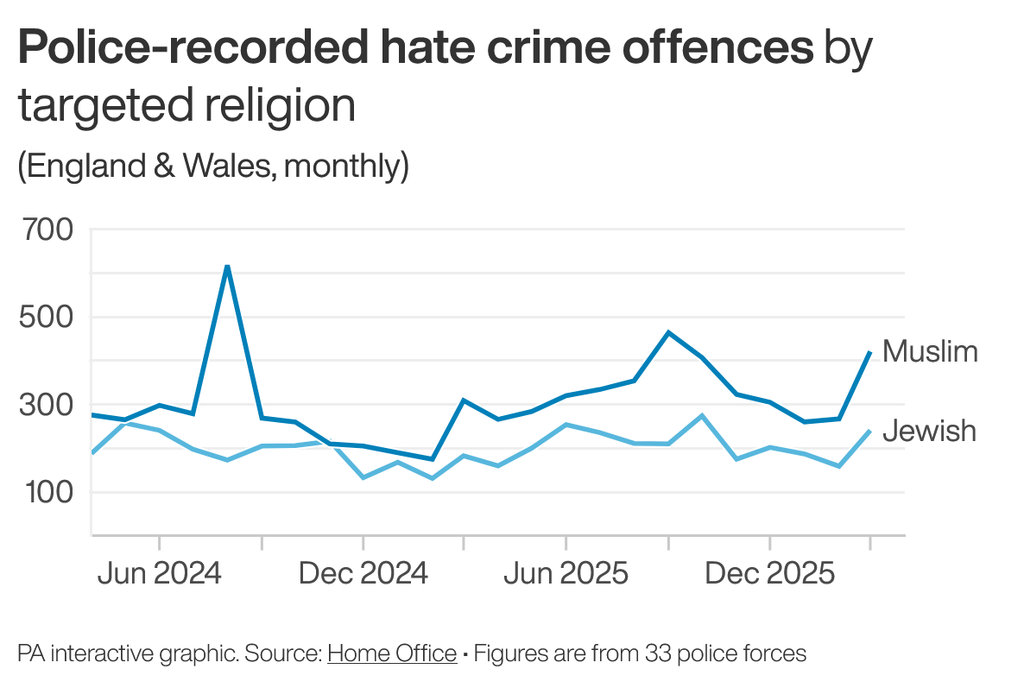
The Home Office reported sharp increases in anti-Muslim offences during September 2025, coinciding with protests and public disorder, and again in March 2026 following the outbreak of war between the US and Iran. Police forces recorded over 8,000 racial and religious hate crimes for five consecutive months between April and August last year.
Tell MAMA, the leading monitoring organisation for anti-Muslim hate, has documented what it describes as “a sustained, escalating crisis driven by political scapegoating and street-level aggression.”
A spokesperson told The Investigative Journal: “Today’s Home Office release confirms what Tell MAMA has argued for years. London alone has seen a sixfold rise in cases referred to our service since 2021. With 1,031 anti-Muslim cases reported in the capital in the first six months of this year, that figure has already eclipsed the whole of 2023.”
The organisation has renewed its calls for government action: “Communities deserve more than platitudes and gesture politics. They want to feel safe at their places of worship, on our streets, and in public. There is a failure of leadership and of a coherent strategy to address this growing scourge and improve community relations, whilst ensuring there is no place for racism and bigotry in political and public life.”
Tell MAMA advocates for a comprehensive approach including updating the hate crime action plan, tackling digital disinformation, improving digital literacy, and implementing a community cohesion strategy that “gives everyone a voice.”
The British Muslim Trust: Documenting Mosque Attacks
The British Muslim Trust (BMT), appointed by the government in July 2025 to monitor anti-Muslim hostility, published a damning report titled A Year of Division, documenting 78 incidents involving 64 mosques across the UK and Channel Islands between July 2025 and July 2026, approximately one incident every five days.
The report identifies a disturbing evolution in the nature of these attacks: “The defining shift across this reporting period is a movement from hate aimed at the mosque itself to hate targeting Muslims inside it.”
According to BMT’s seven-level severity scale, 62.7% of incidents since November 2025 fell into the upper four levels—threats and sustained harassment, weapon present or threats to kill, arson or direct violence, and alleged mass-casualty plots. Between July and October 2025, just 22.2% of incidents were of this more serious kind.
Akeela Ahmed, BMT’s Chief Executive, told The Investigative Journal: “Security needs are increasing… and many Muslims today are scared to go about their everyday lives. We need to reduce the need for protection and address the root causes of hate against Muslim communities.”
The BMT report directly implicates political rhetoric: “Political figures and commentators should take greater care when raising policy concerns regarding immigration or integration. Rhetoric intended as policy critique on immigration or integration can often become incendiary and difficult to distinguish from hostility directed at British Muslim communities specifically.”
Voices From The Ground: Watford Mosque Under Siege
The human cost of this rising tide of hatred is perhaps best illustrated by the experiences of communities like Masjid Al-Ummah, a planned mosque on the site of a former church in Watford.
Ammer Amin, a trustee, described to The Investigative Journal the persistent targeting the project has faced: “It’s almost open season [on Muslims] and people feel emboldened by politicians. It’s easy to say it’s the Reform party, but it’s not just the Reform party. It’s the Conservative Party as well. I’m not party political, but they’re singing from the same hymn sheet. They’re almost competing.”
The planned mosque, which includes a sports hall, gym, nursery, and food bank intended for use by the entire community, has been repeatedly vandalised. In October last year, crucifixes were sprayed on the building’s hoardings. A man later admitted possession of a knife and an axe but was cleared of criminal damage. In February this year, model pigs were thrown into the premises in another incident.
Antisemitism: An “Unacceptably High” Level
The Jewish community also continues to face alarming levels of hostility. Excluding Met Police data, antisemitic hate crimes rose by 10%, from 2,874 to 3,162 offences. At 2,003 offences recorded outside the capital, this represents the second-highest level on record, just below the peak of 2,093 in the year ending March 2024, which followed the October 7 Hamas attacks on Israel and the subsequent war in Gaza.
The Home Office noted that hate crimes against Jewish people spiked in October 2025 “following a series of antisemitic crimes after the Heaton Park Synagogue terror attack and have been at an elevated level since the beginning of the Israel-Hamas conflict.”
The Heaton Park attack saw Melvin Cravitz and Adrian Daulby killed when Jihad Al-Shamie, 35, drove into the synagogue gates on October 2 last year, attacking with a knife while wearing a fake suicide belt. A series of antisemitic attacks followed, including the torching of four Jewish community ambulances in Golders Green, north London, in March this year.
The Community Security Trust (CST), which monitors antisemitism, stated: “Antisemitic hate crime remains at an unacceptably high level.” The organisation called for an “urgent need to reduce the amount of incitement connected to conflict overseas,” adding that “much more needs to be done across society to tackle this problem.”
Political Rhetoric: Fuelling the Fire?
A growing body of evidence points to the role of political discourse in normalising prejudice. The Muslim Council of Britain (MCB) responded to a recent ITV Exposure investigation that revealed shocking levels of racism and Islamophobia among Reform UK elected officials and candidates.
The undercover investigation captured senior party figures using explicitly racist slurs, referring to minority communities as “parasites” and “animals” who have “infested” areas, calling for the forced deportation of “even the legal ones,” and making violent threats against public figures. The footage also exposed what appeared to be a deliberate strategy among some party figures to mask their toxic and racist views from the electorate in order to gain political power.
Dr Wajid Akhter, Secretary General of the MCB, stated: “The findings of this ITV investigation are chilling, but not surprising. It exposes a rotten core of racism and Islamophobia within the ranks of Reform UK. To hear elected officials casually use dehumanising language, advocate for the mass deportation of British citizens, and discuss hiding their true agenda should ring alarm bells for every citizen committed to a tolerant and democratic society.”
The MCB further noted: “Islamophobia and racism are not isolated incidents within the party; they are systemic issues that continue to manifest despite repeated promises by the party leadership to clean house.”
The organisation also highlighted a concerning trajectory: “It is telling that one of those exposed is a Solihull councillor and former Conservative. On promoting anti-Muslim hatred, there is a common thread from the Conservative Party normalising Islamophobia whilst in Government, to Restore, Reform and black-clad vigilantes intimidating innocent people on our streets today.”
Reform UK MP’s And The Mainstreaming Of Anti-Muslim Rhetoric
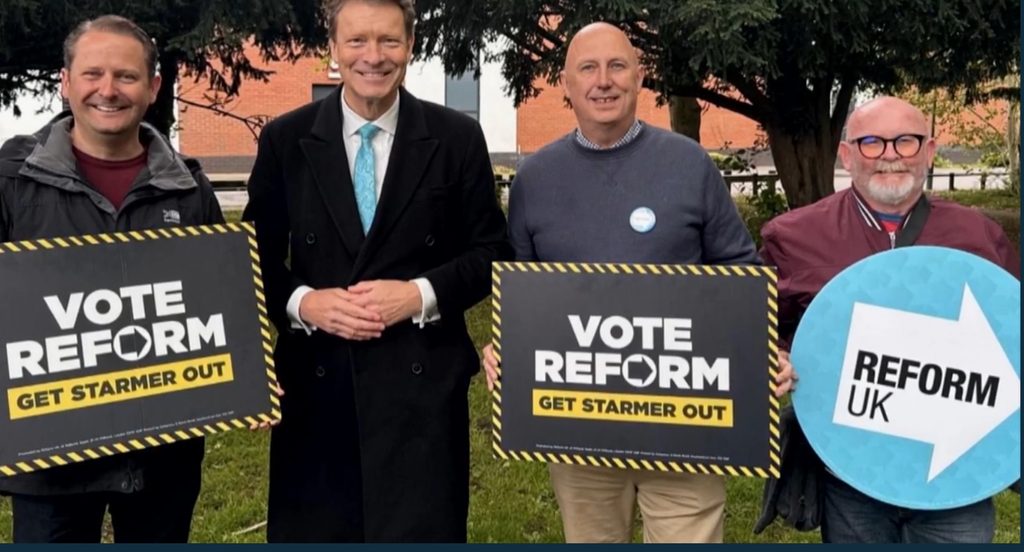
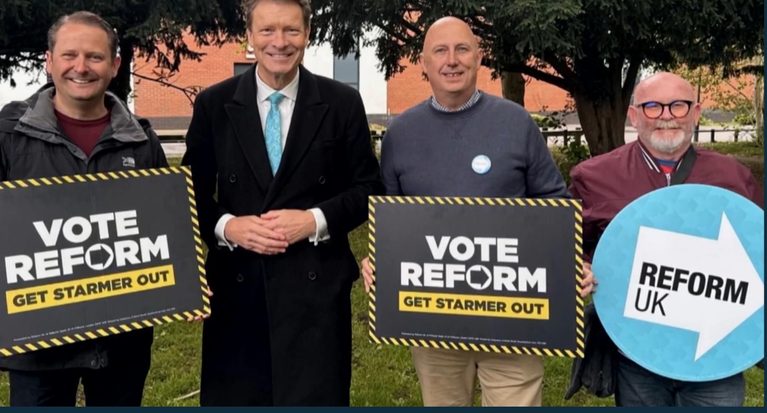
A parallel rise in inflammatory political rhetoric, most conspicuously within Reform UK has accompanied the statistical rise in hate crime. The party has repeatedly denied accusations of racism, insisting that its concerns are about immigration, integration and security rather than faith. But the record is increasingly difficult to dismiss as isolated slips.
The most recent flashpoint is an ITV Exposure undercover investigation which captured senior Reform UK officials and candidates using explicitly racist and dehumanising language. According to reporting on the investigation, the footage showed party figures referring to minority communities as “parasites” and “animals” who had “infested” areas, calling for the forced deportation of “even the legal ones”, a reference to migrants, and discussing a deliberate strategy to mask their views from the electorate in order to gain power. One of those exposed was a Solihull councillor and former Conservative.
The investigation centred on councillors and candidates rather than sitting MPs, and Reform UK has sought to characterise such cases as individual failures. But the Muslim Council of Britain (MCB) said the footage exposed something deeper. Dr Wajid Akhter, MCB Secretary General, said:
“The findings of this ITV investigation are chilling, but not surprising. It exposes a rotten core of racism and Islamophobia within the ranks of Reform UK. To hear elected officials casually use dehumanising language, advocate for the mass deportation of British citizens, and discuss hiding their true agenda should ring alarm bells for every citizen committed to a tolerant and democratic society.”
He added: “Islamophobia and racism are not isolated incidents within the party; they are systemic issues that continue to manifest despite repeated promises by the party leadership to clean house. Condemnations and rushed resignations after being caught on camera are no longer enough.”
The investigation follows a pattern of remarks by Reform MPs that Muslim and anti-racism organisations have condemned. Reform MP Lee Anderson, who defected from the Conservatives in 2024, has repeatedly used language that critics say feeds anti-Muslim tropes. In February 2024, before joining Reform, he claimed that “Islamists” had “got control of Khan, and they’ve got control of London”, a remark that drew widespread condemnation and led to his suspension from the Conservative Party. After joining Reform, Anderson has continued to face criticism for comments about mosques, Muslim integration and immigration, though the party has rejected accusations of racism.
The significance of such rhetoric is not merely that it offends. It creates what the British Muslim Trust describes as an “incendiary” environment in which policy criticism becomes difficult to distinguish from hostility directed at British Muslim communities. The BMT’s report, A Year of Division, warned:
“Political figures and commentators should take greater care when raising policy concerns regarding immigration or integration. Rhetoric intended as policy critique on immigration or integration can often become incendiary and difficult to distinguish from hostility directed at British Muslim communities specifically.”
That warning is borne out by the hate crime data. The Home Office recorded sharp increases in anti-Muslim offences in September 2025, coinciding with protests and public disorder, and again in March 2026 after the outbreak of war between the US and Iran. Police recorded over 8,000 racial and religious hate crimes for five consecutive months between April and August last year. Tell MAMA has documented a sixfold rise in anti-Muslim cases in London since 2021.
For Tell MAMA, the connection between political discourse and street-level harm is direct. The organisation has warned of “a sustained, escalating crisis driven by political scapegoating and street-level aggression,” and has called for a response that goes beyond security funding for faith institutions to a comprehensive hate crime action plan, action on digital disinformation, and a renewed community cohesion strategy.
Reform UK’s leadership has sought to distance the party from the worst examples, and not every controversial remark by a Reform figure is equivalent to the undercover footage. But the pattern matters. When elected officials and candidates use dehumanising language about minority communities, and when those remarks are met with delayed condemnations or treated as media distractions, the boundary between “legitimate debate” and licensed hostility shifts. The MCB’s warning that there is “a common thread from the Conservative Party normalising Islamophobia whilst in Government, to Restore, Reform and black-clad vigilantes intimidating innocent people on our streets today” is a political judgement, not a legal finding. But it captures the concern of many communities that anti-Muslim rhetoric has moved from the fringe to the mainstream of electoral politics.
The hate crime figures cannot be attributed to any single party or politician. They reflect a complex mix of international conflict, social media amplification, media framing and long-standing prejudice. Yet the political environment is not incidental. As the BMT’s Akeela Ahmed put it: “The rising tide of hatred in this country requires a whole society response. Politicians and those with the loudest voices need to take greater care in what they say.”
Media Complicity: The Role Of Negative Portrayals
Research consistently demonstrates the media’s role in shaping public attitudes toward minority communities. A report by the Centre for Media Monitoring examined over 10,000 articles and broadcast clips referring to Muslims and found that 59% of articles and 49% of broadcast clips associated Muslims with negative behaviour.
The Muslim Women’s Network UK reported that 67% of respondents had experienced an Islamophobic hate incident in the past five years, with one in four suffering multiple incidents during that time. The Community Policy Forum noted that 80% of those who experienced in-person hate incidents did not report them to the police or hate crime monitoring services.
These findings support the assertion by Baroness Sayeeda Warsi that prejudice towards Muslims had “passed the dinner table test” and become socially acceptable.
Policing Response: Adapting To New Challenges
Commander Claire Smart, hate crime lead at the National Police Chiefs’ Council (NPCC), acknowledged the complexity of the challenge: “The challenge for policing is not simply responding to offences after they occur. It is understanding the factors driving harm, identifying tensions early, working with communities and partners, and preventing issues from developing into even more serious crimes.”
She emphasised the importance of trust: “Trust and confidence remain fundamental. People must feel able to come forward, knowing they will be listened to, treated with dignity and supported throughout the process.”
Smart noted the evolving nature of hate crime: “As offending increasingly moves online and events overseas continue to impact communities here in the UK, policing must continue to adapt. We are working with forces, government, communities and partners to strengthen our understanding of emerging threats, improve consistency and ensure that victims remain at the centre of our response.”
The Under-reporting Crisis
While the headline figures are alarming, they likely underestimate the true scale of hate crime. Stop Hate UK expressed deep concern about reductions in recorded hate crimes based on disability (down 5%), sexual orientation (down 1%), and transgender identity (down 4%).
The organisation stated: “We do not believe these figures reflect the everyday experiences of many disabled people, LGBTQ+ people and transgender individuals living in the UK. We are hearing increasing concerns from communities about the impact of negative public discourse. Hostile rhetoric directed at transgender people, alongside ongoing debates surrounding disability benefits and welfare reform, has contributed to people feeling less safe, less valued and less confident that their experiences will be taken seriously.”
Stop Hate UK warned: “Hate crime statistics are an important measure, but they do not tell the whole story. We should not automatically interpret reductions in reporting as reductions in harm. There is a need to continue building trust with communities, improving access to reporting mechanisms, and ensuring that victims are confident they will be listened to, supported and taken seriously.”
International Context: Azerbaijan’s Headscarf Controversy And The Policing Of Muslim Girls’ Bodies
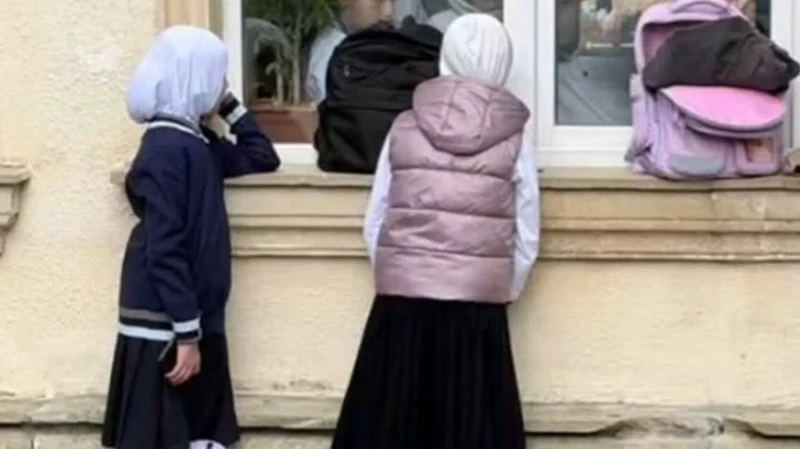
The rise in Islamophobic hate is not confined to the UK, and neither is the political contestation of Muslim women’s and girls’ bodies. In Azerbaijan, an amendment to uniform rules for state schools, introduced last month, has introduced requirements linked to the extreme secular character of education. The text does not explicitly name the headscarf, yet reports of Muslim girls being turned away from schools, followed by the introduction this month of rules governing teachers’ clothing, have intensified a bitter national debate.
The difference between what a regulation says and how schools enforce it matters profoundly to the children affected. Asking a girl to remove her headscarf before entering a school is not simply a question of dress. It raises a more fundamental question: can access to education depend on making religious identity invisible?
This debate should begin not with abstract arguments among adults, but with the girls standing at school gates. Decisions made in the name of secularism, religion or public order shape their everyday lives, educational opportunities and sense of belonging. The controversy is larger than one country’s school policy. Why does Muslim women’s clothing so often become a test of modernity, freedom and social progress?
These schoolgirls were not allowed to enter classes because of their headscarves
A headscarf can signify devotion, cultural belonging or personal identity. Where covering is compulsory, it can also become an instrument of coercion. None of these meanings can be presumed for every woman or girl. There is a contradiction when authorities claim to liberate women from religious pressures by imposing another rule about their bodies. Requiring a headscarf, or requiring its removal, arises in different historical and legal contexts, yet both demand scrutiny of whose choices count, whose voices are heard, and who has the authority to decide.
For girls, this is especially urgent. Too often, a girl becomes a symbol of her family’s religious values or the state’s secular identity, rather than a person with her own developing convictions. No child should be reduced to a symbol in an ideological contest among adults. Instead of asking who gets to decide what Muslim girls wear, we should ask why their own voices are so rarely heard.
Secularism can help to ensure that children of different faiths learn together, without the state imposing religious beliefs. But institutional neutrality is not necessarily the same as demanding that students conceal individual religious identities. The distinction matters when a school’s dress rules affect attendance. Governments may regulate uniforms for reasons of equality, order and belonging. Those aims, however, cannot end the discussion. If a dress code excludes some children from classrooms, it raises a question about the conditions attached to their right to education. In Azerbaijan, the crucial test is not only the wording of the rules, but their application and consequences.
Officials, parents, religious authorities and commentators are all allowed to speak. Yet how often are the girls whose lives are being debated asked what they think? A rights-based approach to the headscarf issue should take into account both the ways in which familial and social pressures can shape a child’s decisions and the reality that removing an item of clothing under institutional pressure is not automatically an act of liberation.
The UN Convention on the Rights of the Child recognises children’s right to express their views in matters affecting them, along with their freedoms of thought, conscience and religion, and their right to access education. These rights must be considered together. Listening to a girl is not the same as leaving her unprotected; protection should be attentive to her evolving capacities and circumstances. States should not dismiss a girl’s beliefs in the name of education. Equally, a family’s religious preferences should not silence children. The task is to create conditions in which they can speak, receive support and continue learning.
Excluding a girl from school because of her headscarf means more than losing a day of lessons. It can damage her relationships, confidence and sense of belonging, especially during adolescence, when identity matters deeply. Schools should be places where children encounter differences and learn to live with them. If the stated aim of education is to help girls think independently, consider different worldviews and make their own decisions, then exclusion is a troubling way to pursue it.
Girls’ freedom cannot be defended at the cost of their right to learn. What should be left at the school gates are not headscarves, but rather these exclusionary policies. The world must stop trying to “rescue” Muslim women by imposing new rules on their bodies. Instead of asking who gets to decide what Muslim girls wear, we should ask why their own voices are so rarely heard. The Azerbaijan controversy is a reminder that the same logic that fuels anti-Muslim hostility in Britain, the reduction of Muslim women to symbols in a political argument, operates internationally, and that the right to education must never be made conditional on the erasure of religious identity.
Historical Trajectory: A Decade Of Escalation
The current crisis did not emerge in isolation. Islamophobic incidents doubled across Britain between 2012 and 2022, driven by a combination of increased far-right activity, toxic political discourse, and the Brexit referendum campaign. This historical context underscores that Islamophobia is not merely a reaction to recent events in the Middle East but has consistently increased for over a decade.
Data for the year ending March 2024 showed 9,792 recorded religious hate crimes, with 3,866 directed at British Muslims, up 13% from the 3,432 recorded the previous year. Nearly 40% of all victims of religiously motivated hate crimes in the UK were Muslims.
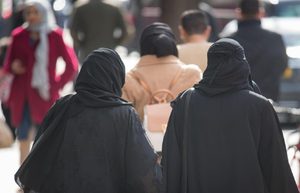
Muslims are frequently targeted in public spaces, with attacks ranging from verbal abuse and threats to physical acts of violence in both urban and rural areas, particularly in major cities like London, Birmingham, and Manchester. British Muslim women, in particular, have reported feeling increasingly unsafe in public and have faced heightened levels of verbal and physical violence due to their adoption of the hijab.
The Need For Comprehensive Action
The evidence points to an urgent need for a coordinated, comprehensive government response. Piecemeal approaches, such as security funding for faith institutions, are insufficient to address the root causes of hatred.
Tell MAMA has articulated what such a response should include:
Updating and refreshing a hate crime action plan
Tackling disinformation and misinformation on social media
Improving digital literacy and critical thinking skills
Bringing communities together with an updated community cohesion plan that gives everyone a voice
The Muslim Council of Britain has called on the Ministry of Housing, Communities and Local Government to follow through on its promise in March 2026 to appoint a “Special Representative on anti-Muslim Hostility” without delay.
Akeela Ahmed of the BMT emphasised: “The rising tide of hatred in this country requires a whole society response. Politicians and those with the loudest voices need to take greater care in what they say, social media platforms have to do more to tackle hate, the authorities must act quickly and decisively, and the rest of us must rebuild the social norms that make clear any form of hatred and prejudice is not acceptable, and it is not British.”
Conclusion: A Defining Moment
The record levels of racial and religious hate crimes in England and Wales represent a defining moment for British society. The figures expose not only the persistence of prejudice but its apparent acceleration, fuelled by irresponsible political rhetoric, media irresponsibility, and social media platforms that prioritise engagement over safety. The mainstreaming of anti-Muslim rhetoric, from undercover footage of Reform UK officials to inflammatory remarks by elected MPs, makes the task of rebuilding community trust harder, not easier. And as the Azerbaijan headscarf controversy demonstrates, the reduction of Muslim women and girls to symbols in ideological battles is a transnational phenomenon that demands a principled, rights-based response wherever it occurs.
Behind every statistic is a human being whose sense of safety, belonging and dignity has been attacked. The Muslim child afraid to walk to school, the Jewish family installing security cameras, the trans person reluctant to report abuse, the disabled person facing hostility on public transport, these are the constituents of a crisis that demands more than condemnation.
The government must move beyond platitudes and gesture politics to implement a comprehensive, well-resourced action plan that addresses the root causes of hate, holds perpetrators accountable, supports victims, and rebuilds the social fabric that binds communities together.
As Stop Hate UK stated: “Everyone has the right to live free from hatred, discrimination, and targeted abuse. We call on government, public bodies, criminal justice agencies and community organisations to work together to address the causes of hate, improve confidence in reporting, and ensure that all victims receive the support and protection they deserve.”
The question is not whether Britain can afford such action, but whether it can afford not to.
References
Home Office (2026). Hate Crime, England and Wales, 2025 to 2026. London: Home Office.
British Muslim Trust (2026). A Year of Division. London: BMT.
Tell MAMA (2026). Statement on Home Office Hate Crime Statistics.
Community Security Trust (2026). Statement on Antisemitic Hate Crime.
Stop Hate UK (2026). Statement on the Rise in Recorded Hate Crime.
Muslim Council of Britain (2026). Statement on ITV Exposure Investigation.
ITV Exposure (2026). Investigation into Reform UK.
Centre for Media Monitoring (2025). Media Portrayals of Muslims in the UK.
Muslim Women’s Network UK (2025). Islamophobia and Muslim Women’s Experiences.
Community Policy Forum (2025). Underreporting of Hate Crime in the UK.
National Police Chiefs’ Council (2026). Statement on Hate Crime Statistics.
UN Convention on the Rights of the Child (1989).
Veritas Press Investigative Analysis Independent journalism examining global affairs, power, diplomacy, and accountability.
Source:Veritas Press C.I.C. | Multi-News Agencies
Help Support Our Work
Readers who believe that truth still matters have power over popular information. When just a few more people step up to support this work, it means more lies exposed, more corruption uncovered, and more accountability where it’s long overdue.
Help Protect Independent Journalism, Which Is Currently Under Attack.
If you believe journalism should serve the public, not the powerful, and you’re able to help, becoming a regular DONOR or a PAID SUBSCRIBER truly makes a difference.
DONATION APPEAL: If you found this reporting valuable, please consider supporting independent journalism.
Your support fuels our fearless, truth-driven journalism. In unity, we endeavour to amplify marginalised voices and champion justice, irrespective of geographical location. We operate independently, with no financial backing from billionaires; our readers support us.
But it’s also extremely important. One of Veritas Press’s greatest assets is its reader-funded model.
1. Reader funding means we can cover what we like. We’re not beholden to the political whims of a billionaire owner. We are a small, independent and impartial organisation. No one can tell us what not to say or what not to report.
2. Reader funding means we don’t have to chase clicks and traffic. We’re not desperately seeking your attention for its own sake; we pursue the stories that our editorial team deems important and believes are worthy of your time.
3. Reader Funding: enables us to keep our website and other social media channels open, allowing as many people as possible to access quality journalism from around the world, particularly those in places where the free press is under threat.
We know not everyone can afford to pay for news, but if you’ve been meaning to support us, now’s the time.
Your donation goes a long way. It helps us:
Keep the lights on and sustain our day-to-day operations
Hire new, talented, independent reporters
Launch real-time live debates, community-focused shows, and on-the-ground reporting
Cover the issues that matter most to our communities, in real time, with depth and integrity
Without your support, independent voices like ours will be silenced.
Furthermore, we have plans to expand our work, but we can’t do it without your support. Every contribution, no matter the size, helps us stay independent and build a truly people-powered media platform.
If you believe in journalism that informs, empowers, and reflects the communities we serve, please donate today.
Submissions
For the safe submission of documentation, testimonies, or exclusive investigative reports from anywhere in the world, please use the following contact details for our Investigations Desk: mailto:enquiries@veritaspress.co.uk or mailto:editor@veritaspress.co.uk.
SEATTLE, TEHRAN — The U.S. Department of Homeland Security (DHS) will allow Iran’s national football team to enter the country 48 hours before their critical World Cup match against Egypt on Friday, a modest concession in a tournament where Team Melli’s travel conditions have sparked claims of oppression and competitive disadvantage.