












Author:
Byline: Investigative Desk
Help support our mission, donate today and be the change. Every contribution goes directly toward driving real impact for the cause we believe in.
From Virginia’s Data Centre Valley to the parched communities of Uruguay and Gaza, the hidden water appetite of artificial intelligence is straining aquifers, poisoning environmental justice, and exposing a collision between big tech’s ambitions and the human right to water.
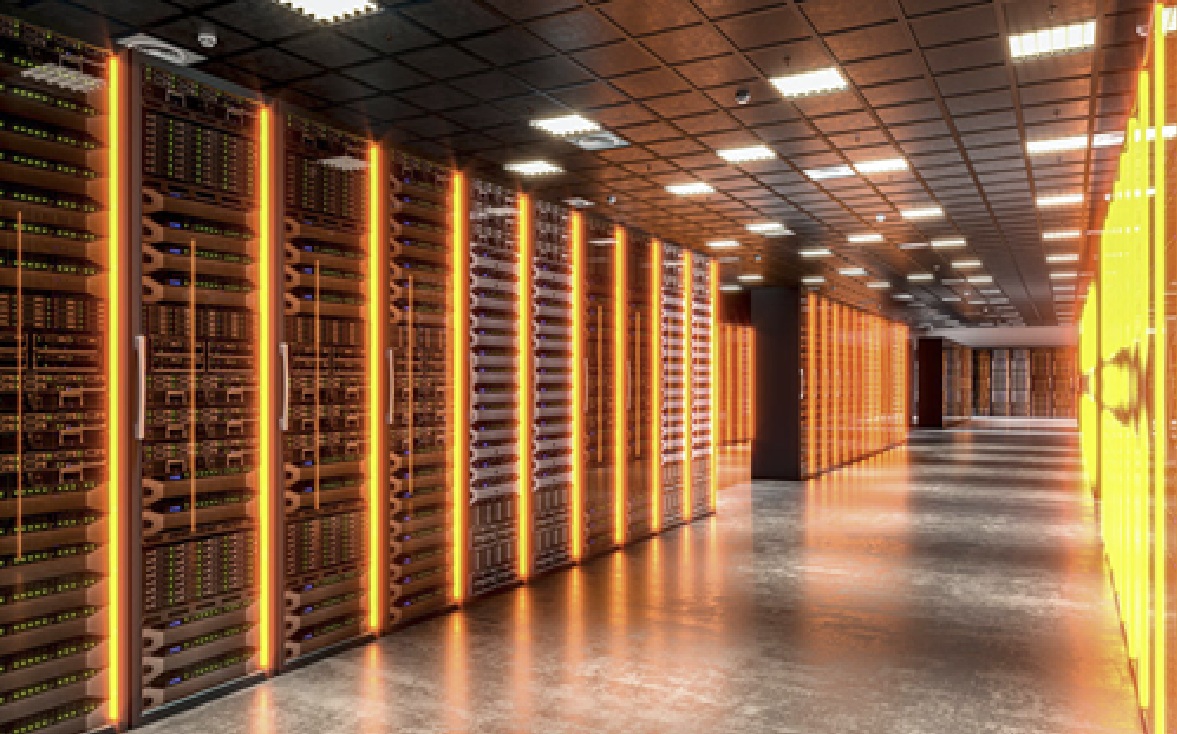
A low hum leaks from a windowless beige box squatting on the outskirts of The Dalles, Oregon. Inside, thousands of servers blink in refrigerated darkness, cooling towers exhaling plumes of steam. The facility, owned by Google, is a hyperscale data centre, one node in the planetary nervous system of artificial intelligence. By the time you finish reading this sentence, it will have evaporated roughly the same amount of water you would use to brush your teeth. Over the course of a day, it will consume up to 5 million gallons of fresh drinking water, matching the daily residential use of a city of 50,000 people. And it is far from alone.
The rapid, unregulated expansion of AI is triggering a global water crisis that most consumers never see. Behind every query typed into ChatGPT, every AI-generated music video, every “smart” supply-chain algorithm, sits a cooling tower pulling millions of litres from strained watersheds. The math is stark. A single large AI data centre can drink 18.9 million litres daily. A June 2026 UN University report projects that global AI data centre water consumption will reach 9.3 trillion litres annually by 2030. This volume is enough to meet the basic daily water needs of 1.3 billion people. That is more than the entire population of Africa, parched by the very technology the wealthy world is building.
“Wherever they choose to put a data centre, it is like a giant soda straw sucking water out of that basin,” said Peter Colohan, director of partnerships and program innovation at the Lincoln Institute of Land Policy. “And when you take water from a place, you have to reduce demand or put water back in that same place. There’s no other solution.”
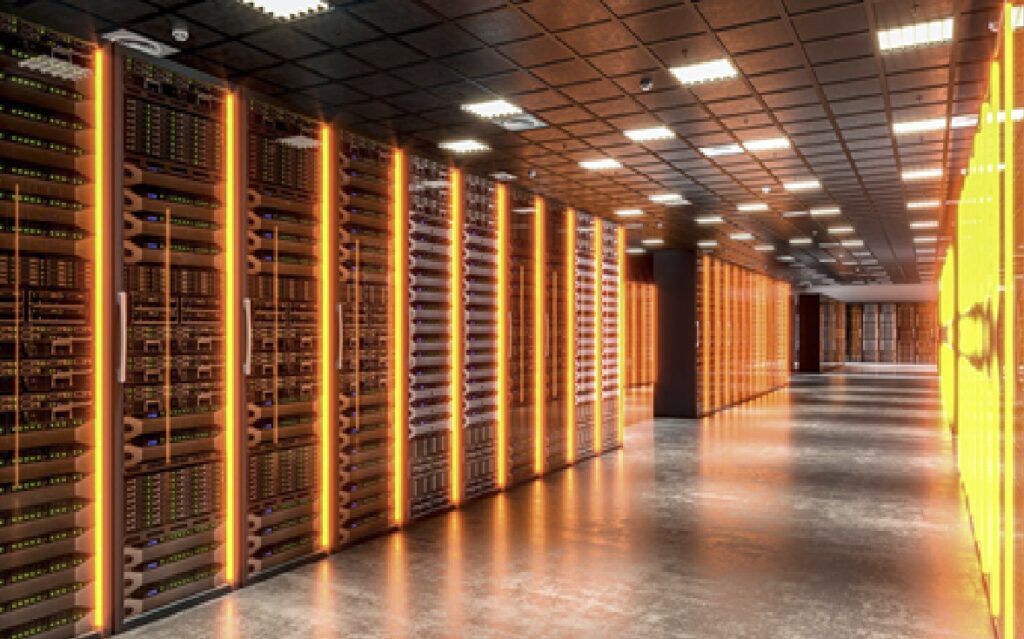
The crisis is no longer an abstraction debated in academic journals. From the Piedmont of Virginia to the semi-arid highlands of central Mexico, communities are fighting back and demanding that governments and tech giants reckon with a resource that has long been treated as an invisible, cost-free input. In the courts, in the streets, and before regulators, a new question is being asked with increasing urgency: whose water is the cloud?
The Hidden Hydrology Of A Chatbot:
The viral claim that “a single ChatGPT query drinks a bottle of water” is a simplification, but its kernel is true. A 2023 University of California, Riverside study found that GPT-3 consumes roughly a 500-millilitre bottle of freshwater for every 10 to 50 responses, depending on geography and season. The number swings wildly, but the mechanism is constant: evaporative cooling. In traditional data centre design, water is sprayed into air flowing past server racks or evaporated in cooling towers to carry away heat. Up to 80% of that water leaves the local watershed as vapour, never to return. The remaining blowdown water accumulates salts, minerals, and chemicals, which require intensive municipal treatment before discharge.
That direct cooling, however, is only the visible part of the iceberg. Indirectly, these power plants consume roughly half of the total footprint’s water in their cooling towers, hundreds of miles away, to generate the prodigious electricity data centres demand. A study co-authored by researchers at the University of Oxford demonstrated that when regional electricity generation is water-intensive, the true water cost of a data centre can be far higher than the on-site meter suggests. In Texas, for example, the Houston Advanced Research Centre (HARC) and the University of Houston calculated that powering anticipated data centre loads with natural gas would require 50 times more water than using solar, and a staggering 1,000 times more than wind.
Then there is the upstream thirst of chip fabrication. Before a single server is switched on, its microprocessors have already consumed thousands of gallons of ultra-pure water. Semiconductor manufacturing requires between 1.5 and 2 gallons of tap water to produce one gallon of the hyper-clean rinse water needed to remove silicon residues without damaging nanoscale circuits. A typical chip fab uses about 10 million gallons of ultra-pure water a day, as much as 33,000 US households. The World Economic Forum has flagged this “virtual water” embedded in AI hardware as a blind spot in sustainability accounting. “We don’t give water enough value,” said Kelly T. Sanders, associate professor of engineering at the University of Southern California. “It’s priced too cheaply, and so we use it wastefully across the entire stack.”
Data Centre Alley: Tax Breaks And A Dwindling Potomac.
Nowhere embodies the collision between municipal ambition and hydrological reality more acutely than Northern Virginia. Loudoun County, a suburban expanse west of Washington, DC, hosts the densest concentration of data centres on Earth. About 300 facilities already process an estimated two-thirds of the world’s internet traffic, and dozens more are in the pipeline. A statewide sales and use tax exemption saves the industry more than $130 million annually, turning the region into a magnetic pole for server farms.
For local governments, the fiscal temptation is immense. In fiscal year 2025, Loudoun County expects to collect nearly $900 million in real and property tax revenues from data centres, a sum approaching the county’s entire annual operating budget. But the environmental ledger tells a different story. Water consumption by data centres in the county has surged roughly 250% since 2019. Even when operators use reclaimed or recycled water, as some now tout, that water is no longer returning to the base flow of the Potomac River. “Everybody is upstream from someone else,” said Julie Bolthouse, director of land policy at the Piedmont Environmental Council (PEC). “Washington, DC, will still lose water supply if Northern Virginia data centres use recycled water, because that water won’t make it back into the river.”
The construction footprint is equally voracious. Data centres in the area have swollen from compact corporate campuses into fortress-like warehouses ringed with security fencing. Bolthouse recalled the former AOL headquarters, which once held 5,300 employees amid tennis courts, walking trails, and basketball courts. The site is now being redeveloped into three vast data centre boxes, employing perhaps 150 people, isolated from the neighbourhood. “That’s the difference,” she said. The new facilities also require thousands of diesel generators, each the size of a rail car, that can legally run for 50-hour stretches as “demand response” backup. “That’s particulate matter and NOx, which impacts the growing lungs of children, can add cases of asthma, and can exacerbate heart disease in the elderly,” Bolthouse said. “No other land use that I know of uses as many generators as a data centre does.”
Across the US, similar confrontations are erupting. In Newton County, Georgia, a Meta data centre that opened in 2018 uses 500,000 gallons of water per day, 10% of the entire county’s consumption. Some proposals for new facilities would require up to 6 million gallons daily, more than doubling the county’s total current water use. In Arizona, where Bloomberg News found that two-thirds of data centres built since 2022 are located in water-stressed regions, new developments are pushing against aquifers already strained by drought. Google, for years, deemed its water usage a trade secret, a posture that community activists say epitomises an industry-wide culture of non-disclosure. “Very often, data centres are coming in with non-disclosure agreements,” Bolthouse said. “They’re hiding a lot of information about water usage, energy usage, air quality impacts, emissions, none of that information is disclosed, and so communities don’t really know what they’re getting into.”
The Global South: Data Colonialism And Day Zero:
If Northern Virginia represents the domestic political fight, the export of AI’s water burden to the Global South is its colonial frontier. In 2023, Uruguay experienced its worst drought in roughly 70 years. The capital, Montevideo, reached a crisis so severe that authorities mixed brackish river water into the public supply, what environmentalists called “Day Zero.” At the same time, Google was negotiating for a data centre in Canelones projected to consume about 7.6 million litres of water per day, equal to the domestic use of 55,000 people. Protests erupted, and the project was eventually scaled back to less water-intensive cooling. Nearby in Chile, mired in a multi-year drought that had half the country’s 19 million citizens under water stress, saw a court partially revoke Google’s permit for a facility in Santiago over its planned cooling draw of 169 litres per second. Microsoft faced similar opposition in the same region. Google ultimately paused its $200 million project to redesign the cooling system.
In the Mexican state of Querétaro, a semi-arid region increasingly battered by climate change, Google, Microsoft, and Amazon Web Services have proposed roughly $10 billion in combined investment. Three planned centres could draw up to 4 million litres per day in a town of 65,000 residents, prompting ongoing protests. Critics have termed this pattern “data colonialism”: wealthy economies accrue the value of AI services where users generate the queries, while semi-arid host nations, lured by investment promises, offload the hydrological risk. “The water cost of AI is increasingly being exported to the countries least able to absorb it,” the UN University report warns, projecting that by 2030 the sector’s water footprint could equal the annual domestic needs of all of Sub-Saharan Africa.
In the UK, John Hernon, strategic development manager at Thames Water, says his utility’s service area holds about 80% of the nation’s data centres, with another 100 proposed, despite London receiving less annual rainfall than famously damp stereotypes suggest. Water usage peaks during the hottest, driest months, precisely when the system can least accommodate the load. “That’s why we talk about restricting or reducing or objecting to [data centres],” Hernon said. “It’s not because we don’t like them. We absolutely get it, we need them ourselves. AI will massively help our call centre … which means we can have more people out fixing leaks.” Yet the message is clear: we must factor water in “at the earliest possible thinking … at the forefront, rather than an afterthought.”
The PFAS Trap: Solving One Crisis With Another.
Faced with mounting outrage over water consumption, the data centre industry has touted “two-phase” liquid cooling systems that use far less water than traditional evaporative towers. The catch, as a coalition of 17 US environmental groups revealed in formal comments to the Environmental Protection Agency this year, is that these systems typically rely on fluorinated gases (F-gases), a subclass of PFAS “forever chemicals.” The new refrigerant, Opteon 2P50, manufactured by Chemours, is the first chemical for which industry has asked the Trump EPA to fast-track approval under an executive order calling for expedited review of data centre chemicals.
In comments submitted by Earthjustice, the groups allege that Chemours used flawed science to downplay the compound’s toxicity and climate risks. The chemical is likely a potent greenhouse gas and, once leaked, eventually degrades into trifluoroacetic acid (TFA), a substance the European Chemicals Agency recently classified as hazardous, citing probable disruption of thyroid function, reduced sperm quality, and liver toxicity. “The data centre industry knows it is under fire for its enormous use of water so they cast themselves as the good guys by using alternative cooling, but they’re not telling [the public] that they’re using hazardous chemicals,” said Lenny Siegel, director of the Chips Communities United non-profit. “Some are toxic, some are greenhouse gases, and some are both.”
Adriana Antezana, a scientist with Earthjustice, warned that the Trump administration might interpret its “priority review” as “priority approval,” which would ignore the law’s requirement for a health risk assessment. The groups point to Chemours’ reliance on a strain of laboratory rat less sensitive to PFAS than humans, missing toxicological data, and occupational exposure limits developed by a partially industry-funded science body that failed to follow EPA best practices. Chemours responded that the groups were making “sweeping generalisations” and that two-phase systems are closed loops with low fugitive emissions. But the dispute reveals a troubling dynamic: in the rush to solve AI’s water crisis, regulators may open the door to a chemical contamination crisis; the same frontline communities that already bear disproportionate pollution burdens will bear it.
Energy, Water, And The Ratepayer Cross-Subsidy:
Water and electricity connect inextricably within the data centre equation. A modern hyperscale AI facility can draw as much power as 100,000 homes. Once completed, Meta’s Hyperion data centre in Louisiana is expected to require more than twice the electricity of the entire city of New Orleans. Another Meta centre planned in Wyoming will consume more electricity than every home in that state combined. The surge is forcing utilities to build new natural gas plants; Louisiana regulators have already approved three to serve Hyperion, while federal policy actively undermines the fastest-to-deploy clean alternatives. The Trump administration, while acknowledging the energy demands of AI, has cancelled offshore wind projects such as Revolution Wind off Rhode Island and undermined incentives for solar and battery storage. “In the last six months we’ve lost a lot of the incentives for clean energy, and there’s an all-out war on wind,” said Sanders. “Wind projects that are already built, already paid for, are being cancelled. And to me, that’s peculiar, because that’s electricity that would be ready to go out on the grid soon.”
Ratepayers are already feeling the pinch. US electric bills have risen at twice the rate of inflation over the past year, partly driven by the infrastructure needed to serve data centres. Under traditional utility models, utilities socialise the costs for new power plants, transmission lines, and grid upgrades across all customers in a service area. So while a host town reaps the property-tax windfall of a new data centre, the entire region pays for the pylons and backup power. If a data centre eventually closes or secures energy independently, as Microsoft did by signing a 20-year power purchase agreement with the Three Mile Island nuclear plant, those sunk grid costs still remain on residential bills. “These data centres are still going to use transmission lines and all those grid assets, but if they’re not buying the electricity from the utility, they’re not paying for all that infrastructure through their rate bills,” Sanders said.
The Trump administration has unveiled a “Ratepayer Protection Plan” framework that would require big tech companies to fund or build their own power plants and has directed federal regulators to fast-track interconnection for heavy-load facilities. Yet the plan is conspicuously silent on water. While drought and groundwater depletion escalate, federal policy has largely abdicated water resource management to state and local municipalities, the same level of government that is often most vulnerable to corporate pressure for tax-base expansion. Kim Rueben, former senior fiscal systems advisor at the Lincoln Institute, likened data centres to extractive industries. “I don’t think places are acknowledging all the costs,” she said. “Forcing data centre operators to explain how they’re going to run the facility more efficiently, and where they’re going to get their water from, and not just assuming that they have first access to the water and energy systems, is a shift in perspective that we kind of need government officials to make.”
Israel: Engineering Abundance, Weaponising Scarcity:
No country embodies the paradoxes of AI-era water politics more sharply than Israel. Through decades of investment, Israel has constructed a water-security apparatus unmatched in the developed world. Reverse-osmosis desalination of the Mediterranean now provides most of its drinking water, and agriculture reuses over 87% of treated municipal wastewater, the highest rate in the OECD by a wide margin. In an arid land, water has become a manufactured good with a price tag in kilowatt-hours, not a finite natural endowment to be guarded. This engineering triumph positions Israel as a potential exporter of precisely the technologies the global data centre industry desperately needs: desalination plants, leak-detection algorithms, smart irrigation, and wastewater recycling systems. The same scarcity that ought to discipline its own AI build-out has given it a comparative advantage.
And yet, less than 50 miles from Israel’s thriving high-tech campuses, the weaponisation of water is acute. In the Gaza Strip, Israeli military operations have systematically destroyed water pipelines, pumping stations, and treatment facilities. UNICEF reported the death of its drivers in April. They were killed while trying to deliver water to the Mansoura filling station in northern Gaza because bombardment had made the pipelines inoperable, thus causing the deliveries. “On the ground, the situation is pretty horrific,” Jonathan Veitch, head of UNICEF for the Palestinian territories, told the Canadian Press. “All we’re asking for is the basic humanitarian needs to be met through a recovery process and fixing some of these systems … We can fix this relatively straightforwardly by bringing in the equipment that is required to fix those pipes, to reduce the leaks in them, and to restart some of the pumping stations that have broken or were destroyed during the war.” Instead, aid workers are forced onto dangerous roads in a daily, deadly water trucking operation that is financially ruinous and life-threatening.
The contrast is an uncomfortable one for the global AI sector. Here is a nation that has solved the technical problem of water scarcity for its own citizens and its own data centres, while simultaneously being implicated in the deliberate destruction of water infrastructure for a captive population. It dramatises the central ethical question: the AI water crisis is not just about hydrology; it is about power. The wealthy and the powerful, whether tech companies or states, can engineer their way out of scarcity, leaving the poor to choke on the dust.
Subsea Data Centres: Promise And Peril Beneath The Waves.
One emerging technological escape hatch from the land-and-water squeeze is the subsea data centre, a sealed computing module sunk onto the seabed, cooled directly by the ocean and potentially collocated with offshore wind farms. Microsoft’s Project Natick experiment off the coast of Scotland showed a 40% improvement in energy-use efficiency and server failure rates at least eight times lower than comparable land-based facilities, thanks to stable, cool, low-oxygen environments. China has since leapfrogged into commercial scale, deploying a subsea cluster near Shanghai that integrates offshore wind to supply most of its power, eliminates freshwater cooling, and reduces land use by roughly 90%.
For coastal states, the model offers tantalising advantages: cooling that demands no drinking water, physical redundancy away from urban heat stress, and a path to digital sovereignty within territorial waters. “The maritime domain is already a critical infrastructure arena,” notes an Israeli policy study on the opportunity. “A state with control over its coastline and territorial waters can establish ‘maritime AI clusters’ that remain physically and legally under national jurisdiction.” Given its extensive coastline, existing subsea gas pipelines, and undersea communication cables, advisors urge Israel to explore decoupling AI growth from freshwater stress.
But subsea deployment is no panacea. Environmental groups warn of localised ocean heating, electromagnetic fields affecting marine life, and the cumulative unknowns of large-scale underwater industrial infrastructure. Regulatory frameworks are embryonic. The UN Convention on the Law of the Sea (UNCLOS) addresses cables and pipelines but says nothing about data centres, creating grey zones around liability, environmental impact assessment, and security. Hostile actors have already showed a willingness to sabotage subsea cables; data centres packed with sensitive AI computations would represent a far higher-value target. “Addressing this challenge will require the development of doctrines for protecting subsea infrastructure, enhanced capabilities for subsea domain awareness and control, and improved maritime governance,” the Israeli analysis cautions. The very ocean that promises a water-free future is also the next contested geopolitical battlefield.
The Transparency Imperative:
Nearly every expert, activist, and official interviewed for this article converged on a single demand: transparency. Without standardised, mandatory disclosure of water use, both on-site and across the full electricity supply chain, communities are negotiating blind. Microsoft discovered that the true cost of water at its San Antonio data centre was 11 times the utility price, after accounting for ecosystem services and long-term risk. Facebook and Microsoft now publish aggregated water data, but many others do not. “Every operator needs to publish their water efficiency plan and back it up with the relevant regional numbers,” urged researchers who have tracked the sector. The Dutch government imposed a temporary moratorium on new data centres over exactly these concerns, and France is advancing legislation to mandate transparency.
“Water is often one of the last things that gets thought about,” said Thames Water’s Hernon. “So when you’re thinking about data centres, it’s not just about the speed you’re going to get, it’s not just about making sure there’s a lot of power available, we need to make sure that water is factored in at the earliest possible thinking.”
The path forward demands integrated land-use planning that treats water, energy, and community health as a single system. AI itself, if properly harnessed, could help, optimising grid loads, scheduling cooling for off-peak hours, and reducing waste. Large-scale battery storage and virtual power plants, like the California PG&E test that supplied 535 megawatts from residential batteries for two hours at sundown, hint at a future where data centres can become flexible grid actors rather than relentless burdens. But none of this will happen by accident. “There is a world in which these data centres can actually be good grid actors,” said Sanders. “It’s not just going to happen naturally.”
The vampire metaphor is not merely a rhetorical flourish. Data centres are pallid, energy-draining, and immortal in their corporate form; they can only enter a place if invited. The question that counties, nations, and the international community must now answer is whether the invitation will come with binding conditions, honest water pricing, public disclosure, renewable energy commitments, chemical safety guarantees or whether the door will swing open one more time on a promise of tax revenue, leaving behind a dried-up river and a community that never saw the true bill. Water, after all, does not care about Moore’s law. It is finite, local, and, for billions of people, irreplaceable. The algorithm’s thirst is real. The response must be too.
Conclusion: The Great Diversion.
Strip away the jargon of teraflops and latency, and the AI water crisis reveals itself as something older and more brutal: a modern enclosure movement, in which the common resource essential to life is being quietly redirected from crops and kitchen taps toward the cooling towers of an industry that serves the world’s most profitable corporations. Across hemispheres, the pattern is now unmistakable. Governments and tech giants, armed with tax breaks and non-disclosure agreements, are diverting finite freshwater from the land and the people who work it, transforming watersheds into digital infrastructure while agricultural communities are left to count the cost in fallowed fields, sinking aquifers, and dust.
In the high plains of Texas, where the Houston Advanced Research Centre projects that data centres will suck 49 billion gallons of water in 2025 alone, rising to a staggering 399 billion gallons by 2030, cotton and sorghum farmers are already losing the bidding war. The same utility pipelines that once irrigated thousands of acres now serve server racks, while Lake Meredith and the Ogallala Aquifer, already in retreat from decades of agricultural drawdown, face a new adversary that does not grow food. Further west, in Arizona’s Pinal County, the arrival of hyperscale campuses has accelerated groundwater depletion to the point where state officials have begun denying new irrigation permits to alfalfa growers, not because the crop is profligate, but because the water has essentially been reallocated, without a vote, without compensation, to cool the algorithms powering Silicon Valley’s next quarterly earnings.
The dynamic is even starker in Latin America, where the term “data colonialism” has moved from activist slogan to material reality. In the semi-arid valleys of Querétaro, Mexico, where smallholder farms produce maize, beans, and avocados for regional markets, three proposed data centres backed by a combined $10 billion in US tech investment would extract roughly 4 million litres daily from a watershed that already fails to meet the needs of 65,000 residents during the dry season. “We are being told that a query typed in New York is more valuable than the water my grandfather used to irrigate this land,” said a community organiser in Colón, who requested anonymity for fear of retribution from municipal officials eager to secure the promised tax revenues. In Chile, the courts have partially intervened, revoking Google’s water permit in the drought-stricken Maipo basin south of Santiago, a river system that not only supplies half the capital’s drinking water but also irrigates the vineyards and stone-fruit orchards that anchor the region’s export agriculture. The company’s planned draw of 169 litres per second posed an unacceptable threat to both human consumption and the agricultural economy, but the case remains an outlier. In Uruguay, households received brackish estuary water through their taps in 2023 as Google negotiated its Canelones data centre. They merely scaled back the project, rather than cancelling it. The message to farmers was clear: the cloud will be quenched first.
Even where the data centre industry has not yet arrived, the upstream footprint of AI is quietly parching the land. In drought-ravaged Andalusia, Spain, where olive groves are shrivelling under climate change, the water-intensive chip fabs of Dresden and Grenoble, part of the European Union’s drive for semiconductor sovereignty, draw heavily on the Rhine and Rhône watersheds, competing indirectly with Mediterranean irrigation. Rice farmers in Malaysia complained in September 2025 that new server farms were pulling down the water table beneath their paddies, forcing the government to slow data centre approvals in Johor.
The United States presents perhaps the most egregious domestic case. Newton County, Georgia, where Meta’s existing facility already consumes 10% of the county’s entire water supply, is entertaining proposals that would more than double that figure, up to 6 million gallons per day, in a region where poultry processing plants and peanut farms are already wrestling with seasonal scarcity. The county’s economic development authority touts the data centre tax base as a salvation for rural decline, but the math is perverse: the jobs created are a fraction of those supported by the agriculture and agribusiness they displace, and the land beneath the server halls, hundreds of acres of former pasture, forest, and row crops, is sealed under impermeable concrete, never to grow anything again. “No other land use that I know of uses as many generators as a data centre does,” said Julie Bolthouse of the Piedmont Environmental Council, but the land itself is also extinguished as a living system. In Loudoun County, Virginia, the transformation is complete: the rolling Piedmont landscape of cattle farms and horse paddocks that defined the region for centuries has been paved into “Data Centre Alley,” its streams depleted and its remaining farmers priced out by soaring land values driven by server-farm speculation.
What makes this diversion so politically potent is its invisibility. Water, unlike a smokestack, does not announce its theft. Farmers draw it from wells and pipes at off-peak hours, and it evaporates silently into the atmosphere. They only register its loss in the gradual sinking of the land, the slow salinisation of remaining aquifers, and the creeping rise of their irrigation bill. The NDAs that companies like Google, Amazon, and Meta routinely demand from the municipalities they court ensure that even basic consumption figures remain trade secrets, shielded from public scrutiny. As Kim Rueben of the Lincoln Institute put it, “I don’t think places are acknowledging all the costs.” Accounting for evaporated irrigation water, lost crop yields, subsidence damage to roads and foundations, and diesel particulate from backup generators, the true price of a single AI query is not measured in millilitres but in livelihoods.
And then there is the land itself. The sprawl of hyperscale data centres, each covering hundreds of acres with concrete, steel, and high-security fencing, is consuming prime agricultural soil at a pace that rivals suburban development. In Virginia’s Prince William County, the Board of Supervisors recently approved the largest data centre complex in the world on the historic Pageland Farm, a 2,100-acre property that had been in cultivation since the 18th century. The Board of Supervisors pushed the decision through despite objections from conservation groups who argued that the county’s comprehensive plan prioritised farmland preservation. The resulting facility will not only erase the farm but will require the construction of new transmission lines across additional agricultural parcels, fragmenting remaining farm operations and creating a corridor of industrial blight. The Netherlands, which temporarily banned new data centres after the industry consumed farmland rapidly, illustrates this pattern. Ireland also experiences this, as data centres strain its electric grid, prompting requests for farmers to endure rolling blackouts during peak server loads.
The subterranean damage may prove even more lasting. When data centres extract groundwater faster than it can recharge, a common scenario in the alluvial basins of Arizona, West Texas, and central Chile, the land physically subsides, cracking irrigation canals, collapsing well casings, and permanently reducing the aquifer’s storage capacity. Once compacted, geologists cannot restore these geological sponges. The Central Valley of California, where land subsidence due to agricultural pumping has already damaged hundreds of miles of the California Aqueduct, is now being targeted for new AI data centres that would add a second, unregulated draw on the same declining reservoirs. The California Department of Water Resources has warned that coordinating groundwater and data centre demands is urgently needed, but no legislation currently requires this coordination.
The agricultural consequences are not merely local. Global food systems, already strained by conflict and climate disruption, depend on the very watersheds now being contested. When a data centre in Mexico displaces avocado irrigation, the price of the fruit rises in US supermarkets. When Chilean vineyards lose water to server cooling, the cost of a bottle of Carménère climbs in London. The world is learning, belatedly, that AI’s appetite for water is not a marginal externality but a direct competitor with the water needed to grow the food on our plates. The UN University report projects that AI’s water footprint could meet the domestic needs of 1.3 billion people by 2030. We must read this alongside the parallel projection that global food demand will rise by 50% over the same period. These two curves are on a collision course, and the data centre industry is winning.
The solution does not lie in better technology alone. Closed-loop cooling, immersion systems, and subsea deployment can reduce the direct water toll, but they do not address the upstream consumption of the power plants and chip fabs, nor the land footprint, nor the fundamental question of democratic control over a shared resource. What is required is a comprehensive re-politicisation of water. Empowering municipalities is required so they can demand binding water-use caps, full lifecycle transparency, and legally enforceable replenishment obligations before issuing any permit. State and national governments must treat data centres not as benign economic developments but as extractive industries subject to the same environmental impact assessments and public hearings as mines and refineries. And the global community must begin to frame the export of AI’s water burden to water-stressed nations as a form of ecological dumping, subject to international standards and accountability.
Water, the late geographer Gilbert White once observed, “is not an input to agriculture or industry, but the bloodstream of the biosphere.” To treat it as a mere coolant for the digital economy is to invert the hierarchy of value that sustains civilisation. The fields that feed us, the aquifers that anchor the land beneath our feet, and the rivers that have shaped human settlement for millennia are not obstacles to technological progress. They are the non-negotiable substrate of life itself. The AI industry’s water crisis is not a technical problem awaiting an engineering fix; it is a political and moral test of whether we can assert the primacy of the living world over the virtual one. The answer, written now in dry wells, abandoned farms, and community protests from Querétaro to Loudoun County, is far from certain. But one truth is already clear: no amount of artificial intelligence can irrigate a field.
Disclaimer:
This investigation draws on reporting from the Lincoln Institute of Land Policy, the Guardian, the Washington Post, peer-reviewed studies by the University of California Riverside and the University of Oxford, the UN University June 2026 report on AI and water, data from the Houston Advanced Research Centre, Canadian Press interviews with UNICEF officials, and original documents from the US Environmental Protection Agency and Earthjustice.
Veritas Press Investigative Analysis
Independent journalism examining global affairs, power, diplomacy and accountability.
Source: Veritas Press C.I.C. | Multi-News Agencies
Help Support Our Work By Donating
Readers who believe that truth still matters have power over popular information. When just a few more people step up to support this work, it means more lies exposed, more corruption uncovered, and more accountability where it’s long overdue.
Help Protect Independent Journalism, Which Is Currently Under Attack.
If you believe journalism should serve the public, not the powerful, and you’re able to help, becoming a regular DONOR or a PAID SUBSCRIBER truly makes a difference.
DONATION APPEAL: If you found this reporting valuable, please consider supporting independent journalism.
Your support fuels our fearless, truth-driven journalism. In unity, we endeavour to amplify marginalised voices and champion justice, irrespective of geographical location. We operate independently, with no financial backing from billionaires; our readers support us.
But it’s also extremely important. One of Veritas Press’s greatest assets is its reader-funded model.
1. Reader funding means we can cover what we like. We’re not beholden to the political whims of a billionaire owner. We are a small, independent and impartial organisation. No one can tell us what not to say or what not to report.
2. Reader funding means we don’t have to chase clicks and traffic. We’re not desperately seeking your attention for its own sake; we pursue the stories that our editorial team deems important and believes are worthy of your time.
3. Reader Funding: enables us to keep our website and other social media channels open, allowing as many people as possible to access quality journalism from around the world, particularly those in places where the free press is under threat.
We know not everyone can afford to pay for news, but if you’ve been meaning to support us, now’s the time.
Your donation goes a long way. It helps us:
- Keep the lights on and sustain our day-to-day operations
- Hire new, talented, independent reporters
- Launch real-time live debates, community-focused shows, and on-the-ground reporting
- Cover the issues that matter most to our communities, in real time, with depth and integrity
Without your support, independent voices like ours will be silenced.
Furthermore, we plan to expand our work, but we can’t do so without your support. Every contribution, no matter the size, helps us stay independent and build a truly people-powered media platform.
If you believe in journalism that informs, empowers, and reflects the communities we serve, please donate today.
Submissions:
For the secure submission of documentation, testimonies, or exclusive investigative reports from any global location, please utilise the following contact details for our Investigations Desk: mailto:enquiries@veritaspress.co.uk or mailto:editor@veritaspress.co.uk

Houthi forces have captured the historic Red Sea port of Mocha and are advancing on

London’s historic sanctions against Israeli settlements mark a watershed moment in UK foreign policy, but

With 95% of Gaza’s population now wholly dependent on aid and more than 90% stripped
India calls for Kashmir and Ladakh to appear only on its official map after a

ISLAMABAD – In the high-stakes political theatre of Pakistan, the battleground has shifted from the

Francesca Albanese says third states have an ICJ-mandated obligation to end Israel’s occupation. But with
As Israeli jets bomb a Syrian air base over alleged Turkish deployment plans, Ankara, Washington

QUSRA, OCCUPIED WEST BANK – In the rugged hills south of Nablus, a slow-motion displacement

Beneath the wreath-laying and “plunder” rhetoric lies a contest for Iraq’s logistical arteries and post-war

As mediators push for ceasefire extensions, airstrikes on police infrastructure reveal a strategic campaign to






















xrb2uz
hze4tr
20523g