Kamran Faqir is a volunteer investigative journalist and writer committed to exposing hidden truths and amplifying underreported stories. Driven by social justice, he brings sharp insight and fearless truth-telling to independent journalism. NUJ registered.
Article Date Published:
Article Date Modified:
11 minutes
Views:336
Listen to this article
Help support our mission, donate today and be the change. Every contribution goes directly toward driving real impact for the cause we believe in.
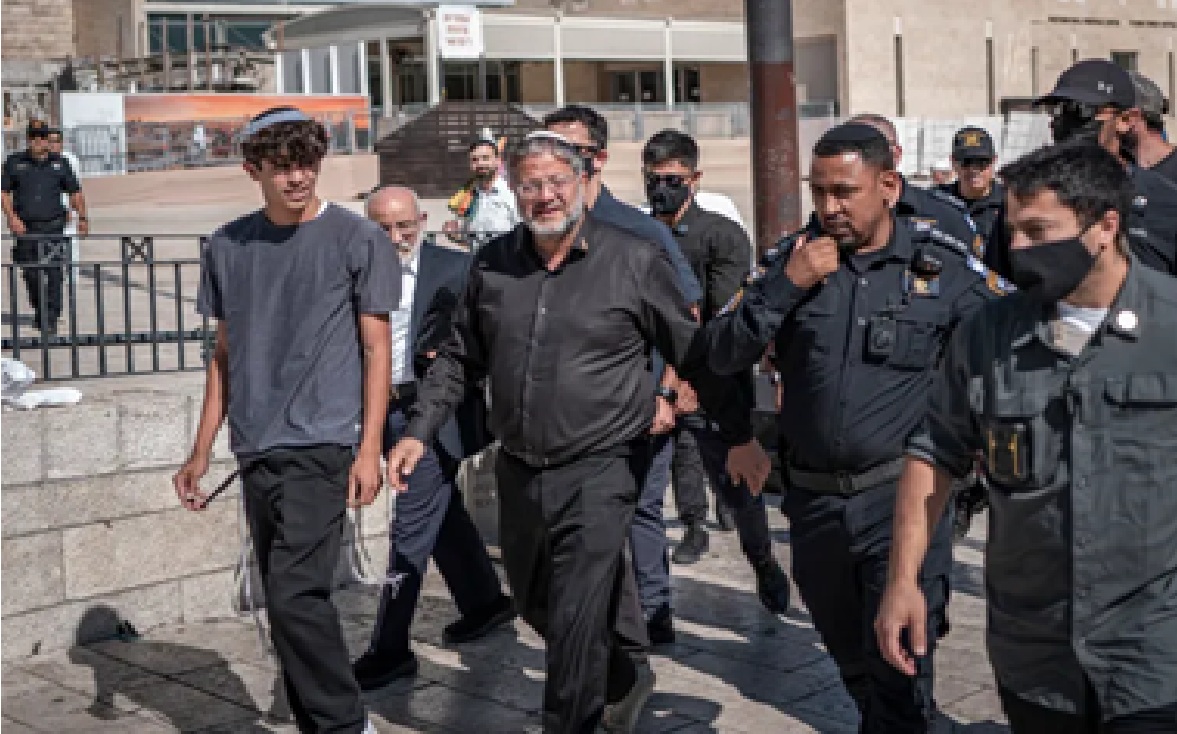
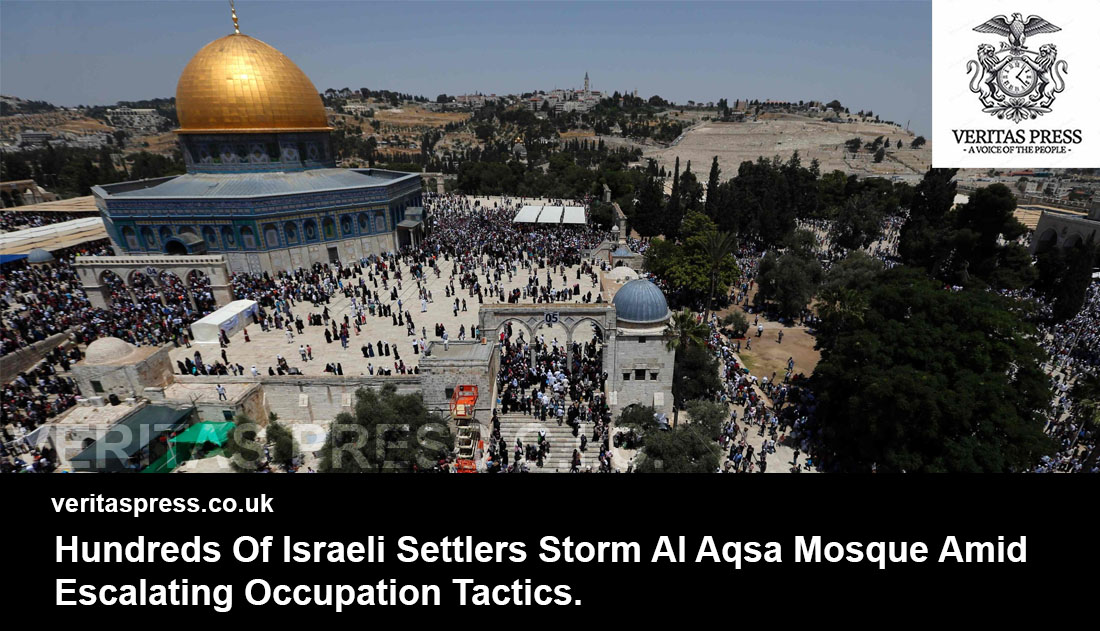
Over 2,300 settlers entered the Al-Aqsa compound in a single morning under heavy police protection. The participation of National Security Minister Itamar Ben-Gvir and Likud lawmakers transforms a day of religious mourning into an orchestrated state-backed provocation. Palestinian worshippers are barred, and the group performs Talmudic rituals openly. They also call for 5,000 more settlers to follow. This action deliberately dismantled the decades-old status quo governing Jerusalem’s holiest and most volatile site, drawing furious condemnation from Jordan, threats from Hamas, and urgent warnings of regional repercussions.
OCCUPIED EAST JERUSALEM — In a calculated choreography of prayer and provocation, over 2,300 Israeli settlers and far-right figures poured into the Al-Aqsa Mosque compound on Thursday morning, their numbers swelling by the hour in what Palestinian officials described as the single largest incursion of the year. By midday, the Jerusalem Governorate warned that the figure would likely exceed 5,000 before sundown. This scale would surpass all previous records for Tisha B’Av, the Jewish day of mourning that increasingly serves as a vehicle for a radical political project at Islam’s third holiest site.
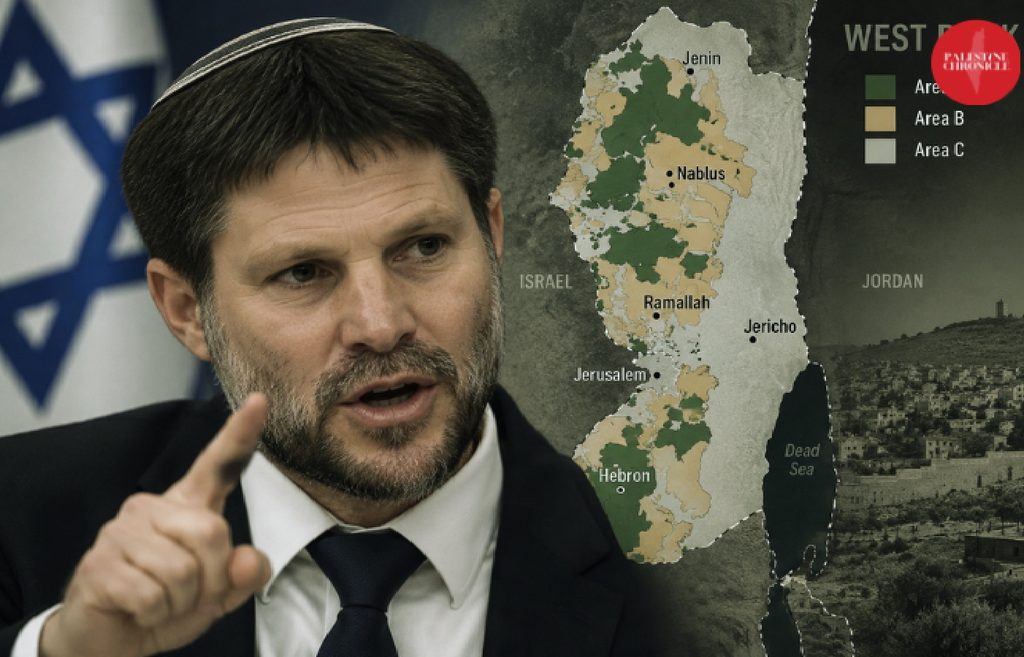
The day’s events, documented in real time by the governorate, Al Jazeera, and Israeli media, marked not merely another flashpoint in the contested city but a dangerous institutional shift. For the first time since Israel’s 1967 occupation of East Jerusalem, the participation of a sitting minister responsible for police oversight, National Security Minister Itamar Ben-Gvir, alongside lawmakers from the ruling Likud party, signalled what the Palestinian Authority’s Jerusalem Governorate called a “dangerous shift” from fringe extremism to “the Israeli government’s official adoption of such actions.”
Under a heavy police deployment that Palestinian residents described as a collective punishment, Israeli forces sealed off access to the mosque’s gates for all but a handful of elderly Palestinian worshippers. Dawn prayers saw a skeletal congregation; “Israeli forces imposed tight restrictions at the mosque’s gates and around Jerusalem’s Old City, deploying heavily across its courtyards and preventing Palestinian worshippers from entering,” the Jerusalem Governorate said in a statement. “Only a very limited number of Palestinians reached the mosque for dawn prayers before Israeli forces assaulted several worshippers and other residents.”
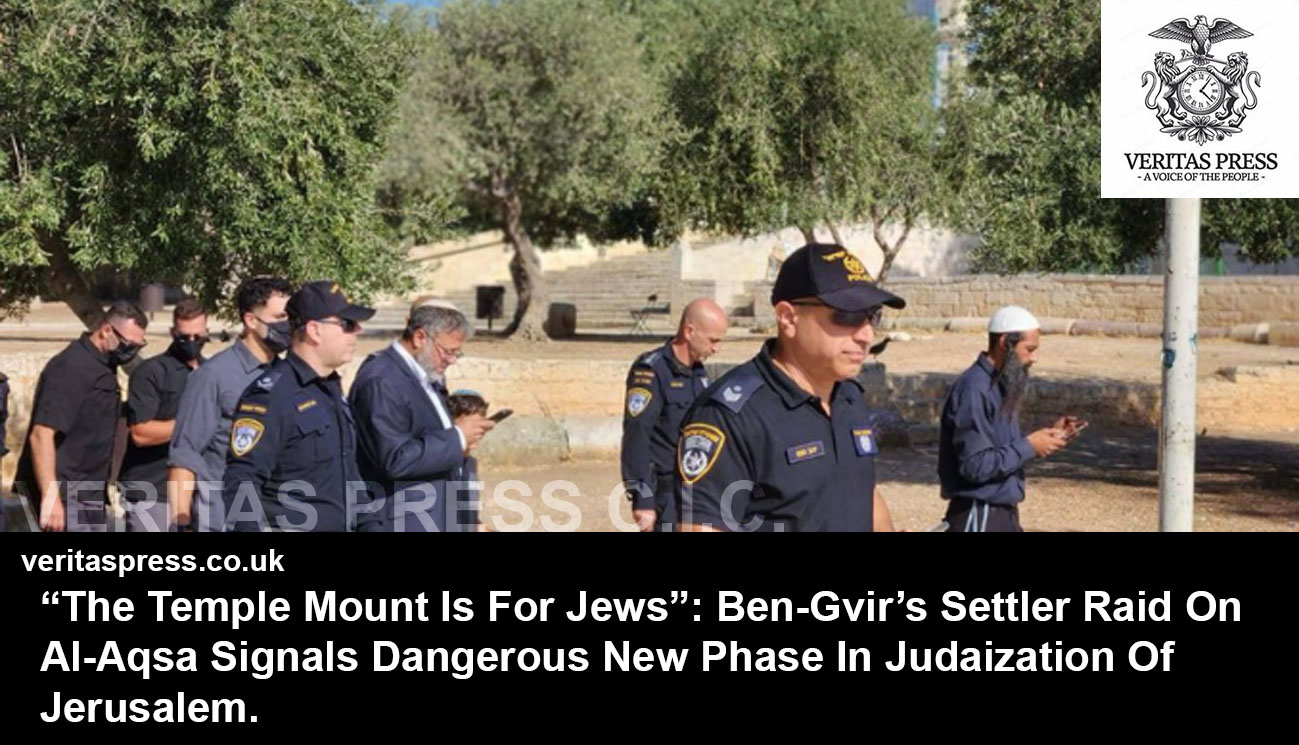
Israel’s far-right National Security Minister Itamar Ben-Gvir enters Al-Aqsa Mosque compound under heavy police protection [Ilia Yefimovich/AFP]
Rituals And Red Lines:
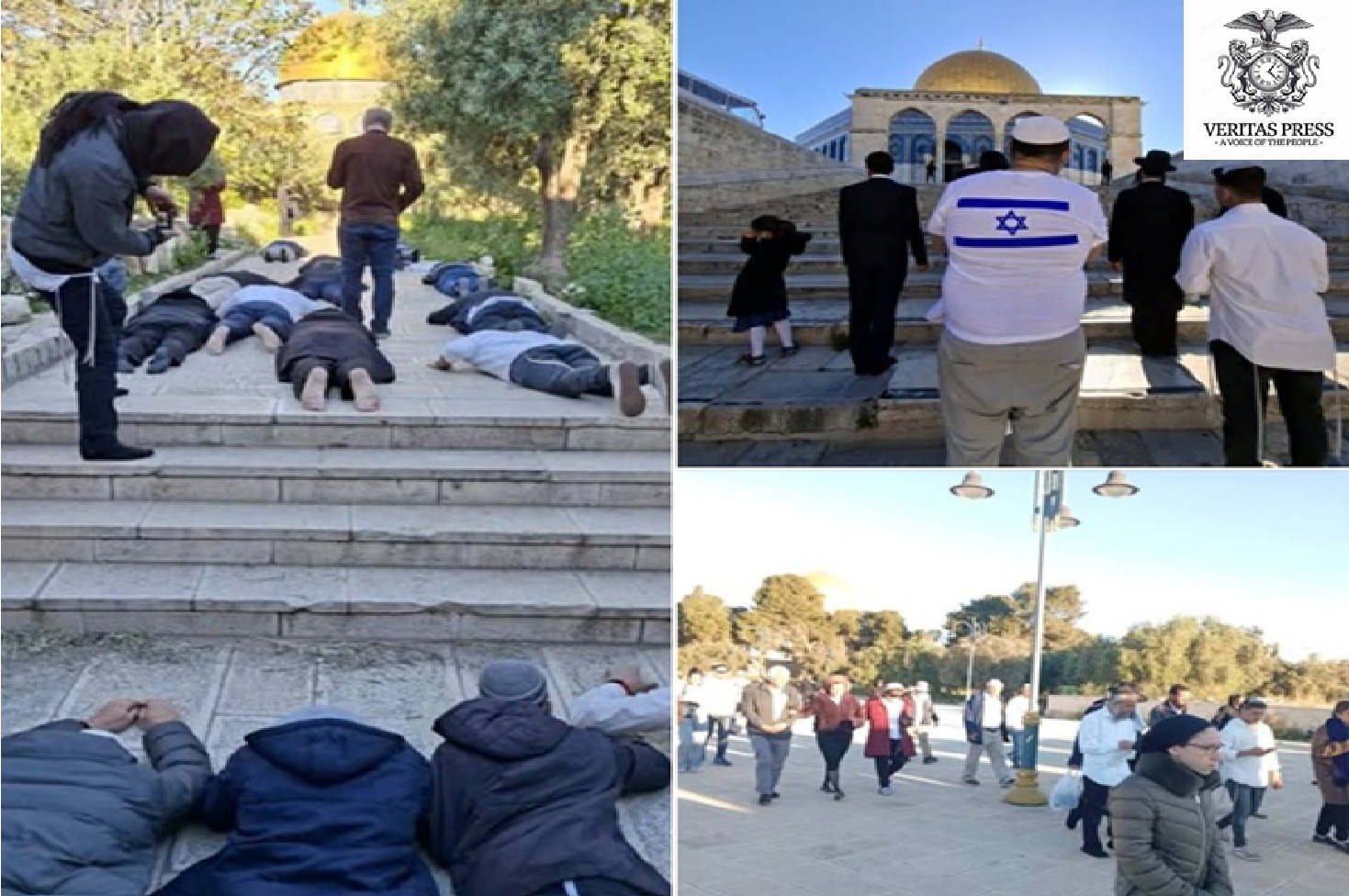
Inside the compound, the incursions were not silent. The governorate reported that settlers “performed Talmudic rituals … including wearing tefillin, carrying out full prostrations in the eastern section of the compound and chanting loudly.” Israeli media, including Haaretz, confirmed police permitted over 1,000 Israelis to pray openly at the site, a clear violation of the long-standing agreement established after 1967, which allows non-Muslim visits but reserves prayer solely for Muslims. The rule, fragile but functional for over half a century, has been chipped away incrementally. On Thursday, it was shattered with the full protection of the state.
“Ben-Gvir said Jews visiting the site on Tisha B’Av ‘feel like the owners,’ praising what he called ‘tremendous progress’ there,” Haaretz reported, capturing a triumphalist mood that rippled through the ranks of temple activist groups. The minister’s presence was a message: the police force he commands would not merely facilitate the breach but sanctify it.
Likud lawmaker Amit Halevi also joined the incursion, his presence a direct link between the parliamentary majority and the decades-old campaign to replace the golden Dome of the Rock with a Third Temple. “Extremist groups advocating the construction of a Jewish temple at the site were mobilising supporters in an effort to bring 5,000 occupiers into the compound,” the governorate noted, observing that calls for a temple, once relegated to the margins of Israeli politics, now echo from the cabinet table.
A Political Shift Laid Bare:
Nour Odeh, Al Jazeera’s correspondent in Ramallah, contextualised the day’s events as a “fundamental political shift.” She reported that Palestinian and Muslim officials now argue that the Temple Movement’s goals are “endorsed by key figures in the Israeli government and the Israeli parliament,” a development that moves the conflict from clashes with settlers to a direct confrontation with state policy.
This shift is not merely rhetorical. It carries immediate consequences for the tens of thousands of Palestinian worshippers whose access to the site is increasingly dictated by an Israeli security calculus that treats their presence as a threat while normalising settler prayer. The Jerusalem Governorate stressed that the entire 144-dunam (35.6-acre) compound is “an exclusively Islamic place of worship” and declared any attempt to alter its identity “invalid and illegitimate.” Yet on the ground, the language of invalidity crumples against the reality of boots, checkpoints, and legislative immunity.
“This is a desecration of the sanctity of the mosque, an escalation, a barbaric act, and an unacceptable provocation,” said Jordanian foreign ministry spokesperson Ambassador Fouad Majali, whose country holds custodianship over Christian and Muslim holy sites in Jerusalem under international law. Amman’s condemnation, though sharp, underscored a deepening diplomatic paralysis; the Hashemite Kingdom has repeatedly urged the international community to pressure Israel, with little tangible result.
Hamas, the Palestinian faction governing Gaza, warned that “these blatant acts of aggression will backfire on the occupation and its settlers,” a statement that carries the weight of a region already convulsing from months of war. The group’s framing of the incursions as a religious casus belli is not new, but the 2026 context, a fragile ceasefire, a devastated Gaza, and a West Bank under relentless military pressure, lends the warning a volatile immediacy.
The Anatomy Of A Coordinated Incursion:
Thursday’s operation bore the hallmarks of meticulous planning. Israeli authorities shut down Palestinian access to the Old City through a network of checkpoints, including the Qalandiya crossing, effectively placing East Jerusalem under a religious curfew. Police allowed settler groups to converge in organised waves, each numbering up to 150 individuals, a logistical feat that required prior coordination with temple organisations and the police command — a command ultimately answerable to Ben-Gvir. The minister’s dual role as inciter and enforcer collapses any remaining distinction between the state and the mob.
The Israeli narrative frames Tisha B’Av as a solemn commemoration of the destruction of the First and Second Temples, said to have stood on the site known to Jews as the Temple Mount. But the contemporary reality captured by witnesses and Palestinian officials tells a different story: that of a state harnessing religious grief to advance a territorial and ideological claim under armed guard. The governorate’s description of the day’s events, “systematic targeting of Islamic holy sites”, reflects a deep belief among Palestinians that each incursion, each prostration, is a brick in the construction of a new reality, one that seeks to partition the compound temporally and spatially.
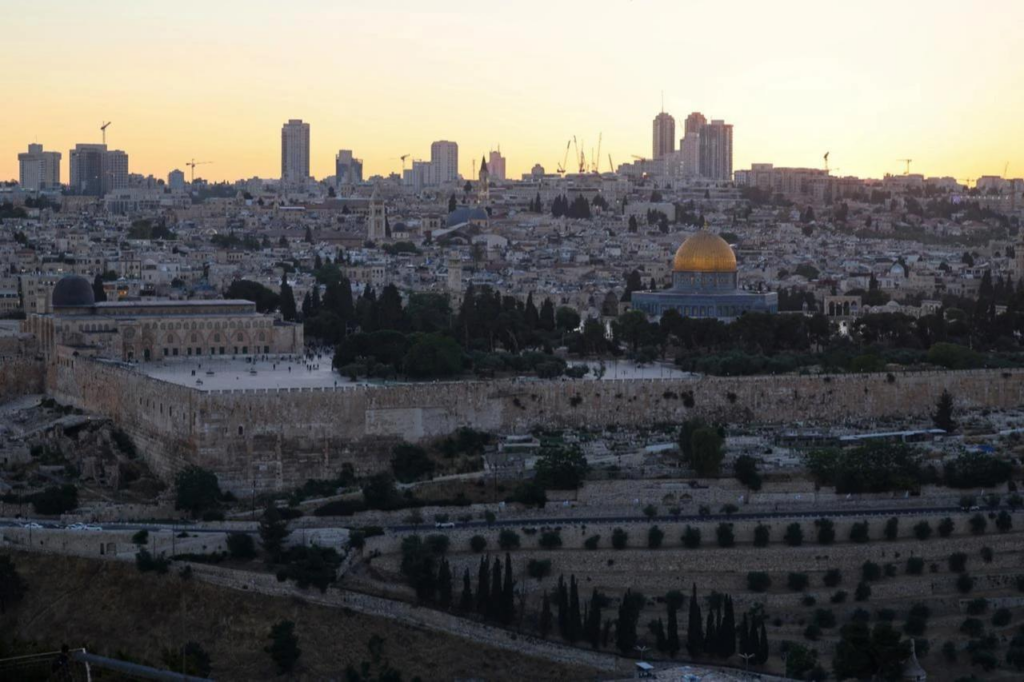
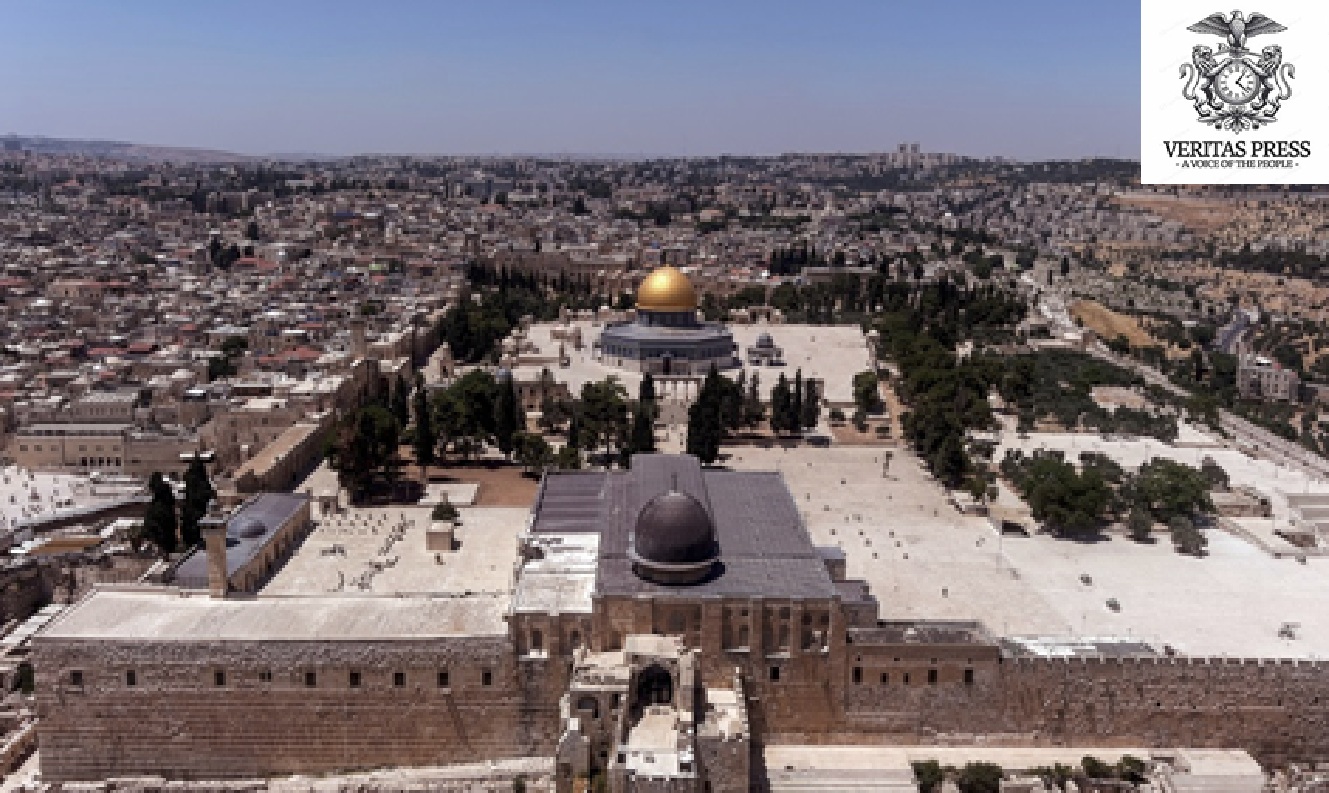
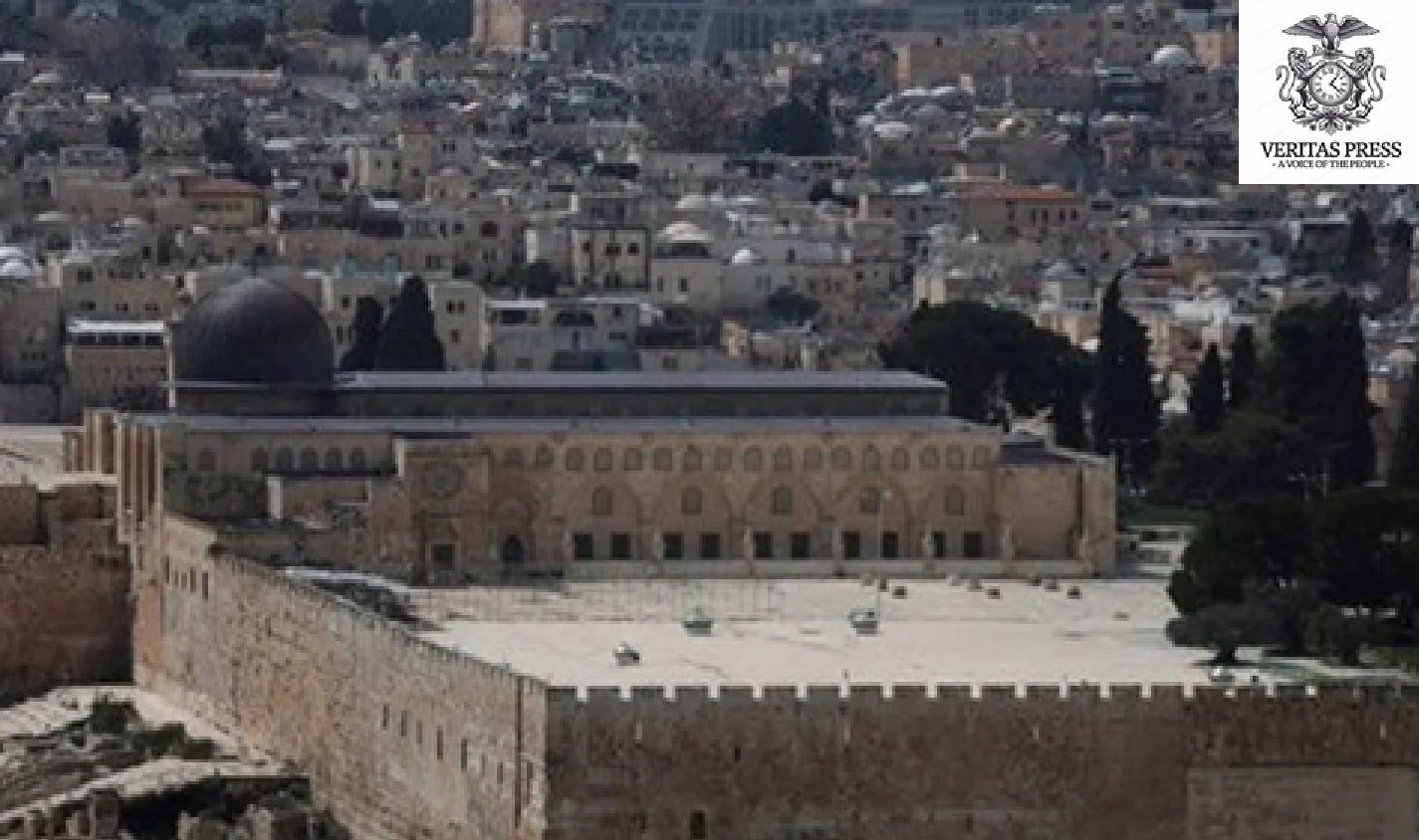
This picture taken from the Mount of Olives shows a view of the Al-Aqsa Mosque compound and its Dome of the Rock in Jerusalem’s Old City on May 22, 2026. (AFP Photo)
The 1967 status quo is not merely a legal arrangement; it is a meticulously calibrated truce that has contained the explosive potential of Jerusalem for generations. Its erosion is measured in small, calculated steps: extended visiting hours, silent prayer tolerated, then loud prayer permitted, then full Talmudic rituals performed, then ministers in situ, then lawmakers, and now a target of 5,000. What remains of the arrangement is a fiction sustained by international inertia.
The Regional and International Echo
The Jerusalem Governorate warned that the violations “could have repercussions for regional security and stability.” That warning, issued from the occupied city’s institutional heart, is not hyperbole. The Al-Aqsa compound has been the ignition point for previous uprisings and regional flare-ups; similar scenes sparked the 2021 war between Israel and Hamas at the mosque and in the Sheikh Jarrah neighbourhood. In 2026, with a multi-front conflict only recently abated, the strategic recklessness of such a provocation is staggering.
The international community, long accustomed to issuing statements that expire between news cycles, faces a test it has repeatedly failed. The United Nations and individual member states have condemned unilateral actions that alter Jerusalem’s status, yet the cycle speeds up. Thursday’s events make clear that without concrete consequences, diplomacy’s tools become background noise, while on the ground, transformation proceeds at a prayer pace.
Friday Looms:
The governorate and Palestinian officials note that incursions were expected to continue into Friday, when the weekly congregational prayers draw thousands of Muslim worshippers to the compound. Odeh warned that the ongoing settler entries “could spark further confrontations,” a scenario that Israeli forces are evidently preparing for with the same heavy hand. The convergence of Friday prayers with the tail end of a holiday marked by record-breaking settler presence is a tinderbox laid deliberately.
The day’s events are not an isolated aberration. They are the logical culmination of a political project that has moved from the margins of Israeli society to the heart of its government, a project that sees the Al-Aqsa Mosque compound not as a sacred space to be shared under an agreed framework, but as a real estate asset to be reclaimed, stone by stone, ritual by ritual. As the sun set over the Old City on Thursday, the golden dome still caught the last light, but the shadows on the ground had lengthened. Men in uniform escorted the faithful of a different creed to pray on ground that, according to every international norm, remains occupied territory and an exclusively Muslim sanctuary.
The question now is not whether the status quo is dead, but whether the world will notice before the flames that follow its burial engulf a region already in ashes.
Source:Veritas Press C.I.C. | Multi-News Agencies
Help Support Our Work By Donating
Readers who believe that truth still matters have power over popular information. When just a few more people step up to support this work, it means more lies exposed, more corruption uncovered, and more accountability where it’s long overdue.
Help Protect Independent Journalism, Which Is Currently Under Attack.
If you believe journalism should serve the public, not the powerful, and you’re able to help, becoming a regular DONOR or a PAID SUBSCRIBER truly makes a difference.
DONATION APPEAL: If you found this reporting valuable, please consider supporting independent journalism.
Your support fuels our fearless, truth-driven journalism. In unity, we endeavour to amplify marginalised voices and champion justice, irrespective of geographical location. We operate independently, with no financial backing from billionaires; our readers support us.
But it’s also extremely important. One of Veritas Press’s greatest assets is its reader-funded model.
1. Reader funding means we can cover what we like. We’re not beholden to the political whims of a billionaire owner. We are a small, independent and impartial organisation. No one can tell us what not to say or what not to report.
2. Reader funding means we don’t have to chase clicks and traffic. We’re not desperately seeking your attention for its own sake; we pursue the stories that our editorial team deems important and believes are worthy of your time.
3. Reader Funding: enables us to keep our website and other social media channels open, allowing as many people as possible to access quality journalism from around the world, particularly those in places where the free press is under threat.
We know not everyone can afford to pay for news, but if you’ve been meaning to support us, now’s the time.
Your donation goes a long way. It helps us:
Keep the lights on and sustain our day-to-day operations
Hire new, talented, independent reporters
Launch real-time live debates, community-focused shows, and on-the-ground reporting
Cover the issues that matter most to our communities, in real time, with depth and integrity
Without your support, independent voices like ours will be silenced.
Further, we have plans to expand our work, but we can’t do it without your support. Every contribution, no matter the size, helps us stay independent and build a truly people-powered media platform.
If you believe in journalism that informs, empowers, and reflects the communities we serve, please donate today.
Kamran Faqir is a volunteer investigative journalist and writer committed to exposing hidden truths and amplifying underreported stories. Driven by social justice, he brings sharp insight and fearless truth-telling to independent journalism. NUJ registered.
SEATTLE, TEHRAN — The U.S. Department of Homeland Security (DHS) will allow Iran’s national football team to enter the country 48 hours before their critical World Cup match against Egypt on Friday, a modest concession in a tournament where Team Melli’s travel conditions have sparked claims of oppression and competitive disadvantage.