Kamran Faqir is a volunteer investigative journalist and writer committed to exposing hidden truths and amplifying underreported stories. Driven by social justice, he brings sharp insight and fearless truth-telling to independent journalism. NUJ registered.
Article Date Published:
Article Date Modified:
16 minutes
Views:408
Listen to this article
Help support our mission, donate today and be the change. Every contribution goes directly toward driving real impact for the cause we believe in.
The Last Distribution Centre – In Northern Gaza, Armed Raids, Black-Market Smuggling, And A Strangling Siege Have Transformed Humanitarian Aid Into A Weapon Of War, And Starvation Into An Instrument Of Ethnic Cleansing.
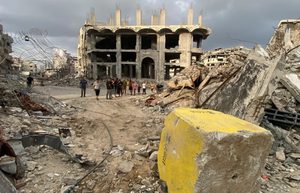
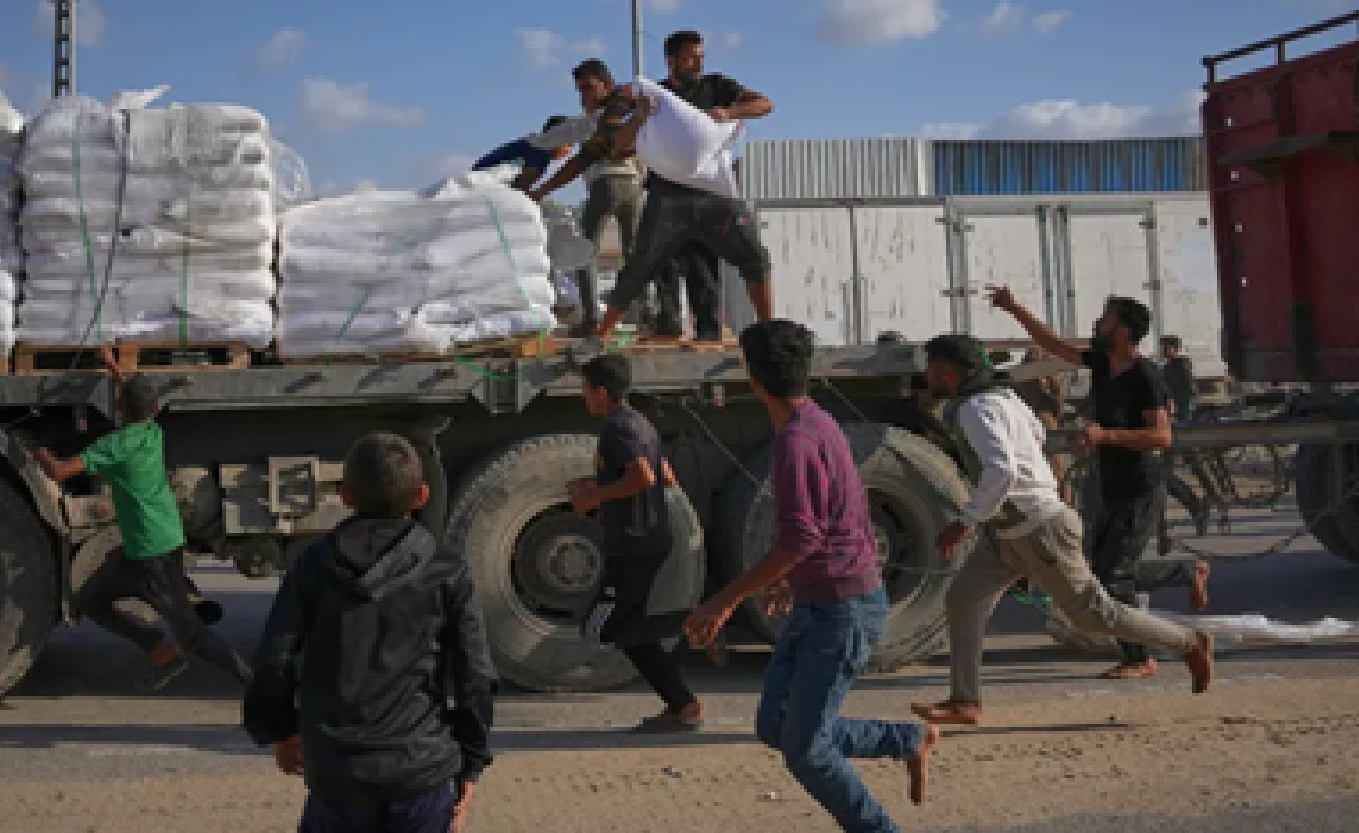
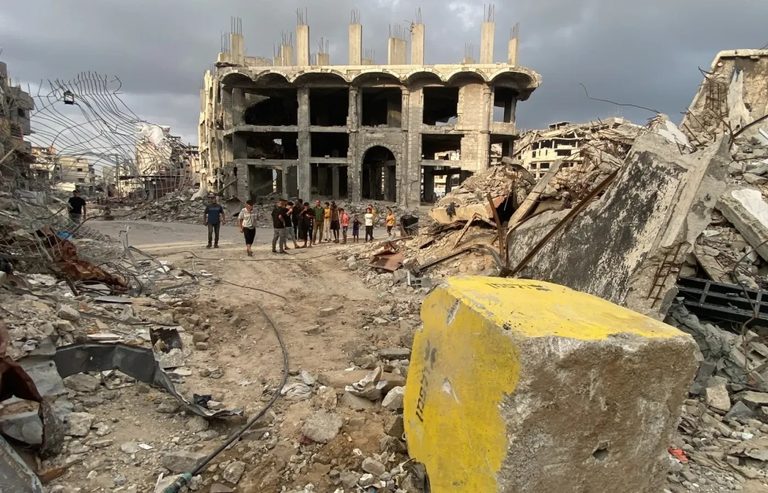
JABALIYA REFUGEE CAMP, GAZA STRIP— The flour dust still hangs in the air at the Abu Rashid distribution centre, mixing with the acrid residue of tear gas and the iron tang of blood. On July 7, 2026, this warehouse, once a lifeline for 40,000 starving people, became a crime scene. Depending on whom you believe, it was either a brazen armed raid by Hamas-affiliated forces seizing humanitarian supplies, or a lawful police operation to stop commercial smugglers from corrupting the last food pipeline into a dying enclave. But beyond the dueling press statements lies a more harrowing reality, one that neither the United Nations nor the de facto authorities in Gaza are willing to name aloud: the aid distribution system has collapsed into a free-for-all, starvation is being weaponised as a policy tool, and every act of violence around a food parcel is a microcosm of a slow-motion ethnic cleansing campaign designed to render the Gaza Strip uninhabitable.
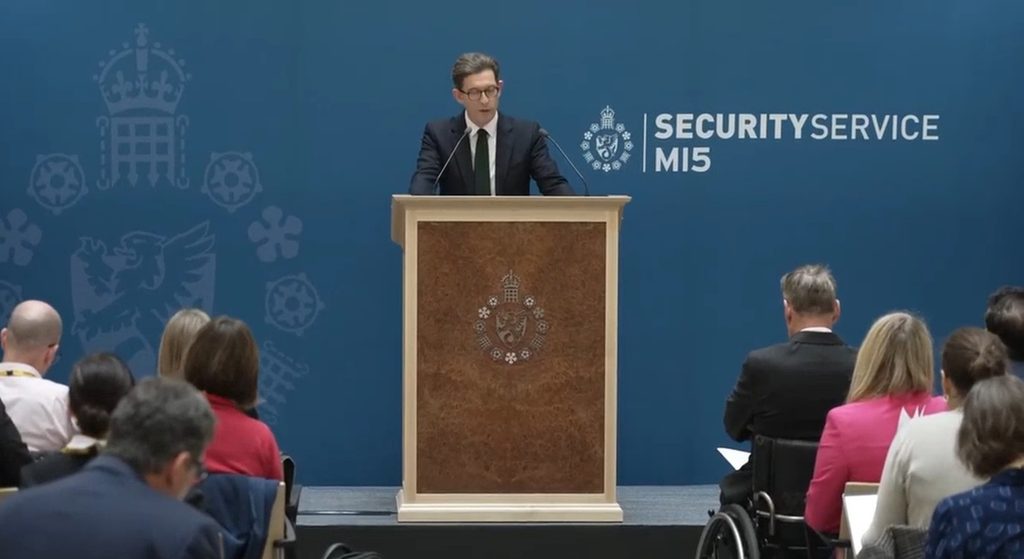
The UN’s account was stark. Ramiz Alakbarov, Deputy Special Coordinator for the Middle East Peace Process, accused “armed personnel affiliated with the de facto authorities” of forcibly entering the World Food Programme (WFP) facility in Jabaliya, assaulting two truck drivers, and halting a critical distribution. He warned of an “increasingly dangerous pattern of intimidation, violence and obstruction.” His words, measured in the sterile cadence of diplomatic language, masked the lethal consequences: according to local medics, at least six malnourished children died in northern Gaza in the 48 hours following the distribution shutdown. The food never reached their tents.
Hamas, through its Government Media Office, issued a thunderous denial. There was no raid, it insisted, only an “official law-enforcement mission” that uncovered cigarette cartons and mobile phone screens hidden inside aid parcels. The police, it claimed, were protecting humanitarian neutrality. The office then pivoted, demanding a UN apology and accusing the international body of complicity in silence over Israeli attacks on aid workers. It was a classic counter-narrative: deflect, deny, and accuse the accuser.
But listen to the voices on the ground, and both official accounts crumble into irrelevance.
“They Raid Us, Then They Raid Each Other”
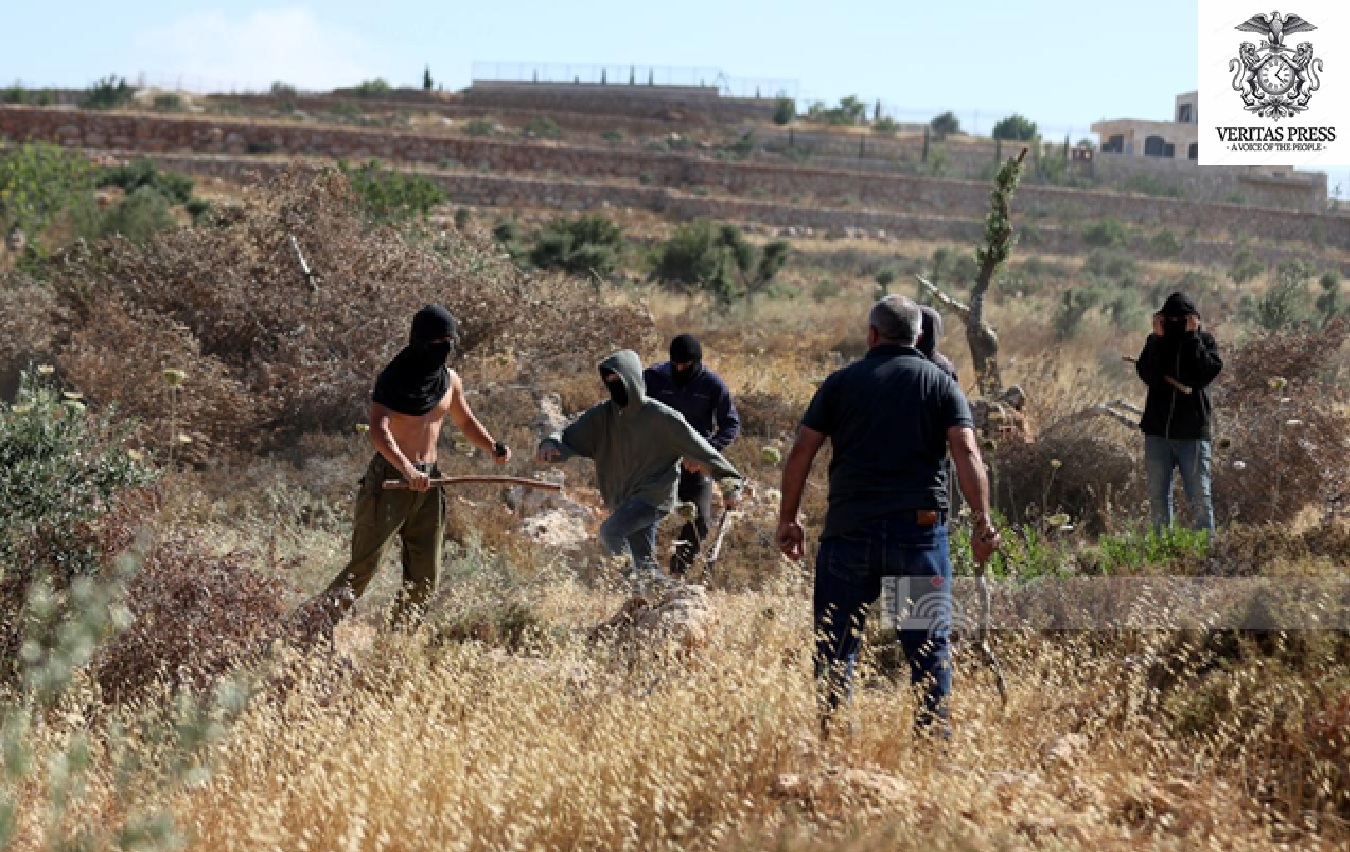
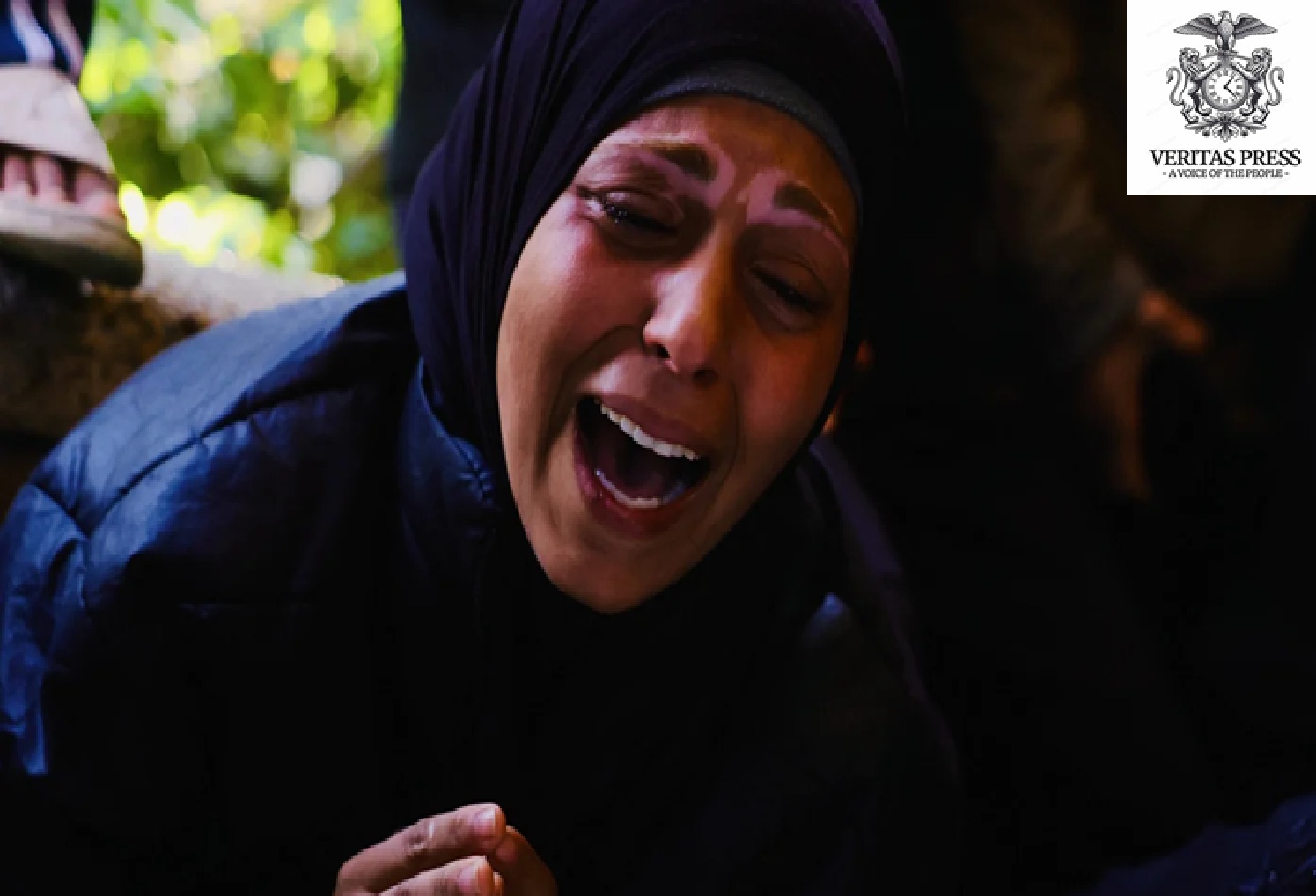
Um Mohammed, a 54-year-old widow sheltering with 15 relatives in a collapsed school in Jabaliya, does not care about UN protocols or police mandates. She only knows that the aid distribution was raided, not once, but repeatedly, by different groups of armed men over the past three months. “Sometimes they wear police uniforms. Sometimes they wear tracksuits and balaclavas. Sometimes they come at night and take the stocks from the warehouse. The UN knows this. Everyone knows this,” she told this correspondent, her voice flattened by hunger and fury. “We queued for six hours on Monday. Then the shooting started. The truck drivers were beaten. The bags of flour were carried away. We got nothing. My grandchild has not eaten a full meal in four days.”
Her testimony aligns with a growing body of evidence gathered by local monitors and international NGOs operating clandestinely in the north. A confidential field report by a European aid agency, shared on condition of anonymity because its staff face expulsion by Hamas and targeting by Israel, describes a “systematic pattern of armed expropriation” at distribution points. The report documents 17 separate incidents in June 2026 alone in which armed factions, some clearly identifiable as Hamas police, others as clan-based gangs with links to the Internal Security apparatus, diverted aid for resale on the black market. A 25-kilogram bag of WFP flour, meant to sustain a family for a month, now sells for the equivalent of $600 in the shadow souks of Jabaliya. A can of cooking oil is traded for gold jewellery. Infant formula is a currency more valuable than cash.
“Aid distribution in northern Gaza has become a continuous, multi-layered raid,” said Tareq Al-Burai, an independent economist who fled Gaza last year and now testifies before parliamentary committees in London. “The Israelis raid the supply at the border crossings, refusing entry to items they classify as dual-use. Then the clans raid the convoys on the road, paying off checkpoint guards. Then the police raid the warehouses, claiming to be investigating police smuggling. Then the desperate civilians raid whatever is left. The result is engineered. The result is famine.”
The Architecture Of Starvation:
The famine stalking Gaza in July 2026 is not a natural disaster. It is not a consequence of war alone. It is, as an increasingly vocal bloc of UN special rapporteurs, human rights lawyers, and genocide scholars contend, a deliberate construction of a policy of imposed deprivation that meets the legal definition of extermination under the Rome Statute of the International Criminal Court.
Since the collapse of the Phase 2 ceasefire negotiations, Israel has tightened what it calls “security screening” on humanitarian goods. In practice, this has reduced the daily average of aid trucks entering Gaza to 22, down from a pre-war average of 500. According to the UN’s own Office for the Coordination of Humanitarian Affairs (OCHA), 83% of food distribution points in northern Gaza are now non-functional, some bombed by the Israeli military in resumed strikes, others abandoned after being looted or raided by armed groups. The Integrated Food Security Phase Classification (IPC), the global standard for measuring food crises, declared in its latest June 2026 report that over 1.1 million Gazans are experiencing “catastrophic” hunger (IPC Phase 5), the threshold at which death by starvation becomes a daily mass event.
“When you combine the siege, the systematic denial of humanitarian access, the destruction of agricultural land, water infrastructure, and fishing boats, and the deliberate targeting of aid workers, you are looking at the textbook definition of using starvation as a method of warfare,” said Francesca Albanese, the UN Special Rapporteur on the occupied Palestinian territories, in a statement last week that the Israeli Foreign Ministry dismissed as “blood libel.” She added: “This is not a humanitarian crisis. This is a humanitarian crime, perpetrated in plain sight, with the complicity of states that continue to supply arms and diplomatic cover.”
The Jabaliya aid centre raid must be understood within this structural framework. It is not an isolated incident of criminality. It is a predictable consequence of a system designed to produce scarcity. When food is reduced to a trickle, it becomes a weapon. Control over its distribution confers power, wealth, and political control. Hamas, fighting for its survival as a governing entity, cannot afford to cede that control to international agencies. Neither can it afford to allow independent clan-based smuggling networks to eclipse its authority. The “law-enforcement operation” was, in this reading, a brutal assertion of primacy over the last fungible resource in a territory where the economy has been pulverised.
The Double Raid: Borders And Warehouses.
To speak of aid raiding is to speak of two distinct but interlocking processes. The first is the geopolitical raid at the border. Israel, as the occupying power under international humanitarian law, is obligated to facilitate relief operations. Instead, it has subjected humanitarian shipments to a Kafkaesque approval process in which items as basic as crutches, water pipes, and children’s toys are rejected on security grounds. A leaked Israeli Defence Ministry memo from April 2026, published by the Israeli newspaper Haaretz, revealed a policy of calculating the “minimum caloric intake” necessary to prevent outright famine, a bureaucratic calibration of mass hunger that human rights groups say constitutes a war crime of starvation.
The second raid is the internal, anarchic predation inside Gaza. The Hamas government’s operation at Abu Rashid, whether it was a legitimate anti-smuggling action or a cover for asset seizure, is a symptom of this chaos. “The police are not an independent institution,” said Younis Al-Khatib, director of the Palestinian Centre for Human Rights, speaking from his office in Khan Younis before it was damaged in a recent Israeli airstrike. “They are the enforcement arm of a political faction. When they raid a warehouse, how can we know if they are confiscating smuggled goods for legal proceedings or simply seizing them to sell and fund their own operations? There is no judiciary, no transparency, no accountability. The aid is unprotected from everyone.”
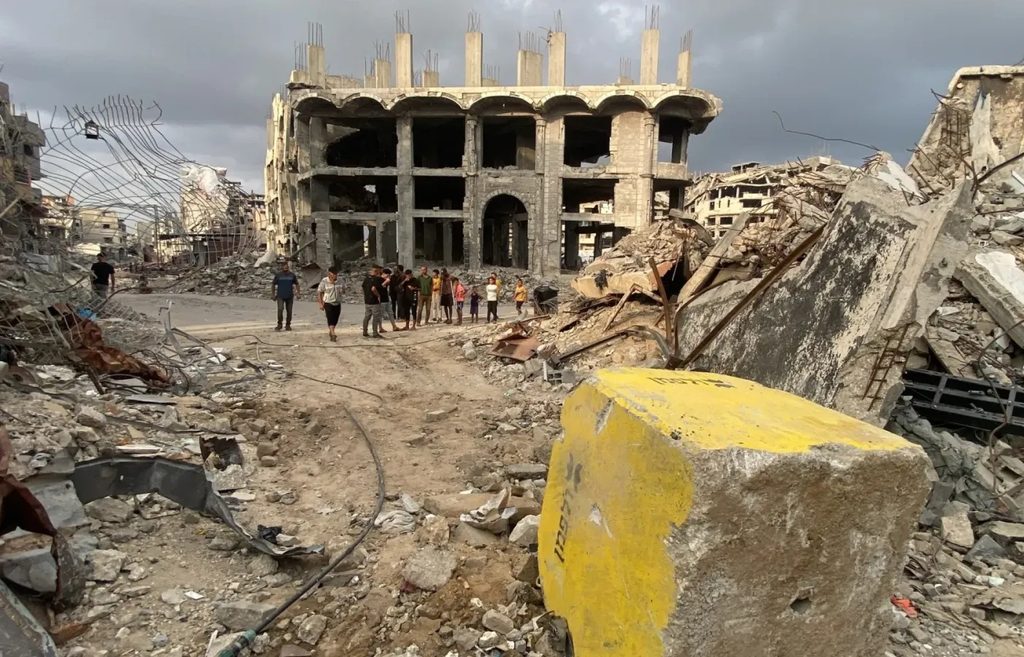
This vacuum of accountability is precisely the fertile ground in which ethnic cleansing incubates. The term, once debated cautiously in academic journals and UN corridors, has now entered mainstream discourse. A landmark report published in April 2026 by a coalition of 18 human rights organizations, including Amnesty International, Human Rights Watch, and Al-Haq, concluded that Israel’s actions in Gaza, the mass displacement of 1.9 million people into an ever-shrinking “humanitarian zone,” the systematic destruction of housing and infrastructure, the denial of return, and the imposition of conditions of life calculated to cause physical destruction, amount to the crime against humanity of extermination and the specific intent of ethnic cleansing.
“A Design, Not A Byproduct”
The raid on aid, the march of famine, the diplomatic paralysis, these are not collateral damage. They are, in the words of prominent Israeli historian and Holocaust scholar Omer Bartov, “a design, not a byproduct.” In an interview with this publication last month, Bartov expanded: “When you move a civilian population into a zone that you then bomb, when you cut off their water and food, when you prevent humanitarian organisations from operating, when you destroy the infrastructure of life itself, you are not fighting a war against a militant group. You are making a territory unlivable. That is the essence of ethnic cleansing: the creation of conditions that force the population to leave, or to die.”
Inside Gaza, the population can do neither. The border with Egypt is sealed for the vast majority. Israel’s stated security buffer zones have swallowed over 60% of the Strip’s territory, far beyond the 53% stipulated in Phase 1 of the collapsed ceasefire deal. Those displaced are packed into the coastal Al-Mawasi area, a waterlogged, sewage-ridden expanse with no permanent shelters, no sewage treatment, and no economic life. Disease is rampant. The UN Relief and Works Agency (UNRWA), itself the target of an Israeli Knesset ban that came into effect in January 2026, operates on the brink of collapse, its convoys repeatedly denied access.
Against this backdrop, Hamas’s demand for a UN apology and its framing of the Jabaliya operation as a defence of humanitarian neutrality appear grotesque. It is the language of sovereign legitimacy from an entity presiding over a population being collectively punished into oblivion. “They want the UN to legitimise their policing role, so they can be seen as the rightful government in Phase 2 negotiations,” said Mkhaimar Abusada, a political scientist from Gaza now at the Carnegie Endowment for International Peace. “But their policing is indistinguishable from their predation. They cannot be the arsonist and the fire brigade simultaneously.”
Yet the UN’s own moral footing is perilously unstable. Alakbarov’s statement condemned the Hamas raid while remaining diplomatically silent on the context that produced it, the Israeli siege, the weaponised blockade, the deliberate creation of a humanitarian catastrophe so extreme that every bag of flour becomes a prize to be fought over by armed men and starving mothers. “The UN is trapped,” said a senior WFP official who requested anonymity because they are not authorised to speak to the media. “If we say nothing when our staff are assaulted, we become complicit in the breakdown of our own operations. If we say nothing about the cause of the famine, we become complicit in the policy that created it. We are forced to choose which injustice to protest, and we inevitably fail the victims both ways.”
The Final Prize:
In Jabaliya, the Abu Rashid distribution centre remains closed. The World Food Programme has suspended operations in the northern governorate, citing “untenable security conditions” and a failure to receive adequate protection guarantees from either the Israeli military or the de facto authorities. The impact is immediate and lethal. At Kamal Adwan Hospital, the nearest medical facility, Dr. Hussam Abu Safiya reported receiving 42 cases of severe acute malnutrition in a single week, 18 of them children under five. “We have no therapeutic food to give them,” he said in a video message circulated to journalists. “We watch them die. This is not a hospital anymore. This is a hospice for the starving.”
The Government Media Office continues to issue statements, the latest demanding the UN retract its “slander” and focus on “the occupation’s daily massacres.” The UN continues to issue its carefully worded condemnations. Meanwhile, the people of northern Gaza queue for bread that never comes, bury children whose deaths are registered not as starvation but as “underlying health conditions” or “dehydration,” and navigate a landscape of armed men who claim to protect them while participating in their slow destruction.
The raid on the aid centre was a flashpoint. But the fire it illuminated has been burning for months. It is the fire of a population being extinguished by design, a design executed through Israeli military policy, facilitated by international diplomatic abdication, and exacerbated by a Palestinian factional struggle over the spoils of a dying society. Starvation, aid raiding, and ethnic cleansing have become a single, fused, catastrophic process. To report on one is to report on the other. To separate them is to perpetuate the illusion that this is a humanitarian crisis rather than what it is: a crime against humanity, committed before an indifferent world, with a bag of WFP flour as both the evidence and the weapon.
Conclusion:
So we return to the question that neither the UN statement nor the Hamas communiqué dares to answer: Who bears ultimate responsibility when a population is systematically deprived of the means of life, and then condemned for the chaos that ensues over the scraps? International humanitarian law is unambiguous. An occupying power that fails to ensure the provision of food, water, and medical supplies to a protected population is in violation of the Fourth Geneva Convention. The deliberate infliction of conditions of life calculated to bring about a group’s physical destruction is a constitutive act of genocide under the Genocide Convention. These are not rhetorical flourishes; they are legal findings that multiple UN special rapporteurs, the International Court of Justice in its provisional measures, and a growing body of jurists have already articulated. Yet the enforcement machinery of international law remains in diplomatic paralysis, held hostage by Security Council vetoes and geopolitical calculations that value the architecture of impunity over the architecture of accountability. The raid on the Abu Rashid centre is a crime scene within a crime scene. But the larger crime scene is the entirety of the Gaza Strip, a territory that the civilised world has decided can be bombed, starved, and erased, provided the press releases are properly formatted and the condemnations are carefully balanced. History will not judge these pronouncements kindly. It will read them as the bureaucratic accompaniment to mass death, the white noise that drowned out the screams of children who only ever wanted a piece of bread.
Source:Veritas Press C.I.C. | Multi News Agencies
Help Support Our Work By Donating
Popular Information is powered by readers who believe that truth still matters. When just a few more people step up to support this work, it means more lies exposed, more corruption uncovered, and more accountability where it’s long overdue.
Help Protect Independent Journalism, Which Is Currently Under Attack.
If you believe journalism should serve the public, not the powerful, and you’re in a position to help, becoming a DONOR or a PAID SUBSCRIBER truly makes a difference.
DONATION APPEAL: If You Found This Reporting Valuable, Please Consider Supporting Independent Journalism.
Your support fuels our fearless, truth-driven journalism. In unity, we endeavour to amplify marginalised voices and champion justice, irrespective of geographical location. We operate independently, without any financial backing from billionaires.
But it’s also extremely important. One of Veritas Press’s greatest assets is its reader-funded model.
1. Reader funding means we can cover what we like. We’re not beholden to the political whims of a billionaire owner. We are a small, independent and impartial organisation. No one can tell us what not to say or what not to report.
2. Reader funding means we don’t have to chase clicks and traffic. We’re not desperately seeking your attention for its own sake: we pursue the stories that our editorial team deems important and believes are worthy of your time.
3. Reader Funding: enables us to keep our website and other social media channels open, allowing as many people as possible to access quality journalism from around the world, particularly those in places where the free press is under threat.
We know not everyone can afford to pay for news, but if you’ve been meaning to support us, now’s the time.
Your donation goes a long way. It helps us:
Keep the lights on and sustain our day-to-day operations
Hire new, talented independent reporters
Launch real-time live debates, community-focused shows, and on-the-ground reporting
Cover the issues that matter most to our communities, in real time, with depth and integrity
We have plans to expand our work, but we can’t do it without your support. Every contribution, no matter the size, helps us stay independent and build a truly people-powered media platform.
If you believe in journalism that informs, empowers, and reflects the communities we serve, please donate today.
Submissions:
For The Secure Submission Of Documentation, Testimonies, Or Exclusive Investigative Reports From Any Global Location, Please Utilise The Following Contact Details For Our Investigations Desk: enquiries@veritaspress.co.uk or editor@veritaspress.co.uk
Kamran Faqir is a volunteer investigative journalist and writer committed to exposing hidden truths and amplifying underreported stories. Driven by social justice, he brings sharp insight and fearless truth-telling to independent journalism. NUJ registered.
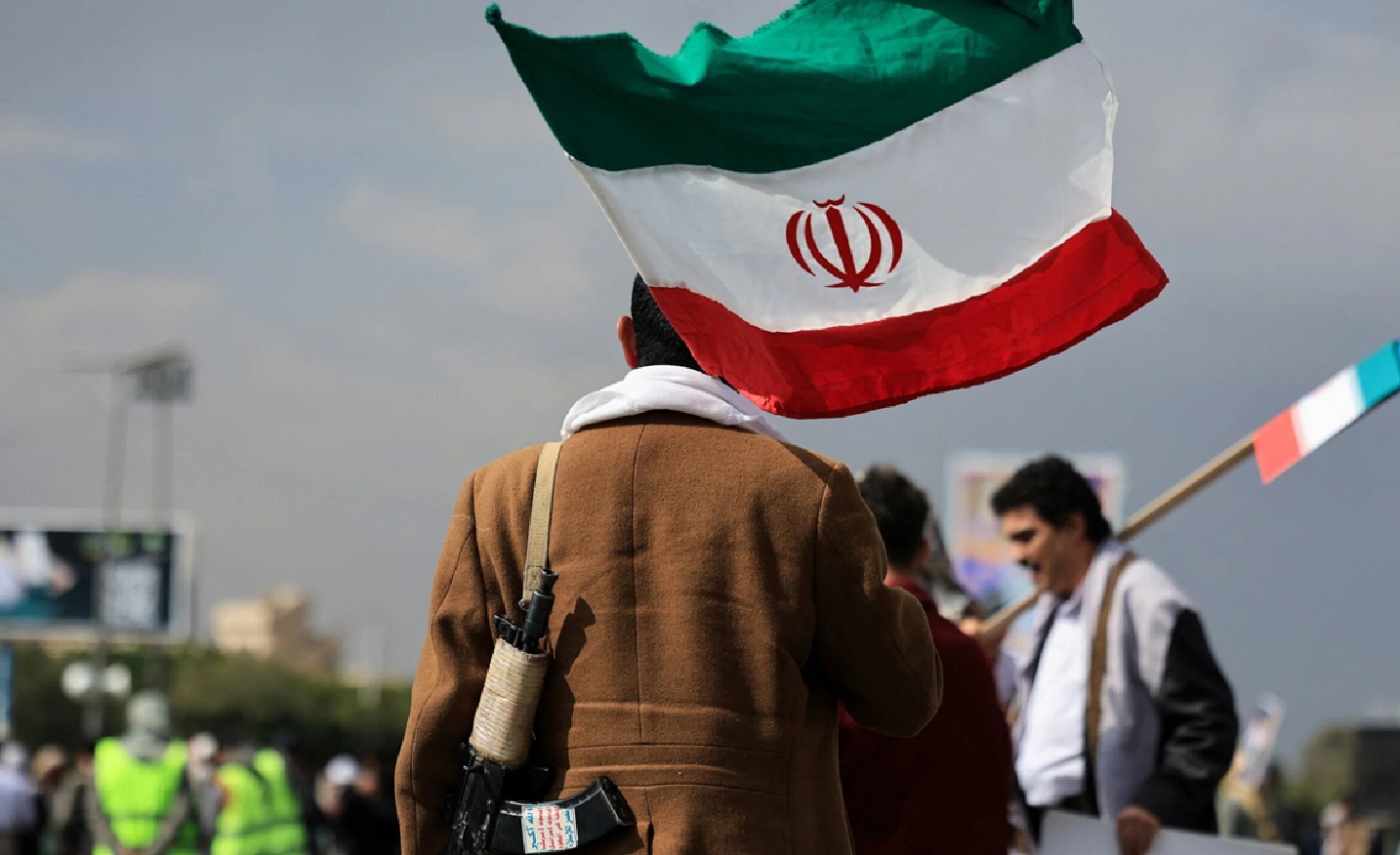
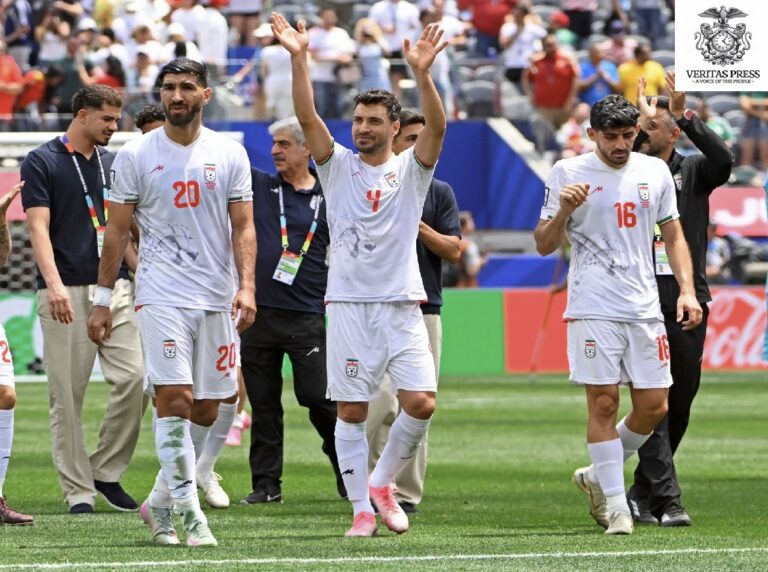
SEATTLE, TEHRAN — The U.S. Department of Homeland Security (DHS) will allow Iran’s national football team to enter the country 48 hours before their critical World Cup match against Egypt on Friday, a modest concession in a tournament where Team Melli’s travel conditions have sparked claims of oppression and competitive disadvantage.






























3gesyk
z434p9
9t020f
en366z
Здесь сайте вы сможете отыскать интересную информацию.
https://rsc-infobuh.ru/economika/34-regulirovanie-i-litsenzirovanie-onlayn-kazino-chto-dolzhen-znat-igrok.html