



Author:
Help support our mission, donate today and be the change. Every contribution goes directly toward driving real impact for the cause we believe in.
Iran’s Ultimatum Of Reciprocal Compliance, The Deepening Rift Over Lebanon And The Strait Of Hormuz, And A Dead Leader’s Funeral March Are Pushing The Islamabad Memorandum Toward Collapse, Before Peace Negotiations Have Even Begun.
TEHRAN/DOHA — On a sweltering Wednesday morning in the Persian Gulf, the fragile ceasefire between Iran and the United States is being tested not in the negotiating rooms of Doha but in the mine-strewn waters of the Strait of Hormuz, the bombed-out villages of southern Lebanon, and the street processions across Iraq mourning a “martyred” supreme leader. Two weeks after the Islamabad Memorandum of Understanding (MoU) was signed, supposedly ending the four-month US-Israeli war against Iran, the agreement is already fraying, with both sides accusing the other of bad faith, while regional capitals watch nervously as an edgy peace hangs by a thread.
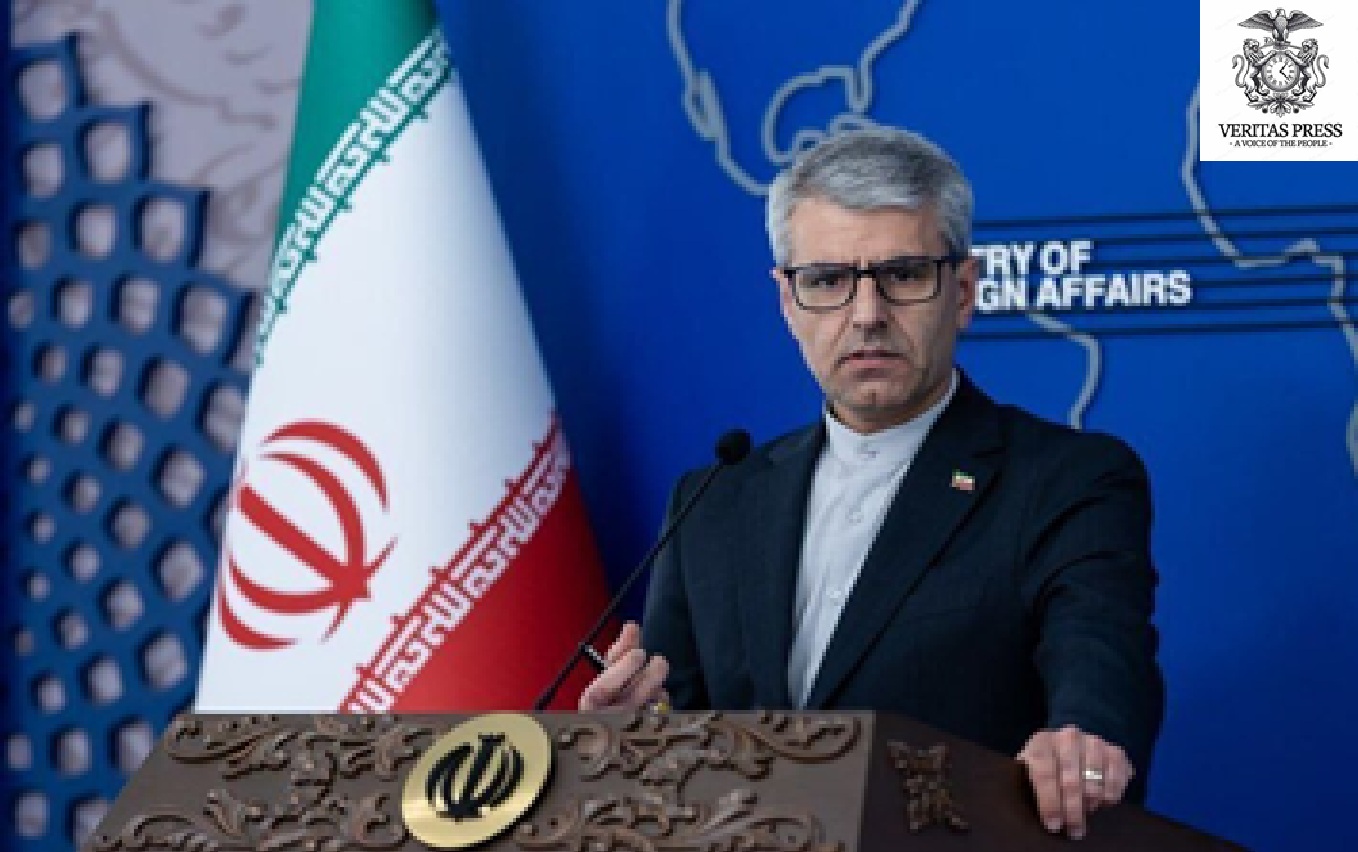
In a combative press briefing on Tuesday, Iranian Foreign Ministry spokesman Esmaeil Baghaei declared that Tehran will monitor Washington’s compliance with the MoU “moment by moment” and warned that the Islamic Republic will not implement its commitments unilaterally. “The principle of ‘commitment in exchange for commitment’ means that we will implement our commitments only as long as the other side implements its commitments,” Baghaei said. “No commitment is supposed to be implemented unilaterally.”
Those words, delivered against a backdrop of renewed clashes in the Strait of Hormuz over the weekend and persistent Israeli strikes in southern Lebanon, encapsulate the deep structural fragility of a diplomatic process born of war, mistrust, and the death of Ayatollah Seyyed Ali Khamenei, Iran’s supreme leader, whose funeral arrangements are now a major regional political event.
Moment-By-Moment Monitoring:
The MoU, brokered by Pakistan and electronically signed by President Masoud Pezeshkian and President Donald Trump on June 18, 2026, lays out a 14-point framework for terminating hostilities, lifting the naval blockade, releasing frozen Iranian assets, and eventually negotiating a final agreement encompassing Iran’s nuclear programme and regional security architecture. But the path from memorandum to lasting peace is strewn with tripwires.
Baghaei, speaking in Tehran, made it clear that Iran has not yet entered the “final agreement negotiation phase” and will not do so until the US begins implementing five specific articles: Article 1 (cessation of all military operations on all fronts including Lebanon), Article 4 (lifting the blockade and ensuring free navigation under agreed parameters), Article 5 (security arrangements for the Strait of Hormuz under Iranian control), Article 10 (issuing licences for Iranian oil exports), and Article 11 (release of blocked Iranian funds). “We have not yet entered the negotiation phase for the final agreement,” he said. “According to Article 13 of the MoU, the start of negotiations for the final agreement is contingent upon the initiation of the implementation of Articles 1, 4, 5, 10, and 11, and the continuation of their implementation.”
While the US has issued the necessary licences for Iranian oil sales, and the naval blockade has formally been lifted, the atmosphere is poisoned by what Iran perceives as Washington’s failure to rein in Israel, and by direct US violations that Tehran claims occurred just days ago.
Lebanon Ceasefire Tests The MoU’s Core:
The most immediate test is Lebanon. Article 1 of the MoU mandates “an immediate and permanent cessation of military operations on all fronts, including Lebanon.” Yet, according to Lebanese security officials and residents, Israeli warplanes struck targets near Nabatieh and Tyre as recently as Monday night, killing three civilians and wounding a dozen. “We heard the jets, then the explosions. The ceasefire is a lie written on paper,” said Umm Hassan, a mother of four from a village outside Tyre, speaking to this correspondent by phone. “The Americans do nothing to stop them.”
Iran’s position is that the US bears direct responsibility for Israeli violations. “The text of the memorandum is drafted very precisely and clearly,” Baghaei said. “The United States, as the other party to the memorandum, must adhere to its commitments and do whatever is necessary regarding Lebanon to ensure that the Zionist regime’s military aggression against Lebanon is halted.” If Washington fails to do so, he warned, Iran “will not hesitate to use all available tools to protect its national security and interests.” That language, left deliberately vague, could encompass everything from proxy attacks to direct military retaliation, a reminder that the ceasefire is conditional, not absolute.
The Strait Of Hormuz Flashpoint:
Those “tools” were already tested over the weekend of June 27–28, in a sharp escalation that exposed the deal’s Achilles’ heel. According to Iranian deputy foreign minister Kazem Gharibabadi, speaking on Monday, Islamic Revolutionary Guard Corps (IRGC) naval forces repelled a US attempt to establish an unauthorised shipping corridor inside the Strait of Hormuz, a violation of Article 5, which stipulates that vessels pass only under Iranian-arranged procedures. Iran fired warning shots. The US responded with strikes on Iranian territory in the south, hitting facilities near Minab and Lamerd. Iran retaliated with heavy attacks on US military installations in Bahrain and Kuwait.
Gharibabadi said the skirmish was the reason no technical working-group meetings with Washington had been scheduled for this week, contradicting a Truth Social post by President Trump claiming talks were imminent. “Holding technical meetings of the working groups has not been scheduled for this week,” Gharibabadi stated. “The first round of technical talks will be held once conditions are met and after agreement is reached on the date and venue.” He explicitly linked the delay to Washington’s “bad-faith implementation.”
An IRGC commander in the south, speaking on condition of anonymity, described the US corridor as “an attempt to break our control over the Hormuz chokepoint, perhaps to test our resolve.” He added that the unauthorised route “has been dismantled.” Satellite imagery analysed by independent naval tracking groups appears to confirm that US military vessels pulled back early Sunday.
Doha Talks And The Frozen Assets Puzzle:
Despite the tensions, a flurry of diplomacy is underway in Doha. Qatari officials confirmed that US envoys Steve Witkoff and Jared Kushner are in the capital to meet mediators and discuss implementation of the MoU. Iran, however, insists it will sit only with Qatari officials, not directly with Americans. Baghaei stated bluntly: “What will likely take place in Doha tomorrow is a discussion on the implementation of certain clauses of the MoU, including the release of Iran’s frozen assets, which will be conducted with Qatari officials. I emphasise that no meeting at any level with the American side has been scheduled.”
Qatar’s foreign ministry spokesman Majed al-Ansari confirmed to reporters that the transfer of $6 billion out of $12 billion in frozen Iranian funds “will be agreed upon by the US and Iran” and that the funds have not yet moved. The issue, he said, “is linked to the progress of negotiations between Washington and Tehran.” That linkage is precisely what frustrates the Iranians: they see the funds as an unconditional entitlement under the MoU, while the US appears to be holding them back as leverage for broader nuclear talks.
“We see that reconstruction funds and asset freezes are actually bound to a negotiation of the nuclear file,” military and diplomatic analyst Alexandru Hudisteanu told Al Jazeera, describing the MoU’s language as “vague and open to interpretation” and “poison” for negotiators. “Article 13 broadly favours Iran because it states that they will not discuss the nuclear file until Articles 1, 4, 5, 10 and 11 are starting to be implemented. But that wording leaves a lot of room for interpretation.” The US, he said, is trying to circumvent this by making sanctions relief contingent on nuclear talks even before full implementation is confirmed.
‘Poison’ Wording And The Nuclear Shadow:
Hudisteanu’s analysis points to a central problem: the MoU was drafted in haste, with deliberate ambiguities to secure signatures. Article 13, for instance, speaks of “initiation of the implementation” of key articles, a phrase that can mean anything from a token gesture to full, verifiable compliance. For Iran, the cessation of hostilities in Lebanon is the prerequisite that unlocks the rest. For the US, the precondition is movement on the nuclear file. The result is a diplomatic chasm.
A former European diplomat involved in the early mediation efforts, who requested anonymity, said: “Both sides are prisoners of their own narratives. The Iranians believe the US never fully honoured the JCPOA and won’t honour this MoU unless forced. The Americans believe Iran is using the Lebanon and Hormuz clauses to stall while it rebuilds its military and continues enrichment. The trust deficit is unbridgeable in the short term.”
NATO’s Confession And War Crimes Accountability:
Adding another layer of complexity, NATO Secretary General Mark Rutte last week admitted that several member states participated in military operations against Iran during the war. Baghaei seized on the admission, calling it “a clear confession of complicity in the crime of aggression against Iran.” He said the statement carries international legal consequences. “This confession is admissible in any court,” he argued. “The NATO Secretary General, as someone who had a role in this decision-making, and all NATO member states that participated, will bear international responsibility for committing an internationally wrongful act.” He specifically noted that attacks on Minab, Lamerd, and elsewhere can now be attributed as war crimes to NATO members, “their commanders, and decision-makers.”
Legal scholars are divided on whether individual soldiers or commanders could face prosecution, but the political impact is undeniable. In Europe, some governments are scrambling to clarify the nature of their involvement. A French defence ministry statement insisted Paris provided only “technical and logistical support,” a line that Baghaei dismissed: “Under international law, any participation in the commission of the crime of aggression is prohibited and condemned.” For Iran, NATO’s admission is not merely a propaganda victory; it is a lever to demand reparations and accountability mechanisms as part of any final agreement, a demand that could slow or derail the process.
A Leader’s Martyrdom: Funeral And Regional Reverberations.
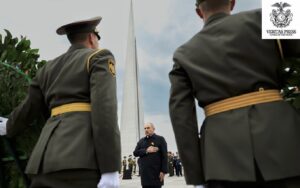
Hovering over all these diplomatic manoeuvres is the martyrdom of Ayatollah Khamenei. The supreme leader was killed during the war, reportedly in an airstrike on a command bunker, though details remain officially secret, and his funeral has become a transnational event of profound political significance. Foreign Minister Abbas Araghchi visited Iraq this week, the first such visit since Iraq formed its new government. The primary purpose was to coordinate the funeral ceremonies in Iraq, where Khamenei is revered as a religious authority and a symbol of resistance.
“The Iraqi people are eagerly awaiting to participate in the farewell ceremony for the martyred Leader of the Islamic Revolution,” Baghaei said, describing Khamenei as “a figure known as a prominent scholar, a supreme religious authority, and a pioneer concerned with peace, security and dignity in the region.” Iraq has formed a high-level committee headed by the prime minister’s chief of staff to handle the logistics. Thousands of Iraqi mourners are expected to walk in the processions, mirroring scenes from Iran. The funeral, analysts say, will serve as a massive display of Shia solidarity and a reminder of Iran’s regional clout, even as the country reels from war. It also hardens domestic resolve: any negotiator seen as conceding too much while the blood of the martyred leader is still fresh risks a backlash from hardliners.
Market Jitters And The Demining Standoff:
Regional financial markets are reflecting the uncertainty. Gulf stock markets ended mixed on Tuesday, with Dubai’s main index dropping 0.6% and Abu Dhabi’s falling 0.4%. Qatar’s index eased 0.1%, dragged down by Qatar National Bank. “The market is pricing in a prolonged stalemate,” said a senior trader at a Dubai-based investment bank. “The MoU bought time, but if the technical talks keep getting postponed and skirmishes flare up, we could see oil prices spike back above $120.”
Another point of friction emerged over the Strait of Hormuz demining. French President Emmanuel Macron declared last week that “we have decided to collaborate jointly, in coordination with our partner, on de-mining the strait to secure maritime routes.” Iran’s Baghaei bluntly rejected any third-party role. “Clearance of mines in the Strait of Hormuz is regulated by a relevant memorandum of understanding, and Tehran sees no need for third-party intervention,” he said. This is a red line for Iran, which views control of the strait as a sovereign prerogative and a strategic advantage. Any French or Western-led demining mission would be seen as an encroachment, possibly reviving memories of colonial gunboat diplomacy. A fisherman from Bandar Abbas, Mahmoud, told us: “We just want the mines gone so we can sail again. If the French help, why not? But the government says it’s our job.” Behind that simple sentiment lies a deep nationalist anxiety.
Outlook: A Peace Process On The Brink.
As indirect discussions continue in Doha this Wednesday, the fundamental question remains: can a document written in Islamabad’s diplomatic hothouse survive the heat of the Persian Gulf and the mountains of southern Lebanon? Iran’s insistence on reciprocal compliance, moment-by-moment, is both a negotiating tactic and a reflection of an institutional psyche scarred by decades of broken Western promises. The US, for its part, is under domestic pressure not to “reward” Iran while the Israeli Prime Minister’s office, though noticeably quieter in recent weeks, lobbies against any deal that leaves Iran with a nuclear threshold capability.
Hudisteanu, the analyst, sums up the grim paradox: “The MoU is a ceasefire, not a peace. It’s designed to stop the shooting while negotiations begin. But because the negotiations themselves are contingent on full cessation, which hasn’t happened, and because the wording is elastic, we are stuck in a loop. Each violation justifies the next, and the process eats itself.”
For now, the world watches Doha, the Strait, and the funeral processions, each a thread in a tapestry of war, memory, and a peace that remains, for the moment, more a hope than a reality. As Baghaei put it with chilling clarity: “We will not leave any action unanswered. Any action against Iran will face an immediate and decisive response.” In this landscape, the “moment-by-moment” vigilance is both a promise and a threat, and its next test may be only a miscalculation away.
Help Support Our Work By Donating
Popular Information is powered by readers who believe that truth still matters. When just a few more people step up to support this work, it means more lies exposed, more corruption uncovered, and more accountability where it’s long overdue.
Help Protect Independent Journalism, Which Is Currently Under Attack.
If you believe journalism should serve the public, not the powerful, and you’re in a position to help, becoming a DONATOR or a PAID SUBSCRIBER truly makes a difference.
DONATION APPEAL: If You Found This Reporting Valuable, Please Consider Supporting Independent Journalism.
Your support fuels our fearless, truth-driven journalism. In unity, we endeavour to amplify marginalised voices and champion justice, irrespective of geographical location. We operate independently, without any financial backing from billionaires.
But it’s also extremely important. One of Veritas Press’s greatest assets is its reader-funded model.
1. Reader funding means we can cover what we like. We’re not beholden to the political whims of a billionaire owner. We are a small, independent and impartial organisation. No one can tell us what not to say or what not to report.
2. Reader funding means we don’t have to chase clicks and traffic. We’re not desperately seeking your attention for its own sake: we pursue the stories that our editorial team deems important and believe are worthy of your time.
3. Reader Funding: enables us to keep our website and other social media channels open, allowing as many people as possible to access quality journalism from around the world, particularly those in places where the free press is under threat.
We know not everyone can afford to pay for news, but if you’ve been meaning to support us, now’s the time.
Your donation goes a long way. It helps us:
- Keep the lights on and sustain our day-to-day operations
- Hire new, talented independent reporters
- Launch real-time live debates, community-focused shows, and on-the-ground reporting
- Cover the issues that matter most to our communities, in real time, with depth and integrity
We have plans to expand our work, but we can’t do it without your support. Every contribution, no matter the size, helps us stay independent and build a truly people-powered media platform.
If you believe in journalism that informs, empowers, and reflects the communities we serve, please donate today.
Help By Donating Today
Submissions:
For The Secure Submission Of Documentation, Testimonies, Or Exclusive Investigative Reports From Any Global Location, Please Utilise The Following Contact Details For Our Investigations Desk: enquiries@veritaspress.co.uk or editor@veritaspress.co.uk
GENEVA — A United Nations fact-finding mission has concluded there are “reasonable grounds to believe”
Iran’s GDP is projected to contract by 5.4 to 6.1% in 2026, its worst performance
The Trump administration is preparing a $2.8 billion weapons package for Israel containing 40,000 2,000-pound

Film alleges mass civilian deaths are routinely built into military decisions amid Israel’s genocidal war
The Israeli rights group says violence, displacement, economic strangulation, and settlement expansion form part of

Houthi forces have captured the historic Red Sea port of Mocha and are advancing on
London’s historic sanctions against Israeli settlements mark a watershed moment in UK foreign policy, but
With 95% of Gaza’s population now wholly dependent on aid and more than 90% stripped
India calls for Kashmir and Ladakh to appear only on its official map after a
ISLAMABAD – In the high-stakes political theatre of Pakistan, the battleground has shifted from the















8pfovn