Kamran Faqir is a volunteer investigative journalist and writer committed to exposing hidden truths and amplifying underreported stories. Driven by social justice, he brings sharp insight and fearless truth-telling to independent journalism. NUJ registered.
Article Date Published:
Article Date Modified:
10 minutes
Views:392
Listen to this article
Help support our mission, donate today and be the change. Every contribution goes directly toward driving real impact for the cause we believe in.
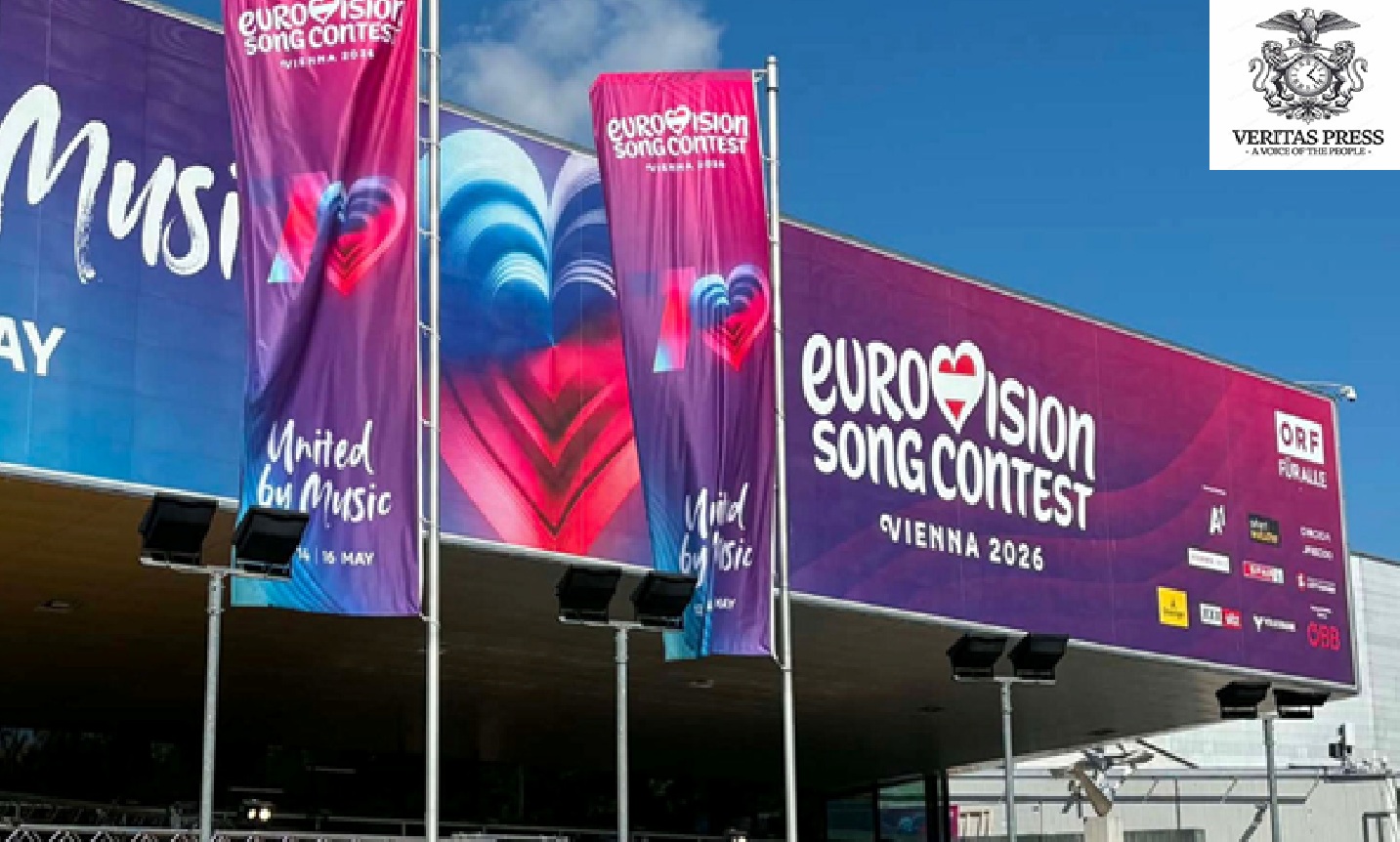
VIENNA — The Eurovision Song Contest, long marketed as a celebration of music, diversity and European unity, is facing one of the most serious legitimacy crises in its 70-year history after television audiences fell by 35 million viewers in the wake of a boycott by five countries protesting Israel’s participation amid its ongoing war in Gaza.
New figures released by the European Broadcasting Union (EBU) show that Eurovision 2026 attracted 131 million viewers across 35 measured television markets, down sharply from 166 million viewers in 2025. The decline follows decisions by Ireland, Spain, Slovenia, Iceland and the Netherlands to withdraw from the contest and, in several cases, refuse to broadcast it altogether.
The ratings collapse represents one of the largest audience declines in recent Eurovision history and comes as the competition becomes increasingly entangled in debates over Israel’s assault on Gaza, accusations of genocide, and growing criticism of what campaigners describe as a double standard in the EBU’s application of its own rules.
The controversy has transformed Eurovision from a music competition into a battleground over politics, culture, accountability and the limits of so-called neutrality.
Five-Country Boycott Delivers Major Blow:
The 2026 contest, held in Vienna and won for the first time by Bulgaria through singer Dara’s song Bangaranga, unfolded under the shadow of a coordinated boycott.
Spain, Ireland, Iceland, Slovenia and the Netherlands withdrew after the EBU decided to allow Israel to compete despite mounting international condemnation of its military campaign in Gaza. Several broadcasters argued that continued Israeli participation undermined the values Eurovision claims to represent.
The boycott was particularly significant because it involved countries with historically strong Eurovision audiences.
Spain alone delivered an average audience of approximately 5.8 million viewers during the 2025 contest, while Dutch broadcasts attracted around 3.5 million viewers. Ireland’s Eurovision audience has also remained substantial relative to its population size. Their absence inevitably contributed to the ratings decline, but analysts argue the losses extend beyond simple arithmetic.
The EBU acknowledged the impact.
“While some of our figures are naturally lower without those of our five members who chose not to participate this year, we remain committed to doing everything possible to find pathways back for them in 2027,” Eurovision director Martin Green said following the release of the audience data.
Yet critics argue the deeper problem is not merely the absence of five broadcasters but the erosion of public confidence in Eurovision’s claim to political neutrality.
Protests Erupt Across Vienna:
The boycott was accompanied by large demonstrations in Vienna during Eurovision week.
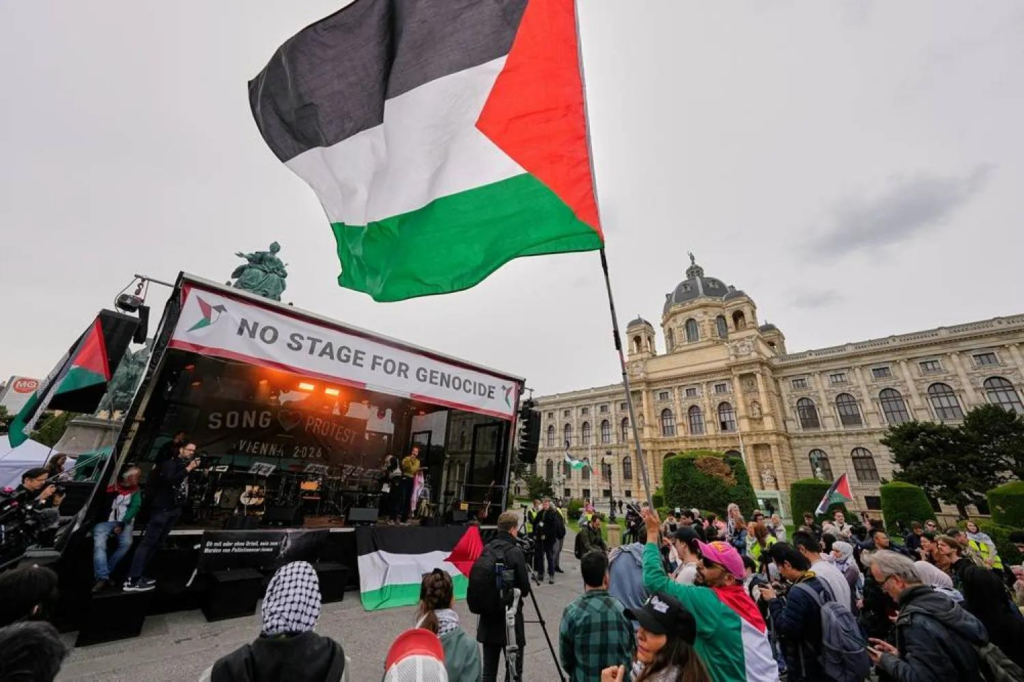
Thousands of protesters marched through the Austrian capital demanding Israel’s exclusion from the contest. Demonstrators carried Palestinian flags, banners condemning the war in Gaza, and signs accusing Eurovision organisers of helping normalise Israeli policies through cultural events.
During Israel’s semi-final performance, chants of “Stop the genocide” were reportedly heard inside the venue, highlighting the extent to which the political dispute had penetrated the contest itself.
Parallel cultural events were organised under slogans such as “No Stage for Genocide” and “United for Palestine,” drawing artists, activists and campaigners who argued that Eurovision could not remain detached from events unfolding in Gaza.
For many demonstrators, the issue was not merely Israel’s presence but what they saw as inconsistent treatment compared with Russia’s exclusion after its invasion of Ukraine in 2022.
The Double-Standards Debate:
The comparison with Russia has become central to criticism of the EBU.
When Russia launched its invasion of Ukraine, Eurovision organisers moved quickly to exclude Russian broadcasters, arguing that their participation would damage the reputation of the contest.
Critics now ask why similar standards have not been applied to Israel despite proceedings at both the International Court of Justice (ICJ) and the International Criminal Court (ICC), widespread allegations of war crimes, and growing international concern over Gaza’s humanitarian catastrophe.
Human rights activists, artists and several participating broadcasters have argued that Eurovision’s insistence on neutrality appears selective.
“The issue is consistency,” one European cultural campaigner told several media outlets during the contest. “If Eurovision is willing to act in one geopolitical crisis but not another, then it inevitably becomes part of the political debate it claims to avoid.”
The EBU has repeatedly defended its position by insisting Eurovision is a competition between public broadcasters rather than states and that exclusion decisions must follow organisational rules.
However, that explanation has failed to satisfy many critics, particularly after reports emerged showing significant internal disagreement among EBU members regarding Israel’s participation.
Growing Internal Revolt:
Tensions inside Eurovision had been building long before the Vienna final.
Broadcasters from multiple countries reportedly pushed for a vote on Israel’s participation during EBU meetings in 2025. Instead, organisers introduced procedural reforms and transparency measures while declining to hold a direct membership vote on excluding Israel.
Ireland’s RTÉ publicly stated that participation had become increasingly difficult to justify given the humanitarian catastrophe in Gaza, while Iceland’s public broadcaster RÚV cited ongoing concerns over Israel’s involvement despite EBU reforms.
The dispute has also spread beyond broadcasters.
Over the past three Eurovision seasons, numerous artists, former contestants, musicians and cultural figures have publicly questioned Israel’s participation or called for greater scrutiny of the contest’s governance.
What was once a fringe debate has evolved into one of the defining controversies facing the competition.
Audience Decline Extends Beyond Boycotting Countries
Although the withdrawal of five countries explains part of the audience drop, EBU data indicates broader declines elsewhere.
Viewership reportedly fell by approximately:
3.8 million in Poland
3.7 million in the United Kingdom
3.3 million in France
compared with Eurovision 2025.
The overall grand final viewing share fell from 47.7% in 2025 to 42.6% in 2026, while youth audience engagement among viewers aged 15-24 also declined from 60.4% to 54.8%.
For critics, these figures suggest that Eurovision may be facing more than a temporary boycott effect.
Some media analysts point to audience fatigue caused by repeated controversies, concerns over voting transparency and growing public discomfort with the political disputes surrounding the event.
Digital Growth Cannot Fully Mask Traditional Losses.
The EBU has sought to emphasise Eurovision’s digital success.
According to organisers, Eurovision content generated more than 2.75 billion views across social media platforms during the 2026 season. Instagram surpassed one billion views, while TikTok, Facebook and Eurovision’s official app all recorded significant growth.
Martin Green described the figures as evidence that Eurovision is evolving into a global multi-platform cultural phenomenon.
Yet some media observers caution against treating social media metrics as a direct substitute for traditional broadcast audiences.
Television viewership remains the contest’s primary commercial and cultural benchmark, influencing sponsorship value, broadcaster investment and political legitimacy.
The loss of 35 million viewers, therefore, remains a significant setback regardless of digital growth.
Israel’s Eurovision Strategy Under Increasing Scrutiny:
The controversy surrounding Israel’s participation has intensified partly because of allegations that Eurovision has been used as a soft-power platform during the Gaza war.
Recent international reporting has examined Israeli efforts to promote Eurovision participation abroad and cultivate public support through cultural diplomacy. Those reports have fuelled accusations that the contest is being used to improve Israel’s image during a period of intense international criticism.
Supporters of Israel reject those accusations, arguing that artists should not be punished for government actions and that cultural exchange should remain separate from geopolitical disputes.
Nevertheless, the debate has become increasingly difficult for Eurovision organisers to contain.
A Contest At A Crossroads:
Despite the ratings decline, Eurovision remains one of the most-watched entertainment events in the world.
Nordic countries continued to record exceptionally high audience shares, reaching 93% in Finland, 86% in Sweden, 83% in Norway and 79 percent in Denmark. More than 100,000 tickets were sold for events in Vienna, and viewers from 148 countries participated in voting.
Yet the deeper question facing Eurovision is no longer about audience numbers alone.
The 2026 contest exposed widening divisions among broadcasters, artists and audiences over whether the competition can genuinely maintain political neutrality while operating amid one of the most polarising international crises of the modern era.
With Bulgaria set to host Eurovision 2027, organisers face mounting pressure to repair fractured relationships with boycotting broadcasters and address accusations of inconsistency that have damaged the contest’s reputation.
For critics, the sharp decline in viewership is not merely a ratings story but evidence of a broader crisis of confidence.
As the war in Gaza continues and international scrutiny of Israel intensifies, the controversy that engulfed Eurovision in Vienna appears unlikely to disappear when the music stops.
For The Secure Submission Of Documentation, Testimonies, Or Exclusive Investigative Reports From Any Global Location, Please Utilise The Following Contact Details For Our Investigations Desk: enquiries@veritaspress.co.uk or editor@veritaspress.co.uk
Popular Information is powered by readers who believe that truth still matters. When just a few more people step up to support this work, it means more lies exposed, more corruption uncovered, and more accountability where it’s long overdue.
Help Protect Independent Journalism, Which Is Currently Under Attack.
If you believe journalism should serve the public, not the powerful, and you’re in a position to help, becoming a DONATOR or a PAID SUBSCRIBER truly makes a difference.
DONATION APPEAL: If You Found This Reporting Valuable, Please Consider Supporting Independent Journalism.
Help Support Our Work – We Know, We Know, We Know …
Seeing these messages is annoying. We know that. (Imagine what it’s like writing them … )
Your support fuels our fearless, truth-driven journalism. In unity, we endeavour to amplify marginalised voices and champion justice, irrespective of geographical location.
But it’s also extremely important. One of Veritas Press’s greatest assets is its reader-funded model.
1. Reader funding means we can cover what we like. We’re not beholden to the political whims of a billionaire owner. We are a small, independent and impartial organisation. No one can tell us what not to say or what not to report.
2. Reader funding means we don’t have to chase clicks and traffic. We’re not desperately seeking your attention for its own sake: we pursue the stories that our editorial team deems important and believe are worthy of your time.
3. Reader Funding: enables us to keep our website and other social media channels open, allowing as many people as possible to access quality journalism from around the world, particularly those in places where the free press is under threat.
We know not everyone can afford to pay for news, but if you’ve been meaning to support us, now’s the time.
Your donation goes a long way. It helps us:
Keep the lights on and sustain our day-to-day operations
Hire new, talented independent reporters
Launch real-time live debates, community-focused shows, and on-the-ground reporting
Cover the issues that matter most to our communities, in real time, with depth and integrity
We have plans to expand our work, but we can’t do it without your support. Every contribution, no matter the size, helps us stay independent and build a truly people-powered media platform.
If you believe in journalism that informs, empowers, and reflects the communities we serve, please donate today.
Kamran Faqir is a volunteer investigative journalist and writer committed to exposing hidden truths and amplifying underreported stories. Driven by social justice, he brings sharp insight and fearless truth-telling to independent journalism. NUJ registered.
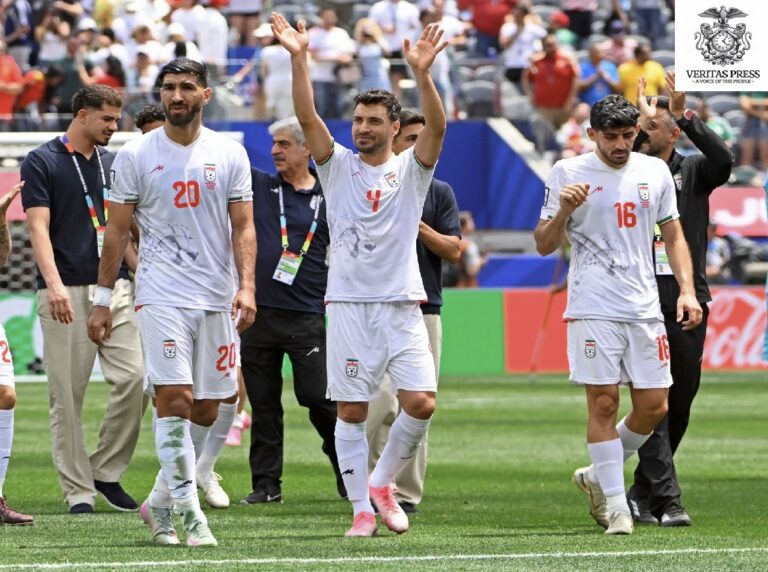
SEATTLE, TEHRAN — The U.S. Department of Homeland Security (DHS) will allow Iran’s national football team to enter the country 48 hours before their critical World Cup match against Egypt on Friday, a modest concession in a tournament where Team Melli’s travel conditions have sparked claims of oppression and competitive disadvantage.