Kamran Faqir is a volunteer investigative journalist and writer committed to exposing hidden truths and amplifying underreported stories. Driven by social justice, he brings sharp insight and fearless truth-telling to independent journalism. NUJ registered.
Article Date Published:
Article Date Modified:
13 minutes
Views:492
Listen to this article
Help support our mission, donate today and be the change. Every contribution goes directly toward driving real impact for the cause we believe in
With 343 Confirmed Cases, No Approved Vaccine For The Bundibugyo Strain, And A Response Crippled By Armed Violence And Community Resistance, A Preventable Outbreak Is Spiralling Into A Regional Crisis.
BUNIA, DEMOCRATIC REPUBLIC OF THE CONGO — The numbers are climbing with a grim inevitability that has become all too familiar in eastern Congo. As of Monday, the Health Ministry confirmed 343 cases of the rare Bundibugyo strain of Ebola, with 48 deaths, spread across 23 health zones in three provinces. But behind the stark statistics lies a far more complex and treacherous reality: a perfect storm of armed conflict, deep-seated community mistrust, a virus with no approved vaccine or treatment, and an aid response struggling to keep pace with a pathogen that moves faster than the roads, the rumours, and the armed groups that carve up this mineral-rich but blood-soaked landscape.
This is not simply an epidemiological crisis; it is a political, social and security emergency layered on top of a public health disaster. The outbreak, officially declared on 15 May 2026, has now engulfed Ituri, North Kivu and South Kivu, three provinces that for decades have been a patchwork of rebel fiefdoms, ethnic militias and government-held enclaves. More than 260 confirmed cases are in Ituri alone, a province the United Nations has described as a humanitarian catastrophe zone, where over 1.5 million people are displaced, and violence is so routine that health workers fear being shot as much as they fear being infected.
“The epidemic is galloping, and we are walking,” said a senior official with an international medical organisation, speaking on condition of anonymity because they were not authorised to brief the media. “Every day we lose more ground to the virus because we cannot reach the people who need us most.”
A Glimmer Of Joy Amid The Sorrow:
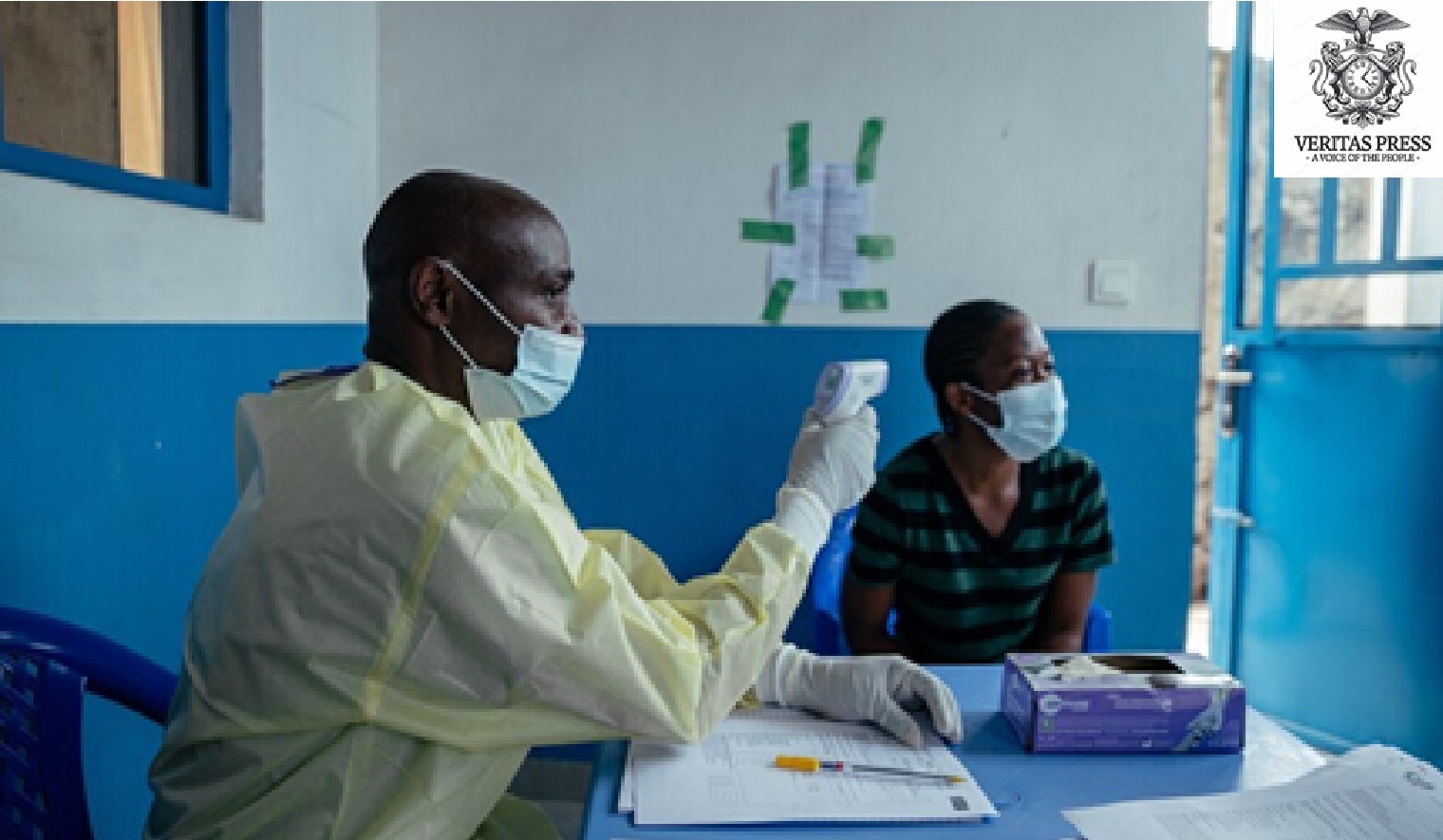
On Sunday, at the Evangelical Medical Centre in Bunia, the provincial capital, the sterile ward became a stage for a rare celebration. Four patients, including two nurses, were discharged after twice testing negative for the virus. Baraka Bulambulu, a nurse who had tended to the sick before falling ill himself, stood beaming, his yellow gown replaced by civilian clothes. “Coming out of this illness alive is an indescribable joy,” he said, a grin spreading across his face. Beside him, Ezo Étienne, another survivor, recalled the terrifying moment he realised something was wrong: “I called the team and told them, ‘Something’s wrong here.’ I decided to rest for a bit, and a few minutes later, I started vomiting.”
World Health Organization Director-General Tedros Adhanom Ghebreyesus, on a high-profile visit to Congo that concluded Monday, personally honoured the survivors. “Your courage gives hope and your living story that this outbreak can be stopped,” Tedros told them. The WHO chief met with President Félix Tshisekedi to hammer home the urgency, and officials inaugurated a new 60-bed Ebola treatment centre in Bunia.
Yet even these bright moments cast long shadows. The new facility, funded by international partners, is already under strain. Congo’s health ministry says more than 1,000 suspected cases have been reported, far surpassing the centre’s capacity. The tiny number of survivors, four recovered patients, a handful of health workers, is a drop of hope in a sea of fear. Dr Dieudonné Mwamba Kazadi, director-general of the National Institute of Public Health, called the recoveries “a victory worth celebrating” and a message “that it is possible to recover from Ebola when seeking care early in a dedicated health facility.” But early care-seeking is exactly what is being sabotaged.
The Twin Curse: Conflict And Conspiracy.
Nowhere is the deadly intersection of violence and viral spread more apparent than in Ituri and North Kivu. On Saturday, just a day before Tedros toured the Bunia treatment centre, fighters from the Allied Democratic Forces (ADF), a rebel group affiliated with the Islamic State, killed 16 people in Beni, North Kivu, the very territory where the Ebola response is trying to gain a foothold. “Every time we set up a safe burial team, the shooting starts,” said a Red Cross volunteer reached by phone in Beni, who asked not to be named for safety. “The community thinks we are bringing the disease because we wear the protective suits. They think we are poisoning them. And then the ADF attacks, and suddenly nobody trusts anybody.”
That mistrust has curdled into open resistance. Health authorities cited community resistance in Bunia and the northeastern town of Nizi as one of the principal barriers to containment, fuelled by disinformation on social media and local radio. Rumours that Ebola is a fabrication designed to attract foreign money, or that the vaccine trials are experiments on the population, have taken deep root. Government spokesperson Patrick Muyaya acknowledged the challenge in a statement Monday, saying that “rumours and disinformation are complicating response efforts,” even as he announced that Bunia Airport, closed to all but humanitarian flights, was reopening after monitoring devices were installed at both departure and arrival points. The airport’s closure had delayed the delivery of essential supplies; its reopening is a logistical victory, but it also carries the risk of seeding the virus into other regions if screening is less than foolproof, a near certainty given the country’s porous internal transport networks.
The conflict map compounds the nightmare. In South Kivu, the Rwanda-backed M23 rebel group controls the key cities of Goma and Bukavu, effectively carving out a separate statelet beyond the reach of Kinshasa’s health authorities. While no cases have been officially reported inside M23-held territory, health workers suspect the virus is already there, hidden among communities too terrified to report symptoms to either rebels or a government they see as hostile. “We hear of people dying with bleeding symptoms in the hills, but we cannot verify,” said a community health worker in a village outside Bukavu, contacted through a local civil society group. “The rebels will not allow the government teams in, and the people will not talk.”
A Strain That Outpaces Science:
Complicating the response is the nature of the virus itself. The Bundibugyo ebolavirus, first identified in Uganda in 2007, is a rare species of Ebola. While the world’s pharmaceutical arsenal has been sharpened against the Zaire strain, with two licensed vaccines and several effective therapeutics, Bundibugyo has no approved vaccine or treatment. The Coalition for Epidemic Preparedness Innovations (CEPI) announced Monday it would commit up to $62 million to accelerate the development of three experimental vaccines targeting Bundibugyo, from the International AIDS Vaccine Initiative, Moderna and the University of Oxford. Trials in Bunia are already underway. But vaccines take time, and “compassionate use” protocols, even if expedited, are a far cry from the rapid ring vaccination campaigns that helped extinguish past Zaire-strain outbreaks.
“We are essentially starting from behind the curve,” said a senior CEPI official reached by telephone. “The window to contain this with the tools we have, isolation, contact tracing, safe burials, is narrowing every day the insecurity and the misinformation persist.”
The epidemiological picture is murky. The official death toll of 48 in Congo and one in Uganda belies the likelihood of uncounted victims in areas too dangerous to access. Uganda, which has reported nine cases and closed its border with Congo, is on high alert; cross-border trade between the two countries is among the busiest in the region. The presence of a single confirmed death on Ugandan soil, announced by Kampala last week, underscores how easily the virus exploits human mobility.
An Investigative Lens On A Failing Response:
A deeper examination of the outbreak timeline reveals troubling delays. According to multiple sources in Ituri, an unusual number of fever and haemorrhage deaths were being reported in remote villages as early as late April, nearly a month before the official declaration on 15 May. “The surveillance system was too slow, and the alert was raised only when a prominent trader died bleeding, and his body was brought to Bunia,” said a local journalist who has been tracking the initial cases for a community radio station. “By then, the chain of transmission was long established.”
The government’s response, while publicly projecting control, has been hobbled by chronic underfunding of the health system, endemic corruption, and a security apparatus that is itself a source of fear. President Tshisekedi’s meeting with Tedros produced a flurry of official statements, but on the ground, health workers complain of unpaid salaries, insufficient personal protective equipment, and a command structure that prioritises political optics over operational efficiency. “The dignitaries fly in, they open a treatment centre, they take photos, and then they leave,” a nurse at a referral hospital in Bunia said bitterly, requesting anonymity. “Meanwhile, we are here with three pairs of gloves for a whole week.”
International aid organisations, too, come under critical scrutiny. Past outbreaks were drenched in billions of dollars of donor funds, yet the Eastern Congo’s health infrastructure remains skeletal. Médecins Sans Frontières, the International Federation of Red Cross and Red Crescent Societies, and the WHO have all deployed emergency teams, but many local activists accuse them of a “parachute-in, parachute-out” model that fails to build lasting local capacity. “The international community is again pouring millions into a reactive response when we have been screaming for years about the need for basic primary health care in Ituri,” said Josée Musambya, director of a women-led civic group in Bunia. “Where was the investment after the tenth Ebola outbreak? Where is it now, before the virus came? Nowhere.”
The Human Terrain:
Behind the analysis are the individuals, the nurses who risked everything, the families who lost loved ones, the survivors grappling with stigma. At the Evangelical Medical Centre, Baraka Bulambulu and Ezo Étienne embodied resilience. But they also know that their survival is not guaranteed for others. “I want to go back to work,” Bulambulu said, his smile fading. “But I am afraid. I am afraid of the virus, yes, but I am more afraid that my neighbours will reject me because they think I am still contagious.”
That fear is not unfounded. In previous Ebola outbreaks, survivors were ostracised, their possessions burnt, their families shunned. In a region where every stranger is a suspect and every authority figure a potential threat, the social fabric frays quickly. A community elder in Nizi, reached through an intermediary, summed up the sentiment: “We see the white cars and the suits, and we hear the government say ‘Ebola’, but we also see bullets and soldiers. Which one is the real killer? For us, they are the same danger. So we hide, we deny, we refuse. It is not ignorance; it is survival.”
The Road Ahead:
As of Tuesday, 2 June, the outbreak shows no sign of abating. The Health Ministry’s latest figures, expected to rise again, will likely break through the 350-case mark. The airport’s reopening may ease logistics, but it also raises the stakes for regional spread. Vaccine trials are a promising long-term step, but in the short term, the only weapons are the classical ones, and they are being outmanoeuvred.
In the end, this outbreak is a mirror held up to the DRC and the international community: a reflection of how decades of conflict, underdevelopment and broken trust can turn a preventable disease into a protracted catastrophe. Baraka Bulambulu’s indescribable joy is a story worth telling, but it cannot drown out the far more numerous silent deaths in the bush. As one humanitarian veteran put it, “We are celebrating recoveries while the cemetery is filling. That is the absurdity of eastern Congo.” The Bundibugyo virus has no conscience, but the world’s response should, and must, have one.
Source:Veritas Press C.I.C. | Multi News Agencies
Submissions:
For The Secure Submission Of Documentation, Testimonies, Or Exclusive Investigative Reports From Any Global Location, Please Utilise The Following Contact Details For Our Investigations Desk: enquiries@veritaspress.co.uk or editor@veritaspress.co.uk
Help Support Our Work:
Popular Information is powered by readers who believe that truth still matters. When just a few more people step up to support this work, it means more lies exposed, more corruption uncovered, and more accountability where it’s long overdue.
Help Protect Independent Journalism, Which Is Currently Under Attack.
If you believe journalism should serve the public, not the powerful, and you’re in a position to help, becoming a DONATOR or a PAID SUBSCRIBER truly makes a difference.
DONATION APPEAL: If You Found This Reporting Valuable, Please Consider Supporting Independent Journalism.
Help Support Our Work – We Know, We Know, We Know …
Seeing these messages is annoying. We know that. (Imagine what it’s like writing them … )
Your support fuels our fearless, truth-driven journalism. In unity, we endeavour to amplify marginalised voices and champion justice, irrespective of geographical location.
But it’s also extremely important. One of Veritas Press’s greatest assets is its reader-funded model.
1. Reader funding means we can cover what we like. We’re not beholden to the political whims of a billionaire owner. We are a small, independent and impartial organisation. No one can tell us what not to say or what not to report.
2. Reader funding means we don’t have to chase clicks and traffic. We’re not desperately seeking your attention for its own sake: we pursue the stories that our editorial team deems important and believe are worthy of your time.
3. Reader Funding: enables us to keep our website and other social media channels open, allowing as many people as possible to access quality journalism from around the world, particularly those in places where the free press is under threat.
We know not everyone can afford to pay for news, but if you’ve been meaning to support us, now’s the time.
Your donation goes a long way. It helps us:
Keep the lights on and sustain our day-to-day operations
Hire new, talented independent reporters
Launch real-time live debates, community-focused shows, and on-the-ground reporting
Cover the issues that matter most to our communities, in real time, with depth and integrity
We have plans to expand our work, but we can’t do it without your support. Every contribution, no matter the size, helps us stay independent and build a truly people-powered media platform.
If you believe in journalism that informs, empowers, and reflects the communities we serve, please donate today.
Kamran Faqir is a volunteer investigative journalist and writer committed to exposing hidden truths and amplifying underreported stories. Driven by social justice, he brings sharp insight and fearless truth-telling to independent journalism. NUJ registered.
SEATTLE, TEHRAN — The U.S. Department of Homeland Security (DHS) will allow Iran’s national football team to enter the country 48 hours before their critical World Cup match against Egypt on Friday, a modest concession in a tournament where Team Melli’s travel conditions have sparked claims of oppression and competitive disadvantage.