



Help support our mission, donate today and be the change. Every contribution goes directly toward driving real impact for the cause we believe in.
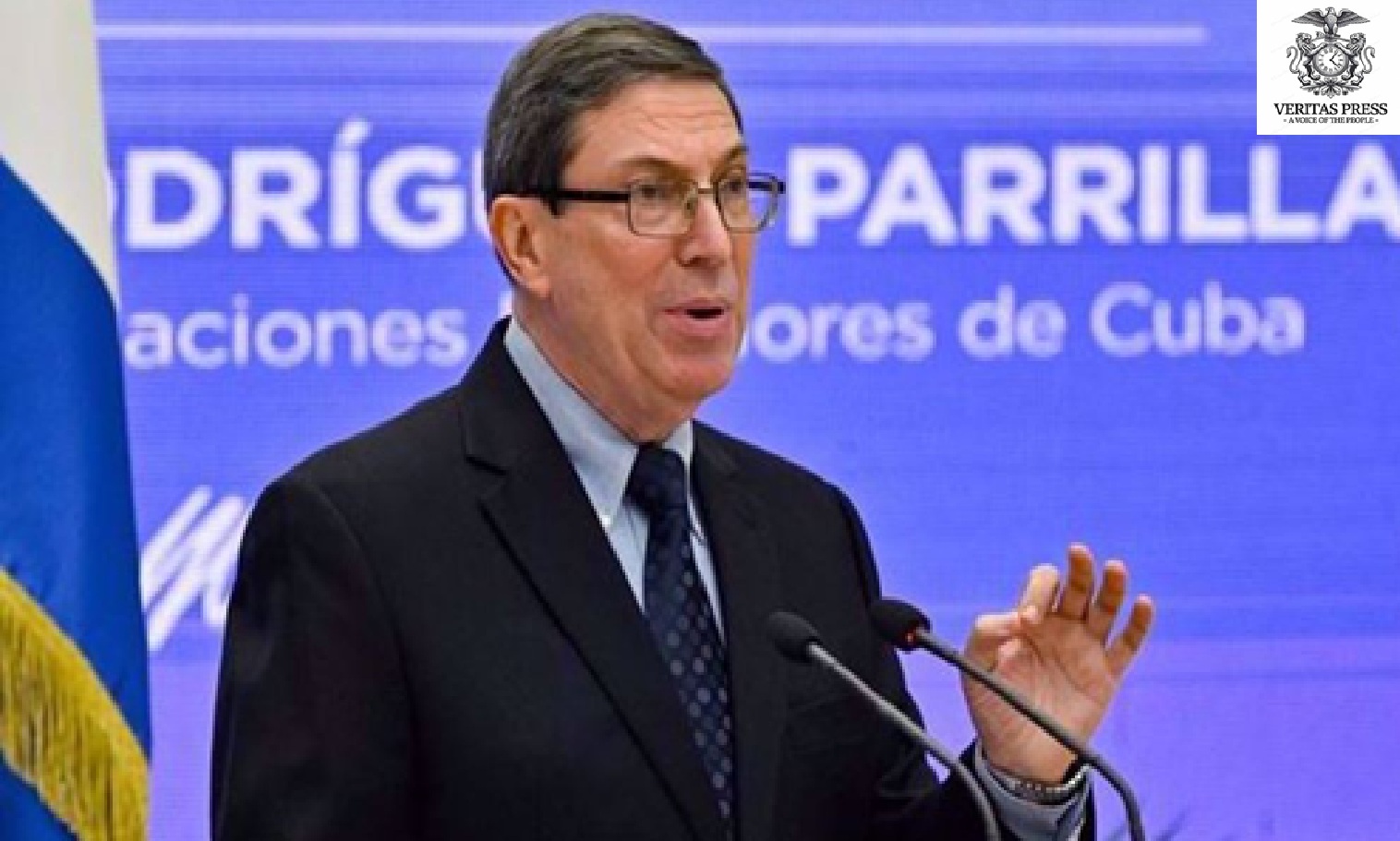
HAVANA, MAY 18, 2026 — On a sweltering morning in Centro Habana, where blackouts now swallow up to 18 hours a day, a retired schoolteacher named María Elena Torres held a battery-powered radio close to her ear. She was listening to Cuban Foreign Minister Bruno Rodríguez deliver a furious rebuttal to a new Axios report alleging that the island had secretly acquired a fleet of military-grade drones to strike US targets. “Otra mentira,” she muttered. Another lie. “They are building the stage for something terrible. We feel it in our bones.”
Across the Florida Straits, in Washington, a familiar script is being dusted off. The Axios piece, published late Thursday and citing anonymous US intelligence sources, claims that Cuba has taken delivery of advanced Chinese-made attack drones capable of hitting critical infrastructure in southern Florida. Within hours, Rodríguez took to national television, calling the story “a fraudulent case” stitched together by “certain media outlets playing along, spreading slanderous claims and publishing insinuations leaked by the US government.” His words were not just a denial; they were a pre-emptive accusation that the United States is manufacturing a casus belli against an impoverished Caribbean nation of 11 million people.
The Axios Bombshell And Havana’s Rebuttal:
The report lands at a moment of maximum tension. Over the past sixteen months, the second Trump administration has orchestrated what Cuban officials, independent UN experts, and even some European diplomats now openly call a “strangulation campaign.” In a blistering statement posted to social media, Rodríguez warned: “Cuba neither threatens nor desires war. The leaked government documents are part of a clandestine operation conducted by US governmental departments or agencies under Washington’s supervision to concoct a fraudulent case to justify the ruthless economic war against the Cuban people and, eventually, military aggression.”
Rodríguez’s language is apocalyptic but not hyperbolic in the current context. On January 29, 2026, President Donald Trump signed Executive Order 14404, declaring a national emergency over “an unusual and extraordinary threat to the national security and foreign policy of the United States emanating from Cuba.” The order imposed secondary tariffs on any country supplying petroleum products to the island and blacklisted the powerful military-run conglomerate GAESA, Grupo de Administración Empresarial S.A., as well as the Moa Nickel joint venture, effectively severing Havana’s remaining hard-currency lifelines. The result was immediate. Fuel shipments plummeted by 40%. The already-fragile electrical grid collapsed into rolling, days-long blackouts that triggered scattered street protests in Santiago de Cuba in March.
Rodríguez, in a separate diplomatic note obtained by the Spanish news agency EFE, called those measures an act of “genocidal intent … unilateral coercive measures aimed at the collective punishment of the Cuban people.” The claim, which US officials dismiss as Castro-ite melodrama, is gaining traction. In an April 2026 report, a coalition of UN human rights rapporteurs, including the Special Rapporteur on unilateral coercive measures, Alena Douhan, who has visited Cuba twice since 2023, warned that the “tightening fuel blockade risks creating a humanitarian catastrophe of the sort that will fundamentally undermine the rights to life, health, and food.” The report used language almost identical to Havana’s.
A Pattern Of Pretexts:
For scholars of US-Cuba relations, the drone allegations carry an eerie echo. In the 1960s, the discovery of Soviet nuclear missiles on the island brought the world to the brink. That crisis ultimately solidified a rigid economic embargo that has survived the Cold War, the “Special Period,” the Obama thaw, and now an era of hybrid warfare. The current administration, stocked with veterans of the first Trump term’s maximum-pressure campaign against Venezuela and Iran, has never hidden its desire for regime change in Havana. Former National Security Advisor-turned-Secretary of State Michael Waltz, in a closed-door briefing to donors in February, reportedly mused that the Western Hemisphere would be “cleansed of its last red stain before the decade is out.”
Cuban officials and a network of solidarity activists are drawing explicit parallels to the run-up to the 2003 invasion of Iraq. “This is the same playbook: plant a story with a friendly outlet, cite anonymous intelligence, ratchet up fear, and then present military action as a reluctant last resort,” said Carlos Fernández de Cossío, Cuba’s Deputy Foreign Minister, in an interview with Telesur late Friday. “But Cuba is not Iraq. We have no oil, no weapons of mass destruction, and we do not accept fabricated evidence.”
The Axios report itself, according to a former US Defence Intelligence Agency analyst who reviewed the open-source summary for this article, contains significant qualifiers buried in its ninth paragraph: the drone “capability” is assessed as “a potential future threat,” with no evidence of operational deployment or even completed training. “It’s a classic iceberg leak,” the analyst said, speaking on condition of anonymity because they still consult for the Pentagon. “Ten per cent visible, ninety per cent ominous implication.”
The Escalating Punishments And A ‘Genocidal Intent’:
The sanctions machine has moved far beyond the familiar embargo. Executive Order 14404 explicitly targets the “Cuban Revolutionary Armed Forces’ commercial apparatus,” sanctioning dozens of tourist hotels, shipping companies, and even a pharmaceutical export firm that produced low-cost COVID-19 vaccines during the pandemic. US Treasury officials, in background calls with reporters, justify the measures as necessary to “stop the flow of resources to a state sponsor of terrorism”, a designation re-imposed by Trump in January 2025, citing Havana’s sheltering of Colombian ELN negotiators and its refusal to extradite US fugitives wanted on decades-old charges.
But on the streets of Havana, the impact is not abstract. “They call it sanctions, we call it an economic war,” said Yaima Rojas, a 34-year-old nurse at the Hermanos Ameijeiras Hospital. She spoke while standing in line for a state-subsidised bag of rice, a process that now takes an average of six hours. “Last week we ran out of surgical gloves. Antibiotics have to be bought on the black market for a month’s salary. Tell me how that is not a form of collective violence.”
Innovation born of desperation is visible everywhere. The iconic 1950s American cars now share the road with a growing fleet of solar-powered tricycles, “eco-taxis”, that have become a lifeline for transportation amid petroleum scarcity. Local mechanics have become adept at 3D-printing replacement parts for medical equipment using filament smuggled in personal luggage. “This is the Cuban way,” said Rojas. “We resist, we invent, but the wear and tear on human beings is unsustainable.”
International Concern And The Whispers Of War:
As the humanitarian situation deteriorated, President Miguel Díaz-Canel Bermúdez convened an emergency session of the National Assembly of People’s Power on May 3. In a televised address, he stated that US military pressure on Cuba had “reached unprecedented levels.” A US Navy carrier strike group, led by the USS George H.W. Bush, had begun a previously unscheduled “freedom of navigation exercise” in the Yucatán Channel in late April, according to Southern Command. Díaz-Canel’s warning was blunt: “Any attack on this island will be met with strong resistance. We will defend our sovereignty with the same spirit as at Playa Girón [the Bay of Pigs]. And those who invade will find no victory, only a bloodbath.”
The Foreign Minister reinforced that message during a press conference on May 12: “A US invasion would not only trigger a bloodbath for Cubans. It would spill American blood on a catastrophic scale and ignite a humanitarian catastrophe that would shame the world. The cost in innocent lives, on both sides, would be immeasurable.”
In the same breath, however, US officials insist through background channels that no invasion is imminent. A senior Pentagon official, quoted by The Washington Post on condition of anonymity, said military planners have “reviewed contingency scenarios for a potential collapse of order in Cuba” but that “no immediate intervention has been approved.” That distinction, between contingency planning and active preparation, does little to reassure Havana, which reads it as an admission that the scenarios are on the table.
European and Latin American governments have publicly cautioned against escalation. Brazilian President Luiz Inácio Lula da Silva, in a joint statement with Colombian President Gustavo Petro, called the US measures “a return to the darkest doctrines of gunboat diplomacy.” The Community of Latin American and Caribbean States (CELAC) issued an urgent call for dialogue on May 15, warning that “the fabrication of a security threat to justify unilateral military action would be a grave violation of the UN Charter.”
UN Secretary-General António Guterres, in a rare direct comment, expressed “profound concern at the deteriorating living conditions and the cycle of accusation and counter-accusation that could lead to miscalculation.”
The Media’s Role And The Fog Of War:
Media critics inside and outside Cuba have begun to scrutinise the Axios report’s provenance. “When a government selectively leaks to a specific outlet the same week a carrier group is repositioned, we must ask basic journalistic questions,” said media ethicist Carlos Lauría of the New York-based Committee to Protect Journalists. “What is the source’s motive? What is being left out? Axios is a reputable outlet, but history shows that intelligence leaks on weapons capabilities are often highly politicised.”
Cuban state media, for its part, has aggressively pushed back. A Granma editorial on Friday declared: “The empire needs a spectacular lie to eclipse the truth of its genocidal blockade. The drone fable is that lie.” Meanwhile, a cadre of pro-embargo Cuban-American hardliners in Congress, including Senator Marco Rubio, who chairs the Senate Intelligence Committee, have seized on the Axios report to demand “all necessary measures to neutralise a clear and present danger to the American homeland.”
Activist groups in the United States are scrambling to pierce the information bubble. “We are witnessing a replay of the lead-up to the Iraq War, except the target is 90 miles from our shores and has been demonised for over sixty years,” said Medea Benjamin, co-founder of the peace group CodePink, which is organising a flotilla of small boats to deliver humanitarian aid to Havana in a symbolic challenge to the blockade. “The American people do not want another war, especially one based on fraud.”
Back in Centro Habana, as the afternoon sun baked the unlit hallways of her apartment building, María Elena Torres folded her radio antenna. She recalled the “Special Period” of the 1990s, when the Soviet collapse plunged Cuba into near-famine. “We survived that. We will survive this,” she said. “But the anger is different now. It is mixed with a fear that they will not stop until they land Marines on the Malecón. And we will be here waiting, because this is our home. Tell the world: Cuba is not a threat. The threat is the lie that wants to destroy us.”
As the standoff deepens, the question is no longer whether the US government will use the drone allegations to further tighten the screws. The question is whether those allegations will become the public justification for a step from which even the most belligerent planners acknowledge there would be no easy retreat, and for which ordinary Cubans like Torres would pay the highest price of all.
Source: Veritas Press C.I.C. | Multi News Agencies
Submissions:
For The Secure Submission Of Documentation, Testimonies, Or Exclusive Investigative Reports From Any Global Location, Please Utilise The Following Contact Details For Our Investigations Desk: enquiries@veritaspress.co.uk or editor@veritaspress.co.uk
Help Support Our Work:
Popular Information is powered by readers who believe that truth still matters. When just a few more people step up to support this work, it means more lies exposed, more corruption uncovered, and more accountability where it’s long overdue.
Help Protect Independent Journalism, Which Is Currently Under Attack.
If you believe journalism should serve the public, not the powerful, and you’re in a position to help, becoming a DONATOR or a PAID SUBSCRIBER truly makes a difference.
DONATION APPEAL: If You Found This Reporting Valuable, Please Consider Supporting Independent Journalism.
Help Support Our Work – We Know, We Know, We Know …
Seeing these messages is annoying. We know that. (Imagine what it’s like writing them … )
Your support fuels our fearless, truth-driven journalism. In unity, we endeavour to amplify marginalised voices and champion justice, irrespective of geographical location.
But it’s also extremely important. One of Veritas Press’s greatest assets is its reader-funded model.
1. Reader funding means we can cover what we like. We’re not beholden to the political whims of a billionaire owner. We are a small, independent and impartial organisation. No one can tell us what not to say or what not to report.
2. Reader funding means we don’t have to chase clicks and traffic. We’re not desperately seeking your attention for its own sake: we pursue the stories that our editorial team deems important and believe are worthy of your time.
3. Reader Funding: enables us to keep our website and other social media channels open, allowing as many people as possible to access quality journalism from around the world, particularly those in places where the free press is under threat.
We know not everyone can afford to pay for news, but if you’ve been meaning to support us, now’s the time.
Your donation goes a long way. It helps us:
- Keep the lights on and sustain our day-to-day operations
- Hire new, talented independent reporters
- Launch real-time live debates, community-focused shows, and on-the-ground reporting
- Cover the issues that matter most to our communities, in real time, with depth and integrity
We have plans to expand our work, but we can’t do it without your support. Every contribution, no matter the size, helps us stay independent and build a truly people-powered media platform.
If you believe in journalism that informs, empowers, and reflects the communities we serve, please donate today.
Donate Today:
GENEVA — A United Nations fact-finding mission has concluded there are “reasonable grounds to believe”
Iran’s GDP is projected to contract by 5.4 to 6.1% in 2026, its worst performance
The Trump administration is preparing a $2.8 billion weapons package for Israel containing 40,000 2,000-pound

Film alleges mass civilian deaths are routinely built into military decisions amid Israel’s genocidal war
The Israeli rights group says violence, displacement, economic strangulation, and settlement expansion form part of

Houthi forces have captured the historic Red Sea port of Mocha and are advancing on
London’s historic sanctions against Israeli settlements mark a watershed moment in UK foreign policy, but
With 95% of Gaza’s population now wholly dependent on aid and more than 90% stripped
India calls for Kashmir and Ladakh to appear only on its official map after a
ISLAMABAD – In the high-stakes political theatre of Pakistan, the battleground has shifted from the

















fzf176
xs982l
d62b3n
sly6mb
5z4ljl
jzdl2e