


Help support our mission, donate today and be the change. Every contribution goes directly toward driving real impact for the cause we believe in.
BEIJING/WASHINGTON – Chinese President Xi Jinping has issued one of Beijing’s starkest warnings in years over Taiwan, cautioning visiting US President Donald Trump that Washington’s continued political and military backing for Taipei risks pushing the world’s two largest powers towards direct confrontation.
During a closely watched summit in Beijing on Thursday, Xi told Trump that the Taiwan question remains “the most important issue in China-US relations” and warned that mishandling it could lead to “clashes and even conflicts,” placing bilateral ties “in great danger.”
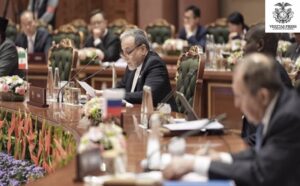
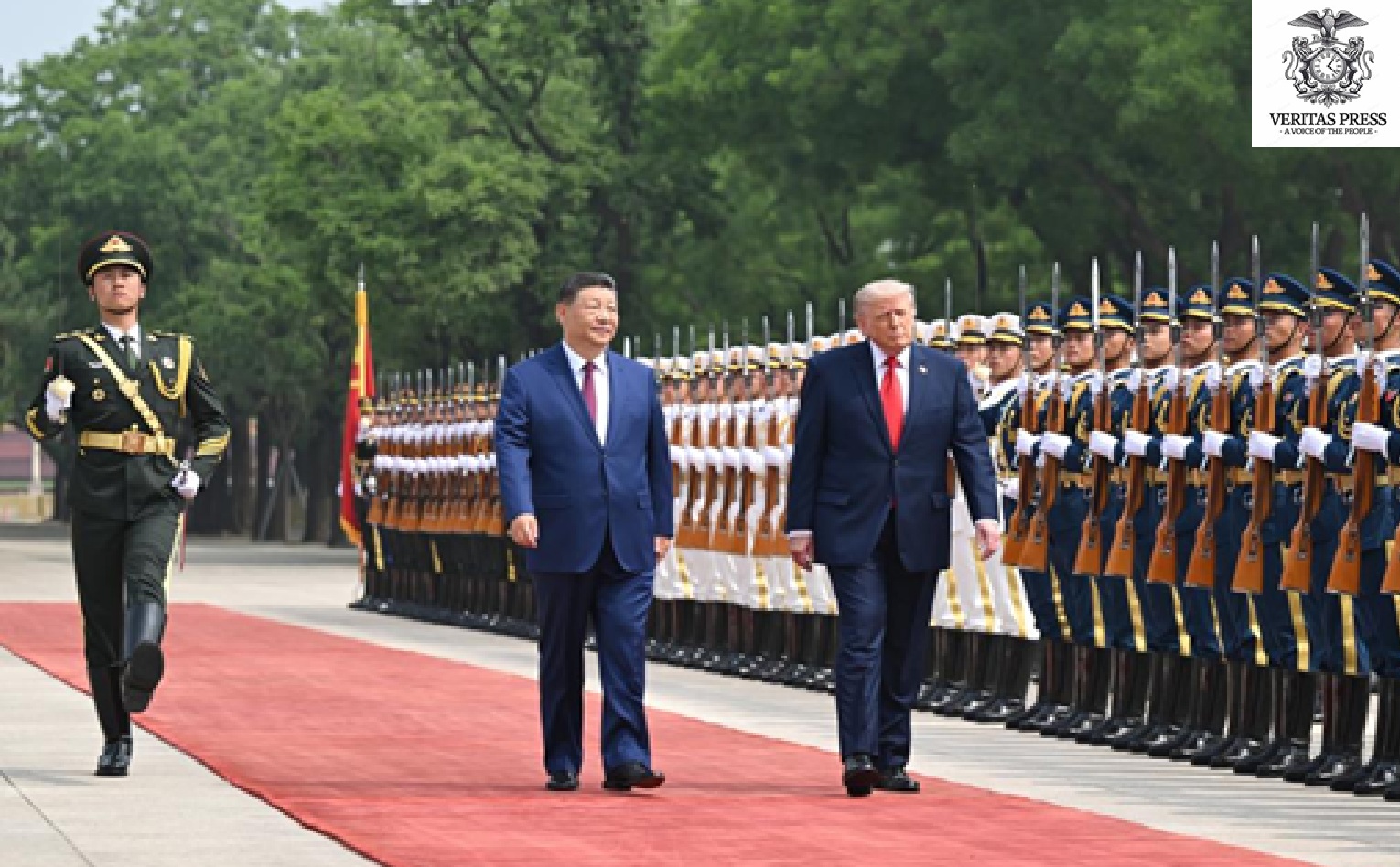
The remarks came during Trump’s first state visit to China in nearly a decade by a sitting US president, a meeting wrapped in elaborate diplomatic symbolism, military ceremony, and carefully choreographed displays of friendship, yet overshadowed by deepening geopolitical rivalry, trade tensions, military escalation in the Asia-Pacific, and Washington’s expanding military support for Taiwan.
Beijing Draws A Red Line:
At the heart of the summit was the future of Taiwan, referred to by Beijing as “Chinese Taipei” and regarded by the Chinese government as an inseparable part of China under the “One China” principle.
Xi’s message was direct: peace across the Taiwan Strait cannot coexist with what Beijing views as US-backed separatism.
“If it is handled properly, the bilateral relationship will enjoy overall stability,” Xi said. “Otherwise, the two countries will have clashes and even conflicts.”
Chinese state media described the Taiwan issue as the “core of China’s core interests,” while Foreign Ministry spokesperson Mao Ning later reiterated that Beijing would not tolerate foreign interference in what it considers an internal matter.
The warning reflects growing alarm within Beijing over Washington’s increasingly open military and political engagement with Taiwan. Over recent years, the United States has expanded weapons transfers, increased naval patrols through the Taiwan Strait, deepened intelligence cooperation, and elevated political contacts with Taiwanese officials despite formally recognising the “One China” framework.
Analysts in Beijing argue that the United States is attempting to strategically contain China by transforming Taiwan into a frontline geopolitical pressure point, similar to how NATO expansion has been framed by Russia in relation to Ukraine.
Chinese political commentator Victor Gao told regional media that Washington’s actions are viewed in Beijing as “incremental erosion” of previous diplomatic understandings reached between the two countries in the 1970s and 1980s.
“The Chinese leadership sees arms sales and political signalling as deliberate provocations that increase the possibility of military miscalculation,” Gao said.
The Arms Sales Escalation:
Tensions have intensified following reports that Washington is preparing to move ahead with an arms package for Taiwan valued at more than $11 billion, while US senators have reportedly urged the Trump administration to proceed with an additional, delayed deal worth roughly $14 billion.
Beijing has repeatedly condemned such transfers as violations of Chinese sovereignty and breaches of prior bilateral commitments.
Chinese military analysts say the continued militarisation of Taiwan risks creating a permanent flashpoint in East Asia.
In recent months, the Chinese military has dramatically increased naval and air exercises around Taiwan, including simulated blockade operations and large-scale drills involving fighter jets, missile systems, and warships encircling the island.
Taiwanese residents have increasingly found themselves living under the constant shadow of military escalation.
“We hear fighter jets almost every week now,” one Taipei resident told local journalists following China’s December blockade simulations. “People try to continue daily life, but everyone understands the pressure is growing.”
Taiwanese officials, however, argue that Beijing’s military actions themselves are destabilising the region.
A spokesperson for Taiwan’s premier, Michelle Lee, thanked Washington for its “long-term support” after the Xi-Trump meeting and said Taipei welcomed actions aimed at “regional stability and the management of authoritarian expansion.”
Pageantry Masks Deep Strategic Divisions:
Despite the severity of Xi’s warning, both leaders publicly attempted to project optimism.
Trump praised Xi as “a great leader” and declared that US-China relations would become “better than ever before.” During a state banquet, Xi similarly emphasised “mutual respect, peaceful coexistence, and win-win cooperation.”
The Chinese leader invoked the legacy of “Ping-Pong Diplomacy,” recalling the symbolic thaw in relations more than five decades ago.
Yet beneath the ceremonial language lies a relationship increasingly defined by structural competition rather than partnership.
The summit exposed widening divides not only over Taiwan but also over trade, technology restrictions, the wars in Iran and Ukraine, rare earth exports, semiconductor controls, and competing visions of global order.
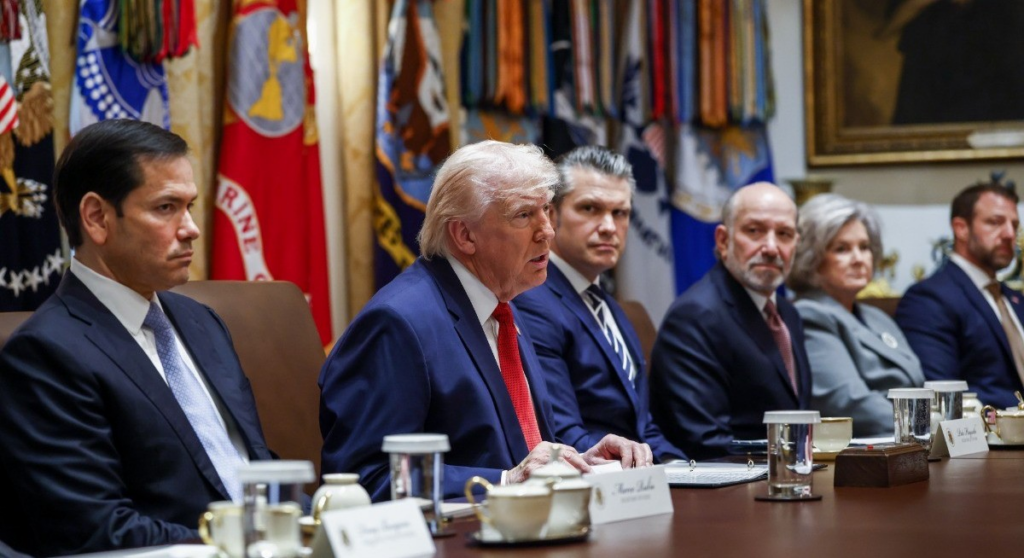
US Secretary of State Marco Rubio described China as both Washington’s “top geopolitical challenge” and “the most important relationship for us to manage.”
That contradiction increasingly defines contemporary US policy toward China: economic interdependence alongside military containment.
Trade Cooperation And Economic Contradictions:
Even as tensions rise, both governments remain economically intertwined.
Chinese officials highlighted recent trade talks in South Korea as “constructive” and “balanced,” with China’s Ministry of Commerce stating that Beijing is willing to “expand the list of cooperation and shorten the list of problems.”
Trump arrived in Beijing accompanied by some of America’s most influential corporate executives, including Elon Musk, Jensen Huang, and Tim Cook, a sign that, despite political tensions, major US corporations remain deeply dependent on the Chinese market.
Xi reassured the delegation that “China will only open its door wider,” portraying Beijing as a defender of global trade at a moment when Western economies face slowing growth and supply-chain instability.
Yet critics argue that the summit highlighted a deeper contradiction at the heart of US policy: Washington seeks economic access to China while simultaneously escalating military pressure against it.
“This is strategic competition wrapped in economic pragmatism,” said one Beijing-based international relations scholar quoted in Chinese media. “The US wants Chinese markets without accepting China’s rise.”
Taiwan As The Epicentre Of A New Cold War:
Many geopolitical observers increasingly describe Taiwan as the most dangerous potential trigger for a future great-power war.
Xi’s reference to avoiding the “Thucydides Trap”, the theory that conflict often emerges when a rising power challenges an established one, underscored Beijing’s belief that the United States is attempting to obstruct China’s ascent.
Chinese state commentators accuse Washington of weaponising Taiwan in order to maintain American primacy in the Indo-Pacific.
US officials reject that characterisation, insisting Washington’s actions are intended to preserve deterrence and prevent forced reunification.
But critics warn that the accelerating cycle of arms sales, military exercises, sanctions, and nationalist rhetoric on all sides is narrowing diplomatic space and increasing the risks of accidental escalation.
Regional peace activists and anti-war groups across Asia have also voiced concern that ordinary civilians would bear the catastrophic consequences of any future conflict.
“The people of Taiwan, mainland China, Japan, Korea, and the wider region would pay the price for great-power militarism,” said a representative from a regional peace coalition in Seoul. “The escalation is being normalised while the human cost is ignored.”
Beyond Diplomacy: Competing Visions Of World Order.
The Xi-Trump summit ultimately reflected more than a dispute over Taiwan. It exposed the emergence of two competing global visions.
China presents itself as a rising multipolar power advocating economic connectivity, sovereignty, and non-interference, though critics point to Beijing’s own military assertiveness and domestic repression.
The United States continues to frame itself as the guarantor of regional security and democratic alliances, while critics accuse Washington of using military alliances, sanctions, and arms transfers to preserve hegemony.
For now, both sides appear determined to avoid outright confrontation while simultaneously preparing for it.
Xi’s message in Beijing was therefore both a warning and a calculation: cooperation with Washington remains possible, but only if the United States accepts Beijing’s red lines, above all on Taiwan.
Whether Washington chooses confrontation, compromise, or continued ambiguity may shape not only the future of US-China relations but the geopolitical trajectory of the entire 21st century.
Source: Multiple News Agencies
Submissions:
For The Secure Submission Of Documentation, Testimonies, Or Exclusive Investigative Reports From Any Global Location, Please Utilise The Following Contact Details For Our Investigations Desk: enquiries@veritaspress.co.uk or editor@veritaspress.co.uk
Help Support Our Work:
Popular Information is powered by readers who believe that truth still matters. When just a few more people step up to support this work, it means more lies exposed, more corruption uncovered, and more accountability where it’s long overdue.
Help Protect Independent Journalism, Which Is Currently Under Attack.
If you believe journalism should serve the public, not the powerful, and you’re in a position to help, becoming a DONATOR or a PAID SUBSCRIBER truly makes a difference.
DONATION APPEAL: If You Found This Reporting Valuable, Please Consider Supporting Independent Journalism.
Help Support Our Work – We Know, We Know, We Know …
Seeing these messages is annoying. We know that. (Imagine what it’s like writing them … )
Your support fuels our fearless, truth-driven journalism. In unity, we endeavour to amplify marginalised voices and champion justice, irrespective of geographical location.
But it’s also extremely important. One of Veritas Press’s greatest assets is its reader-funded model.
1. Reader funding means we can cover what we like. We’re not beholden to the political whims of a billionaire owner. We are a small, independent and impartial organisation. No one can tell us what not to say or what not to report.
2. Reader funding means we don’t have to chase clicks and traffic. We’re not desperately seeking your attention for its own sake: we pursue the stories that our editorial team deems important and believe are worthy of your time.
3. Reader Funding: enables us to keep our website and other social media channels open, allowing as many people as possible to access quality journalism from around the world, particularly those in places where the free press is under threat.
We know not everyone can afford to pay for news, but if you’ve been meaning to support us, now’s the time.
Your donation goes a long way. It helps us:
- Keep the lights on and sustain our day-to-day operations
- Hire new, talented independent reporters
- Launch real-time live debates, community-focused shows, and on-the-ground reporting
- Cover the issues that matter most to our communities, in real time, with depth and integrity
We have plans to expand our work, but we can’t do it without your support. Every contribution, no matter the size, helps us stay independent and build a truly people-powered media platform.
If you believe in journalism that informs, empowers, and reflects the communities we serve, please donate today.
Donate Today:
GENEVA — A United Nations fact-finding mission has concluded there are “reasonable grounds to believe”
Iran’s GDP is projected to contract by 5.4 to 6.1% in 2026, its worst performance
The Trump administration is preparing a $2.8 billion weapons package for Israel containing 40,000 2,000-pound

Film alleges mass civilian deaths are routinely built into military decisions amid Israel’s genocidal war
The Israeli rights group says violence, displacement, economic strangulation, and settlement expansion form part of

Houthi forces have captured the historic Red Sea port of Mocha and are advancing on
London’s historic sanctions against Israeli settlements mark a watershed moment in UK foreign policy, but
With 95% of Gaza’s population now wholly dependent on aid and more than 90% stripped
India calls for Kashmir and Ladakh to appear only on its official map after a
ISLAMABAD – In the high-stakes political theatre of Pakistan, the battleground has shifted from the